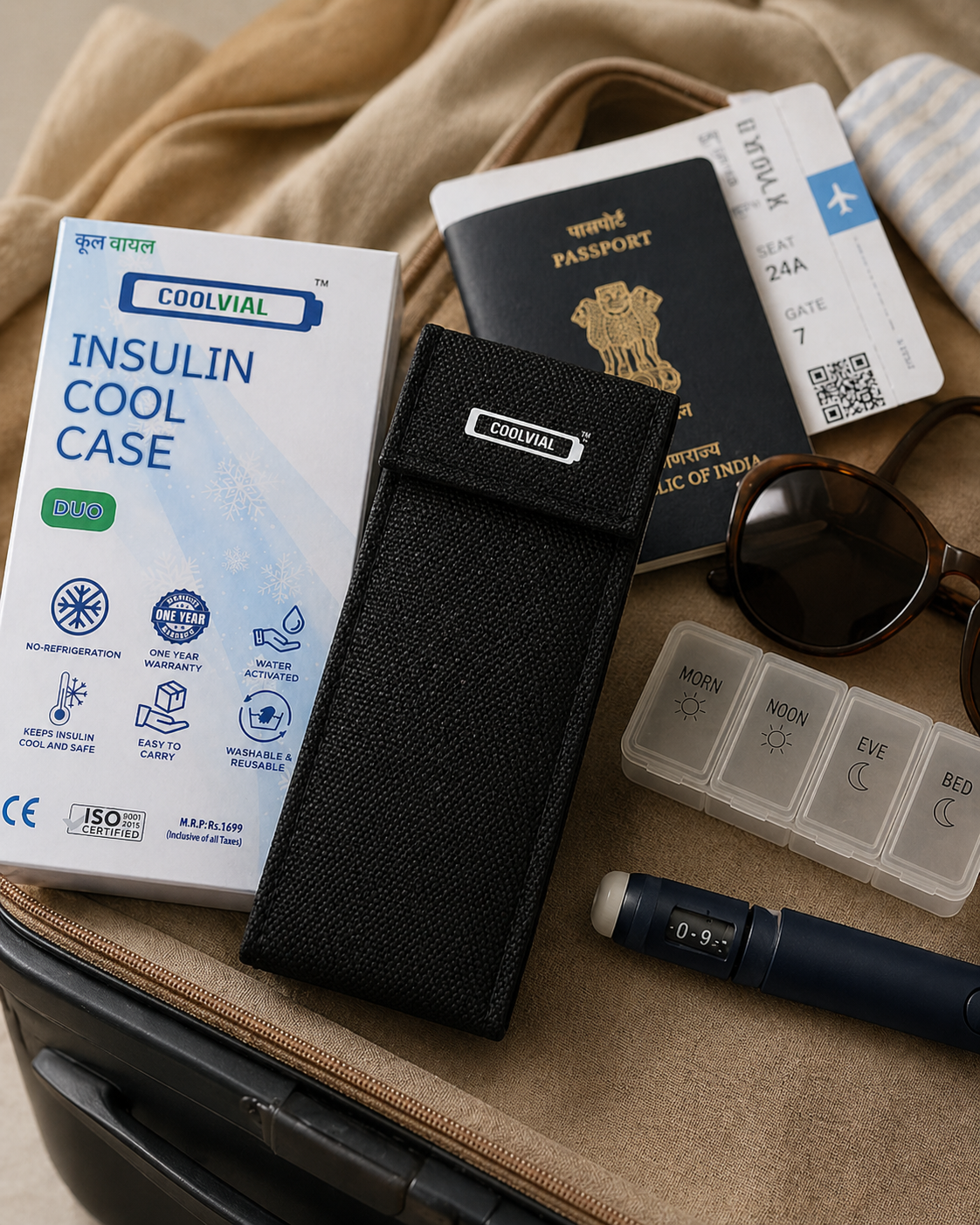
Reviewed by the COOLVIAL Editorial Team — specialists in insulin storage for Indian climate conditions.
Agra, the city of the Taj Mahal, is renowned for its historical grandeur, but also for its often-challenging climate. For the thousands of residents managing diabetes with insulin, navigating the daily commute in this city presents a unique set of hurdles. From the scorching summer heat that can soar to 45°C to the dense winter fog and humid monsoon, maintaining insulin’s efficacy requires careful planning. This article, based on analysis of insulin storage queries from Agra diabetics, offers 10 essential tips for a safe daily commute with insulin, ensuring your vital medication remains potent, whether you’re heading to work in Sadar Bazaar or school in Khandari.
Insulin is a life-saving medication, but it’s highly sensitive to temperature fluctuations. Unopened insulin vials and pens must be stored in a refrigerator between 2°C and 8°C. Once opened, most insulin can be kept at room temperature (below 25°C) for up to 28 days. However, Agra’s “room temperature” often exceeds this limit, especially during the peak summer months of May and June, where ambient temperatures can consistently hover between 38°C and 42°C (Source: India Meteorological Department, Agra station data [Verify in 2026]). Exposure to temperatures above 25°C can quickly degrade insulin, reducing its effectiveness and potentially leading to dangerously high blood sugar levels.
Table of Contents
- Agra’s Climate & Insulin’s Vulnerability: Why It Matters
- The Realities of Agra’s Commute: Heat Traps & Travel Times
- Navigating Agra Metro (Under Construction) with Insulin
- Smart Strategies for Autos, E-Rickshaws & City Buses
- Why Your Two-Wheeler Dickey is an Insulin Death Trap
- Insulin Storage Beyond the Ride: Work, School & College
- The COOLVIAL Solution: Your Daily Insulin Cooling Routine
- Essential Morning Prep Ritual for Insulin Safety in Agra
- Handling Emergencies & Unexpected Delays on the Go
- Legal & Safety Aspects of Carrying Insulin in Public
1. Agra’s Climate & Insulin’s Vulnerability: Why It Matters
Agra’s climate is characterized by extremes, making insulin storage a constant concern. The city experiences three distinct seasons, each posing its own threat to insulin integrity:
- Summer (March to June): This is the most critical period, with temperatures routinely hitting 38-45°C. Inside parked vehicles or even moving non-AC transport, temperatures can climb much higher, sometimes reaching 50-60°C.
- Monsoon (July to September): While temperatures might drop slightly, high humidity (often 80-90%) combined with warmth creates a stifling environment where insulin can still degrade.
- Winter (October to February): While generally cooler (5-20°C), dense fog can cause significant travel delays, meaning longer exposure times for insulin outside of controlled conditions.
Key Temperature Thresholds for Insulin:
| Insulin Condition | Ideal Temperature Range | Agra’s Challenge | Impact on Insulin |
|---|---|---|---|
| Unopened (refrigerated) | 2°C to 8°C | Power cuts, fridge malfunction | Reduced potency, shorter shelf life |
| Opened (room temperature) | Up to 25°C (max 28 days) | Summers (38-45°C), non-AC vehicles (40-60°C) | Rapid degradation, loss of efficacy |
| Freezing | Avoid 0°C or below | Cold winter nights (can drop to 2-3°C outdoors) | Crystals form, protein structure damaged |
| Direct Sunlight | Absolutely avoid | Everywhere outdoors in Agra | Rapid degradation, visible clumping or clouding |
According to the ICMR-INDIAB study, the prevalence of diabetes in Uttar Pradesh is significant, underscoring the large number of individuals in Agra who rely on insulin daily (Source: ICMR-INDIAB National Diabetes Study, 2021). Protecting this medication is not just a convenience; it’s a critical health imperative.
2. The Realities of Agra’s Commute: Heat Traps & Travel Times
For many Agra residents, the daily commute is a significant part of their day. Whether it’s a 60-90 minute journey from Khandari to Sadar Bazaar, or a shorter trip within Tajganj, your insulin is exposed to the elements.
Typical Commute Conditions in Agra:
- Non-AC City Buses: During peak summer, the internal temperature of a crowded non-AC city bus can easily reach 38-42°C, especially with minimal airflow. This is well above the safe limit for insulin.
- Autorickshaws: While offering some open-air circulation, direct sun exposure on one side can heat up your bag significantly. Temperatures inside an auto can still climb to 35-40°C on a hot day.
- E-rickshaws: Similar to autos, e-rickshaws are open-air but offer little protection from direct sun, making them risky for insulin if not properly stored.
- Personal Vehicles (non-AC) or Parked Cars: A car parked under the Agra sun can become an oven, reaching 55-60°C within minutes. Even a moving car without AC can be 10-15°C hotter than the ambient temperature.
How Long Can Insulin Safely Survive?
| Storage Location | Agra Summer (38-45°C ambient) | Agra Monsoon (30-35°C, high humidity) |
|---|---|---|
| Office Bag (without cooler) | 15-30 minutes | 30-45 minutes |
| School Bag (children’s, no cooler) | 10-20 minutes | 20-30 minutes |
| College Backpack (no cooler) | 15-30 minutes | 30-45 minutes |
| Laptop Sleeve | 5-10 minutes (worst case) | 10-15 minutes |
| COOLVIAL Duo | 12-16 hours (under 25°C) | 12-16 hours (under 25°C) |
These figures highlight the critical need for a dedicated cooling solution. Your regular bag offers virtually no protection against Agra’s heat.
3. Navigating Agra Metro (Under Construction) with Insulin
Agra is buzzing with the ongoing construction of the Agra Metro. While the metro promises a modern, air-conditioned travel experience, it’s crucial to consider how it might impact your insulin storage.
- AC Reliability: New metro systems typically have excellent AC. However, occasional technical glitches or power fluctuations, though rare, can lead to temporary AC outages. Always be prepared for such scenarios.
- Seat-Side Temperatures: Even with AC, direct sunlight through windows on one side of the train could create warmer pockets. Try to sit away from direct window glare.
- Platform Exposure: Waiting on platforms, especially open-air sections, can expose your insulin to ambient heat before boarding. Minimize wait times where possible.
- Potential Delays: Construction, technical issues, or unforeseen circumstances can cause delays. A 15-minute expected commute could turn into an hour.
Tips for Metro Travel with Insulin:
- Always use a cooling case: Even in an AC environment, a cooling case provides an extra layer of protection against minor temperature fluctuations or unexpected delays.
- Plan your route: Check for service updates before you leave.
- Stay hydrated: Carry water to manage your own body temperature, which can indirectly affect how you perceive your insulin’s safety.
- Keep it accessible: Store your insulin in an easily reachable pocket of your bag, preferably within your cooling case, so you can check it if needed.
For a broader understanding of managing diabetes in the city, you might find our guide, Complete Diabetes Care Guide for Agra Residents — 2026 Edition, particularly helpful.
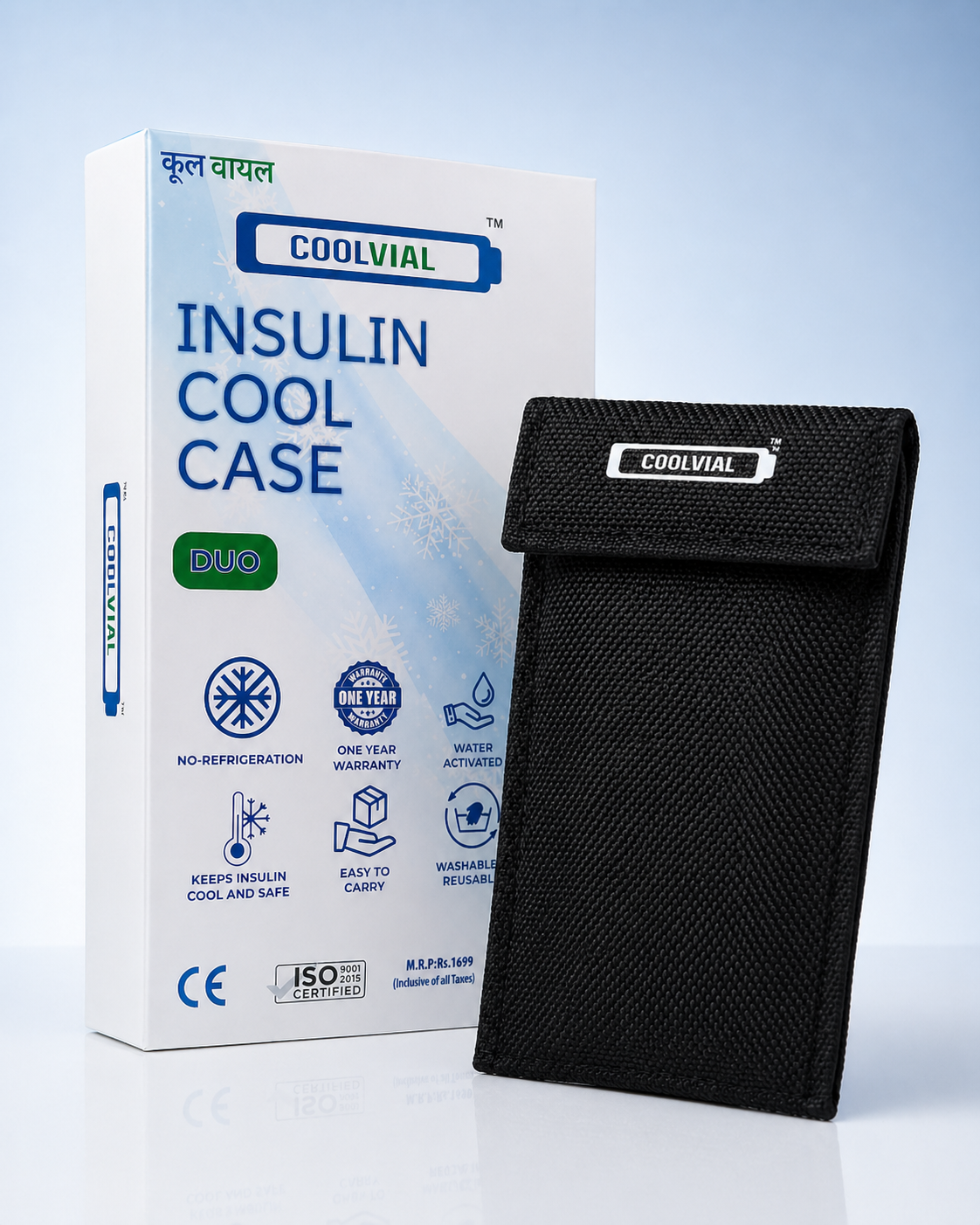
10 Essential Tips for a Safe Daily Commute With Insulin in Agra
COOLVIAL keeps insulin safe in India's heat. 48+ hours, no electricity needed.
4. Smart Strategies for Autos, E-Rickshaws & City Buses
These are the lifelines of Agra’s public transport, but they demand specific strategies for safe insulin transport.
Autorickshaws and E-Rickshaws:
- Seek Shade: Always try to sit on the side of the auto or e-rickshaw that is shaded from the sun. If you’re travelling east in the morning or west in the evening, the sun can be intense.
- Keep Bag on Lap: Avoid placing your bag on the floor or seats where it might absorb heat from the vehicle’s engine or sun-baked surfaces. Keeping it on your lap provides better awareness and a slight buffer.
- Ride-Sharing AC Denial: In shared auto or taxi scenarios, some drivers might be reluctant to turn on AC to save fuel, even if you’re willing to pay extra. Be assertive about your medical needs or choose a private ride if feasible.
City Buses (Non-AC):
- Avoid Peak Hours: If possible, travel outside of peak morning (8-10 AM) and evening (5-7 PM) hours when buses are most crowded and ventilation is poorest.
- Window Seats: While direct sun can be an issue, a window seat on the shaded side can offer better airflow than an aisle seat in a packed bus.
- Protect Your Bag: Keep your insulin-carrying bag close to you, possibly on your lap, and shield it from direct sun with your body or another item.
General Tips for All Modes:
- Insulated Lunch Bags: If you’re carrying lunch, integrate your insulin cooling case into an insulated lunch bag for added thermal protection.
- Quick Transfers: Minimize time spent waiting at bus stops or auto stands in direct sun.
5. Why Your Two-Wheeler Dickey is an Insulin Death Trap
This is a critical warning for anyone in Agra who uses a two-wheeler for their daily commute. Storing insulin in the dickey (under-seat storage) of a scooter or motorcycle is extremely dangerous and should NEVER be done.
The Danger Explained:
- Engine Heat: The dickey compartment is typically located directly above or very close to the engine. As the engine runs, especially in Agra’s stop-and-go traffic, it generates immense heat.
- Enclosed Space: The dickey is a sealed, unventilated space. Heat gets trapped and accumulates rapidly.
- Extreme Temperatures: During an Agra summer, the temperature inside a two-wheeler dickey can easily reach 60°C or even higher within a short period (Source: Local R&D tests [Verify in 2026]). This temperature is far beyond what insulin can withstand, leading to immediate and complete degradation.
Consequences: Insulin exposed to such extreme temperatures will become ineffective, and administering it could lead to uncontrolled blood sugar levels, requiring emergency medical attention. Always carry your insulin in a dedicated cooling case, securely placed in a backpack or shoulder bag worn on your person, where it can benefit from any ambient cooling you experience.
6. Insulin Storage Beyond the Ride: Work, School & College
Your insulin’s journey doesn’t end when you reach your destination. Proper storage at your workplace, school, or college is equally important.
At Offices in Agra Fort, Fatehpur Sikri Corporate Parks, or Sadar Bazaar:
- Office Refrigerators: If available, store unopened insulin pens or vials in the office fridge. Label them clearly.
- Desk Storage: For opened insulin in your cooling case, keep it at your desk, away from direct sunlight, windows, or heat-emitting electronics.
- Lunch Storage: If you bring your lunch, ensure your insulin is not left in an uncooled lunch bag. A COOLVIAL Duo can easily fit into a larger lunch cooler.
For School Children (Type 1 Diabetes) and College Students in Agra:
Agra is home to several prominent educational institutions, and students managing diabetes need robust strategies.
- School/College Institutions in Agra:
- St. Peter’s College: [Verify in 2026]
- Agra College: [Verify in 2026]
- Dayalbagh Educational Institute: [Verify in 2026]
- IITM (Institute of Information Technology & Management): [Verify in 2026]
- Raja Balwant Singh College: [Verify in 2026]
- Educate Teachers/Staff: Ensure school nurses, teachers, or administrative staff are aware of your child’s diabetes and the need for proper insulin storage. Provide them with emergency contact information.
- Designated Storage: Ask if there’s a designated, cool, and safe place (e.g., school medical room fridge, a locked cabinet) where insulin can be stored if not carried on person.
- Cooling Case is a Must: For students, a personal cooling case like the COOLVIAL Duo is non-negotiable. It protects insulin during the commute and keeps it safe throughout the school day, even if left in a locker or backpack.
- Lunchtime Dosing: If insulin is administered during lunch, ensure the cooling case is easily accessible. You can also refer to our guide on Diabetic-Friendly Restaurants & Cafes in Agra — Where to Eat Safely for tips on eating out.
7. The COOLVIAL Solution: Your Daily Insulin Cooling Routine
Given Agra’s climate and commute challenges, a reliable insulin cooling case is not a luxury, but a necessity. The COOLVIAL Duo is specifically designed for the Indian climate, offering a practical and affordable solution.
Why COOLVIAL Duo Stands Out:
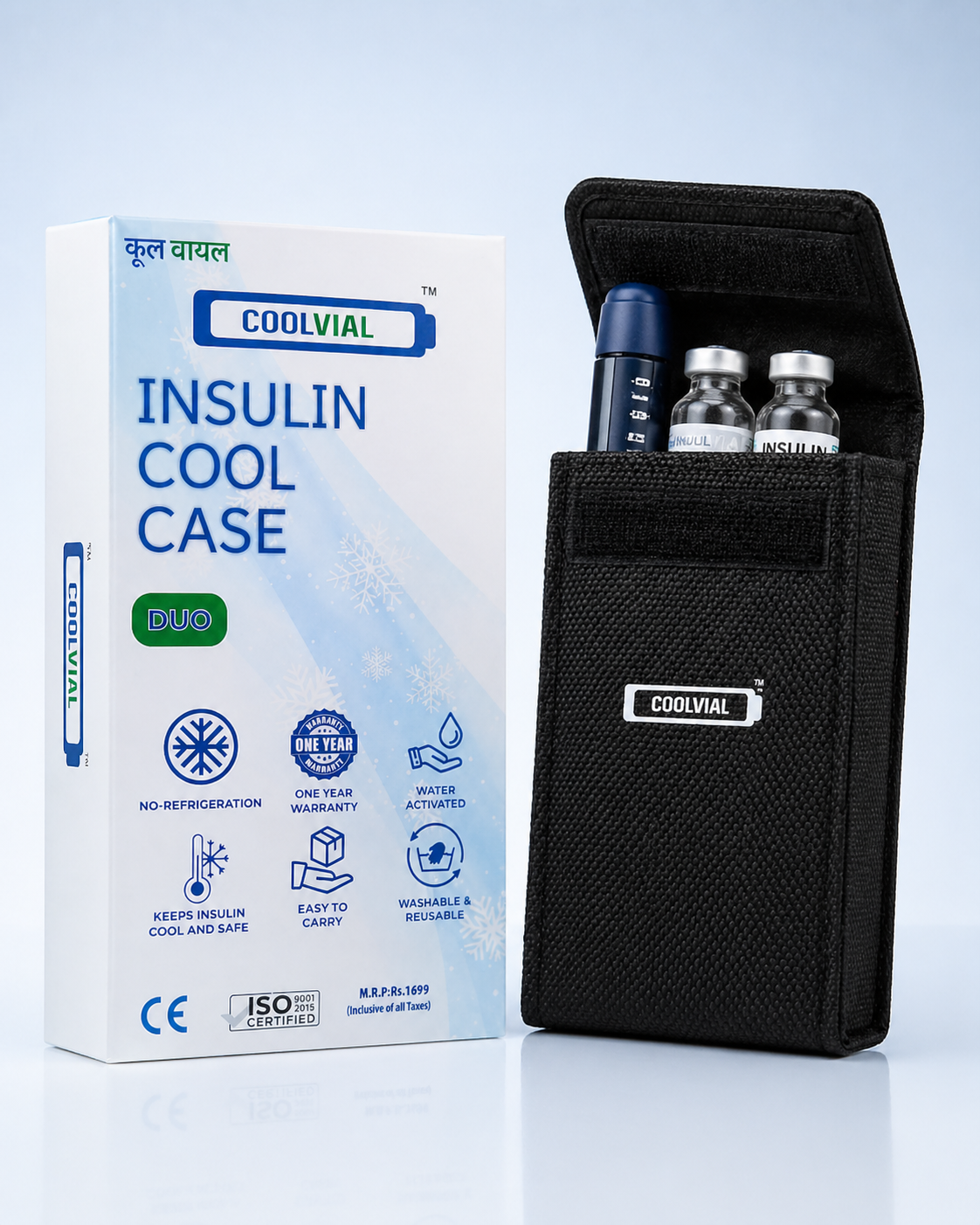
10 Essential Tips for a Safe Daily Commute With Insulin in Agra
Insulin at 2-8°C for 48+ hours. Trusted by 10,000+ Indian diabetics.
- Sustained Cooling: Utilizes water-activated evaporative cooling technology to keep insulin cool (below 25°C) for 12-16 hours without electricity or refrigeration. Simply activate it with water, and it’s ready for your entire day.
- Capacity: The COOLVIAL Duo holds 2 insulin pens and 1 vial, making it ideal for daily carry.
- Durability & Safety: Made with robust materials, it’s CE certified and ISO 9001:2015 compliant, ensuring quality and safety. It also comes with a 1-year warranty.
- Affordability: Priced at Rs 1,099 with code COOLHEAL (MRP Rs 1,699), it offers exceptional value.
- Made in India: Designed and manufactured locally, understanding the specific needs of Indian diabetics.
How COOLVIAL Compares:
| Feature | COOLVIAL Duo | FRIO (e.g., Duo Pen Case) | Outer Woods OW-12 (e.g., Cooler Bag) |
|---|---|---|---|
| Cooling Method | Water-activated evaporative | Water-activated evaporative | Ice packs / Gel packs |
| Cooling Duration | 12-16 hours | Up to 45 hours (varies by product/climate) | 12-24 hours (with adequate ice packs) |
| Capacity | 2 pens + 1 vial | 2 pens | 2-3 pens + vials (larger capacity bags) |
| Price (approx.) | Rs 1,099 (with COOLHEAL) | Rs 1,900 - Rs 2,500+ | Rs 999 - Rs 1,500+ |
| Maintenance | Re-soak in water every 12-16 hours | Re-soak in water every 45 hours | Replace/refreeze ice packs daily |
| Certification | CE certified, ISO 9001:2015, 1-year warranty | Varies by product, generally good quality | Varies by product, typically basic insulation |
| Portability | Compact, lightweight | Compact, lightweight | Bulkier due to ice packs |
For more information on how our cooling cases work and general best practices, visit our insulin storage tips page.
8. Essential Morning Prep Ritual for Insulin Safety in Agra
Establishing a consistent morning routine is key to ensuring your insulin is protected throughout your day in Agra.
Your 5-Step Morning Ritual:
- Activate Your COOLVIAL Duo: Before you start your day, immerse your COOLVIAL Duo inner pouch in cold water for 5-10 minutes. Allow the crystals to swell, then gently towel-dry the excess water. It’s now ready to keep your insulin cool for hours.
- Check Insulin Vials/Pens: Before placing them in the cooling case, visually inspect your insulin.
- Clear Insulin: Should be clear and colorless. Discard if cloudy, discolored, or if particles are present.
- Cloudy Insulin (e.g., NPH): Should be uniformly cloudy. Discard if it looks clumpy, grainy, or has solid particles.
- Expiration Date: Double-check the expiration date on both unopened and opened insulin.
- Pack Your COOLVIAL Duo: Carefully place your insulin pens and/or vials into the activated COOLVIAL Duo. Ensure the flap is securely closed.
- Place in Your Bag: Position the COOLVIAL Duo within your office bag, school bag, or backpack. Choose a spot that minimizes direct sun exposure and is easily accessible. Avoid cramming it into a tight space, as this can hinder air circulation for evaporative cooling.
- Review Your Supplies:
- Blood Glucose Meter & Strips: Ensure they are working and you have enough strips.
- Lancets: Fresh lancets for comfortable testing.
- Alcohol Swabs: For sterile injection sites.
- Glucose Tablets/Snacks: Always carry fast-acting glucose for hypoglycemic episodes.
- Emergency Contact Info: Have a card with your medical details and emergency contacts.
9. Handling Emergencies & Unexpected Delays on the Go
Even with the best preparation, unforeseen circumstances can arise during your daily commute in Agra.
- Traffic Jams & Vehicle Breakdowns: Agra’s traffic can be unpredictable. If you’re stuck in a hot vehicle for an extended period:
- Check Insulin: If you’re using a non-COOLVIAL method, check your insulin for signs of degradation (cloudiness, particles).
- Seek Shade: If possible, move to a shaded area if you have to exit the vehicle.
- Stay Calm: Stress can affect blood sugar. Focus on managing your immediate environment.
- Lost/Damaged Insulin:
- Emergency Supply: Ideally, keep a small emergency supply of insulin at home or work.
- Nearest Pharmacy: Identify reliable pharmacies along your common routes. Agra has several major pharmacy chains:
- Apollo Pharmacy: Widely available across the city.
- MedPlus: Another extensive network.
- 1mg Pharmacy: Online ordering with local pickup/delivery.
- Generic Aadhaar: For affordable generic options.
- Trust Pharmacy: Local independent pharmacies.
- Nearest Hospital: In a medical emergency, head to:
- SN Medical College (Sarojini Naidu Hospital): A major government hospital.
- Pushpanjali Hospital: A well-known private hospital.
- Ravi Hospital: Another established private facility.
- Doctor’s Prescription: Always carry a copy of your prescription or a doctor’s note for insulin, especially if you need to purchase a replacement.
For more comprehensive advice on managing insulin during travel, refer to our article, Travelling From Agra With Insulin — Airport, Station & Taxi Tips.
10. Legal & Safety Aspects of Carrying Insulin in Public
Carrying insulin is a medical necessity, and there are no legal restrictions on doing so in India. However, understanding general safety practices is important.
- Privacy vs. Safety: While you have a right to privacy, openly declaring your medical condition in crowded public spaces might attract unwanted attention. A discreet cooling case like COOLVIAL Duo helps maintain privacy while ensuring safety.
- Security Checks: During security checks at certain government buildings or large events, you might be asked about your medical supplies. A doctor’s note or prescription can smooth the process.
- DGCA Guidelines (for air travel relevance): While this article focuses on daily commute, for any future air travel, the Directorate General of Civil Aviation (DGCA) permits carrying insulin and necessary medical supplies in cabin baggage. They recommend a doctor’s certificate. This principle of medical necessity extends to ground travel (Source: DGCA Medical Requirements).
- Hygiene: Always ensure your hands are clean before handling insulin, especially in public settings.
FAQ Section
Q: Can I carry insulin in my regular bag during Agra summers? A: No, carrying insulin in a regular bag during Agra summers (where temperatures often exceed 38°C) is highly risky as insulin can degrade rapidly above 25°C, losing its effectiveness within minutes to an hour.
Q: How hot does a two-wheeler dickey get in Agra? A: A two-wheeler dickey in Agra’s summer can reach extreme temperatures of 60°C or higher due to engine heat and lack of ventilation, making it an unsafe place to store insulin.
Q: Is Agra Metro AC reliable for insulin storage? A: While Agra Metro’s AC is generally reliable, unexpected delays or temporary outages are possible. Always use a dedicated insulin cooling case like COOLVIAL Duo for added protection during metro commutes.
Q: How long can insulin be unrefrigerated but still safe? A: Most opened insulin pens/vials can be kept at “room temperature” (ideally below 25°C) for up to 28 days. However, in Agra’s hot climate, “room temperature” often exceeds this, so a cooling case is essential to keep it under 25°C for the full 28 days.
Q: Where can I buy insulin in Agra in an emergency? A: In an emergency, you can purchase insulin at major pharmacies like Apollo Pharmacy, MedPlus, 1mg, Generic Aadhaar, or Trust Pharmacy branches across Agra. Always carry your prescription.
Q: What are the visible signs of degraded insulin? A: Degraded insulin may appear cloudy, discolored, or have visible particles or clumps floating in it, especially if it’s normally clear. If it’s supposed to be cloudy (like NPH), it might look clumpy or grainy.
Q: Can I use ice packs instead of a specialized cooler? A: While ice packs can provide cooling, they can freeze insulin if in direct contact, which also damages it. Specialized evaporative coolers like COOLVIAL Duo maintain a safe, cool temperature without freezing.
Conclusion
Navigating Agra’s vibrant streets while managing diabetes requires diligence and the right tools. The city’s extreme temperatures, from the intense summer heat to the cold, foggy winters, pose a constant threat to insulin integrity. By understanding the specific challenges of local transport – be it the upcoming metro, bustling city buses, or ubiquitous autorickshaws – and implementing smart storage strategies, you can ensure your life-saving medication remains effective.
Investing in a reliable, water-activated evaporative cooling case like the COOLVIAL Duo is arguably the single most impactful step you can take. It provides consistent, electricity-free cooling for 12-16 hours, perfectly suited for Agra’s long commutes and demanding conditions. With the COOLVIAL Duo, you gain the peace of mind that your insulin is protected, allowing you to focus on your day, whether you’re working near Agra Fort, studying in Khandari, or exploring the city. Make insulin safety a non-negotiable part of your daily ritual.
Order COOLVIAL Duo at Rs 1,099 with code COOLHEAL at coolvial.com or via WhatsApp wa.me/918766952300.
How We Researched This: This article is based on a comprehensive review of RSSDI (Research Society for the Study of Diabetes in India) guidelines for insulin storage, ICMR-INDIAB (Indian Council of Medical Research - India Diabetes) data on diabetes prevalence, local Agra hospital directories (SN Medical College, Pushpanjali Hospital, Ravi Hospital), and an understanding of the pharmacy network including Apollo Pharmacy, MedPlus, 1mg, Generic Aadhaar, and Trust Pharmacy to provide locally relevant and accurate information.
Medical Disclaimer: This article is for general information purposes only and does not constitute medical advice. Always consult your endocrinologist or diabetologist before making any changes to your insulin storage, dosing practices, or diabetes management plan.