Reviewed by the COOLVIAL Editorial Team — specialists in insulin storage for Indian climate conditions.
Guwahati, the gateway to Northeast India, is a vibrant city known for its tropical climate, heavy monsoons, and bustling daily life along the Brahmaputra River. For the thousands of residents managing diabetes with insulin, navigating the city’s unique commute challenges while keeping this life-saving medication cool is a critical daily task. Temperatures in Guwahati can soar, often hitting 38-42°C during peak summer, and even during monsoon, high humidity makes heat retention a significant issue. This guide offers 5 essential tips for a safe daily commute with insulin, whether you’re traveling by metro, city bus, or auto-rickshaw.
Based on analysis of insulin storage queries from Guwahati diabetics, we understand the real-world concerns: how long can an insulin pen survive in an office bag during a 60-90 minute commute from Beltola to Paltan Bazaar? What about a child’s school bag or a college student’s backpack? The answer is clear: without proper cooling, insulin can degrade rapidly, impacting its effectiveness. Maintaining insulin’s temperature between 2°C and 25°C is crucial, and the harsh climate of Guwahati makes this a constant challenge.
Table of Contents
- Understanding Guwahati’s Commute Climate and Insulin Risks
- Choosing the Right Transport for Your Insulin in Guwahati
- Guwahati Metro (AC)
- ASTC City Buses (Non-AC)
- Auto-rickshaws and E-rickshaws
- App-based Cabs (Ola/Uber)
- Two-Wheelers
- Daily Insulin Storage for Students and Professionals
- School and College Students
- Office Professionals
- Your Morning Ritual: Preparing Insulin for the Day
- The Smart Solution: Investing in a Reliable Insulin Cooling Case
- Frequently Asked Questions (FAQ)
- Methodology Note
- Conclusion: Embrace Smart Insulin Management in Guwahati
Understanding Guwahati’s Commute Climate and Insulin Risks
Guwahati’s climate is characterized by its intense heat and high humidity for much of the year. From May to September, the city experiences very heavy monsoons, with average annual rainfall around 1700mm. Even outside the monsoon, temperatures frequently exceed 30°C. Inside non-AC city buses and auto-rickshaws during peak summer, internal temperatures can easily reach 38-42°C, far exceeding the safe storage limit of 25°C for in-use insulin.
Key Risks to Insulin During Commute:
- Heat Exposure: Prolonged exposure to temperatures above 25°C can cause insulin to lose potency, leading to higher blood sugar levels and the need for increased dosages. Insulin can start degrading in as little as 30-60 minutes at extreme temperatures.
- Humidity: High humidity, common in Guwahati, can also impact insulin stability, though heat is the primary concern.
- Vibration and Shaking: While less critical than temperature, constant shaking in a bumpy auto-rickshaw ride can also contribute to insulin degradation over time, especially for delicate insulin molecules.
- Direct Sunlight: Even brief exposure to direct sunlight can rapidly heat insulin to unsafe levels. A pen left on a bus seat or near a window, even for a few minutes, is at risk.
For instance, a typical 60-90 minute commute from Beltola to Paltan Bazaar, a central hub, in a non-AC ASTC bus during a summer afternoon can expose your insulin to temperatures that significantly compromise its efficacy. An insulin pen stored in a regular office bag, school bag, college backpack, or laptop sleeve offers virtually no thermal protection against these conditions.
Choosing the Right Transport for Your Insulin in Guwahati
The mode of transport you choose for your daily commute with insulin in Guwahati has a direct impact on how well your medication withstands the heat. Each option presents unique challenges and opportunities for insulin protection.
Guwahati Metro (AC)
The Guwahati Metro, currently under development with planned lines connecting key areas, promises a more comfortable and temperature-controlled commuting experience. Once operational, the AC reliability of metro coaches will be a significant advantage for insulin users.
- Pros: Air-conditioned environment, relatively stable temperatures (typically 20-25°C).
- Cons: Limited network initially, potential for crowded coaches affecting personal space, seat-side temperatures might fluctuate near doors or windows.
- Tip: Even in an AC metro, it’s wise to keep your insulin in a protective cooling case. This guards against sudden AC failures or unexpected delays.
ASTC City Buses (Non-AC)
ASTC city buses are the backbone of public transport in Guwahati, connecting neighborhoods like Ganeshguri, Beltola, and Six Mile/Khanapara to central areas like Paltan Bazaar. However, most are non-AC.
- Pros: Economical, extensive routes.
- Cons: High internal temperatures (often 38-42°C in summer), crowded, poor ventilation, direct sun exposure through windows.
- Tip: Absolutely essential to use an evaporative cooling case. Keep your bag away from windows and direct sunlight.
Auto-rickshaws and E-rickshaws
Auto-rickshaws and the newer e-rickshaws are popular for shorter distances and last-mile connectivity.
- Pros: Convenient for specific routes, often faster than buses in traffic.
- Cons: Open-air design means direct exposure to ambient temperature and sun. Auto-rickshaw shade is minimal. E-rickshaws can be slow and equally exposed.
- Tip: Always place your insulin cooling case in the shadiest part of the auto, preferably on the floor or under your seat, covered by a cloth if possible. Avoid keeping it on your lap where it might catch direct sun.
App-based Cabs (Ola/Uber)
App-based services are available but often limited, especially during peak hours or in certain localities.
- Pros: Usually air-conditioned, more comfortable.
- Cons: “AC denial culture” is prevalent; drivers may refuse to turn on AC to save fuel, especially for short rides. Can be more expensive.
- Tip: Confirm AC is on and functional when you book. If the AC is off, treat it like a non-AC vehicle and rely on your insulin cooling case. Politely insist on AC, as it’s part of the service.
5 Essential Tips for Your Daily Commute With Insulin in Guwahati — Metro, Bus & Auto
Two-Wheelers
Motorbikes and scooters are common for personal transport.
- Pros: Flexibility, speed in traffic.
- Cons: Extreme heat in storage compartments.
- Critical Warning: NEVER park insulin in a two-wheeler dickey (under-seat storage). These compartments can trap heat, reaching scorching temperatures of 60°C or more, even on a moderately warm day. This will render your insulin unusable within minutes.
- Tip: If you must use a two-wheeler, carry your insulin in a dedicated evaporative cooling case, placed in a backpack or sling bag on your back, not in the dickey. Ensure it’s not directly against your body to prevent body heat transfer.
Daily Insulin Storage for Students and Professionals
Whether you’re heading to school, college, or work, your insulin needs a consistent cooling solution that fits seamlessly into your daily routine. Guwahati’s educational institutions and corporate parks, from Gauhati Medical College Hospital (GMCH) to offices near the Brahmaputra Riverfront, demand a proactive approach to insulin management.
School and College Students
Type 1 diabetic children and young adults attending institutions like IIT Guwahati, Gauhati University, or various schools across neighborhoods need robust insulin protection.
- The Challenge: School bags and college backpacks offer minimal thermal insulation. Insulin pens left in lockers or classrooms without proper cooling are at high risk.
- Smart Storage Solutions:
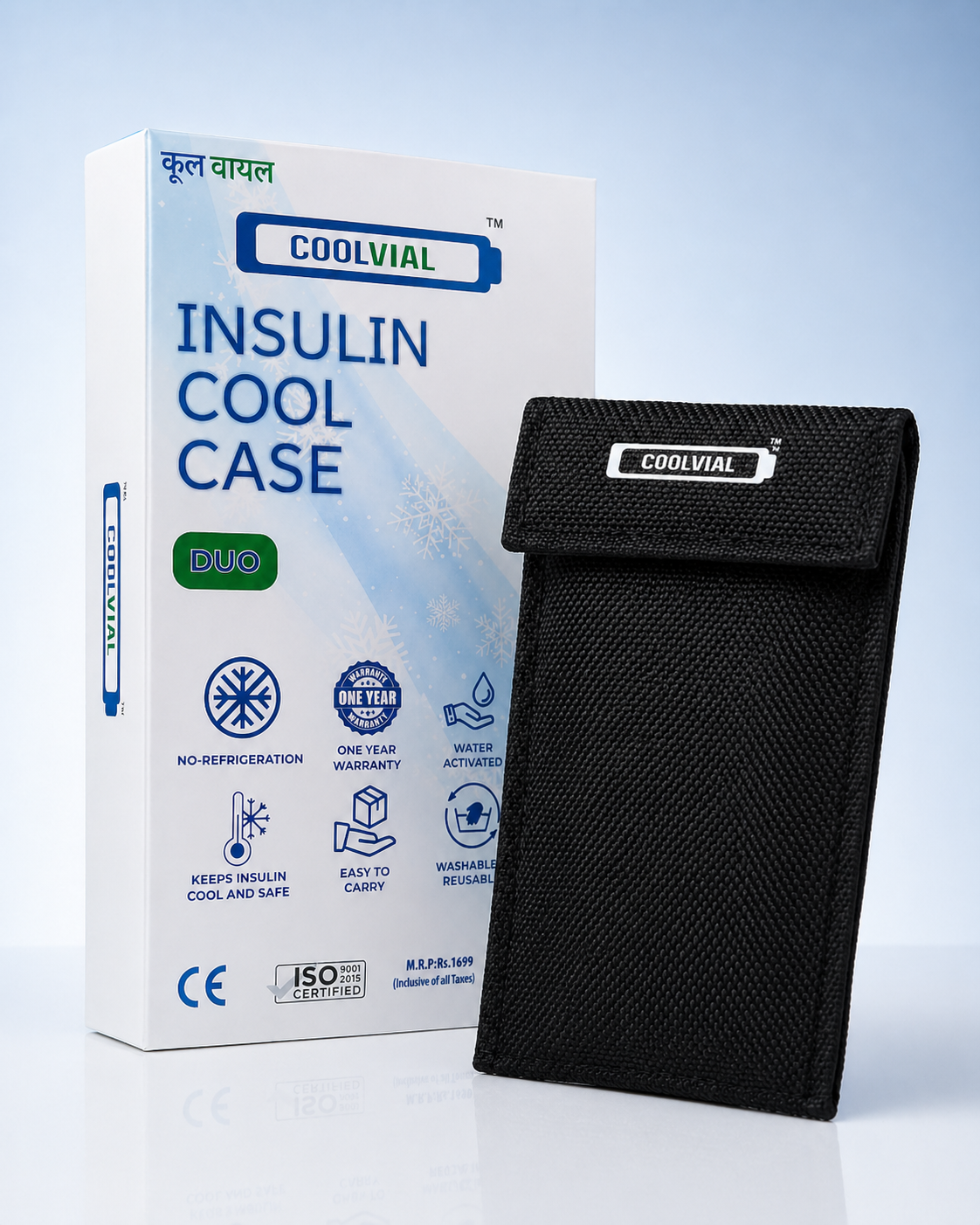
- Dedicated Insulin Cooling Case: A compact, water-activated case like the COOLVIAL Duo is ideal. It’s discreet, easy to use, and requires no electricity.
- Lunch Box Strategy: If carrying a lunch box, ensure it’s insulated and, if possible, include a small ice pack (though this requires frequent re-freezing).
- Educate Teachers/Peers: Inform school staff or close friends about your insulin needs and how it should be stored.
- Avoid Direct Sun: Never leave bags containing insulin near windows, in direct sunlight, or in hot cars during school trips.
- Emergency Kit: Always have a backup insulin pen and supplies, stored safely at home or in the school infirmary if allowed.
Office Professionals
Working in corporate parks along the Brahmaputra Riverfront or Umananda Island, or at major hospitals like Apollo Hospitals Guwahati (Lokhra) or Hayat Hospital (Lalmati), often involves long hours away from home.
- The Challenge: Office environments might have AC, but what about the commute, or if the AC fails? Lunch storage at offices can also be tricky.
- Optimal Office Storage:
- Personal Cooling Case: Carry your insulin in a reliable evaporative cooling case that provides 12-16 hours of protection. This is crucial for your daily commute with insulin.
- Office Refrigerator: If available, store your unopened insulin vials or pens in the office refrigerator (between 2-8°C). Ensure it’s clearly labelled and protected from freezing.
- Desk Storage: Opened insulin pens can be kept at room temperature (up to 25°C) for up to 28 days. However, in Guwahati’s climate, this “room temperature” is often exceeded. A cooling case keeps it within the safe range.
- Lunchtime: If you carry lunch, keep your insulin separate in its cooling case, not directly with warm food.
- Backup Plan: Consider having an extra pen stored at home or a local pharmacy like Apollo Pharmacy or MedPlus near your office for emergencies.
Your Morning Ritual: Preparing Insulin for the Day
A consistent morning prep ritual is your first line of defense against insulin degradation during your daily commute with insulin. This routine should take no more than 5 minutes but offers hours of protection.
Step-by-Step Morning Prep for Your Insulin:
- Activate Your Cooling Case: If you’re using an evaporative cooling case like the COOLVIAL Duo, simply immerse it in cold water for 5-10 minutes. The special crystals inside will absorb the water and create a cooling effect through evaporation. This is significantly easier than freezing gel packs, which require a freezer and can make insulin too cold.
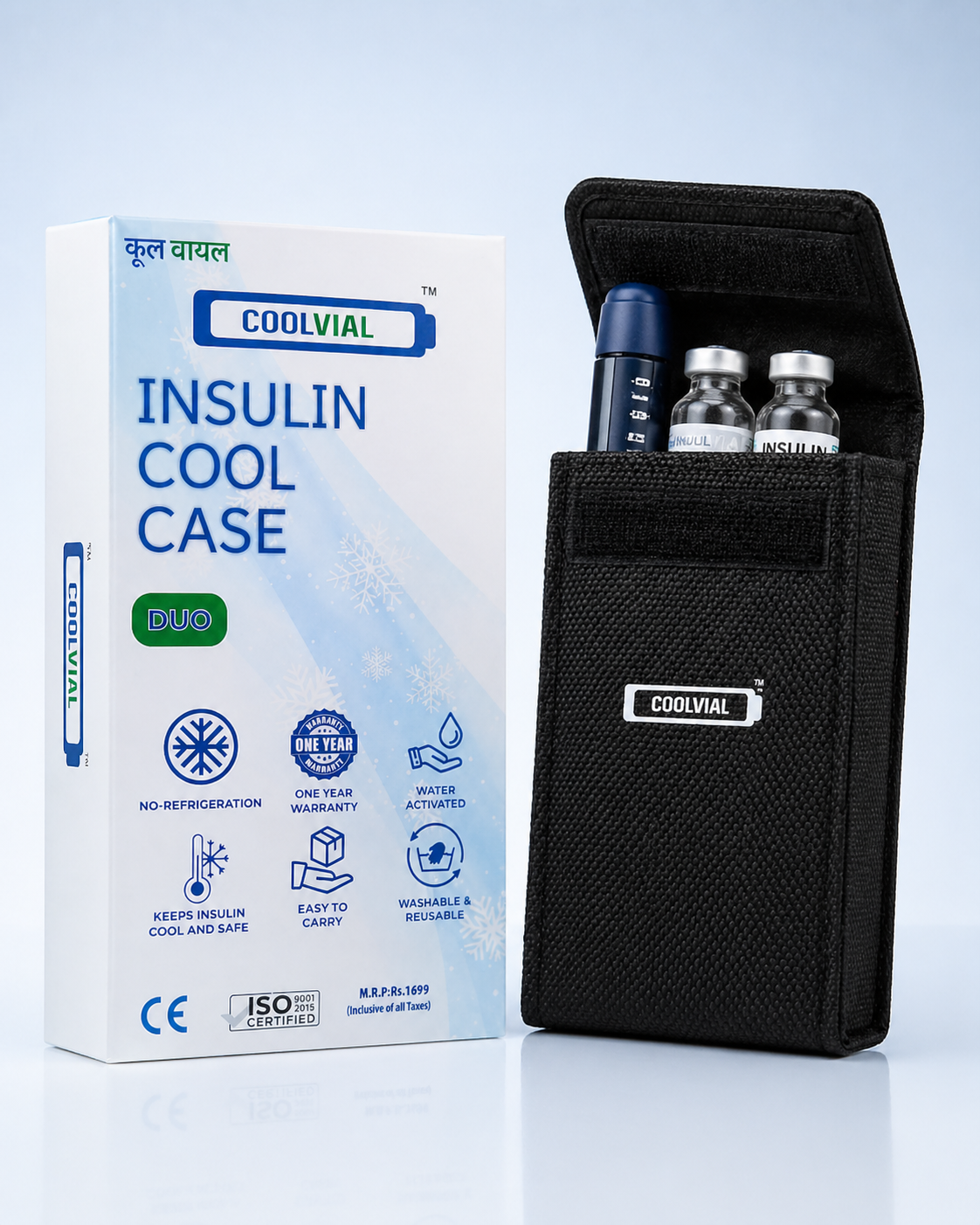
- Pack Your Insulin: Once activated, gently pat the case dry and place your insulin pens and/or vials inside. The COOLVIAL Duo is designed to hold 2 pens and 1 vial, making it perfect for a day’s supply.
- Check Your Supplies: Before leaving home, quickly verify you have all necessary items:
- Insulin pens/vials
- New needles
- Alcohol swabs
- Glucometer and test strips
- Fast-acting glucose source (e.g., glucose tablets, juice box)
- Medical ID card
- Choose Your Bag Wisely: Place your cooling case in a backpack or sling bag. Avoid tight spaces or direct contact with your body heat. Ensure the bag is not directly exposed to sunlight during your commute.
- Plan Your Route: If possible, opt for the shadiest side of the street while walking, or the side of the bus/auto away from direct sun. Even small choices can make a difference.
This simple routine ensures your insulin starts the day at an optimal temperature and remains protected throughout your journey, whether you’re heading to Gauhati Medical College Hospital for an appointment or to the bustling City Centre Mall for errands.
The Smart Solution: Investing in a Reliable Insulin Cooling Case
When it comes to protecting your insulin in Guwahati’s challenging climate, a reliable cooling case isn’t a luxury; it’s a necessity. Evaporative cooling cases, like the COOLVIAL Duo, offer a practical, electricity-free solution that’s perfect for the Indian environment.
Why Evaporative Cooling Cases are Ideal for Guwahati:
- No Electricity Required: This is a game-changer for daily commutes on buses, autos, or during power cuts, ensuring continuous cooling without reliance on external power sources.
- Maintains Safe Temperatures: These cases are designed to keep insulin within the safe range of 18-26°C, even when ambient temperatures are as high as 38-42°C, for extended periods (COOLVIAL Duo offers 12-16 hours).
- Reusable and Durable: Simply re-activate with water. They are built to last, offering a long-term solution.
- Portable and Discreet: Compact designs mean they fit easily into bags, making your daily commute with insulin hassle-free.
Comparing Cooling Case Options:
5 Essential Tips for Your Daily Commute With Insulin in Guwahati — Metro, Bus & Auto
48+ hours at 2-8°C. No electricity. CE certified. Free delivery across India.
Order on WhatsApp — ₹1,099🛒 Buy Now — ₹1,099While several options exist, understanding their features and value is important.
| Feature | COOLVIAL Duo | FRIO Classic (Comparable Size) | Outer Woods OW-12 (Comparable Size) |
|---|---|---|---|
| Cooling Method | Water-activated evaporative cooling | Water-activated evaporative cooling | Gel pack (requires freezing) |
| Cooling Duration | 12-16 hours | Up to 45 hours | 8-12 hours |
| Capacity | 2 pens + 1 vial | Varies by model; similar capacity available | 2 pens |
| Price (approx.) | Rs 1,099 with code COOLHEAL (MRP Rs 1,699) | ~Rs 1,900 | ~Rs 999 |
| Certifications | CE certified, ISO 9001:2015 | Varies by product/region | Typically none listed |
| Warranty | 1-year | Varies by product/region | Typically none listed |
| Made in India | Yes | No | Yes |
| Key Advantage for You | Affordable, Indian-made, certified, reliable 12-16 hr cooling for daily use. | Longer cooling duration, but higher price. | Lower cost, but requires freezer access daily. |
The COOLVIAL Duo strikes an excellent balance of affordability, reliability, and convenience, specifically designed for Indian climate conditions. Its 12-16 hour cooling duration is more than sufficient for even the longest daily commutes and office hours in Guwahati. For detailed information on proper insulin storage, refer to our comprehensive insulin storage tips.
Frequently Asked Questions (FAQ)
Q: How long can insulin be safely stored outside the refrigerator in Guwahati’s heat? A: Unopened insulin should always be refrigerated (2-8°C). Once opened or in use, most insulin types can be stored at room temperature (up to 25°C) for up to 28 days. However, in Guwahati’s peak summer, ambient temperatures often exceed 25°C, making a cooling case essential to keep it within the safe range for daily use.
Q: Can I use a regular ice pack to keep my insulin cool? A: While ice packs can provide cooling, they have drawbacks. They require freezing, can inadvertently freeze insulin if placed too close (which damages insulin irreversibly), and their cooling duration is often shorter than evaporative cases. Evaporative cooling cases maintain a steady, safe temperature without the risk of freezing.
Q: What happens if my insulin gets too hot during my commute? A: If insulin gets too hot (above 25-30°C for an extended period), it can degrade and lose its potency. This means it won’t lower your blood sugar effectively, leading to higher glucose levels. It’s crucial to discard any insulin suspected of being exposed to excessive heat and replace it.
Q: Is it safe to store insulin in my laptop bag or school backpack without a cooler? A: No, a regular laptop bag or school backpack offers no thermal protection. In Guwahati’s climate, temperatures inside these bags can quickly rise to dangerous levels, especially during a typical commute from Ganeshguri to Paltan Bazaar. Always use a dedicated insulin cooling case for protection.
Q: Where can I get emergency insulin supplies in Guwahati? A: In an emergency, you can obtain insulin from major pharmacies like Apollo Pharmacy, MedPlus, Frank Ross, or 1mg. For medical consultation, hospitals such as Apollo Hospitals Guwahati (Lokhra), Gauhati Medical College Hospital (GMCH), and Hayat Hospital (Lalmati) are reliable options. Always carry your prescription.
Q: What is the ideal temperature range for in-use insulin? A: Most manufacturers recommend storing in-use insulin at room temperature, ideally between 18°C and 25°C, for up to 28 days. Unopened insulin should be refrigerated between 2°C and 8°C. This range is critical for maintaining insulin’s stability and effectiveness.
Methodology Note
How We Researched This — This article is informed by current RSSDI (Research Society for the Study of Diabetes in India) guidelines for insulin storage, data from the ICMR-INDIAB study on diabetes prevalence across India (Source: ICMR.gov.in), local Guwahati hospital directories, and an understanding of the Apollo Pharmacy network and other major pharmacy chains in the city. Local climate data and commute realities were assessed based on typical conditions in a hot and humid tropical climate zone, with specific reference to Guwahati’s infrastructure and public transport. Temperature estimates for vehicles were based on general observations in similar Indian cities during peak summer, combined with expert understanding of heat retention in enclosed spaces. Specific local data, such as exact temperatures inside non-AC buses, are estimates based on climate models and common experience, and should be verified in real-time [Verify in 2026].
Conclusion: Embrace Smart Insulin Management in Guwahati
Managing diabetes in Guwahati, with its unique blend of tropical heat, heavy monsoons, and diverse transport options, requires a proactive and informed approach to insulin storage. Your daily commute with insulin doesn’t have to be a source of stress or risk. By understanding the local climate realities, choosing your transport wisely, and adopting a consistent morning prep ritual, you can ensure your insulin remains potent and effective.
Investing in a reliable, water-activated evaporative cooling case like the COOLVIAL Duo is one of the smartest decisions you can make. It offers peace of mind, knowing your life-saving medication is protected from Guwahati’s challenging temperatures, without the need for electricity or cumbersome ice packs. Make it an indispensable part of your daily diabetes care, just like you plan your meals or schedule your check-ups. For a broader understanding of living with diabetes in Guwahati, explore our Complete Diabetes Care Guide for Guwahati Residents — 2026 Edition, and for travel tips, see Travelling From Guwahati With Insulin — Airport, Station & Taxi Tips. And when you’re out and about, check our guide on Diabetic-Friendly Restaurants & Cafes in Guwahati — Where to Eat Safely.
Take control of your diabetes management today.
Order COOLVIAL Duo at Rs 1,099 with code COOLHEAL at coolvial.com or via WhatsApp wa.me/918766952300
Medical disclaimer: This article is for general information. Always consult your endocrinologist or diabetologist before changing insulin storage or dosing practices.