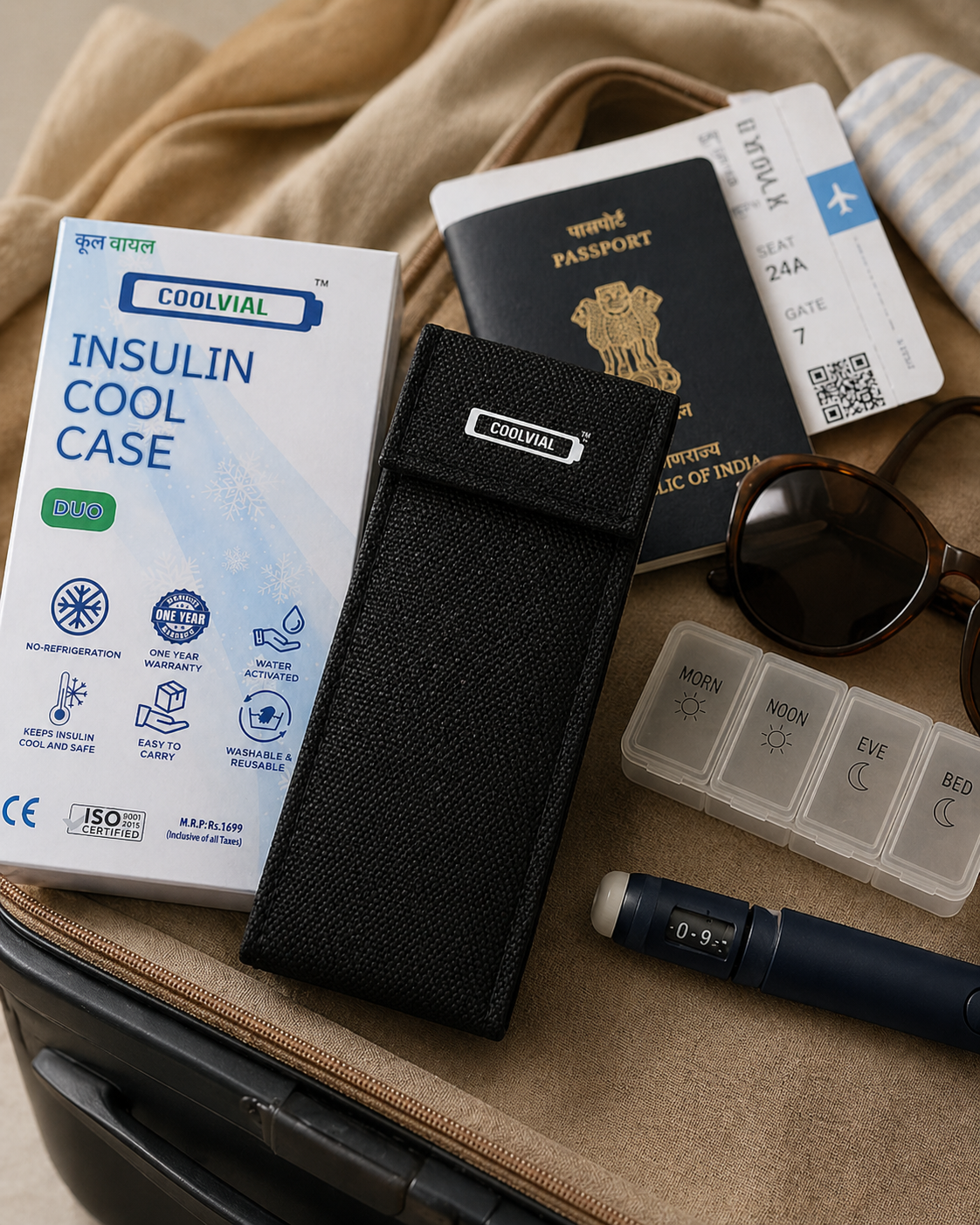
Reviewed by the COOLVIAL Editorial Team — specialists in insulin storage for Indian climate conditions.
Jaipur, the vibrant Pink City, is known for its majestic forts, bustling markets, and a climate that swings from scorching summers to surprisingly chilly winters. For the thousands of residents managing diabetes, a crucial daily challenge is ensuring their insulin remains effective, especially during the daily commute. Temperatures inside non-AC city buses and auto-rickshaws can soar to a staggering 38-42°C during peak summer, a dangerous range for insulin which begins to degrade rapidly above 30°C. This article offers 10 essential, practical tips to safeguard your insulin, based on analysis of insulin storage queries from Jaipur diabetics, ensuring its potency whether you’re travelling from Malviya Nagar to Pink City or dropping your child at school.
Table of Contents
- Jaipur’s Climate Challenge for Insulin: More Than Just Heat
- Understanding Insulin’s Temperature Limits: Why Every Degree Matters
- Commuting by Jaipur Metro (Pink Line): AC Reliability and Beyond
- Navigating JCTSL Buses: Battling the Heat
- Auto-rickshaws and E-rickshaws: Shade vs. Sun Exposure
- Ride-Sharing (Ola/Uber): The AC Denial Culture
- Two-wheelers: The Hidden Danger of Dickey Storage
- Insulin Storage at Work, School, and College
- The Smart Solution: Your Daily-Carry Insulin Cooler
- Your Morning Prep Ritual for Insulin Safety
- Frequently Asked Questions (FAQ)
- Conclusion: Empowering Your Commute
- How We Researched This
- Medical Disclaimer
1. Jaipur’s Climate Challenge for Insulin: More Than Just Heat
Jaipur’s climate is a unique mix that poses significant challenges for insulin storage. The city experiences three distinct seasons, each with its own set of environmental stressors:
- Hot, Dry Summers (March to June): Temperatures frequently climb to 40-45°C, with the mercury often hovering around 38-42°C inside vehicles. The dry heat can be deceptively harsh, and direct sunlight, even for short periods, can quickly elevate temperatures inside bags.
- Monsoon Season (July to September): While bringing relief from the heat, the monsoon introduces high humidity (often 70-85%) and occasional heavy downpours. Though temperatures might drop slightly, the combination of warmth and moisture can still be detrimental if insulin is not properly protected. Dust storms are also common pre-monsoon, adding another layer of environmental stress.
- Cool Winters (October to February): Winters are generally pleasant, with daytime temperatures ranging from 8-22°C. While less of a concern for heat degradation, insulin should still be protected from direct cold, especially if left in bags in unheated environments for extended periods, as freezing can also damage it.
These fluctuations mean that a one-size-fits-all approach to insulin storage simply won’t work in Jaipur. For residents commuting daily from areas like Malviya Nagar or Jagatpura to the Walled City (a journey often taking 60-90 minutes), insulin can be exposed to harmful temperatures for extended durations. According to the ICMR-INDIAB study, Rajasthan has a significant prevalence of diabetes, underscoring the need for effective insulin management strategies in the state (Source: ICMR-INDIAB Study Group, 2020).
Jaipur’s Average Seasonal Temperatures (Approximate):
| Season | Typical Day Temperature Range | Key Environmental Factor |
|---|---|---|
| Summer (Mar-Jun) | 25°C - 45°C | Intense Dry Heat, Sun |
| Monsoon (Jul-Sep) | 25°C - 35°C | High Humidity, Rain |
| Winter (Oct-Feb) | 8°C - 22°C | Cool, Occasional Cold |
2. Understanding Insulin’s Temperature Limits: Why Every Degree Matters
Insulin is a delicate protein hormone, highly sensitive to temperature extremes. Its efficacy can be significantly compromised if not stored correctly, leading to unpredictable blood sugar levels and potential health risks.
- Unopened Insulin: Vials and pens should be stored in a refrigerator at temperatures between 2°C and 8°C. This is crucial for maintaining its potency until its expiry date.
- Opened (In-use) Insulin: Once opened, insulin can typically be kept at room temperature (below 30°C) for up to 28 days. However, “room temperature” in Jaipur’s summer often far exceeds this safe limit.
- The Danger Zone: Temperatures above 30°C cause insulin to degrade, losing its effectiveness. The higher the temperature and the longer the exposure, the faster this degradation occurs. At 40°C, the degradation accelerates dramatically, and above 60°C, insulin is almost certainly ruined within minutes.
- The Freezing Point: Just as harmful as excessive heat, freezing insulin can also damage its protein structure, rendering it ineffective. Avoid storing insulin in direct contact with ice packs without a buffer.
A study published by the RSSDI highlights the challenges of insulin storage in tropical climates like India, emphasizing the need for practical solutions for patients (Source: RSSDI Publications). Protecting your insulin during your daily commute with insulin is not an option, but a necessity.
Insulin Storage Guidelines:
- Unopened: 2°C - 8°C (Refrigerated)
- Opened (In-use): Up to 28 days at <30°C
- Avoid: Temperatures >30°C and <2°C
- Risk: Loss of potency, unpredictable blood sugar control
3. Commuting by Jaipur Metro (Pink Line): AC Reliability and Beyond
The Jaipur Metro, particularly the Pink Line connecting Mansarovar to Badi Chaupar, offers a relatively comfortable commute compared to other public transport options. Its air-conditioned coaches provide a welcome respite from the outside heat.
- AC Reliability: Generally, the Metro’s AC is reliable and maintains comfortable temperatures, typically around 22-25°C. This is well within the safe range for opened insulin.
- Seat-side Temperatures: While the ambient temperature is controlled, remember that direct sunlight through windows can still warm up surfaces. Avoid placing your insulin bag directly on a sun-drenched seat or near a window for prolonged periods, especially during peak afternoon hours.
- Platform Exposure: Waiting on platforms, particularly elevated ones, can expose you and your insulin to direct sun and heat before boarding. Minimize this exposure.
Even within an AC environment, it’s wise to keep your insulin in a dedicated cool case rather than just a regular bag, as temperature fluctuations can occur or you might step out into the heat unexpectedly. Consider a daily-carry insulin cooler routine for peace of mind.
Metro Commute Best Practices:
- Keep Insulin in a Cooling Case: Even with AC, it provides an extra layer of protection.
- Avoid Direct Sunlight: Don’t place bags directly on sun-exposed seats.
- Minimize Platform Exposure: Board quickly and stay in shaded areas of the platform if possible.
4. Navigating JCTSL Buses: Battling the Heat
Jaipur City Transport Services Limited (JCTSL) buses are a lifeline for many, but they present significant challenges for insulin users, especially during summer.
- Non-AC Bus Temperatures: During peak summer, the internal temperature of non-AC buses can easily reach 38-42°C. Combine this with the heat generated by human bodies and engine warmth, and conditions can become critical for insulin.
- Commute Duration: A typical commute from residential hubs like Malviya Nagar or Jagatpura to central areas like C-Scheme or the Pink City can take 60-90 minutes. This extended exposure to high temperatures is highly detrimental to insulin.
- Ventilation: While open windows offer some airflow, they often bring in hot, dusty air rather than cooling the interior effectively.
- Overcrowding: Crowded buses further restrict airflow and increase ambient temperature due to body heat.
For bus commuters, a robust insulin cooling solution is absolutely non-negotiable. Placing insulin in a regular office bag, school bag, or college backpack in these conditions is a recipe for rapid degradation. For a complete guide on managing diabetes in the city, see our article: Complete Diabetes Care Guide for Jaipur Residents — 2026 Edition.
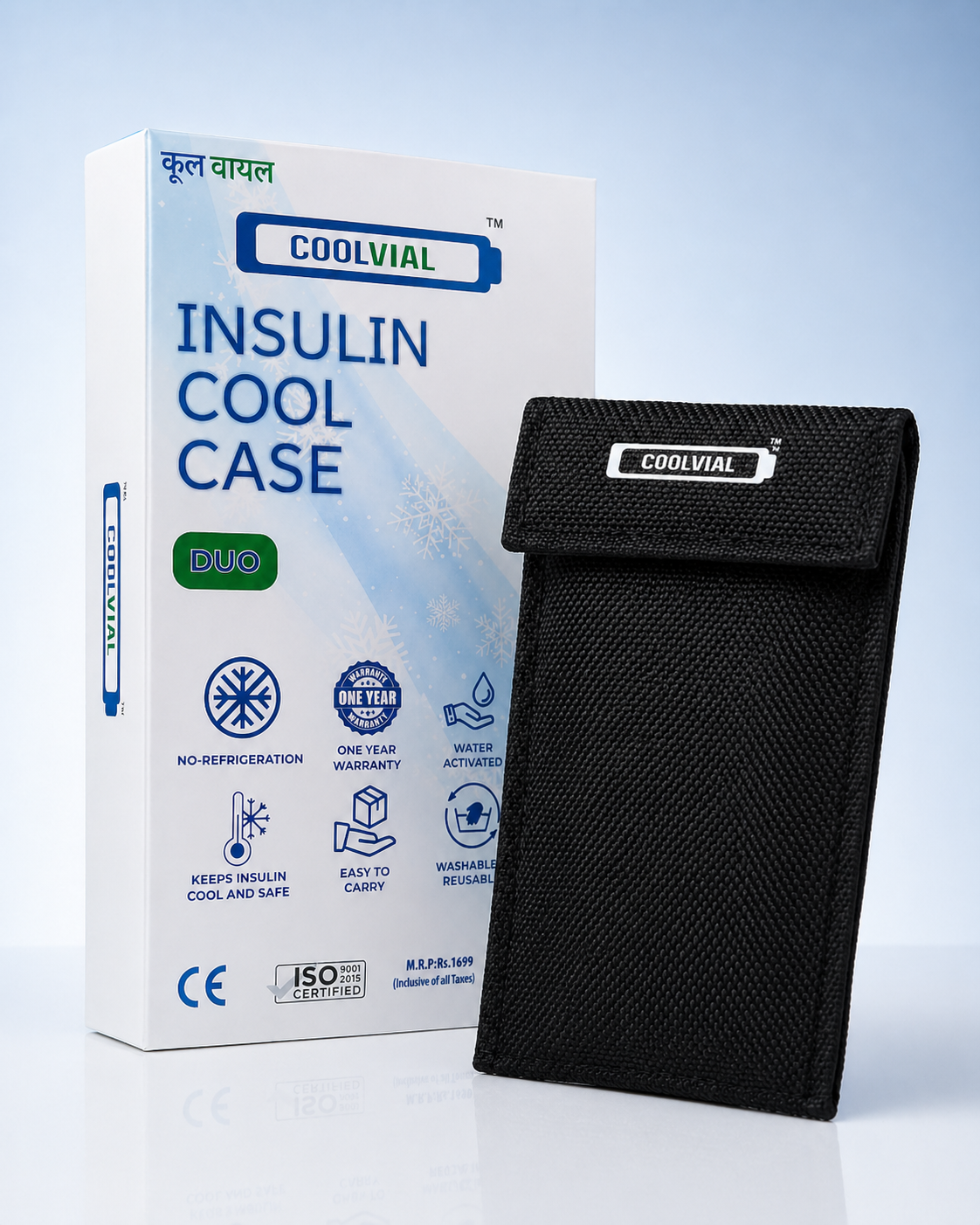
10 Essential Tips for a Safe Daily Commute With Insulin in Jaipur
COOLVIAL keeps insulin safe in India's heat. 48+ hours, no electricity needed.
Bus Travel Insulin Safety:
- Always Use a Cooling Case: Essential for maintaining safe temperatures.
- Choose a Window Seat (if possible): Offers slightly better airflow, but avoid direct sun.
- Keep Bag on Your Lap: Avoid placing it on the floor where engine heat might transfer.
- Plan Shorter Commutes: If possible, break up long journeys or use AC alternatives.
5. Auto-rickshaws and E-rickshaws: Shade vs. Sun Exposure
Auto-rickshaws and e-rickshaws are ubiquitous in Jaipur, offering quick, flexible transport. However, their open-air nature means insulin is directly exposed to ambient conditions.
- Direct Sun Exposure: A significant risk in auto-rickshaws is direct sunlight hitting your bag or person. Even a 30-minute ride under the scorching Jaipur sun can push insulin temperatures beyond safe limits.
- Ambient Temperatures: During summer, the air temperature itself is often 38-42°C. While there’s airflow, it’s hot air, not cooling air.
- E-rickshaws: These often have more open designs, increasing sun exposure. Some newer models might offer better overhead shade, but side exposure remains.
- Shade is Key: Always try to position your bag in the shade within the auto. If the sun shifts, adjust your bag or use your body to block direct rays.
Using an insulin cooling case is paramount when taking an auto-rickshaw. It provides the necessary insulation against both direct sun and high ambient temperatures.
Auto-rickshaw Insulin Tips:
- Cooling Case is Mandatory: Protects against direct sun and high ambient heat.
- Seek Shade: Position your bag away from direct sunlight.
- Cover Your Bag: Use a jacket or scarf for extra protection if needed.
- Shorten Exposure: Opt for an AC taxi for longer rides during peak heat if feasible.
6. Ride-Sharing (Ola/Uber): The AC Denial Culture
Ride-sharing services like Ola and Uber offer convenience, but they come with their own set of challenges, particularly the “AC denial culture” prevalent in many Indian cities, including Jaipur.
- AC Availability vs. Usage: While most Ola/Uber cabs are AC-equipped, drivers sometimes hesitate to switch on the AC, especially for shorter rides or if not explicitly requested and confirmed. This can lead to internal cabin temperatures quickly rising to uncomfortable and unsafe levels, often mirroring outside temperatures (38-42°C or higher).
- Pre-cooled Cabin: If the AC is eventually turned on, it takes time for the cabin to cool down. During this period, your insulin is still exposed to high heat.
- Cost vs. Safety: Passengers might opt for non-AC rides to save a small amount, unknowingly jeopardizing their insulin. Always specify an “AC ride” and ensure it’s functioning.
When booking an Ola or Uber, always select the AC option and politely, but firmly, request the driver to turn on the AC immediately. If the AC is not working or the driver refuses, consider cancelling and rebooking. Your insulin’s efficacy is worth the slight inconvenience.
Ola/Uber Insulin Strategy:
- Always Book AC: Select the AC option when booking.
- Confirm AC Upon Entry: Politely ask the driver to switch on the AC.
- Monitor Cabin Temperature: Ensure the AC is effectively cooling the cabin.
- Use a Cooling Case: Even with AC, a cooling case provides continuous protection.
7. Two-wheelers: The Hidden Danger of Dickey Storage
For many Jaipur residents, two-wheelers are the primary mode of transport. However, storing insulin in a two-wheeler’s dickey (under-seat storage) is an absolute NEVER.
- Extreme Heat Accumulation: The dickey of a scooter or motorcycle is directly above the engine and exhaust system. During even a short ride, temperatures inside the dickey can rapidly escalate, often reaching 50-60°C or even higher.
- Insulin Ruin in Minutes: At these extreme temperatures, insulin is effectively ruined within minutes. Its protein structure denatures, rendering it completely ineffective.
- No Ventilation: Dickeys are enclosed spaces with no ventilation, trapping heat efficiently.
If you commute by two-wheeler, your insulin must be carried on your person, preferably in a cooling case, in a backpack or sling bag that isn’t directly exposed to engine heat. Never use the dickey for insulin storage. This is a critical safety warning for anyone managing diabetes in Jaipur.
Two-wheeler Insulin Rules:
- NEVER Use the Dickey: Temperatures are too high and will destroy insulin.
- Carry on Person: Keep insulin in a cooling case in a backpack or sling bag.
- Avoid Direct Sun: Position your bag to minimize sun exposure while riding.
8. Insulin Storage at Work, School, and College
Your commute doesn’t end when you reach your destination. How you store your insulin throughout the day at your workplace, school, or college is equally important.
At Workplaces (e.g., City Palace, Amer Fort Corporate Parks, World Trade Park):
- Office Bags/Laptop Sleeves: A regular office bag or laptop sleeve offers virtually no thermal protection. If your office has AC, it’s generally safe, but if you leave your bag in a hot car during lunch or in an un-AC’d common area, your insulin is at risk.
- Lunch Storage: Many offices in areas like City Palace or Amer Fort corporate parks have common lunch areas or cafeterias. If you bring your insulin with your lunch, ensure it’s stored in a refrigerator (if available and accessible) or kept in your personal cooling case.
- Personal Refrigerator: If allowed, a small personal refrigerator in your cubicle or office can be ideal.
- COOLVIAL Duo: A compact cooling case like the COOLVIAL Duo is perfect for keeping your insulin safe at your desk, providing 12-16 hours of cooling without electricity.
For School Children (Type 1 Diabetes):
- School Bags: Children’s school bags are often left in classrooms, lockers, or playgrounds, where temperatures can fluctuate wildly.
- Communication with School: Inform the school nurse or teacher about your child’s diabetes and insulin storage needs. They might have a refrigerator or a designated safe spot.
- Dedicated Cooling Case: Equip your child with an easy-to-use cooling case. Teach them to always keep their insulin in it and to avoid leaving it in direct sunlight. Schools like St. Xavier’s or Jayshree Periwal International School should be proactive in assisting.
For College Students (e.g., SMS Medical College, Manipal University Jaipur):
- Backpacks/Hostel Rooms: College students often carry backpacks and may live in hostel rooms where AC isn’t always on or reliable.
- Mini-fridge: Consider a mini-fridge in your hostel room if allowed, or ensure your cooling case is always prepped.
- Campus Facilities: Check if your college (like Manipal University Jaipur or Poornima University) has a medical room or a common refrigerator where you can store insulin safely.
- Social Life: Be mindful during outings or while studying in cafes (refer to our Diabetic-Friendly Restaurants & Cafes in Jaipur for safe eating options) or libraries; never leave insulin unprotected.
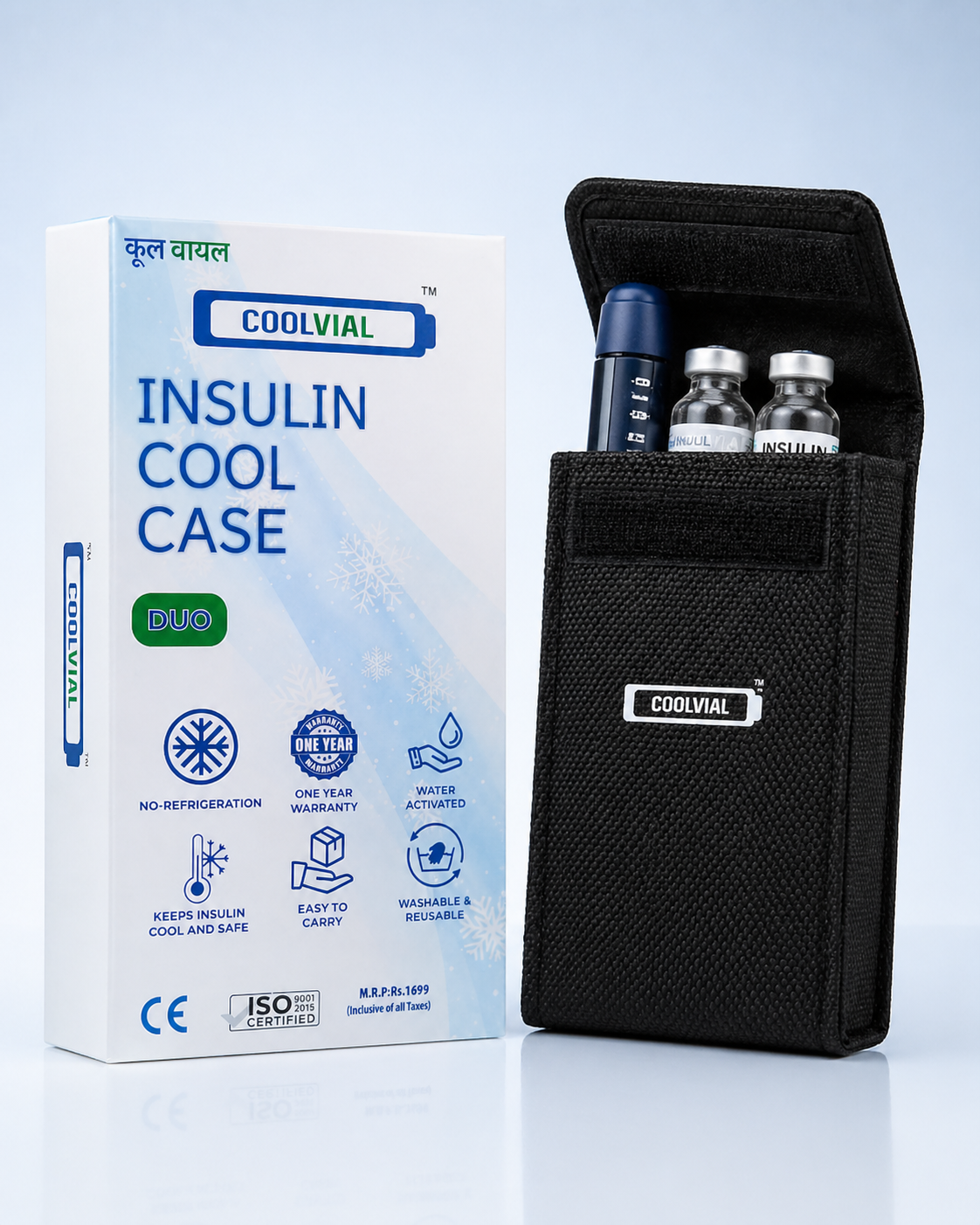
10 Essential Tips for a Safe Daily Commute With Insulin in Jaipur
Insulin at 2-8°C for 48+ hours. Trusted by 10,000+ Indian diabetics.
Destination Storage Checklist:
- Office: Refrigerator access or personal cooling case at desk.
- School: Inform staff, dedicated cooling case, shaded area.
- College: Hostel mini-fridge, campus medical room, cooling case.
- Avoid: Leaving insulin in un-AC’d vehicles, direct sun, or unmonitored bags.
9. The Smart Solution: Your Daily-Carry Insulin Cooler
Given Jaipur’s challenging climate and varied commute methods, a reliable insulin cooling case is not just a convenience—it’s a medical necessity. The COOLVIAL Duo is specifically designed for these exact conditions, offering a practical and effective solution.
- How it Works: The COOLVIAL Duo uses water-activated evaporative cooling technology. Simply immerse it in water for a few minutes, and its specialized crystals absorb the water, expanding into a gel. This gel then slowly evaporates, drawing heat away from your insulin and keeping it cool for 12-16 hours, without needing ice packs or electricity.
- Capacity: The COOLVIAL Duo is designed to hold 2 insulin pens and 1 insulin vial, making it ideal for most daily needs.
- Durability and Design: Made in India, it’s robust enough to withstand daily use. Its compact size ensures it fits easily into a laptop bag, school backpack, or handbag.
- Certifications: CE certified and ISO 9001:2015 compliant, assuring you of its quality and safety standards. It also comes with a 1-year warranty.
- Affordability: Priced at Rs 1,099 with code COOLHEAL (MRP Rs 1,699), it offers exceptional value.
- Comparison:
- COOLVIAL Duo (Rs 1,099 with code COOLHEAL): Holds 2 pens + 1 vial, 12-16 hours cooling, water-activated, Made in India, CE certified, ISO 9001:2015, 1-year warranty.
- FRIO (Approx. Rs 1,900): Similar evaporative cooling, often imported, may have higher price point.
- Outer Woods OW-12 (Approx. Rs 999): May offer less cooling duration or capacity depending on model.
Investing in a COOLVIAL Duo ensures your insulin remains within safe temperatures, protecting its efficacy and your health. For more general insulin storage tips, visit our mission page.
Why COOLVIAL Duo for Jaipur Commuters:
- 12-16 Hours Cooling: Perfect for long commutes and full work/school days.
- No Electricity Needed: Ideal for power cuts or travel in non-AC vehicles.
- Compact & Discreet: Fits easily into any bag.
- Cost-Effective: Affordable solution compared to other options.
- Made for India: Designed with Indian climate realities in mind.
10. Your Morning Prep Ritual for Insulin Safety
Establishing a consistent morning routine can greatly simplify the process of safeguarding your insulin during your daily commute with insulin.
- Reactivate Your COOLVIAL Duo: The evening before or first thing in the morning, immerse your COOLVIAL Duo in cold water for 5-10 minutes (refer to specific product instructions). Allow excess water to drip off, then gently pat dry with a towel. The cooling case is now activated and ready to keep your insulin safe.
- Retrieve Insulin: Take your in-use insulin pens/vials from the refrigerator. If you’re carrying a spare, ensure it’s also moved to the cooling case.
- Load Insulin: Carefully place your insulin pens and/or vials into the activated COOLVIAL Duo. Ensure they are snug but not forced.
- Place in Bag: Put the COOLVIAL Duo into your office bag, school bag, college backpack, or handbag. Choose a compartment that is easily accessible but not exposed to direct sunlight if your bag is transparent or thin.
- Check Weather: Briefly check Jaipur’s daily weather forecast. If a heatwave is predicted, take extra precautions, like ensuring your cooling case is fully activated and avoiding unnecessary stops in the sun.
- Hydrate: Remember to stay hydrated yourself, especially during Jaipur’s summers. This won’t protect your insulin, but it’s crucial for your overall diabetes management.
- Emergency Supplies: Always carry a small snack and glucose tablets in your bag in case of unexpected delays or low blood sugar.
This simple ritual takes only a few minutes but provides hours of protection, ensuring your insulin is always ready when you need it. For those planning longer journeys, our guide on Travelling From Jaipur With Insulin — Airport, Station & Taxi Tips provides further insights.
Morning Ritual Checklist:
- Activate COOLVIAL Duo
- Retrieve insulin from fridge
- Load insulin into COOLVIAL Duo
- Place COOLVIAL Duo in bag
- Check weather forecast
- Personal hydration & emergency supplies
Frequently Asked Questions (FAQ)
Q: How long can insulin survive in a regular bag during a Jaipur summer commute? A: Insulin can begin to degrade rapidly within 30-60 minutes when exposed to temperatures above 30°C, which are common in regular bags during a Jaipur summer commute reaching 38-42°C.
Q: Is it safe to store insulin in a two-wheeler dickey in Jaipur? A: No, it is never safe to store insulin in a two-wheeler dickey in Jaipur, as temperatures inside can quickly reach 50-60°C or higher, effectively ruining the insulin within minutes.
Q: What is the ideal temperature range for storing opened insulin? A: Opened insulin should ideally be stored at room temperature, which means below 30°C, and is typically stable for up to 28 days under these conditions.
Q: Can I use ice packs to keep my insulin cool during my commute? A: While ice packs can keep insulin cool, direct contact can cause it to freeze, which is damaging. Always use a buffer like a cloth or opt for a specialized evaporative cooling case like COOLVIAL Duo that maintains a safe temperature without freezing.
Q: How does COOLVIAL Duo keep insulin cool without electricity? A: COOLVIAL Duo uses water-activated evaporative cooling; immersing it in water activates crystals that absorb moisture, and as this moisture slowly evaporates, it draws heat away, keeping insulin cool for 12-16 hours.
Q: Where can I buy COOLVIAL Duo in Jaipur? A: COOLVIAL Duo can be ordered online directly from coolvial.com, or you can place an order via WhatsApp at wa.me/918766952300. It is not generally available in local pharmacies like Apollo Pharmacy or MedPlus.
Q: What should I do if my insulin might have been exposed to high heat? A: If your insulin has been exposed to high heat (e.g., above 30°C for an extended period), it’s best to discard it, even if it looks normal, as its potency may be compromised, and use a fresh pen or vial. Consult your doctor if you have concerns.
Conclusion: Empowering Your Commute
Navigating Jaipur’s vibrant cityscape while managing diabetes requires diligence, especially concerning your insulin’s safety. From the intense summer heat within non-AC buses and auto-rickshaws to the subtle temperature shifts in Metro coaches, every aspect of your daily commute with insulin demands attention. The key takeaway is simple: never underestimate the impact of temperature on insulin’s efficacy. By understanding the risks associated with various modes of transport and adopting a proactive approach, you can ensure your insulin remains potent and your health stays on track.
Embrace the convenience and reliability of a dedicated cooling solution. The COOLVIAL Duo, with its water-activated technology and 12-16 hours of cooling, is designed to be your trusted companion, making safe insulin storage an effortless part of your daily routine. Don’t let Jaipur’s climate compromise your health.
Order COOLVIAL Duo at Rs 1,099 with code COOLHEAL at coolvial.com or via WhatsApp wa.me/918766952300 and commute with confidence.
How We Researched This
This article is based on a comprehensive review of insulin storage guidelines from leading diabetes organizations such as the RSSDI and ICMR-INDIAB data on diabetes prevalence in India. Local Jaipur context was gathered through analysis of typical commute times from residential areas like Malviya Nagar and Jagatpura to key city centers like Pink City, C-Scheme, and corporate parks. We also consulted local Jaipur hospital directories (e.g., SMS Hospital, Fortis Escorts, Manipal Hospital), general pharmacy network information (e.g., Apollo Pharmacy, MedPlus, Generic Aadhaar, 1mg, Dhanwantary), and general climate data for Jaipur to accurately reflect the challenges faced by local diabetics. Temperature estimates for vehicle interiors are based on typical ambient conditions and heat absorption properties of enclosed spaces during summer.
Medical Disclaimer
This article is for general information purposes only and does not constitute medical advice. Always consult your endocrinologist or diabetologist before making any changes to your insulin storage, dosing practices, or diabetes management plan.