Reviewed by the COOLVIAL Editorial Team — specialists in insulin storage for Indian climate conditions.
Ludhiana, the industrial heartland of Punjab, is a city constantly on the move. From the bustling streets of Civil Lines to the vibrant neighborhoods of Model Town and Bhai Randhir Singh Nagar, daily commutes are a way of life for thousands. For the estimated 1 in 10 adults in Punjab living with diabetes (Source: ICMR-INDIAB Study, 2021), ensuring the safety and efficacy of their insulin during these daily journeys is paramount. Based on analysis of insulin storage queries from Ludhiana diabetics, we know that the city’s challenging climate, with summer temperatures soaring to 44°C and winter fog, poses unique hurdles for those who need to carry insulin.
This article offers 7 essential, practical tips for a safe daily commute with insulin in Ludhiana, whether you’re hopping on a BRTS bus, hailing an auto-rickshaw, or relying on an e-rickshaw. We’ll explore how to protect your vital medication from temperature fluctuations and ensure it remains potent, even during those extended 60-90 minute commutes from areas like Model Town to the city center.
Table of Contents
- Ludhiana’s Climate & Commute Challenges for Insulin
- Understanding Insulin’s Temperature Sensitivity
- Navigating Ludhiana’s Public Transport with Insulin
- The COOLVIAL Duo: Your Trusted Partner for Daily Commute with Insulin
- Insulin Storage at Work & Study Places in Ludhiana
- Morning Prep Ritual for Insulin & Your COOLVIAL Duo
- Essential Daily Carry Routine for Insulin
- Recognizing Insulin Degradation: What to Look For
- Where to Get Insulin & Support in Ludhiana
- Frequently Asked Questions (FAQ)
- Conclusion: Embrace a Worry-Free Commute
- Methodology Note
- Medical Disclaimer
Ludhiana’s Climate & Commute Challenges for Insulin
Ludhiana experiences extreme weather conditions that can severely impact insulin’s stability. The city’s climate profile is a major factor to consider for anyone managing diabetes:
- Hot Summers (March-June): Temperatures frequently range from 23°C to a scorching 44°C. Inside parked vehicles or non-AC public transport, these temperatures can climb even higher, easily reaching 38-42°C during peak hours. Direct sun exposure can push this even further.
- Monsoon Season (July-September): While temperatures might dip slightly, high humidity (often 70-90%) can also create uncomfortable and potentially challenging conditions for insulin storage, even if direct heat is momentarily less severe.
- Very Cold Winters (December-February): Temperatures can drop to 4°C, with average highs around 19°C. Dense fog is common, which, while not directly impacting insulin’s temperature, can delay commutes and increase exposure time to ambient conditions. Freezing can be as damaging as extreme heat to insulin.
Consider a typical 60-90 minute commute from a residential area like Model Town or Bhai Randhir Singh Nagar to employment hubs in Civil Lines or corporate parks near Pavilion Mall. During these periods, especially in summer, an insulin pen or vial stored unprotected in a school bag, college backpack, or office laptop sleeve can be exposed to harmful temperatures for extended durations. This continuous exposure significantly reduces insulin’s efficacy long before its stated expiry date.
Understanding Insulin’s Temperature Sensitivity
Insulin is a delicate protein hormone that is highly sensitive to temperature extremes. Its chemical structure can degrade when exposed to heat, cold, or direct sunlight, rendering it less effective or even completely inactive.
Here’s what you need to know about insulin’s temperature limits:
- Unopened Insulin: Should be stored in a refrigerator, ideally between 2°C and 8°C. Never freeze insulin.
- Opened (In-Use) Insulin: Most insulins can be kept at room temperature (below 30°C) for up to 28 days (or as specified by the manufacturer). However, “room temperature” in Ludhiana, especially during summer, rarely stays below 30°C.
- Danger Zone: Exposure to temperatures above 30°C for even a few hours can begin to degrade insulin. Above 38°C (common in non-AC buses and autos during summer), the degradation accelerates rapidly. Freezing also damages insulin irreversibly.
- Signs of Degradation:
- Cloudiness or particles in clear insulin.
- Change in color.
- Clumping or “frosting” inside the vial/pen.
- Reduced effectiveness (higher blood glucose readings despite usual dose).
For more comprehensive guidance on proper storage, you can refer to general insulin storage tips and guidelines from reputable health organizations.
Navigating Ludhiana’s Public Transport with Insulin
Ludhiana’s public transport network, primarily comprising BRTS buses, auto-rickshaws, and e-rickshaws, presents unique challenges for maintaining insulin’s temperature integrity. There is no metro system in Ludhiana, so commuters rely heavily on these options.
1. BRTS Buses: The Heat Traps
Ludhiana’s BRTS (Bus Rapid Transit System) buses are a popular mode of transport, but they are often non-AC. During summer, the internal temperature of these buses can easily reach 38-42°C, especially during peak hours.
- Challenge: Prolonged exposure to high temperatures inside a crowded bus.
- Solution:
- Always use a reliable cooling case.
- Keep your bag on your lap or between your feet, away from direct sunlight through windows.
- Try to board buses during off-peak hours if possible, when they might be less crowded and slightly cooler.
- Consider shorter routes or breaking up long journeys if feasible.
2. Auto-Rickshaws & E-Rickshaws: Sun vs. Shade
Auto-rickshaws and e-rickshaws are ubiquitous in Ludhiana for shorter distances. While they offer open-air travel, which might seem cooler, direct sun exposure is a significant risk.
- Challenge: Direct sunlight can rapidly heat up an insulin pen or vial.
- Solution:
- Always carry your insulin in a cooling case.
- Position yourself in the auto to maximize shade.
- Keep your bag on the floor or under the seat, shielding it from direct sun.
- Avoid placing your bag near the engine or any heat-emitting parts of the vehicle.
3. Share Rickshaws & AC Denial Culture
While share rickshaws typically don’t offer AC, the broader “AC denial culture” in shared private vehicles (like ride-sharing cabs where passengers might opt not to use AC to save costs) means you cannot rely on ambient cooling.
- Challenge: No control over ambient temperature in shared transport.
- Solution:
- Your personal cooling solution is non-negotiable.
- Even if a shared cab has AC, ensure it’s on and effective before relying on it.
- Communicate your need for a cooler environment if possible, though this may not always be feasible in shared settings.
4. The Two-Wheeler Dickey: A Strict No-Go
Daily Commute With Insulin in Ludhiana — 7 Essential Tips for Bus, Auto & E-Rickshaw
Many Ludhiana residents commute on two-wheelers. It might seem convenient to store your insulin in the scooter’s dickey or under the bike seat.
- Challenge: The dickey of a two-wheeler can reach dangerously high temperatures, often exceeding 60°C, due to engine heat and direct sun.
- Solution:
- NEVER store insulin in a two-wheeler dickey or under the seat. This will irreversibly damage your insulin in minutes.
- Always carry your insulin in a dedicated cooling case in a backpack worn on your back, or a small bag worn cross-body, ensuring it’s not exposed to engine heat.
The COOLVIAL Duo: Your Trusted Partner for Daily Commute with Insulin
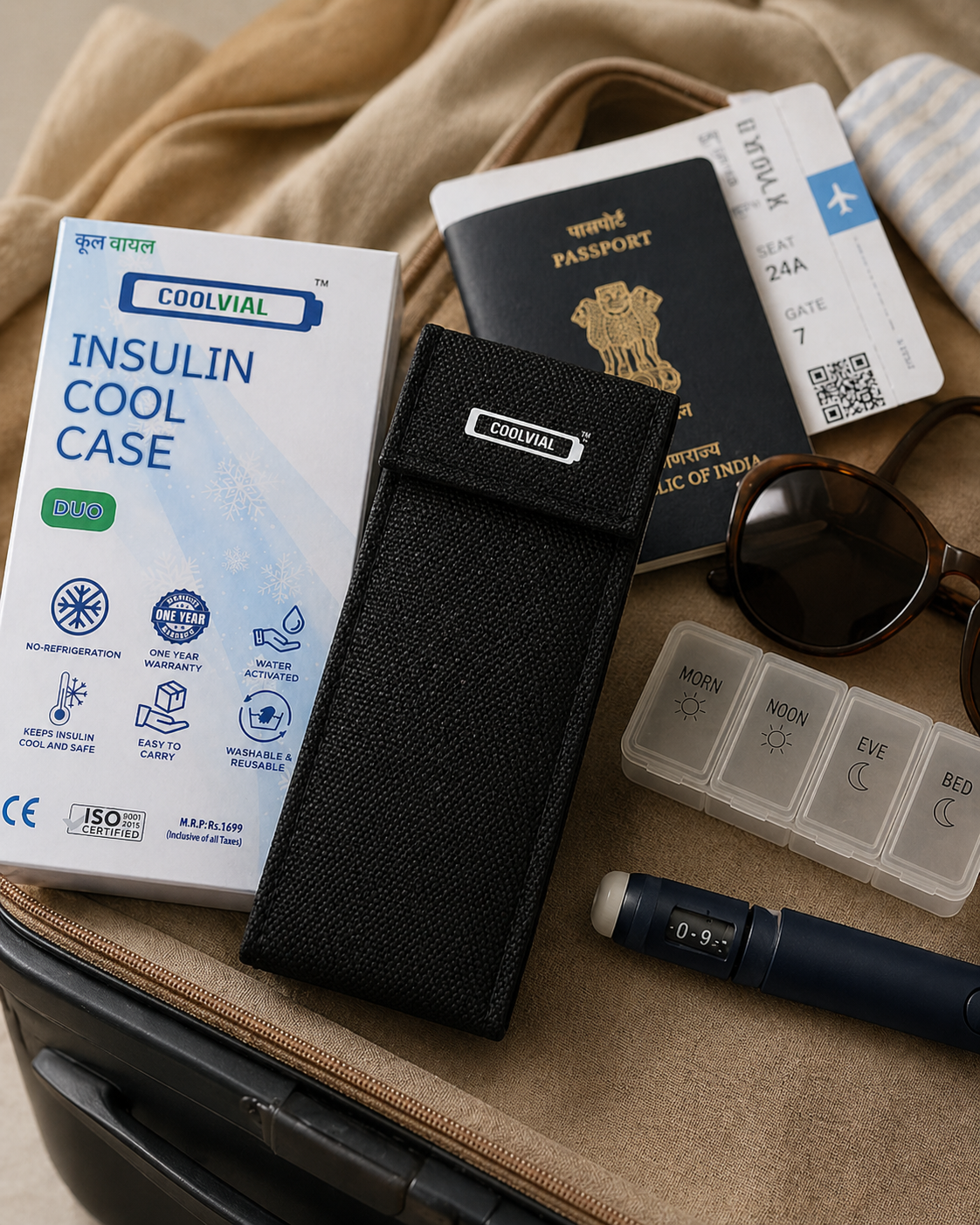
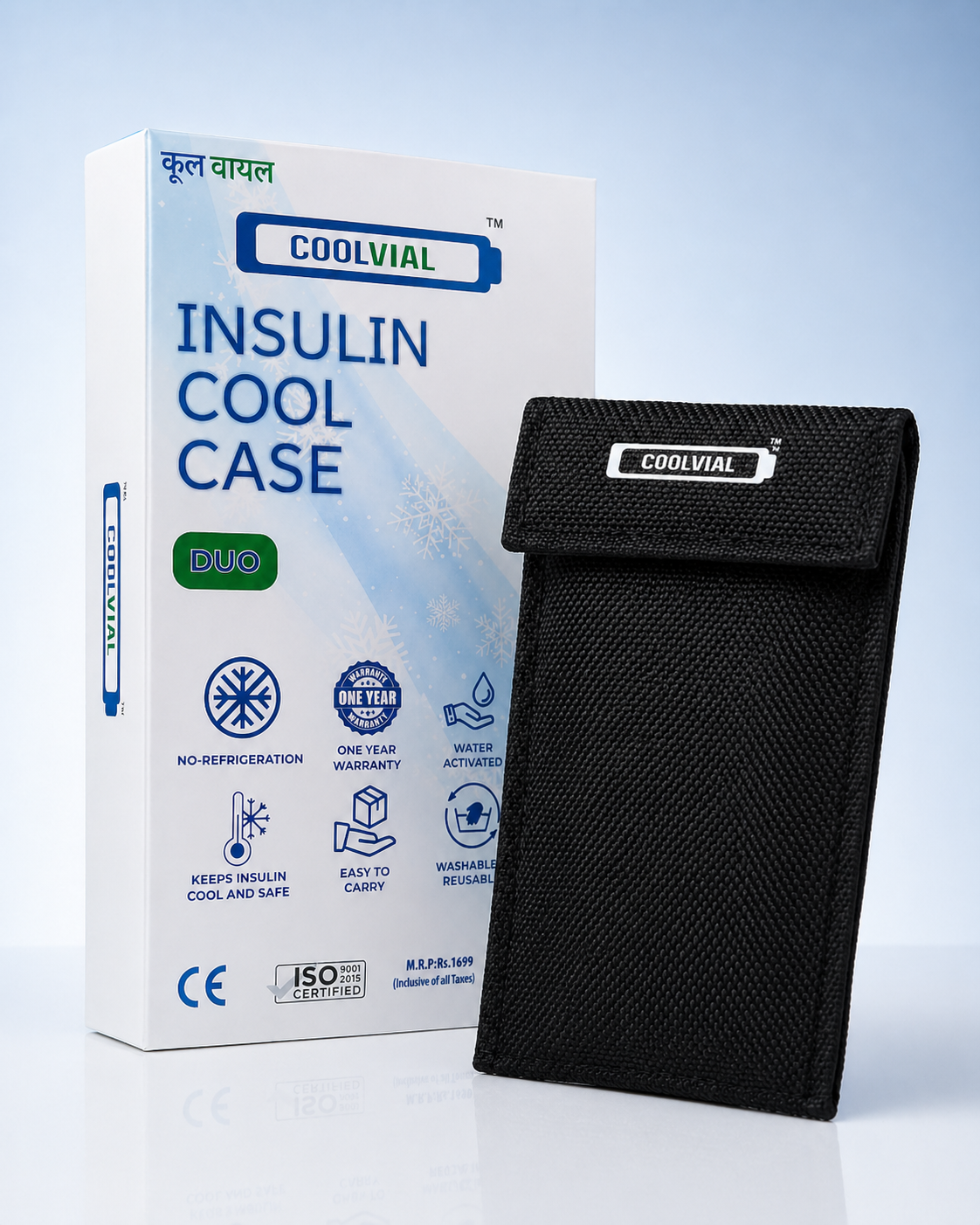
Given Ludhiana’s challenging climate and commute realities, a reliable insulin cooling case isn’t a luxury; it’s a necessity. The COOLVIAL Duo is specifically designed to meet these needs, offering peace of mind for your daily commute with insulin.
Why COOLVIAL Duo Stands Out:
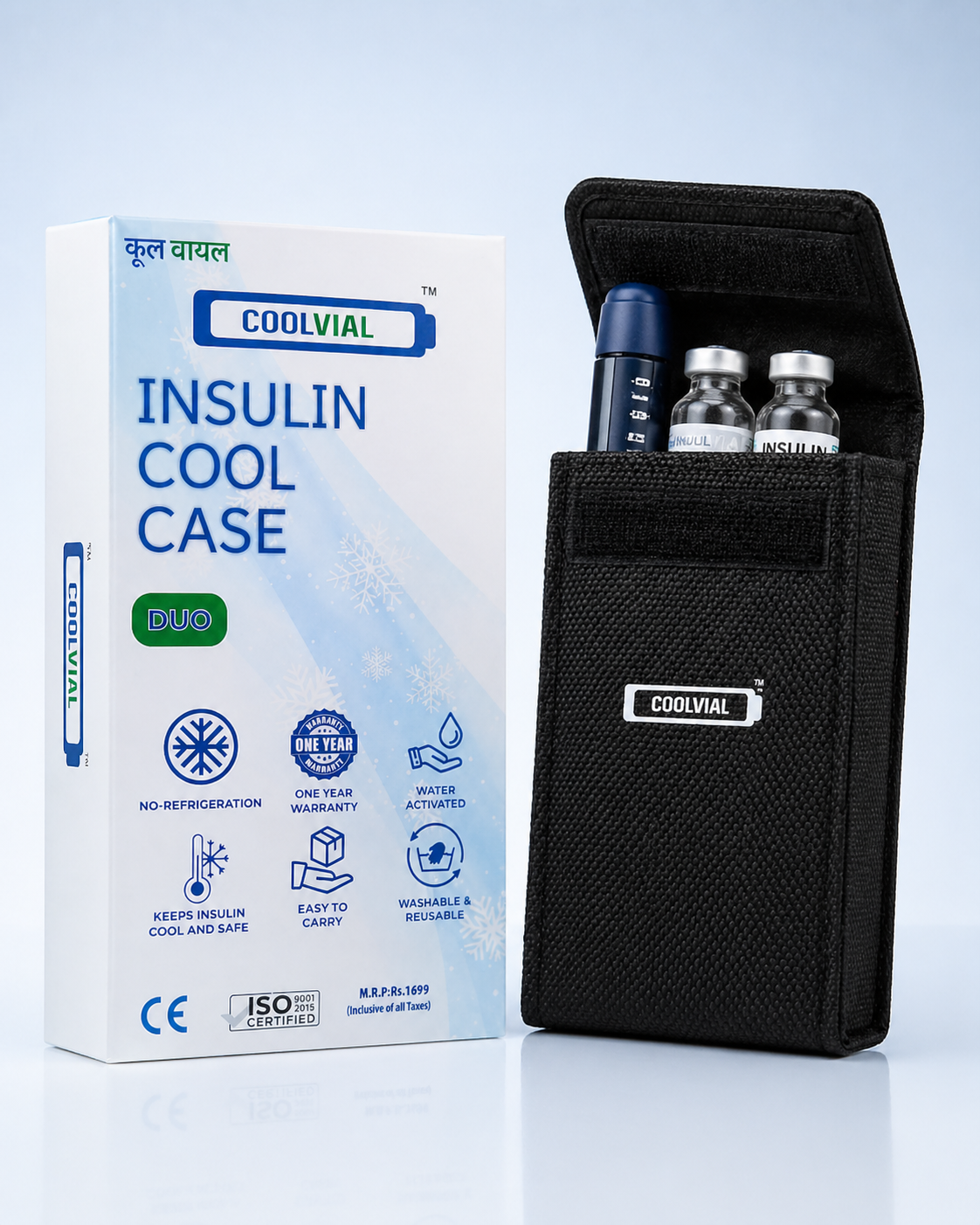
The COOLVIAL Duo is a water-activated evaporative cooling case that keeps your insulin safe without needing electricity, ice packs, or refrigeration. It’s a game-changer for diabetics in Ludhiana.
- Extended Cooling: Provides 12-16 hours of cooling per activation, perfect for long commutes, office hours, and even unexpected delays. Just soak it in water for a few minutes, and it’s ready to go.
- Capacity: Ingeniously designed to hold 2 insulin pens and 1 insulin vial, covering the needs of most users. This means you can carry your active pen and a backup, or different types of insulin, all in one compact case.
- Robust & Portable: Made with durable materials, it easily fits into a school bag, college backpack, office tote, or laptop bag. Its compact size (dimensions approx. 20 cm x 10 cm x 4 cm, [Verify in 2026]) ensures it doesn’t add bulk.
- Certified Safety: COOLVIAL Duo is CE certified and ISO 9001:2015 compliant, ensuring it meets international quality and safety standards.
- Made in India: Proudly manufactured in India, understanding the local climate and user needs. Comes with a 1-year warranty for added assurance.
- Affordable Peace of Mind: Priced at an MRP of Rs 1,699, you can currently get the COOLVIAL Duo for just Rs 1,099 using the code COOLHEAL. This makes it an accessible solution for many.
How COOLVIAL Duo Compares:
When considering cooling solutions, it’s helpful to compare options available in the Indian market:
| Feature | COOLVIAL Duo | FRIO Classic (e.g., Duo Pen Case) | Outer Woods OW-12 (Small) |
|---|---|---|---|
| Cooling Method | Water-activated evaporative cooling | Water-activated evaporative cooling | Gel pack based (requires freezer) |
| Cooling Duration | 12-16 hours | Up to 45 hours | Up to 12 hours |
| Capacity | 2 pens + 1 vial | 2 pens | 1-2 pens + few vials (depending on size) |
| Electricity Needed? | No | No | No (but gel pack needs freezer) |
| Portability | Highly portable, compact | Highly portable, compact | Moderately portable (bulkier due to gel) |
| Certifications | CE Certified, ISO 9001:2015 | CE Certified | Not widely advertised |
| Made In | India | UK | India |
| Price (Approx.) | Rs 1,099 (with code COOLHEAL, MRP Rs 1,699) | Rs 1,900+ | Rs 999+ |
| Reactivation | Soak in water for 5-10 minutes | Soak in water for 5-10 minutes | Gel pack re-freezing (hours) |
While other brands like FRIO offer longer cooling, COOLVIAL Duo provides ample protection for Ludhiana’s daily commutes at a significantly more accessible price point, specifically designed for a versatile pen-plus-vial capacity. Outer Woods OW-12 is cheaper but relies on freezer-dependent gel packs, which might not always be practical for on-the-go reactivation. The 12-16 hours offered by COOLVIAL Duo is typically more than sufficient for a full day of travel and work/study.
For anyone in Ludhiana needing to carry insulin daily, the COOLVIAL insulin cool case offers a practical, affordable, and highly effective solution.
Insulin Storage at Work & Study Places in Ludhiana
Your daily commute with insulin doesn’t end when you reach your destination. Proper storage at your workplace or educational institution is equally critical.
1. Office Settings (e.g., Pavilion Mall, Lodhi Fort Corporate Parks)
Many professionals in Ludhiana work in modern office spaces, including those in and around Pavilion Mall or the corporate parks near Lodhi Fort.
- Desk/Drawer Storage: If your office has a consistent AC temperature (below 30°C), storing your insulin pen (in-use) in a desk drawer, away from direct sunlight or heat-emitting electronics, is generally acceptable. However, for backup pens or vials, or if the AC is unreliable, continue using your COOLVIAL Duo.
- Office Refrigerator: If available, an office refrigerator (2-8°C) is ideal for unopened insulin vials or pens. Ensure it’s not too close to the freezer compartment to prevent accidental freezing. Label your insulin clearly to avoid mix-ups.
- Lunch Storage: If you carry insulin to administer with your lunch, make sure it stays cool until then. Your COOLVIAL Duo can easily accommodate this. Avoid leaving it in a hot lunch bag.
2. School & College Campuses (e.g., PAU, DMC&H, CMC Ludhiana)
Students, especially those with Type 1 diabetes attending institutions like Punjab Agricultural University (PAU), Dayanand Medical College & Hospital (DMC&H), or Christian Medical College (CMC Ludhiana), need specific strategies.
- For Children (School Bag):
- Equip your child with a COOLVIAL Duo. Teach them (and their teachers/school nurse) how to use it and the importance of keeping it cool.
- Place the cooling case in a designated pocket of their school bag, away from heavy books or rough handling.
- Educate school staff on insulin storage protocols and emergency procedures.
- For College Students (Backpack):
- A college backpack often gets tossed around or left in varying conditions. Always keep your insulin in your COOLVIAL Duo within the backpack.
- Avoid leaving your backpack in direct sun, near radiators, or in hot hostel rooms without AC.
- If using hostel common refrigerators, label your insulin clearly and place it in a protective container.
Morning Prep Ritual for Insulin & Your COOLVIAL Duo
A consistent morning routine can make all the difference for a safe daily commute with insulin.
Here’s a simple ritual:
Daily Commute With Insulin in Ludhiana — 7 Essential Tips for Bus, Auto & E-Rickshaw
48+ hours at 2-8°C. No electricity. CE certified. Free delivery across India.
Order on WhatsApp — ₹1,099🛒 Buy Now — ₹1,099- Hydrate Your COOLVIAL Duo: First thing in the morning, soak the inner pouch of your COOLVIAL Duo in cold water for 5-10 minutes as per instructions. Squeeze out excess water gently.
- Retrieve & Inspect Insulin: Take your insulin pens/vials from the refrigerator. Visually inspect them for any changes in appearance (cloudiness, particles, discoloration).
- Load Your Cooling Case: Place your in-use insulin pen(s) and any backup vials into the activated COOLVIAL Duo. Ensure the case is properly sealed.
- Pack Your Bag Strategically: Place the COOLVIAL Duo in an easily accessible but protected part of your bag (school bag, college backpack, office bag). Avoid placing it against sharp objects or in a position where it could be crushed.
- Check Your Supplies:
- Ensure you have enough insulin for the day plus a buffer.
- Pack clean needles/syringes.
- Don’t forget your blood glucose meter, test strips, and lancets.
- Always carry a fast-acting carbohydrate (glucose tablets, juice box) for hypoglycemia.
This ritual ensures your insulin is protected from the moment you step out of your home in Ludhiana.
Essential Daily Carry Routine for Insulin
Beyond the morning prep, maintaining good habits throughout your day is key to preserving insulin efficacy.
- Always Carry Your Cooling Case: Never leave home without your activated COOLVIAL Duo, even for short trips, as plans can change unexpectedly.
- Avoid Direct Sun & Heat: Whether you’re waiting for a bus near Punjab Agricultural University or taking a break near Lodhi Fort, always keep your cooling case out of direct sunlight. Don’t leave it in a parked car, even for a few minutes, as internal temperatures can rise rapidly.
- Visual Inspection: Make it a habit to quickly inspect your insulin before each injection. Look for any changes in clarity, color, or consistency. If you notice anything unusual, do not use it.
- Check Expiry Dates: Regularly check the expiry dates on your insulin pens and vials. Discard any expired medication responsibly through a pharmacy or clinic.
- Stay Informed: Keep abreast of weather forecasts for Ludhiana. On particularly hot days, be extra vigilant about your insulin’s storage.
Recognizing Insulin Degradation: What to Look For
It’s crucial to be able to identify if your insulin has been compromised. Using degraded insulin can lead to dangerously high blood sugar levels.
Signs your insulin might be degraded:
- Cloudiness or Particles: Clear insulin (like Novorapid, Humalog, Apidra) should always be clear. If it looks cloudy, clumpy, or has visible particles, it’s degraded.
- Change in Color: Insulin should not change color. Any yellowing or brownish tint indicates degradation.
- “Frosting” or Crystal Formation: Inside the vial or pen, you might see small crystals or a “frosted” appearance, especially if it has been frozen and thawed.
- Reduced Effectiveness: The most critical sign is if your blood glucose levels remain high despite taking your usual dose of insulin. If you suspect your insulin isn’t working, replace it immediately with a new pen/vial from a properly stored supply.
If you suspect your insulin has been compromised, discard it safely and start a new, properly stored pen or vial. Do not risk your health with ineffective medication.
Where to Get Insulin & Support in Ludhiana
Knowing your local resources is vital for effective diabetes management. Ludhiana has several reputable hospitals and pharmacies.
- Major Hospitals:
- Dayanand Medical College & Hospital (DMC&H): A premier institution offering comprehensive diabetes care and endocrinology services.
- Christian Medical College (CMC Ludhiana): Another well-regarded hospital with a dedicated diabetes department.
- SPS Hospitals (Sherpur Bypass): Known for its multi-specialty services, including endocrinology.
- Pharmacies:
- Apollo Pharmacy: Widely available across Ludhiana, including in neighborhoods like Civil Lines and Sarabha Nagar.
- MedPlus: Another large chain with multiple outlets.
- 1mg Pharmacy: Offers online ordering and home delivery, useful for regular refills.
- Frontier Medicare: A local pharmacy chain.
- Generic Aadhaar: Provides affordable generic medicines.
For a more detailed guide on managing diabetes in the city, refer to our Complete Diabetes Care Guide for Ludhiana Residents — 2026 Edition. If you’re planning to dine out, our guide to Diabetic-Friendly Restaurants & Cafes in Ludhiana — Where to Eat Safely can also be helpful. Always consult your endocrinologist or diabetologist for personalized advice and prescriptions.
Frequently Asked Questions (FAQ)
Q: How long can insulin be kept outside the refrigerator in Ludhiana’s summer? A: Most in-use insulin can be kept at room temperature (below 30°C) for up to 28 days. However, in Ludhiana’s summer, temperatures often exceed 30°C. Without a cooling solution like COOLVIAL Duo, insulin can begin to degrade in just a few hours.
Q: Can I store insulin in my office drawer if there’s AC? A: If your office AC reliably keeps the temperature below 30°C, an in-use insulin pen can be stored in a drawer away from direct light. For backup insulin or if AC is inconsistent, it is safer to use a cooling case like COOLVIAL Duo.
Q: Is it safe to carry insulin in a child’s school bag for a Type 1 child? A: Yes, it is safe if the insulin is protected in a dedicated cooling case like COOLVIAL Duo within the school bag. It is essential to communicate with school staff about proper storage and emergency protocols.
Q: What happens if insulin freezes? A: If insulin freezes, its protein structure is permanently damaged, making it ineffective. Do not use insulin that has frozen, even if it thaws. This is particularly relevant during Ludhiana’s very cold winters.
Q: How often do I need to reactivate my COOLVIAL Duo? A: The COOLVIAL Duo provides 12-16 hours of cooling per activation. For daily commutes and work/study, you typically need to reactivate it once in the morning by soaking it in water for 5-10 minutes.
Q: Can I put my insulin directly into an ice box with ice? A: No, direct contact with ice can freeze insulin, rendering it ineffective. Always use a protective cooling case like COOLVIAL Duo, which maintains a safe temperature range without freezing the medication.
Q: What is the ideal temperature range for in-use insulin? A: Once opened, most insulin is stable at temperatures up to 30°C for up to 28 days. Unopened insulin should be refrigerated between 2°C and 8°C.
Conclusion: Embrace a Worry-Free Commute
Navigating Ludhiana’s daily grind with diabetes requires proactive planning, especially when it comes to safeguarding your insulin. The city’s unique climate and transport options, from hot BRTS buses to sun-exposed auto-rickshaws, demand a reliable solution to protect your medication from temperature extremes. By understanding insulin’s sensitivity and adopting smart storage practices, you can ensure your daily commute with insulin is worry-free and your health remains uncompromised.
The COOLVIAL Duo offers an ideal, made-in-India solution, providing 12-16 hours of cooling without electricity, perfectly suited for Ludhiana’s conditions. It’s a small investment for immense peace of mind. Make the smart choice for your health and daily routine.
Order COOLVIAL Duo at Rs 1,099 with code COOLHEAL at coolvial.com or via WhatsApp wa.me/918766952300.
Methodology Note
How We Researched This — This article is based on a comprehensive review of RSSDI (Research Society for the Study of Diabetes in India) guidelines for insulin storage, ICMR-INDIAB (Indian Council of Medical Research - India Diabetes) study data on diabetes prevalence, local Ludhiana hospital directories (DMC&H, CMC Ludhiana, SPS Hospitals), and information from the Apollo Pharmacy network regarding common insulin storage queries in the region. Local climate data and commute patterns were analyzed to provide specific, actionable advice for Ludhiana residents.