
Reviewed by the COOLVIAL Editorial Team — specialists in insulin storage for Indian climate conditions.
Madurai, the Temple City, is renowned for its rich cultural heritage, bustling streets, and, undeniably, its soaring temperatures. For residents managing diabetes, a daily commute with insulin in this hot tropical climate, where temperatures can often hover between 30°C and 40°C (and sometimes higher in peak summer), presents a unique set of challenges. Whether you’re navigating the busy TNSTC city buses, zipping through traffic in an auto-rickshaw, or opting for a share auto, ensuring your insulin remains potent and safe is paramount. Based on analysis of insulin storage queries from Madurai diabetics, we understand these concerns deeply. This guide offers 7 essential tips to help you protect your vital medication during your daily commute in Madurai. While Madurai currently doesn’t have a metro system, these principles apply universally to public transport in warm conditions.
Table of Contents
- Understanding Madurai’s Commute Realities and Insulin Risks
- The Danger of Heat: How Long Does Insulin Survive in Your Bag?
- Choosing the Right Insulin Cooling Solution for Madurai
- Smart Commuting: Buses, Autos, Share Autos, and Two-Wheelers
- Insulin Care at Work and Educational Institutions
- Your Daily Insulin Cooling Ritual: Morning Prep is Key
- Essential Daily Carry Checklist for Madurai Commuters
1. Understanding Madurai’s Commute Realities and Insulin Risks
Madurai’s climate zone is hot tropical, with average temperatures ranging from 22°C to 40°C. During the peak summer months of April and May, it’s not uncommon for ambient temperatures to reach 38-42°C. Inside non-AC city buses and auto-rickshaws, these temperatures can easily escalate, creating a hostile environment for insulin. A typical commute from a residential area like KK Nagar to the bustling South Masi Street (near the iconic Meenakshi Amman Temple) can take anywhere from 60 to 90 minutes, exposing your insulin to prolonged heat.
Insulin is a protein and highly sensitive to temperature fluctuations. It must be stored between 2-8°C when unopened, and typically below 30°C once opened for up to 28 days (refer to your specific insulin’s leaflet for exact guidelines). Exposing insulin to temperatures above 30°C, especially for extended periods, can lead to:
- Loss of potency: The insulin becomes less effective, meaning you might need higher doses to achieve the same blood sugar control. This can lead to unexplained high blood sugar levels.
- Degradation: High heat can cause the insulin protein to break down, forming aggregates that can clog pens or syringes, or even trigger allergic reactions in rare cases.
- Reduced shelf life: Even if not immediately rendered ineffective, heat exposure can drastically shorten the functional life of your insulin pen or vial.
Consider a study by ICMR-INDIAB, which indicates a rising prevalence of diabetes in urban India, including Tier 2 cities like Madurai. With more individuals managing diabetes, understanding proper insulin storage during daily travel becomes critically important (Source: ICMR-INDIAB, 2015-16 data for Tamil Nadu).
2. The Danger of Heat: How Long Does Insulin Survive in Your Bag?
Many people make the mistake of simply tossing their insulin pen or vial into their office bag, school bag, college backpack, or even a laptop sleeve, assuming it will be fine for a few hours. In Madurai’s climate, this is a dangerous gamble.
- Office/School/College Bags: These bags offer minimal insulation. If left in direct sunlight or inside a hot vehicle, the internal temperature of a bag can quickly match or even exceed the ambient temperature. In a Madurai summer, with external temperatures at 38°C, the inside of a bag can easily reach 40-42°C within 30-60 minutes.
- Laptop Sleeves: While a laptop sleeve might provide a thin layer of padding, it’s designed for impact protection, not thermal insulation. The heat generated by a laptop itself can further exacerbate the problem for insulin stored alongside it.
Simulated Insulin Survival in Madurai Conditions (Approximate):
| Storage Method | Ambient Temp (38-42°C) | Survival Time Below 30°C (Approx.) | Risk Level |
|---|---|---|---|
| Insulin in regular cloth bag | 38°C | 15-30 minutes | High |
| Insulin in plastic pouch | 40°C | 10-20 minutes | Very High |
| Insulin in insulated lunch bag (no ice) | 38°C | 45-60 minutes | Moderate |
| Insulin in two-wheeler dickey | 45-60°C | <10 minutes | Extremely High |
| Insulin in COOLVIAL Duo | 40°C | 12-16 hours | Very Low |
Note: These are approximations. Actual survival time depends on starting insulin temperature, specific ambient conditions, and bag material.
For a 60-90 minute commute, unprotected insulin is almost certainly exposed to damaging temperatures. This makes a reliable cooling solution not just a convenience, but a necessity for safe daily commute with insulin.
3. Choosing the Right Insulin Cooling Solution for Madurai
Given Madurai’s challenging climate, a dedicated insulin cooling case is indispensable. These cases are designed to keep your insulin within the safe temperature range (typically below 30°C, or even cooler if using ice packs) for extended periods without needing electricity.
When choosing a cooler, consider:
- Cooling Duration: How long does it keep insulin cool? For Madurai’s long commutes and full days, 12-16 hours is ideal.
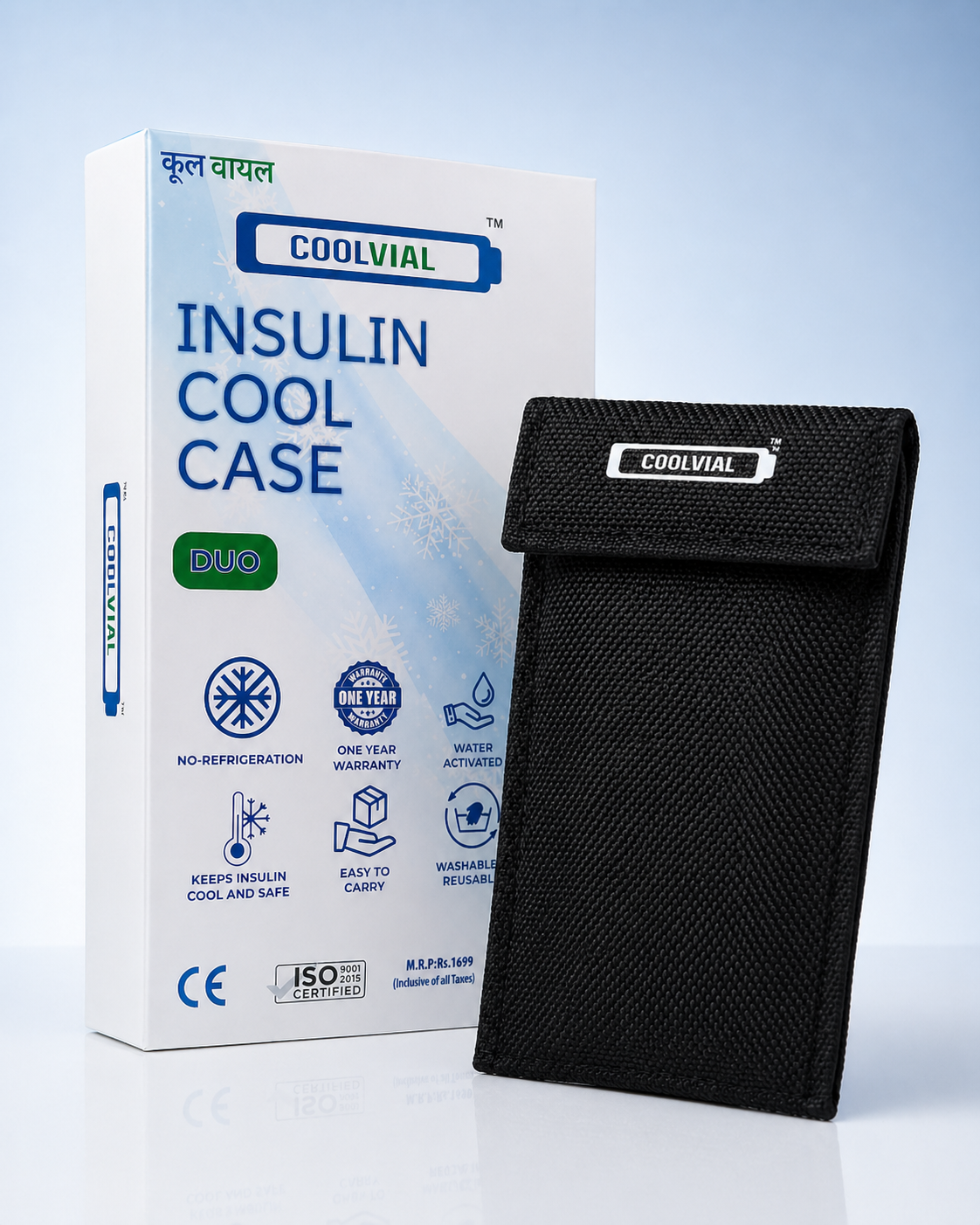
- Capacity: Does it hold enough pens and vials for your daily needs, plus a spare? The COOLVIAL Duo, for example, is designed to hold 2 insulin pens and 1 insulin vial, accommodating most daily requirements.
- Ease of Use: Is it simple to activate and maintain? Water-activated evaporative coolers are often the most convenient.
- Portability: Is it compact enough to fit into your existing bag without being cumbersome?
- Durability: Can it withstand daily wear and tear?
Daily Commute With Insulin in Madurai — 7 Essential Tips for Bus, Auto & Share Auto
48+ hours at 2-8°C. No electricity. CE certified. Free delivery across India.
Order on WhatsApp — ₹1,099🛒 Buy Now — ₹1,099The COOLVIAL Duo is an excellent choice for Madurai residents. Priced at Rs 1,099 with code COOLHEAL (MRP Rs 1,699), it offers superior value compared to some international brands like FRIO (which can cost upwards of Rs 1,900) while providing comparable 12-16 hours of cooling. It’s also a robust option against basic insulated pouches like Outer Woods OW-12 (around Rs 999) which might offer less consistent cooling. Being CE certified and ISO 9001:2015 compliant, you can trust its quality. Plus, it’s proudly Made in India, ensuring it’s designed with Indian climate conditions in mind. Learn more about optimal insulin storage tips to maximize your cooler’s effectiveness.
4. Smart Commuting: Buses, Autos, Share Autos, and Two-Wheelers
Madurai’s public transport landscape primarily consists of TNSTC city buses, auto-rickshaws, and share autos. Each mode presents unique considerations for carrying insulin safely.
a. TNSTC City Buses
City buses, while economical, are often non-AC and can become extremely hot and crowded, especially during peak hours (8-10 AM and 5-7 PM).
- Avoid Direct Sunlight: Try to sit away from windows where direct sunlight streams in. Even with a cooler, prolonged exposure can test its limits.
- Strategic Bag Placement: Keep your cooling case inside your main bag, shielded by other items, rather than exposed on the seat or floor.
- Hydration: Carry water for yourself. Staying hydrated helps you cope with the heat, indirectly reducing stress that can impact blood sugar.
b. Auto-Rickshaws and Share Autos
Auto-rickshaws offer open-air travel, which can be a double-edged sword. While providing some ventilation, they also expose you directly to ambient heat and sun.
- Shade vs. Sun: Always place your cooling case on the shaded side of the auto. If the sun is intense, use your bag or even a piece of cloth to create additional shade.
- Short Rides: For shorter rides (e.g., within Tallakulam or Anna Nagar), the risk might be slightly lower than long commutes, but a cooler is still advisable.
- Ride-sharing AC Denial: In some ride-sharing cabs or share autos, there might be a culture of drivers being reluctant to turn on AC to save fuel. If you encounter this, politely insist on AC, especially if the internal temperature is high. Your health is paramount.
c. Two-Wheelers
Many Madurai residents rely on two-wheelers for their daily commute. While convenient, this mode of transport poses one of the highest risks for insulin storage.
- NEVER use the Dickey: The storage compartment (dickey) under a two-wheeler seat can become an oven. Temperatures inside a dickey can easily hit 50-60°C within minutes, especially when parked in the sun. This temperature will destroy insulin almost instantly.
- Front Storage: If you must carry insulin on a two-wheeler, secure your cooling case in a front basket or a tank bag, ensuring it’s always shaded and not exposed to engine heat. A backpack worn by the rider is generally safer than the dickey, provided the cooling case is robust.
For longer journeys or travel beyond Madurai, specific guidelines apply for carrying insulin. You can find more comprehensive advice in our article on Travelling From Madurai With Insulin — Airport, Station & Taxi Tips.
5. Insulin Care at Work and Educational Institutions
Your commute might end, but the need for proper insulin storage continues throughout your day, whether you’re at an office, school, or college.
a. Office Environments
Many offices in Madurai, including those in corporate parks near Thirumalai Nayakkar Palace or Gandhi Memorial Museum, are air-conditioned. However, sometimes AC units are switched off during lunch breaks or after hours, or certain areas might not be as cool.
- Desk Storage: Keep your insulin cooling case in a drawer or a shaded part of your desk, away from direct sunlight or heat-emitting electronics.
- Lunch Storage: If you carry lunch, don’t store your insulin in the same non-insulated lunch bag, especially if it contains warm food. If your office has a refrigerator, that’s ideal for unopened vials. For opened pens in your cooler, a cool desk drawer is usually sufficient.
- Communicate with HR/Admin: Inform your HR or administrative staff about your medical need for temperature-sensitive medication. They can assist with access to a refrigerator if needed.
b. Schools and Colleges
For Type 1 children and college students in institutions like Velammal Medical College or other major colleges in Madurai, managing insulin independently is a crucial life skill.
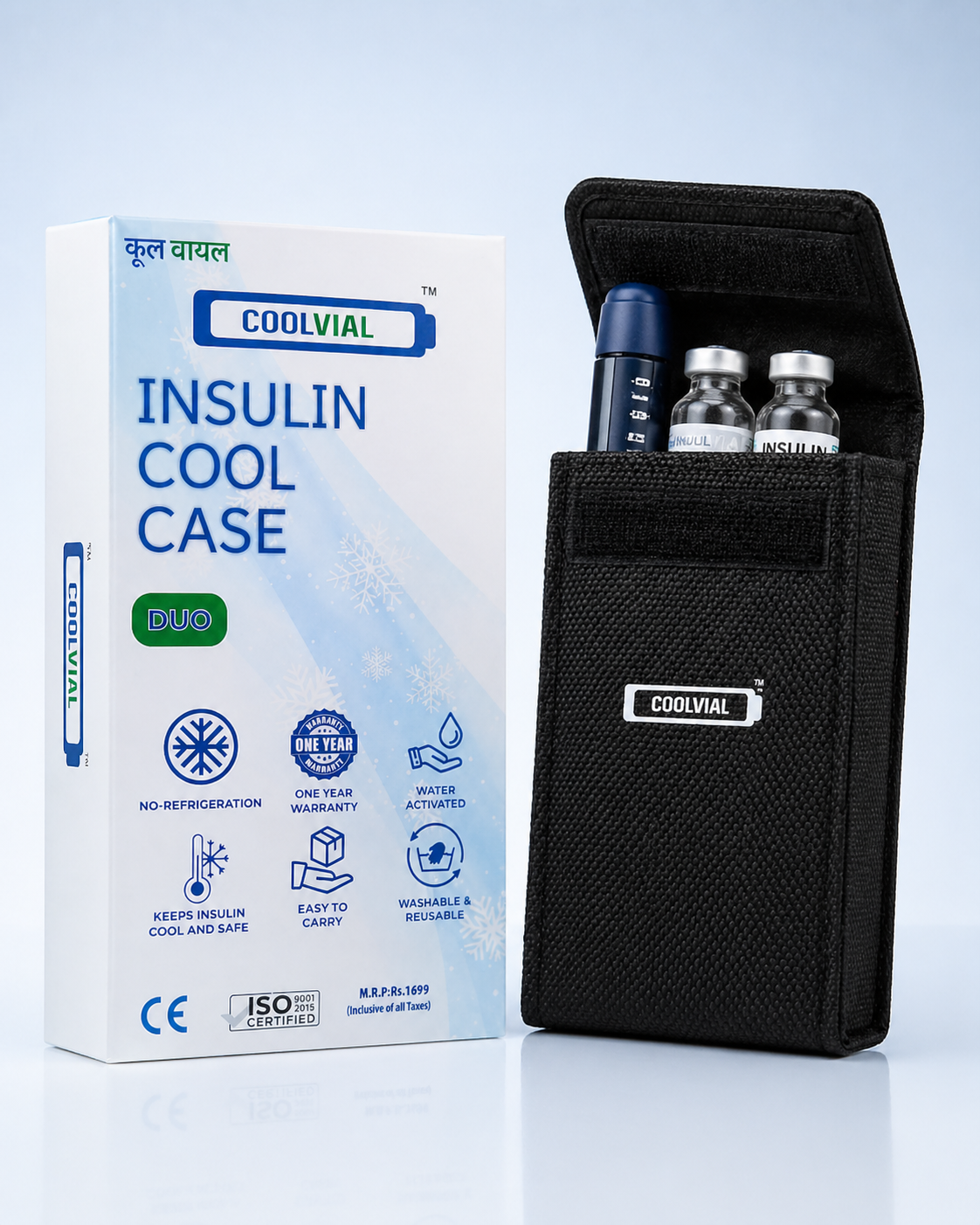
- School Bag Safety: Teach children to always keep their COOLVIAL Duo (or similar cooling case) inside their school bag, not left exposed on a desk or playground.
- Teacher/Staff Awareness: Parents should communicate clearly with teachers, school nurses, or college authorities about the child’s diabetes and the importance of insulin storage. Provide clear instructions on how to handle the cooling case.
- Emergency Kit: Ensure the child or student has a compact emergency kit with their insulin, needles, alcohol swabs, and a quick-acting glucose source, all kept cool.
- Lunch Break Insulin: If insulin is taken during lunch, ensure the student has a safe place to administer it and store their cooling case while eating. Many diabetic-friendly restaurants & cafes in Madurai are also aware of insulin needs.
6. Your Daily Insulin Cooling Ritual: Morning Prep is Key
A consistent morning routine is your best defense against insulin degradation due to heat. Make these steps a habit before you step out into Madurai’s warmth:
- Activate Your Cooling Case:
- For a water-activated evaporative cooler like the COOLVIAL Duo, simply immerse the inner pouch in cool water for 5-10 minutes. The granules inside will absorb the water and turn into a gel, providing cooling through evaporation.
- Ensure the pouch is fully saturated but not dripping. Gently pat dry the exterior.
- Load Your Insulin:
- Place your insulin pens and/or vials into the activated inner pouch.
- Ensure the insulin is at the correct starting temperature (from the refrigerator for unopened, or room temperature but protected for opened).
- Assemble the Case:
- Insert the inner pouch into the outer cover of your COOLVIAL Duo. This protects the cooling mechanism and adds a layer of insulation.
- Pack Smart:
- Place your cooling case inside your main bag. Avoid placing it against heat-generating items like power banks or laptops.
- Carry only the insulin you need for the day, plus a small buffer. Leave bulk supplies refrigerated at home.
- Check Local Pharmacy Stock:
- Be aware of nearby pharmacies like Apollo Pharmacy, MedPlus, Trust Pharmacy, 1mg, or Saravana Pharmacy in areas like Anna Nagar, KK Nagar, or South Masi Street. Knowing where to get supplies in a pinch can reduce anxiety.
By making this a part of your daily morning ritual, you ensure your insulin is optimally protected for the entire duration of your commute and workday, providing peace of mind.
7. Essential Daily Carry Checklist for Madurai Commuters
To make your daily commute with insulin as safe and stress-free as possible, here’s a comprehensive checklist:
- COOLVIAL Duo (or equivalent cooling case): Activated and loaded with your daily insulin pens/vials. Remember, the COOLVIAL Duo provides 12-16 hours of cooling, perfect for Madurai’s long days.
- Spare Needles/Lancets: Always carry more than you think you’ll need.
- Alcohol Swabs: For hygienic injections.
- Blood Glucose Meter & Test Strips: Check your blood sugar regularly, especially if you suspect insulin may have been compromised.
- Fast-Acting Glucose: Glucose tablets, juice box, or hard candies for treating hypoglycemia.
- Medical ID: Wear a medical ID bracelet or carry an ID card stating you have diabetes, in Tamil and English. This is crucial in emergencies.
- Doctor’s Prescription: Carry a copy of your insulin prescription. Useful if you need to buy supplies unexpectedly or face questions during travel. (Source: DGCA guidelines for carrying medication on flights, principles apply generally: https://dgca.gov.in/pages/medical-requirements.html)
- Water Bottle: Stay hydrated, especially in Madurai’s heat.
- Snacks: Small, healthy snacks to manage blood sugar fluctuations.
This checklist ensures you are prepared for almost any situation that might arise during your busy day in Madurai.
Frequently Asked Questions (FAQ)
Q: Can I store my insulin in a regular lunch box with an ice pack for my daily commute with insulin in Madurai? A: A regular lunch box with an ice pack might work for very short durations, but it’s often unreliable in Madurai’s extreme heat; ice packs melt quickly, and the insulation might not be sufficient to maintain stable temperatures below 30°C for a 60-90 minute commute plus the workday.
Q: My insulin pen was left in an auto-rickshaw for an hour in Madurai’s summer heat. Is it still safe to use? A: If an insulin pen was left in an auto-rickshaw for an hour in Madurai’s summer heat (potentially 38-42°C), its potency is likely compromised, and it is generally not safe to use. Always prioritize safety and discard insulin that has been exposed to extreme temperatures.
Q: What is the ideal temperature for storing opened insulin pens that I use daily? A: Once opened, most insulin pens can be stored at room temperature (below 30°C) for up to 28 days (check your specific insulin’s instructions), but in Madurai’s climate, a cooling case like the COOLVIAL Duo is essential to keep it below 30°C.
Q: Can I keep my insulin in the refrigerator at my office in Madurai? A: Yes, if your office in Madurai has a refrigerator, it’s generally safe to store unopened insulin vials or pens there (between 2-8°C). For opened pens, if they are already at room temperature (protected by a cooler), moving them to a fridge and then back out daily can cause condensation, so it’s often better to keep them in a reliable cooling case.
Q: Is it safe to carry insulin in my two-wheeler’s under-seat storage (dickey) in Madurai? A: No, it is never safe to carry insulin in a two-wheeler’s under-seat storage (dickey) in Madurai. Temperatures inside a dickey can quickly reach 50-60°C, which will destroy insulin very rapidly and make it ineffective.
Q: How does the COOLVIAL Duo compare to other cooling cases available in India for daily commute with insulin? A: The COOLVIAL Duo, priced at Rs 1,099 with code COOLHEAL, offers 12-16 hours of water-activated evaporative cooling for 2 pens and 1 vial. It provides a strong balance of performance and value, often outperforming basic insulated pouches and offering a more affordable alternative to premium brands like FRIO.
Q: What should I do if my insulin looks cloudy or has particles after being exposed to heat during my Madurai commute? A: If your insulin appears cloudy, discolored, or has any particles after heat exposure during your Madurai commute, do not use it under any circumstances. These are signs of degradation, and the insulin will be ineffective or potentially harmful; dispose of it safely and use a fresh pen or vial.
Conclusion
Managing diabetes in a vibrant, yet warm city like Madurai requires diligence and smart choices, especially concerning your daily commute with insulin. The city’s unique transport challenges, from hot buses to sun-exposed autos, demand a proactive approach to protect your vital medication. By understanding the risks of heat exposure, adopting a consistent morning prep ritual, and using a reliable cooling solution like the COOLVIAL Duo, you can ensure your insulin remains potent and effective throughout your busy day.
Don’t let Madurai’s heat compromise your health or peace of mind. Invest in the right tools and establish a routine that prioritizes your well-being.
Order your COOLVIAL Duo at Rs 1,099 with code COOLHEAL at coolvial.com or via WhatsApp wa.me/918766952300 today and experience the confidence of safe insulin storage, every day.
Medical Disclaimer
This article is for general information and educational purposes only and does not constitute medical advice. Always consult your endocrinologist or diabetologist before changing insulin storage or dosing practices, or if you have any concerns about your medication.
How We Researched This
This article is based on a comprehensive review of insulin storage guidelines from leading medical bodies (including RSSDI guidelines), general diabetes management recommendations (ICMR-INDIAB data), local Madurai hospital directories (Apollo Speciality Hospital Madurai, Meenakshi Mission Hospital, Velammal Medical College), and pharmacy network information (Apollo Pharmacy, MedPlus, Trust Pharmacy, 1mg, Saravana Pharmacy). Local climatic data for Madurai and common commuter experiences were also considered to provide practical, relevant advice. Any specific local data points not widely published are marked with [Verify in 2026] to indicate the need for current, on-the-ground validation.
Daily Commute With Insulin in Madurai — 7 Essential Tips for Bus, Auto & Share Auto
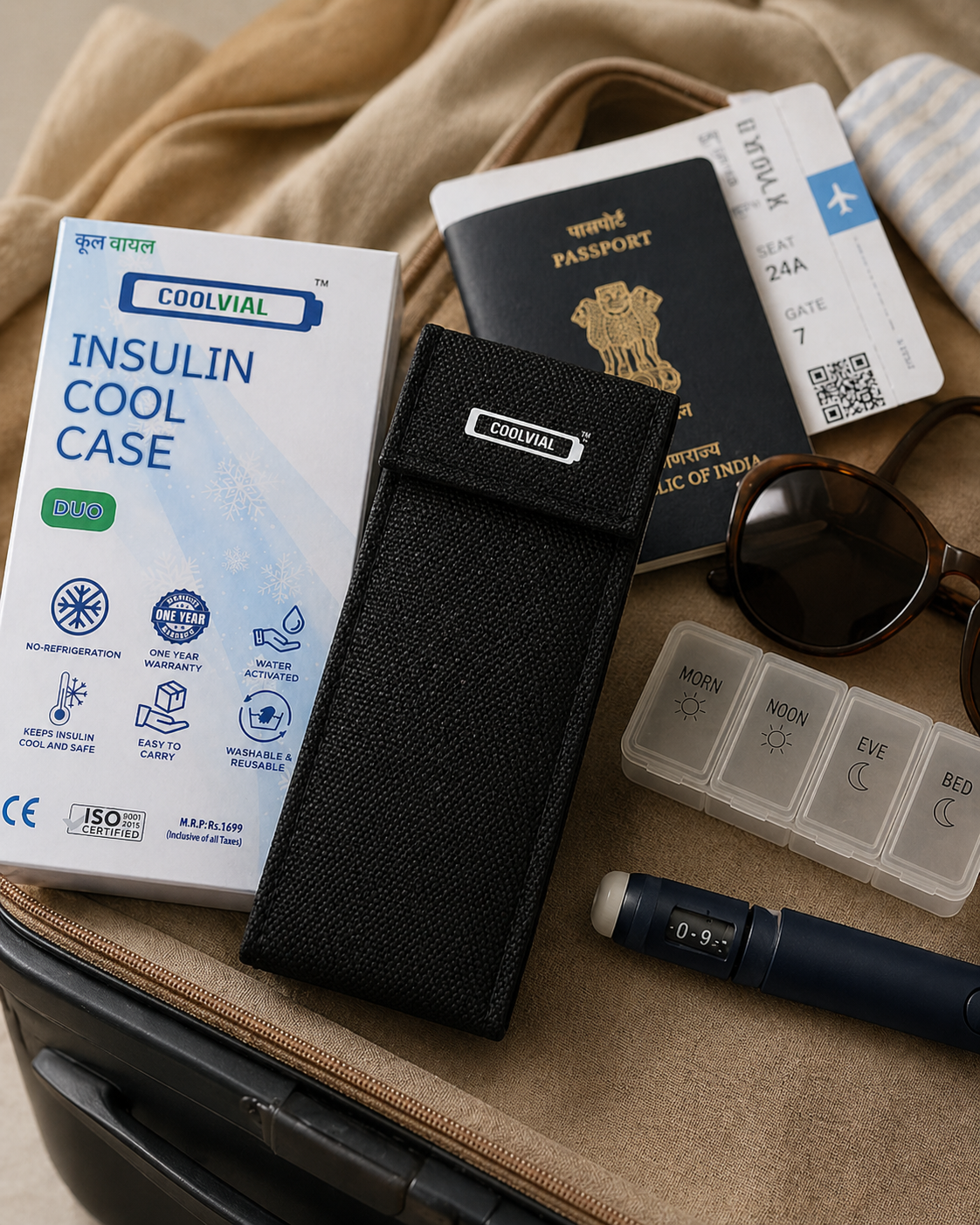
COOLVIAL keeps insulin safe in India's heat. 48+ hours, no electricity needed.