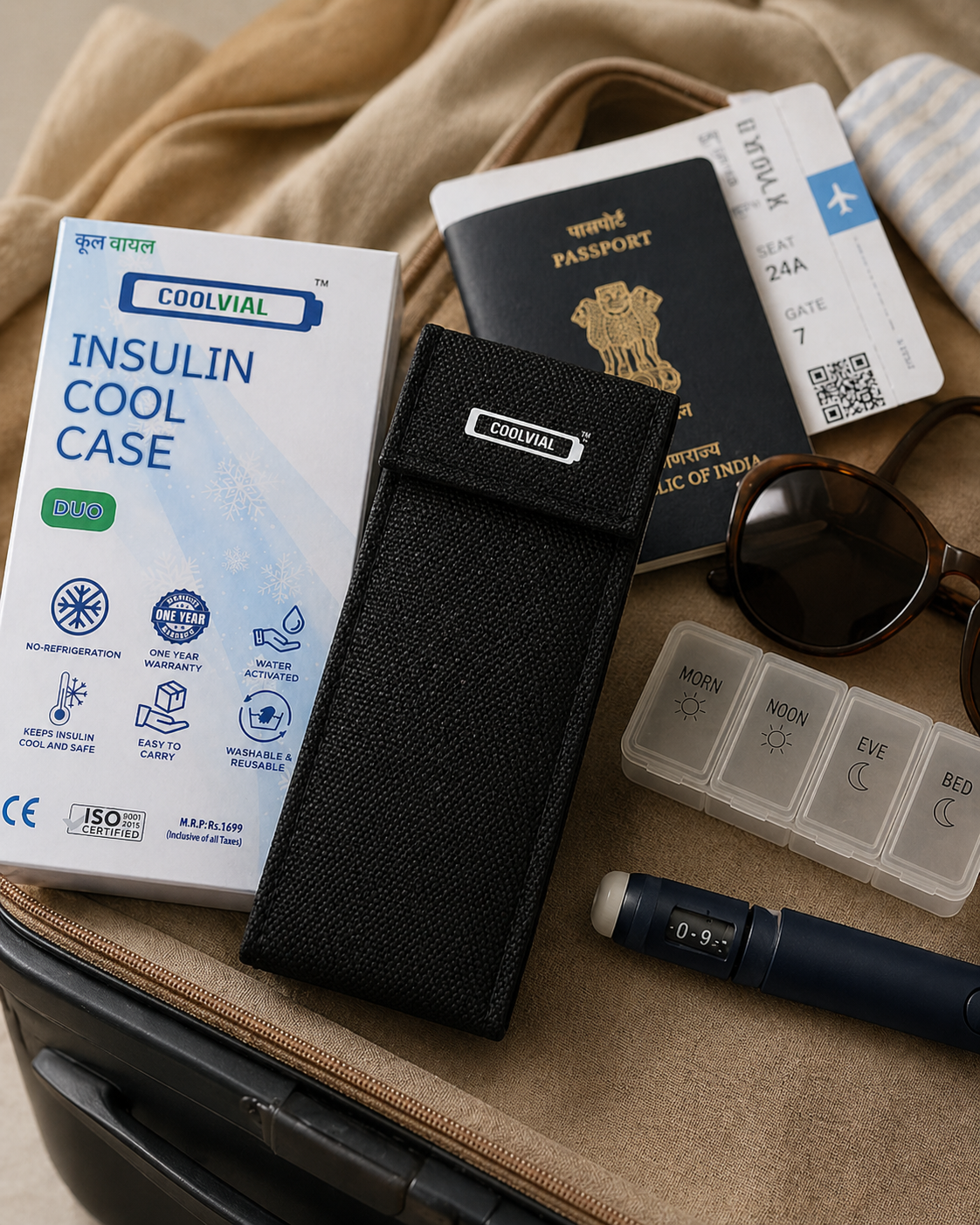
Reviewed by the COOLVIAL Editorial Team — specialists in insulin storage for Indian climate conditions.
For the thousands of residents in Rajkot managing diabetes, ensuring the safe storage of insulin during the daily commute is not just a recommendation, it’s a critical necessity. With Rajkot’s climate often soaring to 43°C in peak summer and averaging 30-35°C for much of the year, insulin is constantly at risk of degradation. Whether you’re a student heading to Christ College on Kalavad Road, an office-goer commuting from 150 Feet Ring Road to the corporate parks near Race Course, or a senior citizen visiting Sterling Hospital Rajkot (Saurashtra), understanding how to protect your insulin is paramount. This guide offers 5 essential, practical tips for a safe daily commute with insulin in Rajkot, ensuring your medication remains effective, even when traversing the city by RMC city bus, auto-rickshaw, or private vehicle. Based on analysis of insulin storage queries from Rajkot diabetics, we’ll map out the realities of local transport and provide actionable advice to safeguard your health.
Table of Contents
- Rajkot’s Climate: A Challenge for Insulin Storage
- Understanding Insulin’s Temperature Sensitivity
- Navigating Rajkot’s Commute Realities: Buses, Autos, and More
- Insulin in Your Daily Bag: Office, School, College & The Two-Wheeler Dickey Danger
- The COOLVIAL Duo: Your Reliable Companion for Rajkot Commutes
- Practical Morning Prep & On-the-Go Tips for Insulin Users
- Addressing Specific Rajkot Scenarios: From Commutes to Lunch Storage
- Frequently Asked Questions (FAQ)
- How We Researched This
- Conclusion
Rajkot’s Climate: A Challenge for Insulin Storage
Rajkot, nestled in Gujarat’s Saurashtra region, experiences a predominantly hot and dry climate for a significant part of the year. Temperatures typically range from a mild 18°C in winter to a scorching 43°C during the summer months (April to June). Even during the monsoon season (around June to September), which brings an average rainfall of about 600mm, humidity can rise, and temperatures often remain high, making cool storage a constant concern.
This extreme heat directly impacts the efficacy of insulin. Insulin is a protein, and like many proteins, it is susceptible to denaturation (loss of function) when exposed to high temperatures.
Key Climate Facts for Rajkot:
- Summer Peak: 38°C to 43°C (April-June)
- Average Annual: 25°C to 30°C
- Monsoon: High humidity, temperatures often remain above 30°C
- Commute Exposure: Direct sunlight in non-AC vehicles can easily push internal temperatures well above ambient, reaching 45-50°C.
Such conditions mean that a short commute can expose insulin to temperatures far exceeding its safe limits, potentially rendering it ineffective and risking suboptimal diabetes management. This makes a careful approach to your daily commute with insulin absolutely essential.
Understanding Insulin’s Temperature Sensitivity
Insulin is a life-saving medication, but its stability is highly dependent on proper storage temperatures. Incorrect storage can lead to a loss of potency, meaning that even if you inject the prescribed dose, you might not be receiving the full therapeutic effect, leading to uncontrolled blood sugar levels.
Insulin Storage Guidelines:
- Unopened Insulin: Should be stored in a refrigerator, typically between 2°C and 8°C. This ensures maximum shelf life, often until the expiry date printed on the package.
- Opened/In-Use Insulin: Once opened or removed from refrigeration, insulin can generally be stored at room temperature (below 30°C) for up to 28 days. However, this “room temperature” is a critical point, especially in a city like Rajkot.
What Happens When Insulin Gets Too Hot?
- Denaturation: High temperatures cause the insulin protein to break down, losing its ability to lower blood sugar. This process is irreversible.
- Visible Signs: While not always obvious, extreme heat can sometimes cause insulin to become cloudy, discolored, or form particles. If you notice any of these changes, the insulin should be discarded immediately.
- Invisible Damage: Crucially, insulin can lose potency due to heat exposure without any visible changes. This makes proactive protection vital.
According to the Indian Council of Medical Research (ICMR) guidelines on diabetes, maintaining insulin’s cold chain is critical for its efficacy, especially in tropical climates like India. (Source: ICMR Guidelines for Management of Type 2 Diabetes) For someone with Type 1 diabetes, or Type 2 requiring insulin, this understanding forms the bedrock of safe diabetes management.
Navigating Rajkot’s Commute Realities: Buses, Autos, and More
Rajkot’s local transport system primarily relies on RMC city buses, auto-rickshaws, and share rickshaws. While the article title mentions “Metro,” it’s important to clarify that Rajkot currently does not have a metro system. Therefore, our focus will be on the common modes of transport available and how to manage your insulin effectively within them.
1. RMC City Buses: RMC city buses are a lifeline for many Rajkot residents, connecting areas like 150 Feet Ring Road to central hubs like Race Course. However, these buses are typically non-AC, and during peak summer, internal temperatures can easily soar.
- Temperature Reality: On a 40°C day outside, the inside of a non-AC bus, especially when crowded and moving slowly, can reach 45°C to 50°C.
- Commute Duration: A typical commute from, say, the far end of 150 Feet Ring Road to Race Course or University Road can take 60 to 90 minutes during peak hours. This prolonged exposure to high temperatures is highly detrimental to insulin.
- Recommendation: Relying solely on your bag for insulin protection in an RMC city bus is risky. A dedicated cooling case is essential.
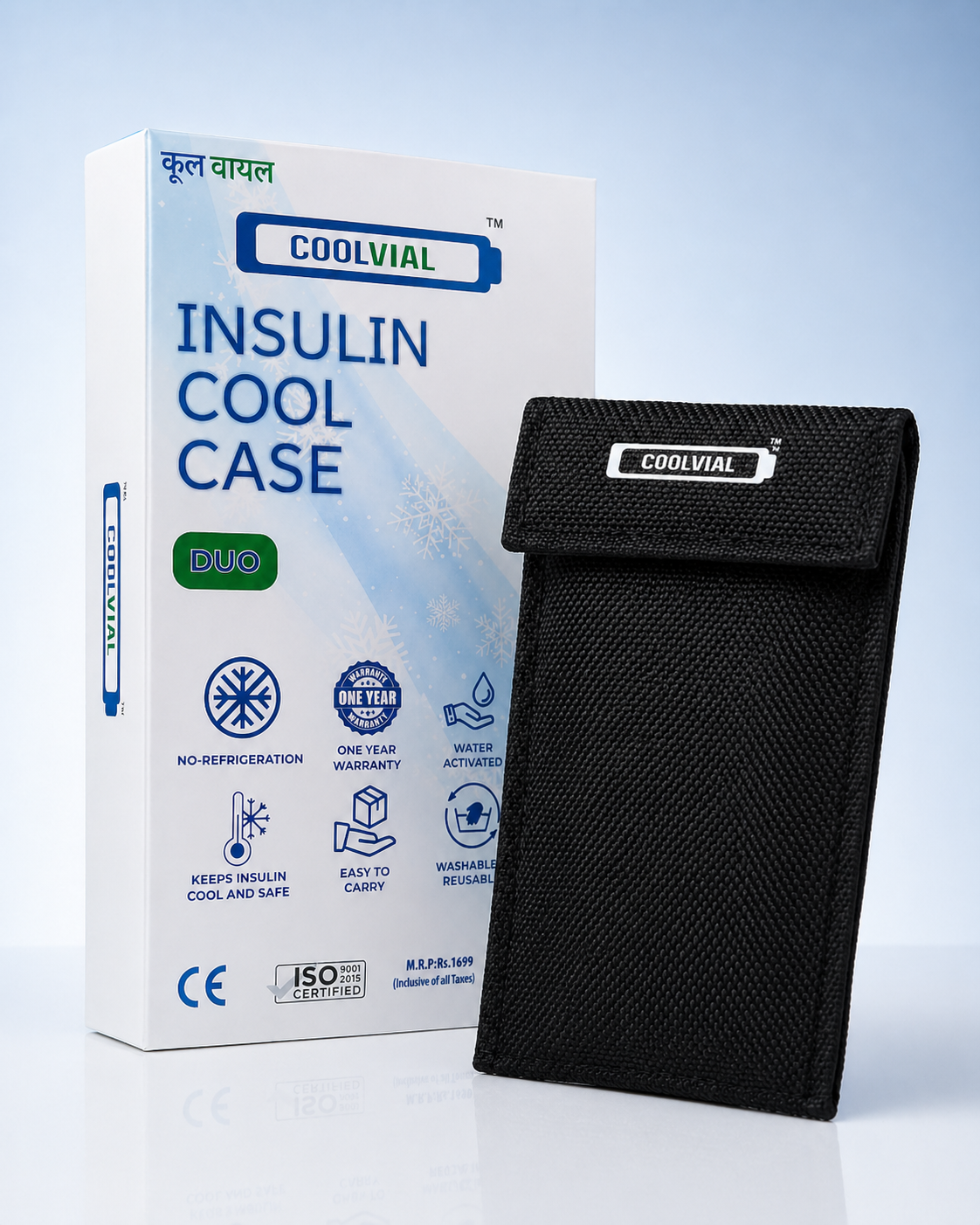
5 Essential Tips for Your Daily Commute With Insulin in Rajkot
COOLVIAL keeps insulin safe in India's heat. 48+ hours, no electricity needed.
2. Auto-rickshaws: Auto-rickshaws are ubiquitous in Rajkot, offering a quicker, albeit often more exposed, mode of transport.
- Sun Exposure: Sitting in an auto-rickshaw means direct exposure to sunlight, especially if you’re on the side facing the sun. This can rapidly heat up your insulin.
- Internal Temperatures: While open-sided, the enclosed cabin of an auto can still trap heat, and the metal body can become extremely hot.
- Recommendation: Always carry your insulin in a cooling case and try to position it away from direct sunlight. If possible, choose an auto that offers more shade or position yourself strategically.
3. Share Rickshaws / Private Cabs: Share rickshaws offer a cost-effective option, similar to autos but with shared seating. Private cabs (like Ola/Uber) offer AC, but often at a higher cost.
- Share Rickshaws: Similar thermal challenges to regular auto-rickshaws.
- Private Cabs (AC): If you opt for an AC private cab, this is the safest option for insulin transport. However, AC reliability can vary, and seat-side temperatures might still be higher than the cabin average if the sun is directly hitting the window.
- “AC Denial Culture”: While less common in Rajkot’s ride-sharing cabs, in some parts of India, drivers might switch off AC to save fuel. Always ensure the AC is functioning effectively throughout your ride.
- Recommendation: If using AC cabs, keep your insulin in a cooling case as an extra layer of protection, especially during longer rides or if AC is inconsistent.
For those planning longer journeys from Rajkot, whether by train or air, specific considerations apply. You can learn more about these in our article: Travelling From Rajkot With Insulin — Airport, Station & Taxi Tips.
Insulin in Your Daily Bag: Office, School, College & The Two-Wheeler Dickey Danger
Many people make the mistake of simply tossing their insulin pen or vial into their regular bag, assuming it’s safe. In Rajkot’s climate, this is a dangerous gamble.
How Long Can Insulin Survive in a Regular Bag?
- Office Bag/Laptop Sleeve: An insulin pen in an office bag or laptop sleeve, especially if carried inside a building, might stay below 30°C for a short period (1-2 hours) if the ambient temperature is moderate (around 25-28°C). However, during a peak summer commute (38-43°C ambient), the internal temperature of your bag can quickly exceed 30°C within 30-45 minutes. If left on a seat in direct sunlight, it will heat up even faster.
- School Bag (Type 1 Children)/College Backpack: Children and young adults often have less awareness of proper insulin storage. A school bag or college backpack, frequently exposed to sun during walks or waiting for transport, offers minimal thermal protection. For students attending institutions like Christ College or Atmiya University on Kalavad Road, or schools around Race Course, a dedicated cooling solution is non-negotiable.
- Recommendation: Never rely on a regular bag for insulin storage during your daily commute in Rajkot, especially for durations exceeding 30 minutes in ambient temperatures above 30°C.
Lunch Storage at Offices in Corporate Parks: Many offices in corporate parks near Aji Dam or Watson Museum might have refrigerators. If available, this is the ideal place to store your insulin during the workday. However, always ensure the refrigerator is functional and not set too cold (to avoid freezing). If a fridge isn’t available, your personal insulin cooler is the only safe alternative.
The Danger of Two-Wheeler Dickeys (NEVER!): For two-wheeler commuters, the temptation to store items in the vehicle’s dickey (under-seat storage) is strong. However, this is one of the most dangerous places for insulin.
- Extreme Heat Accumulation: A two-wheeler dickey is a confined space that can reach incredibly high temperatures due to engine heat and direct sun exposure. Temperatures can easily soar to 50°C, and even hit 60°C or more on a hot Rajkot afternoon.
- Rapid Degradation: Insulin exposed to such extreme heat will degrade very quickly, potentially becoming completely ineffective within minutes.
- Recommendation: NEVER, under any circumstances, store insulin in a two-wheeler dickey. Always carry it on your person in a dedicated cooling case.
The COOLVIAL Duo: Your Reliable Companion for Rajkot Commutes
Given Rajkot’s challenging climate and commute realities, a reliable insulin cooling solution is not a luxury but a necessity. The COOLVIAL Duo is specifically designed to address these challenges, offering peace of mind for Indian diabetics.
Why COOLVIAL Duo is Ideal for Rajkot Commutes:
- Sustained Cooling Without Electricity: The COOLVIAL Duo uses water-activated evaporative cooling technology. Simply soak it in water for a few minutes, and it keeps your insulin cool for 12-16 hours without requiring ice packs, refrigeration, or electricity. This is perfect for those long commutes and full workdays in Rajkot.
- Ample Capacity: The COOLVIAL Duo holds 2 insulin pens and 1 vial, providing enough capacity for your daily needs and even some backup. This means you can carry your primary pen and a spare, or a vial for refills, all safely cooled.
- Robust & Portable Design: Made in India, it’s designed for the rigors of daily use. Its compact size fits easily into a backpack, office bag, or even a larger handbag, making your daily commute with insulin hassle-free.
- Certified Quality: With CE certification and ISO 9001:2015, you can trust its quality and performance. It also comes with a 1-year warranty.
Comparing Cooling Solutions:
| Feature | COOLVIAL Duo (Rs 1,099) | Frio Cooling Wallet (Approx. Rs 1,900) | Outer Woods OW-12 (Approx. Rs 999) |
|---|---|---|---|
| Technology | Water-activated evaporative cooling | Water-activated evaporative cooling | Gel-based ice pack (requires freezing) |
| Cooling Duration | 12-16 hours | Up to 45 hours | 12-16 hours |
| Capacity | 2 pens + 1 vial | Varies by model (e.g., 2 pens) | 1 pen, or small vial |
| Electricity Req. | No | No | Yes (for freezing gel pack) |
| Portability | Excellent, compact | Excellent, compact | Good, but slightly bulkier with frozen pack |
| Convenience | Soak in water, ready to use | Soak in water, ready to use | Must pre-freeze gel pack, can be inconvenient |
| Certification | CE certified, ISO 9001:2015 | Varies by product/region | Usually none specified |
| Made In | India | UK | India |
The COOLVIAL Duo offers a compelling balance of performance, convenience, and affordability, making it a smart choice for managing your insulin during the daily commute in Rajkot.
Practical Morning Prep & On-the-Go Tips for Insulin Users
Establishing a consistent routine can significantly reduce the stress of managing your daily commute with insulin.
1. Your Morning Prep Ritual:
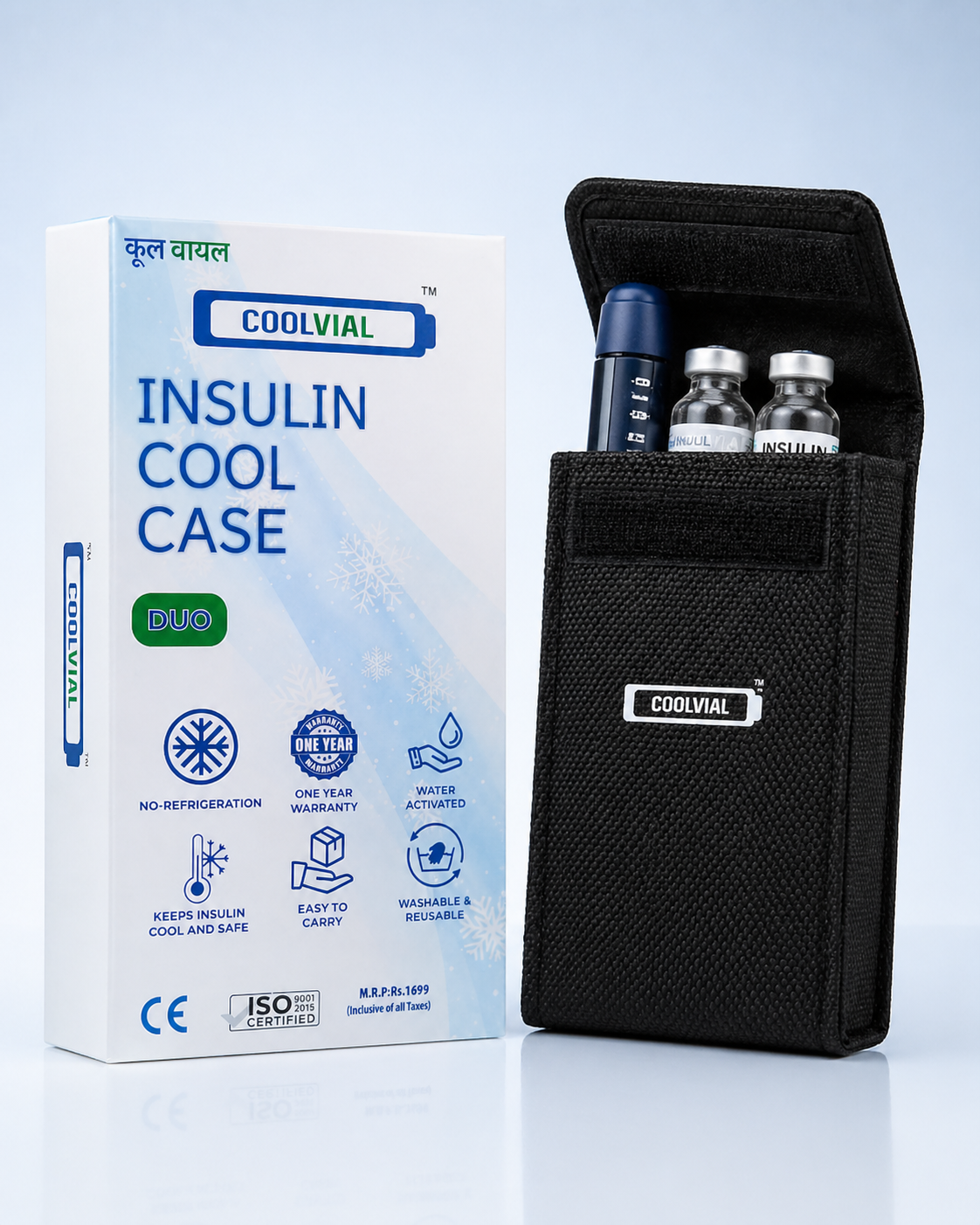
5 Essential Tips for Your Daily Commute With Insulin in Rajkot
Insulin at 2-8°C for 48+ hours. Trusted by 10,000+ Indian diabetics.
- Activate Your COOLVIAL Duo: Every morning, or the night before, soak your COOLVIAL Duo in cold water for 5-10 minutes as per instructions. Squeeze out excess water gently. This activates the cooling crystals.
- Pack Your Insulin: Place your insulin pens and/or vials into the activated COOLVIAL Duo. Ensure the insulin is at the correct temperature (either from the fridge or in-use at room temperature below 30°C).
- Check Supplies: Double-check that you have enough insulin, needles, alcohol swabs, and a blood glucose meter with strips.
- Prepare for Emergencies: Always carry a quick source of sugar (glucose tablets, candies) for hypoglycemic episodes.
2. On-the-Go Checks and Best Practices:
- Keep It Close: Always carry your COOLVIAL Duo with you, ideally in your personal bag, rather than leaving it in a separate piece of luggage or an unattended area.
- Avoid Direct Sun: Even within your cooling case, prolonged direct sun exposure can test its limits. In an auto-rickshaw, try to shield your bag from the sun. On a bus, keep it under your seat or in your lap, away from windows.
- Stay Hydrated: While not directly for insulin, staying hydrated helps you cope with Rajkot’s heat, which in turn helps you manage your diabetes better.
- Regular Blood Sugar Monitoring: Especially on days with varied commutes or high temperatures, monitor your blood sugar more frequently to detect any potential issues with insulin efficacy.
- Know Your Route: Plan your commute to minimize wait times in direct sun. If possible, choose routes with more shaded waiting areas.
By integrating these practices into your daily routine, you can confidently manage your daily commute with insulin, even in Rajkot’s challenging environment.
Addressing Specific Rajkot Scenarios: From Commutes to Lunch Storage
Let’s look at some specific situations faced by Rajkot residents and how to best manage insulin.
1. Long Commutes from 150 Feet Ring Road to Race Course: Many residents living along the extensive 150 Feet Ring Road commute to central areas like Race Course for work, education, or errands. This can involve 60-90 minutes in non-AC RMC city buses or auto-rickshaws.
- Strategy: For such commutes, an active cooling case like the COOLVIAL Duo is indispensable. Place your insulin in the activated case before leaving home. When on the bus or in an auto, keep the case within your immediate bag or lap, ensuring it’s not squashed and has some air circulation, and shield it from direct window sun.
2. Lunch Storage at Offices in Aji Dam and Watson Museum Corporate Parks: Corporate parks near Aji Dam and offices around the Watson Museum are common workplaces.
- Strategy:
- If a refrigerator is available: Store your insulin (in its original box or a protective container) in the office fridge. Clearly label it.
- If no refrigerator: Your COOLVIAL Duo is your personal mini-fridge. Keep it at your desk, away from direct sunlight, and ensure it’s not left in a hot cabin or car during lunch breaks.
3. School/College Tips for Rajkot’s Major Institutions: Students at institutions like Christ College, Atmiya University (near Kalavad Road), or schools in the Race Course area, face unique challenges.
- Strategy for Students:
- Educate: Children and young adults need to understand why insulin storage is crucial.
- Personal Cooler: A COOLVIAL Duo should be part of their daily school/college kit. It’s compact enough to fit in a backpack.
- Communicate: Inform school nurses or college authorities about the need for insulin storage, especially for emergency pens.
- Avoid Lockers/Two-Wheelers: Never leave insulin in uncooled lockers or, as reiterated, a two-wheeler dickey.
- Lunchtime: If injecting at lunch, ensure the insulin is kept cool until use. Our article, Diabetic-Friendly Restaurants & Cafes in Rajkot — Where to Eat Safely, provides tips for managing meals outside, which indirectly supports insulin management.
By taking these proactive steps, Rajkot residents can navigate their daily routines with confidence, knowing their insulin is protected. For a broader understanding of managing diabetes in Rajkot, refer to our Complete Diabetes Care Guide for Rajkot Residents — 2026 Edition.
Frequently Asked Questions (FAQ)
Q: How long can insulin be out of the fridge in Rajkot’s heat? A: Unopened insulin should ideally be kept refrigerated. Once removed from the fridge or opened, most insulins can be kept at room temperature (below 30°C) for up to 28 days. In Rajkot’s heat, “room temperature” rarely stays below 30°C, meaning a cooling case is essential for even short periods outside.
Q: Can I store insulin in a regular lunchbox with an ice pack? A: While a regular lunchbox with an ice pack offers some cooling, it’s not ideal for insulin. Ice packs can freeze insulin if in direct contact, which is just as damaging as excessive heat. Evaporative cooling cases like COOLVIAL Duo maintain a stable, cool temperature without the risk of freezing.
Q: Is it safe to carry insulin in my pocket while commuting in Rajkot? A: Carrying insulin directly in your pocket is generally not recommended, especially in hot weather. Body heat can raise the insulin’s temperature, and the constant movement can agitate it. A dedicated cooling case kept in a bag is a much safer option.
Q: What if my insulin gets hot during a commute? How do I know if it’s still good? A: If your insulin has been exposed to temperatures significantly above 30°C for an extended period, it’s best to err on the side of caution and discard it, even if there are no visible changes. The loss of potency might not be visible but can severely impact blood sugar control.
Q: Where can I buy a COOLVIAL Duo in Rajkot? A: COOLVIAL Duo can be ordered online directly from coolvial.com. We deliver across India, including Rajkot. You can also reach out via WhatsApp for direct orders.
Q: My child with Type 1 diabetes goes to school in Rajkot. What’s the best way to ensure their insulin is safe? A: For children with Type 1 diabetes in Rajkot schools, equip them with a COOLVIAL Duo. Teach them how to activate it and store their insulin. Also, communicate with the school staff or nurse about their diabetes management plan and the importance of proper insulin storage.
Q: Can I reuse the COOLVIAL Duo after a day’s use? A: Yes, the COOLVIAL Duo is designed for repeated use. Simply re-soak it in water when the cooling effect starts to diminish, typically after 12-16 hours, or before your next commute.
How We Researched This
This article is based on a comprehensive review of insulin storage guidelines from reputable sources such as RSSDI (Research Society for the Study of Diabetes in India) and ICMR-INDIAB (Indian Council of Medical Research - India Diabetes) data. We also cross-referenced local Rajkot hospital directories including Sterling Hospital Rajkot (Saurashtra), Synergy Hospital, and NM Virani Wockhardt Hospital, along with local pharmacy networks like Apollo Pharmacy, Wellness Forever, MedPlus, 1mg, and Generic Aadhaar, to understand the local healthcare landscape and patient needs. Geographical context, climate data for the Saurashtra region, and common commute patterns in Rajkot (e.g., from 150 Feet Ring Road to Race Course) were analyzed to provide hyper-local, actionable advice.
Conclusion
Navigating your daily commute with insulin in a city like Rajkot, with its fluctuating temperatures and diverse transport options, demands vigilance and the right tools. From the scorching summer heat of an RMC city bus to the direct sun in an auto-rickshaw, the risks to insulin efficacy are constant. By understanding insulin’s temperature sensitivity and adopting smart storage practices, you can ensure your medication remains potent and effective.
Equipping yourself with a reliable, electricity-free cooling solution like the COOLVIAL Duo is the single most impactful step you can take. It eliminates the worry of heat exposure during your 60-90 minute commute, keeps your insulin safe throughout your workday or school day, and empowers you to manage your diabetes confidently, anywhere in Rajkot. Don’t let the heat compromise your health.
Order your COOLVIAL Duo today at Rs 1,099 with code COOLHEAL at coolvial.com or via WhatsApp wa.me/918766952300 and take control of your insulin’s safety.
Medical Disclaimer: This article is for general information and educational purposes only. It is not intended to be a substitute for professional medical advice, diagnosis, or treatment. Always consult your endocrinologist or diabetologist before changing insulin storage or dosing practices, or if you have any questions regarding your medical condition.