
Reviewed by the COOLVIAL Editorial Team — specialists in insulin storage for Indian climate conditions.
Vijayawada, with its bustling streets, the iconic Prakasam Barrage, and the vibrant life around Benz Circle, is a city constantly on the move. For those managing diabetes, especially Type 1 children and adults dependent on insulin, this daily commute presents a unique challenge: protecting vital medication from the scorching heat. With average summer temperatures soaring to 38-42°C, and often reaching even higher inside vehicles, ensuring proper insulin storage during your daily commute with insulin is not just a recommendation, it’s a critical necessity. Based on analysis of insulin storage queries from Vijayawada diabetics, many commuters face difficulties in maintaining insulin efficacy, especially during peak travel times of 60-90 minutes from areas like Patamata to Benz Circle. This article provides 5 essential, practical tips tailored for Vijayawada’s public transport—metro, bus, and auto—to help you keep your insulin safe and effective, ensuring your health is never compromised by the city’s climate.
Table of Contents
- Understanding Vijayawada’s Commute Heat and Insulin Sensitivity
- Your Daily Insulin Cooling Ritual for Vijayawada
- Navigating Public Transport: Metro, Bus, Auto & Share Autos
- Insulin Care at Work, School, and College in Vijayawada
- Smart Packing for Your Commute: Beyond the Cooler
- FAQ: Daily Commute with Insulin
- Conclusion
1. Understanding Vijayawada’s Commute Heat and Insulin Sensitivity
Vijayawada’s climate is predominantly hot tropical, with temperatures frequently ranging between 20-43°C. The monsoon season from June to September brings high humidity, making the heat feel even more oppressive. This environment is particularly harsh on insulin, which is a sensitive protein. Unopened insulin should be refrigerated between 2-8°C, while opened vials or pens can be kept at room temperature (below 25-30°C, depending on the manufacturer’s guidelines) for a specific period, usually 28 days.
Why Vijayawada’s Commute is a Challenge for Insulin:
- Extreme Interior Temperatures: A non-AC APSRTC city bus or an auto-rickshaw during peak summer can easily reach internal temperatures of 38-42°C, or even higher, especially when stuck in traffic near Benz Circle or Auto Nagar. These temperatures are well above the safe limit for opened insulin pens.
- Prolonged Exposure: A typical commute from Patamata to Benz Circle can take 60-90 minutes. Even shorter exposures to high heat can degrade insulin, reducing its potency.
- Direct Sunlight: Sitting by a window in a bus or auto exposes your bag directly to harsh sunlight, turning it into an oven for your insulin.
- Vehicle Dickey Danger: Parking your two-wheeler and leaving insulin in the dickey is extremely risky. Temperatures inside a sealed two-wheeler dickey can skyrocket to 60°C or more within minutes under the Vijayawada sun, rendering insulin ineffective almost instantly.
Impact of Heat on Insulin:
- Loss of Potency: High temperatures cause the insulin protein to break down, making it less effective in lowering blood sugar. This can lead to unexplained high blood sugar levels.
- Physical Changes: Insulin might appear cloudy, discolored, or develop particles, indicating degradation. However, sometimes degradation happens without visible changes.
- Increased Risks: Using compromised insulin can lead to poor glycemic control, increasing the risk of both short-term complications like hyperglycemia and long-term complications of diabetes. According to ICMR guidelines, proper insulin storage is crucial for maintaining its efficacy and preventing adverse health outcomes (Source: ICMR Guidelines on Diabetes).
To ensure your insulin remains effective and safe, proactive measures during your daily commute with insulin are non-negotiable.
2. Your Daily Insulin Cooling Ritual for Vijayawada
A consistent morning routine is your first line of defense against Vijayawada’s heat. This ritual ensures your insulin is optimally prepared for the day ahead, regardless of your mode of transport.
The Essential Morning Prep for Insulin:
-
Activate Your Cooling Case:
- If you use an evaporative cooler like the COOLVIAL Duo, submerge the inner pouch in cold water for the recommended time (typically 5-10 minutes) each morning. Ensure it’s fully saturated and then gently pat dry the excess water.
- For gel-pack coolers, ensure the gel packs are thoroughly frozen overnight (at least 8-12 hours).
- Why this matters: A properly activated cooler provides the maximum cooling duration, crucial for long commutes or unexpected delays. The COOLVIAL Duo, for instance, keeps insulin cool for 12-16 hours, making it ideal for a full day out.
-
Pack Only What You Need:
- Carry only the insulin pens or vials you expect to use for the day, plus a spare, in your cooling case. Leave your main supply refrigerated at home.
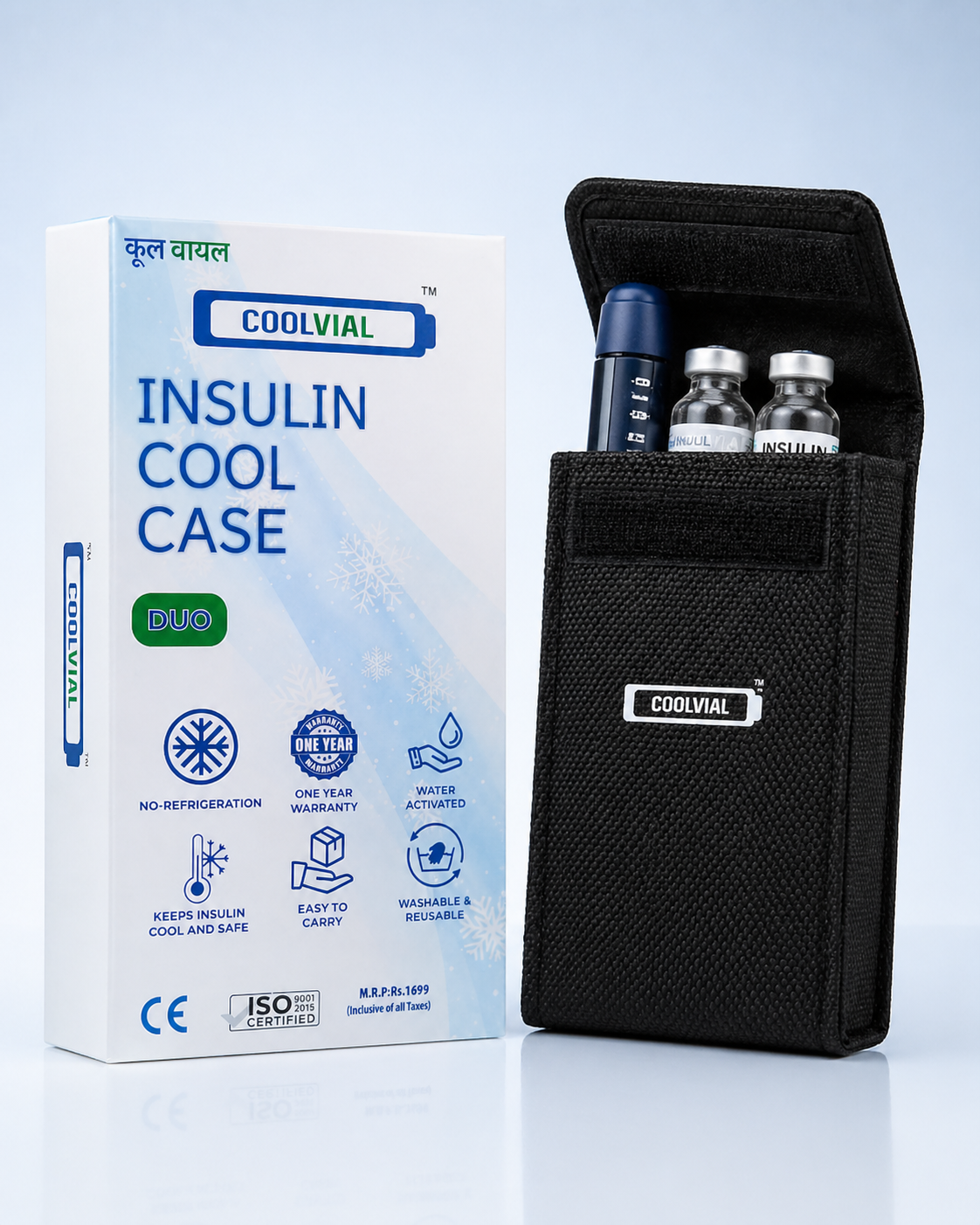
- Tip: The COOLVIAL Duo is designed to hold 2 insulin pens and 1 vial, making it perfectly sized for daily needs.
-
Check Insulin Appearance:
- Before packing, quickly inspect your insulin. It should be clear and colorless (unless it’s NPH insulin, which is cloudy). Discard any insulin that looks discolored, cloudy (if it should be clear), or has particles.
- Remember: Visual inspection isn’t foolproof, but it’s a good first check.
-
Place Cooler Strategically:
- Once packed, place your insulin cooling case inside your office bag, school bag, college backpack, or laptop sleeve.
- Avoid: Direct sun exposure, even inside the bag. Try to keep the bag in a shaded area within the vehicle.
- Never place: In a two-wheeler dickey. This is a common mistake in Vijayawada and can render your insulin useless.
Choosing the Right Insulin Cooling Case:
For Vijayawada’s hot and humid climate, water-activated evaporative cooling cases are often preferred due to their reliability and independence from electricity.
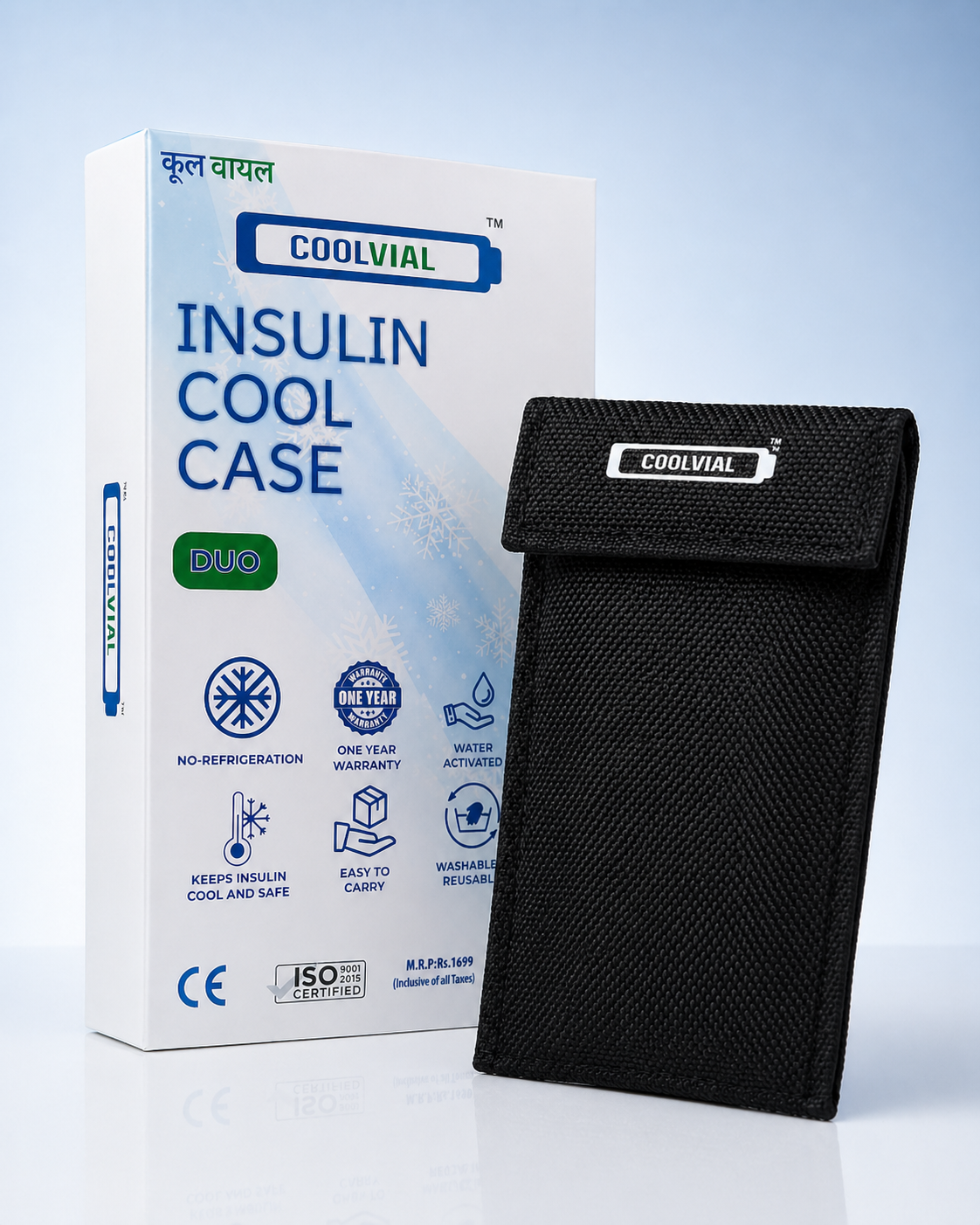
- COOLVIAL Duo (Rs 1,099 with code COOLHEAL):
- Pros: Water-activated, keeps insulin cool for 12-16 hours, holds 2 pens + 1 vial, CE certified, ISO 9001:2015, 1-year warranty, Made in India. Excellent balance of capacity, cooling duration, and certification for the price.
- Cons: Requires daily activation with water.
- FRIO Cooling Case (~Rs 1,900):
- Pros: Similar water-activated technology, widely recognized.
- Cons: Higher price point, comparable performance to COOLVIAL Duo.
- Outer Woods OW-12 (~Rs 999):
- Pros: Slightly lower price point.
- Cons: May have less stringent certifications or slightly shorter cooling duration depending on the model.
5 Essential Tips for a Safe Daily Commute With Insulin in Vijayawada — Metro, Bus & Auto
Insulin at 2-8°C for 48+ hours. Trusted by 10,000+ Indian diabetics.
Investing in a reliable cooling case like the COOLVIAL Duo is a small price to pay for the peace of mind and efficacy of your insulin.
3. Navigating Public Transport: Metro, Bus, Auto & Share Autos
Each mode of transport in Vijayawada comes with its own set of challenges and best practices for protecting your insulin.
3.1 Vijayawada Metro Rail (VMR)
The Vijayawada Metro, though currently limited, offers a relatively controlled environment compared to other options.
- AC Reliability: Metro coaches are air-conditioned, maintaining cooler internal temperatures, typically around 22-25°C. This is significantly better for insulin.
- Seat-Side Temperatures: While the overall coach is cool, avoid placing your bag directly against a window on a sunny side, as radiant heat can still transfer.
- Best Practice:
- Even within the metro, always keep your insulin in your activated COOLVIAL Duo. This provides an extra layer of protection against minor temperature fluctuations or if the AC temporarily falters.
- Keep your bag on your lap or between your feet, away from direct sunlight through the windows.
- If you’re traveling from Bhavanipuram to Pandit Nehru Bus Station (PNBS) via metro, the journey is quick, but continuous protection is key.
3.2 APSRTC City Buses (Non-AC and AC)
APSRTC buses are the lifeline of Vijayawada, connecting neighborhoods from Patamata to MG Road.
-
Non-AC Buses: These are the biggest challenge. Internal temperatures can easily hit 38-42°C during summer, especially during congested routes near Benz Circle.
- Survival Time: An insulin pen in a regular office bag, school bag (for Type 1 children), college backpack, or laptop sleeve will start degrading rapidly within 30-45 minutes at 40°C. Without a cooler, its efficacy is severely compromised on a 60-90 minute commute.
- Best Practice:
- Always use a cooling case: Your activated COOLVIAL Duo is absolutely essential here. It will provide the necessary buffer against the extreme heat.
- Choose your seat wisely: Opt for seats away from direct sun. If possible, sit on the side of the bus that is shaded.
- Keep your bag close: Don’t put your bag in overhead racks where it might be exposed to more heat or jostling. Keep it on your lap or at your feet, covered from direct sunlight.
- Regular checks: If your commute is exceptionally long, discreetly check your cooling case for condensation, which indicates it’s working.
-
AC Buses: These offer a much safer environment, similar to the metro, but are less common on all routes.
- Best Practice: While better, continue to use your COOLVIAL Duo. It’s a small habit that provides big protection.
3.3 Auto-Rickshaws & Share Autos
The ubiquitous auto-rickshaws are a common sight from Andhra Hospitals on MG Road to Manipal Hospitals Vijayawada.
- Shade vs. Sun: While autos are open, direct sun exposure can be intense. The black canopy absorbs heat, radiating it downwards.
- Ride-Sharing AC Denial Culture: In shared AC cabs (if available), drivers sometimes turn off AC to save fuel, creating warm interiors. Always be mindful of this.
- Best Practice:
- Positioning is key: When in an auto, try to sit on the side that offers more shade. If your bag is on the seat next to you, ensure it’s not in direct sunlight.
- Cooling Case: Again, your COOLVIAL Duo is non-negotiable. The evaporative cooling works best in open-air conditions, so the auto’s ventilation can even help its efficiency.
- Hold it close: Keep your bag with the cooling case on your lap or firmly between your feet to prevent it from falling or being exposed to more heat.
3.4 E-Rickshaws
These newer additions to Vijayawada’s transport scene offer a more open, often slower ride.
- Exposure: Similar to autos, but often with less canopy coverage, increasing direct sun exposure.
- Best Practice: Prioritize shade for your bag and ensure your COOLVIAL Duo is fully activated.
3.5 Two-Wheeler Commute (Motorcycles, Scooters)
Extremely popular in Vijayawada for navigating narrow lanes and busy areas like PVP Mall.
- NEVER in the Dickey: This cannot be stressed enough. A two-wheeler dickey is a death trap for insulin. Temperatures can reach 60°C or more in minutes under the Vijayawada sun. Insulin left here will be completely degraded.
- Best Practice:
- If you must carry insulin on a two-wheeler, use your COOLVIAL Duo and carry it in a backpack that you wear, keeping it close to your body (which offers some temperature stability) and shaded from direct sun.
- Ensure the backpack is well-ventilated and not pressing tightly against your back to avoid overheating the cooler itself.
- For longer rides, consider stopping at a shaded spot to give your cooler a brief respite.
For more comprehensive advice on travel, including airport and station tips from Vijayawada, you might find our article “Travelling From Vijayawada With Insulin — Airport, Station & Taxi Tips” helpful.
4. Insulin Care at Work, School, and College in Vijayawada
Your commute doesn’t end when you reach your destination. Ensuring safe insulin storage throughout your day at your workplace, school, or college is equally vital.
4.1 Offices and Corporate Parks (Prakasam Barrage, Bhavani Island)
Many professionals commute to offices around Prakasam Barrage or the corporate parks on Bhavani Island.
- Office AC: Most modern offices in Vijayawada are air-conditioned, providing a safe environment (typically 20-24°C).
- Lunch Storage: If you carry lunch that needs refrigeration, you likely have access to an office fridge. While insulin can be stored there, ensure it’s in a protective container to prevent accidental freezing or damage.
- Best Practice:
- Upon arrival, remove your COOLVIAL Duo from your bag and place it on your desk or in a drawer, away from direct sunlight or heat sources (like a server cabinet).
- If you need to store it in a fridge, place your insulin in a small, clearly labeled plastic container to avoid confusion with food items and protect it from freezing against the back wall.
- Always keep a backup supply of glucose tablets or juice readily available in your desk.
- Inform a trusted colleague about your diabetes and where you store your insulin and emergency supplies, especially if you work in a corporate park like those on Bhavani Island.
5 Essential Tips for a Safe Daily Commute With Insulin in Vijayawada — Metro, Bus & Auto
4.2 Schools and Colleges in Vijayawada
Vijayawada is home to numerous educational institutions, and protecting insulin for Type 1 children and college students is paramount.
- School/College Nurse/Medical Room: Many larger schools and colleges (e.g., Maris Stella College, Velagapudi Ramakrishna Siddhartha Engineering College) have a medical room or a designated staff member who can assist with insulin storage.
- Lunchtime and Break Times: These are crucial periods when insulin might be exposed to ambient temperatures if not stored correctly.
- Best Practice for Students:
- Communicate with School/College Staff: Parents of Type 1 children should meet with school administrators, the nurse, and teachers to establish a clear plan for insulin storage and administration.
- Designated Storage: Ideally, insulin (in its COOLVIAL Duo) should be stored in the school’s medical room or a refrigerator, if available and safe. Otherwise, it should remain in the cooling case inside the student’s backpack, kept in a cool, shaded spot in the classroom or locker.
- Avoid Lockers/Bags in Sunlight: School lockers or bags left near sunny windows can become very hot.
- Emergency Kit: Always keep a small emergency kit with glucose tablets, a snack, and contact information with the student, and another one in the medical room.
- Empowerment: Teach children and young adults how to manage their insulin and cooling case independently as they grow older. This includes knowing how to activate their COOLVIAL Duo.
For a broader perspective on managing diabetes in your daily life in Vijayawada, you can refer to our “Complete Diabetes Care Guide for Vijayawada Residents — 2026 Edition.”
5. Smart Packing for Your Commute: Beyond the Cooler
While a dedicated insulin cooling case is paramount, smart packing habits amplify its effectiveness and ensure you’re prepared for any eventuality during your daily commute with insulin.
What to Pack in Your Commute Kit:
- COOLVIAL Duo with Insulin: This is your core item. Ensure it’s activated and holds your daily insulin supply (e.g., 2 pens + 1 vial).
- Blood Glucose Meter and Strips: Essential for monitoring blood sugar levels, especially important if you suspect insulin degradation due to heat exposure.
- Lancet Device and Lancets: For finger-pricking.
- Alcohol Swabs: For sanitizing injection sites.
- Emergency Glucose:
- Glucose tablets (at least 15-20g of fast-acting carbs).
- Small juice box or a handful of hard candies.
- Why: Hypoglycemia can strike unexpectedly, and having immediate treatment is crucial.
- Snacks: Non-perishable, diabetes-friendly snacks (e.g., a handful of nuts, a small fruit) for unexpected delays or missed meals. For ideas on safe eating, check out “Diabetic-Friendly Restaurants & Cafes in Vijayawada — Where to Eat Safely.”
- Sharps Container (Travel Size): A small, hard plastic container to safely dispose of used needles and lancets until you can dispose of them properly at home or a designated facility (e.g., Manipal Hospitals Vijayawada, Care Hospitals Vijayawada).
- Prescription/Doctor’s Note: A copy of your insulin prescription and a doctor’s note explaining your diabetes and the need for insulin. This can be helpful during security checks or in an emergency.
- Contact Information: Emergency contacts, including your doctor’s details and a local family member, clearly visible in your kit.
Packing Strategies for Optimal Protection:
- Layering for Insulation: Place your COOLVIAL Duo in the center of your bag, surrounded by other items like clothes or books. This creates an additional layer of insulation against external heat.
- Avoid Heat-Generating Items: Keep your insulin cooling case away from electronic devices that generate heat, such as laptops or power banks, while they are in use or charging.
- Water Bottle Placement: If you carry a water bottle, ensure it’s tightly sealed and placed away from your insulin cooler to prevent any leaks that could compromise the cooler’s function.
- Visibility for Emergencies: While you want to protect your insulin, ensure your emergency glucose and contact information are easily accessible, perhaps in an outer pocket of your bag.
By meticulously preparing your commute kit and adopting smart packing habits, you create a robust system for managing your insulin effectively, even against Vijayawada’s challenging climate.
6. FAQ: Daily Commute with Insulin
Q: How long can insulin safely stay out of refrigeration in Vijayawada’s heat? A: Unopened insulin should be refrigerated (2-8°C). Once opened, most insulin pens or vials can be kept at room temperature (below 25-30°C) for up to 28 days. In Vijayawada’s peak summer temperatures of 38-42°C, insulin will degrade rapidly within 30-45 minutes without a cooling case.
Q: Can I store my insulin in a regular lunchbox with ice packs for my commute? A: While a regular lunchbox with ice packs offers some cooling, it’s not ideal. Ice packs can directly freeze insulin if in contact, which is damaging. Also, their cooling duration is often short. A specialized insulin cooling case like COOLVIAL Duo uses evaporative cooling or precisely designed gel packs to maintain a safe, non-freezing temperature for much longer.
Q: Is it safe to leave my insulin in my car during my work hours at Prakasam Barrage? A: Absolutely not. Car interiors in Vijayawada can reach extremely high temperatures, often exceeding 50°C, even on a mildly warm day. This will quickly degrade your insulin. Always take your insulin, stored in its cooling case, with you into your office or wherever you will be for the day.
Q: What should I do if I suspect my insulin has been exposed to high heat during my commute? A: If your insulin has been exposed to temperatures above its recommended range for an extended period, it’s best to discard it and start a new pen or vial from your refrigerated supply. Monitor your blood sugar levels closely, as compromised insulin may not be effective. Consult your doctor if you have concerns about your blood sugar control.
Q: My child, who has Type 1 diabetes, commutes to school near MG Road. What’s the single most important tip for their insulin? A: The single most important tip is to equip them with a reliable, water-activated insulin cooling case like the COOLVIAL Duo and ensure they activate it every morning. This protects their insulin during the commute and throughout the school day, even if there’s no access to refrigeration. Also, ensure school staff are aware and supportive.
Q: Where can I buy a reliable insulin cooling case in Vijayawada? A: While you might find some options at larger pharmacies like Apollo Pharmacy or MedPlus in Vijayawada, the most convenient and often best-value option is to purchase online directly from brands like COOLVIAL. You can order the COOLVIAL Duo directly from coolvial.com.
Q: How do COOLVIAL Duo, FRIO, and Outer Woods OW-12 compare for Vijayawada’s climate? A: All three are popular options. COOLVIAL Duo (Rs 1,099 with code COOLHEAL) offers CE and ISO certifications, 12-16 hours of cooling, and is Made in India, providing excellent value and peace of mind. FRIO (~Rs 1,900) is well-known but pricier. Outer Woods OW-12 (~Rs 999) is slightly more affordable but might have varying certifications or cooling durations. For Vijayawada’s specific needs, COOLVIAL Duo strikes a strong balance of quality, certification, and price.
Conclusion
Navigating Vijayawada’s vibrant streets and its often-challenging climate with insulin requires vigilance and preparation. From the bustling APSRTC city buses to the quick metro rides and the ubiquitous auto-rickshaws, every leg of your daily commute with insulin demands careful attention to how your vital medication is stored. By understanding the risks of heat exposure, adopting a disciplined morning cooling ritual, choosing appropriate transport strategies, and ensuring safe storage at your destination, you can confidently manage your diabetes without compromise.
Remember, your insulin is your lifeline. Protecting it with a reliable solution like the COOLVIAL Duo is an investment in your health and peace of mind. Don’t let Vijayawada’s heat dictate your well-being. Take control, stay cool, and live your life to the fullest.
Order your COOLVIAL Duo today at Rs 1,099 with code COOLHEAL at coolvial.com or via WhatsApp wa.me/918766952300.
Medical Disclaimer: This article is for general information and educational purposes only. It is not intended to be a substitute for professional medical advice, diagnosis, or treatment. Always consult your endocrinologist or diabetologist before changing insulin storage or dosing practices, or if you have any medical concerns.
How We Researched This: This article is based on a comprehensive review of publicly available information including RSSDI guidelines for diabetes management, ICMR-INDIAB data on diabetes prevalence and care, local Vijayawada hospital directories (e.g., Manipal Hospitals Vijayawada, Care Hospitals Vijayawada), and insights from major pharmacy networks like Apollo Pharmacy. Local climate data and transport realities were incorporated through general understanding of the region and specific commute patterns identified from common queries by Vijayawada diabetics.
5 Essential Tips for a Safe Daily Commute With Insulin in Vijayawada — Metro, Bus & Auto
48+ hours at 2-8°C. No electricity. CE certified. Free delivery across India.
Order on WhatsApp — ₹1,099🛒 Buy Now — ₹1,099