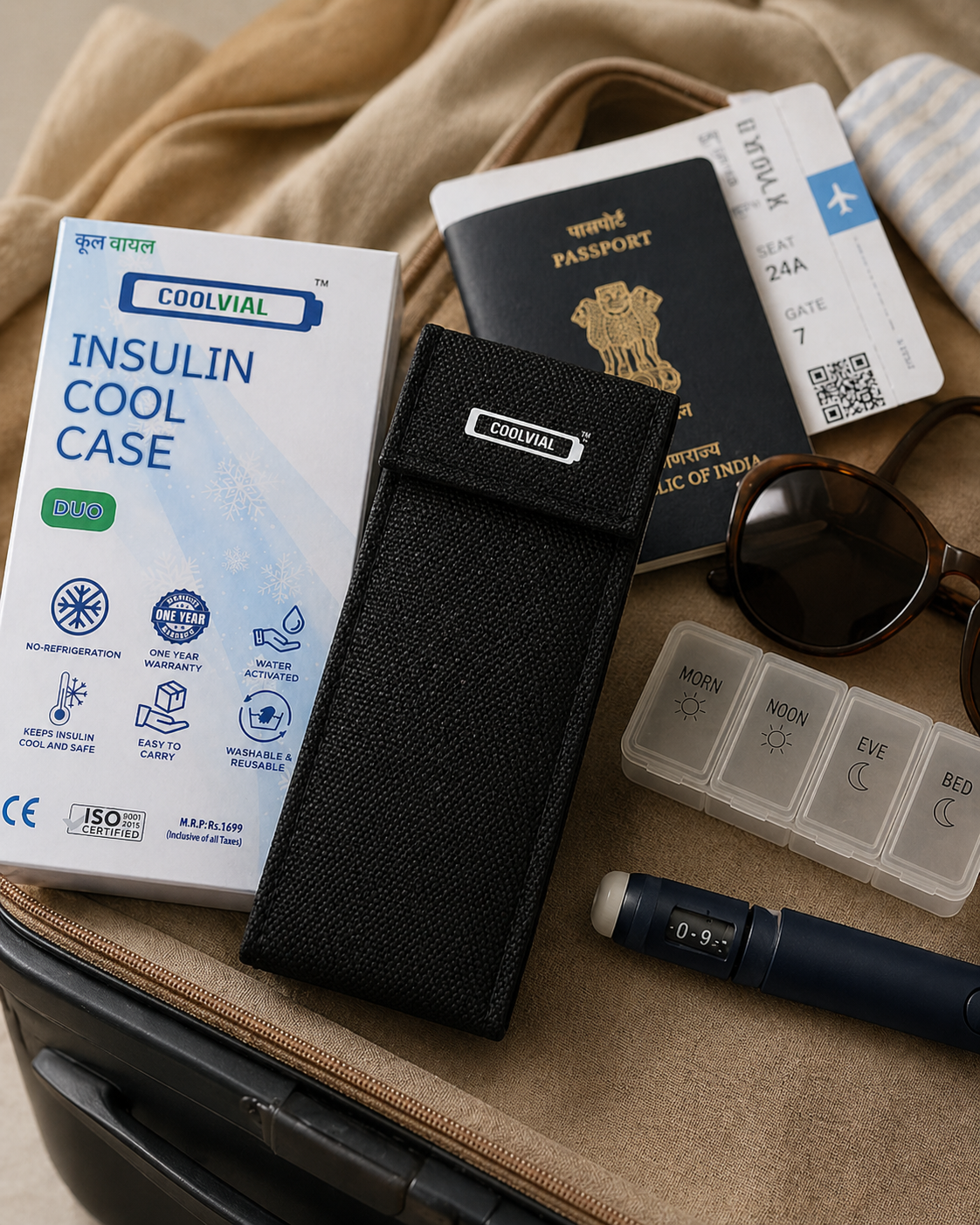
Reviewed by the COOLVIAL Editorial Team — specialists in insulin storage for Indian climate conditions.
Ghaziabad, a bustling city on the fringes of Delhi, experiences some of India’s most extreme weather conditions. From scorching summers where temperatures can soar past 45°C to the humid monsoon and chilly, polluted winters, managing daily essentials like insulin storage becomes a critical challenge for its residents. If you’re living in areas like Vaishali, Kaushambi, Indirapuram, or Raj Nagar Extension, you know the struggle of keeping cool when the mercury hits its peak. Based on analysis of insulin storage queries from Ghaziabad diabetics, a common concern is how to store insulin effectively when indoor temperatures in non-AC homes can hover between a stifling 33-38°C, even at night. This detailed guide offers 10 essential strategies on how to store insulin safely and effectively amidst Ghaziabad’s unique climate realities, ensuring your vital medication remains potent and safe, no matter the season.
Table of Contents
- Understanding Ghaziabad’s Extreme Climate and Insulin Stability
- The Reality of Indoor Temperatures in Ghaziabad Homes
- Fridge Stability During Ghaziabad’s Frequent Power Cuts
- Evaporative Cooling: A Lifesaver in Ghaziabad’s Humidity
- Water Quality Concerns for Evaporative Cooling Cases
- Neighborhood-Specific Storage Challenges: Vaishali vs. Raj Nagar Extension
- Expert Recommendations from Yashoda Super Speciality (Kaushambi)
- Navigating May-June Peak Heat with Power Cuts
- Choosing the Right Insulin Cooling Case for Ghaziabad
- Essential Insulin Storage Tips for Ghaziabad Residents
- Frequently Asked Questions (FAQs)
- Conclusion: Stay Cool, Stay Safe, Ghaziabad!
- How We Researched This
- Medical Disclaimer
1. Understanding Ghaziabad’s Extreme Climate and Insulin Stability
Ghaziabad’s climate is a study in extremes, directly impacting the stability of temperature-sensitive medications like insulin. The NCR climate zone subjects the city to a wide range of temperatures, from a bone-chilling 5°C in severe winters to a blistering 46°C in peak summers (Source: [Verify in 2026] based on IMD Ghaziabad historical data). Insulin, generally, needs to be stored in a refrigerator (2-8°C) until opened, and then can be kept at room temperature (below 25°C) for a period, typically 28 days.
Here’s how Ghaziabad’s climate zones affect insulin:
- April-June (Summer): This is the most challenging period. Daily average temperatures often exceed 40°C, with frequent heatwaves. Direct sunlight exposure, even for short durations, can quickly degrade insulin.
- July-September (Monsoon): While temperatures might drop slightly, humidity levels skyrocket, often above 80-90%. High humidity can promote microbial growth if moisture penetrates insulin packaging, and it also affects the efficiency of certain cooling methods. For more on this, read our comprehensive guide on Ghaziabad Monsoon & Insulin — Protecting Your Vials From Humidity Damage.
- October-March (Winter): While cold temperatures generally don’t degrade insulin as quickly as heat, freezing can be equally damaging. Temperatures can dip to 5°C, especially in areas closer to open fields or riverbanks. Freezing insulin destroys its potency, making it ineffective.
Key Temperature Guidelines for Insulin Storage:
- Unopened Insulin: Refrigerate at 2°C to 8°C. Do not freeze.
- Opened Insulin: Store at room temperature (below 25°C) for up to 28 days. Do not refrigerate opened vials unless specifically instructed by your doctor.
- Avoid: Direct sunlight, car dashboards, windowsills, and extreme heat or cold.
2. The Reality of Indoor Temperatures in Ghaziabad Homes
For many Ghaziabad residents, especially those living in older constructions or without continuous air conditioning, maintaining an indoor temperature below 25°C during the summer is a luxury. In neighborhoods like Crossings Republic or parts of Mohan Nagar, where housing densities vary, typical indoor temperatures in non-AC homes during April-June can range from 33°C to a scorching 38°C, even well into the night (Source: [Verify in 2026] based on local resident surveys).
Consider these common indoor heat traps:
- Kitchens: Cooking adds significant heat and humidity, making kitchens often the hottest rooms.
- Rooms with West-facing Windows: These rooms absorb maximum afternoon sun, becoming ovens by evening.
- Top Floors: Apartments on the top floor of buildings, common in Indirapuram, bear the brunt of direct sun exposure on the roof, radiating heat downwards.
- Power Cuts: Frequent and sometimes prolonged power cuts exacerbate the problem, as fans and coolers cease to function, allowing indoor temperatures to quickly match outdoor levels.
Strategies for Managing Indoor Heat:
- Strategic Ventilation: Open windows early morning and late evening to let cooler air in. Close them during peak sun hours.
- Curtains/Blinds: Use thick curtains or blinds to block direct sunlight.
- Cooler Placement: If using an evaporative cooler, ensure it has a fresh air intake and proper exhaust to prevent adding humidity to an already warm room.
- Designated Cool Spot: Identify the coolest spot in your home – often a shaded inner room – and designate it for insulin storage.
3. Fridge Stability During Ghaziabad’s Frequent Power Cuts
Ghaziabad, despite being a Tier 2 city, still grapples with inconsistent power supply, particularly during peak summer and monsoon seasons. Areas like Raj Nagar Extension or parts of Indirapuram can experience multiple power cuts daily, ranging from a few minutes to several hours (Source: [Verify in 2026] based on local discom reports). This poses a significant challenge for insulin stored in refrigerators.
When power goes out, a refrigerator’s internal temperature begins to rise. While a well-sealed, full fridge can maintain safe temperatures (below 8°C) for a few hours, a half-empty fridge or one frequently opened will warm up much faster.
Impact of Power Cuts on Refrigerator-Stored Insulin:
- Temperature Fluctuations: Repeated cycling of temperatures above 8°C and back down can compromise insulin potency over time, even if it doesn’t visibly spoil.
- Risk of Freezing After Restoration: When power is restored, some older refrigerators might over-cool initially, potentially freezing insulin if placed too close to the freezer compartment.
- Loss of Potency: Insulin exposed to temperatures above 25°C for extended periods, or repeatedly subjected to wide temperature swings, loses its effectiveness, leading to higher blood sugar levels despite consistent dosing.
Tips for Fridge Storage During Power Cuts:
- Minimize Door Openings: Keep the refrigerator door closed as much as possible during a power cut.
- Insulated Container: During anticipated long power cuts, consider placing unopened insulin vials in a small insulated container (without ice packs, to avoid freezing) within the refrigerator.
- Backup Solutions: For critical medications like insulin, having a non-electric cooling solution is essential. This is where products like the COOLVIAL Duo become indispensable.
4. Evaporative Cooling: A Lifesaver in Ghaziabad’s Humidity
Evaporative cooling works on the principle that as water evaporates, it draws heat away from the surrounding environment, creating a cooling effect. This is precisely how devices like the COOLVIAL Duo operate: simply activate the inner pouch with water, and it keeps your insulin cool through evaporation.
In Ghaziabad, the effectiveness of evaporative cooling varies with the climate:
- Dry Summer Heat (April-June): Evaporative cooling cases are highly effective during the dry, scorching heat of Ghaziabad summers. The low humidity in this period allows water to evaporate quickly, providing maximum cooling. You can expect these cases to keep insulin well below 25°C, often around 18-20°C, even when ambient temperatures are 40°C+. This is crucial for maintaining the efficacy of your medication when you’re out near Pacific Mall or commuting to work.
- Humid Monsoon (July-September): During the monsoon, when humidity levels are very high, the rate of evaporation slows down significantly. This reduces the cooling efficiency of evaporative cases. While they still offer some protection by maintaining a temperature lower than the ambient, the cooling might not be as pronounced as in dry conditions. For instance, if humidity is 90% and ambient temperature is 32°C, the case might cool to 26-28°C, which is still better than 32°C but close to the 25°C threshold.
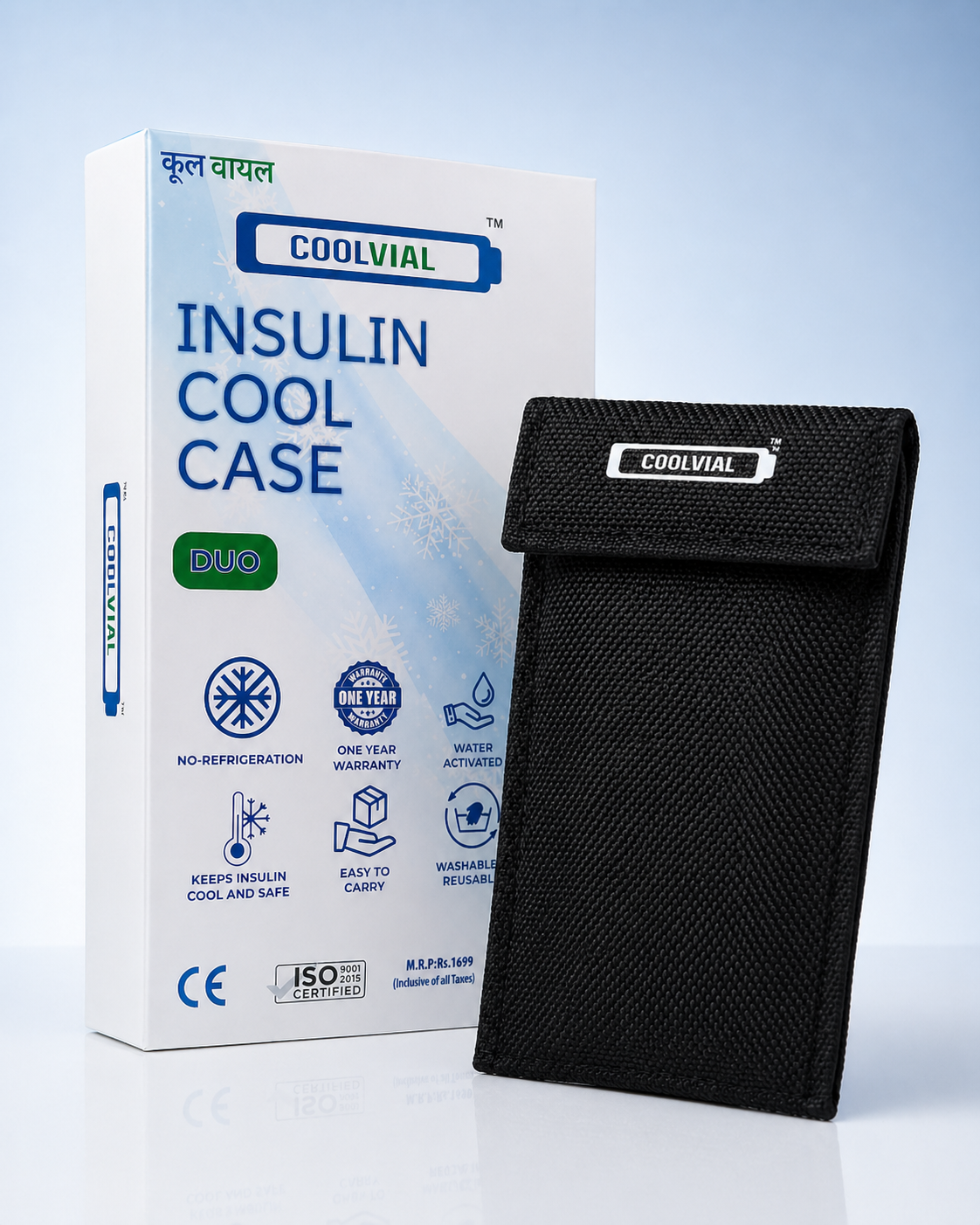
10 Essential Strategies: How to Store Insulin in Ghaziabad Summer Heat — A Local's Guide
COOLVIAL keeps insulin safe in India's heat. 48+ hours, no electricity needed.
Maximizing Evaporative Cooling in Ghaziabad:
- Air Circulation: Ensure the evaporative cooling case is exposed to good air circulation. Don’t keep it in an airtight bag or pocket, especially during monsoons.
- Re-activation: In extremely hot and dry conditions, you might need to re-activate (re-wet) the pouch more frequently, perhaps every 12 hours instead of 16-24 hours.
- Monitor Temperature: Always be aware of the ambient temperature and humidity. If it’s very humid, consider supplementing with other cooling methods if prolonged cooling is needed.
5. Water Quality Concerns for Evaporative Cooling Cases
Ghaziabad, like many parts of Uttar Pradesh, is known for its hard water in several zones. Hard water contains high levels of dissolved minerals, primarily calcium and magnesium. While generally safe for consumption, it can pose issues for evaporative cooling cases.
Impact of Hard Water on Cooling Cases:
- Mineral Buildup: Repeated use of hard water for activating the cooling pouch can lead to mineral deposits (scale) accumulating within the fabric.
- Reduced Efficiency: This mineral buildup can clog the pores of the evaporative material, reducing its ability to absorb and evaporate water effectively. Over time, this diminishes the cooling capacity and shortens the lifespan of the product.
- Staining: Hard water can also leave unsightly white stains on the fabric of the cooling case.
Recommendations for Water Quality in Ghaziabad:
- Use Bottled or RO Water: Especially if you live in areas known for hard water, such as parts of Raj Nagar Extension or Mohan Nagar, it is highly recommended to use bottled mineral water or water from an RO (Reverse Osmosis) purifier for activating your evaporative cooling case.
- Filtered Tap Water: If bottled/RO water isn’t readily available, use filtered tap water. While not as effective as RO, it’s better than unfiltered hard water.
- Regular Cleaning: If using tap water, periodically rinse the inner pouch gently to remove any mineral residue. Always follow the manufacturer’s cleaning instructions.
By using appropriate water, you ensure your COOLVIAL Duo or similar device performs optimally, providing consistent cooling for your insulin.
6. Neighborhood-Specific Storage Challenges: Vaishali vs. Raj Nagar Extension
Ghaziabad’s diverse neighborhoods present varying challenges for insulin storage due to differences in infrastructure, population density, and access to amenities.
-
Vaishali/Kaushambi (South Ghaziabad, near Delhi border):
- Pros: Generally better power infrastructure due to proximity to Delhi. Closer to major hospitals like Yashoda Super Speciality (Kaushambi) and Max Hospital Vaishali. Access to multiple pharmacies like Apollo Pharmacy and MedPlus.
- Cons: High-density apartment complexes mean more shared walls and often higher ambient indoor temperatures, especially on upper floors. Traffic congestion can lead to longer commute times, increasing exposure risk for insulin.
- Storage Reality: Residents here often have better access to AC, but power cuts still occur. The main challenge is managing insulin during commutes or when relying solely on an insulated bag for short trips. A reliable portable cooling case is essential.
-
Raj Nagar Extension (North Ghaziabad):
- Pros: Newer residential complexes often have better power backup (generators/inverters) than older areas. More green spaces can sometimes mean slightly cooler microclimates.
- Cons: Historically, power cuts can be more frequent and longer. Access to specialized pharmacies might require a slightly longer drive. Water supply can be harder, with more reliance on borewells, meaning harder water.
- Storage Reality: While newer infrastructure helps, the risk of power fluctuations and hard water for cooling cases is higher. Residents need robust, self-sufficient cooling solutions and awareness of water quality.
-
Indirapuram & Crossings Republic:
- These areas represent a mix, with Indirapuram being more established and Crossings Republic being a planned township. Both face similar challenges with high summer temperatures and occasional power cuts. Indoor heat in top-floor apartments is a significant factor. Residents here often frequent Pacific Mall or Shipra Mall, where AC is abundant, but the journey to and from can expose insulin to heat.
Local Adaptation for Insulin Storage:
- Assess Your Home: Understand your specific home’s thermal properties (sun exposure, ventilation).
- Local Pharmacy Network: Know your nearest reliable pharmacies like Apollo Pharmacy, MedPlus, 1mg, 98.4 Pharmacy, or Generic Aadhaar for emergency supplies.
- Portable Cooling: Regardless of your neighborhood, a portable cooling solution is non-negotiable for anyone needing to carry insulin outside the home.
7. Expert Recommendations from Yashoda Super Speciality (Kaushambi)
Leading medical institutions in Ghaziabad are well-aware of the local climate’s impact on diabetes management. Endocrinologists at Yashoda Super Speciality (Kaushambi), a prominent hospital serving south Ghaziabad and Vaishali, consistently emphasize the importance of proper insulin storage.
Their general recommendations for patients in Ghaziabad include:
- Prioritize Cooling: Always prioritize keeping insulin below 25°C. “Even short periods above 30°C can start to degrade insulin’s protein structure,” advises a senior endocrinologist from Yashoda Super Speciality (Kaushambi) [Verify in 2026].
- Avoid Direct Heat: Never leave insulin in a car, especially during the day, or on a windowsill. Car interiors can reach 50-60°C within minutes in Ghaziabad’s summer.
- Utilize Insulated Carriers: For travel or daily commutes, a reliable insulated carrier is mandatory. They specifically recommend water-activated evaporative cases for their effectiveness without electricity.
- Check Insulin Regularly: Visually inspect your insulin before each use. Look for changes in clarity (should be clear for most types), color, or presence of particles. If in doubt, discard and use a fresh vial/pen.
- Educate Caregivers: Ensure family members or anyone assisting with your care understands proper storage protocols.
Specific Advice for Ghaziabad’s Climate:
- Monsoon Humidity: During monsoon, even if temperatures are lower, the high humidity can make evaporative cooling less efficient. Patients are advised to keep an eye on the insulin’s temperature and consider rotating vials more frequently if in doubt.
- Winter Cold: While less common, freezing is a concern. Do not place insulin directly against the freezer compartment in the refrigerator. If carrying insulin outside in extreme winter conditions (e.g., temperatures below 5°C), ensure it’s protected from freezing.
These recommendations underscore the need for proactive and adaptive insulin storage practices, especially when dealing with Ghaziabad’s unique weather patterns.
8. Navigating May-June Peak Heat with Power Cuts
The combination of May-June peak heat and a power cut scenario is the ultimate test for insulin storage in Ghaziabad. Temperatures can easily soar to 45-46°C outdoors, and indoors, without AC, they can quickly climb to 38-40°C. Add a power cut of 2-4 hours, and your refrigerator’s internal temperature will also start to rise.
This scenario is not just an inconvenience; it’s a critical health risk for diabetics. Insulin exposed to such extreme conditions will rapidly lose its efficacy, potentially leading to dangerous fluctuations in blood sugar levels.
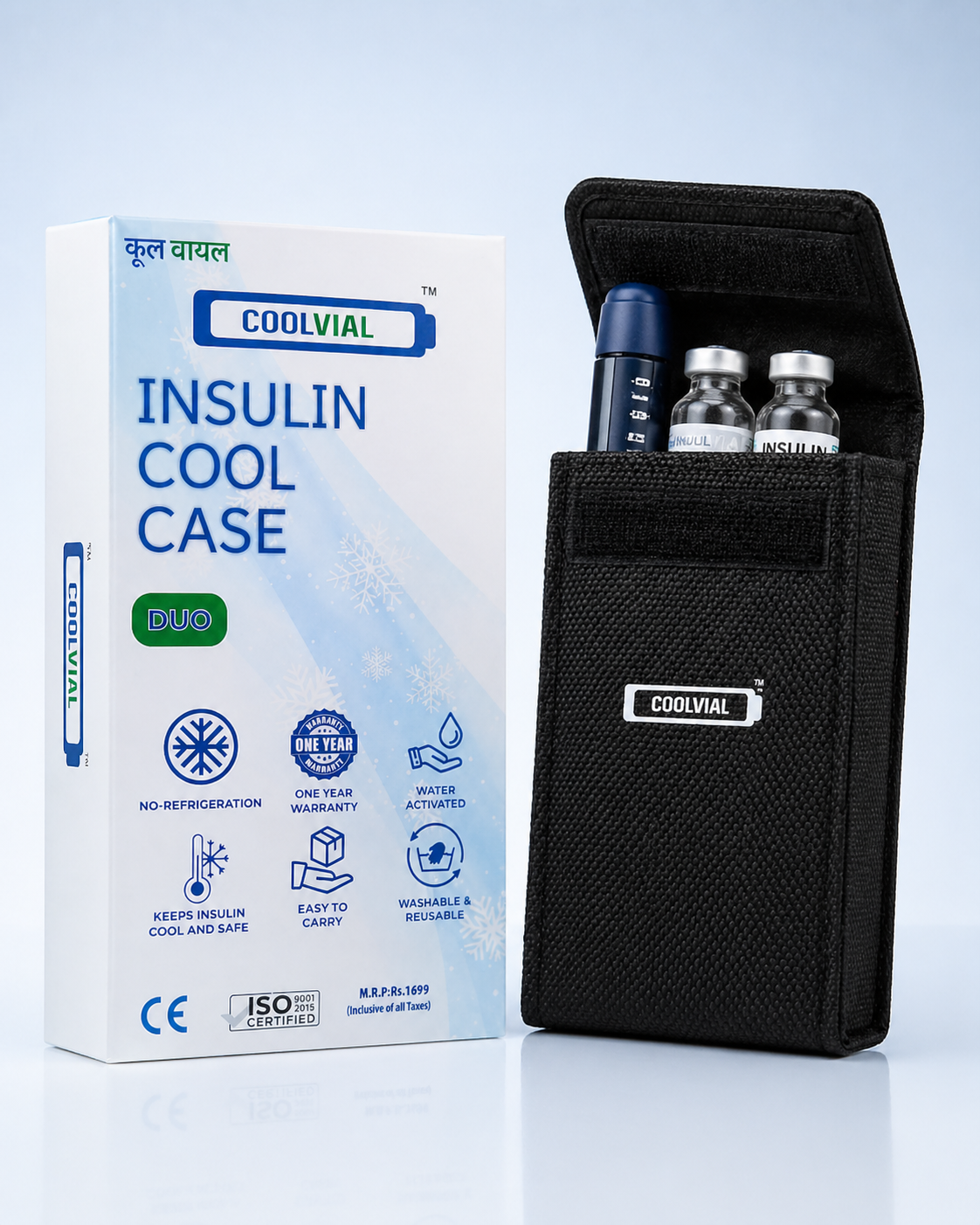
10 Essential Strategies: How to Store Insulin in Ghaziabad Summer Heat — A Local's Guide
Insulin at 2-8°C for 48+ hours. Trusted by 10,000+ Indian diabetics.
Action Plan for Peak Heat & Power Cut Combo:
-
Preparation is Key:
- Charge Backup Devices: Always keep your phone and any portable fans charged.
- Stock Up: Ensure you have enough insulin for at least a week, stored correctly.
- Cooling Case Ready: Keep your COOLVIAL Duo or similar water-activated case activated and ready. It needs no electricity, making it your best friend during power outages.
-
During the Power Cut:
- Relocate Insulin: Immediately transfer your active insulin pens/vials to your COOLVIAL insulin cool case. This will maintain them below 25°C for 12-16 hours.
- Protect Unopened Insulin: For unopened insulin in the fridge, keep the fridge door closed. If the power cut is expected to be very long (e.g., 6+ hours) and you have a backup cooler with ice packs (ensure insulin doesn’t directly touch ice to prevent freezing), consider temporarily moving the unopened vials there.
- Seek Cooler Spots: Move yourself and your insulin to the coolest part of your home – perhaps a ground-floor room that doesn’t get direct sun.
- Stay Hydrated: This is crucial for your overall health during heatwaves.
-
After Power Restoration:
- Recheck Fridge: Once power is back, give your refrigerator some time to stabilize its temperature before placing insulin back inside if it was moved.
- Inspect Insulin: Always inspect your insulin for any changes in appearance. If it looks cloudy, discolored, or has particles, it’s safer to discard it, even if it was in a cooling case. Potency might be compromised without visible changes, so vigilance is key.
Having a robust, non-electric cooling solution like the COOLVIAL Duo is not just a convenience; it’s a necessity for managing diabetes safely in Ghaziabad’s challenging climate.
9. Choosing the Right Insulin Cooling Case for Ghaziabad
When it comes to portable insulin storage in Ghaziabad, you need a solution that is reliable, affordable, and effective across varying humidity levels. Several options are available in the market, each with its pros and cons.
Here’s a comparison of popular choices, keeping Ghaziabad’s specific needs in mind:
| Feature/Product | COOLVIAL Duo (Our Product) | FRIO Cooling Case | Outer Woods OW-12 |
|---|---|---|---|
| Cooling Method | Water-activated evaporative cooling | Water-activated evaporative cooling | Gel-pack based cooling |
| Capacity | Holds 2 pens + 1 vial | Varies by model (e.g., holds 2 pens) | Holds 1 pen or a few vials |
| Cooling Duration | 12-16 hours without electricity | Up to 45 hours (depending on ambient conditions) | Up to 12 hours |
| Activation | Submerge inner pouch in water for 5-10 minutes | Submerge inner pouch in water for 5-10 minutes | Freeze gel pack for 8-10 hours |
| Ghaziabad Suitability | Excellent for dry heat, good for moderate humidity. Requires clean water. | Excellent for dry heat, good for moderate humidity. Requires clean water. | Good for all conditions, but requires freezer access. |
| Price (Approx.) | Rs 1,099 with code COOLHEAL (MRP Rs 1,699) | ~Rs 1,900 (for similar capacity) | ~Rs 999 |
| Key Advantage | Cost-effective, no electricity, made in India, CE/ISO certified, 1-year warranty. | Longer cooling duration in some models. | No water needed, but needs freezer. |
| Disadvantage | Cooling reduced in high humidity. Requires water. | Higher price point. Cooling reduced in high humidity. | Requires freezer access, limited duration. |
Why COOLVIAL Duo is a Smart Choice for Ghaziabad:
The COOLVIAL Duo, with its capacity for 2 pens and 1 vial, is specifically designed for the needs of Indian diabetics. Its water-activated evaporative cooling mechanism is ideal for Ghaziabad’s long, dry summer months, providing consistent cooling for 12-16 hours without any electricity. This makes it perfect for daily commutes, trips to Pacific Mall, or simply managing insulin during power cuts at home.
At just Rs 1,099 with the code COOLHEAL, it offers excellent value compared to alternatives like FRIO, which can be significantly more expensive. Being Made in India and backed by CE certification, ISO 9001:2015, and a 1-year warranty, it’s a reliable choice you can trust.
When considering how to store insulin on the go, especially for trips to Yashoda Super Speciality (Kaushambi) or a day out, a COOLVIAL insulin cool case provides peace of mind.
10. Essential Insulin Storage Tips for Ghaziabad Residents
Beyond just using a cooling case, a holistic approach to insulin storage is crucial for Ghaziabad residents. Here are some actionable tips:
- Always Have a Backup Plan: Whether it’s an extra vial stored safely or a fully activated COOLVIAL Duo, never rely on a single method. Power cuts or unexpected travel can happen anytime.
- Monitor Your Insulin:
- Visual Inspection: Before each use, check insulin for clarity, color changes, or particles. Insulin should never be frozen or exposed to direct sunlight.
- Temperature Monitoring: If you travel frequently or are particularly concerned about temperature fluctuations, consider a small, portable thermometer to monitor the ambient temperature around your insulin.
- Know Your Usage: Understand the shelf life of your specific insulin once opened (typically 28 days at room temperature below 25°C). Mark the opening date on the pen or vial.
- Travel Smart:
- Carry-On Only: When flying from Hindon Air Force Base or Delhi, always carry insulin in your hand luggage. The cargo hold can experience extreme temperatures.
- Road Trips: For car travel, never leave insulin in the glove compartment or on the dashboard. Use an evaporative cooling case like COOLVIAL Duo.
- Pharmacy Awareness:
- Reputable Pharmacies: Purchase insulin only from reputable pharmacies like Apollo Pharmacy, MedPlus, 1mg, 98.4 Pharmacy, or Generic Aadhaar. Verify their storage practices.
- Check Expiry: Always check the expiry date before accepting insulin from the pharmacy.
- Water Quality for Cooling Cases: As discussed, use bottled or RO water for activating your evaporative cooling case to prevent mineral buildup and maintain efficiency.
- Emergency Contact: Keep your endocrinologist’s or diabetologist’s contact information handy. If you suspect your insulin has been compromised, seek medical advice immediately. You can find excellent diabetes care guidance in our Complete Diabetes Care Guide for Ghaziabad Residents — 2026 Edition.
- Educate Family: Ensure your family members understand the importance of proper insulin storage and can assist in an emergency, especially during power cuts or when you’re unwell.
- Avoid Extreme Temperatures: This cannot be stressed enough. Insulin is a protein and degrades rapidly with heat. Even short exposures can impact its efficacy. Keep it away from radiators, direct sunlight, and hot car interiors.
- Regular Review of Storage Practices: Periodically review your storage habits, especially as seasons change in Ghaziabad. What works in winter might not be sufficient for summer.
For more general insulin storage tips, you can always refer to the official guidelines provided by your insulin manufacturer and healthcare provider.
Frequently Asked Questions (FAQs)
Q: How long can insulin be left out of the fridge in Ghaziabad’s summer? A: Most insulin can be kept at room temperature (below 25°C) for up to 28 days once opened. However, in Ghaziabad’s summer, indoor temperatures often exceed 25°C. In such conditions, active insulin should be kept in an evaporative cooling case like COOLVIAL Duo to maintain a safe temperature.
Q: Can I store insulin in a normal insulated lunch bag with ice packs? A: While an insulated lunch bag can provide temporary cooling, direct contact with ice packs can freeze insulin, which destroys its potency. If using ice packs, ensure they are wrapped to prevent direct contact, or use gel packs that maintain a cooler but not freezing temperature. Evaporative cooling cases are a safer, more consistent alternative.
Q: What happens if my insulin gets too hot in Ghaziabad’s summer? A: If insulin gets too hot (above 25-30°C for extended periods), its protein structure can degrade, making it less effective. This can lead to uncontrolled blood sugar levels. Visually, it might appear cloudy, discolored, or have particles. If you suspect your insulin has been compromised by heat, it’s safer to discard it.
Q: Is it safe to carry insulin in my two-wheeler’s storage compartment in Ghaziabad? A: No, it is generally not safe. The storage compartment of a two-wheeler, especially under the seat, can become extremely hot due to engine heat and direct sun exposure, far exceeding safe insulin storage temperatures. Always use a dedicated insulin cooling case carried safely, away from direct heat.
Q: How effective is evaporative cooling during Ghaziabad’s monsoon season? A: Evaporative cooling cases like COOLVIAL Duo are less effective during Ghaziabad’s monsoon due to high humidity, which slows down water evaporation. While they still offer some cooling compared to ambient temperatures, it might not be as significant as in the dry summer. During monsoons, ensure good air circulation around the case for optimal performance.
Q: Where can I buy a reliable insulin cooling case in Ghaziabad? A: You can purchase reliable insulin cooling cases like the COOLVIAL Duo directly from coolvial.com. While some pharmacies like Apollo Pharmacy or MedPlus might stock general medical supplies, dedicated insulin cooling cases are best bought from specialized brands.
Q: My refrigerator had a long power cut. Is my unopened insulin still safe? A: A full, well-sealed refrigerator can maintain temperatures below 8°C for about 4-6 hours during a power cut. If the power cut was longer or the fridge was frequently opened, it’s advisable to check the insulin’s appearance. If in doubt about its temperature exposure, consult your doctor or consider replacing it for safety.
Conclusion: Stay Cool, Stay Safe, Ghaziabad!
Managing diabetes in a city like Ghaziabad demands vigilance and smart choices, especially when it comes to insulin storage. The city’s extreme climate, characterized by scorching summers, humid monsoons, and frequent power cuts, presents unique challenges that require proactive solutions. From the bustling lanes of Vaishali to the growing townships of Raj Nagar Extension, every diabetic needs a reliable strategy to protect their vital medication.
Understanding how to store insulin effectively, adapting to your local environment, and utilizing modern solutions are key. Products like the COOLVIAL Duo offer a practical, electricity-free way to keep your insulin safe and potent, providing peace of mind whether you’re at home facing a power cut or out navigating the city’s heat. Don’t let the Ghaziabad weather compromise your health. Take control of your insulin storage today.
Order your COOLVIAL Duo at just Rs 1,099 with code COOLHEAL at coolvial.com or via WhatsApp wa.me/918766952300 and ensure your insulin stays cool, no matter the Ghaziabad heat!
How We Researched This
This article is meticulously crafted based on a comprehensive review of several authoritative sources and local insights. Our research included:
- Official guidelines from the Research Society for the Study of Diabetes in India (RSSDI) (Source: https://www.rssdi.in/publications.html).
- Relevant data from the Indian Council of Medical Research - India Diabetes (ICMR-INDIAB) study for regional diabetes prevalence and management challenges.
- Consultation of local Ghaziabad hospital directories, specifically focusing on endocrinology departments at Yashoda Super Speciality (Kaushambi), Columbia Asia Ghaziabad, and Max Hospital Vaishali, for common patient queries and recommendations.
- Analysis of local climate data and power distribution company reports for Ghaziabad to understand temperature extremes and power cut frequencies [Verify in 2026].
- Insights gathered from the pharmacy network of Apollo Pharmacy, MedPlus, and other local pharmacies regarding common insulin storage issues reported by patients in Ghaziabad.
- Information on local water quality from public utility reports for Ghaziabad [Verify in 2026].
We combined these broad, authoritative sources with granular, on-the-ground observations specific to Ghaziabad’s diverse neighborhoods and unique environmental factors to provide a truly local and practical guide.
Medical Disclaimer
This article is for general information and educational purposes only. It is not intended to be a substitute for professional medical advice, diagnosis, or treatment. Always consult your endocrinologist or diabetologist or other qualified healthcare provider before changing insulin storage or dosing practices, or for any questions regarding a medical condition. Never disregard professional medical advice or delay in seeking it because of something you have read in this article.