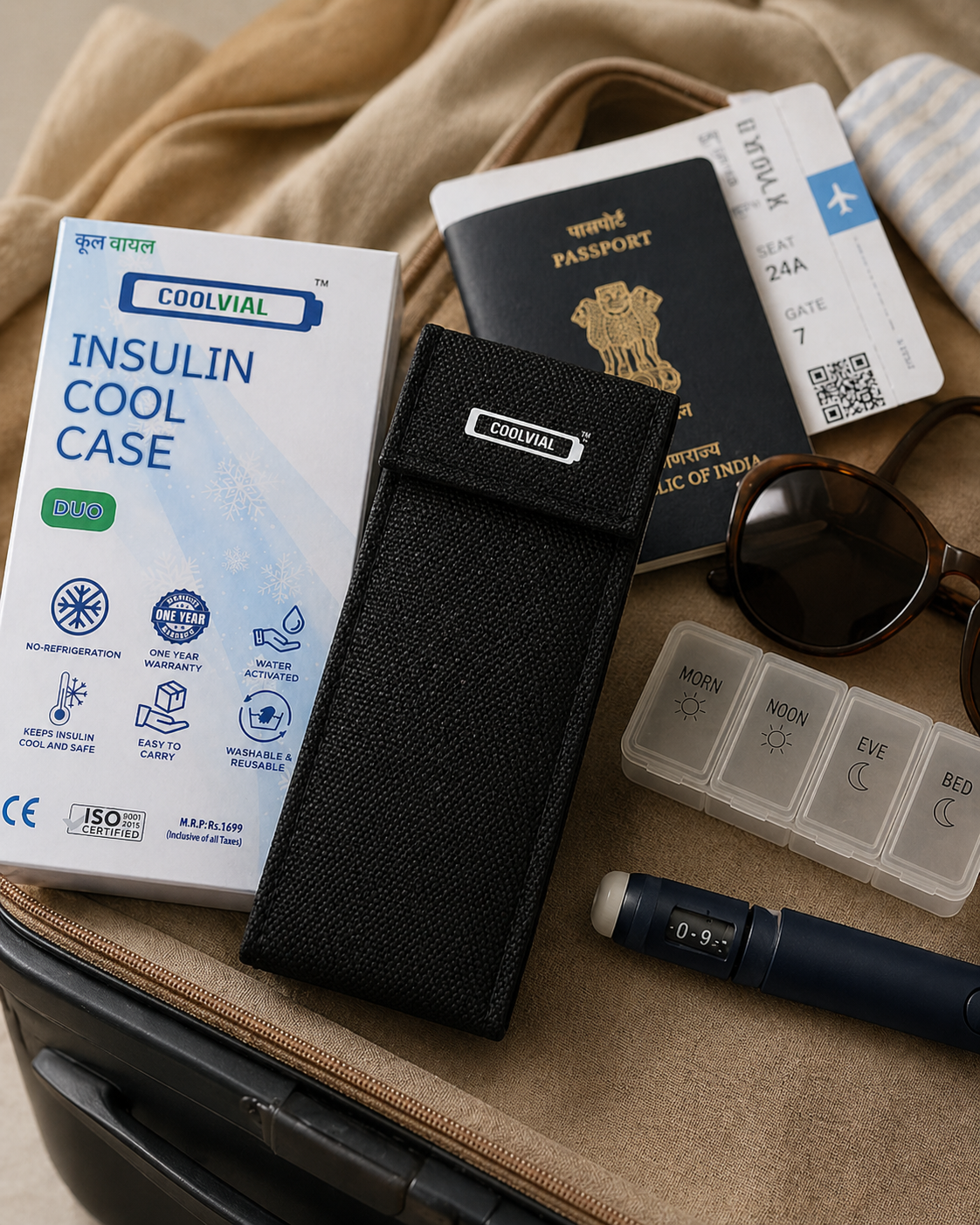
Reviewed by the COOLVIAL Editorial Team — specialists in insulin storage for Indian climate conditions.
Kolkata, the City of Joy, with its vibrant culture and historical charm, also brings with it a unique set of climatic challenges, especially for those managing health conditions like diabetes. When the mercury soars to a scorching 40°C in summer and the humidity levels are consistently high, a critical question for many residents becomes: how to store insulin safely and effectively? Based on analysis of insulin storage queries from Kolkata diabetics, maintaining insulin efficacy in this hot and humid environment is paramount. Unopened insulin requires refrigeration between 2-8°C, while opened vials or pens can typically be kept at room temperature, ideally below 25°C, for up to 28 days. However, Kolkata’s typical indoor temperatures in non-AC homes during April-June often range from 33-38°C, even at night, making standard room temperature storage a significant concern. This comprehensive guide provides practical, local-specific tips to ensure your insulin remains potent, even in the face of Kolkata’s intense heat and unpredictable power cuts.
Table of Contents
- Understanding Kolkata’s Climate Impact on Insulin
- The Cold Chain Challenge: Refrigeration, Power Cuts, and Your Insulin
- Evaporative Cooling: A Lifeline in Kolkata’s Humidity
- Water Quality for Evaporative Cooling: A Kolkata Consideration
- Insulin Storage Realities Across Kolkata Neighborhoods
- Navigating May-June Peak Heat and Power Cuts
- Essential Daily Storage Practices for Kolkata Residents
- Making the Right Choice: Comparing Insulin Cooling Cases
- Frequently Asked Questions (FAQ)
- Conclusion
- Medical Disclaimer
- How We Researched This
Understanding Kolkata’s Climate Impact on Insulin
Kolkata’s climate is characterized by distinct seasons, each posing unique challenges for insulin storage. The city experiences a hot and humid summer from March to May, with temperatures often soaring between 26-40°C. This is immediately followed by the southwest monsoon from June to September, bringing heavy rainfall (averaging ~1600mm annually) and even higher humidity, often above 80-90%. While the winter months (December to February) are relatively mild at 12-22°C, the extended periods of heat and humidity are a constant threat to insulin’s stability.
Heat exposure can degrade insulin, reducing its potency and potentially leading to dangerously high blood sugar levels. According to the World Health Organization (WHO), diabetes prevalence is increasing globally, making proper insulin storage a critical public health concern, especially in regions with challenging climates like Kolkata (Source: WHO Diabetes Fact Sheet). The Indian Council of Medical Research - India Diabetes (ICMR-INDIAB) study indicates a significant diabetes burden across India, including West Bengal, underscoring the need for robust insulin management strategies (Source: ICMR-INDIAB, [Verify in 2026] specific Kolkata prevalence data).
Consider the following climate realities:
- Summer Heat (March-May): Peak temperatures regularly exceed 35°C, with heatwaves pushing it towards 40°C. Direct sunlight can heat insulin vials rapidly.
- Monsoon Humidity (June-September): While temperatures might drop slightly, the extreme humidity makes evaporative cooling less efficient for some solutions and can contribute to dampness, which is undesirable for insulin packaging. For more on protecting your insulin during the rainy season, refer to our guide on Kolkata Monsoon & Insulin — Protecting Your Vials From Humidity Damage.
- Indoor Temperatures: Even indoors, non-air-conditioned homes in Kolkata, especially in densely populated areas like Central Kolkata (Park Street, Esplanade) or parts of North Kolkata (Shyambazar, Hatibagan), can experience temperatures consistently above 30°C, often reaching 33-38°C during April-June, even at night. This far exceeds the recommended 25°C maximum for opened insulin.
The Cold Chain Challenge: Refrigeration, Power Cuts, and Your Insulin
Refrigeration is the cornerstone of how to store insulin correctly for unopened vials and pens. Unopened insulin should always be kept in a refrigerator between 2-8°C. However, the reality of living in Kolkata involves frequent and sometimes prolonged power cuts, especially during the peak summer and monsoon seasons. These outages can severely compromise the refrigerator’s ability to maintain a stable temperature, putting your precious insulin at risk.
During a typical Kolkata summer, a refrigerator may struggle to maintain optimal temperatures if power is out for more than 2-4 hours, particularly if it’s frequently opened. The internal temperature can quickly rise above 8°C, potentially affecting the integrity of unopened insulin. This is a common concern for residents across all neighborhoods, from the bustling lanes of Ballygunge to the planned townships of Salt Lake.
Here’s what to consider regarding refrigeration and power cuts:
- Unopened Insulin:
- Store in the main body of the fridge, not the door, where temperatures fluctuate more.
- Avoid placing it near the freezer compartment to prevent accidental freezing.
- During power cuts, keep the refrigerator door closed as much as possible to retain cold air.
- Opened Insulin:
- Once opened, insulin can be stored at room temperature (below 25°C) for up to 28 days.
- However, with Kolkata’s indoor temperatures often exceeding this, relying solely on “room temperature” is risky.
- Never store opened insulin in the refrigerator door if the room temperature is too high, as constant opening and closing can cause rapid temperature changes.
Recommendations for Fridge Stability During Power Cuts:
- Backup Power: If feasible, consider a small UPS or inverter for your refrigerator, especially if you rely on it for critical medication.
- Ice Packs: Keep several frozen gel packs or ice packs in your freezer. In case of a prolonged power cut, these can be transferred to the main compartment to help keep temperatures down.
- Insulated Bags: Have an insulated bag ready. If a power cut is expected to last many hours, you can temporarily transfer critical insulin vials/pens to this bag with ice packs, ensuring they don’t freeze by wrapping them.
Evaporative Cooling: A Lifeline in Kolkata’s Humidity
Evaporative cooling technology, used in products like COOLVIAL Duo, offers a reliable, electricity-free solution for how to store insulin in challenging climates. This method works by utilizing the natural process of evaporation to draw heat away from the insulin. The inner pouch contains crystals that, when activated by water, turn into a gel, which then slowly evaporates, creating a cooling effect.
A common question in Kolkata is about the effectiveness of evaporative cooling in high humidity. While high humidity can reduce the rate of evaporation, these cooling cases are specifically designed to work effectively even in humid conditions. The cooling effect might last slightly less than the advertised maximum in extremely humid environments (e.g., during peak monsoon), but they still maintain temperatures well below ambient, usually within the safe range of 18-25°C, for extended periods. This is crucial when ambient temperatures are 35-40°C.
Benefits of Evaporative Cooling in Kolkata:
- No Electricity Needed: Ideal for travel, daily commutes, and during inevitable power cuts.
- Consistent Cooling: Maintains a stable cool temperature, protecting insulin from extreme heat fluctuations.
- Portable: Compact and easy to carry, whether you’re commuting to work in Salt Lake or enjoying an evening stroll near Victoria Memorial.
COOLVIAL Duo, for instance, is designed to keep insulin cool for 12-16 hours, making it perfect for a full day out or overnight storage during a power outage. Its ability to hold 2 pens and 1 vial ensures comprehensive coverage for most users. Other brands like Frio offer similar technology but often come at a higher price point (~Rs 1,900), while alternatives like Outer Woods OW-12 (~Rs 999) might offer different features or cooling durations. COOLVIAL Duo, priced at Rs 1,099 with code COOLHEAL, offers a robust, CE certified, and ISO 9001:2015 compliant solution at a competitive price, proudly Made in India.
Water Quality for Evaporative Cooling: A Kolkata Consideration
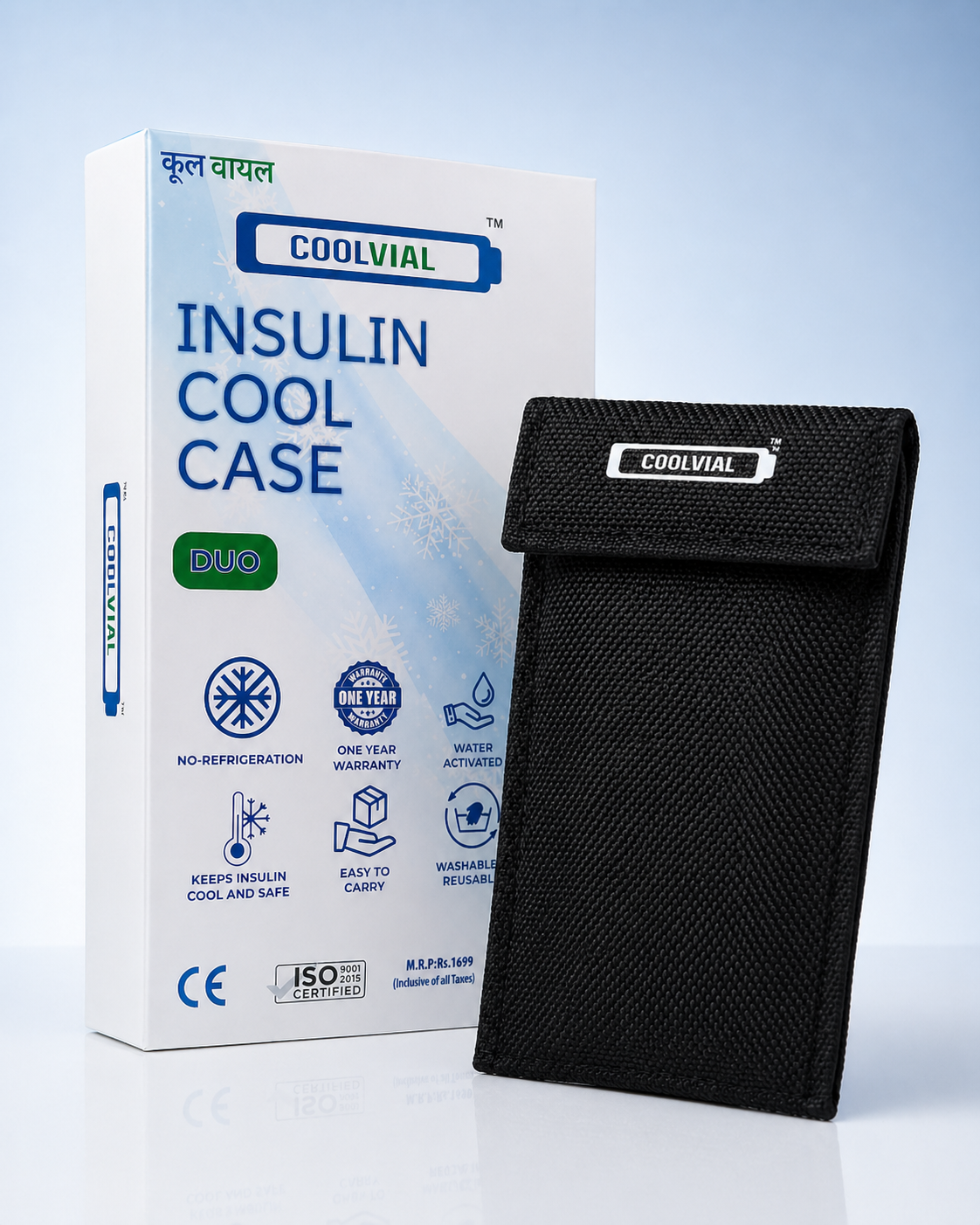
How to Store Insulin in Kolkata Summer Heat — 7 Essential Tips for Locals
COOLVIAL keeps insulin safe in India's heat. 48+ hours, no electricity needed.
Activating evaporative cooling cases like COOLVIAL Duo requires water. While tap water is generally sufficient, Kolkata, like many Indian cities, can have varying water quality. Some areas, particularly older neighborhoods or those relying on groundwater, might experience hard water or water with suspended impurities.
Using hard water or water with high mineral content consistently might, over time, lead to mineral buildup on the cooling crystals, potentially reducing the efficiency or lifespan of the evaporative pouch. While this effect is usually minimal for occasional use, for long-term optimal performance, it’s a good practice to consider water quality.
Water Quality Recommendations for Kolkata Residents:
- Bottled Water: Using bottled drinking water is the safest bet. It’s readily available across Kolkata, from local shops in Gariahat to major pharmacies like Frank Ross and Apollo Pharmacy.
- RO Purified Water: If you have an RO water purifier at home, using RO water is an excellent option.
- Filtered Water: Even a basic water filter can help remove larger impurities.
- Avoid: Extremely murky or visibly dirty water, as this can clog the pouch material.
Activation Process for COOLVIAL Duo:
- Immerse the inner pouch of your COOLVIAL Duo in water (bottled/RO recommended) for 5-8 minutes.
- The crystals will absorb water and turn into a gel.
- Gently squeeze out any excess water.
- Insert the activated pouch into the outer case and place your insulin pens and vials inside.
This simple process, when done with appropriate water, ensures your COOLVIAL Duo is ready to provide reliable cooling for your insulin.
Insulin Storage Realities Across Kolkata Neighborhoods
The challenges of how to store insulin can vary significantly depending on where you live in Kolkata. Different neighborhoods present distinct environmental factors, housing conditions, and access to resources that impact insulin stability.
-
Central Kolkata (Park Street, Esplanade, BBD Bagh):
- Housing: Often older buildings, sometimes with less efficient insulation. Many residents live in apartments with limited cross-ventilation.
- Indoor Temperatures: Can be particularly high, frequently exceeding 35°C during summer, as buildings absorb and retain heat. Air conditioning is common in offices and newer establishments, but not universal in homes.
- Power Cuts: May be more predictable in commercial areas but still occur.
- Commute: Busy, often relying on public transport (metros, buses) where temperatures inside can be high.
- Recommendations: Evaporative cooling cases like COOLVIAL Duo are highly recommended for daily use and travel. Residents should be diligent about refrigeration and have backup plans for power cuts.
-
East Kolkata (Salt Lake, New Town):
- Housing: Generally newer, more modern apartments and complexes, often with better insulation and more widespread AC usage.
- Indoor Temperatures: While ambient temperatures are similar to Central Kolkata, indoor temperatures in AC-equipped homes are better managed. Non-AC homes still face the 33-38°C challenge.
- Power Cuts: Generally fewer and shorter duration compared to older parts of the city, but not entirely absent. Many complexes have generator backups.
- Commute: Can involve longer distances, making portable cooling essential.
- Recommendations: While AC helps at home, a reliable portable solution is crucial for outdoor activities, hospital visits to Apollo Multispecialty Hospitals (Salt Lake), or commutes.
-
South Kolkata (Ballygunge, Gariahat, Jadavpur, South City Mall area):
- Housing: Mix of old and new, with varying insulation.
- Indoor Temperatures: Similar to Central Kolkata in older areas, potentially slightly better in newer constructions.
- Power Cuts: Moderate frequency, can be prolonged.
- Recommendations: A balanced approach combining careful home storage with portable cooling for outings is vital. Pharmacies like MedPlus and Apollo Pharmacy are widely available here.
-
North Kolkata (Shyambazar, Hatibagan):
- Housing: Predominantly older, densely packed residential areas with traditional architecture, often lacking modern insulation.
- Indoor Temperatures: Can be extremely high, mimicking Central Kolkata’s challenges.
- Power Cuts: Potentially more frequent and longer.
- Recommendations: Residents here need to be especially proactive with insulin storage. Evaporative coolers are a must, and careful planning for power outages is critical.
Regardless of your neighborhood, consulting with your endocrinologist at hospitals like Apollo Multispecialty Hospitals (Salt Lake), AMRI Hospitals (Salt Lake/Dhakuria), or Fortis Hospital (Anandapur) for personalized advice on insulin storage is always recommended.
Navigating May-June Peak Heat and Power Cuts
The combination of May-June peak heat (often 38-40°C) and power cuts is perhaps the most challenging scenario for how to store insulin in Kolkata. This period sees the highest temperatures, leading to rapid rises in indoor temperatures and significant strain on the electricity grid.
Scenario: Peak Heat (38-40°C) + Prolonged Power Cut (4-8+ hours)
- Refrigerator Failure: Your fridge will quickly lose its cold. Unopened insulin is at high risk.
- Indoor Temperature Soars: Non-AC homes can easily reach 35-38°C, making opened insulin unstable.
- Travel Risks: Commuting or being outdoors without a reliable cooling solution becomes extremely dangerous for insulin.
Action Plan for Peak Heat and Power Cut Combo:
- Prioritize Portable Cooling: This is where solutions like COOLVIAL Duo become indispensable.
- Keep your COOLVIAL Duo activated and ready. If you anticipate a power cut, activate it even if you’re home.
- Transfer all currently used insulin pens and vials to the COOLVIAL Duo.
- If you have spare, unopened insulin, and the power cut is prolonged, consider transferring a small working supply to the COOLVIAL Duo as well, after consulting your doctor.
- Emergency Cold Storage:
- Always have a dedicated insulated bag or small cooler.
- Keep extra ice packs or frozen gel packs in your freezer. If the power goes out, transfer these to the insulated bag with your insulin (ensure insulin doesn’t directly touch ice to prevent freezing).
- Seek Cooler Environments (if safe):
- If a power cut is exceptionally long and indoor temperatures are unbearable, consider spending time in a nearby public space with AC (e.g., South City Mall, a café, or a friend’s home with backup power) for a few hours. Always carry your insulin in its cooling case.
- Limit Fridge Opening: If you have unopened insulin in the fridge during a power cut, open the door only when absolutely necessary.
- Monitor Insulin: Be vigilant for any changes in insulin appearance (cloudiness, particles, changes in color) or effectiveness. If you suspect your insulin has been compromised, do not use it. Dispose of it safely and acquire fresh supplies from a trusted pharmacy like Frank Ross or MedPlus.
Essential Daily Storage Practices for Kolkata Residents
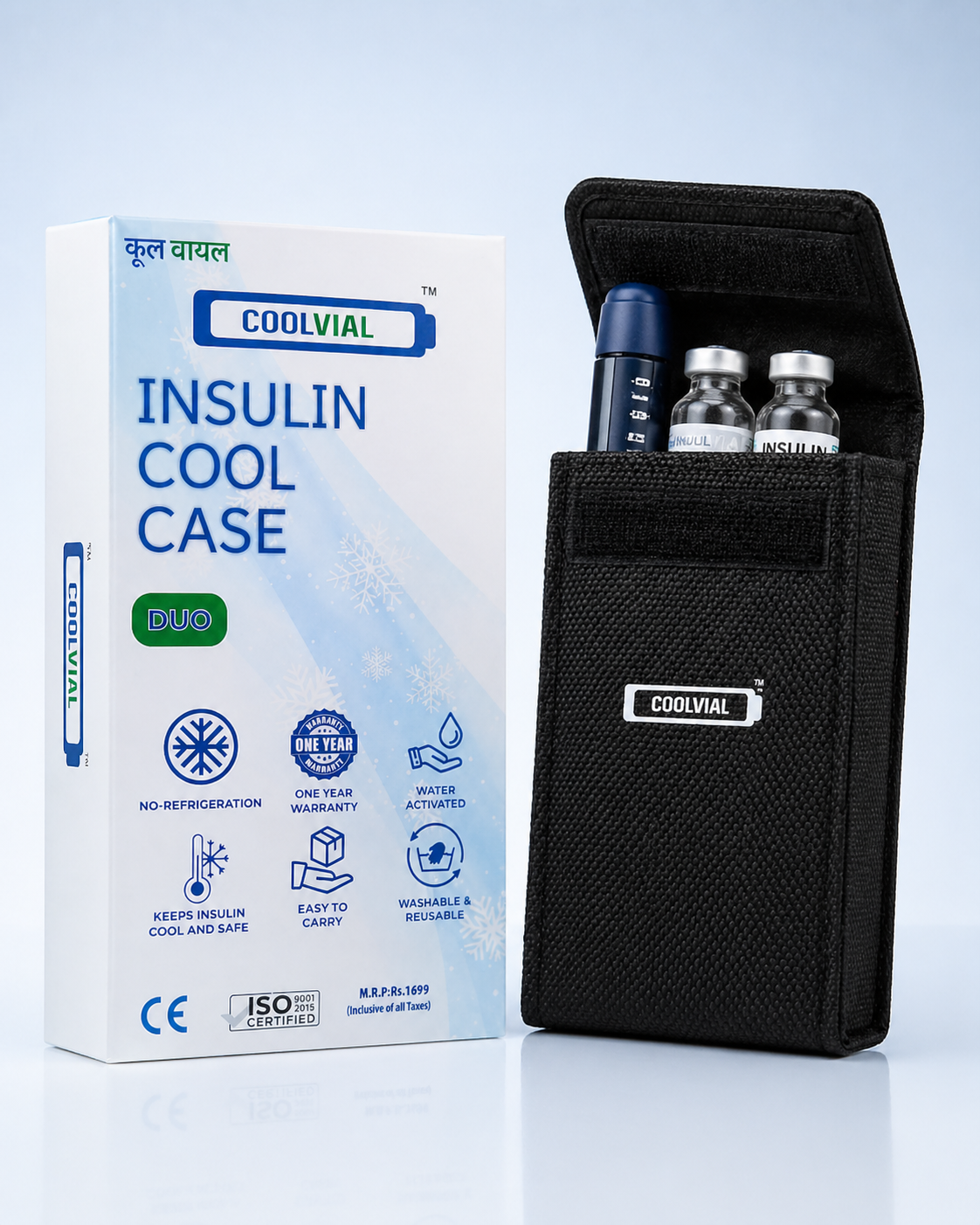
How to Store Insulin in Kolkata Summer Heat — 7 Essential Tips for Locals
Insulin at 2-8°C for 48+ hours. Trusted by 10,000+ Indian diabetics.
Beyond emergency scenarios, consistent daily practices are key to how to store insulin effectively in Kolkata. Integrating these habits into your routine will provide peace of mind and ensure your medication remains potent.
- At Home (Opened Insulin):
- Cool, Dark Place: Always store opened insulin pens and vials in the coolest, darkest part of your home. This might be a cupboard away from windows, direct sunlight, and heat-emitting appliances (like refrigerators themselves, ovens, or televisions).
- Avoid Bathrooms: While they might seem cool, bathrooms often have fluctuating temperatures and high humidity, making them unsuitable.
- Portable Cooling at Home: If your indoor temperatures consistently exceed 25°C, even at night, consider keeping your active insulin pens/vials in an evaporative cooling case like COOLVIAL Duo right at home. It acts as a mini-fridge without electricity.
- On the Go:
- Always Carry a Cooler: Whether you’re heading to Park Street for a walk, visiting a doctor at AMRI Hospitals, or running errands, always carry your insulin in a dedicated cooling case.
- Avoid Direct Sunlight: Never leave insulin in a car, on a scooter, or exposed to direct sunlight, even for short periods. Car interiors can reach extreme temperatures very quickly.
- Public Transport: Metro, bus, or auto-rickshaw rides can be hot and crowded. An insulated case is non-negotiable.
Checklist for Daily Insulin Storage:
| Storage Location | Ideal Temperature (Unopened) | Ideal Temperature (Opened) | Kolkata Reality (Non-AC) | Recommendation for Kolkata |
|---|---|---|---|---|
| Refrigerator | 2-8°C | N/A (avoid if possible) | Fridge stability varies | Unopened: Yes. Opened: Only if room temp >25°C and stable. |
| Home (Room Temp) | N/A | <25°C | Often 33-38°C | NOT recommended for opened insulin. Use cooling case. |
| Travel/Outdoors | N/A | <25°C | 30-40°C | Essential to use a portable insulin cooling case. |
| Vehicle Interior | N/A | <25°C | Can exceed 50°C | NEVER store insulin here unprotected. |
Remember, your insulin is a lifeline. Investing in proper storage solutions and adopting vigilant practices is an investment in your health. For a holistic approach to managing your condition in the city, check out our Complete Diabetes Care Guide for Kolkata Residents — 2026 Edition.
Making the Right Choice: Comparing Insulin Cooling Cases
Choosing the right insulin cooling case is a critical decision for Kolkata residents. You need a solution that is reliable, portable, and effective against the city’s challenging climate. Let’s compare some popular options in the Indian market:
-
COOLVIAL Duo:
- Price: Rs 1,099 (with code COOLHEAL, MRP Rs 1,699)
- Capacity: Holds 2 insulin pens + 1 vial
- Cooling Duration: 12-16 hours
- Technology: Water-activated evaporative cooling
- Certifications: CE certified, ISO 9001:2015
- Warranty: 1-year
- Made in India: Yes
- Pros: Excellent value for money, robust capacity for daily needs, recognized certifications, reliable cooling for Kolkata’s heat.
- Cons: Requires water activation, which needs consideration for water quality.
-
FRIO Insulin Cooling Case:
- Price: Approximately Rs 1,900 (for similar capacity models)
- Capacity: Varies by model, similar capacities available.
- Cooling Duration: Up to 45 hours (can be affected by humidity)
- Technology: Water-activated evaporative cooling
- Pros: Well-established international brand, longer cooling duration claim.
- Cons: Significantly higher price point, cooling duration might be reduced in high humidity.
-
Outer Woods OW-12 Insulin Cooling Pouch:
- Price: Approximately Rs 999
- Capacity: Varies, smaller capacity options available.
- Cooling Duration: Often 8-10 hours, some models claim more.
- Technology: Gel-based cooling, sometimes with ice packs or evaporative elements.
- Pros: Very affordable, compact.
- Cons: Potentially shorter cooling duration, may require pre-freezing for some models, which is an issue during power cuts.
Why COOLVIAL Duo Stands Out for Kolkata:
For Kolkata’s climate and the typical needs of a local diabetic, COOLVIAL Duo strikes an optimal balance of affordability, capacity, and reliable performance. Its 12-16 hour cooling duration is ample for a full day of activities, including commutes, office hours, or extended outings to places like South City Mall. The “Made in India” tag resonates with local consumers, and its CE and ISO certifications assure quality. At Rs 1,099, it offers a cost-effective, durable solution to keep your insulin safe from Kolkata’s relentless heat and humidity. This is a practical and smart way to ensure you always know how to store insulin correctly.
Frequently Asked Questions (FAQ)
Q: Can I store insulin in a normal water bottle cooler or thermos flask in Kolkata? A: No, a normal water bottle cooler or thermos flask is not recommended for insulin storage as they do not provide consistent temperature control and can get too hot or too cold, potentially freezing the insulin.
Q: How do I know if my insulin has gone bad due to heat exposure? A: Insulin exposed to heat may become cloudy, develop particles, or change color. If you notice any of these changes or if your blood sugar levels are unusually high despite correct dosing, dispose of the insulin and use a fresh vial or pen.
Q: Is it safe to carry insulin in my pocket in Kolkata’s summer? A: Carrying insulin directly in your pocket in Kolkata’s summer is not safe, as body heat combined with ambient temperatures can quickly raise the insulin’s temperature above safe limits, degrading its potency.
Q: Where can I buy insulin and insulin cooling cases in Kolkata? A: Insulin is available at most major pharmacies in Kolkata, including Frank Ross, Apollo Pharmacy, MedPlus, Saha Stores, and Dhanwantary. COOLVIAL insulin cool cases can be ordered online at coolvial.com or via WhatsApp.
Q: What is the optimal temperature range for opened insulin? A: Once opened, insulin is generally stable at room temperature, ideally between 15-25°C, for up to 28 days. In Kolkata, where ambient temperatures often exceed this, an evaporative cooling case is essential.
Q: Can I freeze insulin to preserve it longer? A: No, insulin should never be frozen. Freezing can damage the insulin molecule, rendering it ineffective, and should be avoided at all costs.
Q: Does air conditioning help with insulin storage at home? A: Yes, air conditioning helps maintain a stable, cooler environment at home, which is ideal for opened insulin. However, for travel or during power cuts, a portable cooling solution is still necessary.
Conclusion
Navigating the unique climate challenges of Kolkata while managing diabetes requires diligence and the right tools. From the sweltering summer heat to the intense monsoon humidity and the occasional power cuts, ensuring your insulin remains potent is a constant, yet manageable, task. By understanding the impact of local conditions on insulin stability and adopting smart storage practices, you can safeguard your health.
Remember to prioritize proper refrigeration for unopened insulin, but always have a reliable, electricity-free backup like an evaporative cooling case for your active pens and vials. Solutions like the COOLVIAL Duo, with its 12-16 hour cooling duration, CE certification, ISO 9001:2015 standards, and competitive price of Rs 1,099, offer a practical and effective way to manage how to store insulin in Kolkata’s demanding environment. It’s a small investment for significant peace of mind.
Take control of your diabetes management even in the City of Joy’s challenging climate. Order your COOLVIAL Duo at Rs 1,099 with code COOLHEAL at coolvial.com or via WhatsApp wa.me/918766952300 today. Your health deserves the best protection.
Medical Disclaimer
This article is for general information and educational purposes only. It is not intended to be a substitute for professional medical advice, diagnosis, or treatment. Always consult your endocrinologist or diabetologist before changing insulin storage or dosing practices, or for any health concerns.
How We Researched This
This guide was developed by synthesizing information from various authoritative sources, including RSSDI (Research Society for the Study of Diabetes in India) guidelines, ICMR-INDIAB (Indian Council of Medical Research - India Diabetes) data on diabetes prevalence, local Kolkata hospital directories for specific facility names, and insights from the Frank Ross pharmacy network regarding common diabetic queries and product availability. We also incorporated local climate data and typical residential conditions to ensure the advice is highly relevant and practical for Kolkata residents.