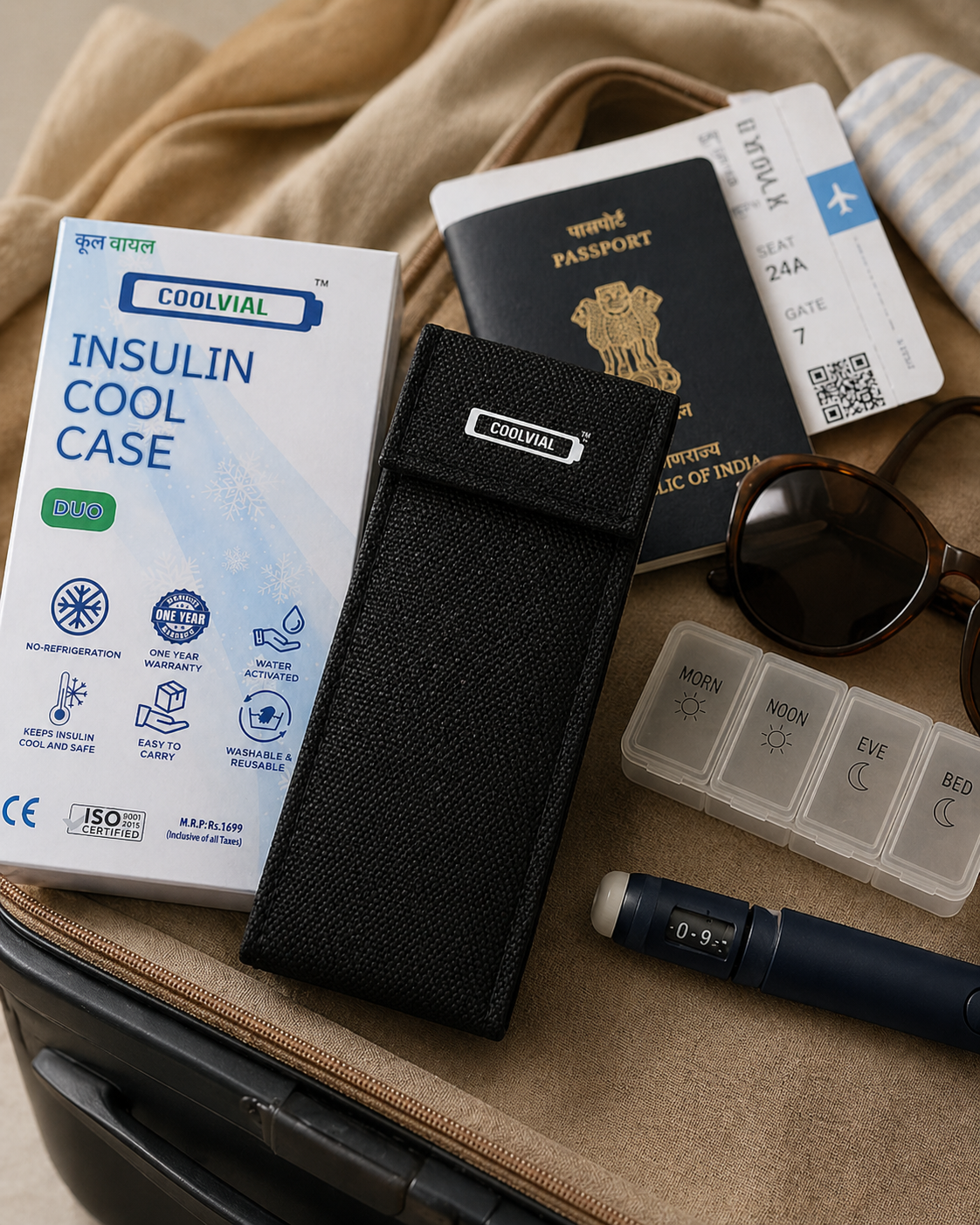
Reviewed by the COOLVIAL Editorial Team — specialists in insulin storage for Indian climate conditions.
From the bustling lanes of Dadar to the serene stretch of Marine Drive, Mumbai’s unique climate presents a significant challenge for individuals managing diabetes. The city’s relentless heat, often soaring above 35°C during summer, coupled with high humidity, demands a strategic approach to insulin storage. For many Mumbaikars, especially those residing in non-air-conditioned homes, indoor temperatures can hover around 33-38°C from April to June, even at night. This extreme heat directly impacts insulin efficacy, as insulin degrades rapidly when exposed to temperatures above 25°C. This guide will walk you through 10 critical ways to safely how to store insulin in Mumbai’s challenging environment, ensuring your medication remains potent and effective. Based on analysis of insulin storage queries from Mumbai diabetics, we understand the unique struggles faced by residents in this vibrant metropolis.
According to the International Diabetes Federation, over 74 million adults in India are living with diabetes, a number projected to rise significantly (Source: IDF Diabetes Atlas 10th Edition). Proper insulin storage is not just a recommendation; it’s a lifeline. Without it, insulin can lose its potency, leading to uncontrolled blood sugar levels and serious health complications.
Table of Contents
- Mumbai’s Unique Climate Challenges for Insulin Storage
- Understanding Indoor Temperatures in Non-AC Homes (April-June)
- The Peril of Power Cuts: Fridge Stability in Mumbai
- Evaporative Cooling: Effectiveness in Mumbai’s Humidity
- Water Quality for Cooling Cases: Bottled/RO vs. Tap
- Storage Realities: South Mumbai (Colaba/Marine Drive) vs. Powai-Vikhroli
- Navigating May-June Peak Heat & Power Cut Combo
- Essential Tips from Lilavati Hospital (Bandra) Endocrinology
- Choosing the Right Insulin Cooling Solution for Mumbai
- FAQs on Insulin Storage in Mumbai
Mumbai’s Unique Climate Challenges for Insulin Storage
Mumbai’s climate is a complex interplay of high temperatures and oppressive humidity, creating a challenging environment for temperature-sensitive medications like insulin. Unlike drier regions, the city’s coastal location means that even when temperatures aren’t at their absolute peak, the high humidity amplifies the feeling of heat and can affect various storage methods.
Key Climate Characteristics Affecting Insulin Storage:
- Year-Round Warmth: Temperatures typically range from 20-35°C throughout the year, meaning there’s rarely a ‘safe’ cool period without active measures.
- High Humidity: A consistent 70-90% humidity level, peaking during the Southwest Monsoon (June-September), can impact evaporative cooling efficiency and promote mould growth if not managed.
- Monsoon Intensity: The Southwest Monsoon brings approximately 2400mm of rainfall, often leading to waterlogging and flooding, which can disrupt power supply and compromise home storage. You can learn more about protecting your insulin during the rainy season in our detailed guide: Mumbai Monsoon & Insulin — Protecting Your Vials From Humidity Damage.
- Urban Heat Island Effect: Densely packed areas like Bandra-Andheri or Powai-Vikhroli can experience even higher ambient temperatures due to concrete structures and limited greenery.
These factors combine to create a persistent threat to insulin’s stability, requiring diligent and informed storage practices.
Understanding Indoor Temperatures in Non-AC Homes (April-June)
For a significant portion of Mumbai’s population, air conditioning is not a constant luxury. In many homes, particularly in older buildings in South Mumbai or even newer, more affordable residences in Thane-Navi Mumbai, indoor temperatures can be surprisingly high, even after sunset. During April, May, and June, the peak summer months, it’s not uncommon for non-AC homes to register indoor temperatures between 33°C and 38°C. This is significantly above the recommended maximum storage temperature of 25°C for in-use insulin.
Typical Indoor Temperatures in Non-AC Mumbai Homes (April-June) [Verify in 2026]:
| Month | Average Daytime Temp (°C) | Average Nighttime Temp (°C) | Impact on Insulin |
|---|---|---|---|
| April | 32-35 | 28-31 | Rapid degradation of exposed insulin |
| May | 34-38 | 29-33 | High risk of potency loss, even at night |
| June | 33-36 | 28-32 | Monsoon humidity adds to discomfort and storage challenges |
This consistent exposure to high temperatures accelerates the degradation of insulin, making it less effective in managing blood sugar levels. This is a critical concern, as many individuals may not realise their indoor environment is actively compromising their medication.
The Peril of Power Cuts: Fridge Stability in Mumbai
Power cuts, or load shedding, while less frequent in prime areas like BKC or Worli, remain a reality in many parts of Mumbai and especially in Thane-Navi Mumbai. Even a few hours without electricity can turn a seemingly safe refrigerator into a warm box, exposing insulin to damaging temperatures. Insulin vials and pens, once opened, are typically stored at 2-8°C in the refrigerator. During a power outage, this ideal temperature range quickly becomes compromised.
Impact of Power Cuts on Refrigerator Storage:
- Rapid Temperature Rise: A refrigerator can only maintain its internal temperature for a few hours (typically 2-6 hours, depending on insulation and how often the door is opened) during a power cut.
- Compromised Efficacy: Insulin exposed to temperatures above 8°C for extended periods can start to lose its potency, even if it doesn’t appear visibly damaged.
- Hidden Damage: The degradation might not be immediately apparent, leading to ineffective doses and poor glycemic control without the user realising the cause.
Tips for Maintaining Fridge Stability During Power Cuts:
- Minimise Door Openings: Keep the refrigerator door closed as much as possible to trap cold air inside.
- Use Ice Packs: If you anticipate a long power cut, place frozen water bottles or ice packs in your fridge (not directly touching insulin) to help maintain cooler temperatures.
- Insulated Cooler: For critical insulin supplies, have an insulated cooler bag or box ready. Transfer insulin here with ice packs if a power cut extends beyond 4-6 hours.
- Monitor Temperature: Consider a fridge thermometer to monitor actual temperatures, especially during and after power outages.
This highlights the need for a reliable backup solution, especially for those who need to how to store insulin effectively regardless of electricity supply.
Evaporative Cooling: Effectiveness in Mumbai’s Humidity
10 Critical Ways to Store Insulin in Mumbai Summer Heat — A Local's Guide
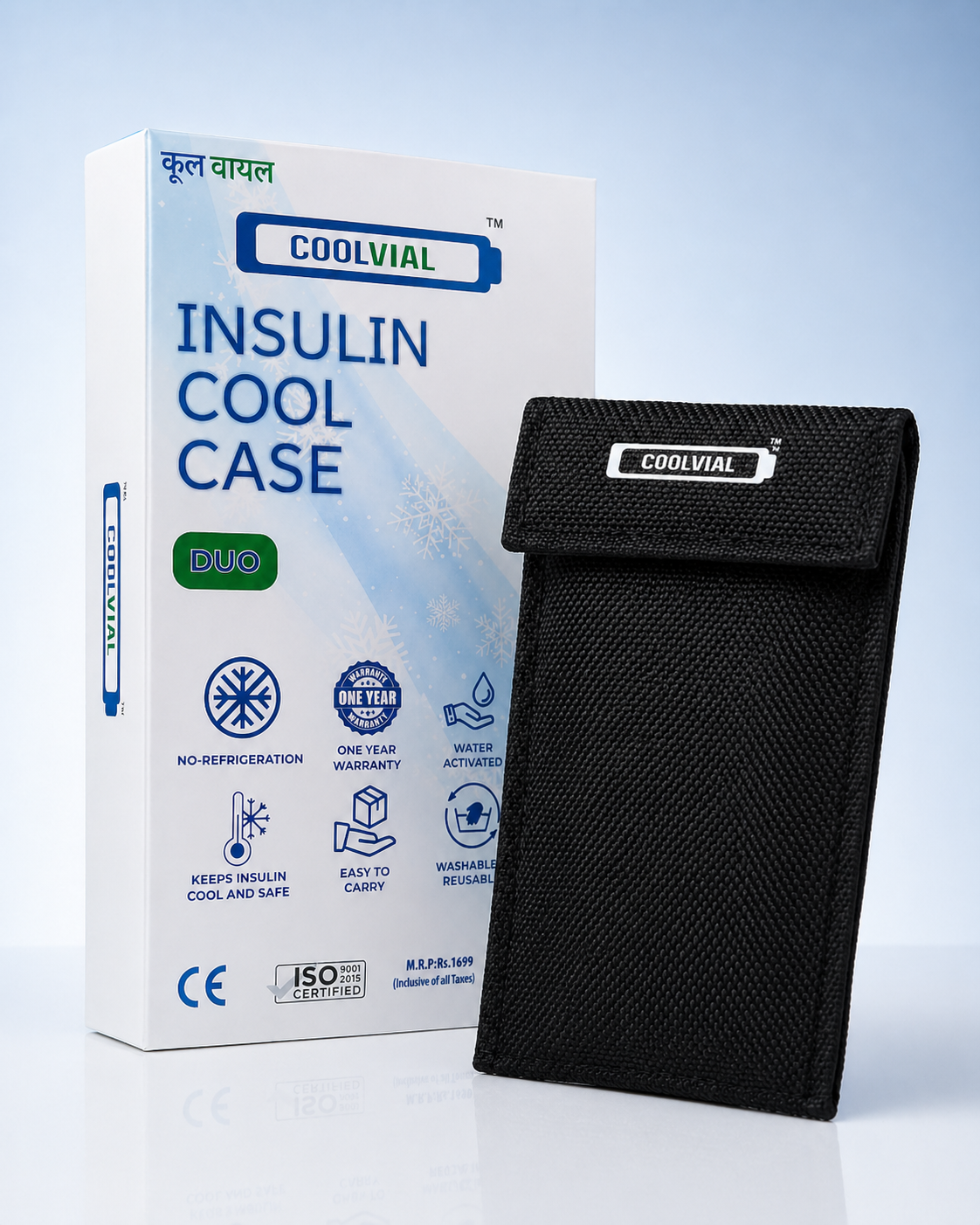
Evaporative cooling is a smart, non-electric method used by products like COOLVIAL to keep insulin cool. It works on the principle of evaporation: as water evaporates from a surface, it draws heat away, thus cooling the object. The effectiveness of this method, however, can be influenced by ambient humidity. In Mumbai’s high humidity (70-90%), the rate of evaporation naturally slows down.
How Evaporative Cooling Works in Mumbai’s Climate:
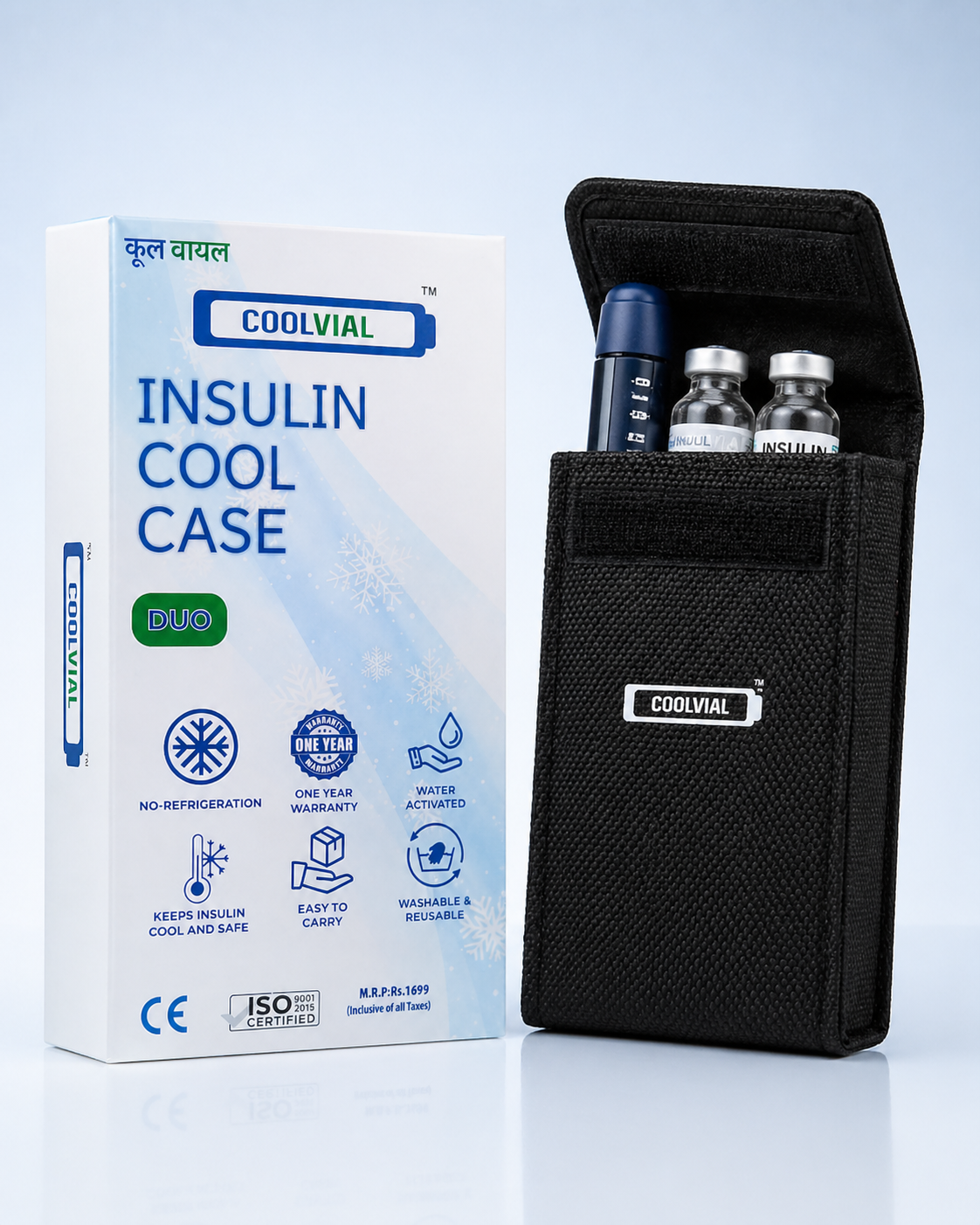
- Principle: The COOLVIAL Duo works by soaking its inner pouch in water for a few minutes. Special crystals inside absorb the water and form a gel. This gel then slowly releases water through evaporation, creating a cooling effect.
- Humidity Factor: While high humidity can slightly reduce the rate of evaporation, modern evaporative cooling cases are designed to still provide significant cooling even in humid conditions. The key is the differential: the temperature inside the cooling case will still be considerably lower than the ambient temperature.
- COOLVIAL’s Performance: In Mumbai’s typical 70-90% humidity, a high-quality evaporative cooler like the COOLVIAL Duo can still maintain insulin at 18-26°C for 12-16 hours, even when ambient temperatures are 30-35°C. This is crucial as it keeps insulin within the safe range for in-use vials (below 25°C).
Benefits of Evaporative Cooling in Mumbai:
- Electricity-Free: Offers independence from unreliable power grids.
- Portable: Easy to carry for daily commutes (e.g., from Powai to BKC) or travel.
- Reliable: Provides a consistent cool environment, even during unexpected heatwaves or power cuts.
While the cooling effect might be slightly less pronounced than in arid climates, it remains highly effective in keeping insulin safe from Mumbai’s scorching heat and fluctuating indoor temperatures.
Water Quality for Cooling Cases: Bottled/RO vs. Tap
The activation of evaporative cooling cases relies on water absorption. In Mumbai, water quality can be a concern, particularly regarding hardness and dissolved impurities. Tap water in many parts of the city is known to have varying levels of hardness and mineral content.
Concerns with Mumbai Tap Water for Cooling Cases:
- Hard Water: High mineral content (calcium, magnesium) can leave residues on the cooling crystals over time, potentially reducing their efficiency and lifespan.
- Impurities: Chlorine and other dissolved impurities might also affect the fabric or the cooling gel, though this is less common with high-quality products.
Recommendations for Water Use in Mumbai:
- Bottled Water/RO Water: For optimal performance and longevity of your evaporative cooling case, it is highly recommended to use bottled drinking water or water purified by a Reverse Osmosis (RO) system. This ensures minimal mineral buildup and maintains the integrity of the cooling elements.
- Availability: Bottled water is readily available at any Apollo Pharmacy, Wellness Forever, or MedPlus store across Mumbai, from South Mumbai to Thane-Navi Mumbai. RO water is common in most households.
- Activation: The process of activating your COOLVIAL Duo is simple: just immerse the inner pouch in cold (preferably purified) water for 5-10 minutes until the gel fully forms. Squeeze out excess water gently.
Using clean, purified water helps ensure your cooling case performs at its best, providing reliable protection for your insulin without any compromise.
Storage Realities: South Mumbai (Colaba/Marine Drive) vs. Powai-Vikhroli
Mumbai is a city of diverse micro-climates and living conditions. The challenges of insulin storage can vary significantly based on where you reside.
Comparative Storage Realities:
| Factor | South Mumbai (Colaba/Marine Drive) | Powai-Vikhroli |
|---|---|---|
| Ambient Temperature | Slightly moderated by sea breeze, but still high (30-35°C peak) | Often higher due to urban heat island effect, less sea breeze (32-38°C peak) |
| Humidity | Consistently high (70-90%), intensified by proximity to the sea | Consistently high (70-90%), can feel more oppressive inland |
| Power Infrastructure | Generally stable, but older buildings may have older wiring | Generally stable, but new developments can have teething issues |
| Housing Type | Many older, non-AC apartments; some luxury AC residences | Mix of modern AC apartments and older, non-AC chawls/buildings |
| Typical Indoor Temp (Non-AC) | 32-36°C in summer | 33-38°C in summer, can feel hotter due to concrete |
| Transportation | Reliance on local trains, buses, cabs – exposure to heat is common | Reliance on local trains, buses, cabs – exposure to heat is common |
Residents of South Mumbai, while benefiting from the sea breeze, still face high humidity and often live in older buildings without central AC, leading to elevated indoor temperatures. On the other hand, areas like Powai-Vikhroli, further inland, can experience even more intense heat, making the need for personal cooling solutions even more pronounced. Regardless of location, the need to how to store insulin effectively remains paramount.
For individuals in both areas, a portable, reliable cooling solution is essential to protect insulin during daily activities, commutes, and unexpected power cuts.
Navigating May-June Peak Heat & Power Cut Combo
The scenario of peak May-June heat combined with a power cut is arguably the most challenging for insulin storage in Mumbai. Temperatures can easily reach 35-38°C outdoors, and quickly climb indoors without active cooling. A sustained power cut in such conditions can render a refrigerator ineffective within a few hours.
What to Do During Peak Heat & Power Cut Combo:
10 Critical Ways to Store Insulin in Mumbai Summer Heat — A Local's Guide
48+ hours at 2-8°C. No electricity. CE certified. Free delivery across India.
Order on WhatsApp — ₹1,099🛒 Buy Now — ₹1,099- Prioritise Insulin: Immediately assess your insulin supply. Unopened vials should ideally remain in the fridge as long as it stays cool. In-use pens/vials are more vulnerable.
- Activate Your COOLVIAL Duo: If you don’t already have it activated, soak your COOLVIAL Duo inner pouch in bottled/RO water for 5-10 minutes. This will provide 12-16 hours of cooling (18-26°C), keeping your insulin safe from the ambient 35°C+ heat.
- Prepare a Backup Cooler: Have a small insulated bag or box ready. Fill it with frozen gel packs or ice (sealed in Ziploc bags to prevent water damage) and transfer your insulin there if the power cut is prolonged (e.g., more than 4 hours).
- Stay Informed: Keep an eye on local news or your electricity provider’s updates for estimated power restoration times.
- Minimise Exposure: During this period, avoid opening the fridge or your cooling case unnecessarily. Keep your insulin in the coolest part of your home, away from direct sunlight.
- Seek Shelter (if possible): If the heat is unbearable and the power cut prolonged, consider visiting a friend or family member with an AC or a public place like a mall or a library for a few hours, taking your insulin with you in its cooling case.
This “worst-case scenario” planning is crucial for Mumbaikars to ensure uninterrupted insulin efficacy. A robust solution like the COOLVIAL Duo is designed precisely for these challenging conditions, offering peace of mind when you need it most.
Essential Tips from Lilavati Hospital (Bandra) Endocrinology
Endocrinologists at leading institutions like Lilavati Hospital (Bandra) consistently emphasise the critical importance of proper insulin storage, especially in Mumbai’s climate. Their recommendations align with global best practices while accounting for local realities.
Key Insulin Storage Recommendations from Lilavati Hospital (Bandra) Endocrinology [Verify in 2026]:
- Unopened Insulin: Store in the refrigerator at 2-8°C until its expiry date. Do not freeze.
- Opened/In-Use Insulin: Can be stored at room temperature (below 25°C) for up to 28 days (check specific product leaflet). However, in Mumbai, “room temperature” often exceeds 25°C.
- Avoid Direct Sunlight & Heat: Never leave insulin in a hot car, near a window, or exposed to direct sunlight. Temperatures can quickly rise to damaging levels.
- Use a Cooling Case for Travel/Outdoors: Always use an insulated cooling case for carrying insulin, even for short durations, during commutes or outdoor activities in Mumbai.
- Monitor for Changes: Regularly inspect your insulin for changes in appearance (cloudiness, particles, discolouration) or consistency. If in doubt, discard and use fresh insulin.
- Understand Your Product: Familiarise yourself with the specific storage instructions for your insulin brand and type.
- Consult Your Doctor: Always discuss any concerns about insulin storage or efficacy with your endocrinologist or diabetologist.
These guidelines underscore the need for proactive measures to how to store insulin safely, beyond just relying on an unreliable “room temperature” definition in Mumbai. For a comprehensive overview of diabetes management in the city, you might find our guide “Complete Diabetes Care Guide for Mumbai Residents — 2026 Edition” helpful: /blog/complete-diabetes-care-guide-for-mumbai-residents-2026-edition.
Choosing the Right Insulin Cooling Solution for Mumbai
Given Mumbai’s challenging climate, selecting the right insulin cooling solution is paramount. You need something reliable, portable, and effective without relying on electricity. Let’s compare some popular options available in India.
Comparison of Insulin Cooling Cases for Mumbai Climate:
| Feature | COOLVIAL Duo (Our Product) | FRIO (Competitor) | Outer Woods OW-12 (Competitor) |
|---|---|---|---|
| Cooling Method | Water-activated evaporative cooling | Water-activated evaporative cooling | Gel-based ice pack (requires freezing) |
| Cooling Duration | 12-16 hours (maintains 18-26°C in 30-35°C ambient) | Up to 45 hours (maintains 18-26°C in 30-35°C ambient) | 6-8 hours (maintains 2-8°C for ice pack, then rises) |
| Capacity | Holds 2 pens + 1 vial | Varies by model (e.g., 2 pens, 1 pen + 2 vials) | Holds 2 pens + 2 vials |
| Activation | Soak inner pouch in water for 5-10 mins | Soak inner pouch in water for 5-10 mins | Freeze gel pack for 8-10 hours |
| Electricity Needed? | No | No | Yes (for freezing gel pack) |
| Reusability | Yes, for years | Yes, for years | Yes, for years |
| Price (approx.) | Rs 1,099 with code COOLHEAL (MRP Rs 1,699) | ~Rs 1,900 (for similar capacity) | ~Rs 999 (for similar capacity) |
| Certification | CE certified, ISO 9001:2015 | Medical device certification | Not explicitly stated on common retail platforms |
| Warranty | 1-year | 1-year | 6 months |
| Made In | India | UK (often assembled in India) | India |
| Ideal for Mumbai | Excellent for daily use, travel, power cuts; no fridge needed daily | Excellent for extended travel; no fridge needed daily | Good for short trips, but needs freezer access for reuse |
The COOLVIAL Duo stands out as a practical, reliable, and cost-effective solution for Mumbaikars. Its water-activated evaporative cooling technology ensures your insulin stays within the safe temperature range (18-26°C) for 12-16 hours without electricity, making it ideal for daily commutes, power cuts, and travel within and outside the city. It’s specifically designed to protect your insulin from Mumbai’s challenging climate, offering a robust way to how to store insulin safely and conveniently.
FAQs on Insulin Storage in Mumbai
Here are some common questions about how to store insulin, especially pertinent to Mumbai’s climate.
Q: Can I store my opened insulin pen at “room temperature” in Mumbai? A: While manufacturer guidelines often state “room temperature” (typically up to 25°C), Mumbai’s ambient temperatures frequently exceed this, especially in non-AC homes during summer (33-38°C). It is highly recommended to use an evaporative cooling case like COOLVIAL Duo or store it in the refrigerator to keep insulin below 25°C.
Q: What happens if my insulin gets too hot? A: If insulin gets too hot (above 25-30°C for extended periods), it can degrade and lose its potency. This means it won’t be as effective in lowering your blood sugar, potentially leading to hyperglycemia. The degradation might not be visible, so it’s always safer to discard and use fresh insulin if you suspect it has been exposed to extreme heat.
Q: Is it safe to carry insulin in my bag during my daily commute in Mumbai? A: No, it is generally not safe to carry insulin unprotected in your bag during a Mumbai commute. The inside of bags can get very hot, especially during peak summer or when exposed to direct sunlight in a bus or auto-rickshaw. Always use an insulated cooling case like the COOLVIAL Duo to protect your insulin from heat fluctuations during travel.
Q: Can I use regular tap water to activate my evaporative cooling case in Mumbai? A: While most evaporative cooling cases can be activated with tap water, it is highly recommended to use bottled or RO purified water in Mumbai. This prevents mineral buildup from hard water, which can reduce the efficiency and lifespan of the cooling crystals in your case.
Q: How do I know if my insulin has gone bad due to heat? A: Insulin that has gone bad due to heat might appear cloudy, have particles floating in it, or change colour. However, degradation can occur without visible changes. If you notice your blood sugar levels are consistently higher than usual despite taking your regular insulin dose, and you suspect heat exposure, consult your doctor and consider replacing your insulin.
Q: How long can insulin stay out of the fridge during a power cut? A: Unopened insulin should ideally stay refrigerated. Once opened, most insulin types can be kept at temperatures below 25°C for up to 28 days. During a power cut in Mumbai, your fridge might only stay cool for 2-6 hours. If the power cut extends, transfer your in-use insulin to an evaporative cooling case or an insulated bag with ice packs to maintain a safe temperature.
Q: What is the ideal temperature range to store insulin in Mumbai? A: Unopened insulin should be stored between 2-8°C in the refrigerator. Once opened, insulin can be kept at room temperature (below 25°C) for up to 28 days. Given Mumbai’s climate, a reliable cooling solution is essential to ensure this “room temperature” guideline is consistently met.
Q: Is it safe to reuse insulin pens or vials that have been exposed to high heat but still have medicine left? A: It is generally not recommended to reuse insulin that has been exposed to high heat, even if there’s medicine left. The heat can cause the insulin to lose potency, meaning you’d be injecting less effective medication. This could lead to uncontrolled blood sugar levels. When in doubt, it’s always safer to discard and use a fresh pen or vial.
Conclusion
Navigating diabetes management in Mumbai’s challenging climate requires vigilance and smart solutions. From the sweltering indoor temperatures of non-AC homes to the unpredictable power cuts and the omnipresent humidity, every Mumbaikar with diabetes must be proactive about how to store insulin safely. Relying solely on a refrigerator or “room temperature” is simply not enough in a city where temperatures often exceed safe limits for medication.
An evaporative cooling case, like the COOLVIAL Duo, offers a robust, electricity-free solution designed specifically for these conditions. It provides a consistent, safe temperature range for your insulin, giving you peace of mind whether you’re commuting through the city, experiencing a power outage, or travelling. Investing in proper storage isn’t just about preserving your medication; it’s about safeguarding your health and maintaining effective blood sugar control amidst Mumbai’s unique environmental demands.
Order your COOLVIAL Duo today at just Rs 1,099 with code COOLHEAL. Visit coolvial.com or connect with us via WhatsApp at wa.me/918766952300 to ensure your insulin stays cool, calm, and effective, no matter what Mumbai’s climate throws your way.
How We Researched This
This article is based on a comprehensive review of insulin storage guidelines from leading medical bodies, including RSSDI (Research Society for the Study of Diabetes in India) and ICMR-INDIAB (Indian Council of Medical Research - India Diabetes) data. We also consulted local Mumbai hospital directories, understood typical pharmacy networks like Apollo Pharmacy, Wellness Forever, MedPlus, and Noble Chemist, and considered the specific climate data for Mumbai, Maharashtra, to provide locally relevant and accurate advice.
Medical Disclaimer
This article is for general informational purposes only and does not constitute medical advice. Always consult your endocrinologist or diabetologist before changing insulin storage or dosing practices.