
Reviewed by the COOLVIAL Editorial Team — specialists in insulin storage for Indian climate conditions.
Prayagraj, the city of the Sangam, is renowned for its spiritual confluence and vibrant culture. However, for residents managing diabetes, the city’s infamous summer heat presents a unique challenge: how to store insulin safely and effectively. With temperatures often soaring past 40°C and indoor readings frequently hitting 33-38°C even at night, maintaining insulin’s efficacy is a critical concern. Based on analysis of insulin storage queries from Prayagraj diabetics, understanding how to store insulin properly in this climate is not just about convenience, but about health and safety. Insulin, a life-saving medication, is highly sensitive to temperature extremes. Exposure to heat can degrade its potency, leading to ineffective treatment and potentially dangerous blood sugar fluctuations. This guide offers 11 practical, local-specific strategies to ensure your insulin remains potent, even during Prayagraj’s most scorching days and unpredictable power cuts.
Table of Contents
- Prayagraj’s Scorching Reality: Understanding Local Summer Temperatures
- The Power Cut Predicament: Fridge Stability and Alternatives
- Evaporative Cooling: Effectiveness in Prayagraj’s Humidity
- Water Quality Concerns: Activating Your Cooling Cases
- Storage Realities Across Prayagraj: Civil Lines vs. Old City
- Navigating Peak Heat & Power Cuts: A Combo Scenario
- SRN Hospital & Local Pharmacy Recommendations
- Introducing COOLVIAL Duo: Your Prayagraj Summer Essential
- Frequently Asked Questions (FAQs)
- Conclusion
- Medical Disclaimer
- How We Researched This
Prayagraj’s Scorching Reality: Understanding Local Summer Temperatures
Prayagraj experiences a climate characterized by extreme variations. The summer months, particularly from April to June, are brutally hot with temperatures consistently ranging from 22°C to a searing 44°C. The dry heat often gives way to a humid monsoon season from July to September, bringing around 1000mm of rainfall. This fluctuating environment poses a significant threat to insulin, which must be stored between 2°C and 8°C (unopened in a refrigerator) or below 25°C-30°C (after opening, for up to 28 days, depending on the brand).
Typical indoor temperatures in non-AC Prayagraj homes during April-June can be alarmingly high, often registering 33-38°C even at night. These temperatures far exceed the safe storage limits for open insulin vials and pens. At such elevated temperatures, insulin can begin to degrade rapidly, losing its effectiveness. This means that even if your insulin looks normal, its potency might be compromised, leading to higher blood sugar levels despite regular dosing.
Here’s a quick look at how temperature impacts insulin stability:
| Storage Condition | Recommended Temperature | Impact of Prayagraj Summer (33-44°C) |
|---|---|---|
| Unopened Vial/Pen | 2°C - 8°C (Refrigerator) | Rapid degradation if left outside fridge; extreme risk during power cuts. |
| Opened Vial/Pen | Below 25°C - 30°C (Room Temp) | Potency significantly reduced; lifespan drastically shortened from 28 days. |
| Freezing | Avoid at all costs (<0°C) | Destroys insulin structure, rendering it unusable. |
(Source: RSSDI Guidelines, [Verify in 2026] for local temperature data from discoms)
The Power Cut Predicament: Fridge Stability and Alternatives
Frequent and often unannounced power cuts are an unfortunate reality for many Prayagraj residents, especially during peak summer when demand for electricity skyrockets. While your refrigerator is the ideal place for unopened insulin, its effectiveness is entirely dependent on a consistent power supply. A fridge can only maintain its internal temperature for a few hours without electricity, typically 4-6 hours if unopened. Beyond this, the temperature inside will quickly rise, jeopardizing your insulin.
This instability necessitates a reliable backup plan for insulin storage. Relying solely on a refrigerator without considering power interruptions is a risky strategy in Prayagraj. It’s crucial to have alternative cooling methods readily available, particularly for the insulin currently in use or for travel.
Here are practical tips for managing insulin during power cuts:
- Keep Fridge Door Closed: During a power cut, resist the urge to open your refrigerator door. Each time it’s opened, cold air escapes, and warm air enters, accelerating the temperature rise.
- Invest in a Reliable Cooler: A good quality insulated cooler box with ice packs can temporarily house your insulin if the power outage is prolonged. However, ensure insulin doesn’t directly touch ice to prevent freezing.
- Prioritize Open Vials/Pens: If you have multiple insulin pens or vials, prioritize moving the one currently in use to an alternative cooling solution first, as it’s most susceptible to degradation.
- Consider a Portable Power Bank for Mini-Fridges: For those with mini-fridges dedicated to medicines, a high-capacity power bank or UPS can provide a few extra hours of cooling.
- Use Evaporative Cooling Cases: For insulin in use, water-activated evaporative cooling cases like the COOLVIAL insulin cool case are an excellent, electricity-free solution, offering hours of safe storage.
Evaporative Cooling: Effectiveness in Prayagraj’s Humidity
Evaporative cooling technology, used in products like the COOLVIAL Duo, works on a simple yet effective principle: as water evaporates from a surface, it draws heat away, thus cooling the object. This method is highly effective in dry climates. In Prayagraj, however, the climate shifts from dry heat in May-June to high humidity during the monsoon (July-September).
During the dry summer months (April-June), when humidity levels are lower, evaporative cooling cases perform optimally, providing significant temperature drops and extended cooling durations. For instance, the COOLVIAL Duo can keep insulin cool for 12-16 hours in these conditions. As the monsoon approaches and humidity rises, the efficiency of evaporative cooling can slightly decrease because less water evaporates into already moisture-laden air. However, even in higher humidity, these cases still provide a crucial temperature buffer, keeping insulin well below ambient temperatures that would otherwise degrade it. They offer a far superior solution than leaving insulin exposed to room temperature.
Comparison of popular evaporative cooling cases for Prayagraj conditions:
| Feature | COOLVIAL Duo | FRIO Wallet (Large) | Outer Woods OW-12 |
|---|---|---|---|
| Capacity | 2 pens + 1 vial | 2-3 pens (varies by model) | 2 pens |
| Cooling Duration | 12-16 hours | Up to 45 hours (claim, may vary by climate) | Up to 12 hours |
| Price (approx.) | Rs 1,099 (with code COOLHEAL) | Rs 1,900 | Rs 999 |
| Certifications | CE certified, ISO 9001:2015 | - | - |
| Warranty | 1-year warranty | - | - |
| Made In | India | UK | India |
| Humidity Impact | Effective, slightly reduced in high monsoon humidity | Effective, potentially reduced in high monsoon humidity | Effective, slightly reduced in high monsoon humidity |
COOLVIAL Duo’s design, optimized for Indian conditions, offers a robust and affordable solution perfectly suited for Prayagraj’s climate fluctuations, providing essential protection for your insulin.
Water Quality Concerns: Activating Your Cooling Cases
For evaporative cooling cases to function, they need to be activated by soaking them in water. While tap water is generally used, Prayagraj, like many cities in Uttar Pradesh, can have hard water. Hard water contains high concentrations of minerals like calcium and magnesium. Over time, repeated activation with hard water can lead to mineral buildup within the cooling crystals or fabric of the case. This buildup can reduce the case’s efficiency by impeding water absorption and evaporation, potentially shortening its cooling duration.
11 Practical Ways to Store Insulin in Prayagraj Summer Heat — A Local's Guide
48+ hours at 2-8°C. No electricity. CE certified. Free delivery across India.
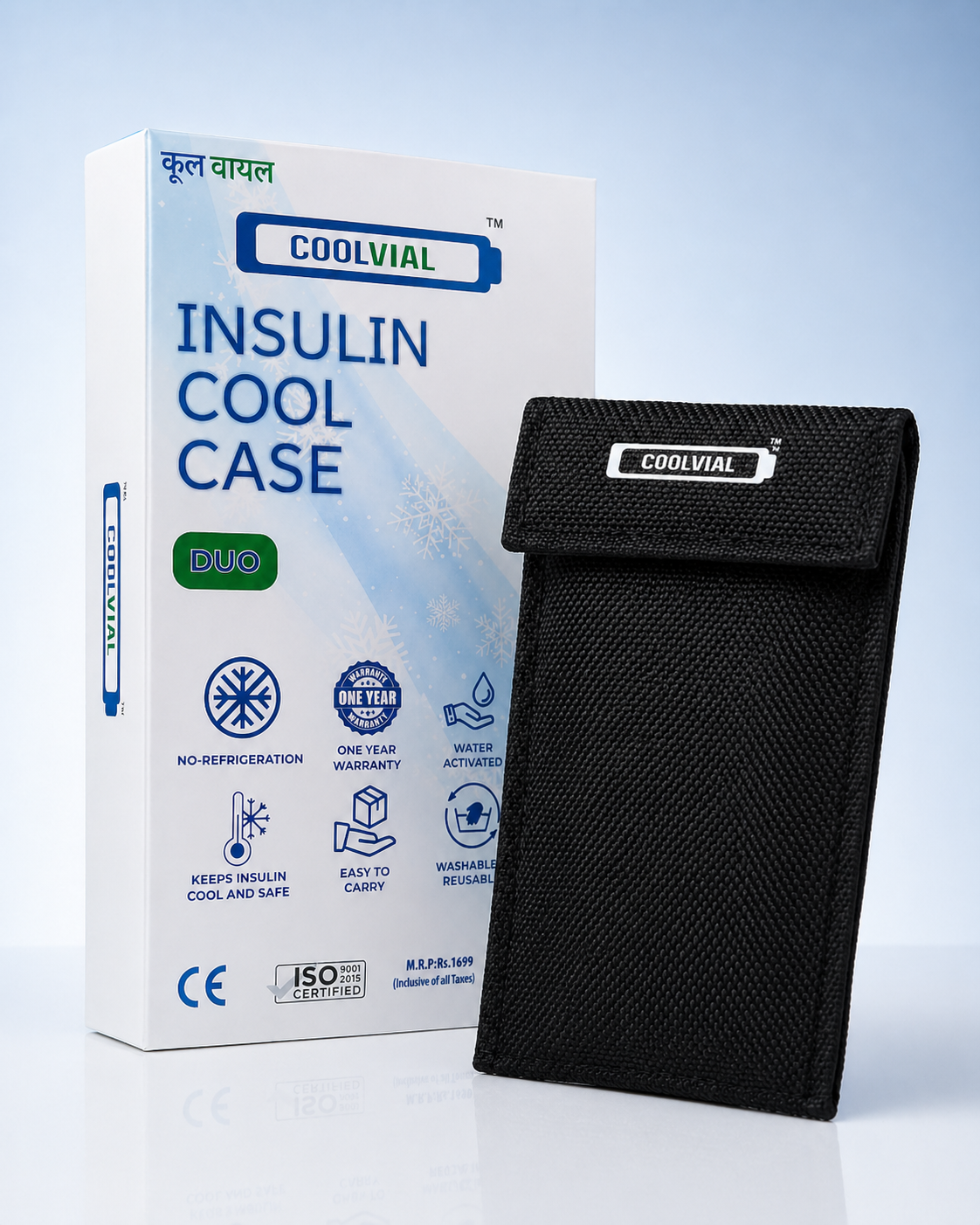
Order on WhatsApp — ₹1,099🛒 Buy Now — ₹1,099To ensure your evaporative cooling case, such as the COOLVIAL Duo, maintains optimal performance and longevity in Prayagraj, it is highly recommended to use bottled or RO (Reverse Osmosis) filtered water for activation. This minimizes mineral residue and preserves the integrity of the cooling mechanism.
Steps for activating your COOLVIAL Duo with optimal water quality:
- Prepare Water: Pour bottled or RO-filtered water into a shallow dish or basin. Ensure there’s enough water to fully submerge the inner pouch of your COOLVIAL Duo.
- Submerge Pouch: Gently place the inner pouch of the COOLVIAL Duo into the water. Ensure it is fully immersed and all sections are absorbing water.
- Soak Time: Allow the pouch to soak for the recommended time (usually 5-10 minutes, or until the crystals expand and the pouch feels gel-like). Avoid over-soaking, as this can cause the pouch to become too bulky.
- Remove & Dry: Once expanded, remove the pouch and gently pat dry any excess water with a towel. It should feel cool and slightly damp, not dripping wet.
- Insert Insulin: Place your insulin pens and/or vials into the activated pouch, then insert the pouch into the outer casing. Your insulin is now protected.
Using good quality water for activation is a small but significant step in ensuring the long-term effectiveness of your cooling case and, by extension, the stability of your insulin.
Storage Realities Across Prayagraj: Civil Lines vs. Old City
Prayagraj is a city of contrasts, and insulin storage realities can differ significantly depending on where you live. Neighborhoods like Civil Lines, known for their central location and more upmarket residential areas, often have better infrastructure, including more consistent electricity supply and a higher prevalence of air-conditioned homes. In contrast, older parts of the city like Katra, Mutthiganj, or Allahpur, with their dense housing, narrower lanes, and older infrastructure, may experience more frequent and longer power cuts, and AC might be less common.
These differences directly impact the choice and necessity of insulin storage solutions.
Civil Lines: Central Upmarket Living
Residents in Civil Lines might have the advantage of air conditioning, which provides a stable indoor temperature, or more reliable power for refrigerator use. However, even here, a backup plan is essential. A sudden power trip or a day out in the city can still expose insulin to damaging heat.
- Advantages: More AC homes, generally better power supply, closer to major pharmacies like Apollo Pharmacy or MedPlus in Civil Lines.
- Challenges: Complacency can be a risk; extended outdoor exposure during errands or visits to landmarks like All Saints Cathedral still requires portable cooling.
- Recommended Strategy: Use a refrigerator for unopened insulin. Keep active pens/vials in a reliable evaporative cooling case like COOLVIAL Duo for daily use and travel within the city.
Katra/Mutthiganj (Old City) & Naini: Traditional Homes and Variable Infrastructure
In older, more densely populated areas like Katra or Mutthiganj, homes might be built with traditional architectural features that offer some natural cooling, but often lack modern AC systems. Naini, south of the Yamuna, also presents varying infrastructure. These areas are more prone to prolonged power outages, making reliance on electricity-dependent cooling risky.
- Advantages: Traditional homes might have thicker walls offering some insulation.
- Challenges: Frequent and prolonged power cuts, less access to AC, potentially higher indoor temperatures.
- Recommended Strategy: Evaporative cooling cases are a primary necessity here. For unopened insulin, consider keeping it in a refrigerator at a trusted relative’s or friend’s home in a more stable power zone if your own supply is unreliable. Regular monitoring of the fridge temperature is crucial.
Here’s a table summarizing storage challenges and solutions by neighborhood:
| Neighborhood | Typical Environment | Insulin Storage Challenges | Recommended Solutions |
|---|---|---|---|
| Civil Lines | AC access, relatively stable power, modern homes. | Occasional power cuts, outdoor travel, complacency. | Fridge for backup, COOLVIAL Duo for daily use/travel, temperature monitoring. |
| Katra/Mutthiganj (Old City) | Older homes, less AC, frequent/long power cuts, dense. | High indoor temps, prolonged fridge instability, limited options. | Primary reliance on evaporative cooling cases, community support for fridge access. |
| Allahpur/Naini | Mixed residential, varying power stability, some AC. | Moderate power cuts, inconsistent indoor temperatures. | Fridge as primary, robust evaporative cooling case as essential backup/daily carry. |
For all residents, understanding how to store insulin effectively is paramount. You can find more comprehensive guidance in our Complete Diabetes Care Guide for Prayagraj Residents — 2026 Edition.
Navigating Peak Heat & Power Cuts: A Combo Scenario
The ultimate challenge for insulin users in Prayagraj is the combination of peak summer heat (May-June) with a prolonged power cut. Imagine the mercury touching 42-44°C outside, and your home, without AC, quickly reaches 38°C. If the power then goes out for several hours, your refrigerator becomes a ticking time bomb for your insulin. This scenario demands immediate and effective action to prevent insulin degradation.
In such a situation, every minute counts. Your preparedness can make the difference between potent and ineffective insulin. Having a pre-planned emergency protocol is crucial.
Here’s an emergency insulin cooling protocol for Prayagraj’s peak heat and power cut combo:
- Activate Your Evaporative Cooling Case Immediately: If you haven’t already, soak your COOLVIAL Duo or similar case using bottled/RO water. This should be your first line of defense for your active insulin pens/vials.
- Prepare a Cooler Box: Have an insulated cooler box ready with frozen gel packs (not loose ice, to avoid direct contact and freezing) or a few water bottles frozen solid. Place your unopened insulin vials/pens from the fridge into this cooler, ensuring they are cushioned and not touching the frozen elements directly. Wrap them in a cloth if necessary.
- Monitor Fridge Temperature: If you have a fridge thermometer, keep an eye on the internal temperature. Once it rises above 8°C, it’s time to transfer unopened insulin to your cooler.
- Seek Alternative Cold Storage (Last Resort): If the power cut extends beyond 8-12 hours and your cooler’s effectiveness diminishes, consider reaching out to a neighbor or nearby relative who has power and space in their refrigerator. This is a temporary measure for critical, unopened insulin.
- Limit Travel: During such extreme conditions, minimize unnecessary travel, especially to exposed areas like the Triveni Sangam, where direct sunlight and high temperatures are unavoidable. If you must go out, always carry your active insulin in a robust cooling case.
- Stay Hydrated: While not directly about insulin storage, staying well-hydrated is crucial for managing blood sugar in extreme heat, which can affect insulin sensitivity.
Remember, the goal is to maintain insulin at its recommended temperature range for as long as possible. Being proactive and having these tools ready can safeguard your insulin’s potency.
SRN Hospital & Local Pharmacy Recommendations
For residents of Prayagraj, local medical professionals and pharmacies are vital resources for diabetes management, including insulin storage advice. SRN Hospital (Swaroop Rani Nehru Hospital), a prominent institution in the city, provides endocrinology services where patients can receive specific guidance tailored to their needs and the local climate. Doctors at SRN Hospital consistently emphasize the importance of maintaining the cold chain for insulin, especially given Prayagraj’s challenging summers.
General recommendations from medical professionals and pharmacy networks like Apollo Pharmacy in Prayagraj often align with national guidelines from bodies such as the Indian Council of Medical Research (ICMR). The ICMR provides comprehensive guidelines for diabetes care in India, emphasizing proper medication storage. (Source: ICMR Guidelines for Diabetes)
Here are key recommendations often heard in Prayagraj:
- Consult Your Doctor: Always discuss your insulin storage practices with your endocrinologist or diabetologist at SRN Hospital or Phoenix Hospital. They can offer personalized advice based on your specific insulin type and lifestyle.
- Adhere to Temperature Ranges: Strictly follow the manufacturer’s guidelines for your specific insulin product (e.g., unopened in fridge 2-8°C, opened at room temp below 25-30°C).
- Utilize Local Pharmacies for Supplies: Pharmacies like Apollo Pharmacy (Civil Lines, Naini), MedPlus, 1mg, Generic Aadhaar, and Hindustan Pharmacy are readily available across Prayagraj for purchasing insulin, syringes, and potentially cooling accessories. Inquire about their storage practices for insulin they sell.
- Stay Informed on Product Updates: Insulin formulations can change, as can storage recommendations. Stay updated by consulting healthcare providers and reliable sources.
- Consider Humidity During Monsoon: While summer heat is the primary concern, the monsoon season (Jul-Sep) brings high humidity (around 1000mm rainfall). This can affect the longevity of insulin packaging and the performance of evaporative coolers. For more, refer to our article on Prayagraj Monsoon & Insulin — Protecting Your Vials From Humidity Damage.
Local pharmacies often stock basic cooling solutions, but dedicated evaporative cooling cases like COOLVIAL Duo might be best purchased directly from specialized providers or online for guaranteed quality and specifications.
Introducing COOLVIAL Duo: Your Prayagraj Summer Essential
Understanding how to store insulin in Prayagraj’s demanding climate necessitates a reliable, electricity-free solution. This is where the COOLVIAL Duo emerges as an indispensable tool for residents managing diabetes. Designed specifically for the challenges of Indian weather conditions, the COOLVIAL Duo offers a practical and efficient way to keep your insulin cool and potent.
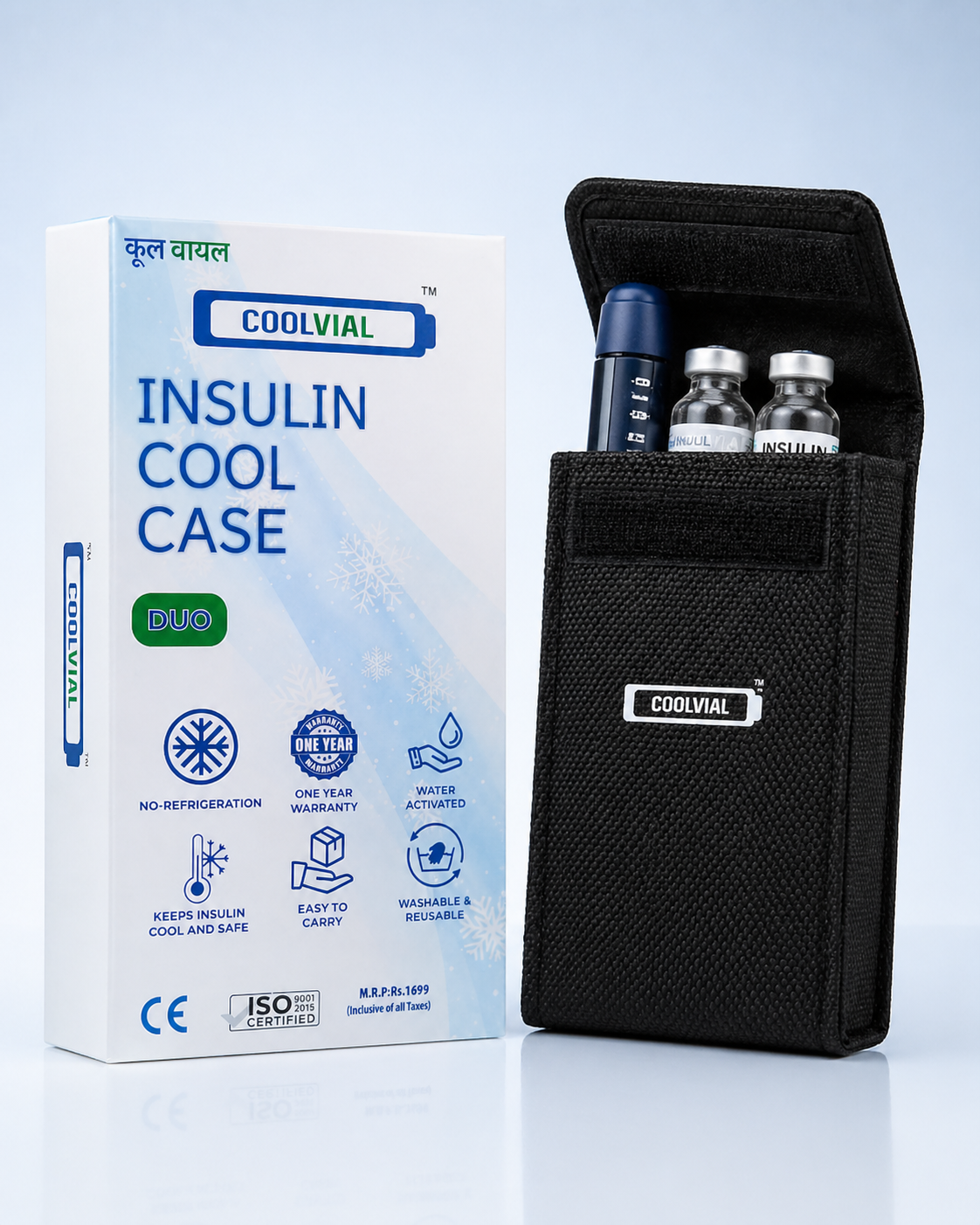
The COOLVIAL Duo is a water-activated evaporative cooling case that leverages the natural process of evaporation to maintain a safe temperature for your insulin. Unlike ice packs, it doesn’t require refrigeration or electricity, making it ideal for the unpredictable power cuts and high ambient temperatures characteristic of Prayagraj summers.
Key Features of COOLVIAL Duo:
- Capacity: Thoughtfully designed to hold 2 insulin pens and 1 insulin vial, accommodating the needs of most users.
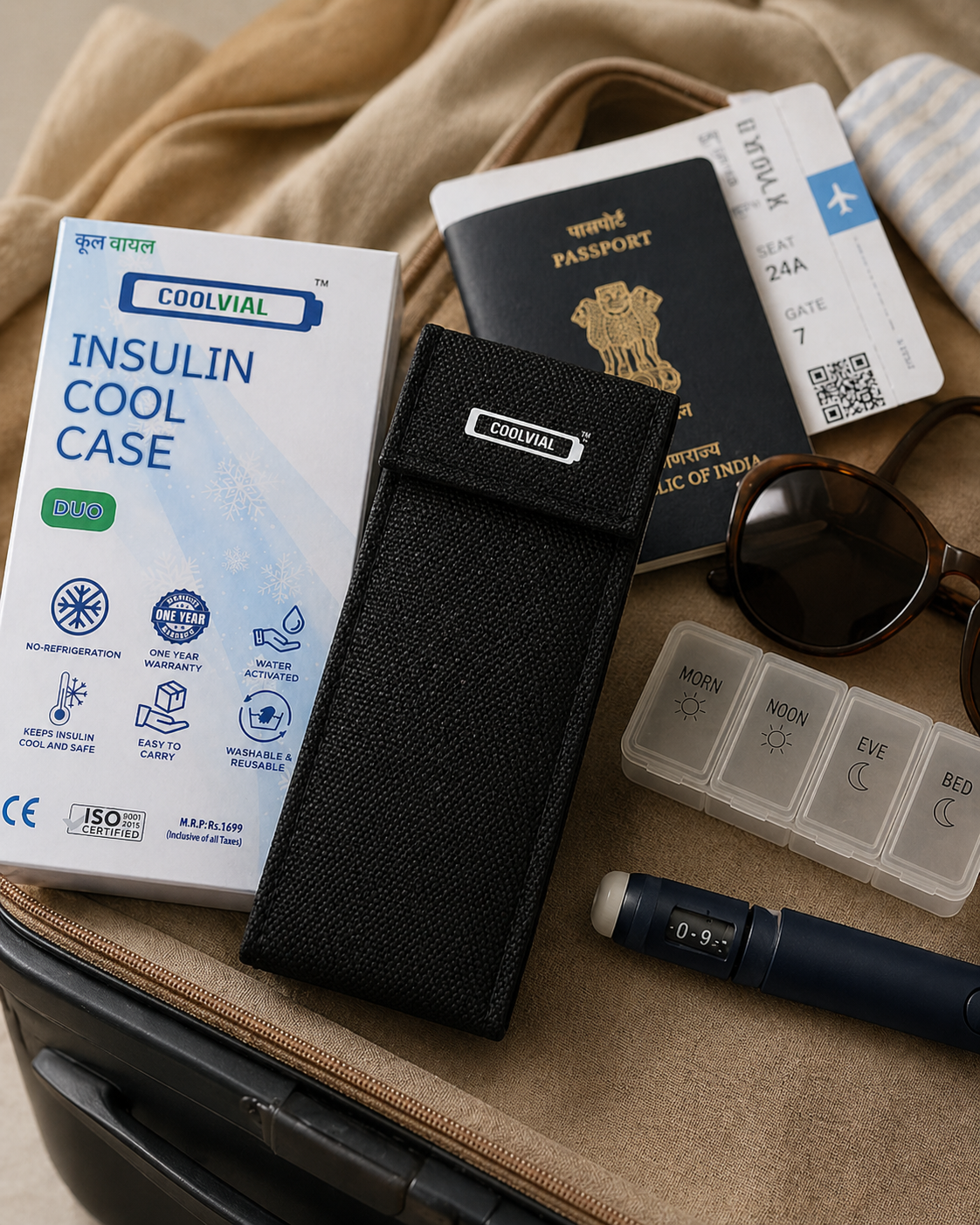
- Extended Cooling: Provides effective cooling for 12-16 hours on a single activation, ensuring your insulin remains safe throughout the day, whether you’re at home, commuting, or visiting landmarks like Allahabad Fort or Anand Bhavan.
- Electricity-Free Operation: Simply activate with water, making it perfect for travel, power outages, and areas with limited access to refrigeration.
- Certifications: CE certified and ISO 9001:2015 compliant, ensuring high standards of quality and safety.
- Durability & Warranty: Built to last with a 1-year warranty, providing peace of mind.
- Made in India: A product designed and manufactured locally, understanding and addressing specific Indian climate challenges.
- Affordable: Priced competitively at Rs 1,099 with code COOLHEAL (MRP Rs 1,699), making it accessible for a wide range of users.
While other options exist, such as FRIO wallets (often around Rs 1,900) or simpler insulated pouches like Outer Woods OW-12 (around Rs 999), the COOLVIAL Duo strikes an optimal balance of capacity, cooling duration, certification, and value. Its ability to hold both pens and a vial provides versatility, and its 12-16 hour cooling period is robust enough for Prayagraj’s daily heat. The CE and ISO certifications also offer an added layer of assurance regarding product quality and safety, a feature not always found in similar products.
For anyone in Prayagraj concerned about how to store insulin safely, especially when away from a refrigerator or during a power outage, the COOLVIAL Duo provides a dependable, cost-effective, and locally relevant solution. It’s a crucial component of any comprehensive insulin storage strategy in this climate. Discover more about essential insulin storage tips and how COOLVIAL can support your diabetes management.
Frequently Asked Questions (FAQs)
Q: How does Prayagraj’s humidity affect insulin storage? A: Prayagraj’s humidity, especially during monsoon (July-September), can slightly reduce the efficiency of evaporative cooling cases, but they still provide crucial protection by keeping insulin well below ambient temperatures. Humidity also requires attention to packaging to prevent moisture damage to insulin boxes.
Q: Can I store insulin in a thermos flask with ice in Prayagraj’s summer? A: Storing insulin in a thermos flask with ice is not recommended because direct contact with ice can freeze the insulin, rendering it ineffective, while fluctuating temperatures can also degrade it. A better option is an evaporative cooling case or an insulated cooler with gel packs that prevent direct contact.
Q: What is the ideal temperature range for insulin in use in Prayagraj? A: Insulin in use should ideally be stored at room temperature, which means below 25°C to 30°C, depending on the specific insulin brand. In Prayagraj’s summer, where indoor temperatures often exceed 30°C, an evaporative cooling case is essential to maintain this range.
Q: How long can insulin stay outside the fridge during a power cut in Prayagraj? A: Unopened insulin can typically tolerate temperatures above refrigeration (up to 25-30°C) for a limited time, usually a few hours, before potency begins to decline. For opened insulin, it can be kept at room temperature (below 25-30°C) for up to 28 days, but Prayagraj’s summer heat often pushes temperatures far beyond this limit.
Q: Is it safe to carry insulin in my regular bag while traveling in Prayagraj? A: No, it is not safe to carry insulin in a regular bag during Prayagraj’s summer, as ambient temperatures can quickly degrade the insulin. Always use an insulated bag or, preferably, an evaporative cooling case like the COOLVIAL Duo to protect your insulin from direct heat and sunlight.
Q: Where can I buy a COOLVIAL Duo in Prayagraj? A: While COOLVIAL Duo is available online at coolvial.com, you might find it at leading pharmacies like Apollo Pharmacy or MedPlus stores in Prayagraj, or via their online platforms. Always verify stock availability with your local branch [Verify in 2026].
Q: What if my insulin gets too hot in Prayagraj’s summer? A: If your insulin has been exposed to temperatures significantly above 30°C for an extended period, it’s best to discard it, even if it looks normal, as its potency may be compromised. Consult your doctor or diabetologist for advice on replacing it.
Conclusion
Navigating Prayagraj’s intense summer heat while managing diabetes requires diligence and the right tools. The city’s scorching temperatures, combined with the challenge of power cuts and varying living conditions across neighborhoods, make proper insulin storage a critical aspect of daily life for diabetics. From understanding the impact of 33-38°C indoor temperatures to implementing emergency protocols during power outages, every step counts in preserving your insulin’s efficacy.
By adopting practical strategies like using bottled/RO water for evaporative cooling cases, preparing for peak heat scenarios, and following local medical advice from institutions like SRN Hospital, Prayagraj residents can confidently protect their life-saving medication. The COOLVIAL Duo stands out as a robust, Made-in-India solution, offering 12-16 hours of electricity-free cooling for 2 pens and 1 vial, all at an affordable price. It’s an essential companion for maintaining insulin stability in the city of Sangam. Don’t let the heat compromise your health.
Order COOLVIAL Duo at Rs 1,099 with code COOLHEAL at coolvial.com or via WhatsApp wa.me/918766952300.
Medical Disclaimer
This article is for general information purposes only and does not constitute medical advice. Always consult your endocrinologist or diabetologist before making any changes to your insulin storage or dosing practices.
How We Researched This
This article was developed based on a comprehensive review of current RSSDI (Research Society for the Study of Diabetes in India) guidelines, ICMR-INDIAB (Indian Council of Medical Research - India Diabetes) data, local Prayagraj hospital directories (including SRN Hospital), and information from the Apollo Pharmacy network regarding general diabetes care and medication storage in Indian climate conditions. Local climate data for Prayagraj was referenced from meteorological sources and typical residential experiences.
11 Practical Ways to Store Insulin in Prayagraj Summer Heat — A Local's Guide
COOLVIAL keeps insulin safe in India's heat. 48+ hours, no electricity needed.