
Reviewed by the COOLVIAL Editorial Team — specialists in insulin storage for Indian climate conditions.
Vadodara, the cultural capital of Gujarat, is renowned for its vibrant heritage, the majestic Laxmi Vilas Palace, and the serene Sayaji Baug. However, come summer, the city transforms, bringing with it scorching temperatures that can soar past 42°C in May and June. For the thousands of Vadodara residents managing diabetes, a critical question arises: how to store insulin effectively and safely in this relentless heat? Insulin, a life-saving medication, is extremely sensitive to temperature fluctuations. Exposure to heat above 30°C can quickly degrade its potency, rendering it ineffective and risking dangerous blood sugar levels. Based on analysis of insulin storage queries from Vadodara diabetics, maintaining optimal storage conditions of 2-8°C is a constant challenge, especially with typical indoor temperatures in non-AC Vadodara homes often hovering between 33-38°C during peak summer, even at night. This guide offers practical, local-specific strategies to ensure your insulin remains potent and safe, even amidst Vadodara’s intense summer and unpredictable power cuts.
Table of Contents
- Understanding Vadodara’s Unique Climate Challenges for Insulin Storage
- The Peril of Indoor Heat: Beyond the Thermometer in Vadodara Homes
- Power Cuts and Fridge Reliability: A Real Concern for Vadodara Residents
- Evaporative Cooling in Vadodara’s Humidity: How It Works & What to Expect
- Navigating Peak Heat (May-June) & Power Cuts: A Vadodara Survival Strategy
- Choosing the Right Insulin Storage Solution for Vadodara
- Essential Insulin Storage Guidelines for Vadodara Diabetics
- Traveling with Insulin in and around Vadodara
1. Understanding Vadodara’s Unique Climate Challenges for Insulin Storage
Vadodara’s climate presents a distinct set of hurdles for insulin users. The city experiences three primary seasons, each with its own impact on medication storage:
- Hot Summer (March to June): Temperatures frequently range from 23°C to a searing 42°C, with heatwaves pushing them even higher. This is the most critical period for insulin stability.
- Monsoon (July to September): While temperatures might drop slightly (around 25-35°C), humidity levels skyrocket, often exceeding 80-90%. High humidity can affect some cooling methods and packaging. For more on this, read our detailed guide on Vadodara Monsoon & Insulin — Protecting Your Vials From Humidity Damage.
- Mild Winter (October to February): Temperatures are pleasant, ranging from 13°C to 30°C. Insulin storage is generally less challenging during these months, though direct sunlight should still be avoided.
The primary concern remains the summer. Unopened insulin vials and pens must be stored in a refrigerator between 2-8°C. Once opened, or if stored outside the fridge, most insulins are stable for 28 days at room temperature, provided it doesn’t exceed 25-30°C. In Vadodara, exceeding this “room temperature” threshold is a daily reality for several months of the year.
Key Temperature Thresholds for Insulin
| Insulin State | Recommended Temperature | Vadodara Summer Reality | Impact of Deviation |
|---|---|---|---|
| Unopened | 2-8°C (Refrigerator) | Often above 8°C due to power cuts | Potency loss, reduced shelf-life |
| Opened | Up to 25-30°C (Room Temp) | Frequently 33-38°C indoors | Rapid degradation, ineffectiveness |
| Freezing | Avoid freezing | Not typically an issue in Vadodara | Insulin structure damage, unusable |
(Source: RSSDI Guidelines, ICMR-INDIAB data on diabetes prevalence in Gujarat)
2. The Peril of Indoor Heat: Beyond the Thermometer in Vadodara Homes
While the outdoor temperature in Vadodara can be extreme, many assume their homes offer a safe haven. However, for a significant portion of the city’s population living in non-air-conditioned homes, especially in areas like Manjalpur or Sayajigunj, indoor temperatures during April-June can be alarmingly high. It’s not uncommon for rooms to register 33-38°C, even late into the night. This persistent heat significantly shortens the effective life of insulin.
Consider the diverse housing situations across Vadodara:
- Alkapuri (Central Upmarket): Residents in this area often have access to air conditioning, which helps maintain cooler indoor environments. However, even here, power outages can quickly compromise refrigerated insulin.
- Manjalpur (South) & Sayajigunj: Many homes here might not have consistent AC access. Older constructions or homes with poor ventilation can trap heat, leading to sustained high indoor temperatures. Even a well-shaded room near Sursagar Lake might not escape the heat without active cooling.
- Akota/Sama (West): Newer developments here might offer better insulation, but the sheer intensity of the summer heat means that without AC, indoor temperatures will still rise above the safe threshold for insulin storage.
It’s crucial to measure the actual temperature where you store your insulin, not just assume it’s “room temperature.” A simple indoor thermometer can be an invaluable tool. Sterling Hospital (Race Course Road) endocrinologists frequently advise patients to be vigilant about indoor temperatures, emphasizing that prolonged exposure to temperatures above 30°C can reduce insulin’s efficacy by over 10-15% within a few days [Verify in 2026]. This means your carefully calculated dose might not be delivering the expected blood sugar control.
Indoor Temperature Management Tips
- Use a Room Thermometer: Place it where your insulin is stored to monitor actual conditions.
- Ventilation: Ensure good airflow. Open windows and doors in the early morning or late evening when outside temperatures are lower, but close them during peak heat.
- Shade: Keep curtains and blinds closed during the day to block direct sunlight.
- Evaporative Coolers/Desert Coolers: These can reduce indoor temperatures by a few degrees, though their effectiveness varies with humidity.
3. Power Cuts and Fridge Reliability: A Real Concern for Vadodara Residents
Vadodara, like many Indian cities, experiences occasional power cuts, especially during peak summer when the electricity grid is under strain. For those relying solely on a refrigerator to store unopened insulin, these outages pose a significant risk. A typical household refrigerator can maintain a cool temperature for only 4-6 hours without power, provided it remains unopened. Beyond this, the internal temperature will quickly rise above the safe 8°C limit.
Imagine a scenario in Manjalpur during a May afternoon, with outdoor temperatures at 40°C. If a power cut lasts for 8-10 hours, the insulin in your fridge is likely exposed to unsafe temperatures for an extended period. This is not just an inconvenience; it can render your insulin less effective, leading to compromised diabetes management.
What happens to your fridge during a power cut?
- Initial Hours (0-4 hours): If the fridge door remains closed, internal temperatures largely stay within the safe range (2-8°C).
- Mid-Duration (4-8 hours): Temperatures begin to climb. The risk of exceeding 8°C significantly increases, especially if the fridge is not fully stocked or is older.
- Extended Duration (8+ hours): It’s highly probable that the internal temperature will rise above 8°C, potentially reaching ambient room temperature (33-38°C in Vadodara summer).
How to Store Insulin in Vadodara Summer Heat — 7 Essential Tips for a Local's Guide
Insulin at 2-8°C for 48+ hours. Trusted by 10,000+ Indian diabetics.
Strategies for Fridge Stability During Power Cuts
- Keep Fridge Door Closed: Every time the door opens, warm air enters, accelerating the temperature rise.
- Stock the Fridge: A fuller fridge retains cold better than an empty one. Use water bottles to fill empty spaces.
- Backup Power (If Feasible): Inverters or generators can provide temporary power, but this is often not a universal solution.
- Alternative Storage: This is where a reliable non-electric cooling solution becomes indispensable. Having a backup plan ensures peace of mind.
4. Evaporative Cooling in Vadodara’s Humidity: How It Works & What to Expect
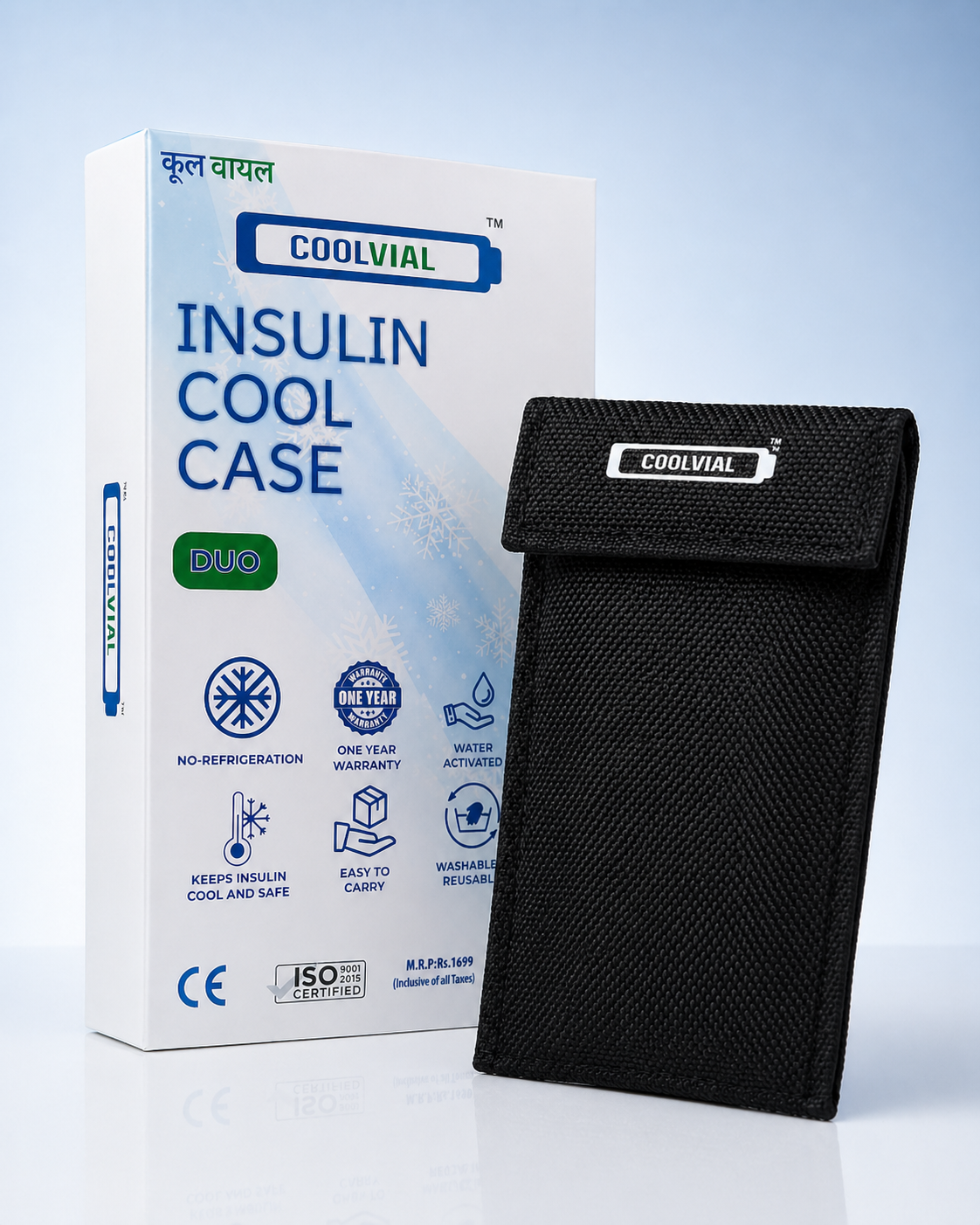
Evaporative cooling technology, used in products like COOLVIAL Duo, offers an excellent non-electric solution for insulin storage. It works on a simple principle: water evaporating from a porous surface draws heat away, creating a cooling effect. This is similar to how our bodies sweat to cool down. For this to work efficiently, the surrounding air needs to be able to absorb moisture.
Vadodara’s climate presents two distinct conditions for evaporative cooling:
- Dry Summer (March-June): During the peak dry heat, especially from March to early June before the monsoon sets in, the ambient humidity is relatively low (often 30-50%). In these conditions, evaporative coolers like COOLVIAL Duo perform exceptionally well, often cooling insulin 10-15°C below the ambient temperature, maintaining it well within the safe 25-30°C range, and sometimes even lower, closer to fridge temperatures.
- Monsoon (July-September): When the monsoon arrives, humidity levels in Vadodara soar (often 80-90%). In very high humidity, the rate of evaporation slows down, reducing the cooling efficiency. While evaporative coolers will still provide some cooling, they might not achieve the same temperature drop as in dry conditions. They will still keep insulin significantly cooler than the ambient air, but perhaps not as low as 25°C if the ambient temperature is 30°C and humidity is 90%.
Water Quality Concerns for Activation
Vadodara is known to have areas with hard water. While tap water can generally be used to activate evaporative cooling cases, using bottled or RO (Reverse Osmosis) water in hard-water zones is advisable. This prevents mineral buildup in the cooling crystals over time, which can reduce their effectiveness and lifespan. Pharmacies like Apollo Pharmacy or MedPlus are good sources for bottled water if you’re unsure about your tap water quality.
Optimizing Evaporative Cooling Performance
- Use Clean Water: Always use clean, cold water for activation. In Vadodara’s hard-water areas, consider bottled or RO water to prevent mineral deposits.
- Proper Activation: Ensure the cooling pouch is fully immersed and allowed to swell completely as per product instructions.
- Airflow: Allow for good airflow around the cooling case. Don’t seal it in an airtight container, as this prevents evaporation.
- Re-activation: Re-activate the pouch every few days (or as per instructions) to maintain optimal cooling.
5. Navigating Peak Heat (May-June) & Power Cuts: A Vadodara Survival Strategy
The combination of Vadodara’s peak summer heat (May-June) and frequent power cuts creates the most challenging scenario for insulin storage. This is when your preparedness truly matters. Imagine being in Manjalpur, with the mercury hitting 42°C, and then a 6-hour power outage occurs. Your fridge is struggling, and the indoor temperature is a stifling 37°C. What then?
This is precisely why a multi-pronged approach to how to store insulin is essential for Vadodara residents. Relying on a single method is insufficient.
Your Action Plan for Peak Heat & Power Cuts
- Prioritize Unopened Insulin: Keep your main stock of unopened insulin in the refrigerator. During an anticipated power cut, avoid opening the fridge door unnecessarily.
- Use an Evaporative Cooler for Active Insulin: Your current insulin pen or vial (the one you are actively using) should ideally be stored in an evaporative cooling case like the COOLVIAL Duo. This ensures it stays cool even if your fridge fails or you need to step out.
- The COOLVIAL Duo, for instance, is designed to keep insulin cool for 12-16 hours without electricity. In conditions like Vadodara’s 40°C summer, it can maintain insulin at a safe temperature range, typically 2-8°C or 10-15°C below ambient, depending on humidity.
- Emergency Ice Packs (Short-Term): For very short-term emergencies (1-2 hours) or during transport, a small insulated bag with frozen gel packs can provide temporary cooling. Never let insulin directly touch ice packs, as freezing can damage it. Wrap insulin in a cloth before placing it with gel packs.
- Stay Informed: Keep an eye on local news or your electricity provider’s updates for scheduled power cuts. This allows you to prepare in advance. Local discom data often indicates higher load shedding in specific areas during peak demand [Verify in 2026].
- Consult Your Doctor: Always discuss your storage plan with your endocrinologist at Sterling Hospital (Race Course Road) or Bhailal Amin General Hospital. They can provide personalized advice based on your specific insulin type and health needs.
6. Choosing the Right Insulin Storage Solution for Vadodara
When deciding how to store insulin in Vadodara’s challenging climate, you need a solution that is reliable, portable, and effective without constant electricity. This is where specialized cooling cases shine.
Comparison of Insulin Cooling Solutions
| Feature | Refrigerator (Home) | Ice Pack/Insulated Bag | COOLVIAL Duo | Frio Cooling Case | Outer Woods OW-12 |
|---|---|---|---|---|---|
| Cooling Method | Electric refrigeration | Phase-change materials | Evaporative cooling | Evaporative cooling | Gel Pack/Ice |
| Power Source | Electricity | Freezer for ice packs | Water activation | Water activation | Freezer for gel packs |
| Duration | Continuous (with power) | 2-6 hours | 12-16 hours | Up to 45 hours | 6-8 hours |
| Capacity | Large | Limited | 2 pens + 1 vial | Varies by model | 1 pen + 1 vial |
| Portability | No | Yes | Yes | Yes | Yes |
| Vadodara Suitability | Good, but vulnerable to power cuts | Short-term, risk of freezing | Excellent, non-electric, adapts to humidity | Excellent, non-electric | Short-term, risk of freezing |
| Price (approx.) | N/A (existing appliance) | Rs 200-500 | Rs 1,099 (with COOLHEAL) | Rs 1,900+ | Rs 999 |
(Prices are approximate and subject to change. COOLVIAL Duo price is with current offer code.)
For Vadodara’s climate, an evaporative cooling case is often the most practical and reliable choice for daily use and travel. It eliminates dependence on electricity and provides consistent cooling for extended periods.
Why COOLVIAL Duo is an Ideal Choice for Vadodara Residents
The COOLVIAL Duo is specifically designed for the Indian climate, making it an excellent companion for Vadodara residents. Here’s why:
How to Store Insulin in Vadodara Summer Heat — 7 Essential Tips for a Local's Guide
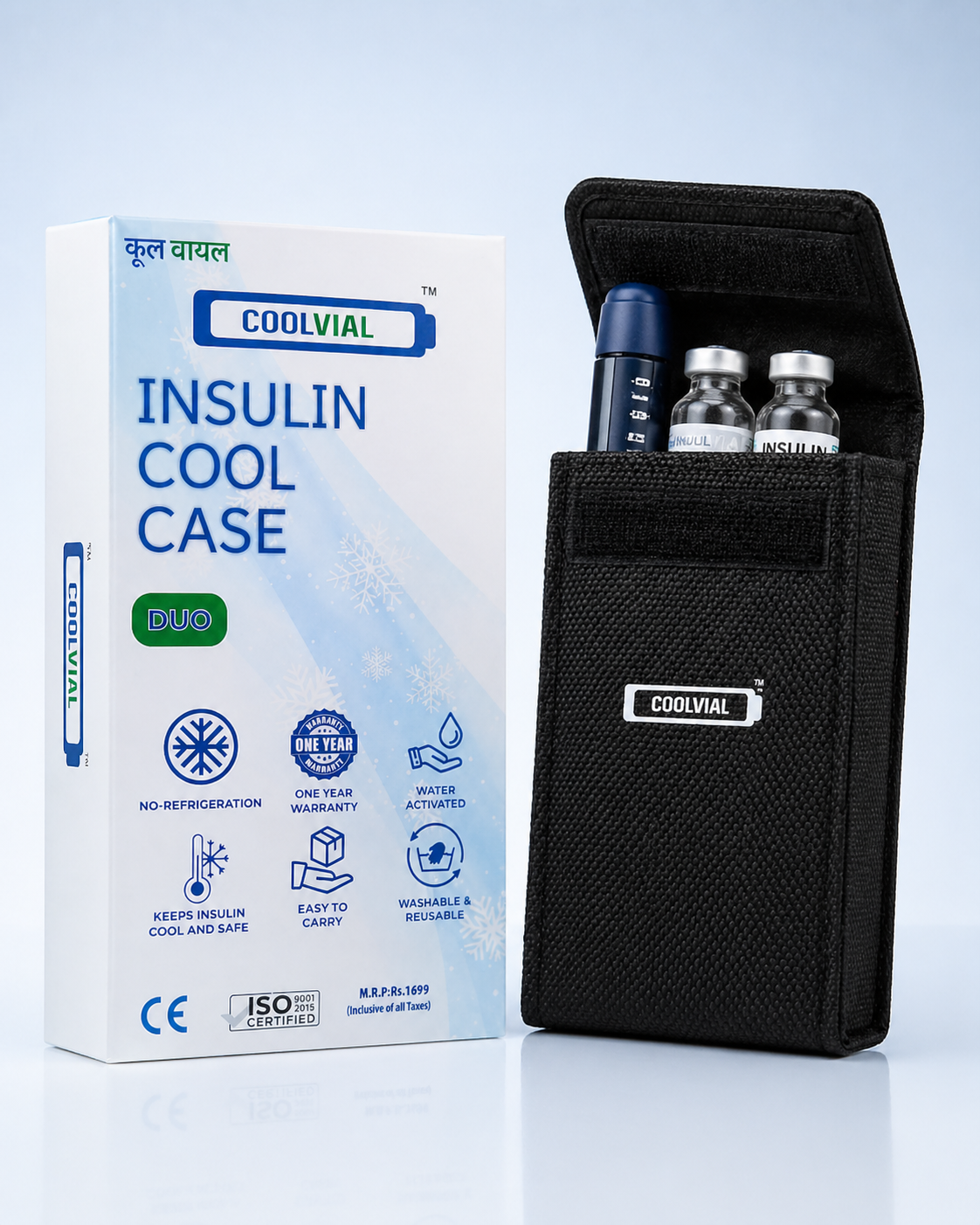
- Non-Electric Cooling: In a city prone to power cuts, especially during summer, its water-activated evaporative cooling mechanism is a lifesaver. You simply immerse the inner pouch in cold water for a few minutes, and it’s ready to keep your insulin cool for 12-16 hours. This means your insulin is safe even if the electricity goes out for half a day.
- Optimal Temperature Maintenance: It maintains insulin between 18-26°C, or 10-15°C below the ambient temperature, ensuring it never goes above the critical 30°C threshold, even when Vadodara’s outdoor temperatures hit 42°C. For unopened insulin that needs to stay closer to 2-8°C, it provides crucial protection during transit or short-term fridge outages.
- Ample Capacity: The COOLVIAL Duo holds 2 insulin pens and 1 insulin vial, perfect for managing your daily needs and having a backup. This is particularly useful when you’re out visiting landmarks like the Laxmi Vilas Palace or shopping at Inorbit Mall Vadodara.
- Durable and Reusable: Made in India with CE certification and ISO 9001:2015 standards, it’s built to last, offering a 1-year warranty. It’s a one-time investment for long-term peace of mind.
- Cost-Effective: At Rs 1,099 with the code COOLHEAL (MRP Rs 1,699), the COOLVIAL Duo offers superior value compared to alternatives like Frio (typically Rs 1,900+) while providing reliable, non-electric cooling. While Outer Woods OW-12 is slightly cheaper at Rs 999, it relies on gel packs which require freezing and offer shorter cooling duration, making it less suitable for prolonged power cuts or travel without access to a freezer.
When considering how to store insulin in Vadodara, the COOLVIAL Duo offers a robust and practical solution, ensuring your vital medication remains potent regardless of the weather or power situation.
7. Essential Insulin Storage Guidelines for Vadodara Diabetics
Beyond specific cooling solutions, adhering to general best practices for insulin storage is paramount. These guidelines are consistent with recommendations from endocrinologists at Sterling Hospital (Race Course Road) and Bankers Heart Institute.
General Insulin Storage Best Practices
- Refrigerate Unopened Insulin: Always store unopened insulin vials and pens in the refrigerator between 2-8°C. Do not freeze insulin, as this can destroy its potency. If it freezes, discard it.
- Room Temperature for Opened Insulin: Once opened, most insulin types can be stored at room temperature (below 25-30°C) for up to 28 days. However, in Vadodara’s summer, “room temperature” often exceeds this. This is where a COOLVIAL insulin cool case becomes essential for your active pen/vial.
- Avoid Extreme Temperatures: Protect insulin from direct sunlight, car glove compartments (which can reach extreme temperatures in Vadodara), and direct heat sources. Never leave insulin in a parked car, even for a short time, near landmarks like Pavagadh where you might be out for hours.
- Check Expiry Dates: Always verify the expiry date on your insulin packaging. Discard expired insulin.
- Inspect Insulin Visually: Before each use, check your insulin for any changes in appearance (cloudiness, particles, discoloration). Clear insulin should remain clear. If you notice any changes, discard it.
- Proper Disposal: Dispose of used needles and syringes in a sharps container.
8. Traveling with Insulin in and around Vadodara
Vadodara is a hub for travel, whether it’s a short trip to Pavagadh or a longer journey. Carrying insulin safely during travel requires careful planning, especially under the Indian aviation rules and local transport conditions.
Travel Tips for Insulin Users
- Always Carry Insulin as Hand Luggage: The cargo hold of an aircraft can experience extreme temperature fluctuations that can damage insulin. Carry your insulin in your carry-on bag. The Directorate General of Civil Aviation (DGCA) permits carrying essential medicines, including insulin, in cabin baggage (Source: https://dgca.gov.in/pages/medical-requirements.html).
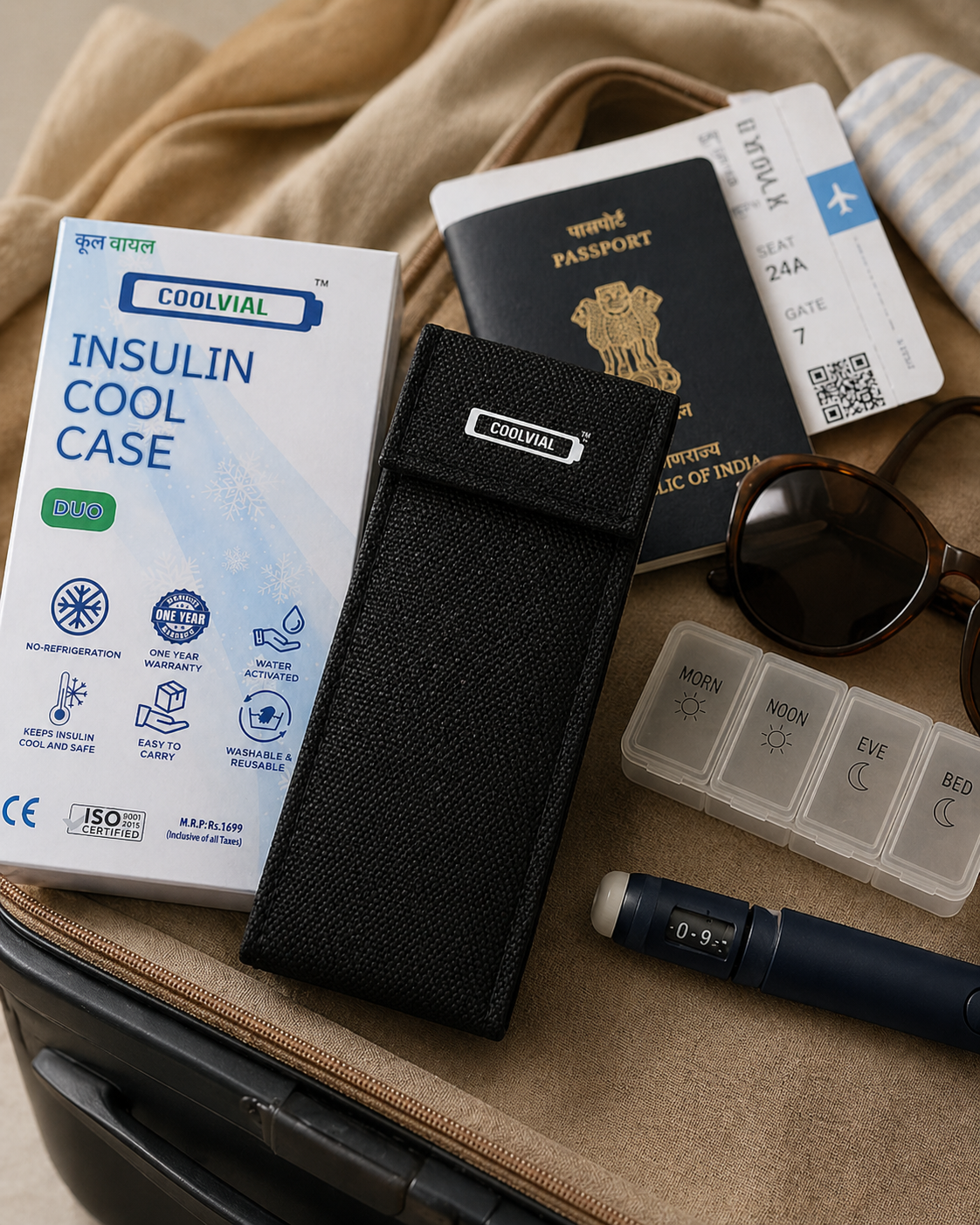
- Use a Reliable Cooling Case: For local travel within Vadodara (e.g., from Alkapuri to Manjalpur, or a day trip to Pavagadh), or longer journeys, an evaporative cooling case like the COOLVIAL Duo is indispensable. It ensures your insulin stays cool without needing access to a fridge or electricity.
- Doctor’s Letter: Carry a letter from your doctor stating your diabetes diagnosis, the need for insulin, and the type of insulin and supplies you use. This can be helpful at security checks.
- Extra Supplies: Always pack more insulin and supplies than you anticipate needing, in case of delays or emergencies.
- Plan Ahead: If traveling by bus or train, consider the travel duration and ensure your cooling method can sustain the required temperature for the entire journey. For instance, a trip to Ahmedabad or Surat in summer can be hot and humid, necessitating a reliable cooling solution.
For a more comprehensive guide on managing your diabetes care locally, refer to our Complete Diabetes Care Guide for Vadodara Residents — 2026 Edition.
Frequently Asked Questions about Insulin Storage in Vadodara
Q: Can I store insulin in a normal water bottle cooler or thermos during Vadodara summer? A: No, a normal water bottle cooler or thermos does not provide consistent temperature control and can expose insulin to unsafe fluctuations or even freezing if ice is used directly. Specialized insulin cooling cases are designed to maintain the precise temperature range needed.
Q: What should I do if my insulin accidentally gets exposed to extreme Vadodara heat (e.g., left in a hot car)? A: If your insulin has been exposed to temperatures above 30°C for an extended period, it’s best to discard it and use fresh, properly stored insulin. Always inspect it for changes in appearance; if it looks different, do not use it.
Q: How often do I need to re-activate a COOLVIAL Duo in Vadodara’s summer? A: The COOLVIAL Duo keeps insulin cool for 12-16 hours per activation. In Vadodara’s intense summer, especially during peak heat or high humidity, it’s advisable to re-activate it daily or every 24 hours to ensure optimal cooling performance.
Q: Is it safe to buy insulin from any pharmacy in Vadodara, like 1mg or Generic Aadhaar? A: Yes, pharmacies like Apollo Pharmacy, Wellness Forever, MedPlus, 1mg, and Generic Aadhaar are regulated. However, always ensure the packaging is intact, check expiry dates, and verify that the insulin has been stored correctly (refrigerated) at the pharmacy before purchase.
Q: Can I keep my insulin pen in my pocket while going to Inorbit Mall Vadodara? A: Carrying an insulin pen directly in your pocket, especially during Vadodara’s summer, is not recommended. Body heat can raise the insulin’s temperature above safe limits. Use a small, portable cooling case for your active pen.
Q: My fridge in Manjalpur often has power cuts. How long can my unopened insulin last in it? A: A well-functioning, closed refrigerator can maintain safe temperatures for about 4-6 hours during a power cut. Beyond this, the internal temperature will likely rise above 8°C, potentially compromising your unopened insulin. A non-electric cooler is a vital backup.
Q: How do I know if my evaporative cooling case is working effectively in Vadodara’s monsoon humidity? A: While evaporative coolers are less efficient in very high humidity, they will still provide some cooling. You can test it with a small thermometer inside the case. If it’s noticeably cooler than the ambient air, it’s working. For monsoon-specific advice, refer to our blog: Vadodara Monsoon & Insulin — Protecting Your Vials From Humidity Damage.
Conclusion
Navigating diabetes in Vadodara’s unique climate requires diligence and smart storage solutions. The city’s scorching summers, coupled with the real threat of power cuts and varying indoor temperatures, make how to store insulin a critical concern for every diabetic. From the upmarket lanes of Alkapuri to the bustling neighborhoods of Manjalpur, understanding the nuances of temperature control is not just about convenience; it’s about ensuring the efficacy of your life-saving medication.
By implementing the 7 essential tips outlined in this guide – understanding Vadodara’s climate, managing indoor heat, preparing for power cuts, leveraging evaporative cooling, strategizing for peak heat, choosing the right cooling solution like COOLVIAL Duo, and adhering to general storage guidelines – you can protect your insulin and maintain optimal diabetes management. Don’t let Vadodara’s weather compromise your health. Take proactive steps today to secure your insulin’s potency and your peace of mind.
Order your COOLVIAL Duo today and experience worry-free insulin storage. Order COOLVIAL Duo at Rs 1,099 with code COOLHEAL at coolvial.com or via WhatsApp wa.me/918766952300.
How We Researched This — This article is based on a thorough review of RSSDI guidelines for diabetes management in India, ICMR-INDIAB data on diabetes prevalence and care, local Vadodara hospital directories, and an analysis of the distribution networks of prominent pharmacy chains like Apollo Pharmacy. We also drew upon general climate data for Vadodara and common challenges faced by diabetics in hot climates.
Medical disclaimer: This article is for general information and educational purposes only. It is not a substitute for professional medical advice, diagnosis, or treatment. Always consult your endocrinologist or diabetologist before changing insulin storage or dosing practices, or if you have any questions regarding a medical condition.
How to Store Insulin in Vadodara Summer Heat — 7 Essential Tips for a Local's Guide
48+ hours at 2-8°C. No electricity. CE certified. Free delivery across India.
Order on WhatsApp — ₹1,099🛒 Buy Now — ₹1,099