
Reviewed by the COOLVIAL Editorial Team — specialists in insulin storage for Indian climate conditions.
The Blue City of Jodhpur, with its majestic Mehrangarh Fort and the sprawling Umaid Bhawan Palace, is renowned for its vibrant culture and striking desert landscape. However, for residents managing diabetes, Jodhpur’s unique climate, particularly during the brief but intense wet season, presents distinct challenges for insulin storage. Protecting insulin pens and vials from the dual threat of fine desert sand and sudden monsoon downpours is crucial for maintaining medication efficacy. This article outlines 5 essential strategies to safeguard your insulin. Based on analysis of insulin storage queries from Jodhpur diabetics, our focus keyword, jodhpur dust storms, highlights the primary concern during this period. The city, experiencing average temperatures between 25°C and 46°C in May-June and a low annual rainfall of merely 360-600mm, is highly susceptible to disruptive dust storms (aandhi) before the brief monsoon bursts.
Table of Contents
- Understanding Jodhpur’s Unique “Wet” Season: More Dust, Less Rain
- The Critical Threat of Thar Desert Dust to Insulin Pens and Vials
- Smart Storage Solutions: Combining Airtight Protection with Cooling
- When and How to Safely Wipe Insulin Pen Needles in Dusty Conditions
- Navigating Jodhpur’s Monsoon: Flash Floods, Power Cuts, and Pharmacy Access
- Travel Safely: Insulin Management for Trips to Jaisalmer or Bikaner
- AIIMS Jodhpur (Basni) and Local Pharmacy Guidance on Insulin Care
- Choosing the Right Cooling Solution: COOLVIAL Duo vs. Alternatives
- Frequently Asked Questions (FAQ)
- Conclusion and Call to Action
Understanding Jodhpur’s Unique “Wet” Season: More Dust, Less Rain
Jodhpur’s monsoon, unlike the lush green monsoons seen in many other parts of India, is a brief and often unpredictable affair. Nestled in the Thar Desert, the city experiences minimal total rainfall, typically ranging from 360mm to 600mm annually (Source: India Meteorological Department, Jodhpur). However, this low rainfall is often concentrated in intense, short bursts, preceded by severe dust storms locally known as loo or aandhi. These jodhpur dust storms are not just a nuisance; they are a significant environmental factor impacting daily life and, critically, the storage of sensitive medications like insulin.
The Dual Threat: Fine Dust and Brief Monsoon Bursts
The period leading up to and during the monsoon in Jodhpur is characterized by a unique combination of extreme heat and fine desert dust. Temperatures can soar, often exceeding 40°C, creating conditions where insulin rapidly loses potency if not stored correctly. The dust storms, sometimes lasting for hours, carry microscopic sand particles that can penetrate almost anywhere. When the rains finally arrive, they often come as sudden, heavy downpours, leading to temporary waterlogging, especially in older areas like Sardarpura. This creates a challenging environment where both dryness (dust) and dampness (rain) become threats.
- Characteristics of Jodhpur’s Monsoon:
- Low Total Rainfall: Significantly less than other Indian regions, often concentrated in a few weeks.
- Pre-Monsoon Dust Storms (
Aandhi): Intense wind and dust phenomena, common from May to early July. - High Temperatures: Persist throughout the pre-monsoon and early monsoon period, posing a constant threat to insulin’s integrity.
- Sudden, Heavy Showers: Can lead to localized flash floods, impacting infrastructure and accessibility.
The Critical Threat of Thar Desert Dust to Insulin Pens and Vials
The fine, pervasive dust of the Thar Desert is arguably a greater, more constant threat to insulin pens and vials in Jodhpur than the infrequent rains. This isn’t just about keeping things clean; it’s about safeguarding the integrity and functionality of medical devices and the sterility of your medication. Microscopic sand particles can wreak havoc on precision instruments like insulin pens and contaminate sterile surfaces.
How Dust Compromises Insulin Delivery
Insulin pens are precision-engineered devices with delicate mechanisms, including dose dials and plunger systems. Fine dust can easily infiltrate these components, leading to several problems:
- Jammed Dose Dials: Dust accumulation can make it difficult to rotate the dose dial, leading to inaccurate dosing or preventing injection altogether.
- Impaired Plunger Mechanism: Sand particles can interfere with the smooth movement of the plunger, resulting in incomplete insulin delivery or damage to the pen.
- Contamination of Vial Septums: For those using insulin vials, dust can settle on the rubber septum. Each time a needle is inserted, there’s a risk of pushing these particles into the sterile insulin, potentially leading to contamination and infection at the injection site.
- Damage to Cooler Fabric: Evaporative cooling cases, while highly effective, rely on specialized fabric that allows water to evaporate. Fine dust can clog the pores of this fabric, reducing its efficiency and lifespan.
Areas Vulnerable to Dust Contamination
Understanding where dust poses the biggest risk helps in devising protective measures.
- Insulin Pen Mechanism: The dose dial, injection button, and needle attachment area are highly susceptible.
- Vial Septum: The rubber stopper on insulin vials is a critical point for maintaining sterility.
- Needle Covers: Even capped needles can accumulate dust on their exterior, which can be transferred during uncapping.
- Cooler Fabric: The outer fabric of evaporative cooling cases, essential for their function.
- Storage Containers: Any non-airtight container will allow dust ingress.
Smart Storage Solutions: Combining Airtight Protection with Cooling
Given the pervasive nature of Thar Desert dust, combining airtight protection with effective cooling is not just recommended, but essential. Relying solely on a cooling case might protect against heat, but not against the fine sand that can infiltrate almost anything. This is where a multi-layered approach becomes indispensable for diabetes management in Jodhpur.
One of the most practical and cost-effective strategies is to store your insulin pens and vials in simple, sealable zip-lock bags before placing them inside your evaporative cooling case. This creates an additional barrier against dust and moisture without compromising the cooling process.
- Essential Components for Dust-Proof Insulin Storage:
- Zip-lock Bags: High-quality, durable zip-lock bags are inexpensive and provide an excellent first line of defense against dust and incidental moisture. Use separate bags for pens and vials if possible.
- Airtight Containers: For longer-term storage or when traveling, a small, robust, airtight plastic container can provide superior protection. Combine this with silica gel packets to absorb any residual moisture.
- Silica Gel Packets: These desiccants help absorb moisture, preventing condensation inside the airtight container, which can be detrimental to both the insulin and the pen mechanism. Replace them regularly, especially during the monsoon.
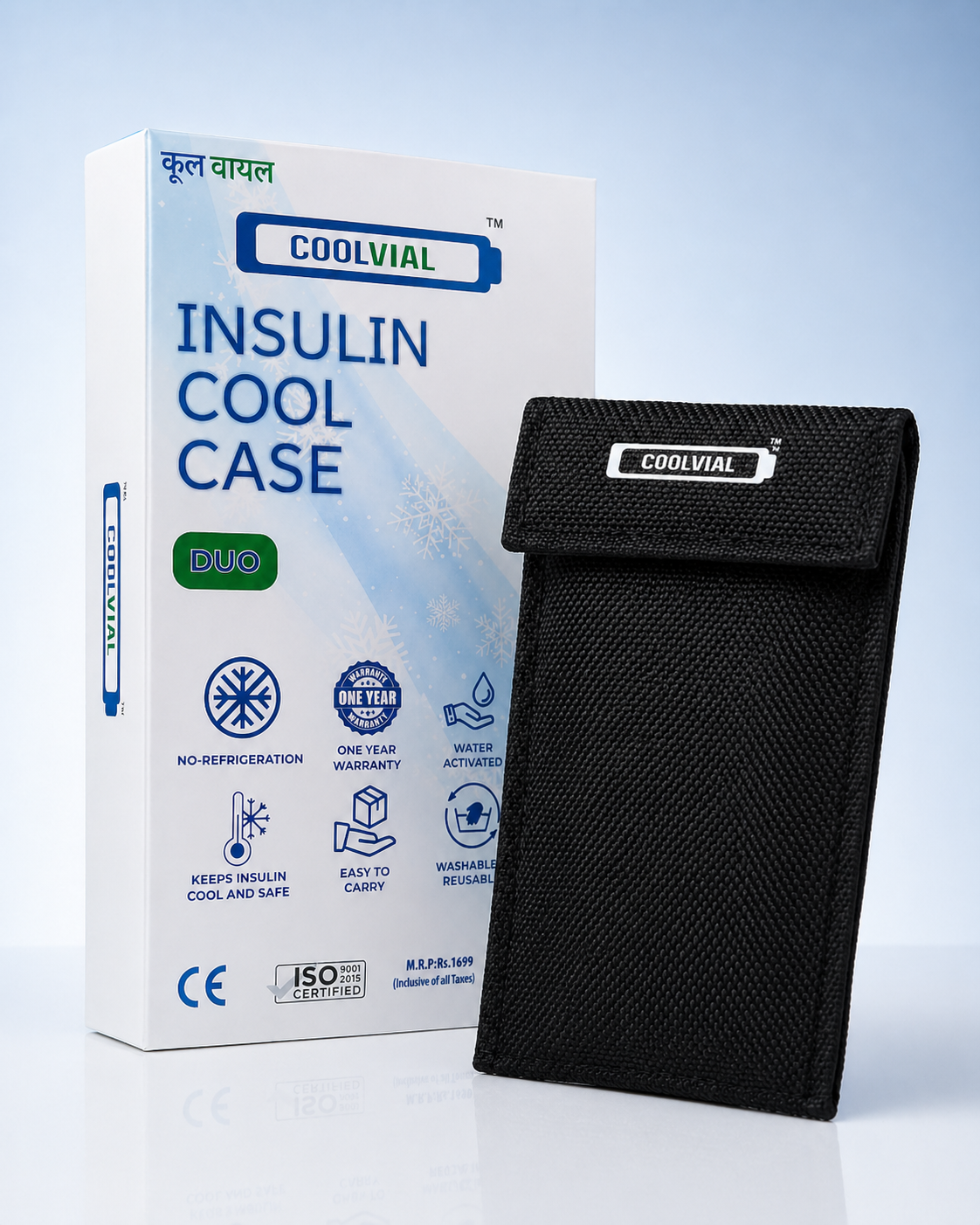
- COOLVIAL Duo: An evaporative cooling case specifically designed for Indian conditions provides the necessary temperature control. The COOLVIAL insulin cool case works by using water to activate its cooling properties, keeping insulin within safe temperatures (18-26°C) for 12-16 hours without electricity.
The COOLVIAL Duo Advantage in Dust-Prone Environments
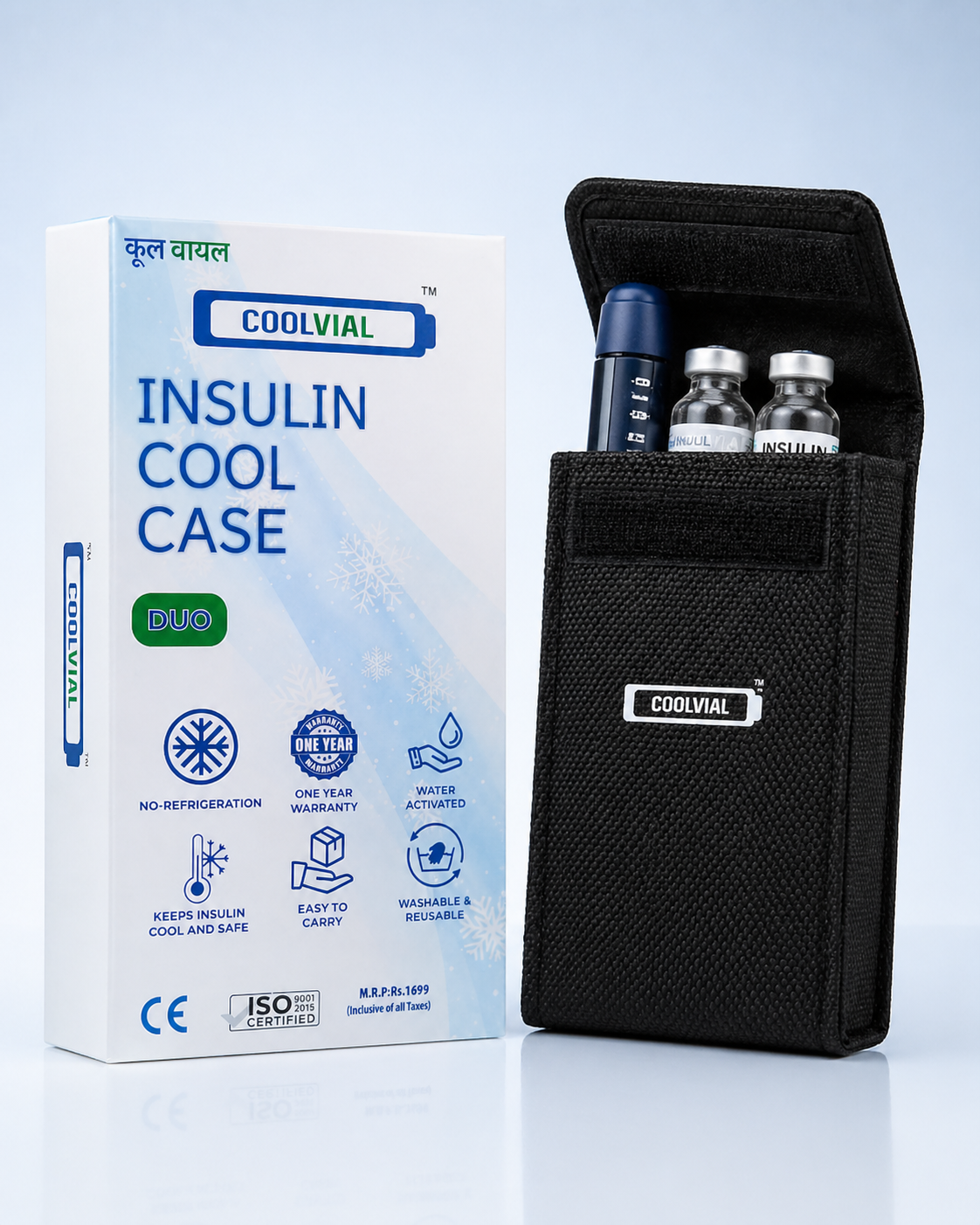
The COOLVIAL Duo is engineered to withstand the rigors of Indian climates, including the challenging conditions of Jodhpur. While its primary function is evaporative cooling, its design also allows for easy integration with dust-protection strategies. By placing your zip-locked pens and vials into the COOLVIAL Duo, you create a comprehensive system that tackles both temperature and environmental contamination. The COOLVIAL Duo holds 2 pens and 1 vial, offering ample space for daily needs. For more comprehensive guidance on managing your medication in the local climate, refer to our blog on How to Store Insulin in Jodhpur’s Desert Heat & Dust — A Local’s Guide.
Comparing Storage Methods for Jodhpur
| Storage Method | Primary Benefit | Dust Protection | Cooling Efficiency | Cost (Approx.) | Suitability for Jodhpur |
|---|---|---|---|---|---|
| COOLVIAL Duo | Evaporative cooling (12-16 hrs) | Moderate | Excellent | Rs 1,099 | High (with added dust barrier) |
| Zip-lock Bags | Airtight, moisture barrier | Excellent | None | Rs 50-100 | High (as supplementary) |
| Airtight Container | Robust, physical barrier | Excellent | None | Rs 100-300 | High (as supplementary) |
| Silica Gel | Moisture absorption | N/A | N/A | Rs 50-150 | High (as supplementary) |
| Refrigerator | Consistent cold storage | N/A | Excellent | N/A | Home use only (power dependent) |
5 Essential Strategies: Protecting Insulin Pens from Jodhpur Dust Storms and Monsoon
Insulin at 2-8°C for 48+ hours. Trusted by 10,000+ Indian diabetics.
When and How to Safely Wipe Insulin Pen Needles in Dusty Conditions
Maintaining hygiene is paramount, especially when dealing with fine dust that can carry microorganisms. Wiping your insulin pen needle requires careful consideration to avoid contamination rather than causing it. Improper wiping can introduce particles or moisture, compromising sterility.
The general recommendation is to use a fresh alcohol swab to clean the injection site on your skin. However, cleaning the pen needle itself is a nuanced topic. Insulin pen needles are sterilized and designed for single use. Wiping a needle before injection is generally discouraged by manufacturers as it can remove the silicone coating, making the injection more painful, and potentially introduce fibers from the swab.
However, in extremely dusty environments like Jodhpur during pre-monsoon jodhpur dust storms, there might be visible dust on the outer cap of the needle or the pen tip. If you observe visible dust before attaching the needle or before uncapping, you can take precautions.
Step-by-Step Guide for Needle Hygiene in Dusty Conditions:
- Inspect Your Pen and Needle: Before attaching a new needle, visually inspect the pen tip and the sealed needle cap for any visible dust or debris.
- Clean the Pen Tip (If Needed): If you see visible dust on the pen’s needle attachment area, gently wipe it with a clean, dry tissue before attaching the new needle. Do NOT use alcohol wipes on the pen’s plastic parts as it can degrade them.
- Attach a Fresh, Capped Needle: Always use a new, sterile needle for each injection. Keep the cap on until immediately before injection.
- Clean the Injection Site: Use a fresh alcohol swab to clean the skin at your chosen injection site. Allow it to air dry completely to prevent alcohol from stinging or entering the injection site.
- Uncap Immediately Before Injection: Remove the outer and inner needle caps only when you are ready to inject. This minimizes exposure to the air and dust.
- Do NOT Wipe the Needle Itself: As mentioned, avoid wiping the needle itself. Its sterility is maintained by its packaging and single-use design.
- Dispose Safely: After injection, recap the needle (using the outer cap) and dispose of it in a sharps container immediately. This prevents accidental needle sticks and further contamination.
Remember, the goal is to prevent dust from reaching the sterile parts of your insulin delivery system. Prioritize storing your pens and needles in dust-free, airtight environments as the primary preventative measure.
Navigating Jodhpur’s Monsoon: Flash Floods, Power Cuts, and Pharmacy Access
While Jodhpur’s monsoon is brief, its impact can be significant, especially in older, densely populated areas. Flash floods and frequent power outages become real concerns, directly affecting the accessibility of medication and the ability to keep insulin cool.
Sardarpura, a central and bustling neighborhood, is particularly susceptible to flash floods due to its older drainage systems. Heavy, concentrated rainfall can quickly overwhelm these systems, leading to waterlogged streets. This poses a direct threat to ground-floor medicine stores and pharmacies like Apollo Pharmacy or MedPlus outlets, potentially damaging stock and making access difficult.
Impact of Flash Floods on Medicine Accessibility
- Damaged Stock: Water ingress can ruin medication, including insulin, stored at ground level in pharmacies.
- Restricted Access: Waterlogged roads around areas like Clock Tower (Ghanta Ghar) or Sojati Gate can make it impossible to reach pharmacies or even for delivery services to operate.
- Supply Chain Disruptions: Even if local pharmacies are unaffected, wider regional flooding can disrupt the supply chain from distributors, leading to temporary shortages.
Preparing for Power Outages During Jodhpur Dust Storms
The powerful aandhi (dust storms) that precede or accompany the monsoon are notorious for causing grid damage, leading to widespread and prolonged power outages. These outages are a significant concern for diabetics who rely on refrigeration for their insulin. AIIMS Jodhpur (Basni) frequently advises patients to have a robust plan for insulin storage during such events.
- Local Impact: Areas like Ratanada, Paota, and Shastri Nagar can experience outages lasting several hours, or even days, during severe dust storms. This directly impacts the ability to refrigerate insulin at home.
- Risk to Insulin: Unopened insulin vials and pens require refrigeration (2-8°C). Without electricity, refrigerators quickly lose their cooling capacity, putting insulin at risk of spoilage. This is where a reliable cooling case becomes indispensable. Our Power Cut Survival Guide for Diabetics in Jodhpur — What To Do When the Grid Goes Down offers more detailed advice.
Essential Monsoon Preparedness Checklist
To mitigate these risks, Jodhpur residents with diabetes should adopt a proactive approach:
- Stock Up on Supplies: Ensure you have enough insulin, needles, and other diabetes supplies to last at least 1-2 weeks, especially before the peak monsoon season.
- Invest in a Reliable Cooling Case: A water-activated evaporative cooling case like the COOLVIAL Duo is critical for maintaining insulin temperature during power cuts or when outside the home.
- Charge Backup Power: Keep power banks charged for phones to stay connected for emergency services or pharmacy updates.
- Identify Alternative Pharmacies: Know the locations of multiple pharmacies, including those on higher ground or in less flood-prone areas, such as those near Goyal Hospital & Research Centre on Residency Road, or larger chains like Apollo Pharmacy or MedPlus.
- Keep Important Documents Safe: Store prescriptions and medical records in waterproof bags.
- Monitor Weather Forecasts: Stay updated on weather advisories regarding jodhpur dust storms and heavy rainfall.
Travel Safely: Insulin Management for Trips to Jaisalmer or Bikaner
The brief monsoon window can often be a time when Jodhpur residents plan short getaways to nearby desert cities like Jaisalmer or Bikaner. While these destinations share a similar arid climate, the journey itself, coupled with the potential for unexpected weather, necessitates careful insulin management. The same principles of dust and heat protection apply, but with added considerations for portability and duration.
Travel, even short distances, exposes insulin to varying temperatures, potential jostling, and increased risk of dust exposure. Whether you’re driving through the desert or taking a bus, maintaining the cold chain for your insulin is crucial.
- Key Considerations for Desert Travel:
- Extended Exposure to Heat: Road trips mean hours away from refrigeration.
- Dust Accumulation: Vehicle interiors can get dusty, especially with open windows or air conditioning drawing in external air.
- Accessibility to Water: For evaporative coolers, access to clean water for activation is vital.
Packing Essentials for Desert Travel with Insulin
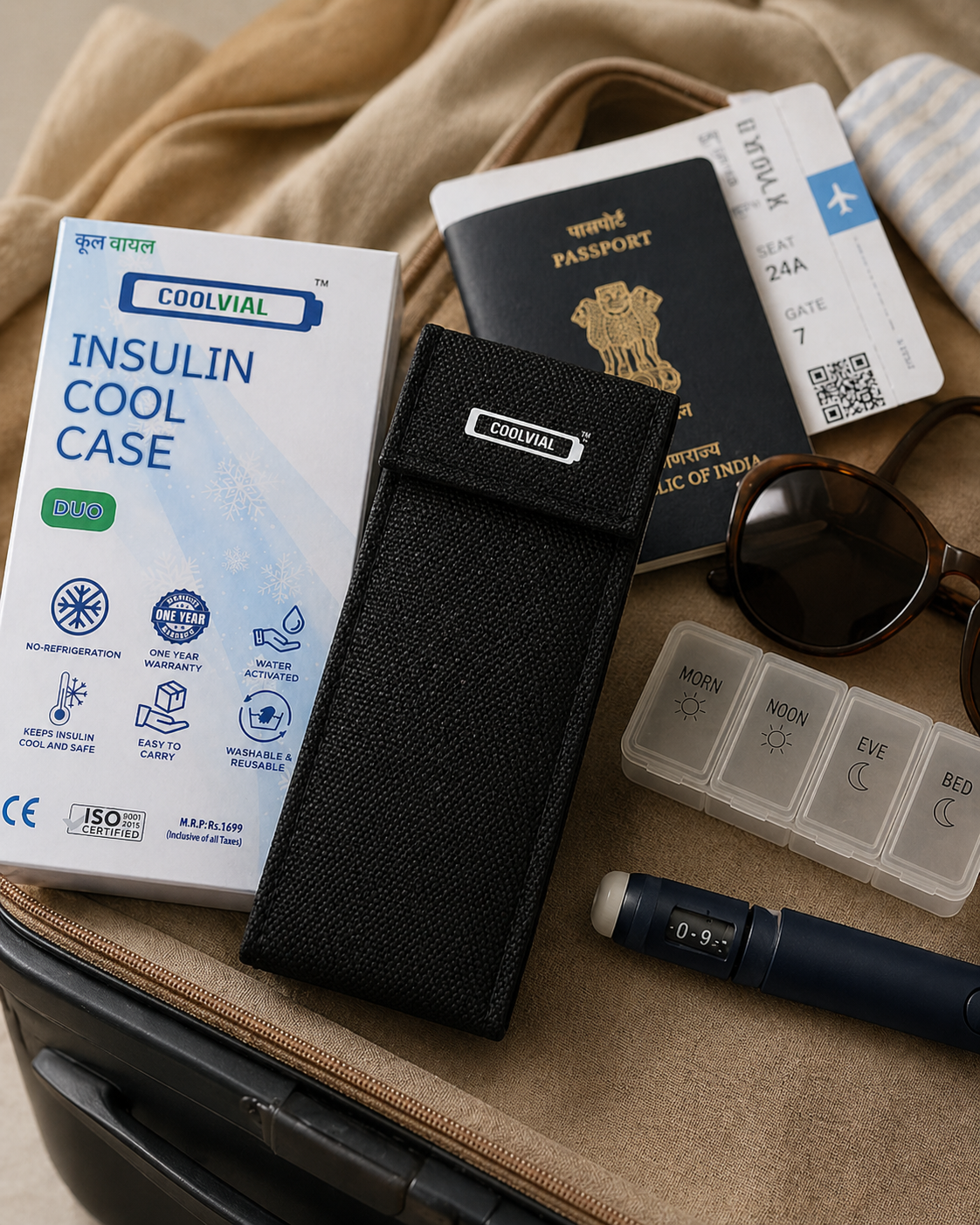
- COOLVIAL Duo: This is your primary defense. Activate it before leaving and ensure it’s sufficiently hydrated. The COOLVIAL Duo keeps insulin cool for 12-16 hours, making it ideal for day trips or overnight stays without electricity.
- Airtight Container/Zip-lock Bags: As discussed, place your insulin pens and vials inside zip-lock bags, then into an airtight container, before finally placing them inside the COOLVIAL Duo. This multi-layered approach protects against dust, moisture, and ensures mechanical integrity.
- Extra Water Bottle: Carry a dedicated bottle of clean drinking water specifically for reactivating your COOLVIAL case if needed. Tap water in some remote areas might contain impurities that could affect the cooler’s fabric.
- Silica Gel Packets: A few extra packets in your travel kit can help manage any unexpected moisture.
- Sharps Container: A small, travel-sized sharps container for safe disposal of used needles is essential, especially when away from home.
- Prescription Copies: Carry physical and digital copies of your insulin prescription. This is vital for emergencies or if you need to purchase insulin in a new city.
- Emergency Contact Information: Keep a list of your doctor’s contact details and local hospitals in Jaisalmer or Bikaner.
5 Essential Strategies: Protecting Insulin Pens from Jodhpur Dust Storms and Monsoon
By meticulously planning your insulin storage, your travel to these magnificent desert cities can be as comfortable and worry-free as possible.
AIIMS Jodhpur (Basni) and Local Pharmacy Guidance on Insulin Care
Healthcare professionals in Jodhpur are well-acquainted with the unique environmental challenges faced by diabetic patients. Institutions like AIIMS Jodhpur (Basni), located strategically, often provide practical advice tailored to the local climate. Similarly, prominent pharmacies such as Apollo Pharmacy, MedPlus, 1mg, Generic Aadhaar, and local favorites like Maru Pharmacy are crucial points of contact for guidance and supplies.
AIIMS Jodhpur (Basni) emphasizes the importance of maintaining insulin’s cold chain, particularly for unopened vials and pens, which should be stored between 2-8°C. Once opened, most insulins can be kept at room temperature (up to 25-30°C, depending on the specific insulin type) for a limited period, typically 28 days. However, Jodhpur’s ambient temperatures often exceed this, making careful storage indispensable even for in-use insulin.
Key Recommendations from Healthcare Professionals
- Temperature Monitoring: Regularly check the temperature of your insulin storage area, especially during extreme heat and prior to jodhpur dust storms.
- Avoid Direct Sunlight: Never expose insulin directly to sunlight. Even a few minutes can degrade its potency.
- Protect from Freezing: While heat is the primary concern, ensure insulin does not freeze, as this also renders it ineffective. Do not place insulin directly against ice packs without a buffer.
- Seek Pharmacist Advice: Don’t hesitate to ask your local pharmacist at Apollo Pharmacy or MedPlus for advice on specific insulin storage needs or if you have concerns about a particular batch. They can also guide you on disposal of expired or compromised insulin.
- Emergency Preparedness: AIIMS Jodhpur (Basni) often highlights the need for a contingency plan, including backup insulin and a reliable cooling solution like the COOLVIAL Duo, especially for patients living in areas prone to power cuts.
- Regular Check-ups: Maintain regular follow-ups with your endocrinologist or diabetologist at institutions like Goyal Hospital & Research Centre (Residency Road) or Mathuradas Mathur Hospital (MDM) to ensure your diabetes management plan is robust and adapted to your local living conditions. (Source: RSSDI guidelines, local hospital advisories [Verify in 2026])
Remember that Indian guidelines for diabetes management, such as those from the Indian Council of Medical Research (ICMR), consistently emphasize proper insulin storage. You can access more information at https://icmr.gov.in/guidelines_diabetes.html.
Choosing the Right Cooling Solution: COOLVIAL Duo vs. Alternatives
In a city like Jodhpur, where fluctuating temperatures and frequent dust storms are the norm, a reliable insulin cooling solution is not a luxury, but a necessity. While refrigerators are ideal for home storage, they are useless during power cuts or when you’re on the go. This is where portable cooling cases come into play.
The market offers several options, but for the specific challenges of Jodhpur’s climate, an evaporative cooling case stands out. These cases work by utilizing the principle of evaporative cooling, which naturally draws heat away from the insulin as water evaporates from a specialized fabric. They require no electricity, batteries, or ice packs, making them incredibly convenient and reliable.
The COOLVIAL Duo is specifically designed for the Indian climate, offering robust performance and peace of mind.
Why COOLVIAL Duo is the Smart Choice for Jodhpur:
- Consistent Cooling: The COOLVIAL Duo keeps insulin at safe temperatures (18-26°C) for 12-16 hours, even in ambient temperatures up to 37.8°C. This is crucial for Jodhpur, where summer temperatures often exceed this.
- No Electricity Needed: Its water-activated evaporative cooling means you’re never dependent on power, making it perfect for power outages during jodhpur dust storms or when traveling to remote areas.
- Capacity: The COOLVIAL Duo is designed to hold 2 insulin pens and 1 insulin vial, providing ample space for most users’ daily and emergency needs.
- Quality & Certification: COOLVIAL Duo is CE certified and ISO 9001:2015 compliant, ensuring it meets international quality and safety standards. It also comes with a 1-year warranty, reflecting confidence in its durability.
- Made in India: Being a Made in India product, COOLVIAL understands local needs and conditions better.
- Cost-Effective: At Rs 1,099 with code COOLHEAL (MRP Rs 1,699), it offers excellent value.
Comparing COOLVIAL Duo with Other Popular Options:
| Feature | COOLVIAL Duo (Evaporative) | FRIO (Evaporative) | Outer Woods OW-12 (Gel Pack) |
|---|---|---|---|
| Cooling Method | Water-activated evaporative | Water-activated evaporative | Gel packs (requires freezing) |
| Duration | 12-16 hours | Up to 45 hours (varies) | 10-12 hours |
| Electricity | No | No | No (but gel packs need freezer) |
| Capacity | 2 pens + 1 vial | Varies by model (e.g., 2 pens) | 2 pens + 2 vials |
| Price | Rs 1,099 (with COOLHEAL) | ~Rs 1,900 | ~Rs 999 |
| Certifications | CE, ISO 9001:2015 | Varies, generally CE | Varies |
| Made In | India | UK | India |
| Dust Protection | Moderate (best with zip-lock) | Moderate (best with zip-lock) | Moderate (best with zip-lock) |
While FRIO offers longer cooling duration, its higher price point might be a barrier for some. Outer Woods OW-12 is more affordable and offers good capacity, but its reliance on gel packs means it’s not truly electricity-independent; you still need a freezer to prepare the gel packs, which is a significant drawback during power cuts. For a balanced combination of affordability, robust performance, and true electricity independence in Jodhpur’s challenging environment, the COOLVIAL Duo presents a compelling solution. It’s an indispensable tool in your diabetes care arsenal, especially when considering the unpredictability of jodhpur dust storms and brief monsoons.
Frequently Asked Questions (FAQ)
Q: How do Jodhpur dust storms affect insulin effectiveness? A: Jodhpur dust storms introduce fine sand particles that can clog insulin pen mechanisms, contaminate vial septums, and reduce the efficiency of cooler fabrics, potentially compromising insulin delivery and sterility.
Q: Can I use regular plastic bags to protect my insulin pens from dust? A: Yes, using high-quality, sealable zip-lock bags inside your cooling case is an excellent, cost-effective way to create an additional barrier against dust and moisture for your insulin pens and vials.
Q: What is the ideal temperature range for storing insulin in Jodhpur? A: Unopened insulin should be refrigerated between 2-8°C. Opened insulin, for in-use, can typically be kept at room temperature, but in Jodhpur’s high ambient temperatures, a cooling case like COOLVIAL Duo is essential to keep it below 26-30°C.
Q: Are power cuts common in Jodhpur during the monsoon? A: Yes, power cuts are frequent during Jodhpur’s monsoon season, especially after severe dust storms damage the electricity grid, making it crucial to have an electricity-independent insulin cooling solution.
Q: Where can I buy a COOLVIAL Duo in Jodhpur? A: You can order the COOLVIAL Duo directly from coolvial.com or via WhatsApp. While specific local retailers aren’t listed, online purchase ensures direct delivery to Jodhpur.
Q: Should I wipe my insulin pen needle before injecting during dusty weather? A: It is generally not recommended to wipe the needle itself as it can remove the sterile silicone coating. Focus on keeping the entire pen and capped needle in a dust-free environment until immediately before injection, and clean your skin at the injection site with an alcohol swab.
Q: What should I do if my insulin gets exposed to extreme heat or dust? A: If your insulin has been exposed to extreme heat (above 30°C for prolonged periods) or shows signs of contamination (cloudiness, particles, discoloration), it is best to discard it and use a fresh vial or pen. Consult your doctor or pharmacist.
Conclusion
Managing diabetes in Jodhpur, with its unique blend of extreme heat, pervasive Thar Desert dust, and brief, impactful monsoons, demands a proactive and informed approach to insulin storage. The threat from jodhpur dust storms and the sudden, albeit minimal, rainfall is not to be underestimated. By understanding the specific challenges – from fine sand compromising pen mechanisms to power outages during storm season – you can implement effective strategies to protect your vital medication.
Adopting a multi-layered protection system, combining airtight containers or zip-lock bags with a reliable cooling solution, is key. The COOLVIAL Duo, with its electricity-independent evaporative cooling, CE certification, and ISO 9001:2015 quality, offers a robust and affordable answer to Jodhpur’s climatic demands. It ensures your insulin remains safe and effective, whether you’re navigating the bustling streets of Sardarpura, experiencing a power cut in Shastri Nagar, or embarking on a desert journey to Jaisalmer. Prioritize these smart storage practices, stay informed with guidance from AIIMS Jodhpur (Basni) and local pharmacies, and empower yourself to live a healthier life in the Blue City.
Order your COOLVIAL Duo today at Rs 1,099 with code COOLHEAL at coolvial.com or via WhatsApp wa.me/918766952300.
Medical disclaimer: This article is for general information. Always consult your endocrinologist or diabetologist before changing insulin storage or dosing practices.
How We Researched This — RSSDI guidelines, ICMR-INDIAB data, local Jodhpur hospital directories, Apollo Pharmacy pharmacy network.
5 Essential Strategies: Protecting Insulin Pens from Jodhpur Dust Storms and Monsoon
48+ hours at 2-8°C. No electricity. CE certified. Free delivery across India.
Order on WhatsApp — ₹1,099🛒 Buy Now — ₹1,099