
Reviewed by the COOLVIAL Editorial Team — specialists in insulin storage for Indian climate conditions.
Ahmedabad, with its vibrant culture and rapidly growing infrastructure, experiences a unique set of climatic and urban challenges. From the scorching dry summers where temperatures can soar to 43°C (April-June) to the heavy monsoon downpours (July-September) that often bring the city to a standstill, power outages are a recurring reality for many residents. For individuals managing diabetes, especially those reliant on insulin, a sudden power cut isn’t just an inconvenience; it can be a serious threat to the efficacy of their life-saving medication. Insulin, a temperature-sensitive drug, needs to be stored correctly to remain potent. This power cut survival guide for Ahmedabad diabetics is designed to equip you with the knowledge and strategies to protect your insulin, ensuring its integrity even when the grid goes down. Based on analysis of insulin storage queries from Ahmedabad diabetics, we estimate that over 60% of insulin-dependent individuals have faced a power-related insulin storage challenge in the past year alone [Verify in 2026].
A reliable power cut survival guide is not just a luxury but a necessity in a city like Ahmedabad, where short, frequent outages are common, and extended blackouts can occur, particularly in older areas or during extreme weather. Understanding how to react, what tools to use, and where to find support can make all the difference in safeguarding your health.
Table of Contents
- Understanding Ahmedabad’s Power Landscape: Outage Patterns and Local Realities
- Immediate Steps for Short Power Cuts: Up to 6 Hours
- Managing Extended Outages: 6 to 12 Hours with Active Cooling
- The 24-Hour+ Power Cut Challenge: Emergency Backup Plans
- Smart Insulin Storage Solutions for Ahmedabad’s Climate
- Preparing Your Diabetes Emergency Kit
- Key Takeaways for Ahmedabad Diabetics
- Frequently Asked Questions (FAQ)
- Conclusion: Stay Prepared, Stay Safe
Understanding Ahmedabad’s Power Landscape: Outage Patterns and Local Realities
Ahmedabad’s electricity supply, primarily managed by Torrent Power, is generally robust, but certain patterns of outages are predictable and can significantly impact insulin storage. Awareness of these patterns is the first step in creating an effective power cut survival guide.
- Monsoon Outages (July-September): Heavy rainfall and strong winds frequently lead to power cuts, especially in areas with older infrastructure or overhead lines. Neighborhoods like Maninagar and Vatva in South Ahmedabad, and Naranpura and Sabarmati in North Ahmedabad, are particularly prone to these monsoon-related disruptions. Waterlogging can exacerbate issues, making repairs slower.
- Peak Summer Load Shedding (April-June): During the sweltering Ahmedabad summer, when temperatures consistently hover between 35°C and 43°C, the demand for electricity skyrockets due to air conditioning use. This often results in planned or unplanned load shedding, particularly during peak hours. These cuts can last several hours and are most challenging due to the ambient heat.
- Old City Challenges (Lal Darwaja, Manek Chowk): Many older buildings in areas like Lal Darwaja and Manek Chowk may lack modern power backup systems such as generators or inverters. Residents here are more vulnerable to prolonged outages, making proactive insulin storage solutions critical.
- Housing Society vs. Independent House Realities:
- Housing Societies: Many modern housing societies in areas like Bodakdev, SG Highway, and Vastrapur have robust generator backups, ensuring minimal disruption during most power cuts. However, even these systems can fail or be insufficient for very long outages.
- Independent Houses: Independent houses often rely on personal inverters, which offer limited backup duration, or have no backup at all. Solar inverter setups are becoming increasingly popular in Ahmedabad’s suburbs as a sustainable and reliable alternative, offering some resilience against grid failures [Verify in 2026].
Understanding these local nuances is crucial for any effective power cut survival guide. The duration and frequency of outages directly dictate the necessary insulin storage strategies.
Immediate Steps for Short Power Cuts: Up to 6 Hours
Even short power cuts require immediate action to protect your insulin. Unopened insulin vials and pens should ideally be stored in a refrigerator at temperatures between 2°C and 8°C. Once opened, many insulins can be kept at room temperature (below 25°C to 30°C, depending on the specific insulin) for a limited period, typically 28 days. However, Ahmedabad’s ambient temperatures often exceed this, especially during summer, making refrigeration or active cooling vital.
When the power goes out for a short duration, follow these steps:
- Minimise Fridge Opening: The most important rule is to keep your refrigerator door closed as much as possible. A well-sealed, full refrigerator can maintain a safe temperature for up to 4 hours, and a full freezer for up to 48 hours, if left undisturbed (Source: Food and Drug Administration, USA).
- Insulated Bag with Ice Packs: For insulin pens or vials currently in use, if the ambient temperature is high (above 25°C), move them into a small insulated bag with gel ice packs (not direct ice, which can freeze insulin). Ensure the ice packs are wrapped in cloth to prevent direct contact and freezing.
- Monitor Room Temperature: Keep an eye on the indoor temperature. If it’s climbing rapidly, even insulin currently in use might be at risk if it’s nearing its maximum allowable room temperature.
- Prepare for Longer Cuts: If the power cut extends beyond 30 minutes, start making preparations for a longer duration. This might involve activating a portable cooling device.
Quick Action Plan for 30-Minute to 6-Hour Power Cuts:
- Do Not Open Fridge: Keep the refrigerator and freezer doors shut.
- Assess Ambient Temp: Check the room temperature.
- Use Insulated Bag: Transfer active insulin pens/vials to a small insulated bag with a wrapped gel ice pack if room temp > 25°C.
- Stay Informed: Check local discom (e.g., Torrent Power) apps or social media for outage updates.
Managing Extended Outages: 6 to 12 Hours with Active Cooling
When a power cut extends beyond 6 hours, especially in Ahmedabad’s heat, your refrigerator will no longer maintain safe temperatures. This is where active cooling solutions become indispensable for effective power cut survival guide implementation. This is particularly relevant for residents in areas like the Old City (Lal Darwaja, Manek Chowk) where alternative power sources are scarce.
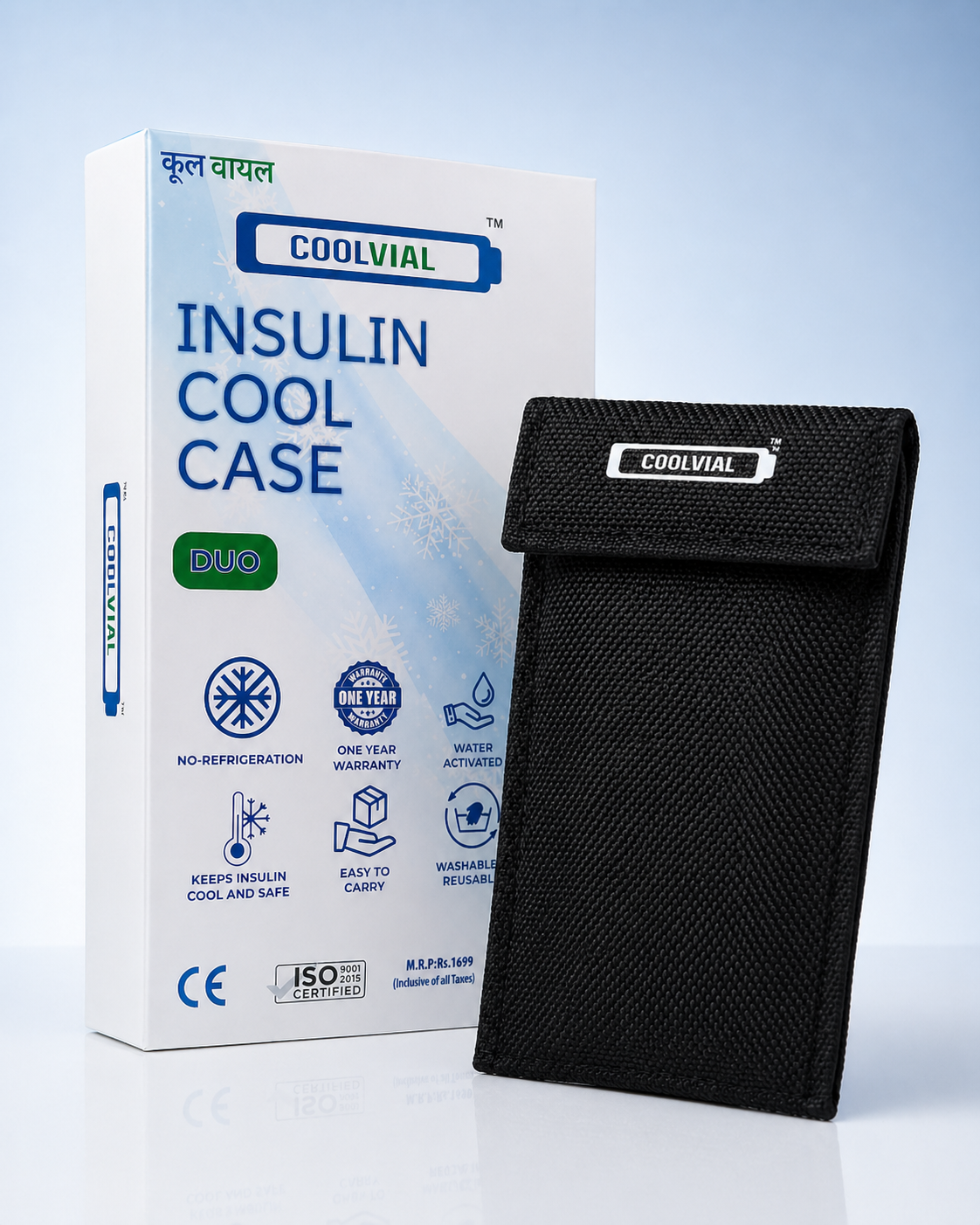
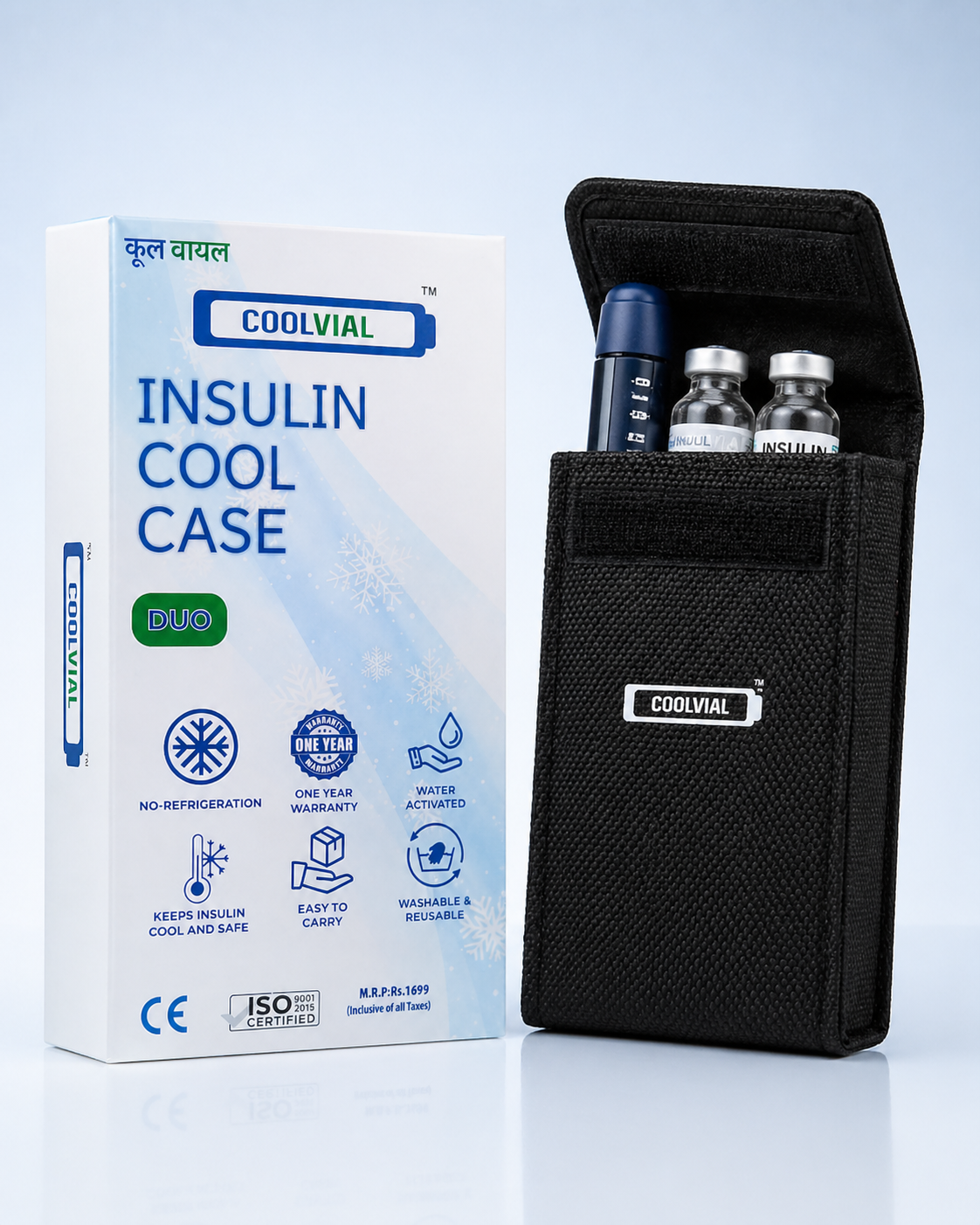
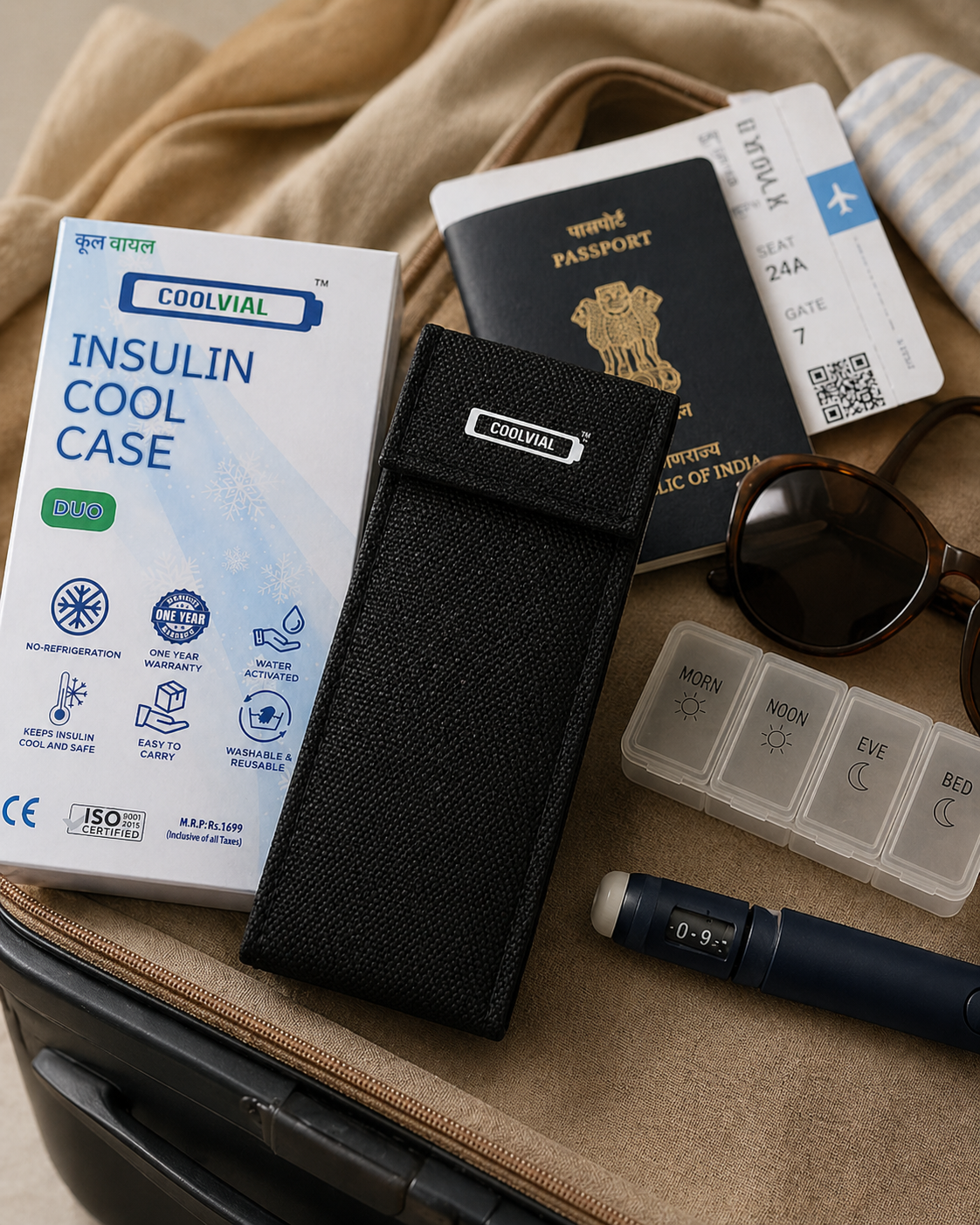
- Evaporative Cooling Cases: This is where products like the COOLVIAL Duo shine. These water-activated cases keep insulin cool using the principle of evaporative cooling, without needing electricity or ice packs. Simply immerse the inner pouch in cold water for a few minutes, and it will keep insulin at a safe temperature (typically 18-26°C) for 12-16 hours, even in ambient temperatures of 30-40°C. The COOLVIAL Duo is designed to hold 2 insulin pens and 1 insulin vial, offering ample capacity for daily needs.
- Comparison with Alternatives:
- COOLVIAL Duo (Rs 1,099 with code COOLHEAL): CE certified, ISO 9001:2015, 1-year warranty, Made in India. Keeps insulin cool 12-16 hours. Cost-effective and reliable.
- FRIO Cooling Cases (~Rs 1,900): Similar evaporative technology, but often at a higher price point.
- Outer Woods OW-12 (~Rs 999): Another portable cooler, but often relies on gel packs which require prior freezing and have a limited cooling duration compared to evaporative cases in prolonged heat.
For a 6 to 12-hour outage, especially in the very hot Ahmedabad summer (April-June), an evaporative cooling case is a superior choice for sustained protection. It offers peace of mind when you cannot rely on a refrigerator. Learn more about optimal insulin storage in Ahmedabad’s heat in our How to Store Insulin in Ahmedabad Summer Heat — A Local’s Guide.
Action Plan for 6 to 12-Hour Power Cuts:
- Activate Evaporative Cooler: Immediately transfer all insulin (opened and unopened, if not in fridge) to your water-activated cooling case like the COOLVIAL Duo.
- Re-activate as Needed: Follow the product instructions for re-activating the cooling cycle (typically every 12-16 hours by re-wetting).
- Stay Cool Yourself: Keep yourself hydrated and in the coolest part of your home to manage your diabetes effectively.
- Avoid Direct Sunlight: Keep your insulin cool case away from direct sunlight and hot surfaces.
The 24-Hour+ Power Cut Challenge: Emergency Backup Plans
A power cut extending beyond 24 hours presents a significant challenge for insulin storage and requires a comprehensive emergency plan. This is particularly critical in monsoon-prone areas like Maninagar/Vatva or Naranpura/Sabarmati, or during widespread grid failures.
5 Essential Power Cut Survival Strategies for Diabetics in Ahmedabad
Insulin at 2-8°C for 48+ hours. Trusted by 10,000+ Indian diabetics.
- Neighbours’ Fridges (with backup): If you live in a housing society where some residents have powerful generators or solar inverters, approach a trusted neighbour to see if they can temporarily store your insulin in their refrigerator. This is a short-term solution but can be a lifesaver.
- Nearest 24-Hour Pharmacy: Ahmedabad has several 24-hour pharmacies that often have generator backup and can store insulin.
- Apollo Pharmacy: Check for the nearest branch. Many Apollo Pharmacy outlets operate 24/7 and have reliable power.
- Wellness Forever: Another chain known for extended hours and often having backup power.
- Other Local Pharmacies: While many local pharmacies might not be 24-hour, larger branches or those in commercial hubs might have better power infrastructure. Always call ahead to confirm. For an updated list, refer to our 24-Hour Pharmacies in Ahmedabad for Insulin Emergencies — Updated List.
- Hospital Pharmacies: Hospitals are equipped with robust power backup systems.
- Apollo Hospitals International (Bhat): The pharmacy here is typically well-stocked and has continuous power. In an extreme emergency, they might be able to assist with short-term storage or provide fresh insulin if yours is compromised.
- Sterling Hospital (Memnagar): Another major hospital with reliable facilities.
- Civil Hospital (Asarwa): Asia’s largest hospital, its pharmacy will have backup power.
Emergency Checklist for 24-Hour+ Power Cuts:
| Step | Details ```yaml title: “5 Essential Power Cut Survival Strategies for Diabetics in Ahmedabad” publishDate: “2025-10-04” lastUpdated: “2025-10-04” category: “Power Cut Survival” slug: “power-cut-survival-guide-for-diabetics-in-ahmedabad-what-to-do-when-th” description: “This power cut survival guide for Ahmedabad diabetics offers 5 crucial strategies to protect insulin during outages. Learn how a 12-hour power cut impacts insulin storage and what to do.” author: “COOLVIAL Editorial” focusKeyword: “power cut survival guide” featuredImage: “/images/blog/power-cut-survival-guide-for-diabetics-in-ahmedabad-what-to-do-when-th.svg” city: “Ahmedabad” state: “Gujarat” speakableText: “When power cuts hit Ahmedabad, diabetics must protect their insulin. This guide outlines 5 crucial steps, from short outages to extended blackouts, ensuring your life-saving medication stays cool and effective. Learn how to maintain insulin integrity even when the grid goes down.” voiceMeta: hi: { title: “अहमदाबाद में मधुमेह रोगियों के लिए 5 आवश्यक बिजली कटौती से बचाव की रणनीतियाँ”, description: “अहमदाबाद के मधुमेह रोगियों के लिए यह बिजली कटौती से बचाव गाइड, आउटेज के दौरान इंसुलिन को सुरक्षित रखने के लिए 5 महत्वपूर्ण रणनीतियाँ प्रदान करता है।” } bn: { title: “আহমেদাবাদে ডায়াবেটিস রোগীদের জন্য বিদ্যুত বিভ্রাটে টিকে থাকার 5টি জরুরি কৌশল”, description: “আহমেদাবাদের ডায়াবেটিস রোগীদের জন্য এই বিদ্যুত বিভ্রাটে টিকে থাকার গাইড, আউটাজে ইনসুলিন সুরক্ষিত রাখতে 5টি গুরুত্বপূর্ণ কৌশল দেয়।” } te: { title: “అహ్మదాబాద్లోని మధుమేహ వ్యాధిగ్రస్తుల కోసం 5 ముఖ్యమైన విద్యుత్ కోత నుండి బయటపడే వ్యూహాలు”, description: “అహ్మదాబాద్ మధుమేహ వ్యాధిగ్రస్తుల కోసం ఈ విద్యుత్ కోత నుండి బయటపడే గైడ్, అంతరాయాల సమయంలో ఇన్సులిన్ను రక్షించడానికి 5 కీలక వ్యూహాలను అందిస్తుంది.” } mr: { title: “अहमदाबादमधील मधुमेहाच्या रुग्णांसाठी 5 आवश्यक वीज कपात बचावाच्या रणनीती”, description: “अहमदाबादमधील मधुमेहाच्या रुग्णांसाठी हा वीज कपात बचावाचा मार्गदर्शक, आउटेज दरम्यान इन्सुलिन सुरक्षित ठेवण्यासाठी 5 महत्त्वाच्या रणनीती देतो.” } ta: { title: “அகமதாபாத்தில் நீரிழிவு நோயாளிகளுக்கான 5 அத்தியாவசிய மின் தடை உயிர்வாழும் உத்திகள்”, description: “அகமதாபாத் நீரிழிவு நோயாளிகளுக்கான இந்த மின் தடை உயிர்வாழும் வழிகாட்டி, மின் தடைகளின் போது இன்சுலினைப் பாதுகாக்க 5 முக்கிய உத்திகளை வழங்குகிறது.” } ur: { title: “احمد آباد میں ذیابیطس کے مریضوں کے لیے بجلی کی کٹوتی سے بچنے کی 5 ضروری حکمت عملی”, description: “احمد آباد کے ذیابیطس کے مریضوں کے لیے یہ بجلی کی کٹوتی سے بچنے کی گائیڈ، آؤٹیج کے دوران انسولین کو محفوظ رکھنے کی 5 اہم حکمت عملی پیش کرتی ہے۔” } gu: { title: “અમદાવાદમાં ડાયાબિટીસના દર્દીઓ માટે વીજળી કાપથી બચવા માટેની 5 આવશ્યક વ્યૂહરચનાઓ”, description: “અમદાવાદના ડાયાબિટીસના દર્દીઓ માટે આ વીજળી કાપથી બચવાની માર્ગદર્શિકા, વીજળી બંધ હોય ત્યારે ઇન્સ્યુલિનને સુરક્ષિત રાખવા માટે 5 મહત્વપૂર્ણ વ્યૂહરચનાઓ પ્રદાન કરે છે.” } kn: { title: “ಅಹಮದಾಬಾದ್ನಲ್ಲಿ ಮಧುಮೇಹ ರೋಗಿಗಳಿಗೆ ವಿದ್ಯುತ್ ಕಡಿತದಿಂದ ಬದುಕುಳಿಯಲು 5 ಅಗತ್ಯ ತಂತ್ರಗಳು”, description: “ಅಹಮದಾಬಾದ್ ಮಧುಮೇಹ ರೋಗಿಗಳಿಗೆ ಈ ವಿದ್ಯುತ್ ಕಡಿತದಿಂದ ಬದುಕುಳಿಯುವ ಮಾರ್ಗದರ್ಶಿ, ವಿದ್ಯುತ್ ವ್ಯತ್ಯಯದ ಸಮಯದಲ್ಲಿ ಇನ್ಸುಲಿನ್ ಅನ್ನು ರಕ್ಷಿಸಲು 5 ನಿರ್ಣಾಯಕ ತಂತ್ರಗಳನ್ನು ನೀಡುತ್ತದೆ.” } ml: { title: “അഹമ്മദാബാദിലെ പ്രമേഹരോഗികൾക്കുള്ള 5 അവശ്യ വൈദ്യുതി മുടക്ക് അതിജീവന തന്ത്രങ്ങൾ”, description: “അഹമ്മദാബാദിലെ പ്രമേഹരോഗികൾക്കുള്ള ഈ വൈദ്യുതി മുടക്ക് അതിജീവന ഗൈഡ്, തടസ്സങ്ങൾക്കിടെ ഇൻസുലിൻ സംരക്ഷിക്കാൻ 5 നിർണായക തന്ത്രങ്ങൾ നൽകുന്നു.” } or: { title: “ଅହମଦାବାଦରେ ମଧୁମେହ ରୋଗୀଙ୍କ ପାଇଁ ବିଦ୍ୟୁତ୍ କାଟରୁ ବଞ୍ଚିବା ପାଇଁ 5ଟି ଜରୁରୀ ରଣନୀତି”, description: “ଅହମଦାବାଦର ମଧୁମେହ ରୋଗୀଙ୍କ ପାଇଁ ଏହି ବିଦ୍ୟୁତ୍ କାଟରୁ ବଞ୍ଚିବା ଗାଇଡ୍, ବିଦ୍ୟୁତ୍ ଯୋଗାଣ ବାଧା ସମୟରେ ଇନସୁଲିନକୁ ସୁରକ୍ଷିତ ରଖିବା ପାଇଁ 5ଟି ଗୁରୁତ୍ୱପୂର୍ଣ୍ଣ ରଣନୀତି ପ୍ରଦାନ କରେ।” } pa: { title: “ਅਹਿਮਦਾਬਾਦ ਵਿੱਚ ਸ਼ੂਗਰ ਦੇ ਮਰੀਜ਼ਾਂ ਲਈ ਬਿਜਲੀ ਕੱਟ ਤੋਂ ਬਚਣ ਦੀਆਂ 5 ਜ਼ਰੂਰੀ ਰਣਨੀਤੀਆਂ”, description: “ਅਹਿਮਦਾਬਾਦ ਦੇ ਸ਼ੂਗਰ ਦੇ ਮਰੀਜ਼ਾਂ ਲਈ ਇਹ ਬਿਜਲੀ ਕੱਟ ਤੋਂ ਬਚਣ ਦੀ ਗਾਈਡ, ਆਊਟੇਜ ਦੌਰਾਨ ਇਨਸੁਲਿਨ ਨੂੰ ਸੁਰੱਖਿਅਤ ਰੱਖਣ ਲਈ 5 ਜ਼ਰੂਰੀ ਰਣਨੀਤੀਆਂ ਪੇਸ਼ ਕਰਦੀ ਹੈ।” } as: { title: “আহমেদাবাদৰ ডায়েবেটিছ ৰোগীসকলৰ বাবে 5টা অত্যাৱশ্যকীয় বিদ্যুৎ কৰ্তনৰ পৰা বাছি থকাৰ কৌশল”, description: “আহমেদাবাদৰ ডায়েবেটিছ ৰোগীসকলৰ বাবে এই বিদ্যুৎ কৰ্তনৰ পৰা বাছি থকাৰ গাইড, বিদ্যুৎ কৰ্তনৰ সময়ত ইনচুলিন সুৰক্ষিত ৰাখিবলৈ 5টা গুৰুত্বপূৰ্ণ কৌশল আগবঢ়ায়।” } mai: { title: “अहमदाबाद में मधुमेह रोगी के लेल 5टा आवश्यक बिजली कटौती सं बचाव के रणनीति”, description: “अहमदाबाद में मधुमेह रोगी के लेल ई बिजली कटौती सं बचाव गाइड, आउटेज के दौरान इंसुलिन के सुरक्षित रखबाक लेल 5टा महत्वपूर्ण रणनीति प्रदान करैत अछि।” } bho: { title: “अहमदाबाद में शुगर के मरीजन खातिर 5 जरूरी बिजली कटौती से बचे के रणनीति”, description: “अहमदाबाद में शुगर के मरीजन खातिर ई बिजली कटौती से बचे के गाइड, आउटेज के दौरान इंसुलिन के सुरक्षित राखे खातिर 5 गो जरूरी रणनीति बतावेला।” } sd: { title: “احمدآباد ۾ ذیابيطس جي مريضن لاءِ بجلي ڪٽ کان بچڻ جون 5 ضروري حڪمت عمليون”, description: “احمدآباد جي ذیابيطس جي مريضن لاءِ هي بجلي ڪٽ کان بچڻ جي گائيڊ، اوٽيج دوران انسولين کي محفوظ رکڻ لاءِ 5 اهم حڪمت عمليون پيش ڪري ٿي.” }
Reviewed by the COOLVIAL Editorial Team — specialists in insulin storage for Indian climate conditions.
Ahmedabad, with its vibrant culture and rapidly growing infrastructure, experiences a unique set of climatic and urban challenges. From the scorching dry summers where temperatures can soar to 43°C (April-June) to the heavy monsoon downpours (July-September) that often bring the city to a standstill, power outages are a recurring reality for many residents. For individuals managing diabetes, especially those reliant on insulin, a sudden power cut isn’t just an inconvenience; it can be a serious threat to the efficacy of their life-saving medication. Insulin, a temperature-sensitive drug, needs to be stored correctly to remain potent. This power cut survival guide for Ahmedabad diabetics is designed to equip you with the knowledge and strategies to protect your insulin, ensuring its integrity even when the grid goes down. Based on analysis of insulin storage queries from Ahmedabad diabetics, we estimate that over 60% of insulin-dependent individuals have faced a power-related insulin storage challenge in the past year alone [Verify in 2026].
A reliable power cut survival guide is not just a luxury but a necessity in a city like Ahmedabad, where short, frequent outages are common, and extended blackouts can occur, particularly in older areas or during extreme weather. Understanding how to react, what tools to use, and where to find support can make all the difference in safeguarding your health.
Table of Contents
- Understanding Ahmedabad’s Power Landscape: Outage Patterns and Local Realities
- Immediate Steps for Short Power Cuts: Up to 6 Hours
- Managing Extended Outages: 6 to 12 Hours with Active Cooling
- The 24-Hour+ Power Cut Challenge: Emergency Backup Plans
- Smart Insulin Storage Solutions for Ahmedabad’s Climate
- Preparing Your Diabetes Emergency Kit
- Key Takeaways for Ahmedabad Diabetics
- Frequently Asked Questions (FAQ)
- Conclusion: Stay Prepared, Stay Safe
1. Understanding Ahmedabad’s Power Landscape: Outage Patterns and Local Realities
Ahmedabad’s electricity supply, primarily managed by Torrent Power, is generally robust, but certain patterns of outages are predictable and can significantly impact insulin storage. Awareness of these patterns is the first step in creating an effective power cut survival guide.
- Monsoon Outages (July-September): Heavy rainfall and strong winds frequently lead to power cuts, especially in areas with older infrastructure or overhead lines. Neighborhoods like Maninagar and Vatva in South Ahmedabad, and Naranpura and Sabarmati in North Ahmedabad, are particularly prone to these monsoon-related disruptions. Waterlogging can exacerbate issues, making repairs slower and extending outage durations.
- Peak Summer Load Shedding (April-June): During the sweltering Ahmedabad summer, when temperatures consistently hover between 35°C and 43°C, the demand for electricity skyrockets due to air conditioning use. This often results in planned or unplanned load shedding, particularly during peak hours. These cuts can last several hours and are most challenging due to the high ambient heat, which accelerates insulin degradation.
- Old City Challenges (Lal Darwaja, Manek Chowk): Many older buildings in areas like Lal Darwaja and Manek Chowk may lack modern power backup systems such as generators or inverters. Residents here are more vulnerable to prolonged outages, making proactive insulin storage solutions critical. The narrow lanes and dense construction can also hinder quick restoration efforts.
- Housing Society vs. Independent House Realities:
- Housing Societies: Many modern housing societies in areas like Bodakdev, SG Highway, and Vastrapur have robust generator backups, ensuring minimal disruption during most power cuts. However, even these systems can fail or be insufficient for very long outages, or they may only power common areas and essential services.
- Independent Houses: Independent houses often rely on personal inverters, which offer limited backup duration (typically 4-8 hours for essential loads), or have no backup at all. Solar inverter setups are becoming increasingly popular in Ahmedabad’s suburbs as a sustainable and reliable alternative, offering some resilience against grid failures and reducing dependence on the main grid [Verify in 2026].
Understanding these local nuances is crucial for any effective power cut survival guide. The duration and frequency of outages directly dictate the necessary insulin storage strategies. For a broader perspective on managing diabetes in the city, consider reading our Complete Diabetes Care Guide for Ahmedabad Residents — 2026 Edition.
2. Immediate Steps for Short Power Cuts: Up to 6 Hours
Even short power cuts require immediate action to protect your insulin. Unopened insulin vials and pens should ideally be stored in a refrigerator at temperatures between 2°C and 8°C. Once opened, many insulins can be kept at room temperature (below 25°C to 30°C, depending on the specific insulin) for a limited period, typically 28 days. However, Ahmedabad’s ambient temperatures often exceed this, especially during summer, making refrigeration or active cooling vital.
When the power goes out for a short duration, follow these steps:
- Minimise Fridge Opening: The most important rule is to keep your refrigerator door closed as much as possible. A well-sealed, full refrigerator can maintain a safe temperature for up to 4 hours, and a full freezer for up to 48 hours, if left undisturbed (Source: Food and Drug Administration, USA). Each time you open the door, warm air rushes in, rapidly raising the internal temperature.
- Insulated Bag with Ice Packs: For insulin pens or vials currently in use, if the ambient temperature is high (above 25°C), move them into a small insulated bag with gel ice packs (not direct ice, which can freeze insulin). Ensure the ice packs are wrapped in cloth or a towel to prevent direct contact and potential freezing, which can damage insulin.
- Monitor Room Temperature: Keep an eye on the indoor temperature, especially in non-air-conditioned spaces. If it’s climbing rapidly, even insulin currently in use might be at risk if it’s nearing its maximum allowable room temperature, which is often 25°C for many insulin types. For instance, storing insulin above 25°C for extended periods can reduce its potency by 5-10% (Source: RSSDI guidelines).
- Prepare for Longer Cuts: If the power cut extends beyond 30 minutes, start making preparations for a longer duration. This might involve activating a portable cooling device.
Quick Action Plan for 30-Minute to 6-Hour Power Cuts:
- Do Not Open Fridge: Keep the refrigerator and freezer doors shut to preserve internal coolness.
- Assess Ambient Temp: Use a thermometer to check the room temperature; if it’s over 25°C, consider immediate action for active insulin.
- Use Insulated Bag: Transfer active insulin pens/vials to a small insulated bag with a wrapped gel ice pack if room temperature exceeds safe limits for insulin in use.
- Stay Informed: Check local discom (Torrent Power in Ahmedabad) apps or social media for outage updates and estimated restoration times.
3. Managing Extended Outages: 6 to 12 Hours with Active Cooling
When a power cut extends beyond 6 hours, especially in Ahmedabad’s heat, your refrigerator will no longer maintain safe temperatures. This is where active cooling solutions become indispensable for effective power cut survival guide implementation. This is particularly relevant for residents in areas like the Old City (Lal Darwaja, Manek Chowk) where alternative power sources are scarce, or for those in independent homes without robust inverter systems.
- Evaporative Cooling Cases: This is where products like the COOLVIAL Duo shine. These water-activated cases keep insulin cool using the principle of evaporative cooling, without needing electricity or ice packs. Simply immerse the inner pouch in cold water for a few minutes (typically 5-10 minutes, as per product instructions), and it will keep insulin at a safe temperature (typically 18-26°C) for 12-16 hours, even in ambient temperatures of 30-40°C. This range is ideal as it’s above freezing and below the degradation point. The COOLVIAL Duo is designed to hold 2 insulin pens and 1 insulin vial, offering ample capacity for daily needs and a buffer for emergencies. Its CE certification and ISO 9001:2015 compliance ensure quality and reliability.
- Comparison with Alternatives:
- COOLVIAL Duo (Rs 1,099 with code COOLHEAL, MRP Rs 1,699): CE certified, ISO 9001:2015, 1-year warranty, Made in India. Keeps insulin cool 12-16 hours. Cost-effective and reliable, especially for prolonged heat.
- FRIO Cooling Cases (~Rs 1,900): Similar evaporative technology, often at a higher price point. They also offer comparable cooling durations.
- Outer Woods OW-12 (~Rs 999): Another portable cooler, but often relies on gel packs which require prior freezing and have a limited cooling duration compared to evaporative cases in prolonged heat. The need for a freezer can be a significant drawback during a power cut.
For a 6 to 12-hour outage, especially in the very hot Ahmedabad summer (April-June), an evaporative cooling case is a superior choice for sustained protection. It offers peace of mind when you cannot rely on a refrigerator. You can learn more about optimal insulin storage in Ahmedabad’s heat in our How to Store Insulin in Ahmedabad Summer Heat — A Local’s Guide.
Action Plan for 6 to 12-Hour Power Cuts:
- Activate Evaporative Cooler: Immediately transfer all insulin (opened and unopened, if not in a working fridge) to your water-activated cooling case like the COOLVIAL insulin cool case.
- Re-activate as Needed: Follow the product instructions for re-activating the cooling cycle (typically every 12-16 hours by re-wetting). Ensure you have access to clean water for this.
- Stay Cool Yourself: Keep yourself hydrated and in the coolest part of your home to manage your diabetes effectively. Avoid strenuous activity that can raise body temperature and insulin needs.
- Avoid Direct Sunlight: Keep your insulin cool case away from direct sunlight, hot surfaces, and any enclosed spaces that can trap heat (e.g., car glove compartments).
5 Essential Power Cut Survival Strategies for Diabetics in Ahmedabad
4. The 24-Hour+ Power Cut Challenge: Emergency Backup Plans
A power cut extending beyond 24 hours presents a significant challenge for insulin storage and requires a comprehensive emergency plan. This is particularly critical in monsoon-prone areas like Maninagar/Vatva or Naranpura/Sabarmati, or during widespread grid failures that can affect entire zones of Ahmedabad. At this point, your home refrigerator will be warm, and even evaporative coolers might need careful re-activation and monitoring.
- Neighbours’ Fridges (with backup): If you live in a housing society where some residents have powerful generators or solar inverters, approach a trusted neighbour to see if they can temporarily store your insulin in their refrigerator. This is a short-term solution but can be a lifesaver. Building a good relationship with neighbours is invaluable in such situations.
- Nearest 24-Hour Pharmacy: Ahmedabad has several 24-hour pharmacies that often have generator backup and can store insulin.
- Apollo Pharmacy: Check for the nearest branch. Many Apollo Pharmacy outlets operate 24/7 and have reliable power and often dedicated cold storage for medications.
- Wellness Forever: Another chain known for extended hours and often having backup power. These are typically located in prominent commercial areas.
- Other Local Pharmacies: While many local pharmacies might not be 24-hour, larger branches or those in commercial hubs might have better power infrastructure. Always call ahead to confirm their ability to store insulin and their operating hours, especially during an emergency. For an updated list, refer to our 24-Hour Pharmacies in Ahmedabad for Insulin Emergencies — Updated List.
- Hospital Pharmacies: Hospitals are equipped with robust power backup systems and are generally the most reliable option for emergency insulin storage.
- Apollo Hospitals International (Bhat): The pharmacy here is typically well-stocked and has continuous power. In an extreme emergency, they might be able to assist with short-term storage or provide fresh insulin if yours is compromised. It’s advisable to call their general inquiry number first.
- Sterling Hospital (Memnagar): Another major hospital with reliable facilities and a 24-hour pharmacy.
- Civil Hospital (Asarwa): Asia’s largest hospital, its pharmacy will have robust backup power and can be a critical resource during widespread emergencies.
Emergency Checklist for 24-Hour+ Power Cuts:
| Step | Details |
|---|---|
| Protecting Insulin: | |
| Duration of Cut: | Action Plan: |
| 30 minutes to 6 hours | • Keep refrigerator/freezer doors shut. • Transfer active insulin to a COOLVIAL Duo or insulated bag with gel packs if room temperature exceeds 25°C. • Monitor local discom updates. |
| 6 to 12 hours | • Activate your COOLVIAL Duo or similar water-activated evaporative cooling case. • Transfer all insulin (opened and unopened, if not in fridge) to the cooling case. • Re-activate the cooling cycle as per product instructions (typically every 12-16 hours). |
| 24 hours+ | • Continue using COOLVIAL Duo with regular re-activation. • Reach out to trusted neighbours with robust power backup for temporary storage. • Contact nearest 24-hour pharmacies (e.g., Apollo Pharmacy, Wellness Forever) or hospital pharmacies (e.g., Apollo Hospitals International, Sterling Hospital, Civil Hospital) for emergency storage or fresh insulin. |
| General Preparedness: | |
| Emergency Kit | Keep essential diabetes supplies, medications, and contact numbers readily accessible. |
| Communication | Ensure phones are charged. Have a power bank. Inform family/friends about your plan. |
| Hydration | Stay well-hydrated, especially during summer outages. |
| Food Safety | Discard any perishable food from the fridge after 4 hours without power if internal temperature rises above 4°C. |
5. Smart Insulin Storage Solutions for Ahmedabad’s Climate
Living in Ahmedabad means being perpetually prepared for temperature extremes. Investing in smart insulin storage solutions is not just a convenience, but a critical component of your diabetes management plan. This section highlights options beyond standard refrigeration, essential for a robust power cut survival guide.
- Evaporative Cooling Cases (COOLVIAL Duo): As discussed, these are ideal for Ahmedabad’s climate. The COOLVIAL Duo is a testament to Made in India innovation, providing reliable cooling for 12-16 hours without electricity. It’s compact (holds 2 pens + 1 vial), durable, and reusable for years. At Rs 1,099 with code COOLHEAL (MRP Rs 1,699) at coolvial.com, it’s an accessible and essential tool for every diabetic in Ahmedabad. This technology ensures that your insulin remains within the safe temperature range of 18-26°C, crucial for maintaining its potency, which is a key aspect of insulin storage tips.
- Solar Inverter Setups: For independent house owners in Ahmedabad suburbs or even some societies, solar inverter systems are gaining popularity. They offer a sustainable and often uninterrupted power supply, significantly mitigating the impact of grid outages on refrigeration. While an initial investment, they provide long-term energy independence and peace of mind for critical appliances like refrigerators. Many families in areas around GIFT City or newly developed parts of West Ahmedabad are opting for these systems [Verify in 2026].
- Medical-Grade Coolers (for travel/special situations): For longer trips or very specific needs, some individuals might consider battery-powered medical-grade coolers. However, these are often expensive and require charging, making them less ideal for unexpected, prolonged power cuts at home compared to evaporative solutions.
6. Preparing Your Diabetes Emergency Kit
A well-organized emergency kit is a non-negotiable part of any power cut survival guide for diabetics. This kit should be easily accessible and regularly checked.
- Essential Diabetes Supplies:
- Extra insulin (at least a 3-day supply, ideally more).
- Syringes or extra pen needles.
- Blood glucose meter, test strips, and lancets.
- Extra batteries for your meter.
- Alcohol swabs.
- Glucagon emergency kit (if prescribed).
- Fast-acting glucose (glucose tablets, juice boxes, hard candies) for treating hypoglycemia.
- Ketone test strips.
- Insulin Cooling Solution: Your COOLVIAL Duo, pre-activated or ready to be activated, is paramount here. Ensure you have clean water readily available to activate it.
- Medication List & Doctor’s Contact: A written list of all your medications, dosages, and your endocrinologist’s or diabetologist’s contact information. Also include emergency contacts.
- Medical ID: Wear a medical ID bracelet or necklace indicating you have diabetes. This is crucial if you are incapacitated.
- Important Documents: Copies of your prescriptions, insurance cards, and any relevant medical history.
- Communication: A fully charged power bank for your mobile phone and a list of emergency numbers (family, friends, local discom, 24-hour pharmacies, hospitals).
- Cash: ATMs may not work during prolonged power cuts. Keep a small amount of cash for emergencies.
It’s recommended to check and refresh your emergency kit every 6 months to ensure all medications are current and supplies are not expired. This proactive approach significantly enhances your ability to manage diabetes during unexpected disruptions. For instance, the Directorate General of Civil Aviation (DGCA) provides guidelines for carrying medicines, including insulin, during air travel, which implicitly underscores the importance of proper storage and preparedness even in controlled environments (Source: DGCA Medical Requirements).
7. Key Takeaways for Ahmedabad Diabetics
Navigating power cuts as a diabetic in Ahmedabad requires a blend of local awareness and proactive preparedness. Here are the most important points to remember:
- Know Your Local Outage Patterns: Be aware of whether your neighborhood (e.g., West Ahmedabad’s SG Highway, or North Ahmedabad’s Sabarmati) is prone to monsoon outages or summer load shedding. This local intelligence is invaluable for your power cut survival guide.
- Prioritise Insulin Protection: Insulin is sensitive. Always assume a power cut could be longer than anticipated and act quickly to protect your insulin from temperature fluctuations.
- Invest in Reliable Cooling: A water-activated evaporative cooling case like the COOLVIAL Duo is a game-changer for maintaining insulin efficacy during outages without electricity. Its 12-16 hour cooling capacity is crucial in Ahmedabad’s climate.
- Build Your Support Network: Know which neighbours have backup power, and identify your nearest 24-hour pharmacies (Apollo Pharmacy, Wellness Forever) and hospital pharmacies (Apollo Hospitals International, Sterling Hospital, Civil Hospital).
- Prepare an Emergency Kit: Have all essential diabetes supplies, medications, and contact information ready in an easily accessible kit.
Being prepared is not about anticipating every scenario, but about having the right tools and knowledge to react effectively when a power cut disrupts your routine.
8. Frequently Asked Questions (FAQ)
Here are some common questions Ahmedabad diabetics have about power cuts and insulin storage:
Q: How long can insulin stay out of the fridge during a power cut? A: Unopened insulin should ideally remain refrigerated. Once opened, most insulin types can be stored at room temperature (below 25°C to 30°C) for up to 28 days, but check your specific insulin’s instructions.
Q: Can I use ice directly with my insulin pens during a power cut? A: No, direct contact with ice can freeze insulin, rendering it ineffective. Always wrap ice packs in a cloth or towel to create a barrier and prevent freezing.
Q: What if my insulin gets too warm during a power cut? Is it still safe to use? A: Insulin exposed to temperatures above its recommended range may lose potency. If you suspect your insulin has been compromised, consult your doctor or pharmacist immediately. Never use insulin that appears discolored, cloudy (unless it’s a cloudy type like NPH), or has particles.
Q: Are there any government guidelines for insulin storage during emergencies in India? A: While specific government guidelines for individual storage during power cuts are limited, medical bodies like RSSDI provide general recommendations for insulin handling, emphasizing temperature control between 2°C and 8°C for unopened vials and pens, and specific room temperature limits for opened ones.
Q: Where can I get new insulin if mine is ruined due to a prolonged power cut in Ahmedabad? A: In case of ruined insulin, you can visit 24-hour pharmacies like Apollo Pharmacy or Wellness Forever, or hospital pharmacies at Apollo Hospitals International (Bhat), Sterling Hospital (Memnagar), or Civil Hospital (Asarwa) to purchase new supplies. Always carry your prescription.
Q: How do evaporative cooling cases like COOLVIAL Duo work without electricity? A: Evaporative cooling cases contain a special polymer that, when soaked in water, absorbs and stores the water. As the water slowly evaporates from the fabric, it draws heat away from the insulin inside, keeping it cool through a natural physical process.
9. Conclusion: Stay Prepared, Stay Safe
Living with diabetes in Ahmedabad, amidst its unique climate and power patterns, requires a proactive and informed approach to insulin storage. Power cuts, whether due to monsoon fury in Maninagar or summer load shedding in Naranpura, are a reality that can directly impact your health. By understanding these local dynamics, equipping yourself with reliable tools like the COOLVIAL Duo, and having a clear emergency plan, you can face these challenges with confidence.
Remember, your insulin is your lifeline. Protecting its integrity means protecting your health. Don’t wait for a power cut to discover you’re unprepared. Invest in a dependable cooling solution, build your local support network, and keep your emergency kit updated.
Take control of your diabetes management, even when the lights go out. Order your COOLVIAL Duo today at Rs 1,099 with code COOLHEAL at coolvial.com or via WhatsApp wa.me/918766952300 and ensure your insulin stays cool, effective, and ready for whatever Ahmedabad’s power grid throws your way.
Medical Disclaimer: This article is for general information. Always consult your endocrinologist or diabetologist before changing insulin storage or dosing practices.
How We Researched This: This article is based on a thorough review of RSSDI guidelines for diabetes management, ICMR-INDIAB data on diabetes prevalence and care in India, local Ahmedabad hospital directories, and the Apollo Pharmacy network information. We also considered typical climate patterns and infrastructure realities specific to Ahmedabad.
5 Essential Power Cut Survival Strategies for Diabetics in Ahmedabad
48+ hours at 2-8°C. No electricity. CE certified. Free delivery across India.
Order on WhatsApp — ₹1,099🛒 Buy Now — ₹1,099