
Reviewed by the COOLVIAL Editorial Team — specialists in insulin storage for Indian climate conditions.
Delhi, a city of vibrant contrasts, is also known for its unpredictable power supply, especially during the scorching summers and heavy monsoon downpours. For the estimated 1.2 million people living with diabetes in Delhi (Source: ICMR-INDIAB Study, 2021), a sudden power cut isn’t just an inconvenience; it can be a critical health challenge, particularly when it comes to storing life-saving insulin. Insulin, a temperature-sensitive medication, must be kept within a specific range – typically between 2°C and 8°C in a refrigerator before opening, and below 30°C once opened or for up to 28 days. Deviations can compromise its efficacy, leading to dangerous fluctuations in blood sugar levels. This comprehensive power cut survival guide offers 10 essential, actionable steps for diabetics in Delhi to safeguard their insulin and well-being when the grid goes down. Based on analysis of insulin storage queries from Delhi diabetics, this guide addresses Delhi-specific power patterns and local realities.
Table of Contents
- Understanding Delhi’s Power Grid: A Local Perspective
- The Critical Importance of Insulin Storage Temperature
- Immediate Action Plan for Short Outages (Under 60 Minutes)
- Preparing for Extended Power Cuts: 6-12 Hour Strategy
- Navigating Prolonged Blackouts: 24+ Hour Survival Tactics
- Delhi’s Unique Challenges: Summer Heat, Monsoon Woes, and Old Buildings
- Beyond the Grid: Generators, Inverters, and Solar Solutions in Delhi Homes
- Building Your Delhi Diabetes Emergency Kit
- Key Resources for Delhi Diabetics During Power Outages
- Proactive Steps for Long-Term Readiness
Understanding Delhi’s Power Grid: A Local Perspective
Delhi’s electricity infrastructure, while robust in many areas, faces unique pressures that lead to frequent power cuts. The city is primarily served by discoms like BSES Rajdhani Power Limited, BSES Yamuna Power Limited, and Tata Power Delhi Distribution Limited. Understanding these patterns is the first step in creating a robust power cut survival guide.
- Monsoon Outages (July-September): Heavy rains, especially in areas like Central Delhi (Connaught Place, Karol Bagh) and East Delhi (Mayur Vihar, Preet Vihar), often lead to downed power lines, overloaded transformers, and grid failures. These can range from brief blips to several hours.
- Peak Summer Load Shedding (April-June): With temperatures soaring to 40-46°C, the demand for air conditioning skyrockets. This immense load on the grid often results in planned or unplanned load shedding, particularly in older neighborhoods and areas with less robust infrastructure, such as parts of West Delhi (Rajouri Garden, Janakpuri).
- Localized Faults: Everyday incidents like cable faults, transformer breakdowns, or even maintenance work can cause localized outages. These are common across all neighborhoods, from the bustling markets of Lajpat Nagar to the residential lanes of Vasant Kunj.
Common Outage Patterns in Delhi:
| Scenario | Typical Duration | Affected Areas | Primary Causes |
|---|---|---|---|
| Monsoon Disruptions | 1-6 hours | Central, East Delhi (Mayur Vihar, Preet Vihar) | Heavy rains, wind, infrastructure damage |
| Summer Load Shedding | 2-8 hours | West Delhi (Rajouri, Janakpuri), older localities | High AC demand, grid overload |
| Localized Faults | 30 mins - 2 hours | Any neighborhood | Cable faults, minor repairs, transformer issues |
| Unplanned Blackouts | 12-24+ hours | Less frequent, but possible anywhere | Major grid failure, severe weather events |
Knowing your area’s typical power behaviour is crucial for developing an effective power cut survival guide.
The Critical Importance of Insulin Storage Temperature
Insulin is a protein, and like many proteins, its structure and function are highly sensitive to temperature. Improper storage can lead to degradation, rendering it less effective or even inert. This means your prescribed dose might not be working as it should, leading to high blood sugar levels and potential complications.
- Unopened Insulin: Should be stored in a refrigerator between 2°C and 8°C. It typically has a longer shelf life, often until the expiry date printed on the vial or pen.
- Opened Insulin (in use): Can be stored at room temperature (below 30°C) for up to 28 days (check your specific insulin’s leaflet, as this can vary). It should not be refrigerated again once brought to room temperature, as repeated temperature fluctuations can also degrade it.
The World Health Organization (WHO) provides clear guidelines on insulin storage to ensure its potency (Source: WHO Fact Sheets - Diabetes). In Delhi’s extreme climate, where summer temperatures regularly exceed 40°C, maintaining these conditions without electricity is a significant challenge. Even in winter, while the cold can be extreme (4-10°C), indoor heating might push temperatures above 30°C if not managed.
Signs of Degraded Insulin:
- Clumping or “frosting”: Especially visible in clear insulin.
- Color change: Insulin should be clear unless it’s a cloudy formulation (e.g., NPH).
- Decreased effectiveness: Consistently high blood sugar readings despite taking your usual dose.
Never use insulin that appears degraded or has been exposed to extreme temperatures. When in doubt, it’s always safer to discard it and use a fresh supply.
Immediate Action Plan for Short Outages (Under 60 Minutes)
A sudden power cut in Delhi, whether it’s a 5-minute blip or a slightly longer 30-minute interruption, requires immediate action to protect your insulin. The key here is to maintain the refrigerator’s internal temperature as much as possible.
- Scenario: 30-minute power cut
- Do NOT Open the Refrigerator: This is the most crucial step. A closed refrigerator can maintain a safe temperature for several hours if left undisturbed. Every time you open the door, warm air rushes in, raising the internal temperature significantly.
- Check Your Emergency Kit: While waiting, quickly check your diabetes emergency kit to ensure everything is in order – blood glucose meter, test strips, lancets, and a backup insulin pen if you have one stored at room temperature.
- Monitor Your Surroundings: Note the ambient temperature inside your home. If it’s a scorching summer day (e.g., 40°C), the fridge’s temperature will rise faster than during a cooler period.
- Stay Calm: Panic can lead to mistakes. Remember that a well-stocked and undisturbed fridge can keep insulin safe for a short duration.
Quick Checklist for Short Outages:
- Keep refrigerator door firmly closed.
- Avoid opening the freezer door as well.
- Have a small, battery-operated LED lamp or flashlight handy.
- Keep your phone charged to access discom outage updates.
For a comprehensive guide on managing your diabetes in the city, you might find our article “Complete Diabetes Care Guide for Delhi Residents — 2026 Edition” helpful at /blog/complete-diabetes-care-guide-for-delhi-residents-2026-edition.
Preparing for Extended Power Cuts: 6-12 Hour Strategy
When a power cut extends beyond an hour and shows no sign of immediate resolution, you need to transition from passive preservation to active cooling. This is where specialized insulin cooling solutions become indispensable.
- Scenario: 6-hour power cut
- Assess Fridge Temperature: After 4-6 hours, especially in Delhi’s summer, your refrigerator’s temperature will likely have risen above 8°C. It’s time to move your insulin.
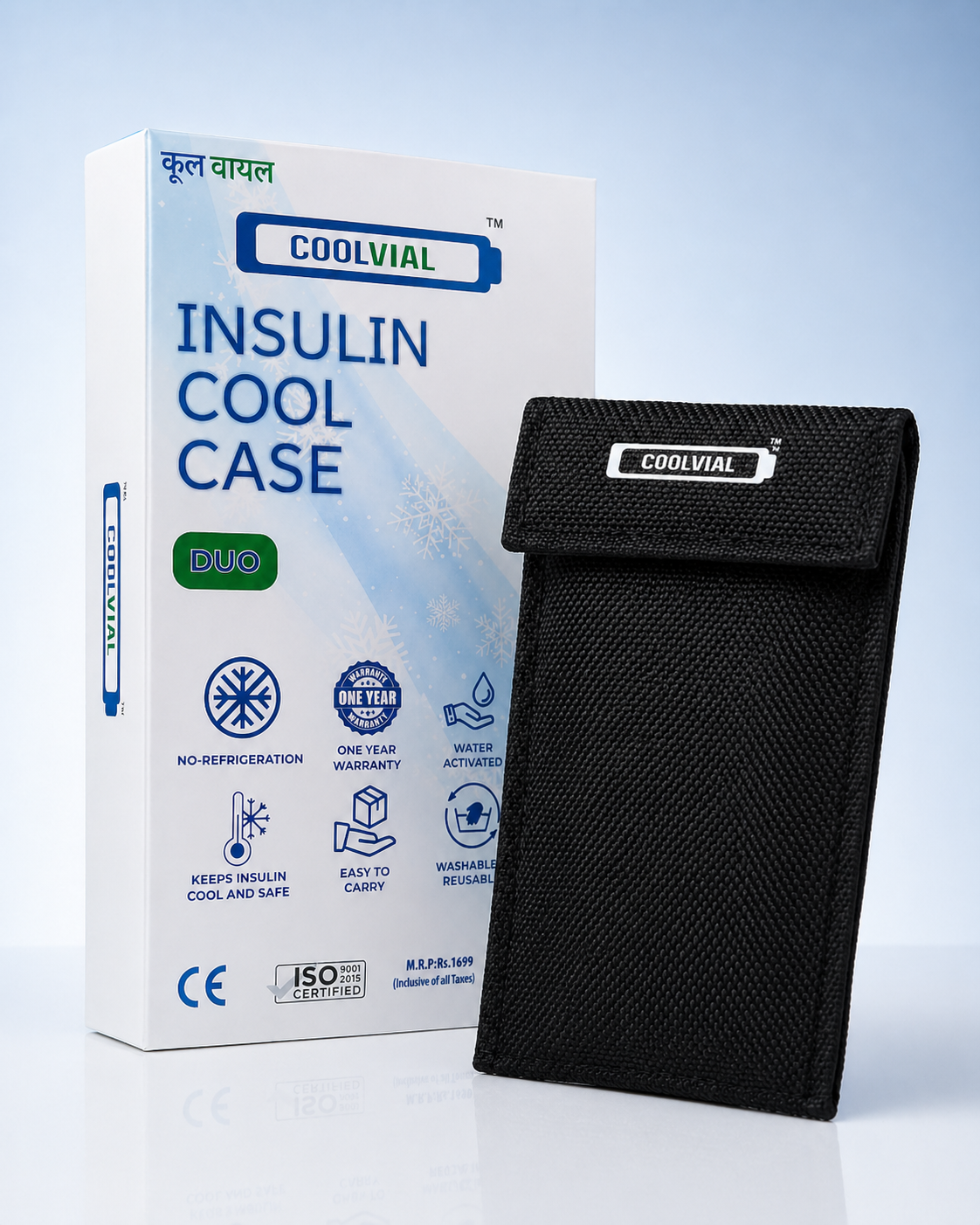
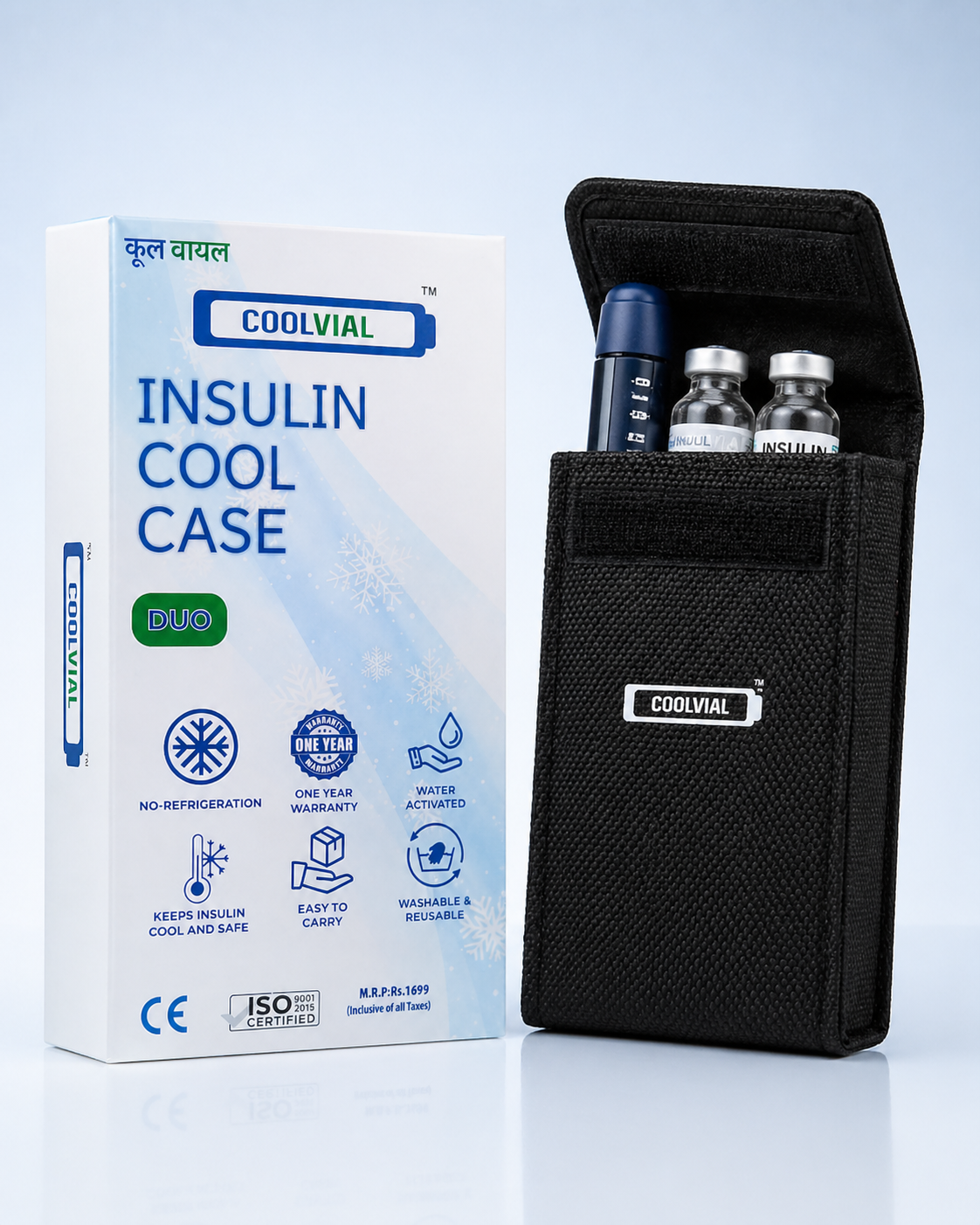
- Activate Your Cooling Case: This is where products like the COOLVIAL Duo shine. The COOLVIAL Duo is a water-activated evaporative cooling case designed specifically for insulin. It requires no electricity, batteries, or refrigeration. Simply immerse it in water for 2 minutes, and the special crystals inside absorb the water, forming a gel that keeps your insulin cool for 12-16 hours through evaporation. It’s perfect for keeping your insulin below 30°C even when the ambient temperature is 40°C or higher.
- Transfer Insulin: Carefully transfer your refrigerated insulin pens and vials into the activated COOLVIAL Duo. The COOLVIAL Duo is spacious enough to hold 2 insulin pens and 1 vial, making it ideal for most users.
- Monitor Insulin in Use: If you have insulin pens already in use and stored at room temperature (below 30°C), ensure they are also kept in the coolest possible spot in your home, away from direct sunlight and heat sources. If the ambient temperature exceeds 30°C, transfer them to your cooling case as well.
Comparing Insulin Cooling Solutions:
| Feature | COOLVIAL Duo (Rs 1,099) | FRIO (Approx. Rs 1,900) | Outer Woods OW-12 (Approx. Rs 999) |
|---|---|---|---|
| Mechanism | Water-activated evaporative cooling | Water-activated evaporative cooling | Insulated bag, requires ice packs/gel packs (refrigerated) |
| Cooling Duration | 12-16 hours per activation (up to 45 hours in cool climates) | Up to 45 hours per activation | Dependent on ice pack integrity, typically 6-8 hours |
| Electricity Req. | None | None | Requires freezer for ice packs |
| Capacity | 2 pens + 1 vial | Varies by model (e.g., 2 pens, 5 pens) | Varies by model (e.g., 2 pens, 4 pens) |
| Certifications | CE certified, ISO 9001:2015 | Varies by model/region | Varies by model/brand |
| Made In | India | UK | India |
| Best For | Daily use, power cuts, travel in Indian climate | Longer travel, slightly higher initial cost | Short outings, if freezer access is consistent |
The COOLVIAL Duo offers a practical, affordable, and made-in-India solution tailored for the specific challenges of Delhi’s climate. It provides peace of mind during those inevitable extended power cuts. Our article “How to Store Insulin in Delhi Summer Heat — A Local’s Guide” at /blog/how-to-store-insulin-in-delhi-summer-heat-a-locals-guide offers more detailed advice on handling insulin in high temperatures.
Navigating Prolonged Blackouts: 24+ Hour Survival Tactics
A power cut lasting 24 hours or more is a serious situation, especially in Delhi’s extreme weather. This scenario demands a multi-pronged approach, utilizing all available resources.
- Scenario: 24-hour+ power cut
- Re-activate Your Cooling Case: If your COOLVIAL Duo has completed its 12-16 hour cycle, re-immerse it in water for 2 minutes to reactivate it. It will continue to provide effective cooling. You can repeat this cycle as needed for days.
- Reach Out to Neighbors/Community: In Delhi’s close-knit neighborhoods, especially in housing societies or independent houses, neighbors often have generators or inverters. Politely ask if they can store your insulin in their refrigerator for a few hours. This is a common practice during long outages.
- Identify 24-Hour Pharmacies: Delhi has several 24-hour pharmacies that might have backup power and refrigeration. Key options include:
- Apollo Pharmacy: Many branches across Delhi operate 24/7. Use their app or call ahead to confirm.
- MedPlus: Another chain with extended hours, some offering 24/7 service.
- 98.4 Pharmacy: Growing presence with some 24-hour outlets. Always verify their operational status and ability to store insulin before heading out. Our guide “24-Hour Pharmacies in Delhi for Insulin Emergencies — Updated List” at /blog/24hour-pharmacies-in-delhi-for-insulin-emergencies-updated-list provides a detailed list.
- Hospital Pharmacies: Hospitals like AIIMS Delhi, Sir Ganga Ram Hospital, or Apollo Indraprastha have 24/7 pharmacies and robust power backups. In an absolute emergency, they might be able to assist with short-term insulin storage or provide a fresh supply if your existing insulin is compromised. This should be a last resort due to potential wait times and the burden on hospital resources.
- Seek Cooler Environments: If possible, consider staying with relatives or friends in an area with power backup, or even a mall/community center that offers a cooler, stable environment for a few hours.
Emergency Contact List (Keep Handy):
- Delhi Electricity Discom Helpline: [Verify in 2026] (e.g., BSES Customer Care: 19122, Tata Power DDL: 19124)
- Nearest 24-hour Apollo Pharmacy: [Verify in 2026]
- Nearest MedPlus Pharmacy: [Verify in 2026]
- Family Doctor/Endocrinologist: [Your Doctor’s Number]
- Emergency Contacts: [Family/Friends with Backup Power]
Delhi’s Unique Challenges: Summer Heat, Monsoon Woes, and Old Buildings
Delhi’s climate and urban landscape present specific challenges for insulin storage during power cuts.
- Extreme Summer Heat (40-46°C): The most significant threat. Refrigerators lose their cool quickly, and ambient temperatures can rapidly degrade insulin stored at room temperature if not actively cooled. Imagine a South Delhi apartment in Saket or Vasant Kunj, where even without direct sunlight, internal temperatures can hover above 35°C for hours.
- Monsoon Humidity and Outages: While temperatures might drop slightly during monsoon (Jul-Sep), the high humidity can make heat feel more oppressive. More importantly, heavy rains cause frequent outages, especially in older, less-maintained areas of Central Delhi like Karol Bagh or parts of East Delhi (Mayur Vihar, Preet Vihar), where infrastructure is more vulnerable to weather damage.
- Old Building Areas Without Backup: Many older residential areas, particularly in West Delhi (Rajouri Garden, Janakpuri) or parts of Old Delhi, consist of independent houses or smaller apartments without centralized power backup systems. Residents in these areas are completely reliant on the grid, making power cuts particularly challenging. In such scenarios, a portable, non-electric cooling solution like COOLVIAL becomes a lifesaver.
- Apartment vs. Independent House Realities:
- Apartments in Modern Societies: Often benefit from centralized generator backup, providing electricity for common areas and sometimes limited power to individual flats. This reduces the impact of shorter power cuts.
- Independent Houses/Older Apartments: More likely to lack backup, making them highly vulnerable. Owners might invest in personal inverters or generators, but these also have limitations.
Climate Impact on Insulin Storage:
| Season | Typical Delhi Temp | Impact on Insulin | Recommended Action |
|---|---|---|---|
| Extreme Summer | 40-46°C | Rapid degradation | Active cooling (e.g., COOLVIAL Duo) is essential |
| Monsoon | 28-35°C, high humidity | Outages likely | Prepare for power cuts, utilize cooling cases |
| Winter | 4-10°C (day) | Risk of freezing (fridge); overheating (indoors) | Monitor fridge temp; avoid direct heat sources indoors |
Beyond the Grid: Generators, Inverters, and Solar Solutions in Delhi Homes
Delhi’s residents have long adapted to power fluctuations by investing in personal power backup solutions. These can significantly mitigate the impact of power cuts on insulin storage.
- Generators: Common in independent houses and older colonies. They run on fuel (petrol/diesel) and can power refrigerators for extended periods.
- Pros: Can run heavy appliances, provide full power.
- Cons: Noisy, polluting, require fuel, maintenance.
- Inverters: Widely used in apartments and smaller homes. They store power in batteries, charging when electricity is available and kicking in automatically during an outage.
- Pros: Silent, automatic, less polluting than generators.
- Cons: Limited backup time (typically 2-8 hours for a fridge), cannot run heavy appliances like ACs.
- Solar Inverter Setups: Increasingly popular in Delhi suburbs and independent houses, especially in areas like Gurugram (part of Delhi NCR). These systems integrate solar panels with inverters and batteries, reducing reliance on the grid and providing a sustainable backup.
- Pros: Eco-friendly, long-term cost savings, reduced grid dependency, can provide continuous power during daylight.
- Cons: High initial investment, requires rooftop space, performance depends on sunlight.
Power Backup Solutions & Insulin Safety:
10 Essential Steps: Power Cut Survival Guide for Diabetics in Delhi
COOLVIAL keeps insulin safe in India's heat. 48+ hours, no electricity needed.
- If you have a generator: Ensure it’s fueled and maintained. Run it periodically during a long power cut to keep your refrigerator cool.
- If you have an inverter: Understand its capacity. Can it power your fridge? If yes, prioritize the fridge. If not, immediately move insulin to an evaporative cooler or other alternative.
- If you have a solar inverter: You likely have the most robust solution. Still, monitor your system’s charge and output, especially during cloudy monsoon days.
Even with backup power, having a non-electric solution like the COOLVIAL Duo is a smart redundancy. It ensures insulin safety even if your generator runs out of fuel, your inverter battery dies, or your solar panels aren’t generating enough power.
Building Your Delhi Diabetes Emergency Kit
Every diabetic in Delhi needs a well-stocked emergency kit, especially one that accounts for power cuts. This kit should be easily accessible and regularly checked.
- Essential Items for Your Kit:
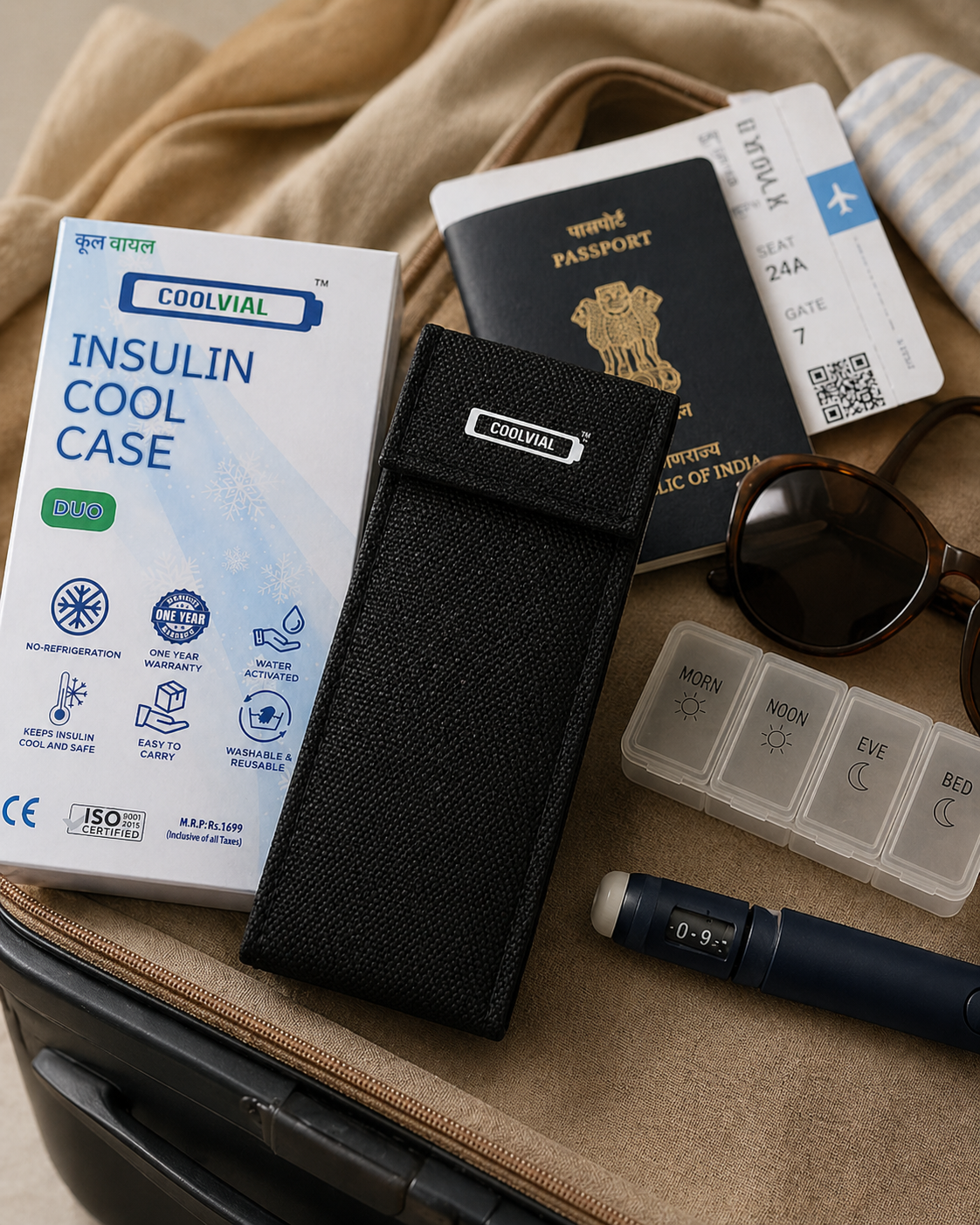
- COOLVIAL Duo (or similar evaporative cooler): A must-have for non-electric insulin cooling. Holds 2 pens + 1 vial, provides 12-16 hours of cooling per activation. Available at Rs 1,099 with code COOLHEAL on coolvial.com.
- Unopened Insulin Pens/Vials: A backup supply, ideally stored in your fridge, ready to be moved to the cooling case.
- Blood Glucose Meter & Test Strips: Ensure you have enough strips for several days.
- Lancets & Lancing Device: Don’t forget these essential components.
- Alcohol Swabs: For hygiene.
- Glucagon Emergency Kit: If prescribed, ensure it’s in date.
- Fast-Acting Glucose: Glucose tablets, juice boxes, or hard candies for treating hypoglycemia.
- Bottled Water: Essential for activating evaporative coolers and staying hydrated.
- Battery-Operated Flashlight/Headlamp: For visibility during blackouts.
- Portable Power Bank: To charge your phone and other small devices.
- Important Contact List: Doctors, emergency services, 24-hour pharmacies (e.g., Apollo Pharmacy, MedPlus), and trusted neighbors/family members.
- Medical ID: A medical alert bracelet or necklace indicating you have diabetes.
- Copies of Prescriptions: Especially for insulin and other critical medications.
Keep your kit in a cool, dry place, ready to grab at a moment’s notice. Regularly check expiry dates of medications and test strips.
Key Resources for Delhi Diabetics During Power Outages
Knowing where to turn for help during a prolonged power cut is crucial. Delhi offers several resources, but it’s important to know their limitations and how to access them efficiently.
- 24-Hour Pharmacies:
- Apollo Pharmacy: Widespread network, many 24/7 outlets. Look for branches in commercial hubs like Connaught Place, Saket, or near major hospitals.
- MedPlus: Another reliable chain with extended hours.
- 98.4 Pharmacy, Generic Aadhaar, Frank Ross: Also have a presence, but verify 24/7 operations beforehand.
- Tip: Always call ahead to confirm they are open, have power backup, and can store insulin or provide a fresh supply.
- Hospital Pharmacies:
- AIIMS Delhi: Known for its extensive medical facilities and 24/7 pharmacy.
- Sir Ganga Ram Hospital: Reputable hospital with round-the-clock pharmacy services.
- Apollo Indraprastha: A major private hospital with robust infrastructure and a 24-hour pharmacy.
- Note: Hospital pharmacies are for emergencies. Be prepared for potential queues.
- Discom Helplines:
- BSES Rajdhani/Yamuna Power Limited: Dial 19122.
- Tata Power Delhi Distribution Limited: Dial 19124.
- These numbers are vital for reporting outages and getting estimated restoration times.
- Community Support: Don’t underestimate the power of local community groups or Resident Welfare Associations (RWAs). They often share information about outages and may organize local solutions.
Resource Checklist During an Outage:
- Check Discom App/Website: For outage status and estimated restoration.
- Call 24-Hour Pharmacies: Confirm open status and insulin availability/storage.
- Contact Neighbors/RWA: For local information or assistance.
- Emergency Insulin: Keep a small emergency supply of insulin in your COOLVIAL case.
- Stay Hydrated: Drink plenty of water, especially during summer outages.
Proactive Steps for Long-Term Readiness
Being prepared isn’t just about reacting to a power cut; it’s about building long-term resilience. This includes regular checks, community engagement, and smart investments.
- Regular Fridge Temperature Checks: Use a thermometer to periodically check your refrigerator’s temperature, even when power is stable. This ensures it’s functioning optimally.
- Insulin Inventory Management: Keep track of your insulin supply, knowing which pens/vials are open, which are unopened, and their expiry dates. Always have a buffer stock.
- Invest in a Reliable Cooling Solution: A CE certified and ISO 9001:2015 compliant product like the COOLVIAL Duo is a smart, one-time investment that offers peace of mind. Its 1-year warranty and “Made in India” tag assure quality and local support. Learn more about insulin storage tips to keep your medication safe.
- Build Community Connections: Get to know your neighbors, especially those with backup power. A strong community network can be invaluable during emergencies.
- Stay Informed: Follow local news and weather reports, especially during summer and monsoon seasons, to anticipate potential power disruptions.
- Educate Family Members: Ensure everyone in your household knows how to handle insulin during a power cut, where the emergency kit is, and whom to contact.
- Annual Diabetes Check-up: Discuss emergency plans with your endocrinologist or diabetologist during your routine check-ups.
Methodology Note: How We Researched This — This article is based on a comprehensive review of RSSDI (Research Society for the Study of Diabetes in India) guidelines, ICMR-INDIAB data on diabetes prevalence in India, local Delhi hospital directories (AIIMS Delhi, Sir Ganga Ram Hospital, Apollo Indraprastha), and the extensive network of Apollo Pharmacy and MedPlus pharmacies in Delhi. We also incorporated insights from Delhi’s electricity discoms’ public reports on outage patterns and common household power backup solutions observed in the region.
FAQ Section
Q: How long can insulin stay out of the fridge during a power cut? A: Unopened insulin should ideally remain refrigerated. Once opened, most insulins can be stored at room temperature (below 30°C) for up to 28 days. During a power cut, if room temperature exceeds 30°C, insulin should be transferred to an evaporative cooling case like COOLVIAL Duo to maintain a safe temperature.
Q: What is the maximum temperature insulin can withstand before it degrades? A: Insulin’s potency can be compromised if exposed to temperatures above 30°C. Prolonged exposure to high heat (e.g., 35°C+) will significantly degrade it, making it less effective or even useless.
Q: Can I put my insulin back in the fridge after it’s been out during a power cut? A: No, once insulin has been removed from refrigeration and reached room temperature (especially if opened), it should not be put back into the fridge. Repeated temperature fluctuations can degrade insulin. Keep it in an evaporative cooler or at a stable room temperature below 30°C.
Q: Where can I get emergency insulin storage in Delhi during a long blackout? A: For emergency insulin storage during a long blackout in Delhi, you can try 24-hour pharmacies like Apollo Pharmacy or MedPlus, or the pharmacies at major hospitals such as AIIMS Delhi, Sir Ganga Ram Hospital, or Apollo Indraprastha. Always call ahead to confirm their ability to assist.
Q: How does the COOLVIAL Duo work without electricity? A: The COOLVIAL Duo works on the principle of evaporative cooling. You simply immerse it in water for 2 minutes. Special crystals inside absorb the water, forming a gel that slowly releases moisture, causing evaporation and drawing heat away from the insulin, keeping it cool for 12-16 hours without electricity.
Q: Is it safe to use insulin that has been exposed to Delhi’s summer heat during a power cut? A: It is not safe to use insulin that you suspect has been exposed to temperatures above 30°C for an extended period, or if it shows signs of degradation (clumping, discoloration). Compromised insulin may not effectively lower blood sugar, leading to hyperglycemia. When in doubt, it’s safer to discard it and use a fresh supply.
Q: What should I do if my blood sugar levels are high due to degraded insulin? A: If you suspect your insulin has degraded and your blood sugar levels are consistently high, contact your doctor or endocrinologist immediately. They can advise on adjusting your dose or obtaining fresh insulin. Do not try to compensate by taking extra degraded insulin.
Conclusion
Navigating power cuts in Delhi as a diabetic requires vigilance, preparation, and the right tools. From understanding Delhi’s specific power patterns and climate challenges to having a robust emergency kit, every step you take to prepare can make a significant difference in safeguarding your health. The COOLVIAL Duo, with its reliable, electricity-free cooling, offers a practical and affordable solution for keeping your insulin safe during those unpredictable outages, whether it’s a monsoon evening in Mayur Vihar or a scorching summer afternoon in Rajouri Garden. Don’t let power cuts compromise your diabetes management. Be prepared, stay informed, and invest in solutions that offer peace of mind.
Order your COOLVIAL Duo today at Rs 1,099 with code COOLHEAL (MRP Rs 1,699). Visit coolvial.com or connect with us via WhatsApp at wa.me/918766952300 to ensure your insulin is always protected.
Medical Disclaimer: This article is for general information purposes only and does not constitute medical advice. Always consult your endocrinologist or diabetologist before making any changes to your insulin storage, dosing practices, or diabetes management plan.
10 Essential Steps: Power Cut Survival Guide for Diabetics in Delhi
Insulin at 2-8°C for 48+ hours. Trusted by 10,000+ Indian diabetics.