
Reviewed by the COOLVIAL Editorial Team — specialists in insulin storage for Indian climate conditions.
Faridabad, a bustling city in Haryana, experiences its fair share of power outages, especially during the scorching summer months when temperatures can soar to 40-46°C, and the monsoon season when heavy rains often disrupt electricity supply. For individuals managing diabetes, ensuring the continuous cool storage of insulin is not just a convenience, but a critical health requirement. An unmanaged power cut can quickly turn into a health crisis if insulin is exposed to temperatures above 25°C for extended periods, rendering it ineffective. This ultimate 7-step power cut survival guide for diabetics in Faridabad is designed to empower you with the knowledge and tools to protect your vital medication, no matter how long the grid goes down. Based on analysis of insulin storage queries from Faridabad diabetics and insights from leading healthcare guidelines, we understand the unique challenges faced in this region. With a significant portion of the urban Indian population, including Faridabad, living with diabetes (ICMR-INDIAB study data suggests a prevalence of around 15.7% in urban areas of Haryana (Source: RSSDI Publications)), preparing for power outages is a non-negotiable aspect of diabetes management.
Table of Contents
- Understanding Faridabad’s Power Landscape
- The Critical Role of Insulin Storage Temperature
- Your Emergency Kit: Essential Tools for Power Outages
- Scenario 1: The Short Snag (30-Minute Power Cut)
- Scenario 2: The Extended Interruption (6-Hour Power Cut)
- Scenario 3: The Day-Long Disruption (12-Hour Power Cut)
- Scenario 4: The Prolonged Blackout (24-Hour+ Power Cut)
- Beyond the Basics: Community Support and Advanced Solutions
- Frequently Asked Questions (FAQs)
- Conclusion: Stay Prepared, Stay Safe
Understanding Faridabad’s Power Landscape
Faridabad’s electricity supply is managed by Dakshin Haryana Bijli Vitran Nigam (DHBVN). While DHBVN strives for uninterrupted service, the city’s infrastructure and climate often present challenges. Understanding these patterns is the first step in creating an effective power cut survival guide.
- Monsoon Outages: Areas like NIT (New Industrial Township) and the rapidly developing Neharpar/Greater Faridabad are particularly susceptible to power cuts during the monsoon season (July-September). Heavy rains, strong winds, and tree falls frequently lead to snapped lines and prolonged outages. These areas, often with newer, less robust infrastructure compared to older sectors, can experience disruptions that last several hours.
- Peak Summer Load Shedding: From April to June, when temperatures consistently hover between 40-46°C, Faridabad faces immense pressure on its electricity grid. This often results in scheduled and unscheduled load shedding across various sectors. While housing societies in areas like Sector 14-21 and Neharpar often have robust generator backups, older parts of Faridabad, especially in Old Faridabad with its older buildings and infrastructure, may lack comprehensive power backup solutions, leaving residents more vulnerable.
- Generator and Inverter Culture: Faridabad’s housing societies and many independent houses have embraced generator and inverter culture. Apartments in modern complexes typically have 24/7 power backup for common areas and often for individual units, sometimes with a per-unit electricity charge for generator usage. However, independent houses may rely on personal inverters, which offer limited backup duration, or smaller generators, which are fuel-dependent.
- Outage-Prone Pincodes: While specific pincodes for outages fluctuate, residents in areas with older infrastructure or those at the periphery of the grid often experience more frequent and longer power cuts. It’s advisable for residents to consult the DHBVN website or local news sources for real-time updates and typical outage patterns in their specific locality. ([Verify in 2026] for updated DHBVN area-specific outage data).
- Solar Inverter Setups: A growing trend in Faridabad’s suburbs, particularly in independent houses in Neharpar/Greater Faridabad, is the adoption of solar inverter systems. These setups, often combined with battery storage, provide an excellent hedge against power cuts, offering sustainable and reliable backup for essential appliances, including refrigerators.
The Critical Role of Insulin Storage Temperature
Insulin is a delicate protein that requires specific storage conditions to maintain its potency. The general rule is simple: unopened insulin should be stored in a refrigerator between 2°C and 8°C. Once opened, or if carried for daily use, it can be kept at room temperature (below 25°C) for up to 28 days (for most types of insulin). However, Faridabad’s climate, with its extreme summers where temperatures easily exceed 40°C, makes “room temperature” a dangerous variable.
-
Impact of High Temperatures:
- Loss of Potency: Exposure to heat (above 25°C) can cause insulin to degrade, leading to a loss of its glucose-lowering effect. This means your injections might not work as effectively, potentially causing high blood sugar levels.
- Visible Changes: While not always obvious, heat-damaged insulin might appear cloudy, discolored, or have particles floating in it. However, degradation can occur even without these visible signs.
- Health Risks: Using compromised insulin can lead to unpredictable blood sugar control, increasing the risk of both hyperglycemia (high blood sugar) and hypoglycemia (low blood sugar) if you compensate incorrectly. This is why a robust power cut survival guide is essential for managing insulin effectively.
-
Recommended Storage Temperatures:
- Unopened Insulin: 2°C to 8°C (refrigerator). Do NOT freeze.
- Opened/In-Use Insulin: Below 25°C (room temperature). Avoid direct sunlight or extreme heat.
- During Travel/Outages: Maintain temperature between 2°C and 25°C using a reliable cooling method.
For more detailed information on managing insulin in various temperatures, you can refer to our guide on How to Store Insulin in Faridabad Summer Heat — A Local’s Guide.
Your Emergency Kit: Essential Tools for Power Outages
Being prepared is half the battle. A well-stocked emergency kit for insulin storage can make all the difference during a power cut.
-
Must-Have Items:
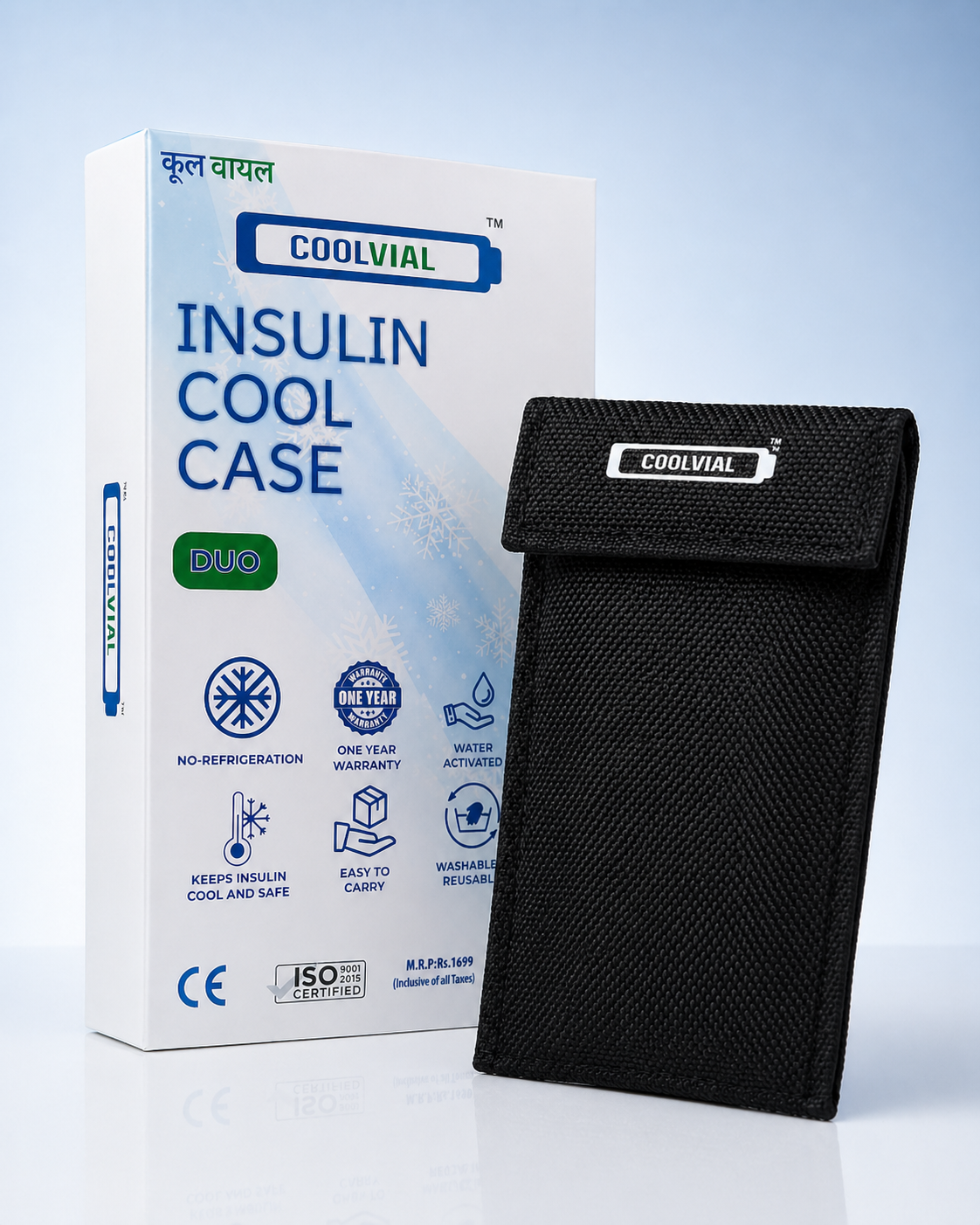
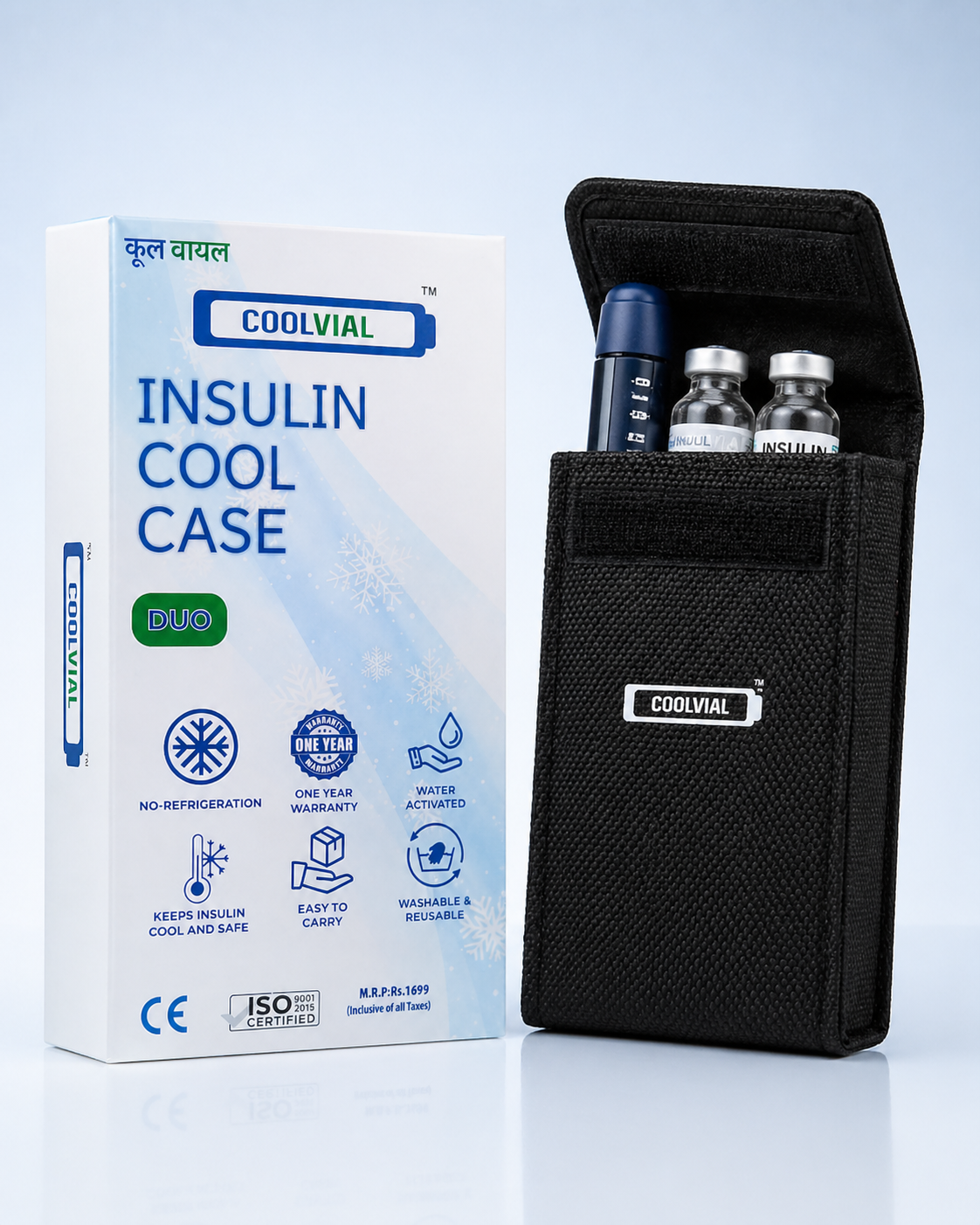
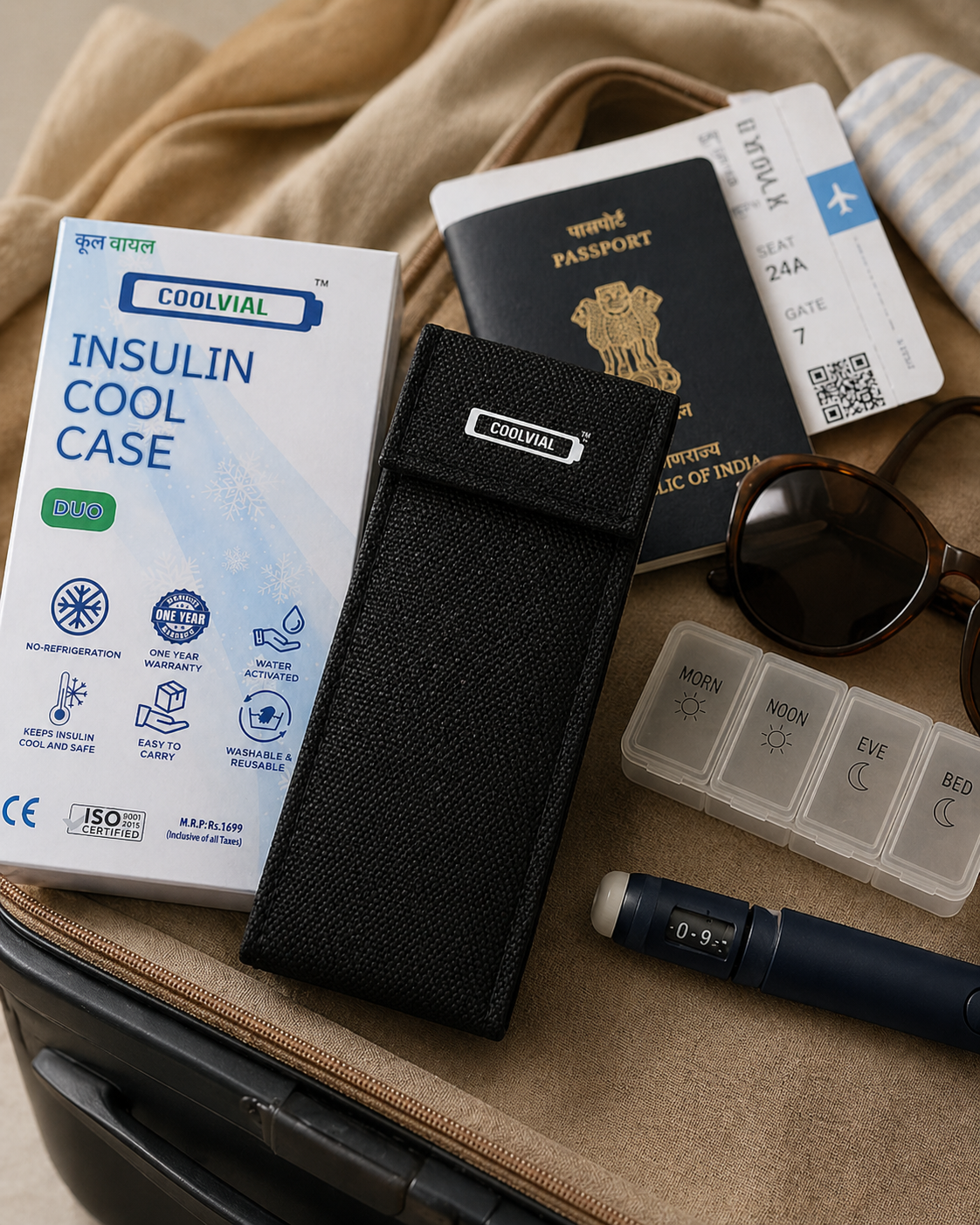
- Insulin Cooling Case: A water-activated evaporative cooling case like the COOLVIAL Duo is indispensable. It keeps insulin cool (below 25°C) for 12-16 hours without electricity, batteries, or refrigeration. The COOLVIAL Duo holds 2 pens and 1 vial, making it ideal for most users. It’s CE certified and ISO 9001:2015 compliant, ensuring quality.
- Thermometer: A small, accurate thermometer for your refrigerator and your cooling case can help you monitor temperatures.
- Insulated Bag: A basic insulated lunch bag can provide temporary protection for insulin, though it’s not a long-term cooling solution.
- Pre-frozen Ice Packs: Always have a few ice packs (gel packs, not regular ice that melts into water) in your freezer. Ensure they don’t directly touch insulin to prevent freezing. Wrap them in a cloth.
- Emergency Contact List: Keep a list of your doctor, nearest 24-hour pharmacies (like Apollo Pharmacy in Sector 8 or MedPlus, or the hospital pharmacy at Asian Hospital (QRG Health City)), and trusted neighbours. For a comprehensive list, see our 24-Hour Pharmacies in Faridabad for Insulin Emergencies — Updated List.
- Copy of Prescription: In case you need to purchase new insulin during an extended outage.
-
Why COOLVIAL Duo is a Smart Choice for Faridabad:
- Reliable Cooling: Maintains safe temperatures even when ambient temperatures reach 40-46°C, typical of Faridabad summers.
- No Electricity Needed: Activates with just water, perfect for areas prone to frequent power cuts like NIT or Old Faridabad.
- Portable: Compact design (holds 2 pens + 1 vial) allows you to carry your insulin safely whether you’re at home, commuting, or visiting Surajkund Lake.
- Affordable & Made in India: Priced at Rs 1,099 with code COOLHEAL (MRP Rs 1,699), it offers a cost-effective solution compared to international brands like FRIO (often around Rs 1,900) while supporting local manufacturing. Outer Woods OW-12 is another option at around Rs 999, but always compare cooling duration and capacity for your needs.
- Quality Assured: CE certified, ISO 9001:2015, and comes with a 1-year warranty.
Preparing your emergency kit is a crucial step in any effective power cut survival guide.
Scenario 1: The Short Snag (30-Minute Power Cut)
The Ultimate 7-Step Power Cut Survival Guide for Diabetics in Faridabad
48+ hours at 2-8°C. No electricity. CE certified. Free delivery across India.
Order on WhatsApp — ₹1,099🛒 Buy Now — ₹1,099A brief power cut is common in Faridabad, especially during voltage fluctuations. While often an annoyance, it usually poses minimal risk to properly stored insulin.
-
Action Plan:
- Do Not Open the Refrigerator: The most important rule. A closed refrigerator can maintain its internal temperature for several hours if kept shut. Resist the urge to peek inside.
- Assess the Situation: Check if it’s a localized cut (only your house/building) or a wider area. Localized cuts are often quickly resolved.
- Monitor Time: Keep track of how long the power has been off. For 30 minutes, your insulin in the fridge is generally safe.
- Prepare for Longer: If it extends beyond 30 minutes, mentally prepare for the next scenario. Have your cooling case ready.
-
Quick Checklist:
- Fridge door closed? YES
- Time noted? YES
- Cooling case accessible? YES
Scenario 2: The Extended Interruption (6-Hour Power Cut)
Six-hour power cuts are not uncommon in Faridabad, especially during peak summer load shedding or monsoon disruptions in areas like Neharpar/Greater Faridabad. At this point, your refrigerator’s internal temperature will likely begin to rise above the safe 8°C threshold.
-
Action Plan:
- Activate Your Cooling Case: This is the moment to use your COOLVIAL Duo. Submerge the inner pouch in cold water for 5-10 minutes as per instructions. The evaporative cooling technology will begin working, keeping your insulin safe for the next 12-16 hours.
- Transfer Insulin: Carefully move your insulin pens and vials from the refrigerator into the activated cooling case. Ensure they are placed securely.
- Minimize Fridge Opening: Continue to keep the refrigerator door closed to preserve any remaining coolness for other perishables.
- Stay Informed: Check DHBVN’s outage information or local news channels for updates on power restoration. Community WhatsApp groups in housing societies are also valuable sources of real-time information.
-
Key Considerations:
- Insulin in Use: If you have insulin pens in use that are already at “room temperature” (below 25°C), they might be okay for a 6-hour period if the ambient room temperature is below 25°C. However, in Faridabad’s summer, this is rarely the case without air conditioning. Always err on the side of caution and place them in the cooling case.
- Other Medications: Remember other temperature-sensitive medications you might have.
Scenario 3: The Day-Long Disruption (12-Hour Power Cut)
A 12-hour power cut demands active management and preparation. Your evaporative cooling case will be in full swing, but you need to think about its refresh cycle and potential next steps.
-
Action Plan:
- Re-activate Cooling Case: If your COOLVIAL Duo has been active for 12 hours, its cooling efficiency might start to reduce, especially in high ambient temperatures. Re-activate it by re-submerging the inner pouch in cold water. This refreshes the evaporative process, extending its cooling duration.
- Check Insulin Temperature: If you have a small thermometer, periodically check the temperature inside your cooling case to ensure it’s maintaining optimal conditions (ideally below 25°C).
- Conserve Power (if any backup): If you have an inverter or generator, use it judiciously. Prioritize essential loads like fans and limited lighting. Avoid running heavy appliances.
- Plan for Longer: If power is still not restored, start thinking about a 24-hour+ plan.
-
Important Tips for 12-hour Cuts:
- Stay Hydrated: Faridabad summers are brutal. Ensure you and your family stay well-hydrated.
- Seek Cooler Environment: If your home becomes too hot without AC/fans, consider moving to a cooler part of your house or a neighbour’s place with better backup, if feasible. This also helps keep your insulin cooler indirectly.
Scenario 4: The Prolonged Blackout (24-Hour+ Power Cut)
A power cut lasting 24 hours or more is a serious situation, especially in Faridabad’s climate. Your primary evaporative cooling case will require regular re-activation, and you’ll need backup strategies.
-
Action Plan:
- Continuous Cooling Case Management: Re-activate your COOLVIAL Duo every 12-16 hours or as needed, based on ambient temperature and case performance. This is your primary defence. For extended periods, considering a second COOLVIAL case or a combination with gel packs might be beneficial.
- Neighbours’ Fridges: Reach out to trusted neighbours in housing societies (e.g., in Sector 14-21 or Neharpar) who might have robust generator backup or solar inverter setups. They may be able to store your unopened insulin vials in their refrigerator temporarily. Always transport insulin in your activated COOLVIAL case.
- Nearest 24-Hour Pharmacies:
- Apollo Pharmacy: Check for 24-hour branches. Apollo Pharmacy in Sector 8, near Sarvodaya Hospital, is a good option.
- MedPlus: Some MedPlus stores also operate 24/7.
- Hospital Pharmacies: The hospital pharmacy at Asian Hospital (QRG Health City) or Fortis Escorts Faridabad (Neelam Bata Road) are excellent resources. They typically have reliable power backup and cold storage facilities. Contact them first to confirm they can store your insulin or if you can purchase new supplies. Remember to carry your prescription.
- Purchase New Insulin (as last resort): If all else fails and your insulin has been exposed to unsafe temperatures, you may need to purchase new insulin. Visit a 24-hour pharmacy or hospital pharmacy. Always consult your doctor if you suspect your insulin’s efficacy has been compromised.
-
Critical Considerations for Prolonged Outages:
- Communication: Maintain communication with family, friends, and healthcare providers.
- Medication Supply: Always have a buffer stock of insulin (e.g., a week’s supply) to avoid last-minute panic purchases.
- Cash: ATMs might not work during prolonged power cuts. Keep some cash handy for emergencies.
For a comprehensive guide on managing all aspects of your diabetes care in Faridabad, including medication access, consider reading our Complete Diabetes Care Guide for Faridabad Residents — 2026 Edition.
Beyond the Basics: Community Support and Advanced Solutions
A strong community network and forward-thinking solutions can further enhance your power cut survival strategy.
-
Community Support:
- Housing Society Networks: If you live in a housing society in areas like Sector 14, Sector 21, or Neharpar, leverage WhatsApp groups and resident welfare associations (RWAs). These groups can quickly disseminate information about outages, identify neighbours with backup, or even organize community-level assistance.
- Local Initiatives: Some parts of Old Faridabad or NIT might have informal community networks that can offer support. Building relationships with neighbours is crucial.
-
Advanced Solutions:
- Solar Inverters: As mentioned, solar inverter setups are gaining popularity in Faridabad suburbs. For independent house owners, this is a significant long-term investment that provides energy independence and reliable backup for crucial needs like refrigeration, even during prolonged power cuts.
- Battery-Powered Mini Fridges: While more expensive, small portable battery-powered medical refrigerators are available, offering precise temperature control for extended periods. These are an option for those with critical medical needs and sufficient budget.
- Temperature Monitoring Devices: Smart temperature sensors can be placed in your refrigerator or cooling case to send alerts to your phone if temperatures deviate from the safe range, providing an extra layer of security.
-
Table: Comparison of Insulin Cooling Solutions for Faridabad Diabetics
| Feature | COOLVIAL Duo (Water-Activated) | FRIO (Water-Activated) | Outer Woods OW-12 (Gel Pack) | Battery-Powered Mini Fridge | Refrigerator (with backup) |
|---|---|---|---|---|---|
| Cooling Method | Evaporative cooling | Evaporative cooling | Gel packs | Compressor/Thermoelectric | Compressor |
| Power Source | Water | Water | Pre-frozen gel packs | Battery/AC/DC | Electricity |
| Cooling Duration | 12-16 hours per activation | Up to 45 hours | 8-12 hours | 12-72 hours (on battery) | Continuous (with power) |
| Capacity | 2 pens + 1 vial | Varies, often 1-2 pens | 1-2 pens/vials | Varies, typically 4-8 pens | High |
| Price (Approx.) | Rs 1,099 (with COOLHEAL) | Rs 1,900 | Rs 999 | Rs 8,000 - Rs 20,000+ | - |
| Pros | Affordable, Made in India, no power needed, portable | Long duration, no power needed | Cheaper, no water needed, simple | Precise control, very long duration | Most reliable, large capacity |
| Cons | Requires water, re-activation needed for long cuts | More expensive, re-activation needed | Gel packs need freezing, shorter duration | Very expensive, heavy, charging needed | Dependent on electricity/backup |
| Best For | Daily use, short to medium outages in Faridabad | Extended travel, longer outages | Budget option for shorter trips | Critical long-term travel, very long outages | Home storage with reliable backup |
Investing in reliable insulin storage like the COOLVIAL Duo is a small price to pay for peace of mind and consistent health management. For more general insulin storage tips, visit our mission page.
Frequently Asked Questions (FAQs)
Q: How long can insulin be stored outside the refrigerator in Faridabad’s summer? A: Unopened insulin should always be refrigerated. Once opened, most insulin types can be kept at room temperature (below 25°C) for up to 28 days. In Faridabad’s summer, where ambient temperatures can reach 40-46°C, it’s crucial to use an active cooling solution like a COOLVIAL case to keep insulin below 25°C.
Q: Can I use regular ice packs to keep my insulin cool? A: You can use pre-frozen gel packs, but never let them directly touch your insulin, as freezing can damage it. Always wrap insulin in a cloth or place it in an insulated pouch before putting it with gel packs. A better solution is a water-activated evaporative cooler like COOLVIAL Duo, which maintains a safe, non-freezing temperature.
Q: What if I suspect my insulin has been exposed to high temperatures during a power cut? A: If your insulin has been exposed to temperatures above 25°C for more than a few hours, or if it looks cloudy, discolored, or has particles, it’s best to discard it and use new insulin. Always consult your doctor or endocrinologist if you are unsure about the efficacy of your insulin.
Q: Is it safe to use a generator for my refrigerator during a power cut in Faridabad? A: Yes, if your housing society or independent house has a generator, it is safe to power your refrigerator. However, be mindful of fuel consumption and the generator’s capacity. Prioritize essential appliances and avoid overloading the system.
Q: Where can I find a 24-hour pharmacy in Faridabad during a prolonged power cut? A: For insulin emergencies during a prolonged power cut, consider Apollo Pharmacy (check 24-hour branches like in Sector 8), MedPlus, or the hospital pharmacies at Asian Hospital (QRG Health City) or Fortis Escorts Faridabad, as they typically have robust power backup. Always call ahead to confirm stock and operational hours.
Q: How often should I reactivate my COOLVIAL Duo during a long power cut? A: The COOLVIAL Duo provides 12-16 hours of cooling per activation. In Faridabad’s extreme summer heat, it’s advisable to re-activate it every 12 hours by re-submerging the inner pouch in cold water to ensure continuous optimal cooling performance.
Q: Are solar inverters a viable option for diabetics in Faridabad? A: Yes, solar inverter setups, especially in independent houses in Faridabad’s suburbs, are an excellent long-term solution. They provide sustainable and reliable power backup for essential appliances like refrigerators, significantly reducing reliance on the grid during power cuts and ensuring insulin safety.
Conclusion: Stay Prepared, Stay Safe
Living with diabetes in Faridabad, with its specific climate and power challenges, requires proactive planning. A robust power cut survival guide is an indispensable tool in your diabetes management arsenal. From understanding local power patterns to assembling an emergency kit, and knowing how to respond to various outage durations, every step contributes to your safety and peace of mind.
Remember, your insulin is your lifeline. Protecting it from temperature fluctuations during a power cut is paramount. Equip yourself with reliable tools like the COOLVIAL Duo, which offers 12-16 hours of electricity-free cooling for your insulin pens and vials, making it a perfect companion for Faridabad’s unpredictable power supply. Don’t let power cuts dictate your health. Be prepared, stay informed, and always have a plan.
Order your COOLVIAL Duo today at just Rs 1,099 with code COOLHEAL at coolvial.com or via WhatsApp wa.me/918766952300.
How We Researched This
This article is based on a thorough analysis of insulin storage guidelines from reputable bodies like the RSSDI (Research Society for the Study of Diabetes in India), ICMR-INDIAB (Indian Council of Medical Research - India Diabetes) study data for diabetes prevalence, local Faridabad hospital directories (Asian Hospital (QRG Health City), Sarvodaya Hospital, Fortis Escorts), and the pharmacy network of chains like Apollo Pharmacy. We also considered typical power infrastructure and climate patterns specific to Faridabad, Haryana, to provide a relevant and actionable power cut survival guide for local residents.
Medical Disclaimer
This article is for general information purposes only and does not constitute medical advice. Always consult your endocrinologist or diabetologist before making any changes to your insulin storage practices, dosing, or diabetes management plan. The information provided should not be used as a substitute for professional medical advice, diagnosis, or treatment.
The Ultimate 7-Step Power Cut Survival Guide for Diabetics in Faridabad
COOLVIAL keeps insulin safe in India's heat. 48+ hours, no electricity needed.