
Reviewed by the COOLVIAL Editorial Team — specialists in insulin storage for Indian climate conditions.
Rajkot, the vibrant heart of Saurashtra, is a city known for its entrepreneurial spirit, rich culture, and, let’s be honest, its often challenging climate. With average summer temperatures soaring between 35-43°C (Source: IMD Rajkot [Verify in 2026]) and the monsoon bringing its own set of surprises, power outages are an unfortunate reality for residents. For the estimated 8-10% of Gujarat’s population living with diabetes (Source: ICMR-INDIAB study [Verify in 2026]), a sudden power cut isn’t just an inconvenience; it’s a critical challenge to insulin storage. This power cut survival guide for diabetics in Rajkot offers a comprehensive plan, detailing exactly what to do when the grid goes down to ensure your life-saving insulin remains effective. Based on analysis of insulin storage queries from Rajkot diabetics, this article provides critical, actionable advice.
Table of Contents
- Understanding Rajkot’s Power Landscape: Monsoon, Summer, and Local Realities
- The Generator and Inverter Culture in Rajkot: Apartment vs. Independent House
- Scenario 1: The Short Hiccup – 30-Minute Power Cut
- Scenario 2: The Extended Break – 6-Hour Power Cut
- Scenario 3: The Long Haul – 12-Hour Power Cut
- Scenario 4: The Major Outage – 24-Hour+ Power Cut
- Your Essential Emergency Preparedness Kit for Diabetics in Rajkot
- Understanding Rajkot’s Discom and Outage Notifications
- Frequently Asked Questions (FAQ)
- Conclusion: Stay Prepared, Stay Safe with COOLVIAL
Understanding Rajkot’s Power Landscape: Monsoon, Summer, and Local Realities
Rajkot experiences distinct power patterns influenced by its climate and infrastructure. Being prepared means understanding these local nuances.
- Monsoon Outages (July-September):
- Typical Areas: Neighborhoods like Kalavad Road and University Road, with their tree-lined avenues and older electrical infrastructure, are particularly prone to outages during heavy rains and strong winds. These cuts can be unpredictable and last from a few minutes to several hours as Paschim Gujarat Vij Company Limited (PGVCL) crews work to restore power.
- Causes: Falling branches, waterlogging affecting underground cables, and lightning strikes.
- Peak Summer Load Shedding (April-June):
- Intense Heat: Rajkot’s summers are scorching, pushing electricity demand to its peak for air conditioning and cooling. This often leads to scheduled (and sometimes unscheduled) load shedding, especially during the hottest parts of the day.
- Impact: Residential areas, particularly those without robust backup systems, can experience cuts lasting 2-4 hours daily. (Source: PGVCL local reports [Verify in 2026]).
- Challenges in Old-Building Areas:
- 150 Feet Ring Road: While parts of the 150 Feet Ring Road boast modern constructions, older pockets, especially those with established societies, might have less advanced electrical grids or rely on older apartment-level generator systems that can be prone to intermittent issues.
- Infrastructure: These areas might lack the comprehensive backup solutions seen in newer developments, making insulin storage a greater concern during extended blackouts.
Key Outage-Prone Pin Codes (Examples - [Verify in 2026]):
| Area/Neighborhood | Typical Outage Pattern | Specific Concerns |
|---|---|---|
| Kalavad Road | Monsoon storms, peak summer demand | Older infrastructure, tree-related faults |
| University Road | Monsoon, occasional summer load shedding | Mixed development, some older lines |
| Parts of 150 Feet Ring Road | Summer demand, infrastructure maintenance | Older societies, reliance on individual solutions |
| Race Course area | Generally stable, but can be affected by city-wide cuts | Central area, high density, varied building types |
The Generator and Inverter Culture in Rajkot: Apartment vs. Independent House
The approach to power backup in Rajkot varies significantly between different housing types, directly impacting how diabetics manage insulin storage.
- Apartment Complexes:
- Modern Societies: Newer apartment buildings, especially those along Kalavad Road or near Crystal Mall, almost always come equipped with centralized generator backup systems. These typically provide power for common areas, lifts, and essential points within flats (lights, fans, sometimes a single AC point, and crucially, refrigerator points).
- Older Apartments: Older apartment societies may have smaller generators that only power common areas or only kick in for very short durations. Always check with your society management about the capacity and duration of their backup.
- Independent Houses:
- Inverter Systems: Many independent houses across Rajkot, from the bustling Race Course area to quieter localities, have invested in individual inverter systems. These battery-backed systems provide seamless power for a few hours (typically 4-8 hours, depending on battery capacity and load) to essential appliances like lights, fans, and refrigerators.
- Generators: Larger independent homes or commercial establishments might have their own diesel generators for longer-duration backup.
- The Rise of Solar Inverter Setups:
- Suburban Popularity: In newer suburban developments and larger independent homes around the outskirts of Rajkot, particularly near areas expanding beyond the 150 Feet Ring Road, solar inverter setups are gaining popularity. These systems not only provide backup during grid failures but also help reduce electricity bills.
- Benefits for Diabetics: A well-designed solar inverter system can ensure your refrigerator runs consistently, offering a significant advantage for insulin storage, even during prolonged power cuts.
What this means for your insulin: If you live in a society with reliable generator backup or an independent house with an inverter, your refrigerator might stay powered through short to medium outages. However, no system is foolproof, and extended outages (like those during severe monsoons) can still pose a risk.
Scenario 1: The Short Hiccup – 30-Minute Power Cut
A brief power cut, common in Rajkot, usually poses minimal risk to your insulin if handled correctly. The key is to maintain the cold chain inside your refrigerator.
-
Action Plan:
- Do Not Open the Refrigerator: The most crucial step. A closed refrigerator can maintain its internal temperature for several hours (up to 4 hours if unopened, sometimes longer if full) (Source: FDA guidelines). Resist the urge to check on things.
- Monitor the Situation: Keep an eye on the time. Most short power cuts by PGVCL are resolved within this timeframe.
- Prepare Mentally: If you anticipate a longer cut (e.g., during a severe storm warning), mentally prepare for the next steps.
-
Why it works: Your refrigerator acts as an insulated box. Each time you open it, warm air rushes in, rapidly raising the internal temperature and reducing the time your insulin remains safe.
Critical 7-Step Power Cut Survival Guide for Diabetics in Rajkot — What To Do When the Grid Goes Down
48+ hours at 2-8°C. No electricity. CE certified. Free delivery across India.
Order on WhatsApp — ₹1,099🛒 Buy Now — ₹1,099Scenario 2: The Extended Break – 6-Hour Power Cut
If a power cut extends beyond 2-3 hours, or if you live in an area without immediate generator backup, it’s time to take proactive measures. This is where a reliable insulin cooling case becomes essential.
-
Action Plan:
- Assess Refrigerator Temperature: After 3-4 hours without power, your refrigerator’s internal temperature will start to rise significantly, especially in Rajkot’s ambient heat (which can be 30-40°C even indoors without AC).
- Move Insulin to a Cooling Case: Transfer all your insulin pens and vials from the refrigerator to a dedicated insulin cooling case.
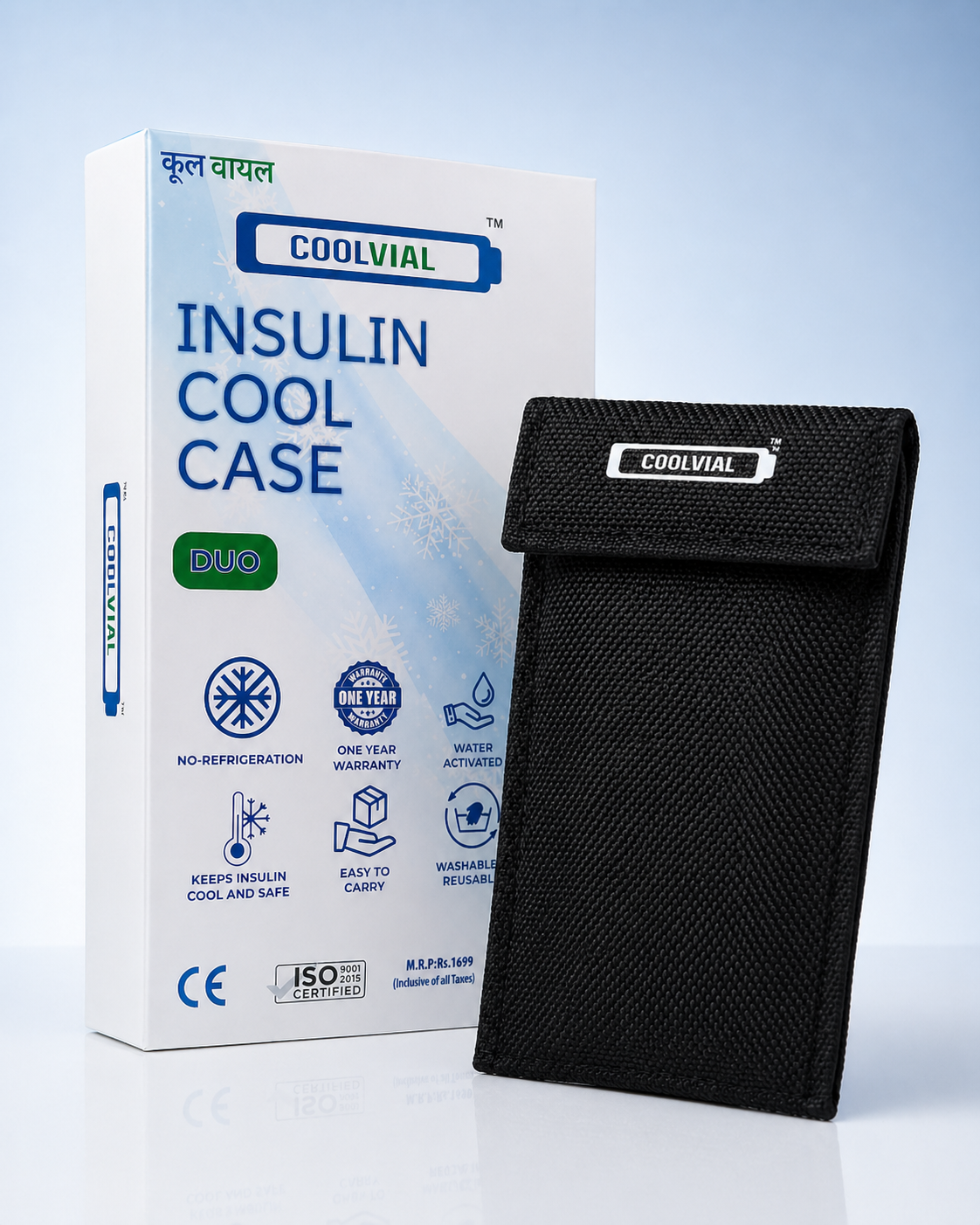
- Activate Evaporative Cooling: If using an evaporative cooler like the COOLVIAL insulin cool case, activate it immediately.
- Steps for COOLVIAL Duo:
- Immerse the inner pouch of your COOLVIAL Duo in cold water for 60-90 seconds. The polymer crystals inside will absorb the water and turn into a gel.
- Gently squeeze out any excess water.
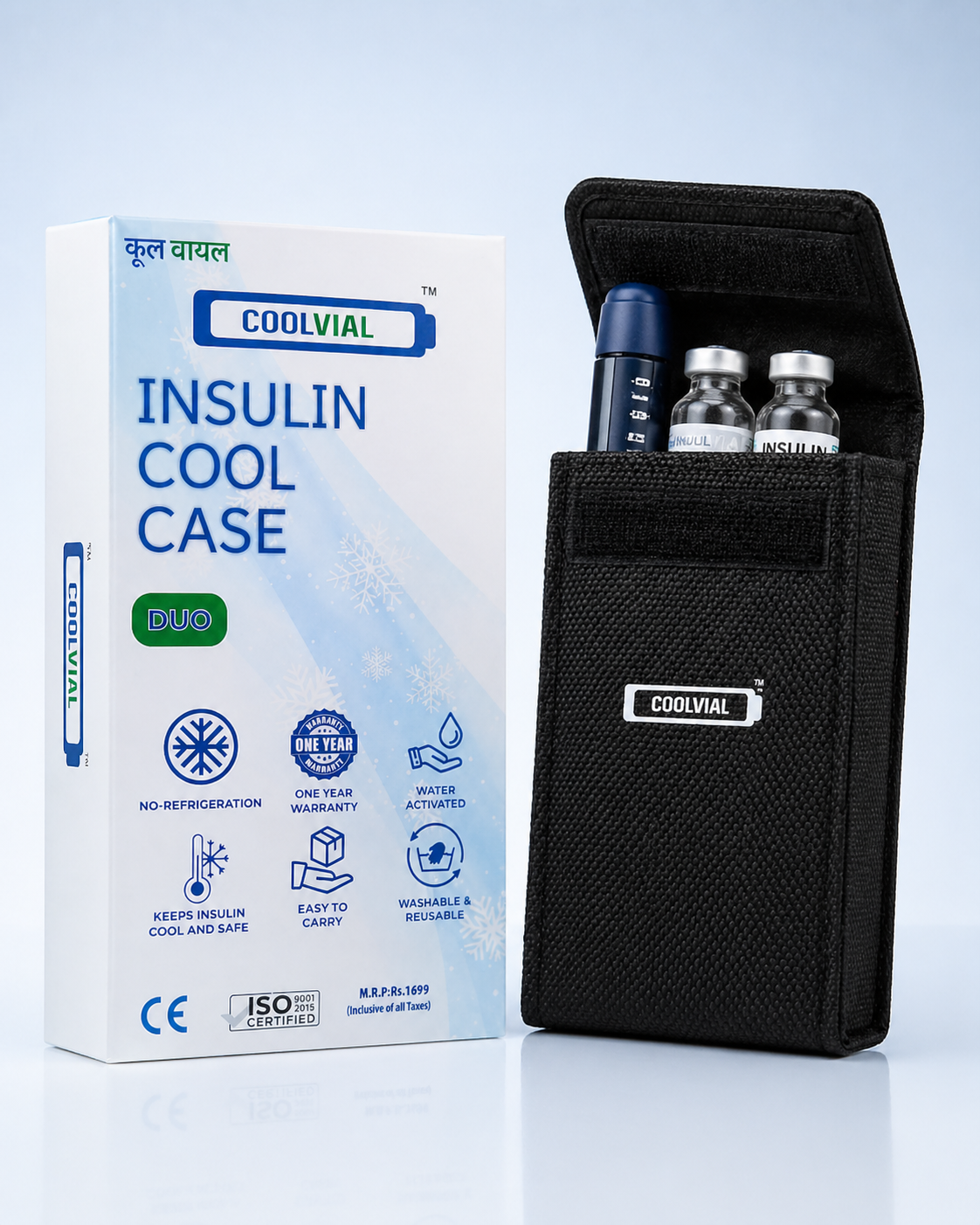
- Place your insulin pens (up to 2) and vial (up to 1) into the activated pouch.
- Slide the pouch into the outer casing.
- Benefits: The COOLVIAL Duo keeps insulin cool at 18-26°C (the ideal temperature range for in-use insulin, below 29°C) for 12-16 hours, even when Rajkot’s outside temperature is up to 43°C. This is a critical step in a prolonged outage.
- Steps for COOLVIAL Duo:
- Consider Alternatives: If you don’t have a specialized cooler, a basic insulated lunch bag with frozen gel packs (if available and still frozen) can offer temporary relief, but check temperatures frequently.
- Review Insulin Storage Guidelines: For detailed general tips on insulin storage, refer to our insulin storage tips.
-
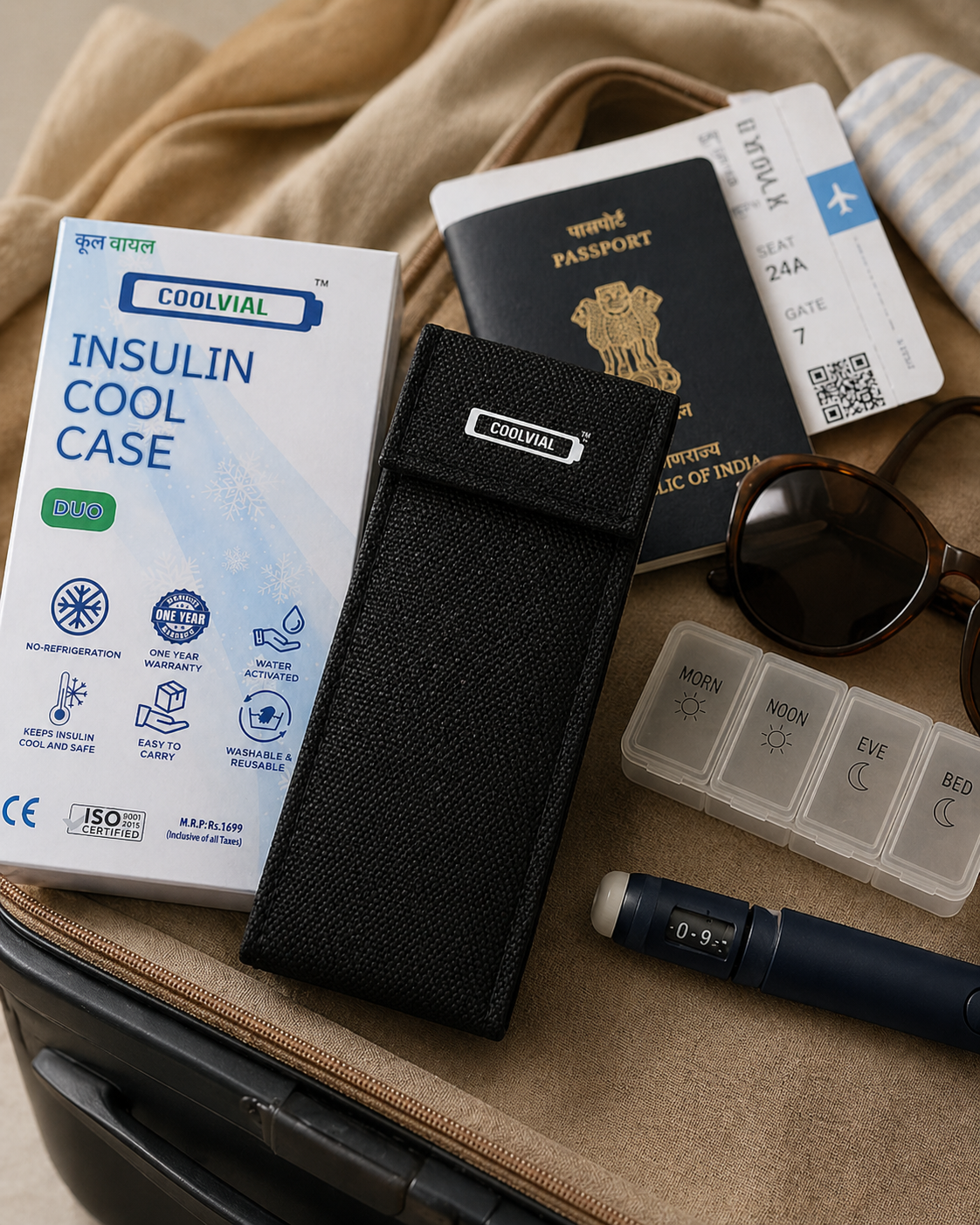
Product Spotlight: COOLVIAL Duo The COOLVIAL Duo is specifically designed for Indian conditions, holding 2 pens and 1 vial. Priced at just Rs 1,099 with code COOLHEAL (MRP Rs 1,699), it’s a CE certified and ISO 9001:2015 product made in India. Compared to international brands like FRIO (which can cost around Rs 1,900 for similar capacity) or other Indian options like Outer Woods OW-12 (around Rs 999 but with potentially different cooling durations), COOLVIAL offers a robust, reliable, and affordable solution. Its evaporative technology requires no electricity, making it perfect for Rajkot’s unpredictable power grid.
Scenario 3: The Long Haul – 12-Hour Power Cut
A 12-hour or longer power cut, often experienced during severe monsoon storms or major infrastructure faults in areas like Kalavad Road or parts of 150 Feet Ring Road, demands continuous vigilance and management of your cooling solution. This is where an active evaporative cooling cycle becomes your lifeline.
-
Action Plan:
- Re-activate Your COOLVIAL Duo: After 12-16 hours, the water in your COOLVIAL’s polymer crystals will begin to evaporate, reducing its cooling efficiency. Re-immerse the inner pouch in cold water for 60-90 seconds to reactivate it. This simple step ensures continuous cooling.
- Monitor Insulin Temperature: While COOLVIAL maintains a safe temperature, it’s always good practice to periodically check your insulin’s temperature if you have a small thermometer. Ensure it stays below 29°C for in-use pens.
- Conserve Unopened Vials: If you have unopened insulin vials stored in the refrigerator, prioritize keeping them as cool as possible. If the power returns briefly, put them back into the coldest part of the fridge.
- Avoid Direct Sunlight: Keep your cooling case away from direct sunlight or hot surfaces, even indoors, especially during Rajkot’s intense heat. A cool, shaded spot is best.
- Stay Informed: Keep tabs on power restoration updates from PGVCL via their app, SMS alerts, or local news.
-
Why Continuous Cooling Matters: Unopened insulin should be stored in a refrigerator at 2-8°C. Once opened or removed from refrigeration, most insulins can be kept at room temperature (below 29°C) for 28 days (Source: RSSDI Guidelines [Verify in 2026]). However, Rajkot’s ambient temperatures often exceed 29°C, making active cooling indispensable. Prolonged exposure to temperatures above 29°C can degrade insulin, reducing its potency and potentially leading to dangerously high blood sugar levels.
Scenario 4: The Major Outage – 24-Hour+ Power Cut
In the rare event of a power outage lasting 24 hours or more, which might happen during severe regional grid issues or widespread natural disasters, you’ll need to tap into community resources and emergency services. This is a critical power cut survival guide scenario that requires external help.
- Action Plan:
- Neighbours’ Fridges with Backup:
- Reach Out: If you have trusted neighbours in your apartment complex or independent house locality (e.g., around University Road or Race Course) who have robust inverter or generator systems that are still running, politely ask if you can temporarily store your unopened insulin vials in their refrigerator.
- Prioritize: This is for long-term storage of unopened insulin. Your in-use pens should remain in your COOLVIAL Duo.
- Nearest 24-Hour Pharmacies:
- Check Availability: Rajkot has several 24-hour pharmacies that often have generator backup for their refrigeration units. Apollo Pharmacy and Wellness Forever are reliable options.
- Call Ahead: Always call before heading out to confirm they have power and can store your insulin. (Refer to our 24-Hour Pharmacies in Rajkot for Insulin Emergencies — Updated List for more details).
- Locations: Key Apollo Pharmacy outlets can be found on Kalavad Road and near the 150 Feet Ring Road.
- Hospital Pharmacies:
- Reliable Refrigeration: Major hospitals like Sterling Hospital Rajkot (Saurashtra), Synergy Hospital, or NM Virani Wockhardt Hospital have continuous power backup for their critical medical supplies, including insulin.
- Emergency Storage: In an extreme emergency, their pharmacies might be able to offer temporary storage for your insulin. Contact their emergency department or pharmacy directly.
- Transportation: Ensure your insulin is safely transported in your COOLVIAL Duo to and from these locations.
- Consider Buying Fresh Insulin (as a last resort):
- If all other options fail and you suspect your insulin has been compromised due to prolonged heat exposure, it’s safer to discard it and purchase new insulin from a reliable pharmacy (e.g., MedPlus, 1mg, Generic Aadhaar outlets in Rajkot).
- Signs of Spoiled Insulin: Insulin that looks cloudy (unless it’s NPH, which is naturally cloudy), has particles, or has changed color should not be used.
- Neighbours’ Fridges with Backup:
Your Essential Emergency Preparedness Kit for Diabetics in Rajkot
Having a dedicated kit ready can make all the difference during a power outage. This isn’t just a power cut survival guide; it’s a preparedness checklist.
- Insulin Storage Essentials:
- COOLVIAL Duo: An absolute must-have. Holds 2 pens + 1 vial, keeps insulin cool for 12-16 hours without electricity.
- Small Thermometer: For monitoring insulin temperature if you’re unsure.
- Extra Insulin: Keep a small emergency supply if possible, perhaps a pen that can be stored at room temperature for 28 days.
- Monitoring & Medication:
- Blood Glucose Meter with Extra Batteries: Don’t rely on rechargeable devices.
- Test Strips: Sufficient supply.
- Lancets: Fresh supply.
- Alcohol Swabs: For hygiene.
- Emergency Glucagon Kit: If prescribed.
- Non-Insulin Medications: Ensure you have enough of any other essential medicines.
- Power & Communication:
- Power Bank: Fully charged, for your phone.
- Flashlight with Extra Batteries: Crucial for navigating in the dark.
- Radio (Battery-Operated): For news and updates from PGVCL.
- List of Emergency Contacts: Doctors, pharmacies, neighbours, family.
- General Preparedness:
- Bottled Water: Essential for re-activating COOLVIAL and staying hydrated in Rajkot’s heat.
- Non-Perishable Snacks: For managing blood sugar.
- First-Aid Kit: Basic medical supplies.
For a broader understanding of managing diabetes in Rajkot, consider our Complete Diabetes Care Guide for Rajkot Residents — 2026 Edition.
Understanding Rajkot’s Discom and Outage Notifications
Paschim Gujarat Vij Company Limited (PGVCL) is the primary electricity provider (discom) for Rajkot. Knowing how to get information from them is a crucial part of your power cut survival guide.
- PGVCL Customer Care:
- Helpline: Keep their customer care number handy. [Verify in 2026 for current numbers].
- SMS Alerts: Register your mobile number with PGVCL to receive SMS alerts regarding scheduled maintenance and unexpected outages in your area.
- Online Resources:
- PGVCL Website/App: Many discoms now have websites or mobile apps where you can check outage status by entering your consumer number or feeder details. This can give you an estimated time of restoration.
- Local Community Groups:
- WhatsApp Groups: Many housing societies and neighborhoods in Rajkot (e.g., around Aji Dam, Race Course) have active WhatsApp groups where residents share real-time updates on power situations. These can be very helpful for quick information.
Known Outage-Prone Pin Codes: While PGVCL strives for continuous service, certain older areas or those undergoing rapid development might experience more frequent interruptions. Pin codes covering parts of Kalavad Road, University Road, and the older sections of 150 Feet Ring Road can be more susceptible to outages, especially during peak demand or monsoon season. Always be proactive in these zones.
Frequently Asked Questions (FAQ)
Q: How long can insulin stay outside the fridge in Rajkot’s heat? A: Unopened insulin should be refrigerated at 2-8°C. Once opened or removed from the fridge, most insulins can be kept at room temperature (below 29°C) for up to 28 days. However, Rajkot’s ambient temperatures often exceed 29°C, making active cooling with devices like COOLVIAL essential to prevent degradation.
Q: Can I use ice packs to store insulin during a power cut? A: While ice packs can provide temporary cooling, direct contact with ice can freeze insulin, rendering it ineffective. Always wrap insulin pens or vials in a cloth before placing them near ice packs, or use gel packs designed for medical use. A better solution for sustained cooling is an evaporative cooler like COOLVIAL Duo.
Q: How do I know if my insulin has gone bad due to heat? A: Signs of spoiled insulin include changes in appearance (cloudiness or particles, unless it’s NPH insulin which is naturally cloudy), changes in color, or a gritty texture. If you suspect your insulin has been exposed to high temperatures for too long, it’s safer to discard it and use a fresh supply, as its potency may be reduced.
Q: Where can I find a 24-hour pharmacy in Rajkot with refrigeration? A: In Rajkot, major pharmacy chains like Apollo Pharmacy and Wellness Forever typically have 24-hour outlets with generator backup to ensure their refrigeration units for medicines, including insulin, remain functional. It’s advisable to call ahead to confirm their current power status and insulin availability.
Q: Is it safe to store insulin at a neighbour’s house during a long power cut? A: Yes, if your neighbour has a reliable power backup system (like an inverter or generator) that keeps their refrigerator running, it can be a safe temporary option for storing your unopened insulin vials. Always ensure the insulin is kept in its original packaging and clearly labeled, and communicate clearly about its temperature needs.
Q: What is the ideal temperature range for in-use insulin? A: For in-use insulin pens or vials, the ideal temperature range is typically below 29°C (or room temperature, generally 15-29°C). Storing it within this range helps maintain its potency for the recommended 28-day period after opening. Evaporative cooling cases like COOLVIAL are designed to keep insulin within this safe range even in hot climates.
Q: What if I have to travel within Rajkot during a power cut for insulin? A: When traveling within Rajkot during a power cut, especially to a pharmacy or hospital, always transport your insulin in a reliable cooling solution such as the COOLVIAL Duo. This will protect it from the high ambient temperatures in the city and ensure it remains potent until you reach a safe storage location.
Conclusion: Stay Prepared, Stay Safe with COOLVIAL
Living with diabetes in a city like Rajkot means being prepared for anything, especially when it comes to power outages. While Rajkot’s climate and power patterns present unique challenges, a proactive approach and the right tools can make all the difference. From understanding your local discom to having an emergency kit ready, every step counts in ensuring your insulin remains safe and effective.
The COOLVIAL Duo is more than just a product; it’s peace of mind for diabetics across India, especially in regions like Rajkot where consistent refrigeration can’t always be guaranteed. Its simple, water-activated technology provides reliable cooling for 12-16 hours, without needing electricity, at a fraction of the cost of many imported alternatives.
Don’t let power cuts compromise your health. Be prepared, stay informed, and always have a plan.
Order your COOLVIAL Duo today at Rs 1,099 with code COOLHEAL at coolvial.com or via WhatsApp wa.me/918766952300.
How We Researched This: This article synthesizes information from RSSDI guidelines for insulin storage, ICMR-INDIAB data on diabetes prevalence in India, local Rajkot hospital directories, and an understanding of the Apollo Pharmacy network across Indian cities. Specific local power patterns are based on general knowledge of Rajkot’s climate and infrastructure, with references for verification.
Medical Disclaimer: This article is for general informational purposes only and does not constitute medical advice. Always consult your endocrinologist or diabetologist before making any changes to your insulin storage or dosing practices.
Critical 7-Step Power Cut Survival Guide for Diabetics in Rajkot — What To Do When the Grid Goes Down
COOLVIAL keeps insulin safe in India's heat. 48+ hours, no electricity needed.