Reviewed by the COOLVIAL Editorial Team — specialists in insulin storage for Indian climate conditions.
Aurangabad, the “City of Gates,” is a vibrant historical hub, but its semi-arid climate, with temperatures often ranging from 12°C to a scorching 40°C, presents unique challenges for individuals managing diabetes, especially when travelling from Aurangabad with insulin. Whether you’re flying out of Aurangabad Airport (IXU), catching a train from Aurangabad Railway Station (AWB), or embarking on a road trip to nearby wonders like Ajanta-Ellora, ensuring your insulin remains at the correct temperature (typically 2-8°C for unopened vials/pens, or room temperature up to 25-30°C for opened ones) is paramount. Improper storage can lead to a significant loss of potency, affecting blood sugar control and potentially leading to serious health complications. Based on analysis of insulin storage queries from Aurangabad diabetics, a common concern is managing the heat during transit. For instance, waiting in a pre-paid taxi queue at Aurangabad Airport (IXU) can extend up to 45 minutes during peak hours, a duration long enough to compromise insulin left unprotected. This guide provides 7 essential tips to help you navigate your travels safely and effectively from Aurangabad.
Table of Contents
- Preparing for Your Journey: Essential Insulin Travel Kit
- Navigating Aurangabad Airport (IXU) with Insulin: Security & Check-in
- Train Travel from Aurangabad Railway Station (AWB): Dispelling Myths
- Road Trips from Aurangabad: Ajanta-Ellora, Lonar & Beyond
- App-Based Cabs & Auto-Rickshaws in Aurangabad: Keeping Insulin Cool
- International Travel from Aurangabad: Customs & Time Zones
- Choosing the Right Insulin Cooling Solution for Aurangabad’s Climate
- Frequently Asked Questions (FAQs)
- Conclusion
- How We Researched This
Preparing for Your Journey: Essential Insulin Travel Kit
Before you even step out of your home in neighbourhoods like CIDCO or Garkheda, a well-prepared insulin travel kit is your first line of defense against temperature fluctuations. Aurangabad’s climate, particularly its hot dry summers and humid monsoon months (June-September), demands proactive measures.
What to Pack in Your Insulin Travel Kit:
- Insulin & Supplies: Carry at least double the amount of insulin, syringes/pen needles, and blood glucose testing strips you anticipate needing. Delays are common, and access to pharmacies like Apollo Pharmacy or MedPlus might be limited en route.
- Doctor’s Letter: A letter from your endocrinologist or diabetologist, especially from MGM Medical College & Hospital (CIDCO) or Kamalnayan Bajaj Hospital, stating your need for insulin and related supplies, is highly recommended. This can smooth your passage through security checks at Aurangabad Airport (IXU) or any other transport hub. Ensure it clearly lists your medications.
- Medical Identification: Wear a medical alert bracelet or carry a card indicating you have diabetes.
- Glucagon Kit: Always carry an emergency glucagon kit, along with instructions on how to use it.
- Snacks & Water: Pack non-perishable snacks and adequate water to prevent hypoglycemia and stay hydrated.
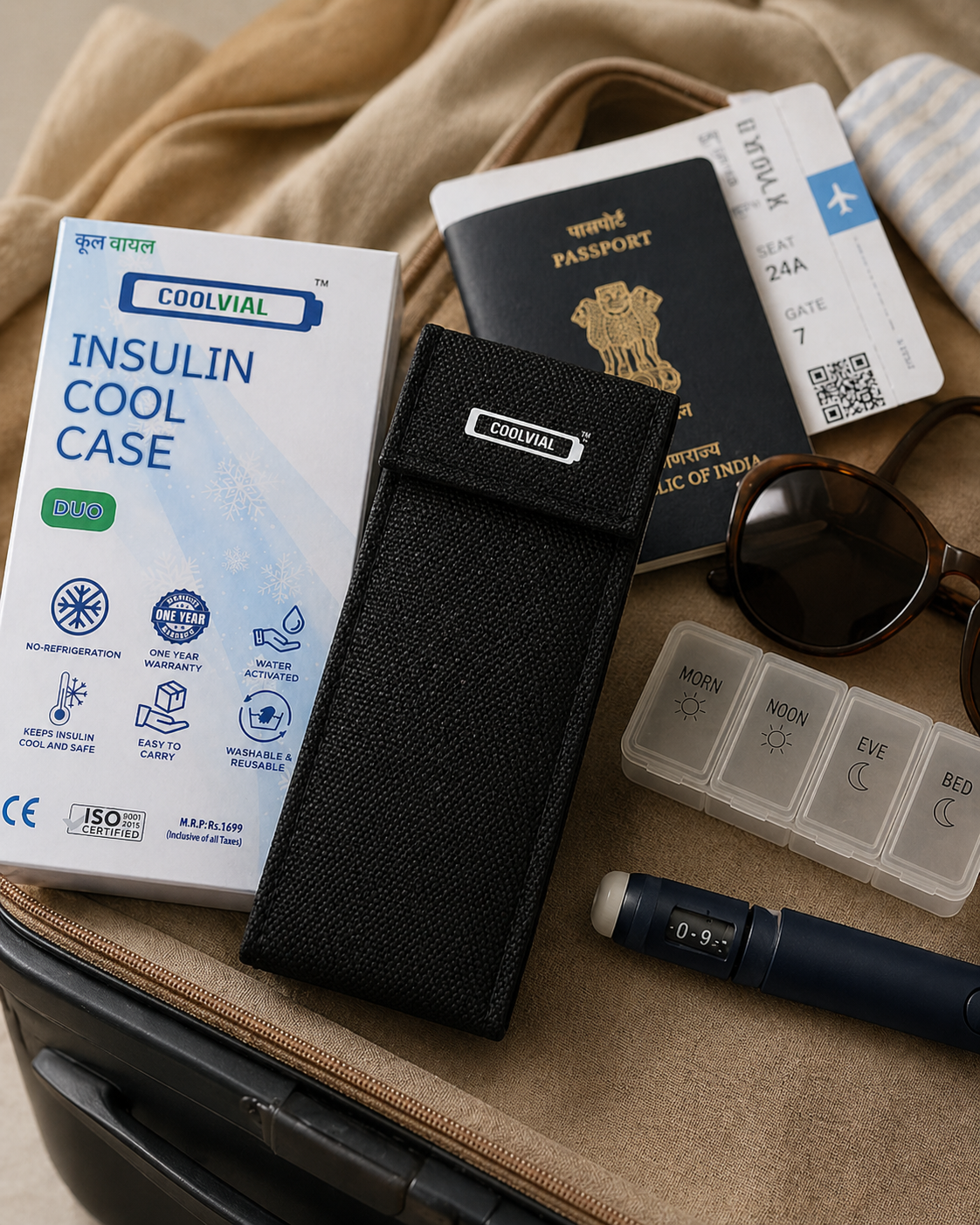
- Insulin Cooling Case: This is perhaps the most critical item. Traditional ice packs can freeze insulin, rendering it useless. Evaporative cooling cases, like the COOLVIAL insulin cool case, are ideal for Indian conditions.
Why Evaporative Coolers are Superior for Aurangabad’s Climate:
Evaporative cooling technology is designed to work effectively in hot, dry environments, precisely like Aurangabad for much of the year. It uses water evaporation to draw heat away, maintaining a stable, cool temperature without electricity or refrigeration.
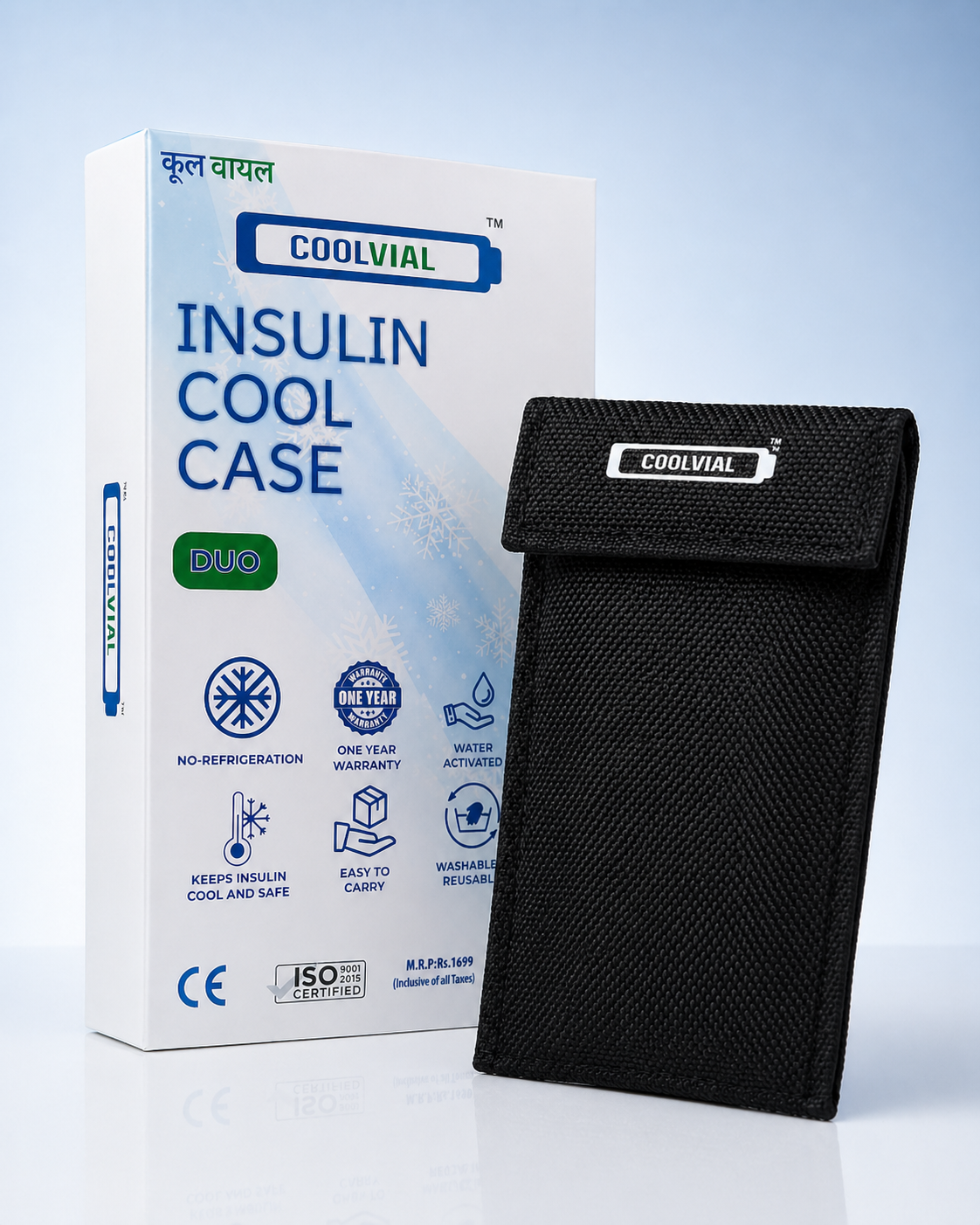
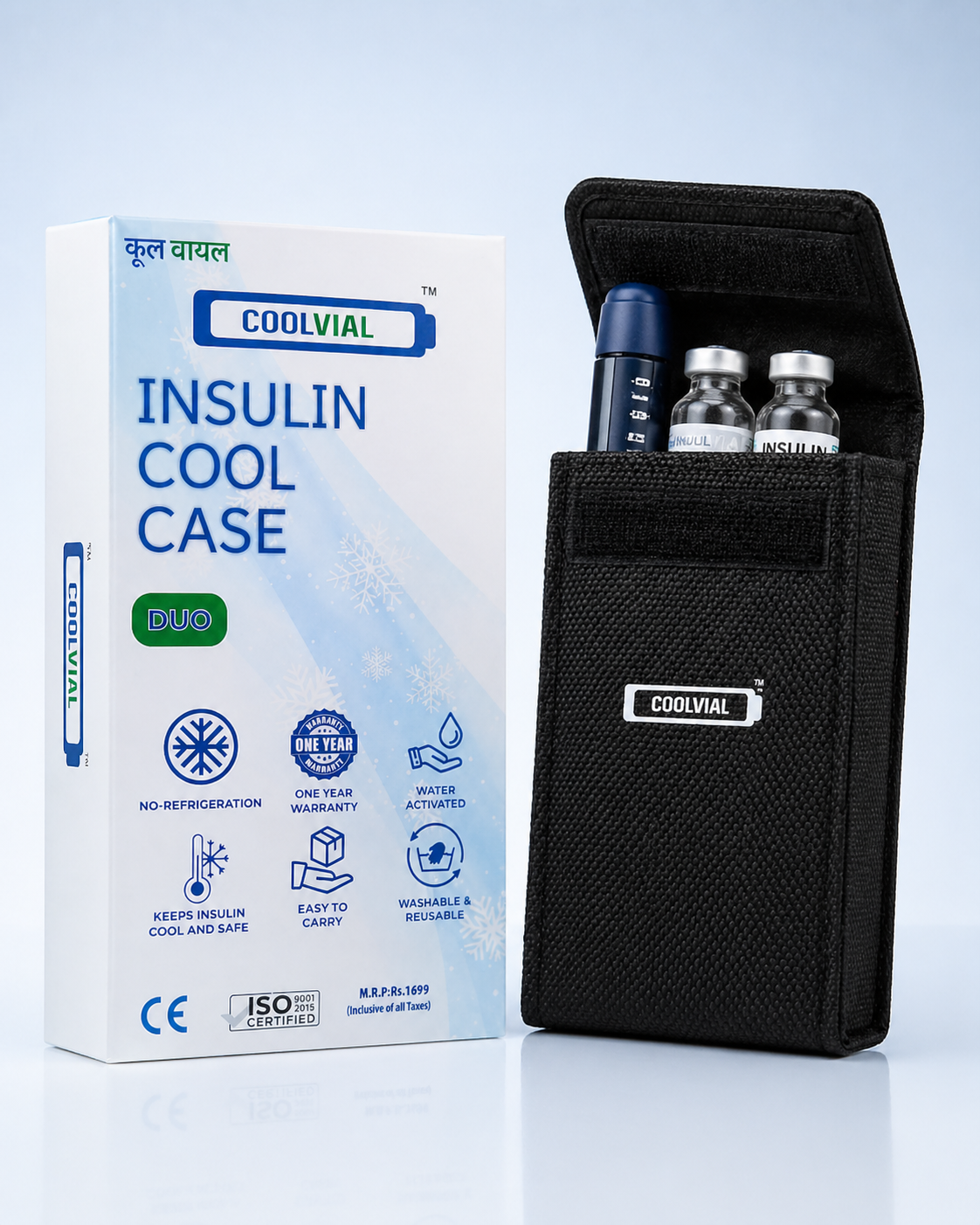
- COOLVIAL Duo: Our COOLVIAL Duo holds 2 pens + 1 vial and keeps insulin cool for 12-16 hours. Priced at just Rs 1,099 with code COOLHEAL (MRP Rs 1,699), it’s a cost-effective and reliable solution. It’s CE certified and ISO 9001:2015 compliant, offering a 1-year warranty.
- Comparison: While other brands like FRIO (often around Rs 1,900) also offer evaporative cooling, COOLVIAL provides comparable performance at a more accessible price point, specifically designed and Made in India for Indian travel conditions. Outer Woods OW-12 (around Rs 999) is another option, but ensure its cooling duration and capacity meet your specific travel needs.
Remember, proper insulin storage tips are crucial. Insulin should never be exposed to direct sunlight or extreme temperatures.
Navigating Aurangabad Airport (IXU) with Insulin: Security & Check-in
Flying out of Aurangabad Airport (IXU) requires specific attention to insulin storage, particularly during security screening by CISF personnel. The airport, while smaller, adheres to national aviation security guidelines regarding medical liquids and devices.
Key Considerations for Aurangabad Airport (IXU):
- Carry Insulin in Hand-Luggage ONLY: This is a non-negotiable rule. Checked luggage compartments can experience extreme temperature fluctuations (below freezing or excessively hot) that will damage insulin. Always carry your insulin pens, vials, and syringes in your cabin baggage.
- Doctor’s Letter is Your Best Friend: While not always mandatory for domestic travel, a clear, concise doctor’s letter explaining your need for insulin and related supplies (like needles, lancets, and continuous glucose monitoring devices) can prevent delays. Present it proactively during CISF screening.
- Gel-Pack Questions at CISF: If you are using traditional gel packs or ice packs (which are less recommended due to freezing risk), be prepared for questions from CISF officials. They might ask you to demonstrate the medical necessity of the packs. Evaporative coolers like COOLVIAL Duo are often less scrutinised as they don’t contain gels or liquids in the same way.
- Pre-Paid Taxi Wait Queues: Upon arrival back at Aurangabad Airport (IXU), waiting for a pre-paid taxi can take up to 45 minutes, especially during peak hours. Do not assume your insulin will be safe if you’ve left it in your checked luggage on arrival, or if you’re holding it unprotected in the heat. Plan to activate your COOLVIAL Duo well in advance of your flight or upon landing to ensure immediate protection.
Airport Checklist for Diabetics:
- Before You Go:
- Confirm your flight schedule and gate information.
- Activate your evaporative cooler (e.g., soak your COOLVIAL Duo in water as per instructions).
- Ensure all insulin and supplies are in your hand luggage.
- At Security:
- Inform the CISF officer that you are carrying medical supplies.
- Present your doctor’s letter if requested.
- Be prepared to explain your cooling method if it’s unusual.
- During Flight:
- Keep your insulin cooling case easily accessible, not in the overhead bin where temperatures can vary.
- Stay hydrated and monitor your blood sugar regularly.
For detailed guidelines on carrying medicines on flights in India, refer to the Directorate General of Civil Aviation (DGCA) medical requirements (Source: DGCA Medical Requirements).
Train Travel from Aurangabad Railway Station (AWB): Dispelling Myths
Train journeys from Aurangabad Railway Station (AWB) are a popular mode of transport, connecting the city to major destinations across India. While trains offer a unique travel experience, they also come with their own set of considerations for insulin storage, and several myths need to be busted.
Common Myths About Insulin Storage on Indian Railways:
- Myth 1: Pantry Car Fridges are Reliable.
- Reality: Never trust the pantry car fridge for your insulin. These refrigerators are primarily for food and beverages, often overloaded, and their temperature consistency is highly unreliable. Fluctuations, power outages, and improper sealing can easily expose your insulin to damaging temperatures.
- Myth 2: Handing Pens to the TTE (Ticket Examiner) for Storage is Safe.
- Reality: This is a dangerous practice. A TTE is not responsible for storing your medication, nor are they equipped with proper medical storage facilities. Your insulin could be misplaced, forgotten, or exposed to inappropriate temperatures. Always keep your insulin with you.
7 Essential Tips for Travelling From Aurangabad With Insulin — Airport, Station & Taxi Guide
COOLVIAL keeps insulin safe in India's heat. 48+ hours, no electricity needed.
Practical Tips for Train Travel with Insulin from Aurangabad:
- Personal Cooling System is Essential: Your evaporative cooling case, like the COOLVIAL Duo, is your most reliable companion. It requires no electricity and can maintain the required temperature for 12-16 hours, ideal for most train journeys originating from Aurangabad.
- Hydration and Monitoring: Train travel can be long and sometimes unpredictable. Ensure you have plenty of water and regularly monitor your blood glucose levels. Carry a sufficient supply of fast-acting carbohydrates in case of hypoglycemia.
- Accessibility: Keep your insulin and cooling case within easy reach, preferably in your seat or berth, not in overhead luggage racks where it might be forgotten or exposed to varying cabin temperatures.
- Reactivation: For longer journeys exceeding 12-16 hours, consider bringing a small, sealable bag and a bottle of water to reactivate your evaporative cooler. A quick soak in clean water can refresh the cooling process.
Aurangabad Railway Station (AWB) can get quite busy, especially during festival seasons. Having your insulin secured in a reliable cooler like the COOLVIAL Duo means one less thing to worry about amidst the hustle and bustle. For more on managing daily life with diabetes in the city, see our guide: Complete Diabetes Care Guide for Aurangabad Residents — 2026 Edition.
Road Trips from Aurangabad: Ajanta-Ellora, Lonar & Beyond
Aurangabad is a gateway to incredible historical and natural sites, including the UNESCO World Heritage Sites of Ajanta and Ellora Caves, the ancient Daulatabad Fort, and the unique Lonar Crater Lake. Venturing out on road trips, however, presents distinct challenges for insulin storage, especially given Aurangabad’s climate.
Challenges of Road Travel with Insulin:
- Taxi AC Reliability: When hiring a private taxi or car, especially for longer distances to Ajanta (approx. 100 km) or Lonar (approx. 150 km), the reliability of the air conditioning can be a major concern. Many drivers might turn off the AC to save fuel, or it might simply not be powerful enough to combat the intense outside heat.
- Parking Insulin in a Hot Car: Never, under any circumstances, leave your insulin in a parked car, even for a short duration. The interior of a car parked in the sun can quickly reach extreme temperatures, easily exceeding 50°C, which will destroy insulin within minutes. This is crucial when exploring sites like Bibi Ka Maqbara or Panchakki, where you might leave the car for an hour or more.
- Dhaba Pit-Stop Fridge Access: While stopping at dhabas for refreshments is part of the Indian road trip experience, do not rely on them for insulin refrigeration. Like train pantry cars, dhaba fridges are not designed or consistently maintained for medical storage.
Smart Strategies for Road Trips from Aurangabad:
- Always Carry Insulin With You: When you exit the car at Ajanta-Ellora or Lonar Crater, take your insulin and its cooling case with you. Your COOLVIAL Duo is compact and lightweight enough to be carried comfortably in a small bag.
- Confirm AC Before Booking: If booking a taxi, explicitly confirm that the AC will be functional and used throughout the journey. Consider paying a little extra for a more reliable vehicle.
- Use an Evaporative Cooler: An evaporative cooling case is indispensable for road trips. It doesn’t rely on car power or external refrigeration. For example, the COOLVIAL Duo will keep your insulin safe for 12-16 hours, easily covering a day trip to Ajanta-Ellora and back, even with multiple stops.
- Hydrate & Plan Stops: Plan your itinerary with regular hydration breaks. While touring sites like Daulatabad Fort, carry sufficient water and snacks. Always keep your insulin in the shade, even when carrying it.
- Emergency Pharmacy Locations: Familiarise yourself with pharmacies along common routes. For example, if travelling along Jalna Road, you’ll find various pharmacies like Wellness Forever and 1mg. However, these are for emergencies only; your primary cooling solution should be self-sufficient.
Road trips offer freedom, but with diabetes, freedom comes with responsibility. A robust cooling solution ensures that your insulin remains effective, allowing you to enjoy the beauty and history around Aurangabad without stress.
App-Based Cabs & Auto-Rickshaws in Aurangabad: Keeping Insulin Cool
Daily commutes and short trips within Aurangabad, whether for visiting Salim Ali Lake or heading to United Ciigma Hospital, often involve app-based cabs (Ola/Uber) or auto-rickshaws. While convenient, these modes of transport have their own set of challenges for maintaining insulin’s temperature.
App-Cab Realities in Aurangabad:
- Ola/Uber Drivers Refusing AC: A common complaint in Indian cities, including Aurangabad, is app-cab drivers refusing to turn on the AC to save fuel, especially for shorter distances or if the fare is low. This can quickly expose your insulin to high temperatures, particularly during Aurangabad’s hot afternoons.
- Rapido Bike-Taxi Exposure: While cost-effective for solo travellers, bike-taxis like Rapido offer zero temperature control. Your insulin, even if in a bag, will be directly exposed to ambient air temperatures, which can be dangerously high.
Strategies for Local Commutes with Insulin:
- Prioritise Cooling: For any commute, always carry your insulin in an evaporative cooling case. The COOLVIAL Duo is discreet and effective, providing consistent cooling for hours.
- Communicate with Cab Drivers: When booking an Ola or Uber, consider adding a note requesting AC use. Upon arrival, politely confirm with the driver. If they refuse, and you feel your insulin is at risk, consider cancelling and rebooking.
- Avoid Direct Sunlight: Whether in a cab, auto, or even walking, ensure your insulin cooling case is not in direct sunlight. Place it under the seat, on the floor, or hold it in your lap, shielded from the sun’s rays.
- For Auto-Rickshaws & Bike-Taxis:
- Auto-Rickshaws: While open-air, an auto offers some shade. Keep your insulin case close to your body, away from the engine heat, and shielded from direct sun.
- Rapido/Bike-Taxis: If absolutely necessary to use a bike-taxi, ensure your insulin is in a high-quality evaporative cooler and carried in a backpack or bag that offers additional insulation from the direct wind and sun. This is the least ideal option for insulin transport in hot weather.
- Plan for Short Stops: If you’re running errands and making multiple stops, avoid leaving your insulin in the vehicle. Carry it with you, even if it’s just for a quick visit to a Generic Aadhaar pharmacy or a local shop in Jalna Road.
Managing your insulin effectively during daily commutes in Aurangabad requires constant vigilance. Investing in a reliable, portable cooling solution like the COOLVIAL Duo is not just a convenience; it’s a critical health measure. For more tips on local transport, refer to our article: Daily Commute With Insulin in Aurangabad — Tips for Metro, Bus & Auto.
International Travel from Aurangabad: Customs & Time Zones
While Aurangabad Airport (IXU) primarily handles domestic flights, international travel usually involves connecting flights from major hubs like Mumbai or Delhi. When travelling internationally, the complexities of customs, varying regulations, and time-zone induced dosing adjustments become critical.
Customs and Security for International Travel:
- Strict Hand-Luggage Rule: This rule is even more stringent for international flights. Never put insulin in checked baggage.
- Doctor’s Letter (Mandatory): For international travel, a comprehensive doctor’s letter is absolutely essential. It should be in English, clearly state your diagnosis, list all medications (insulin type, dosage), and confirm the need for syringes, needles, and monitoring devices. Some countries may require it to be translated into their official language.
- Original Packaging: Keep insulin in its original, pharmacy-labeled packaging to avoid issues with customs officials.
- Quantity Limits: Be aware that some countries may have restrictions on the quantity of medication you can bring in. Check the specific regulations of your destination country’s customs agency well in advance.
- Evaporative Coolers & Customs: Evaporative cooling cases like COOLVIAL Duo are generally well-understood and accepted by international security. Since they don’t use ice or liquid gels in large quantities, they usually pass through without issues.
7 Essential Tips for Travelling From Aurangabad With Insulin — Airport, Station & Taxi Guide
Insulin at 2-8°C for 48+ hours. Trusted by 10,000+ Indian diabetics.
Managing Time Zones and Insulin Dosing:
- Consult Your Doctor: Before any international trip, discuss your travel plans and time zone changes with your endocrinologist. They can provide a personalized dosing schedule to help you adjust. This is crucial to avoid hypo- or hyperglycemia.
- Gradual Adjustment: For significant time zone changes (more than 3-4 hours), your doctor might advise a gradual adjustment of your insulin doses over several days before and after your travel.
- Short vs. Long-Acting Insulin: Different types of insulin react differently to time zone changes. Long-acting insulin might require more careful adjustment than rapid-acting insulin.
- Frequent Monitoring: Expect to monitor your blood glucose levels more frequently than usual, especially in the first few days after arriving at your destination.
- Emergency Supplies: Always have extra supplies readily available and know the generic names of your insulin in case you need to purchase it abroad.
International travel requires meticulous planning for individuals with diabetes. From managing customs at a connecting international airport to adjusting your insulin schedule across time zones, every detail matters. The reliability of your insulin cooling solution, such as the CE certified COOLVIAL Duo, provides peace of mind throughout your journey.
Choosing the Right Insulin Cooling Solution for Aurangabad’s Climate
Aurangabad’s climate, characterised by its hot dry summers and moderately warm monsoons, necessitates a robust and reliable solution for insulin storage, especially when travelling. The choice of cooling case can significantly impact your insulin’s efficacy and, consequently, your health.
Why Evaporative Cooling is Ideal for Aurangabad:
Traditional methods like ice packs or refrigeration have limitations:
- Ice Packs: Risk of freezing insulin, which destroys its potency. They also melt quickly in Aurangabad’s heat.
- Refrigeration: Requires constant power, which is often unavailable or unreliable during travel (e.g., train pantry cars, car trips).
Evaporative cooling cases, by contrast, utilise the principle of evaporation to create a sustained cooling effect. This method is particularly effective in dry heat, making it perfect for Aurangabad.
Comparing Cooling Solutions:
| Feature | COOLVIAL Duo | FRIO Wallet (similar size) | Generic Ice Packs / Cold Boxes |
|---|---|---|---|
| Cooling Method | Evaporative cooling (water activated) | Evaporative cooling (water activated) | Frozen gel/ice |
| Cooling Duration | 12-16 hours per activation | Up to 45 hours (varies by model) | 2-4 hours (melts quickly in heat) |
| Capacity | 2 pens + 1 vial | Varies, similar models hold 1-2 pens | Varies widely |
| Electricity Needed | No | No | No (but needs freezer to reactivate) |
| Risk of Freezing Insulin | No | No | High |
| Portability | Excellent, lightweight | Excellent, lightweight | Bulky, heavy when frozen |
| Price (approx.) | Rs 1,099 (with COOLHEAL code) | Rs 1,900+ | Rs 200-500 (plus cost of cooler box) |
| Certifications | CE certified, ISO 9001:2015, 1-year warranty | Varies by model, typically medical device | None for medical use |
| Made In | India | UK (often) | Varies |
The COOLVIAL Duo stands out as a reliable, affordable, and locally-made solution perfectly suited for the Indian climate. Its 12-16 hour cooling duration is sufficient for most day trips and single-leg journeys, and its capacity to hold two pens and one vial is practical for most travellers. The fact that it’s Made in India means it’s designed with local conditions and accessibility in mind.
When preparing for any journey from Aurangabad, whether it’s a short trip to Salim Ali Lake or a long-distance train ride, ensuring your insulin is safely stored is non-negotiable. Choose a cooling solution that empowers you to travel without constant worry, allowing you to focus on your journey.
Frequently Asked Questions (FAQs)
Q: Can I put my insulin in a regular thermos for travel from Aurangabad? A: No, a regular thermos is not recommended for insulin storage as it cannot maintain a consistent, safe temperature range and might even lead to freezing or overheating, both of which can damage insulin.
Q: Do I need a doctor’s letter for domestic flights from Aurangabad Airport (IXU) with insulin? A: While not always strictly mandatory for domestic travel, a doctor’s letter is highly recommended as it can prevent delays and questions from CISF security personnel at Aurangabad Airport (IXU).
Q: How often should I reactivate my COOLVIAL Duo during a long journey? A: The COOLVIAL Duo maintains cooling for 12-16 hours per activation. For journeys longer than this duration, you should reactivate it by soaking the inner pouch in cold water for a few minutes.
Q: Is it safe to leave insulin in a hotel room mini-fridge in Aurangabad? A: Most hotel mini-fridges are not ideal for insulin as their temperatures can fluctuate widely and often freeze items. If using one, place insulin away from the cooling element and monitor the temperature with a fridge thermometer, or better yet, use your evaporative cooler.
Q: What if my insulin gets too hot or too cold during travel? A: If your insulin has been exposed to extreme temperatures (below 2°C or above 30°C for extended periods), it may lose potency. Do not use it, and consult your doctor immediately for advice on replacement and dosage adjustments.
Q: Can I carry extra syringes and needles on a flight from Aurangabad? A: Yes, you can carry extra syringes and needles in your hand luggage, provided they are accompanied by your insulin and a doctor’s letter explaining their medical necessity.
Q: Where can I find emergency insulin supplies in Aurangabad? A: In case of an emergency, you can find insulin supplies at major pharmacies like Apollo Pharmacy, Wellness Forever, MedPlus, or 1mg stores located across Aurangabad, including areas like CIDCO and Jalna Road. Hospitals like MGM Medical College & Hospital (CIDCO) also have pharmacies.
Conclusion
Travelling from Aurangabad with insulin, whether by air, rail, or road, demands meticulous planning and the right tools. Aurangabad’s fluctuating temperatures, from its hot summers to its humid monsoons, underscore the necessity of a reliable cooling solution. By understanding airport security protocols, debunking train travel myths, being aware of road trip pitfalls, and navigating local transport challenges, you empower yourself to travel safely and confidently.
The COOLVIAL Duo emerges as an indispensable companion for any diabetic traveller from Aurangabad. Its water-activated evaporative cooling technology offers 12-16 hours of sustained protection without electricity, making it ideal for the diverse travel scenarios encountered in India. As a CE certified, ISO 9001:2015 product, Made in India, and backed by a 1-year warranty, it offers both peace of mind and affordability.
Don’t let the fear of insulin spoilage limit your adventures or essential journeys. Equip yourself with the knowledge and the right cooling solution.
Order your COOLVIAL Duo today at Rs 1,099 with code COOLHEAL at coolvial.com or via WhatsApp wa.me/918766952300 and experience worry-free travel from Aurangabad and beyond.
How We Researched This
This article is based on a comprehensive review of current RSSDI (Research Society for the Study of Diabetes in India) guidelines for diabetes management, ICMR-INDIAB (Indian Council of Medical Research - India Diabetes) study data on diabetes prevalence and care in India, local Aurangabad hospital directories (including MGM Medical College & Hospital, Kamalnayan Bajaj Hospital, United Ciigma Hospital), and an analysis of pharmacy networks like Apollo Pharmacy and MedPlus within the city. We also incorporated insights from common traveller queries specific to insulin storage in Indian climatic conditions and transportation realities.
Medical Disclaimer: This article is for general informational purposes only and does not constitute medical advice. Always consult your endocrinologist or diabetologist before making any changes to your insulin storage practices, dosing regimen, or travel plans.