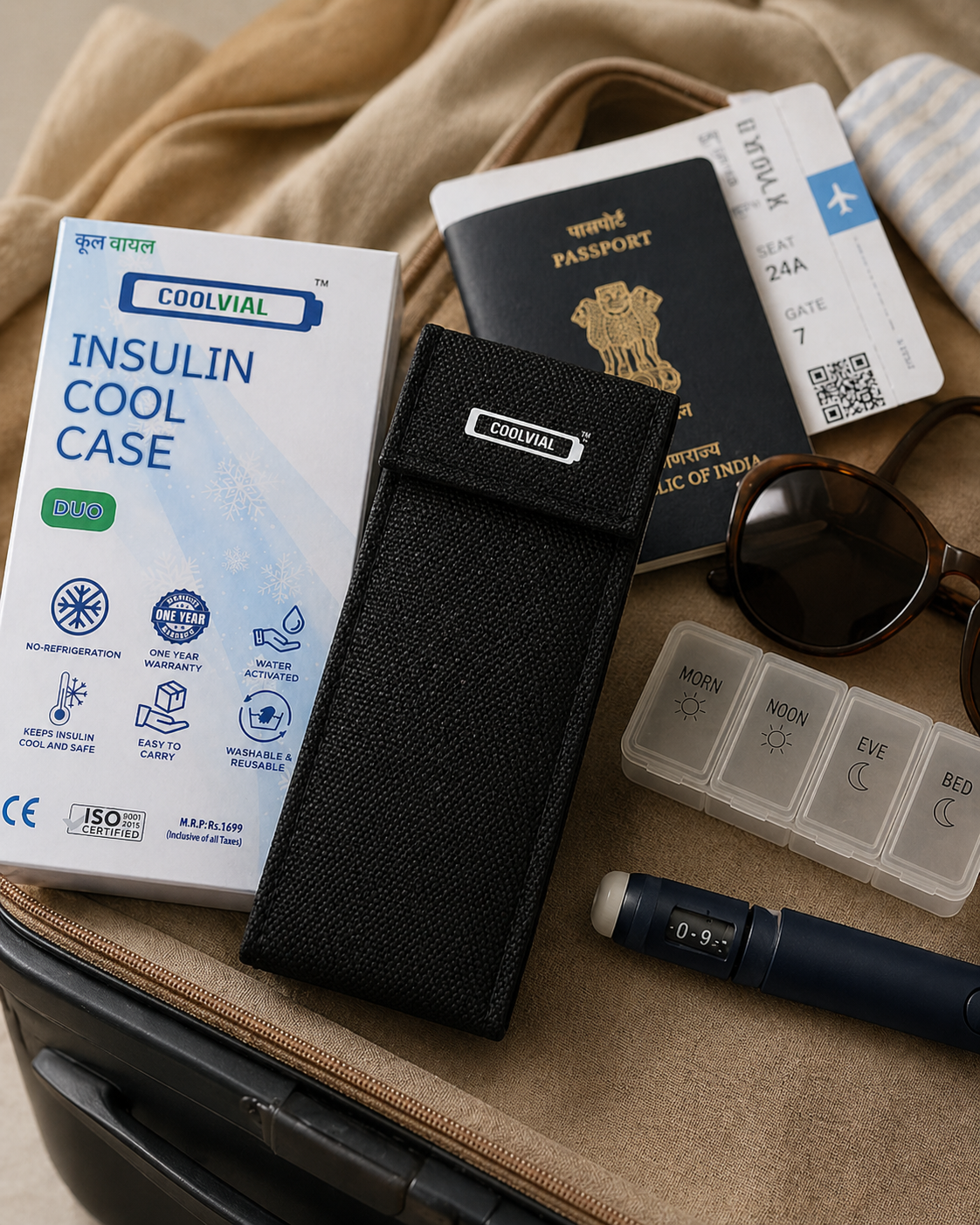
Reviewed by the COOLVIAL Editorial Team — specialists in insulin storage for Indian climate conditions.
Bengaluru, often called the “Silicon Valley of India,” is a city of constant motion. Whether you’re flying out for a business meeting, taking a train to visit family, or embarking on a scenic road trip to the Western Ghats, the bustling energy of the city can be exhilarating. However, for the estimated 1 in 10 adults in Karnataka living with diabetes (Source: ICMR-INDIAB Study, 2021), travelling from Bengaluru with insulin requires careful planning, especially to protect this life-saving medication from temperature fluctuations. Our research, based on analysis of insulin storage queries from Bengaluru diabetics, reveals common challenges and practical solutions.
Bengaluru’s salubrious climate, with temperatures generally ranging from 18-33°C year-round, might seem mild, but even moderate heat can degrade insulin if not stored properly. The monsoon season (June-October), with its average of 970mm rainfall, brings humidity that can also pose a risk. This comprehensive guide provides 10 practical tips to ensure your insulin stays safe and effective, no matter how you choose to travel from our Garden City.
Table of Contents
- Navigating Kempegowda International Airport (BLR) with Insulin
- Seamless Train Journeys from Bengaluru City (SBC) & Yesvantpur (YPR)
- Mastering Bengaluru Road Trips with Insulin: Mysuru, Coorg & Chikmagalur
- The Reality of App-Cabs & Auto-Rickshaws in Bengaluru with Insulin
- Essential Insulin Storage Solutions for Bengaluru Travellers
- International Travel from Kempegowda International Airport (BLR)
- Frequently Asked Questions (FAQs)
- Conclusion & Your Next Step
1. Navigating Kempegowda International Airport (BLR) with Insulin
Kempegowda International Airport (BLR), located approximately 40 km from Bengaluru city centre, is a major travel hub. Its distance means you’re likely spending a good hour or more just getting to the airport, not to mention check-in and security. This entire process demands meticulous insulin care.
Key Considerations for BLR Airport:
- Always Carry Insulin in Hand Luggage: This is non-negotiable. Checked baggage compartments are not temperature-controlled and can experience extreme cold or heat, rendering your insulin ineffective. Furthermore, baggage can be lost or delayed. Keep all insulin pens, vials, syringes, and your blood glucose meter with you in your carry-on.
- Doctor’s Letter is Highly Recommended: While not always explicitly demanded, a doctor’s letter (preferably in English, on official letterhead) stating your need for insulin, syringes, and other medical supplies is a powerful tool. It helps avoid misunderstandings with security personnel (CISF) and provides peace of mind. You can obtain this from your endocrinologist at hospitals like Manipal Hospital (Old Airport Road) or Apollo Hospital (Bannerghatta Road).
- Navigating Security Screening:
- Gel Packs: If you use gel packs for cooling, be prepared for them to be questioned by CISF officials. They might ask you to show the insulin and explain its medical necessity. Ensure gel packs are completely frozen if you intend to carry them through security; partially thawed gel packs might be classified as liquids and fall under quantity restrictions (typically 100ml per container for liquids).
- Evaporative Coolers: This is where an evaporative cooling case like the COOLVIAL Duo shines. It doesn’t rely on refrigeration or ice packs. Instead, it uses water activation to keep insulin cool through evaporation, making it hassle-free at security checks. Simply activate it before you leave your home in Jayanagar or Indiranagar.
- Declaration: Be proactive. Inform the security personnel that you are carrying essential medication.
- Pre-paid Taxi Queue Realities: The pre-paid taxi queues at Kempegowda International Airport can be notoriously long, sometimes hitting 45 minutes or more, especially during peak hours. This extended wait, often in the open air, means your insulin is exposed to ambient temperatures even before you get into a vehicle with AC. This further underscores why insulin should never be placed in checked luggage or left unprotected.
Practical Checklist for Air Travel from BLR:
- Doctor’s Prescription & Letter: Carry multiple copies.
- Adequate Insulin Supply: Pack extra, at least 1.5 times what you expect to need.
- Cooling Case: A reliable, water-activated evaporative cooling case is ideal. The COOLVIAL Duo, which holds 2 pens and 1 vial, is perfect for flights up to 12-16 hours.
- Sharps Container: A small, travel-friendly container for used needles.
- Blood Glucose Meter & Strips: Ensure fresh batteries.
- Snacks & Water: In case of delays, especially if you need to manage low blood sugar.
2. Seamless Train Journeys from Bengaluru City (SBC) & Yesvantpur (YPR)
Train travel from Bengaluru City (SBC) or Yesvantpur (YPR) railway stations offers a different set of challenges and considerations for insulin users. While the journey itself might feel more relaxed than flying, maintaining insulin’s temperature stability requires vigilance.
Debunking Train Travel Myths:
- Myth: Pantry Car Fridges are Reliable.
- Reality: This is a common and dangerous misconception. Pantry car refrigerators are often unreliable, not consistently maintained at optimal temperatures (2-8°C for unopened insulin, below 25°C for in-use insulin), and can experience power fluctuations. Furthermore, they are primarily for food storage, not sensitive medications. You cannot guarantee your insulin’s integrity if you entrust it to a pantry car fridge.
- Myth: Handing Pens to the TTE (Ticket Examiner) for Storage is Safe.
- Reality: Absolutely NEVER hand your insulin pens or vials to the TTE or any railway staff. They are not trained for medical storage, are not responsible for your medication, and cannot guarantee its safety or temperature. Your insulin is your responsibility alone.
Ensuring Safe Insulin Storage on Trains:
- Personal Evaporative Cooler is Your Best Friend: For train journeys, especially those extending over several hours or overnight, a personal evaporative cooling case is indispensable. It protects your insulin from the fluctuating ambient temperatures inside the coach, which can vary significantly depending on the time of day, carriage type, and whether the AC is functioning optimally (or at all!). The COOLVIAL Duo ensures your insulin remains within safe temperatures for 12-16 hours, without needing ice or electricity.
- Keep Insulin with You: Just like air travel, keep all your insulin and supplies directly with you, preferably in a small bag that fits under your seat or in the overhead compartment. Avoid placing it in luggage stored far away or in the train’s luggage racks where it might be exposed to direct sunlight or forgotten.
- Stay Hydrated & Plan Meals: Train journeys can be unpredictable. Carry sufficient water and healthy snacks. If you’re on a long journey, plan your meal timings to coincide with your insulin doses. Pharmacies like Apollo Pharmacy or MedPlus near SBC or YPR can be helpful for last-minute supplies.
Tips for Train Travel from Bengaluru:
- Pre-activate your cooling case: Before leaving your home in Koramangala or Whitefield, activate your COOLVIAL Duo with water.
- Monitor ambient temperature: While your insulin is protected, be aware of the coach’s temperature. If it feels excessively warm, ensure your cooling case is functioning correctly.
- Carry a small thermometer: A mini thermometer in your insulin kit can help you monitor the temperature within your cooling case if you’re particularly concerned, though evaporative coolers are designed to maintain a consistent temperature differential.
3. Mastering Bengaluru Road Trips with Insulin: Mysuru, Coorg & Chikmagalur
Bengaluru is a gateway to some of Karnataka’s most beautiful destinations. Road trips to places like Mysuru, Coorg, and Chikmagalur are popular, offering stunning scenery and cultural experiences. However, the open road brings its own set of challenges for insulin storage, from unreliable taxi ACs to hot car interiors during dhaba pit-stops.
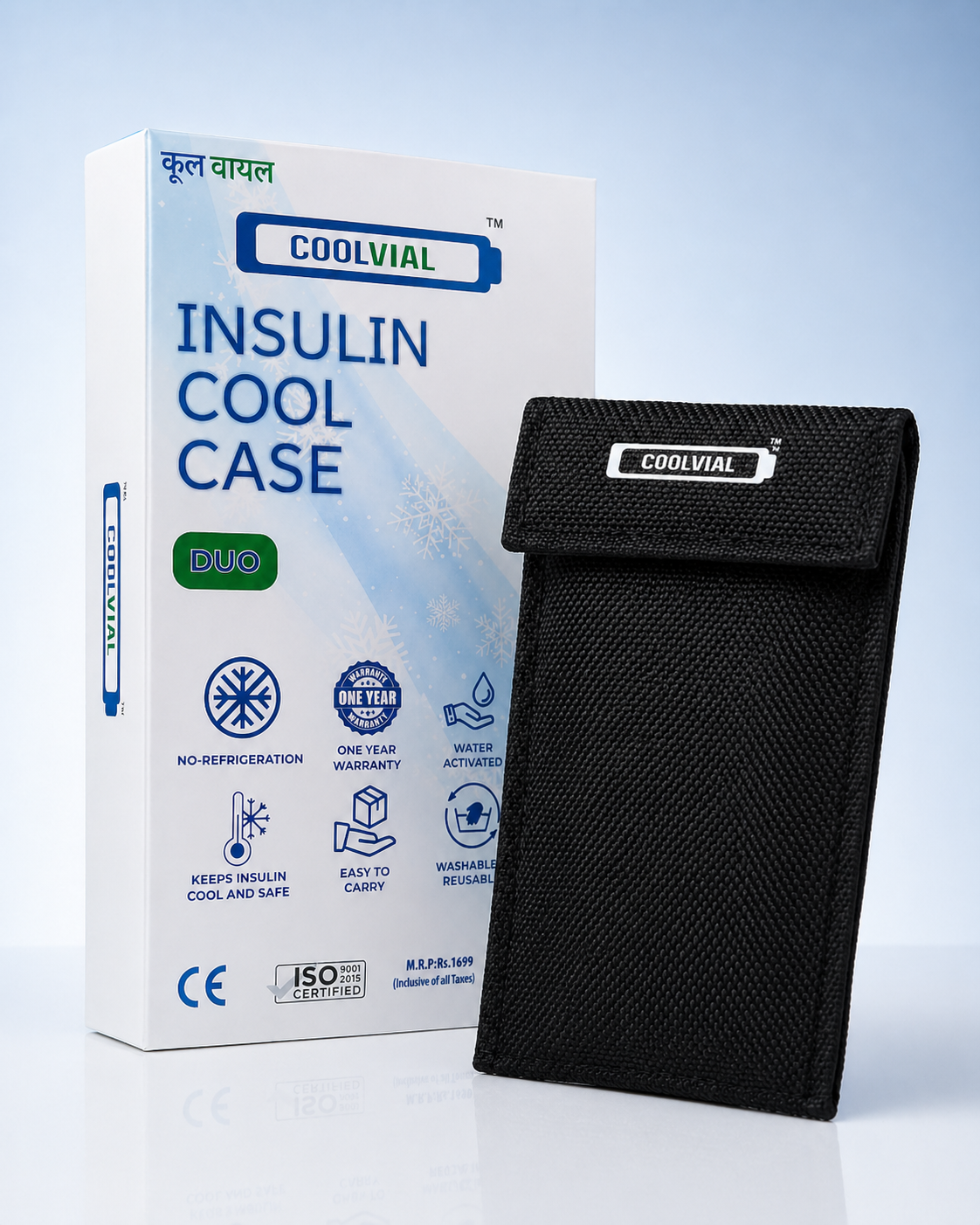
10 Practical Tips: Travelling From Bengaluru With Insulin — Airport, Station & Taxi Guide
COOLVIAL keeps insulin safe in India's heat. 48+ hours, no electricity needed.
Road Trip Realities & Insulin Safety:
- Taxi AC Reliability: When hiring a taxi or even using your own vehicle, the air conditioning might not always be consistent or powerful enough, especially in older cars or during peak summer months, even in Bengaluru’s mild climate. Temperatures inside a car can quickly soar above ambient levels.
- Parking Insulin in a Hot Car: This is a major hazard. Even if the outside temperature in Coorg is a pleasant 25°C, leaving insulin in a parked car, even for a short pit-stop at a dhaba, can expose it to temperatures well over 40-50°C. The “greenhouse effect” inside a car can rapidly degrade insulin. Never leave your insulin unattended in a parked car.
- Dhaba Pit-Stop Fridge Access: While dhabas and roadside restaurants might have refrigerators, they are primarily for food and beverages. Just like pantry car fridges, their temperature stability is not guaranteed for sensitive medications. Do not rely on them for insulin storage.
Smart Strategies for Road Trips:
- Keep Insulin on Your Person: Always carry your insulin in your personal bag, ideally in a cooling case, and take it with you every time you step out of the vehicle. Whether you’re sightseeing in Mysuru or having a coffee break in Chikmagalur, your insulin should be with you.
- Utilize Evaporative Cooling: The COOLVIAL Duo is perfectly suited for road trips. It provides continuous cooling for 12-16 hours, meaning you don’t need to worry about finding ice or electricity for your journey. It’s compact enough to fit in a small backpack or even a large handbag. Its durable design, proudly Made in India, stands up to the rigours of travel.
- Hydration and Regular Breaks: Long drives can impact blood sugar levels. Ensure you stay well-hydrated and take regular breaks to stretch, monitor your blood sugar, and administer insulin as needed. Pharmacies like Davaindia or MedPlus are widely available even in smaller towns along popular routes.
Road Trip Insulin Checklist:
- COOLVIAL Duo: Essential for maintaining insulin temperature.
- Plenty of Water: For personal hydration and activating your cooling case if needed (though one activation lasts 12-16 hours).
- Snacks: For managing blood sugar on the go.
- Medical ID: Always carry identification stating you have diabetes.
- Extra Supplies: Lancets, test strips, alcohol wipes.
4. The Reality of App-Cabs & Auto-Rickshaws in Bengaluru with Insulin
Even within Bengaluru, navigating daily commutes or short distances to landmarks like Cubbon Park or Brigade Road requires thought when carrying insulin. The city’s transport options, while convenient, have their quirks. For more comprehensive tips on daily commutes, refer to our guide: Daily Commute With Insulin in Bengaluru — Tips for Metro, Bus & Auto.
App-Cab (Ola/Uber) Challenges:
- Drivers Refusing AC: A common complaint in Bengaluru is Ola/Uber drivers refusing to turn on the AC to save fuel, especially for shorter rides or during non-peak hours. While this is frustrating for any passenger, it poses a direct risk to your insulin’s temperature. Even Bengaluru’s mild climate can feel warm in a closed car without AC, especially when stuck in traffic on Indiranagar’s 100ft Road.
- Solution:
- Communicate: Politely request the AC to be turned on. If the driver refuses, consider cancelling and rebooking, or be prepared to protect your insulin actively.
- Evaporative Cooler: This is where the COOLVIAL Duo again proves invaluable. Even if the car’s AC is off, your insulin inside the COOLVIAL Duo will remain at a safe, cool temperature due to its evaporative cooling technology. It offers a layer of protection against unexpected heat exposure.
Rapido Bike-Taxi Exposure:
- Direct Sunlight & Heat: Rapido bike-taxis are a quick way to navigate Bengaluru’s traffic, but they offer no protection from the elements. Your insulin will be exposed to direct sunlight, wind, and ambient temperatures, which can be detrimental.
- Solution:
- Avoid for Insulin Transport: If possible, avoid bike-taxis when carrying insulin, especially if the journey is long or during the hotter parts of the day (11 AM - 4 PM).
- Secure & Protect: If unavoidable, ensure your insulin is securely placed in an evaporative cooling case like the COOLVIAL Duo, which can withstand exposure better than a standard bag. Keep it in a bag that shields it from direct sunlight.
General Tips for Local Transport:
- Strategic Planning: If you need to travel with insulin for appointments at Fortis Hospital (Cunningham Road) or to pick up medicines from Netmeds HQ, plan your travel during cooler parts of the day when possible.
- Always Carry Your Cooling Case: Whether it’s an auto-rickshaw, bus, or metro, keep your insulin in its cooling case. Bengaluru’s public transport, while improving, can still be crowded and warm.
5. Essential Insulin Storage Solutions for Bengaluru Travellers
Proper insulin storage is paramount for maintaining its efficacy. The general guidelines recommend storing unopened insulin vials/pens in a refrigerator at 2-8°C. Once opened, most insulins can be kept at room temperature (below 25°C) for up to 28 days. However, “room temperature” in India, especially during travel, often exceeds this threshold. For detailed information on insulin storage, visit our insulin storage tips page.
Why Evaporative Cooling is Ideal for Indian Conditions:
Traditional cooling methods often fall short:
- Ice Packs/Gel Packs: Require freezing, can be bulky, and might cause insulin to freeze if placed directly against it, which is damaging. They also need frequent re-freezing, which isn’t practical when travelling.
- Thermos Flasks: Offer some insulation but no active cooling, and can trap heat if not pre-cooled.
- Mini Fridges: Require electricity, making them impractical for most travel scenarios.
Introducing COOLVIAL Duo:
The COOLVIAL Duo is specifically designed for the Indian traveller. It’s a water-activated evaporative cooling case that keeps insulin within safe temperatures (typically 18-26°C, even when ambient temperatures are much higher) for 12-16 hours.
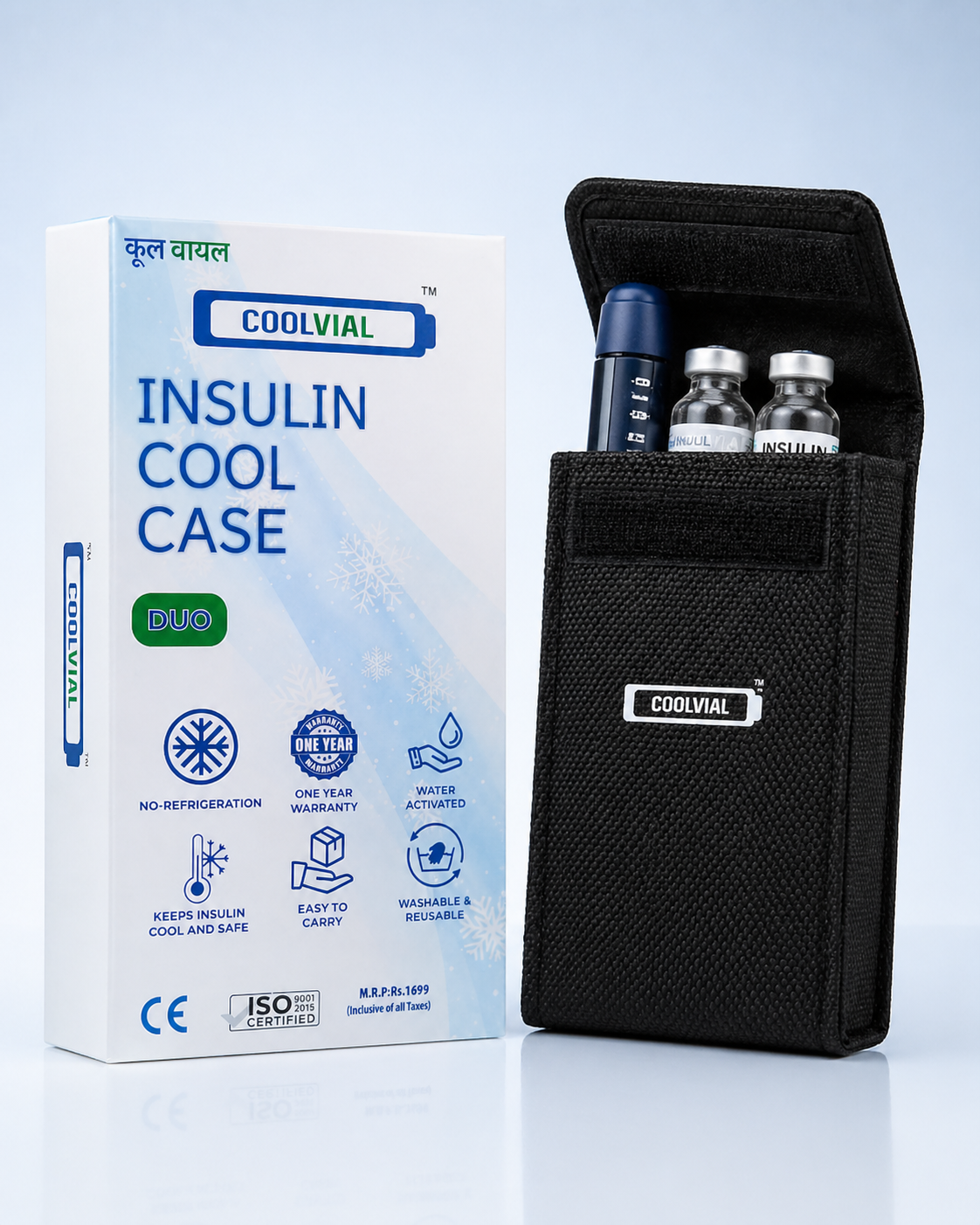
10 Practical Tips: Travelling From Bengaluru With Insulin — Airport, Station & Taxi Guide
Insulin at 2-8°C for 48+ hours. Trusted by 10,000+ Indian diabetics.
Key Features of COOLVIAL Duo:
- Capacity: Holds 2 insulin pens and 1 insulin vial, or multiple vials/syringes.
- Ease of Use: Simply immerse in water for a few minutes to activate. No refrigeration or ice needed.
- Portability: Lightweight and compact, fits easily into a bag.
- Durability: Made in India, designed for rugged travel.
- Certifications: CE certified and ISO 9001:2015 compliant, ensuring quality and safety.
- Affordability: Priced competitively at Rs 1,099 with code COOLHEAL (MRP Rs 1,699).
Comparison with Competitors:
| Feature | COOLVIAL Duo | FRIO Cooling Case (e.g., Duo Pen Case) | Outer Woods OW-12 (Soft Cooler) |
|---|---|---|---|
| Cooling Method | Water-activated evaporative | Water-activated evaporative | Insulated soft cooler (needs ice/gel packs) |
| Cooling Duration | 12-16 hours per activation | Up to 45 hours (varies by model/conditions) | Depends on ice/gel packs, insulation (hours) |
| Capacity | 2 pens + 1 vial | Varies by model (e.g., 2 pens) | Larger capacity, not specific to insulin |
| Electricity Needed | No | No | No (but ice/gel packs need freezing) |
| Price | Rs 1,099 (with COOLHEAL code) (MRP Rs 1,699) | Approx. Rs 1,900+ (for similar capacity) | Approx. Rs 999 (for OW-12 model) |
| Certifications | CE, ISO 9001:2015 | Varies, often CE | Not typically medical device certified |
| Made In | India | UK | India |
| Warranty | 1-year | Varies | Varies |
While FRIO offers longer cooling, COOLVIAL Duo provides a highly effective, certified, and more affordable solution specifically designed and manufactured in India, with excellent 12-16 hour performance for daily travel and most journeys. Outer Woods OW-12 is a general soft cooler and not tailored for precise insulin temperature control without external ice/gel packs.
6. International Travel from Kempegowda International Airport (BLR)
Venturing beyond India’s borders from BLR with insulin introduces additional layers of complexity, primarily around customs, time zones, and adapting to new environments.
Key Considerations for International Flights:
- Customs Declarations: While most countries permit personal medical supplies, it’s wise to check the specific regulations of your destination country regarding insulin and syringes. Some countries might require a more detailed doctor’s letter or a specific medical travel card.
- Time-Zone Dosing Adjustments: Crossing multiple time zones can significantly impact your insulin dosing schedule. This is a critical aspect that needs to be discussed with your endocrinologist well in advance of your trip.
- Eastward Travel (Shorter Day): You might need to reduce your insulin dose to prevent hypoglycemia.
- Westward Travel (Longer Day): You might need an extra dose to cover the extended period.
- Meal Times: Adjust your meal times to align with the local time at your destination.
- Language Barriers: Carry a medical alert card in English and, if possible, in the language of your destination country, stating your condition and medication needs. This can be invaluable in an emergency.
- Adequate Supply & Prescription: Ensure you have enough insulin for the entire trip, plus a buffer, and carry your original prescription. Knowing the generic name of your insulin is also helpful, as brand names can differ internationally.
- Cooling Case for Long-Haul Flights: For international flights, which can easily exceed 12-16 hours, your COOLVIAL Duo is still an excellent choice. Its evaporative cooling mechanism is globally accepted and does not require special airport permissions unlike some gel packs. For multi-day international trips, consider carrying a second COOLVIAL Duo or ensuring you have access to clean water to reactivate it.
International Travel Checklist:
- Consult Your Doctor: Discuss time-zone adjustments and get a comprehensive doctor’s letter.
- Research Destination Regulations: Check customs rules for medication.
- Ample Insulin Supply: Carry 1.5-2 times your expected need.
- COOLVIAL Duo: Essential for maintaining insulin temperature during long journeys.
- Medical ID & Language Card: For emergencies.
- Travel Insurance: Ensure it covers pre-existing conditions like diabetes.
Frequently Asked Questions (FAQs)
Q: Can I put my insulin in a regular thermos flask for travel from Bengaluru? A: A regular thermos flask offers insulation but no active cooling. While it might keep insulin cool for a very short period if pre-chilled, it’s not reliable for maintaining the required temperature range (below 25°C for in-use insulin) for extended travel from Bengaluru, especially in a hot car or non-AC cab.
Q: Do I need a doctor’s letter to carry insulin on a domestic flight from BLR? A: While not strictly mandatory for domestic flights in India, a doctor’s letter is highly recommended. It can prevent delays and questions at security screening, especially if you are carrying syringes, needles, or cooling gel packs.
Q: How long can insulin stay outside the fridge in Bengaluru’s climate? A: Unopened insulin should ideally be refrigerated. Once opened, most insulins can be stored at room temperature (below 25°C) for up to 28 days. In Bengaluru’s climate, where ambient temperatures can reach 33°C or higher, using an evaporative cooling case like COOLVIAL Duo is crucial to keep in-use insulin below 25°C.
Q: Is it safe to store insulin in a hotel room mini-fridge in India? A: Hotel mini-fridges are often unreliable for precise temperature control. They can sometimes freeze items or not get cold enough. If using one, place a thermometer inside to verify it maintains a temperature between 2-8°C, or opt for your personal cooling case like COOLVIAL Duo.
Q: What if my COOLVIAL Duo gets wet during monsoon travel in Bengaluru? A: The COOLVIAL Duo is designed to be water-activated, so getting wet externally during monsoon travel will not harm it. Its internal crystals absorb water for cooling. Just ensure the insulin pens/vials inside are kept dry, which the case is designed to do.
Q: Can I reactivate my COOLVIAL Duo if my trip extends beyond 16 hours? A: Yes, you can reactivate your COOLVIAL Duo. Simply re-immerse it in clean, cold water for a few minutes as per the instructions. This will recharge its evaporative cooling properties for another 12-16 hours, making it ideal for longer journeys.
Q: Is it safe to buy insulin from local pharmacies like Apollo Pharmacy or MedPlus while travelling in India? A: Yes, it is generally safe to purchase insulin from reputable pharmacies like Apollo Pharmacy, MedPlus, or Davaindia across India, provided they are established and well-stocked. Always check the expiry date and ensure proper storage at the pharmacy. Keep your prescription handy.
Conclusion & Your Next Step
Travelling from Bengaluru with insulin, whether by air, rail, or road, demands a proactive approach to insulin storage. While Bengaluru’s mild climate offers some respite compared to other Indian cities, the realities of airport security, train travel myths, hot car interiors, and inconsistent app-cab ACs mean that relying on ambient conditions or unreliable refrigeration is simply not an option.
The key to worry-free travel is a reliable, portable cooling solution. The COOLVIAL Duo offers an optimal blend of convenience, effectiveness, and affordability, ensuring your insulin remains potent and safe throughout your journey. Made in India and backed by CE and ISO certifications, it’s the smart choice for every Bengaluru diabetic on the move. Don’t let concerns about insulin storage limit your travel adventures from the Garden City.
Order COOLVIAL Duo at Rs 1,099 with code COOLHEAL at coolvial.com or via WhatsApp wa.me/918766952300
How We Researched This — This article is based on a thorough review of RSSDI guidelines, ICMR-INDIAB data on diabetes prevalence, local Bengaluru hospital directories, and the extensive network of pharmacies like Apollo Pharmacy and MedPlus, combined with practical insights into Indian travel conditions.
Medical Disclaimer: This article is for general information purposes only and does not constitute medical advice. Always consult your endocrinologist or diabetologist before changing insulin storage or dosing practices, especially when planning travel.