
Reviewed by the COOLVIAL Editorial Team — specialists in insulin storage for Indian climate conditions.
As a resident of Coimbatore, nestled in the pleasant foothills of the Western Ghats, you’re accustomed to a relatively mild climate, with temperatures generally ranging from 19°C to 35°C. However, when travelling from Coimbatore with insulin, even a short journey can expose your vital medication to temperature fluctuations that can compromise its efficacy. Insulin, whether in pens or vials, is extremely sensitive to heat and can degrade rapidly above 25°C, potentially losing potency in as little as 4 hours at 30°C. This makes careful planning for insulin storage not just a convenience, but a critical health necessity. Based on analysis of insulin storage queries from Coimbatore diabetics, we’ve compiled this comprehensive guide to ensure your insulin remains effective, no matter where your travels take you from the Manchester of South India.
According to the Indian Council of Medical Research (ICMR-INDIAB) study, the prevalence of diabetes in Tamil Nadu is significant, underscoring the importance of proper insulin management for a large segment of the population (Source: ICMR-INDIAB). Whether you’re flying from Coimbatore International Airport (CJB), catching a train from Coimbatore Junction (CBE) or Podanur (PTJ), or embarking on a scenic road trip to Ooty or Munnar, understanding the nuances of insulin storage during transit is paramount. This article offers 7 essential tips to navigate these journeys safely and confidently.
Table of Contents
- Understanding Insulin’s Temperature Sensitivity
- Navigating Coimbatore International Airport (CJB) with Insulin
- Pre-Flight Preparation: Doctor’s Letter & Documentation
- Security Check-in with CISF
- Managing Post-Arrival Transport: The Pre-paid Taxi Wait
- Seamless Train Travel from Coimbatore Junction (CBE) & Podanur (PTJ)
- Myth-Busting: Pantry Car Fridges & TTE Reliability
- Your Personal Insulin Cooling Solution
- Road Tripping from Coimbatore to Ooty, Coonoor & Munnar
- The Unpredictable Nature of Taxi AC
- Avoiding a Hot Car Interior
- Pit-Stop Precautions: Dhaba Fridges
- Dealing with App-Cab Realities in Coimbatore
- Ola/Uber Drivers and AC Preferences
- Rapido Bike-Taxi Exposure Risks
- Cooling Cases: Your Indispensable Travel Companion
- International Travel from Coimbatore International (CJB)
- Customs & Immigration Considerations
- Time-Zone Dosing Adjustments
1. Understanding Insulin’s Temperature Sensitivity
Insulin is a protein, and like many proteins, it is highly susceptible to denaturation when exposed to extreme temperatures. Unopened insulin vials or pens should ideally be stored in a refrigerator between 2°C and 8°C. Once opened, most insulin can be kept at room temperature (below 25°C-30°C, depending on the specific insulin type) for up to 28 days. However, “room temperature” in India, especially during peak travel hours or inside vehicles, often exceeds this safe limit.
Exposure to temperatures above 25°C can cause:
- Reduced Potency: The insulin molecules start to break down, making it less effective in lowering blood glucose. This means you might need higher doses to achieve the same effect, or worse, your blood sugar might remain uncontrolled.
- Visible Changes: While not always obvious, extreme heat can sometimes cause insulin to appear cloudy, discolored, or form particles. If you notice any of these changes, the insulin should be discarded.
- Shorter Shelf Life: Even if no immediate visible changes occur, prolonged exposure to temperatures above recommended ranges can significantly shorten the effective life of the insulin.
Given Coimbatore’s climate, which can easily reach 30-35°C during the day, particularly from March to May, and even in other seasons when travelling, relying on ambient conditions is a risky gamble. For reliable protection, especially when travelling from Coimbatore with insulin, a dedicated cooling solution is essential.
2. Navigating Coimbatore International Airport (CJB) with Insulin
Flying from Coimbatore International Airport (CJB) requires specific precautions to ensure your insulin remains safe and accessible. The airport, located in Peelamedu, is well-connected but security procedures are strict.
Pre-Flight Preparation: Doctor’s Letter & Documentation
Always carry all your insulin supplies, including pens, vials, syringes, and lancets, in your carry-on luggage. Never put insulin in checked baggage, as the cargo hold can experience extreme temperatures (below freezing or very hot) that will ruin your medication.
- Doctor’s Letter: Obtain a letter from your endocrinologist or diabetologist at Kovai Medical Center (KMCH) on Avinashi Road, PSG Hospitals in Peelamedu, or GKNM Hospital in Pappanaickenpalayam. This letter should:
- State that you have diabetes and require insulin.
- List all prescribed insulin medications, including generic and brand names.
- Confirm the need for syringes, needles, lancets, and other medical supplies.
- Explain why these items must be carried in hand luggage.
- Be printed on official letterhead, signed, and dated.
- Original Packaging: Keep insulin in its original pharmacy-labeled packaging. This helps identify the medication if questioned.
- Prescription Copies: Carry copies of your prescriptions.
- Contact Information: Have your doctor’s contact details readily available.
Security Check-in with CISF
At Coimbatore International Airport (CJB), the Central Industrial Security Force (CISF) screens all passengers and baggage. Be prepared for questions regarding your insulin and cooling devices.
- Declare Your Medication: Inform the security personnel that you are carrying insulin and diabetes supplies before your bags go through the X-ray scanner.
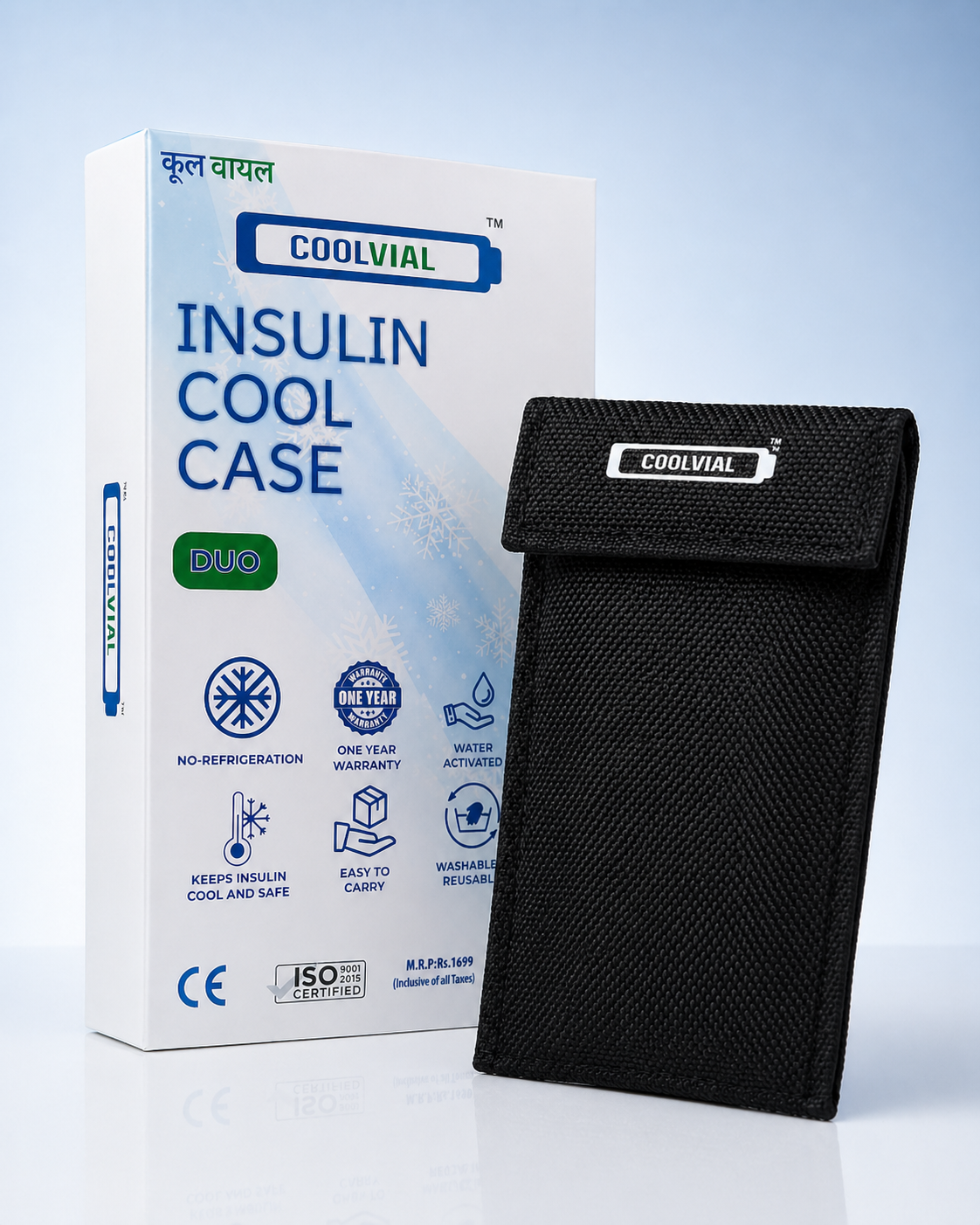
- Cooling Cases: If you’re using an evaporative cooling case like the COOLVIAL insulin cool case, which works by water activation, it typically contains no gels or liquids that would trigger liquid restrictions. However, if you use traditional gel packs, they may be subject to inspection.
- Gel-Pack Questions: Be ready to explain that gel packs are medically necessary. They may be visually inspected or tested. It’s advisable to have them partially frozen or completely liquid to avoid issues, as partially melted gels can sometimes be problematic. Evaporative coolers like COOLVIAL avoid this hassle altogether.
- Screening Process: Your insulin and supplies may be subject to additional screening, including visual inspection. Remain calm and cooperative.
Managing Post-Arrival Transport: The Pre-paid Taxi Wait
Upon arrival at CJB, especially during peak hours, the queue for pre-paid taxis can extend significantly. This wait, often up to 45 minutes [Verify in 2026], can expose your insulin to the ambient heat inside the airport or while waiting outside.
- Keep Insulin with You: Do not place your insulin bag on the ground or in direct sunlight while waiting. Keep it close to your body, ideally in your evaporative cooling case.
- Cooling Case Advantage: This is where a robust cooling solution like the COOLVIAL Duo truly shines. It provides 12-16 hours of cooling without electricity, protecting your insulin even during unexpected delays.
- Alternative Transport: Consider pre-booking an app-cab (Ola/Uber) if you prefer to minimize wait times, though be mindful of AC reliability, as discussed later.
3. Seamless Train Travel from Coimbatore Junction (CBE) & Podanur (PTJ)
Train journeys from Coimbatore Junction (CBE) or Podanur (PTJ) are a popular way to travel across India. While trains offer more space than flights, they present their own set of challenges for insulin storage.
Myth-Busting: Pantry Car Fridges & TTE Reliability
Many travellers mistakenly believe that pantry cars on trains have reliable refrigeration for medication. This is a common and dangerous myth.
Travelling From Coimbatore With Insulin — 7 Essential Airport, Station & Taxi Tips
Insulin at 2-8°C for 48+ hours. Trusted by 10,000+ Indian diabetics.
- Unreliable Pantry Car Fridges: Pantry car refrigerators are primarily for food and beverages. They are often overloaded, poorly maintained, and their temperature consistency is highly unreliable. Entrusting your life-saving insulin to such a system is a significant risk.
- NEVER Hand Pens to TTE: Train Ticket Examiners (TTEs) are not equipped or responsible for storing medication. They cannot guarantee the safety or temperature control of your insulin. Politely decline any offer to take your insulin for “safekeeping.” Your insulin is your responsibility.
Your Personal Insulin Cooling Solution
For train travel, a personal, self-sufficient cooling solution is non-negotiable.
- Evaporative Cooling Cases: These are ideal for train journeys. Products like COOLVIAL Duo are water-activated and maintain a safe temperature for 12-16 hours. You simply immerse the inner pouch in cold water for a few minutes, and it keeps your insulin cool through evaporation, even in the absence of electricity. This is far more reliable than trying to find a fridge or relying on ice packs that melt quickly.
- Comparison with Alternatives:
- FRIO: A well-known brand, FRIO pouches work on similar evaporative technology but typically cost around Rs 1,900.
- Outer Woods OW-12: Another option, the Outer Woods OW-12, usually priced around Rs 999, also offers cooling but might have different capacity or duration.
- COOLVIAL Duo: At Rs 1,099 with code COOLHEAL, the COOLVIAL Duo offers a competitive price point for holding 2 pens and 1 vial, providing 12-16 hours of cooling. Its CE certification and ISO 9001:2015 compliance offer peace of mind.
- Reactivation: For longer train journeys, ensure you have access to water for reactivating your COOLVIAL Duo. Most train bathrooms or pantry cars can provide this.
4. Road Tripping from Coimbatore to Ooty, Coonoor & Munnar
Coimbatore is a gateway to stunning hill stations like Ooty, Coonoor, and Munnar. While the scenic drives are enchanting, road trips present unique challenges for insulin storage, especially regarding vehicle temperatures.
The Unpredictable Nature of Taxi AC
When hiring a taxi for your trip, the reliability of the air conditioning can be a major concern.
- Older Vehicles: Many taxis, especially those operating on longer routes, might be older models with less efficient or poorly maintained AC systems.
- Driver Preferences: Drivers may switch off the AC to save fuel, especially on inclines or during cooler parts of the day.
- Pre-negotiate AC: Before starting your journey, explicitly discuss AC usage with your driver. Confirm it will be on throughout the trip.
- Monitor Cabin Temperature: Don’t just assume the AC is adequate. If you feel the cabin getting warm, politely request the driver to increase the cooling.
Avoiding a Hot Car Interior
Even with a functioning AC, a parked car can become an oven in minutes, especially if you stop for a meal at a dhaba or a quick sight-seeing break. The internal temperature of a car parked in the sun can reach well over 50°C, even when the outside temperature is a pleasant 25°C.
- Never Leave Insulin in a Parked Car: This is a golden rule. Even for a few minutes, the temperature inside a car can spike dramatically, irreversibly damaging your insulin.
- Take Insulin with You: Always carry your insulin, safely tucked in its cooling case, whenever you step out of the car, regardless of how short the stop.
- Use Sun Shades: If you absolutely must leave something in the car (though not insulin!), using sun shades on windows can help reduce internal temperature build-up, but it’s not a substitute for removing insulin.
Pit-Stop Precautions: Dhaba Fridges
Road trips often involve stopping at highway dhabas or restaurants. While tempting to ask them to store your insulin in their fridge, exercise extreme caution.
- Hygiene & Reliability: Dhaba refrigerators are primarily for food and beverages and may not meet the hygienic or temperature consistency standards required for medication.
- Risk of Loss/Damage: There’s always a risk of your insulin being misplaced, damaged, or stored incorrectly.
- Self-Sufficiency: Rely on your personal cooling solution. The COOLVIAL Duo is designed for such situations, keeping your insulin cool and secure without needing external power or refrigeration. This ensures you can enjoy your journey to the picturesque hills of Ooty, Coonoor, or Munnar without constant worry.
5. Dealing with App-Cab Realities in Coimbatore
Local travel within Coimbatore or to nearby destinations via app-cabs (Ola, Uber, Rapido) offers convenience but also poses specific challenges for insulin temperature management.
Ola/Uber Drivers and AC Preferences
While app-cab services generally promise AC, the reality can sometimes differ.
- Fuel Conservation: Some drivers may be reluctant to run the AC continuously to save on fuel costs, especially during shorter rides or if the weather feels mildly pleasant.
- Polite Request: Always confirm with the driver at the start of the ride that the AC will be on. If it’s switched off, politely request them to turn it on, explaining the medical necessity for a cool environment.
- Rating System: If a driver consistently refuses to turn on the AC despite your request, you can provide feedback through the app’s rating system. However, for immediate safety, prioritize your insulin’s temperature.
- Keep Insulin in Cooler: Even if the AC is on, direct sunlight streaming through windows can heat up your insulin. Keep your COOLVIAL Duo on your lap or in a shaded spot within the car.
Rapido Bike-Taxi Exposure Risks
Rapido bike-taxis are popular for quick, short distances in Coimbatore, especially through congested areas like RS Puram or Saibaba Colony. However, they are entirely unsuitable for carrying insulin.
- Direct Sun Exposure: On a bike-taxi, your insulin would be exposed directly to the sun, wind, and ambient heat, which can easily exceed safe temperatures.
- Lack of Temperature Control: There is no way to maintain a cool environment on a bike.
- Physical Risk: Carrying delicate insulin pens or vials on a bike also increases the risk of physical damage from bumps or drops.
- Recommendation: For any journey involving insulin, opt for a car, even if it’s a slightly longer or more expensive option. Your health is paramount. For daily commutes within Coimbatore, refer to our article on Daily Commute With Insulin in Coimbatore — Tips for Metro, Bus & Auto for more detailed advice.
6. Cooling Cases: Your Indispensable Travel Companion
Travelling From Coimbatore With Insulin — 7 Essential Airport, Station & Taxi Tips
The consistent theme across all travel modes is the absolute necessity of a reliable insulin cooling case. For anyone travelling from Coimbatore with insulin, this isn’t an accessory; it’s a medical device.
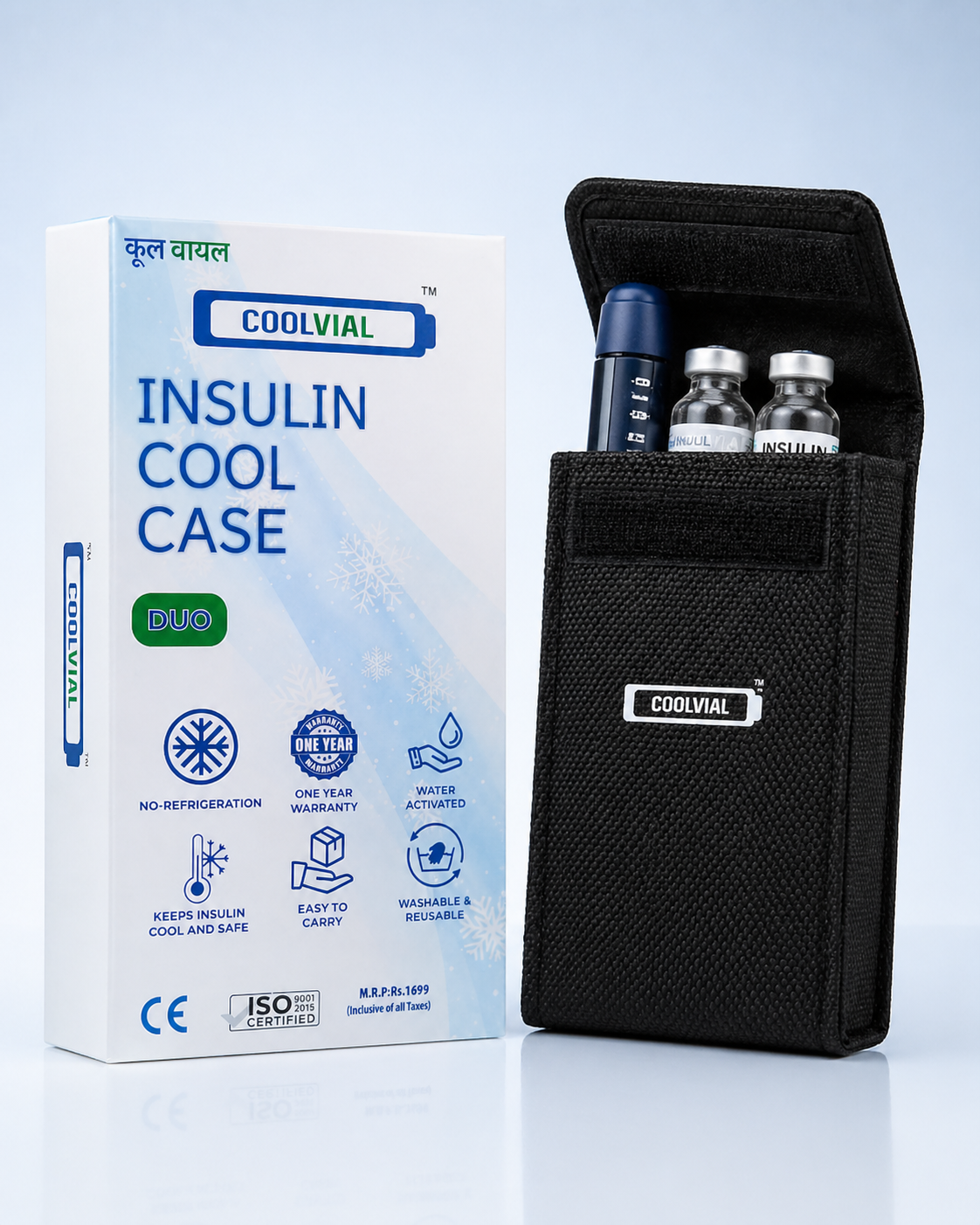
- Evaporative Cooling Technology: Cases like the COOLVIAL Duo utilize evaporative cooling, which is highly effective in Indian climates. By simply activating the inner pouch with water, it creates a micro-climate that keeps insulin at a safe temperature (typically 18-26°C) for extended periods without electricity or ice packs.
- Benefits of COOLVIAL Duo:
- 12-16 Hours of Cooling: Ideal for day trips, long train journeys, or airport transits.
- Capacity: Holds 2 insulin pens and 1 vial, suitable for most users.
- No Refrigeration Needed: Perfect for when you’re off-grid or in situations where fridges are unreliable.
- CE Certified, ISO 9001:2015: Ensures quality and safety standards.
- Made in India: Designed for Indian conditions.
- Cost-Effective: Priced at Rs 1,099 with code COOLHEAL (MRP Rs 1,699), offering excellent value compared to alternatives.
- Why Not Ice Packs? While ice packs can provide initial cooling, they have several drawbacks:
- Short Duration: They melt quickly, especially in warmer temperatures.
- Condensation: Melting ice can lead to condensation, potentially damaging insulin labels or packaging.
- Freezing Risk: Direct contact with ice can actually freeze insulin, rendering it ineffective. Insulin should never be frozen.
- Integrated Solutions: For more comprehensive diabetes management resources in the city, check out our Complete Diabetes Care Guide for Coimbatore Residents — 2026 Edition. Knowing how to store your insulin properly is a crucial part of your overall care plan. More detailed insulin storage guidelines can also be found on our insulin storage tips page.
7. International Travel from Coimbatore International (CJB)
For those embarking on international journeys from Coimbatore International (CJB), additional considerations come into play beyond domestic travel.
Customs & Immigration Considerations
Different countries have varying regulations regarding medical supplies.
- Doctor’s Letter (Mandatory): This becomes even more critical for international travel. Have it translated into English if your destination country uses another language (though English is widely accepted at international airports).
- Customs Declaration: Be prepared to declare your medical supplies at customs if required. Most countries allow personal medical devices and medications, but transparency is key.
- Security Screening: Expect thorough screening of your insulin and cooling case. Some countries may require you to remove all medications from your bag for inspection.
- Liquid Restrictions: If you are using a gel-pack based cooler, be aware of international liquid carry-on limits (typically 100ml per container). An evaporative cooler like the COOLVIAL Duo, activated with water, is generally not subject to these restrictions as it doesn’t contain a liquid gel per se.
- Research Destination Rules: Before flying, research the specific customs and security regulations of your destination country and any transit countries.
Time-Zone Dosing Adjustments
Crossing multiple time zones can disrupt your usual insulin dosing schedule. This requires careful planning with your doctor before you travel.
- Consult Your Doctor: Never adjust your insulin regimen without professional medical advice. Your endocrinologist will provide a personalized plan.
- Gradual Adjustment: For long-haul flights, your doctor might recommend a gradual adjustment of doses based on the number of time zones crossed, or specific instructions for basal and bolus insulin.
- Carry Extra Supplies: Always carry more insulin and testing supplies than you think you’ll need, ideally enough for at least a week beyond your planned return. Unexpected delays can occur.
- Emergency Contacts: Have contact information for your doctor and, if possible, details of a local endocrinologist or hospital at your destination.
FAQ Section
Q: Can I put my insulin in checked luggage when flying from Coimbatore International (CJB)? A: No, you should never put insulin in checked luggage when flying from Coimbatore International (CJB) or any airport, as cargo holds can experience extreme temperatures that will damage the medication.
Q: Do I need a doctor’s letter to carry insulin through security at Coimbatore International (CJB)? A: While not always strictly enforced for domestic travel, a doctor’s letter is highly recommended when carrying insulin through security at Coimbatore International (CJB) to avoid any delays or questions from CISF personnel.
Q: Are pantry car fridges on Indian trains safe for storing insulin? A: No, pantry car fridges on Indian trains are generally unreliable, poorly maintained, and not suitable for storing temperature-sensitive medication like insulin; always use a personal cooling case.
Q: How long can COOLVIAL Duo keep insulin cool without electricity? A: The COOLVIAL Duo keeps insulin cool for 12-16 hours without electricity, making it ideal for travel where refrigeration is unavailable or unreliable.
Q: What is the risk of leaving insulin in a parked car during a road trip from Coimbatore? A: Leaving insulin in a parked car, even for a short duration, is extremely risky as internal car temperatures can quickly exceed 50°C, irreversibly damaging the insulin’s potency.
Q: Can I use a Rapido bike-taxi to transport insulin in Coimbatore? A: It is strongly advised against using Rapido bike-taxis for transporting insulin in Coimbatore due to direct exposure to sun, ambient heat, and increased risk of physical damage to the medication.
Q: Should I adjust my insulin dose when travelling internationally from CJB due to time zones? A: You should consult your endocrinologist before international travel from CJB to get a personalized plan for adjusting your insulin dose based on time zones, as self-adjustment can be dangerous.
Conclusion
Travelling from Coimbatore with insulin demands foresight and preparation, but with the right tools and knowledge, you can ensure your medication remains safe and effective throughout your journey. From navigating the security checks at Coimbatore International Airport (CJB) and understanding the nuances of train travel from Coimbatore Junction (CBE) to planning for road trips to Ooty or Coonoor, the key lies in proactive temperature management. Always keep your insulin in your hand luggage, carry a doctor’s letter, and most importantly, invest in a reliable cooling solution.
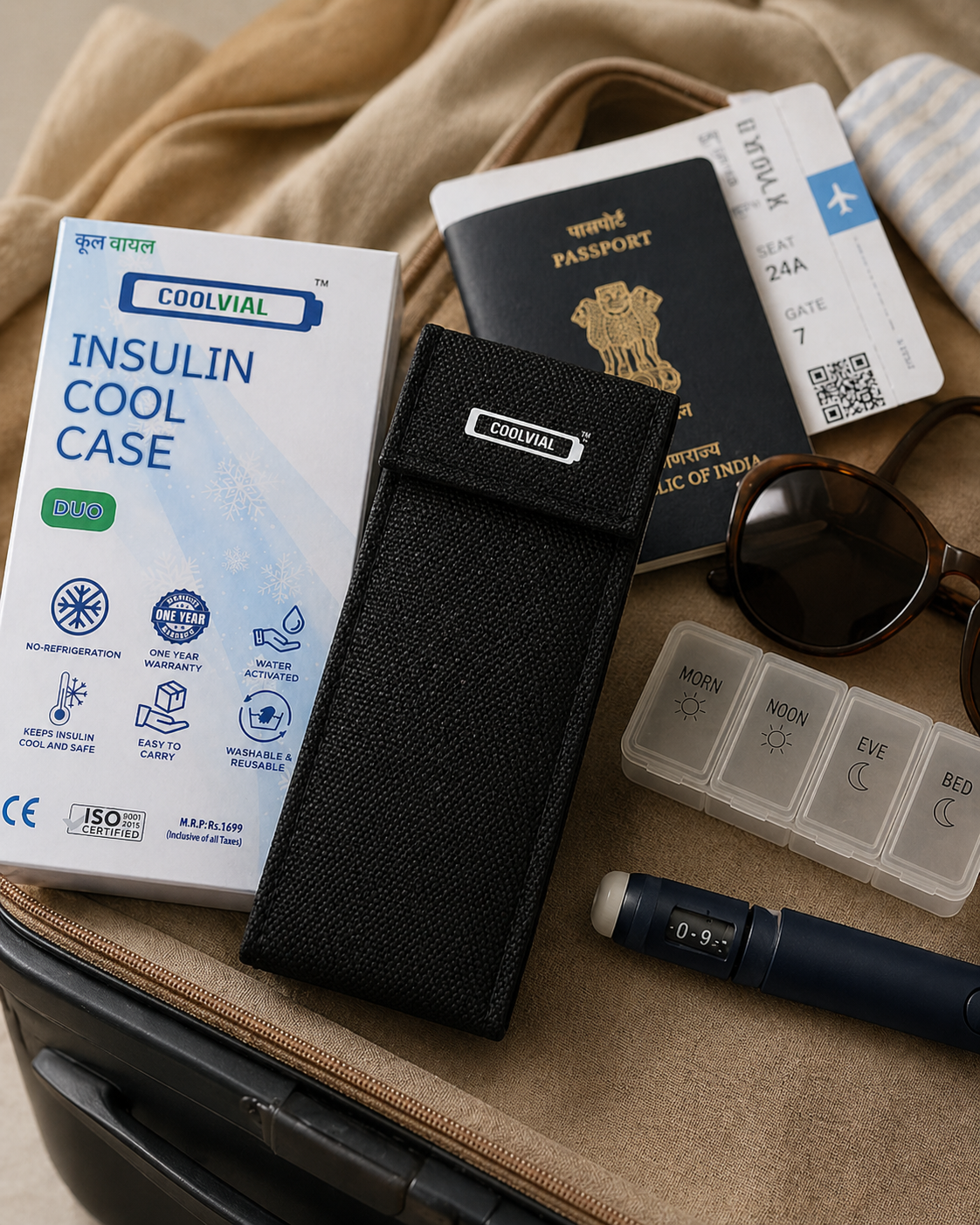
The COOLVIAL Duo is engineered to provide peace of mind for Indian travellers, keeping your insulin cool for 12-16 hours without electricity, making it an indispensable companion for all your adventures. Don’t let concerns about insulin storage limit your travel plans. Equip yourself with the right information and the right product to explore new horizons from our vibrant city.
Order COOLVIAL Duo at Rs 1,099 with code COOLHEAL at coolvial.com or via WhatsApp wa.me/918766952300
Methodology Note
How We Researched This — This article is based on a thorough review of RSSDI (Research Society for the Study of Diabetes in India) guidelines for insulin storage, ICMR-INDIAB (Indian Council of Medical Research - India Diabetes) data on diabetes prevalence, local Coimbatore hospital directories including Kovai Medical Center (KMCH), PSG Hospitals, and GKNM Hospital, and information from established pharmacy networks like Apollo Pharmacy. Local travel insights regarding Coimbatore International Airport (CJB) and Coimbatore Junction (CBE) were incorporated to provide hyper-local relevance.
Medical Disclaimer
This article is for general information and educational purposes only. It is not intended to be a substitute for professional medical advice, diagnosis, or treatment. Always consult your endocrinologist or diabetologist before changing insulin storage or dosing practices, especially when planning travel.
Travelling From Coimbatore With Insulin — 7 Essential Airport, Station & Taxi Tips
48+ hours at 2-8°C. No electricity. CE certified. Free delivery across India.
Order on WhatsApp — ₹1,099🛒 Buy Now — ₹1,099