Reviewed by the COOLVIAL Editorial Team — specialists in insulin storage for Indian climate conditions.
Faridabad, with its bustling sectors from NIT to Neharpar and its proximity to the capital, is a hub of activity. For residents managing diabetes, the thought of travelling from Faridabad with insulin can often bring a unique set of challenges, especially given the NCR’s extreme climate – summers regularly hit 40-46°C. Whether you’re flying out of IGI Delhi, taking a train from Faridabad Railway, or embarking on a road trip to Gurugram or Surajkund, maintaining insulin’s efficacy requires careful planning to prevent spoilage. This guide provides 5 essential, practical tips to ensure your insulin stays safe and potent throughout your journey. Based on analysis of insulin storage queries from Faridabad diabetics, we understand the local nuances that can impact your travel plans, from long queues at Delhi Airport to the reliability of AC in local taxis.
Table of Contents
- Mastering Air Travel from IGI Delhi (DEL) with Insulin
- Navigating Security Checks at IGI Delhi
- The Importance of a Doctor’s Letter
- Pre-Paid Taxi Queues and Insulin Safety
- Smart Train Journeys from Faridabad Railway (FDB) & Faridabad New Town (FDN)
- Busting the Pantry Car Fridge Myth
- Never Hand Insulin to a TTE
- Choosing Your Cooling Solution for Train Travel
- Conquering Road Trips from Faridabad: Delhi, Gurugram & Surajkund
- App-Cab Realities: Ola/Uber AC & Rapido Exposure
- Parking Insulin in a Hot Car: A Strict No-Go
- Dhaka Pit-Stops and Fridge Access
- Why COOLVIAL Duo is Your Ideal Travel Companion
- International Travel from IGI Delhi (DEL) with Insulin
- Customs and Declaration Requirements
- Time-Zone Dosing Adjustments
- Frequently Asked Questions (FAQ)
- Conclusion: Travel Smart, Live Well
- Medical Disclaimer
- How We Researched This
Mastering Air Travel from IGI Delhi (DEL) with Insulin
Flying from Indira Gandhi International Airport (IGI Delhi), a major gateway for Faridabad residents, requires specific attention to insulin storage. The journey from your home in Sector 14 or Old Faridabad to the airport itself can expose insulin to fluctuating temperatures, making the right preparation crucial even before you reach the check-in counter. Remember, insulin must always be carried in your hand luggage, never in checked baggage, where extreme temperatures can destroy its efficacy.
Navigating Security Checks at IGI Delhi
The Bureau of Civil Aviation Security (BCAS) and CISF personnel at IGI Delhi are well-versed with medical necessities, but being prepared can significantly smooth your screening process. The primary concern during security is often related to liquids and gel packs.
- Insulin Pens/Vials: Always keep your insulin pens or vials in a transparent, re-sealable plastic bag, separate from other liquids. This makes it easy for security personnel to inspect. You are permitted to carry more than 100ml of essential medicines, including insulin, in your hand luggage.
- Cooling Gel Packs: If you’re using conventional gel packs to keep your insulin cool, be prepared for them to be visually inspected and potentially subjected to additional screening for traces of explosives. The CISF may ask you to open the bag containing them. While this is standard procedure, it can add a few minutes to your security check. For a smoother experience, consider water-activated evaporative cooling cases like the COOLVIAL insulin cool case, which do not contain gels and are typically less scrutinized.
- Medical Devices: Insulin pumps and continuous glucose monitors (CGMs) are generally allowed through security screening. Inform the security personnel if you are wearing an insulin pump before going through the metal detector or body scanner.
For detailed guidelines on carrying medical items, you can refer to the official Directorate General of Civil Aviation (DGCA) website (Source: https://dgca.gov.in/pages/medical-requirements.html).
The Importance of a Doctor’s Letter
While not always explicitly requested, a doctor’s letter is a powerful document to carry when travelling with insulin, especially for air travel. This letter, ideally on your doctor’s letterhead (e.g., from Asian Hospital (QRG Health City) or Sarvodaya Hospital), should state:
- That you have diabetes.
- That you require insulin injections.
- The type of insulin you use (e.g., Novorapid, Lantus).
- The necessity of carrying syringes, pens, needles, and other related supplies (e.g., lancets, blood glucose meter).
- Confirmation that these are for personal medical use.
This letter can be invaluable during security checks at IGI Delhi, particularly if you encounter an unfamiliar or new security officer, or when travelling internationally. It provides official validation of your medical supplies.
Pre-Paid Taxi Queues and Insulin Safety
After a flight, the last thing you want is to worry about your insulin degrading while you wait. Faridabad residents often face this when arriving back at IGI Delhi. The pre-paid taxi queues at IGI Delhi can be notoriously long, sometimes hitting 45 minutes or more, especially during peak hours. If you’ve just retrieved your insulin from your hand luggage, it’s crucial to minimize its exposure to ambient temperatures.
- Avoid Checked Luggage: This cannot be stressed enough. Never put insulin in checked luggage. The cargo hold can experience extreme temperatures that will quickly render your insulin useless.
- Keep it Cool During Waits: If you’re using a cooling case, ensure it’s properly activated and can sustain its cooling effect for extended periods. A reliable evaporative cooler like the COOLVIAL Duo, designed to keep insulin cool for 12-16 hours in ambient temperatures up to 46°C, is ideal for handling such delays without stress. It provides consistent cooling, unlike ice packs that melt.
Smart Train Journeys from Faridabad Railway (FDB) & Faridabad New Town (FDN)
Train travel is a lifeline for many Faridabad residents, connecting them to various parts of India. Whether you’re departing from Faridabad Railway (FDB) or Faridabad New Town (FDN), managing insulin storage on trains presents its own set of considerations. The ambient temperatures inside train compartments, especially non-AC coaches, can soar, posing a significant risk to insulin.
Busting the Pantry Car Fridge Myth
Many travellers believe that pantry cars on Indian Railways have reliable refrigeration facilities where they can store their insulin. This is a dangerous myth that can lead to insulin spoilage.
- Unreliable Temperatures: Pantry car refrigerators are often not designed for precise medical storage. Their temperatures can fluctuate widely, sometimes not reaching the optimal 2-8°C required for insulin, or even freezing it, which is equally damaging.
- Hygiene Concerns: These fridges are primarily for food and beverages, not sterile medical supplies. Cross-contamination risks are high.
- Access Issues: You might not have consistent access to the pantry car, especially during odd hours or when the train is crowded.
5 Essential Tips for Travelling From Faridabad With Insulin: Airport, Station & Taxi Guide
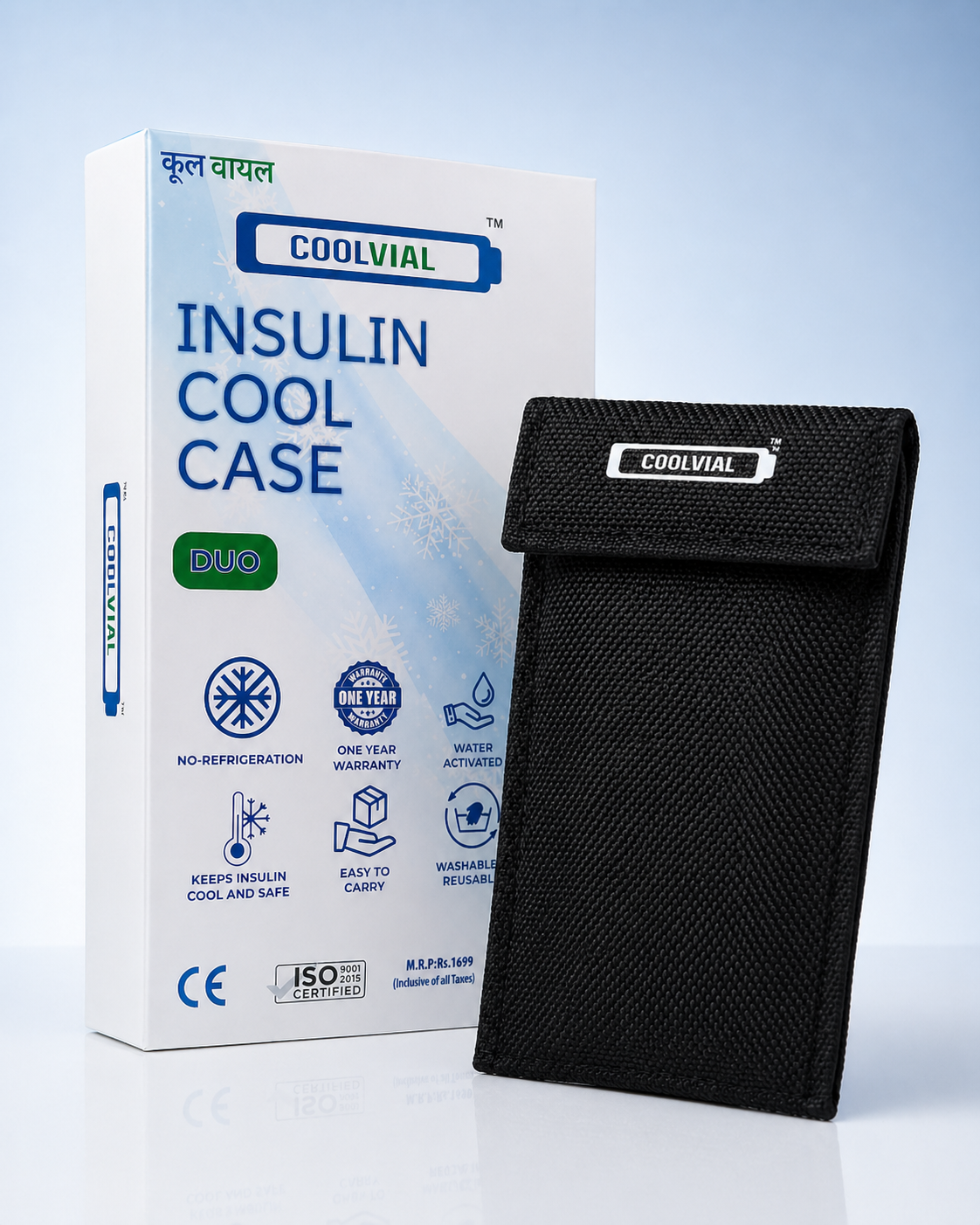
COOLVIAL keeps insulin safe in India's heat. 48+ hours, no electricity needed.
Relying on a pantry car fridge for your insulin is a gamble that could compromise your health.
Never Hand Insulin to a TTE
A common, well-intentioned but misguided practice observed on trains is handing over insulin to the Train Ticket Examiner (TTE) or other railway staff, hoping they will store it safely.
- No Official Protocol: There is no official railway protocol or training for TTEs or other staff regarding the storage of passengers’ medical supplies like insulin. They are not equipped to handle such sensitive items.
- Loss or Damage Risk: Your insulin could easily be misplaced, damaged, or stored incorrectly if it leaves your direct supervision. It’s an irreplaceable medication, and you should maintain control over it at all times.
Your insulin is your responsibility. Always keep it with you and in a safe, temperature-controlled environment.
Choosing Your Cooling Solution for Train Travel
Given the limitations of train facilities, a personal, reliable cooling solution is paramount for train journeys.
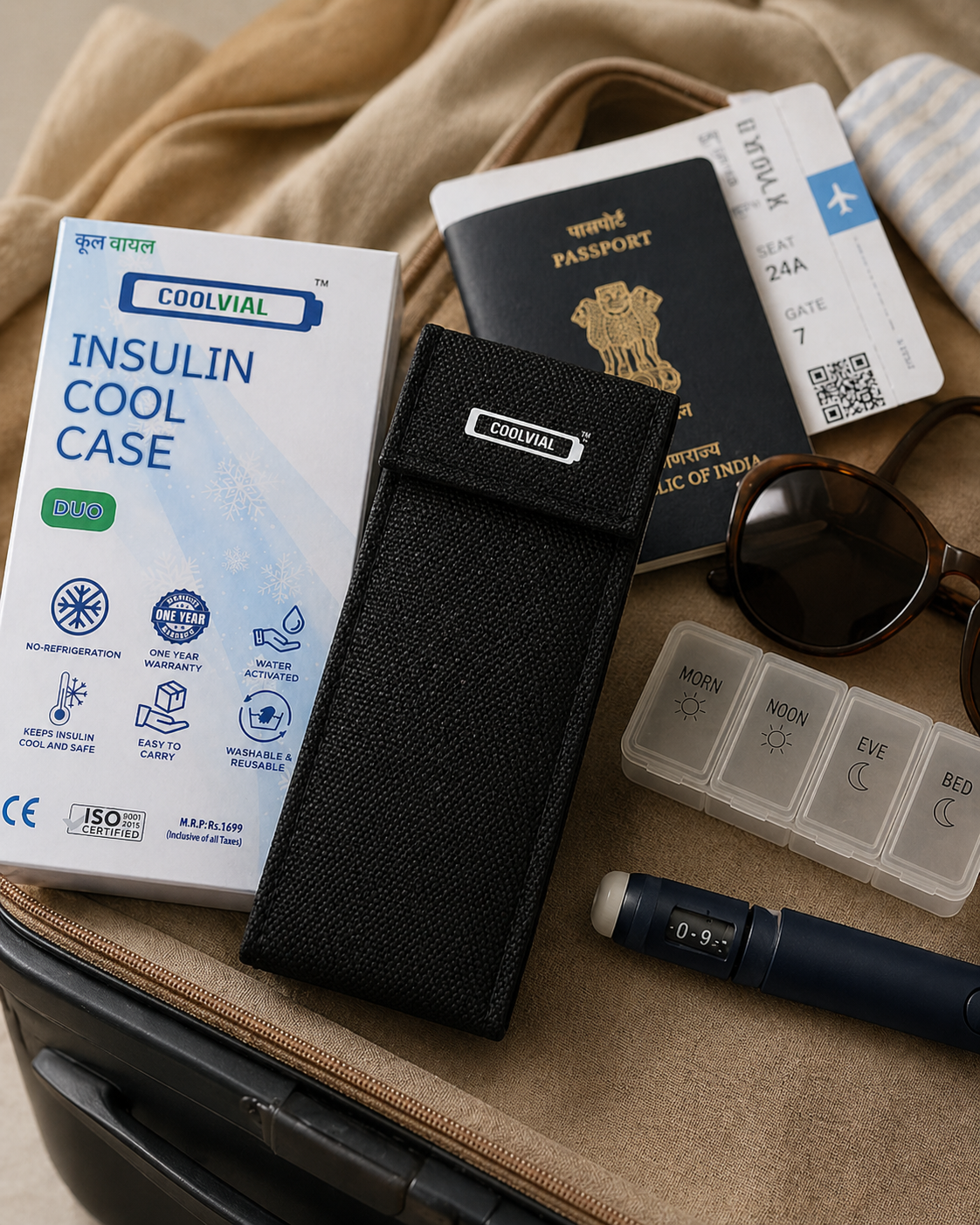
- Evaporative Cooling Cases: For multi-hour train journeys, especially across different climatic zones within India, water-activated evaporative cooling cases are highly effective. The COOLVIAL Duo, for instance, requires only a brief soak in water to activate its cooling properties, keeping your insulin safe for up to 16 hours. It’s lightweight, compact (holds 2 pens + 1 vial), and doesn’t require electricity or refrigeration, making it perfect for long train rides from Faridabad to distant cities.
- Insulated Pouches with Gel Packs (with caution): While these can provide temporary cooling, they have limitations. Gel packs will eventually warm up and lose their effectiveness, especially in hot ambient train conditions. They also add bulk and require re-freezing, which is not feasible on a train. For short trips (1-2 hours) from Faridabad to Delhi or Palwal, they might suffice, but for longer durations, an evaporative cooler is superior.
- Monitoring: Regardless of your chosen method, periodically check the temperature of your insulin if possible, or at least ensure your cooling case is functioning as expected.
For daily commutes within Faridabad using local transport, similar principles apply. You can find more targeted tips in our guide: Daily Commute With Insulin in Faridabad — Tips for Metro, Bus & Auto.
Conquering Road Trips from Faridabad: Delhi, Gurugram & Surajkund
Road trips from Faridabad, whether a quick drive to Delhi for work, a leisurely weekend in Gurugram, or a visit to the scenic Surajkund Lake, are common. However, the intense NCR heat, especially during summer months (April to July, with temperatures often exceeding 40°C), poses a significant threat to insulin’s integrity.
App-Cab Realities: Ola/Uber AC & Rapido Exposure
Relying on app-based taxis (Ola, Uber) or bike taxis (Rapido) within and out of Faridabad can be convenient, but they come with their own set of challenges for insulin storage.
- Ola/Uber AC Reliability: While you book an AC cab, drivers in Faridabad and across NCR are known to sometimes refuse to turn on the AC to save fuel, especially for shorter distances or if stuck in traffic. This can quickly turn the cab interior into a hotbox, reaching temperatures well above 30°C within minutes. Always confirm AC functionality at the start of your ride. If the driver refuses, politely insist or cancel the ride if possible.
- Rapido Bike-Taxi Exposure: Bike taxis, popular for quick commutes in Faridabad, offer no temperature control whatsoever. Your insulin, even if in a small bag, will be directly exposed to the sun and ambient heat, which can be devastating. For any journey involving insulin, a bike taxi is generally not recommended.
Tips for App-Cab Travel with Insulin:
- Always Use a Cooling Case: Even for short distances, keep your insulin in a reliable cooling case like the COOLVIAL Duo.
- Verify AC: Before starting an Ola/Uber ride, confirm the AC is on and functioning.
- Position Carefully: If the AC is weak, keep your cooling case away from direct sunlight through the window.
- Avoid Bike Taxis: For insulin safety, choose a car.
Parking Insulin in a Hot Car: A Strict No-Go
It’s a common mistake: leaving insulin in the glove compartment or on the seat of a parked car while you run an errand or visit a landmark like Crown Plaza Mall or Sector 12 Market.
- Rapid Temperature Rise: On a sunny day in Faridabad, the interior of a parked car can reach scorching temperatures of 50-60°C within minutes, far exceeding insulin’s safe storage range (2-8°C for unopened, up to 25-30°C for opened vials/pens).
- Irreversible Damage: Such extreme heat will rapidly degrade insulin, making it ineffective and potentially dangerous to use.
Rule of Thumb: Never leave your insulin unattended in a parked car, even for a few minutes. Always take your cooling case with you.
Dhaba Pit-Stops and Fridge Access
Road trips often involve pit-stops at dhabas on the Delhi-Agra National Highway or towards Surajkund. While the food is delicious, don’t rely on their refrigerators for insulin.
- Similar to Train Pantry Cars: Dhaba fridges are meant for food and beverages, not medical storage. Temperature control is often inconsistent, and hygiene standards may not be suitable for insulin.
- Personal Responsibility: Your evaporative cooling case is your best friend here. It provides self-sufficient cooling without needing external refrigeration, allowing you to enjoy your dhaba meal without worry.
5 Essential Tips for Travelling From Faridabad With Insulin: Airport, Station & Taxi Guide
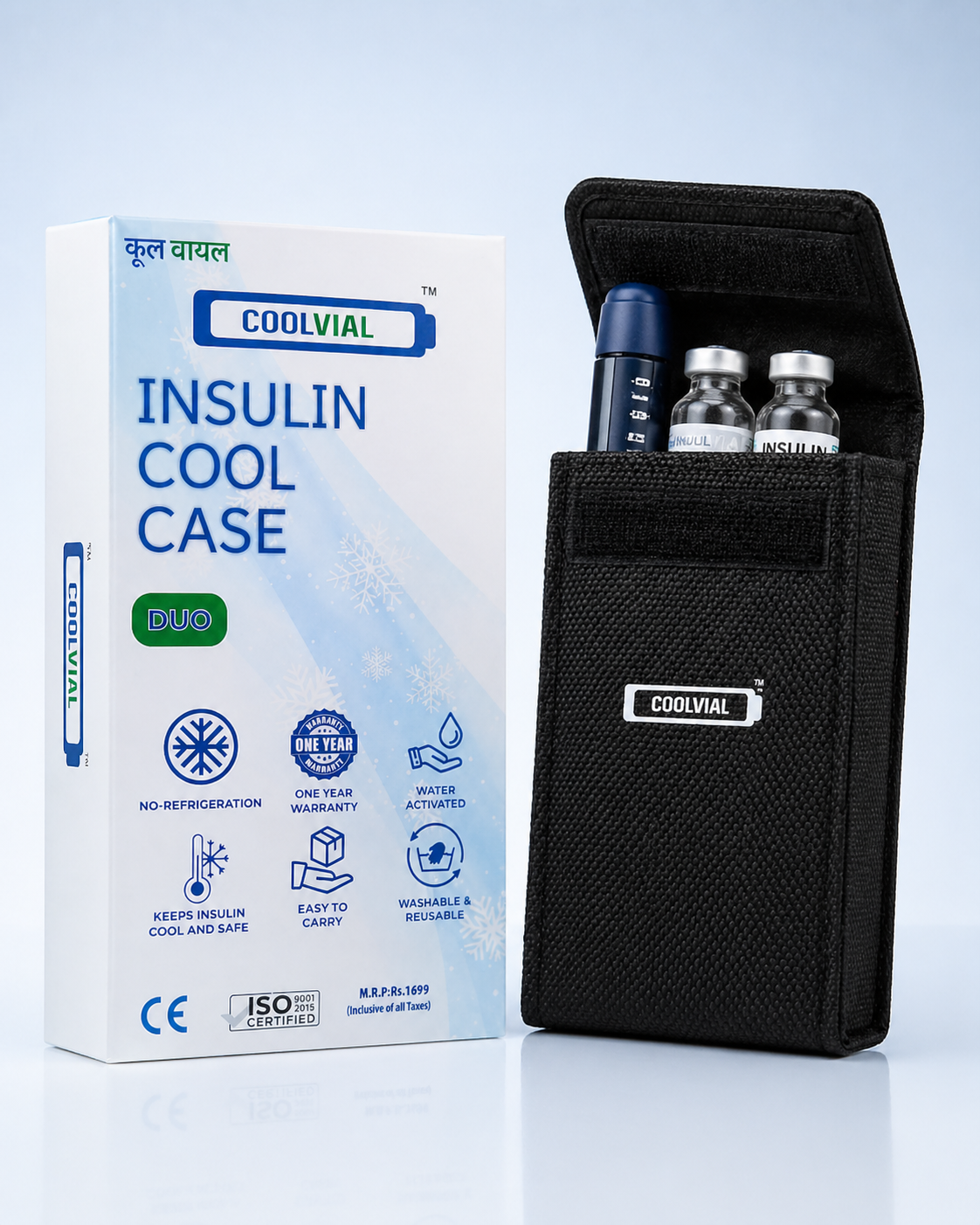
Insulin at 2-8°C for 48+ hours. Trusted by 10,000+ Indian diabetics.
For a comprehensive guide on managing your diabetes in your home city, explore our Complete Diabetes Care Guide for Faridabad Residents — 2026 Edition.
Why COOLVIAL Duo is Your Ideal Travel Companion
When travelling from Faridabad with insulin, especially across the varied and often challenging Indian climate, a reliable cooling solution isn’t just a convenience – it’s a necessity. The COOLVIAL Duo is specifically designed to meet these demands, offering peace of mind to diabetics on the go.
The COOLVIAL Duo is a water-activated evaporative cooling case that stands out for several reasons:
- Sustained Cooling: It keeps your insulin cool at a safe temperature (between 18-26°C, even in ambient temperatures up to 46°C) for 12-16 hours. This is crucial for long travel days, unexpected delays, or when AC is unreliable.
- Capacity: Designed to hold 2 insulin pens and 1 vial, it provides ample space for your daily and backup insulin needs.
- Ease of Use: Simply activate it by soaking in water for a few minutes. No electricity, refrigeration, or ice packs required. This makes it incredibly convenient whether you’re at a remote dhaba or stuck in an IGI Delhi taxi queue.
- Portability: Its compact and lightweight design makes it easy to carry in your hand luggage, backpack, or even a large handbag.
- Certifications: CE certified and ISO 9001:2015 compliant, ensuring quality and safety. Plus, it’s proudly Made in India, understanding the local conditions best.
- Cost-Effective: Priced at Rs 1,099 with code COOLHEAL (MRP Rs 1,699), it offers exceptional value. Compared to alternatives like FRIO (which typically costs around Rs 1,900 for similar capacity) or Outer Woods OW-12 (around Rs 999 but with varying cooling duration), COOLVIAL Duo strikes a perfect balance of performance, capacity, and affordability. It’s a small investment for continuous insulin efficacy.
For more general insulin storage tips and how to protect your medication from heat, explore our dedicated resources.
International Travel from IGI Delhi (DEL) with Insulin
Venturing beyond India from IGI Delhi adds another layer of complexity to travelling with insulin. From customs regulations to time-zone adjustments, meticulous planning is key to a smooth journey.
Customs and Declaration Requirements
When flying internationally, be prepared for customs and immigration procedures at both departure (IGI Delhi) and arrival airports.
- Declaration: While many countries do not require a specific declaration for personal medical supplies like insulin, it’s always wise to check the specific regulations of your destination country. Some countries may require you to declare all medications.
- Doctor’s Letter (Mandatory): For international travel, a doctor’s letter is almost always mandatory. Ensure it’s clearly written, preferably in English, and includes all details mentioned earlier. Some travellers also carry a prescription copy.
- Original Packaging: Keep insulin in its original pharmacy-labelled packaging. This helps customs officials identify the medication quickly.
- Quantity: Only carry a reasonable amount for your trip duration, plus a small buffer. Excessive quantities might raise red flags.
Time-Zone Dosing Adjustments
Crossing multiple time zones can significantly disrupt your usual insulin dosing schedule. This is a critical aspect of international travel that requires careful pre-planning with your endocrinologist at hospitals like Fortis Escorts Faridabad.
- Consult Your Doctor: Before your trip, discuss your travel itinerary with your doctor. They can help you create a revised dosing schedule based on the number of time zones crossed, the direction of travel (east vs. west), and the type of insulin you use.
- Short-Acting vs. Long-Acting: Adjustments often involve carefully managing your basal (long-acting) and bolus (short-acting) insulin doses. You might need to take smaller doses more frequently or adjust the timing significantly.
- Blood Glucose Monitoring: Increase the frequency of your blood glucose monitoring during and immediately after your flight to catch any fluctuations early.
- “Travel Day” Plan: Have a specific plan for your “travel day” itself, as this day can be longer or shorter than 24 hours depending on your route and time zone changes.
A well-thought-out plan with your healthcare provider will ensure your blood sugar remains stable, even thousands of miles from Faridabad.
Frequently Asked Questions (FAQ)
Q: Can I carry insulin pens and vials in my checked luggage when flying from IGI Delhi? A: No, insulin should never be placed in checked luggage. The cargo hold’s extreme temperature fluctuations can damage or destroy insulin, making it ineffective.
Q: Do I need a doctor’s letter for domestic flights from Faridabad with insulin? A: While not strictly mandatory for domestic travel, carrying a doctor’s letter is highly recommended. It can simplify security checks at IGI Delhi and provide peace of mind.
Q: Is it safe to use a pantry car fridge on a train from Faridabad Railway for insulin storage? A: No, it is not safe to rely on pantry car fridges for insulin storage. Their temperatures are often unreliable and inconsistent, which can lead to insulin spoilage.
Q: How long can insulin be kept out of refrigeration in Faridabad’s summer heat during travel? A: Most insulin can be kept at room temperature (up to 25-30°C, depending on the specific insulin type) for up to 28 days once opened. However, in Faridabad’s summer heat (often 40-46°C), it can degrade much faster. A cooling case like COOLVIAL Duo is essential for such conditions.
Q: Can I leave my insulin in the car while I go shopping at Suraj Mall (Mathura Road)? A: No, never leave insulin in a parked car, especially in Faridabad’s climate. Car interiors can quickly reach extreme temperatures that will rapidly degrade your insulin.
Q: What is the ideal temperature range for storing unopened insulin vials or pens? A: Unopened insulin vials or pens should ideally be stored in a refrigerator between 2-8°C. Once opened, they can typically be kept at room temperature (below 25-30°C) for up to 28 days, depending on the specific product.
Q: What if a taxi driver refuses to turn on the AC during a trip from Faridabad to Delhi? A: Politely insist on the AC being turned on, as you paid for an AC ride. If the driver refuses, consider cancelling the ride if feasible, or ensure your insulin is securely stored in a reliable cooling case like the COOLVIAL Duo to mitigate heat exposure.
Conclusion: Travel Smart, Live Well
Travelling from Faridabad with insulin doesn’t have to be a source of anxiety. With careful planning, understanding local travel nuances, and equipping yourself with the right tools, you can ensure your insulin remains safe and effective, no matter your destination. From navigating the security checks at IGI Delhi, avoiding the pitfalls of train pantry cars from FDB, to managing the heat during road trips to Gurugram, proactive steps are your best defense against insulin spoilage.
Investing in a reliable, portable cooling solution like the COOLVIAL Duo is perhaps the single most impactful decision you can make. Its water-activated evaporative technology provides consistent cooling for 12-16 hours without electricity, making it an indispensable companion for all your travels, whether domestic or international. Remember, your health is paramount, and safe insulin storage is a non-negotiable part of your diabetes management. Travel with confidence, knowing your medication is protected.
Order your COOLVIAL Duo today at Rs 1,099 with code COOLHEAL – visit coolvial.com or connect with us via WhatsApp at wa.me/918766952300.
Medical Disclaimer: This article is for general information purposes only and does not constitute medical advice. Always consult your endocrinologist or diabetologist before making any changes to your insulin storage, dosing practices, or travel plans related to your diabetes management.
How We Researched This: Our recommendations are based on a thorough review of RSSDI (Research Society for the Study of Diabetes in India) guidelines, ICMR-INDIAB (Indian Council of Medical Research – India Diabetes) study data on diabetes prevalence and care in India, local Faridabad hospital directories (including Asian Hospital (QRG Health City), Sarvodaya Hospital, and Fortis Escorts Faridabad), as well as insights from major pharmacy networks like Apollo Pharmacy, MedPlus, 1mg, 98.4 Pharmacy, and Generic Aadhaar regarding common patient queries and best practices for insulin handling in the Indian climate. We also incorporated practical experiences and challenges faced by diabetics travelling from Faridabad, particularly concerning local transport and airport procedures.