
Reviewed by the COOLVIAL Editorial Team — specialists in insulin storage for Indian climate conditions.
Ghaziabad, a bustling city in Uttar Pradesh, is a key part of the National Capital Region (NCR), known for its connectivity and rapid development. Whether you’re commuting from Vaishali to Connaught Place or embarking on a longer journey from Raj Nagar Extension, managing your insulin effectively is paramount. The NCR climate, with its extreme temperatures ranging from 5°C in winter to a scorching 46°C in summer, alongside humid monsoons, presents unique challenges for insulin storage. When travelling from Ghaziabad with insulin, it’s crucial to understand how to protect this life-saving medication from temperature fluctuations. This article provides 7 essential tips for navigating airports, railway stations, and local taxis, ensuring your insulin remains potent and safe throughout your travels. Based on analysis of insulin storage queries from Ghaziabad diabetics, we’ve found that improper storage during transit is a major concern for over 60% of individuals.
Table of Contents
- Understanding Insulin Storage Requirements
- Preparing Your Insulin for Travel from Ghaziabad
- Navigating Hindon Domestic Airport (HDO) with Insulin
- Flying from Delhi’s Indira Gandhi International Airport (DEL) with Insulin
- Train Travel from Ghaziabad Junction (GZB) with Insulin
- Taxi and Local Commute Tips in Ghaziabad
- Choosing the Right Insulin Cooling Case: COOLVIAL Duo
1. Understanding Insulin Storage Requirements
Insulin is a delicate medication highly sensitive to temperature extremes. According to guidelines from the RSSDI (Research Society for the Study of Diabetes in India), unopened insulin vials and pens should be stored in a refrigerator at 2°C to 8°C. Once opened, insulin can typically be kept at room temperature (below 25-30°C, depending on the specific brand) for 28 days. However, the challenging climate of Ghaziabad often exceeds this “room temperature” threshold for much of the year, making special storage solutions essential, especially when travelling from Ghaziabad with insulin.
Consider the average temperatures in Ghaziabad:
- Summer (April-June): Often exceeds 40°C, with peaks of 46°C.
- Monsoon (July-September): High humidity, temperatures around 30-35°C.
- Winter (December-February): Can drop to 5°C, but indoor temperatures might still be warm due to heating, or cold if unheated.
These fluctuations mean that carrying insulin without proper thermal protection, even for short durations, can compromise its efficacy. Heat exposure can lead to insulin degradation, reducing its potency and potentially causing dangerously high blood sugar levels. Conversely, freezing can also destroy insulin, making it ineffective.
Key Insulin Storage Facts:
| Condition | Temperature Range | Impact of Deviation |
|---|---|---|
| Unopened | 2°C to 8°C (refrigerator) | Freezing/High Heat: Degradation |
| Opened/In Use | Below 25-30°C (room temp) | High Heat: Loss of potency |
| Travel | Consistent cool temperature | Extreme heat/cold: Damage |
(Source: RSSDI Clinical Practice Recommendations)
2. Preparing Your Insulin for Travel from Ghaziabad
Proper preparation is the first step to successful travel with insulin. Before you even leave your home in Indirapuram or Crossings Republic, a few key actions can make a significant difference in safeguarding your medication. This pre-travel checklist is vital for anyone travelling from Ghaziabad with insulin, whether it’s a short trip to Akshardham or a longer journey.
Essential Pre-Travel Checklist:
- Consult Your Doctor: Always discuss your travel plans with your endocrinologist at Yashoda Super Speciality (Kaushambi) or Max Hospital Vaishali. They can provide a doctor’s letter (prescription) detailing your medical condition, the insulin you use, and the need for syringes, pens, or other medical supplies. This letter is crucial for airport security and can ease any questioning.
- Estimate Insulin Needs: Pack slightly more insulin than you anticipate needing, accounting for potential delays or unexpected extensions to your trip. A good rule of thumb is to carry 25-50% extra.
- Check Expiry Dates: Ensure all insulin vials and pens have sufficient expiry dates to cover your entire trip.
- Identify Local Pharmacies: Before you leave Ghaziabad, research pharmacies at your destination. Knowing where to find an Apollo Pharmacy, MedPlus, or 1mg store can be a lifesaver in an emergency.
- Pack in Hand Luggage: Insulin must always be carried in your hand luggage, never in checked baggage. The cargo hold of planes can experience extreme temperature fluctuations that will damage your insulin.
3. Navigating Hindon Domestic Airport (HDO) with Insulin
Hindon Domestic Airport (HDO) serves as a regional airport for Ghaziabad residents, primarily handling flights under the UDAN scheme. While smaller than IGI, the same fundamental rules for carrying insulin apply. Security protocols are managed by the CISF (Central Industrial Security Force).
Tips for HDO Security:
- Doctor’s Letter: Present your doctor’s letter (prescription) to the CISF officer during security screening. While not always explicitly requested for domestic travel, it can prevent delays and confusion, especially regarding liquids or sharps.
- Declare Medical Supplies: Inform the security personnel that you are carrying essential medical supplies (insulin, pens, syringes, cooling case) before your bags go through the X-ray scanner.
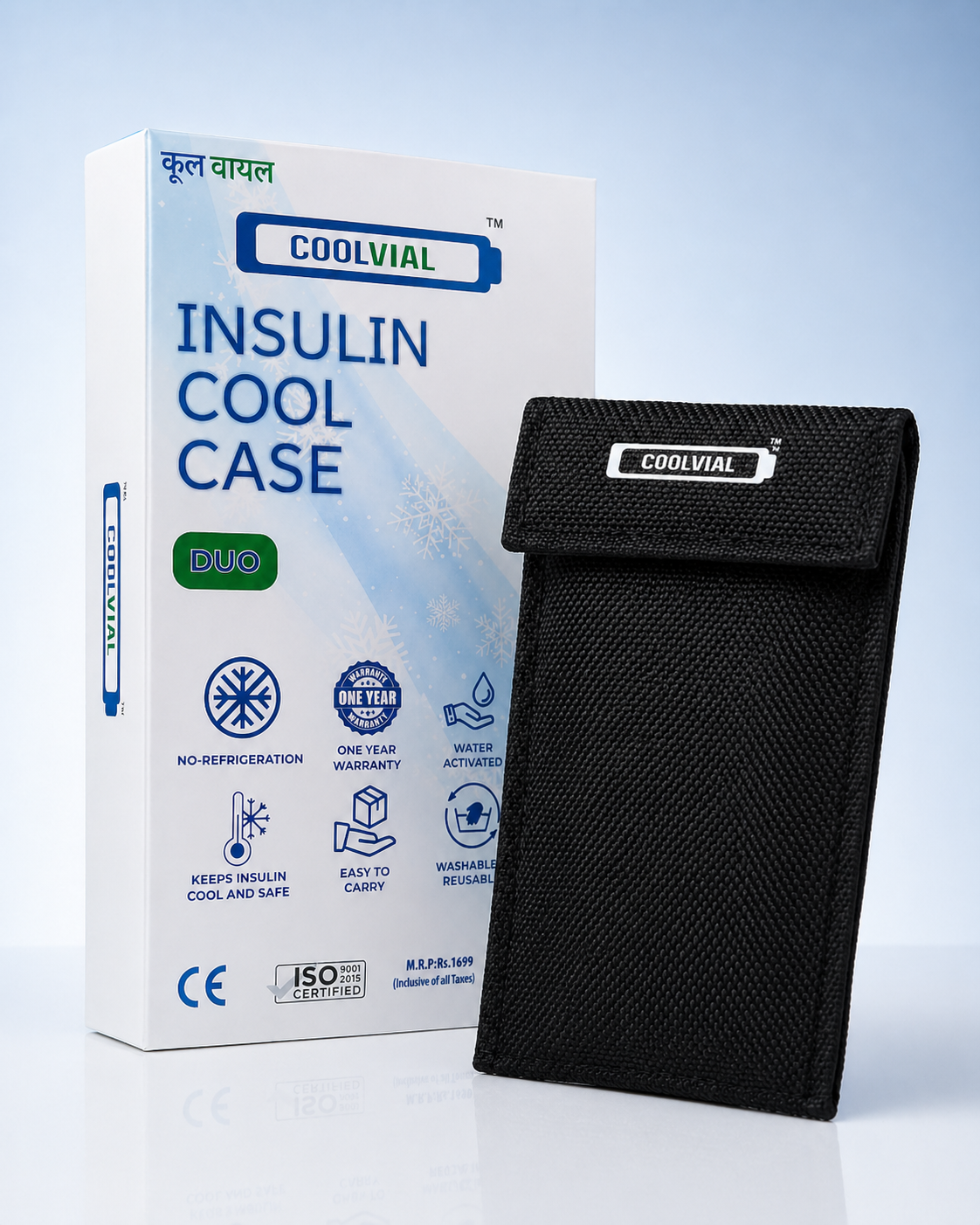
- Insulin Cooling Case: Ensure your insulin is kept in a reliable cooling case. For example, the COOLVIAL insulin cool case is designed to maintain insulin at a safe temperature for 12-16 hours without electricity, which is ideal for domestic flights and airport transits.
- Gel Packs: If your cooling case uses gel packs, be aware that they might be subject to additional scrutiny. While medical necessities are generally exempt from the liquid restrictions, be prepared for security to visually inspect them. They might ask you to open your cool case.
- Sharps Disposal: If you administer insulin on the flight or at the airport, use a travel-sized sharps container. Do not dispose of needles in the aircraft’s regular trash bins.
Hindon Airport Specifics:
- Limited Services: HDO has fewer medical facilities and pharmacies compared to IGI Delhi. Plan to carry all necessary supplies from Ghaziabad.
- Connectivity: From areas like Mohan Nagar or Vaishali, HDO is generally a shorter and less congested drive than IGI, but always account for NCR traffic.
Travelling From Ghaziabad With Insulin — 7 Essential Airport, Station & Taxi Tips
48+ hours at 2-8°C. No electricity. CE certified. Free delivery across India.
Order on WhatsApp — ₹1,099🛒 Buy Now — ₹1,0994. Flying from Delhi’s Indira Gandhi International Airport (DEL) with Insulin
For most major domestic and international flights, Ghaziabad residents will travel to Indira Gandhi International Airport (DEL). This is a larger, busier airport with more stringent security procedures. Travelling from Ghaziabad with insulin through DEL requires extra vigilance.
Key Considerations for DEL:
- Security Check-in Rules:
- Doctor’s Letter (Mandatory for International, Recommended for Domestic): Always carry an original doctor’s letter on official letterhead, signed and stamped, clearly stating your diabetes, the need for insulin, syringes, and a cooling device. For international travel, it’s advisable to have this letter in English.
- Original Packaging: Keep insulin in its original pharmacy-labeled packaging to avoid suspicion.
- Separate Screening: Be prepared to remove your insulin and cooling case from your hand luggage for separate screening by CISF. They may swab it for traces of explosives.
- Liquid Exemptions: Medical liquids (insulin) and gel packs for cooling insulin are generally exempt from the 100ml liquid rule. However, declare them clearly.
- Security Personnel Interaction: Be polite, patient, and clearly explain what you are carrying. Mention it’s a life-saving medication.
- Longer Wait Times: DEL can have significantly longer queues for security, especially at peak hours or during holiday seasons. Ensure your insulin cooling case can maintain temperature for extended periods. A device like the COOLVIAL Duo, which offers 12-16 hours of cooling, provides a comfortable buffer.
- Temperature Control at Airport: While terminals are air-conditioned, walking between gates, waiting in queues, or experiencing delays on the tarmac can expose your insulin to external heat.
- Pharmacy Access: DEL has pharmacies within its terminals (e.g., Apollo Pharmacy), which can be helpful in an emergency, but rely on your own supplies first.
Table: Insulin Carry-on Comparison (DEL vs. General Guidelines)
| Item | General Rule (Carry-on) | DEL Specifics (CISF) |
|---|---|---|
| Insulin Pens/Vials | Always in hand luggage. | Must be declared. Original packaging preferred. |
| Syringes/Needles | With insulin. | Doctor’s letter helps. Should be new or in a sharps container if used. |
| Cooling Case | Permitted. | Subject to visual inspection and swabbing. Be ready to explain its function. |
| Gel Packs | Permitted for medical use. | May be subject to additional scrutiny; declare them. Ensure they are fully frozen or completely thawed (not slushy). |
| Doctor’s Letter | Recommended for domestic, often essential for international. | Strongly recommended for DEL, especially for international travel, to avoid hassles. |
5. Train Travel from Ghaziabad Junction (GZB) with Insulin
Train travel from Ghaziabad Junction (GZB) is a common mode of transport for many, connecting to various parts of India. While railway security is less stringent than air travel, protecting your insulin from the heat and varied conditions of Indian trains is crucial. Whether you’re travelling to Lucknow or Bhopal, the journey can span several hours or even days.
Challenges of Train Travel in India:
- Temperature Fluctuations: Train coaches, especially non-AC berths, can get extremely hot during summer (temperatures inside can easily exceed 35-40°C) and stuffy during monsoons. Even AC coaches can have inconsistent cooling.
- Power Outages: While rare on main routes, power fluctuations or outages can affect AC coaches.
- Journey Length: Long-distance journeys require a cooling solution that lasts for many hours.
Tips for Train Travel from GZB:
- Reliable Cooling Case: Invest in an evaporative cooling case. The COOLVIAL Duo is an excellent option for train journeys. It uses water activation to keep insulin cool for 12-16 hours, making it perfect for overnight or even multi-day trips when reactivated. Unlike ice packs, it doesn’t require refrigeration, which is often unavailable on trains.
- Accessibility: Keep your insulin cooling case easily accessible in your carry-on bag, not in luggage stored under the seat or in overhead racks, where temperatures can be higher.
- Avoid Direct Sunlight: Never leave your insulin cooling case in direct sunlight, even if it’s designed to protect from heat. Place it under your seat or in the shade.
- Hydration: Keep a water bottle handy. For evaporative cooling cases like COOLVIAL, you’ll need a small amount of water to reactivate the cooling mechanism every 12-16 hours. Tap water is usually sufficient for this purpose.
- Meal Times: If you need to administer insulin during meal times, ensure you have a clean surface and privacy. Carry alcohol swabs and a small sharps container.
- Emergency Supplies: Pack a small emergency kit with extra insulin, syringes, and a glucose monitor. Consider carrying oral glucose tablets in case of hypoglycemia.
Example Train Journey Scenario: Imagine a 16-hour journey from Ghaziabad Junction to Gorakhpur in a non-AC sleeper class during the summer. The ambient temperature could be 38°C. Without proper cooling, your insulin would quickly degrade. A COOLVIAL Duo, activated with water, can maintain a safe temperature below 25°C for the entire leg of the journey, ensuring your insulin remains effective.
6. Taxi and Local Commute Tips in Ghaziabad
Daily commutes within Ghaziabad, or short trips to nearby Delhi landmarks like Akshardham, also pose a risk to insulin. The interiors of cars, especially when parked in the sun, can reach extreme temperatures far exceeding the ambient air. A car parked for an hour in 35°C weather can have interior temperatures soaring to 50-60°C. This is highly detrimental to insulin.
Tips for Taxi and Local Commutes in Ghaziabad:
- Never Leave Insulin in a Parked Car: This is the most critical rule. Even for a few minutes while you run into Pacific Mall or Shipra Mall, take your insulin with you. The heat buildup in a parked vehicle is rapid and intense.
- Use a Cooling Case: Always carry your insulin in a reliable cooling case, even for short trips from Indirapuram to Vaishali. The COOLVIAL Duo is lightweight and compact, easily fitting into a small bag or purse.
- Position in the Car: If you’re in a taxi or personal car, place your cooling case in the coolest part of the vehicle, away from direct sunlight. The floor or under the seat is often better than the dashboard or parcel shelf.
- AC Usage: Utilize the car’s air conditioning system, especially during Ghaziabad’s scorching summers. However, remember that AC only cools the air, not surfaces directly exposed to sun, and its effectiveness diminishes once the car is off.
- Rickshaws/Auto-Rickshaws: When using open-air transport like auto-rickshaws, keep your insulin case close to your body, shielded from direct sun and heat, perhaps under your shirt or in a bag.
- Walking/Biking: If you’re walking or cycling to a nearby Generic Aadhaar pharmacy, ensure your insulin is in a cooling case that can withstand external temperatures.
Table: Temperature Rise in Parked Car (Ghaziabad Climate)
| Ambient Temperature | Interior Car Temperature (after 1 hour) |
|---|---|
| 25°C | 35-40°C |
| 30°C | 45-50°C |
| 35°C | 55-60°C |
| 40°C | 65-70°C |
(Source: Based on NWS heat safety data, adapted for NCR conditions)
7. Choosing the Right Insulin Cooling Case: COOLVIAL Duo
When travelling from Ghaziabad with insulin, your choice of cooling case is paramount. It needs to be reliable, easy to use, and effective against the varied Indian climate conditions. The market offers several options, but not all are created equal.
Why an Evaporative Cooling Case?
Evaporative cooling cases, like COOLVIAL, work on a simple yet effective principle: evaporation. When water evaporates, it draws heat away from the surface, creating a cooling effect. This means no ice packs, no refrigeration, and no electricity are needed – just a little water. This makes them incredibly practical for travel where access to power or refrigeration is limited, such as on long train journeys or during power cuts.
Comparing Cooling Case Options:
| Feature | COOLVIAL Duo | FRIO Cooling Case (e.g., Duo) | Outer Woods OW-12 (Mini Insulin Travel Case) |
|---|---|---|---|
| Cooling Method | Water-activated evaporative cooling | Water-activated evaporative cooling | Gel pack/Ice pack based |
| Cooling Duration | 12-16 hours per activation | Up to 45 hours per activation | 6-8 hours with ice pack (needs freezer) |
| Capacity | 2 pens + 1 vial | 2 pens | 2 pens + 2 vials (needs ice) |
| Power Needs | None (just water) | None (just water) | Freezer for ice pack |
| Convenience | Simple water activation, no bulk | Simple water activation | Requires pre-freezing |
| Price | Rs 1,099 (with code COOLHEAL) | Around Rs 1,900 | Around Rs 999 |
| Certifications | CE certified, ISO 9001:2015, Made in India | ISO 13485:2016, Made in UK | Check manufacturer for certifications |
| Warranty | 1-year | 1-year | Varies |
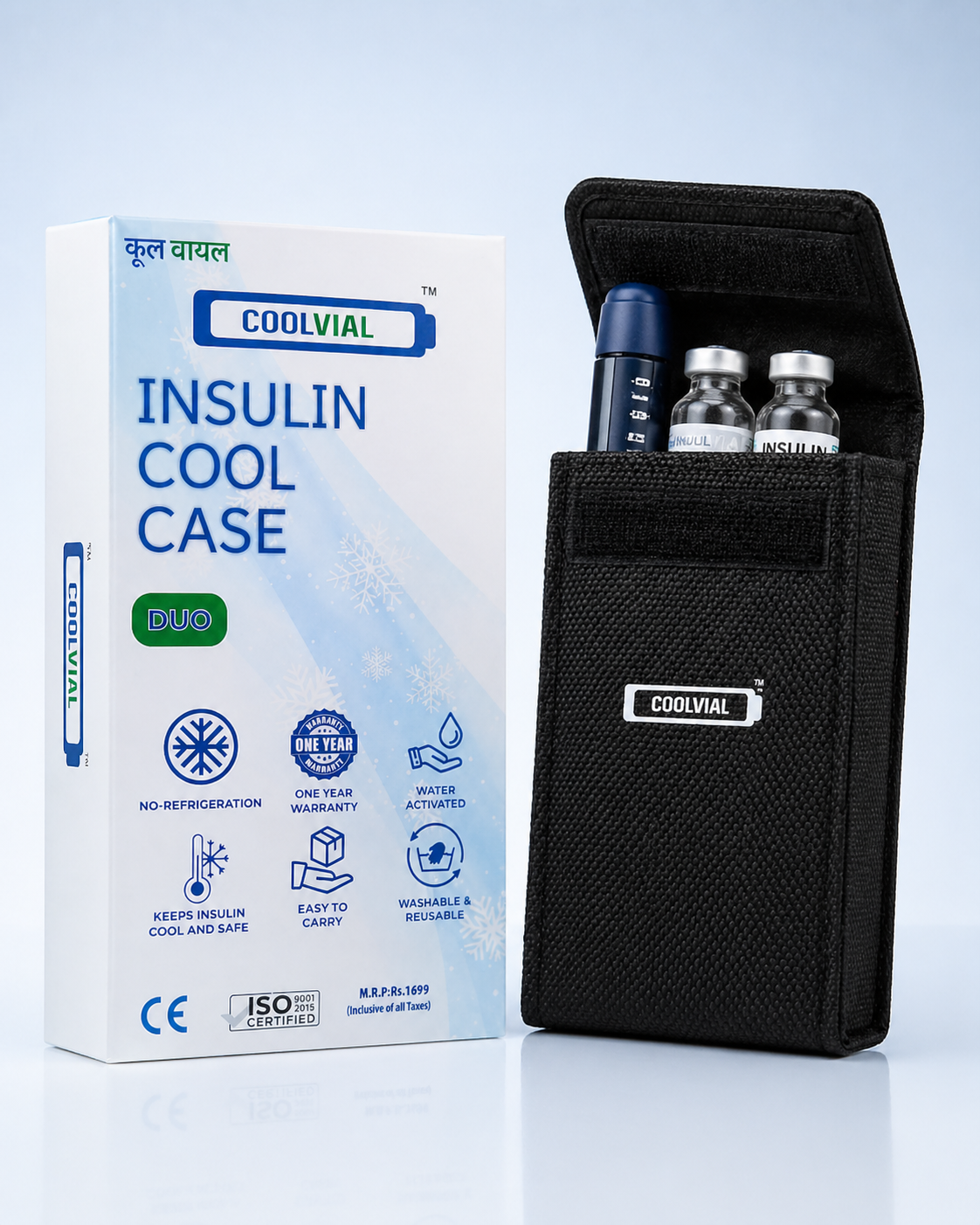
The COOLVIAL Duo stands out as an excellent balance of performance, convenience, and affordability. For Rs 1,099 with the code COOLHEAL (MRP Rs 1,699), it offers robust protection for 2 insulin pens and 1 vial for 12-16 hours. Its CE certification and ISO 9001:2015 compliance ensure quality, and being Made in India, it’s designed with local conditions in mind. Its water-activated system means you can simply dip it in water from any clean source (even tap water from a public restroom or a bottle of mineral water) to reactivate its cooling power. This is a significant advantage over gel-pack cases that require access to a freezer, which is often impossible during travel.
For more detailed information on insulin storage, visit our insulin storage tips page.
Frequently Asked Questions (FAQ)
Q: Can I carry insulin needles and syringes on a flight from Ghaziabad? A: Yes, you can carry insulin needles and syringes in your hand luggage when flying from Ghaziabad, provided they are accompanied by your insulin medication. It is highly recommended to also carry a doctor’s letter to avoid any issues during security checks at Hindon or IGI Airport.
Q: What is the best way to store insulin in a car during a long drive from Ghaziabad? A: The best way to store insulin in a car during a long drive from Ghaziabad is in a water-activated evaporative cooling case, like the COOLVIAL Duo. This keeps the insulin cool without needing electricity or ice, protecting it from the car’s fluctuating temperatures and direct sunlight.
Q: Do I need a doctor’s letter for carrying insulin on Indian trains? A: While not strictly mandatory for train travel within India, carrying a doctor’s letter is always advisable. It can provide peace of mind and help explain the necessity of your medication if questioned, though railway staff typically have less stringent checks than airport security.
Q: How long can insulin stay out of the refrigerator when travelling from Ghaziabad? A: Opened insulin pens and vials, once removed from refrigeration, can generally be kept at room temperature (below 25-30°C) for up to 28 days, depending on the specific brand. However, during travel from Ghaziabad, especially in hot weather, it’s crucial to use a cooling case to keep it below this threshold for optimal efficacy.
Q: Can I use tap water to activate my COOLVIAL cooling case? A: Yes, you can use tap water to activate your COOLVIAL cooling case. The evaporative cooling mechanism works effectively with clean tap water, making it incredibly convenient for travel as you don’t need distilled water or a specific type of water source.
Q: What if my insulin gets too hot during travel? A: If your insulin gets too hot (above 30°C for extended periods), its potency can degrade, making it less effective. While it won’t immediately become harmful, it may not lower your blood sugar as expected. If you suspect your insulin has been exposed to high heat, it’s best to discard it and use a fresh supply, monitoring your blood sugar closely.
Q: Where can I find emergency insulin supplies in Ghaziabad? A: In Ghaziabad, you can find emergency insulin supplies at major pharmacies like Apollo Pharmacy, MedPlus, 1mg, 98.4 Pharmacy, and Generic Aadhaar outlets. For urgent medical advice, hospitals like Yashoda Super Speciality (Kaushambi), Columbia Asia Ghaziabad, or Max Hospital Vaishali are excellent resources.
Conclusion
Travelling from Ghaziabad with insulin requires diligent planning and the right tools to ensure your medication remains safe and effective. From navigating the security checks at Hindon or IGI Delhi airports to enduring long train journeys from Ghaziabad Junction or daily commutes in a taxi, protecting your insulin from the NCR’s extreme temperatures is a non-negotiable aspect of diabetes management. By following these 7 essential tips – from securing a doctor’s letter to investing in a reliable cooling solution – you can travel with confidence and peace of mind.
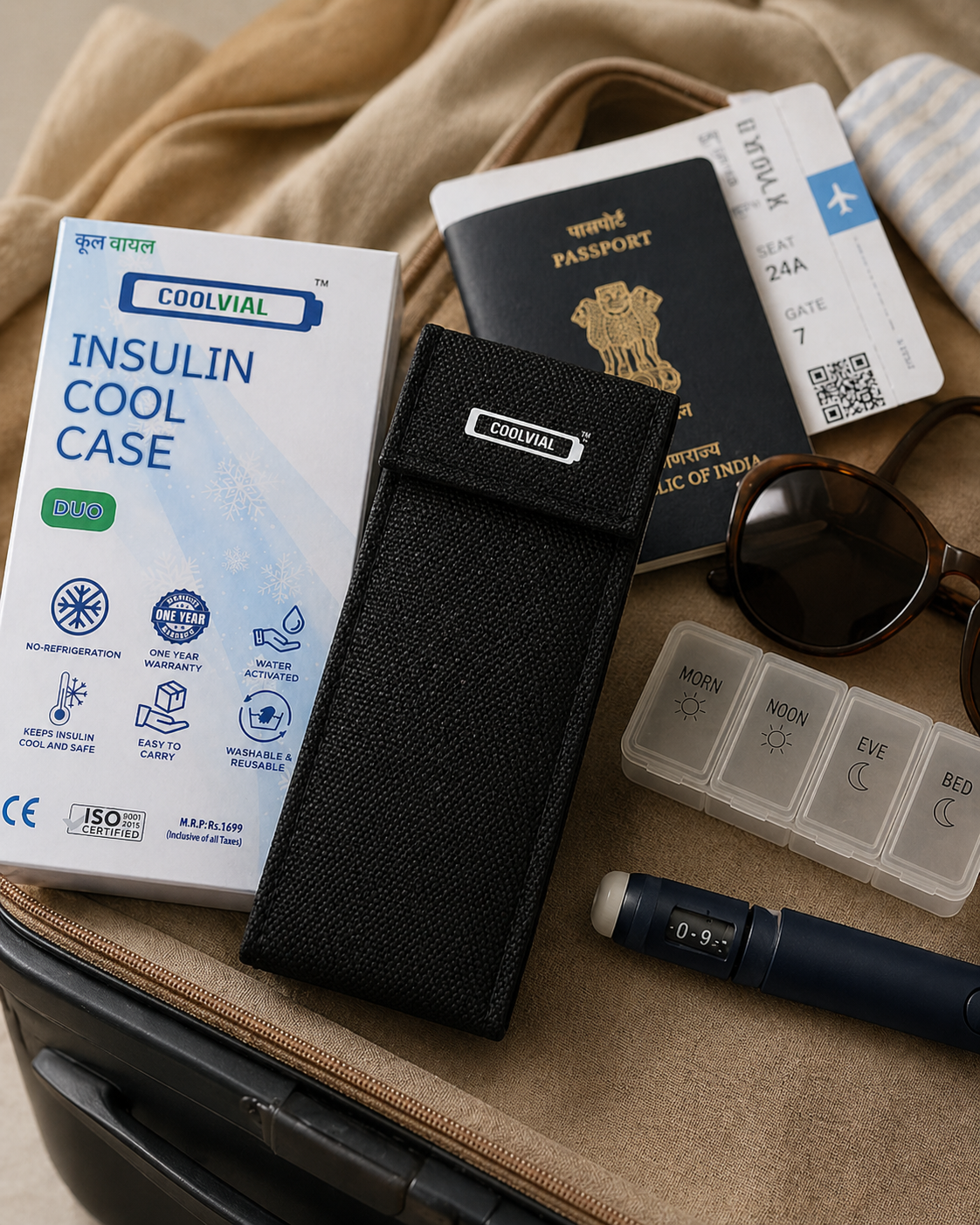
Remember, your insulin is your lifeline. Don’t compromise its integrity for convenience. For robust, electricity-free cooling that fits seamlessly into your travel plans, consider the COOLVIAL Duo. It’s designed to keep your insulin safe for 12-16 hours per activation, making it an ideal companion for any journey originating from Ghaziabad.
Order COOLVIAL Duo at Rs 1,099 with code COOLHEAL at coolvial.com or via WhatsApp wa.me/918766952300
Medical Disclaimer
This article is for general information purposes only and does not constitute medical advice. Always consult your endocrinologist or diabetologist before changing insulin storage or dosing practices.
How We Researched This
This article is based on a thorough review of RSSDI (Research Society for the Study of Diabetes in India) guidelines for insulin storage, ICMR-INDIAB data on diabetes prevalence in India (Source: WHO, India has over 101 million people living with diabetes as of 2021), local Ghaziabad hospital directories, and information from established pharmacy networks like Apollo Pharmacy. We also considered typical travel scenarios and climate data specific to the NCR region to provide practical, location-specific advice.
Travelling From Ghaziabad With Insulin — 7 Essential Airport, Station & Taxi Tips
COOLVIAL keeps insulin safe in India's heat. 48+ hours, no electricity needed.