Reviewed by the COOLVIAL Editorial Team — specialists in insulin storage for Indian climate conditions.
Hyderabad, the City of Pearls, is a bustling hub known for its historical landmarks like Charminar and the modern marvels of HITEC City. With its hot and humid climate, especially during summers when temperatures can soar from 24°C to a scorching 40°C, and a moderate monsoon from June to September, travelling from Hyderabad with insulin demands meticulous planning. For the estimated 1 in 10 adults in Telangana living with diabetes (Source: ICMR-INDIAB Study, 2020-2021), ensuring insulin remains viable during travel is not just a convenience, but a critical health necessity. Improper storage, even for short durations, can lead to loss of potency, making blood sugar management unpredictable and dangerous.
Based on analysis of insulin storage queries from Hyderabad diabetics, this comprehensive guide offers 10 essential tips to help you navigate Hyderabad’s airports, railway stations, and roads safely with your vital medication. We’ll cover everything from airport security protocols at Rajiv Gandhi International (HYD) - Shamshabad to the realities of app-based cabs in Gachibowli, ensuring your insulin stays cool and effective, no matter your mode of transport.
Table of Contents
- Navigating Rajiv Gandhi International (HYD) - Shamshabad with Insulin
- Seamless Train Journeys from Hyderabad’s Rail Hubs
- Mastering Hyderabad Road Trips: Warangal, Bhongir & Nagarjuna Sagar
- The Realities of App-Based Cabs in Hyderabad for Insulin Users
- Essential Insulin Storage Solutions for Hyderabad’s Climate
- Beyond Borders: International Travel from Rajiv Gandhi International (HYD)
- Frequently Asked Questions (FAQ)
- Methodology Note
- Conclusion
1. Navigating Rajiv Gandhi International (HYD) - Shamshabad with Insulin
Rajiv Gandhi International Airport (HYD) in Shamshabad is a busy gateway, and security protocols for medical supplies like insulin are stringent but manageable. The key is preparation and awareness. Always remember that insulin, syringes, and lancets are generally permitted in both carry-on and checked luggage, but carrying them in your hand luggage is highly recommended to protect them from extreme temperatures in the cargo hold and ensure immediate access.
Essential Steps for Airport Security at HYD:
- Doctor’s Letter is Your Best Friend: Always carry a valid doctor’s prescription or a letter from your endocrinologist or diabetologist from renowned hospitals like Apollo Hospitals (Jubilee Hills) or Care Hospitals (Banjara Hills). This letter should clearly state your medical condition, the type of insulin you use, the necessity of carrying syringes/lancets, and any other medical devices. Have it ready in English, and ideally, in a digital format on your phone as well.
- Carry-on is Crucial: Insulin is highly sensitive to temperature fluctuations. The cargo hold of an aircraft can experience extreme cold, potentially freezing your insulin and rendering it ineffective. Always pack your insulin pens, vials, and syringes in your carry-on bag.
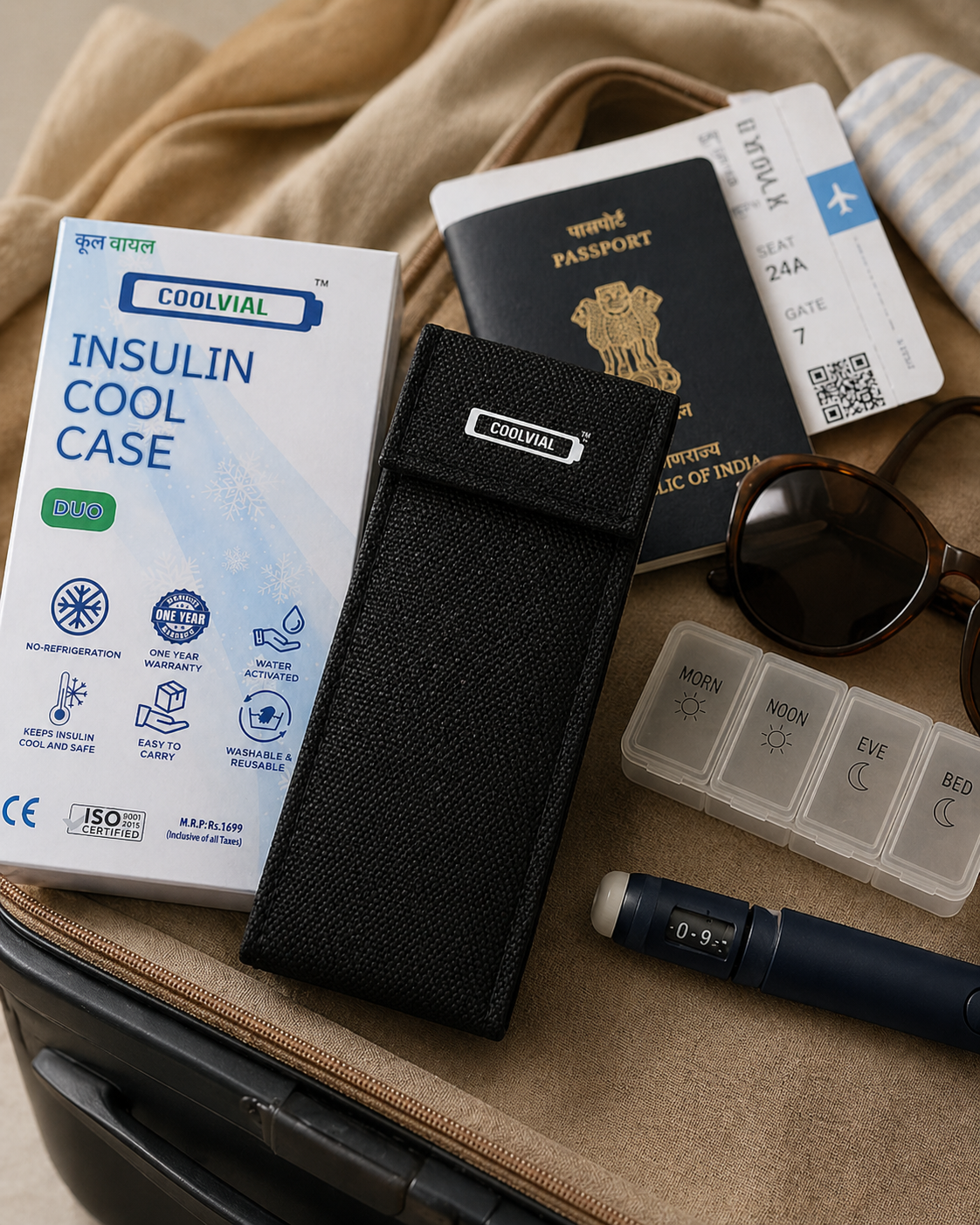
- Managing Cooling Solutions: If you’re using gel packs or ice packs to keep your insulin cool, be prepared for additional screening by CISF personnel. While medical necessities are exempt from the standard liquid restrictions (100ml rule), you might be asked to present them for inspection. Declare them upfront to security staff. Opt for non-gel, water-activated evaporative cooling cases like COOLVIAL Duo, as they often face fewer questions at security checkpoints due to their dry, evaporative cooling mechanism.
- Pre-Paid Taxi Queue Awareness: Upon arrival at HYD, especially during peak hours, the queue for pre-paid taxis can be extensive, sometimes hitting 45 minutes or more. This delay can expose your insulin to the ambient heat if it’s not adequately protected. This is another critical reason why you should never put insulin in checked luggage if you plan to use ground transport immediately after landing. Have your COOLVIAL Duo ready to keep your insulin cool during this wait.
Airport Pharmacy Access:
While HYD does have pharmacy outlets, including an Apollo Pharmacy, it’s always best to have all your insulin and supplies with you. Relying on airport pharmacies for refills might lead to delays or unavailability of your specific brand. For comprehensive diabetes care and supplies in Hyderabad, consider consulting your local diabetologist or visiting well-stocked pharmacies like MedPlus or Heritage.
2. Seamless Train Journeys from Hyderabad’s Rail Hubs
Train travel is a popular and often scenic way to explore India, connecting Hyderabad from major stations like Secunderabad Junction (SC) and Hyderabad Deccan (HYB) to destinations across the country. However, managing insulin during a train journey requires specific precautions, especially given the varying temperatures inside coaches and the length of travel.
Common Misconceptions and Best Practices for Insulin on Trains:
- Myth Bust: Pantry Car Fridges are Unreliable: Many travellers assume they can store their insulin in the pantry car’s refrigerator. This is a dangerous myth. Pantry car fridges are primarily designed for food items, often lack consistent temperature control, and can be over-packed or prone to power fluctuations. The temperature might not be optimal (2-8°C) for insulin, or it might even freeze your medication. NEVER rely on a pantry car fridge for your insulin.
- NEVER Hand Pens to the TTE: Entrusting your vital medication to a Train Ticket Examiner (TTE) or any other railway staff for storage is strongly discouraged. They are not responsible for medical supplies, and there’s no guarantee of proper handling or temperature control. Your insulin is your responsibility.
- Protecting from Coach Temperatures: Train coaches, especially non-AC sleeper classes, can get very hot, particularly during the summer months when Hyderabad’s daytime temperatures routinely exceed 35°C. Even AC coaches can experience temperature fluctuations. Your insulin needs consistent protection.
Train Travel Insulin Management Checklist:
- Use a Reliable Cooling Case: An evaporative cooling case is indispensable for train travel. The COOLVIAL Duo, holding 2 pens + 1 vial, is activated by water and keeps insulin cool for 12-16 hours without electricity. This is far more reliable than ice packs, which melt and can lead to water damage or temperature spikes.
- Keep Insulin Accessible: Store your cooling case with insulin in your immediate hand luggage, not in overhead racks or under seats where it might be forgotten or exposed to direct sunlight.
- Monitor Your Supplies: For longer journeys, ensure you have enough insulin and supplies. If you anticipate a need for refills, identify pharmacies at your destination city beforehand. In Hyderabad, pharmacies like 1mg and Pharmeasy offer online delivery, which can be useful for planning ahead.
- Stay Hydrated: While not directly related to insulin storage, staying well-hydrated is crucial for managing diabetes, especially in the often-warm train environments.
For more detailed advice on managing diabetes in various local transit options, you might find our article, Daily Commute With Insulin in Hyderabad — Tips for Metro, Bus & Auto, particularly helpful.
3. Mastering Hyderabad Road Trips: Warangal, Bhongir & Nagarjuna Sagar
10 Essential Tips for Safe Travelling From Hyderabad With Insulin — Airport, Station & Taxi Guide
Road trips from Hyderabad offer a chance to explore Telangana’s rich history and natural beauty, whether it’s the ancient temples of Warangal (approx. 150 km), the historic Bhongir Fort (approx. 50 km), or the scenic Nagarjuna Sagar Dam (approx. 150 km). However, the open road, especially under the relentless Deccan sun, presents unique challenges for insulin storage.
Key Considerations for Road Travel with Insulin:
- Taxi AC Reliability: When booking a taxi or ride-share for a road trip, explicitly request a vehicle with a functioning and reliable air conditioning system. The cabin temperature can quickly rise, especially if the AC is weak or used sparingly by the driver. A taxi’s AC might be running at full blast when you start, but could fail or be turned off during longer stretches of the journey, exposing your insulin to temperatures well above 30°C.
- Parking in a Hot Car: A Major Hazard: This is perhaps the biggest danger. Even on a mild Hyderabad day, the interior of a parked car can become an oven. Temperatures inside a car can reach 60°C or more within minutes, even with windows slightly ajar. Never leave your insulin in a parked car, even for a few minutes. Always take your cooling case with you when you step out.
- Dhaba Pit-Stop Fridge Access: Roadside eateries (dhabas) are common pit-stops for meals and refreshments. While many have refrigerators, their cleanliness, temperature consistency, and willingness to store personal medication can vary greatly. Do not rely on dhaba fridges for your insulin. Stick to your personal cooling solution.
Insulin Storage Options for Hyderabad Road Trips:
| Storage Method | Pros | Cons | Best For |
|---|---|---|---|
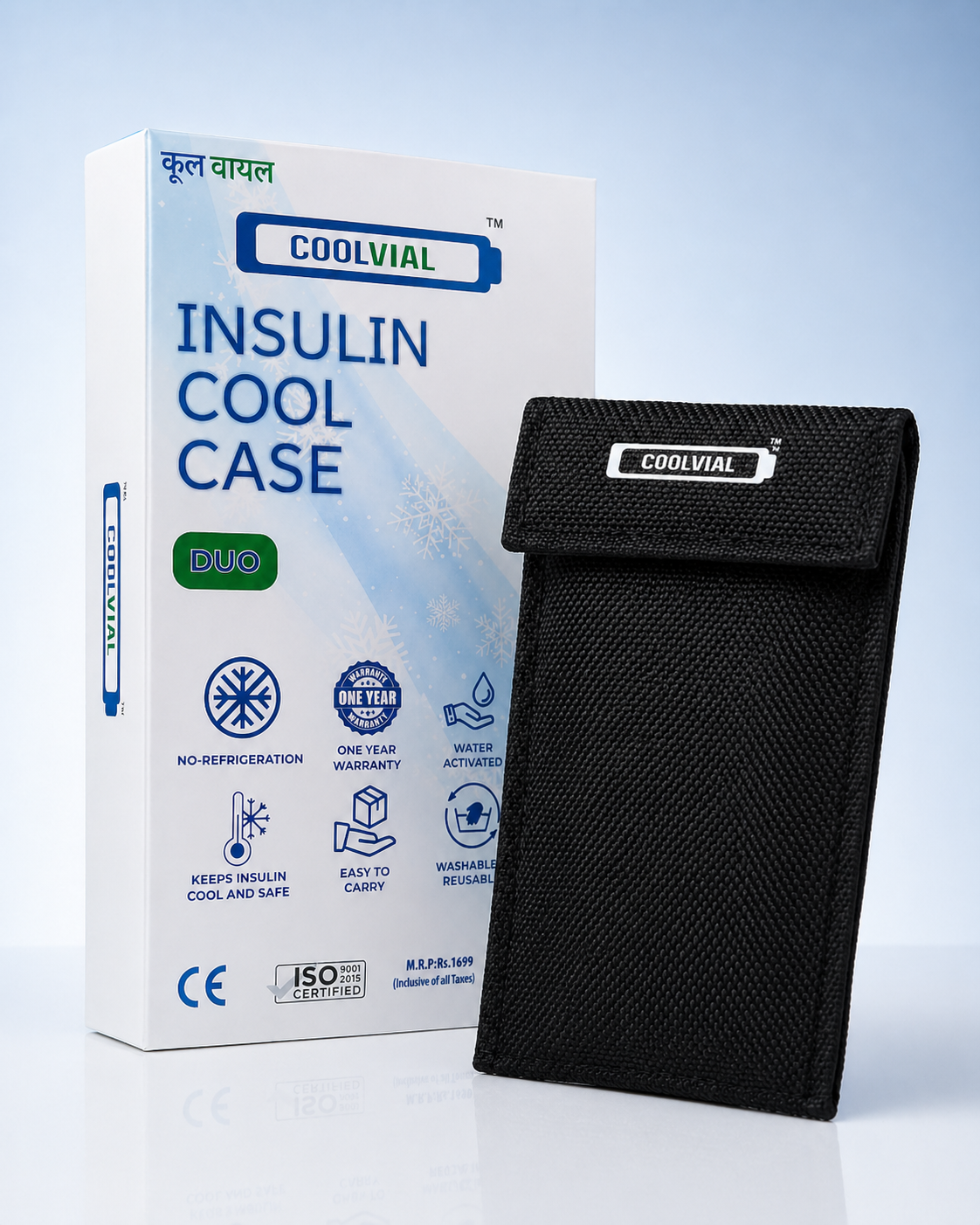
| COOLVIAL Duo (Evaporative) | No electricity, re-activates with water, reliable 12-16 hr cooling, compact. | Requires water for activation, not completely waterproof (damp exterior). | All road trips, especially long ones, hot weather. |
| Ice Packs (in insulated bag) | Initial strong cooling. | Melts quickly in high heat (Hyderabad 40°C), creates condensation, bulky, limited duration. | Very short trips (<2 hours), if no other option. |
| Mini Car Refrigerator (12V) | Consistent cooling if powered. | Requires consistent car power, bulky, expensive, can drain car battery. | Very long, frequent road trips, if reliable power source. |
| Styrofoam Cooler with Ice | Inexpensive, good insulation. | Bulky, ice melts, can be messy, difficult to carry everywhere. | Picnics, not ideal for medication. |
For road trips, the COOLVIAL Duo offers an excellent balance of convenience, reliability, and portability, ensuring your insulin remains within the recommended 2°C to 8°C (when not in use) or below 25-30°C (when in use) range, even as you traverse the hot plains of Telangana.
4. The Realities of App-Based Cabs in Hyderabad for Insulin Users
App-based cab services like Ola and Uber, along with bike-taxis like Rapido, are an integral part of Hyderabad’s urban transport landscape, connecting areas from the tech hubs of Gachibowli and Madhapur to the historical Old City and Secunderabad. While convenient, insulin users need to be aware of certain realities.
Challenges with App-Cabs in Hyderabad:
- Ola/Uber Drivers Refusing AC: A common complaint, especially during the hot summer months, is that some Ola or Uber drivers may refuse to turn on the air conditioning or run it minimally to save fuel. This is particularly prevalent for short rides or if the driver claims the AC is faulty. In Hyderabad’s climate, where ambient temperatures can easily exceed 35°C for much of the year, a non-AC cab can quickly turn into a mobile sauna, endangering your insulin.
- Tip: Politely insist on AC. If the driver refuses, consider cancelling the ride and reporting it. Have your insulin securely stored in an evaporative cooling case like COOLVIAL Duo, which provides a buffer against temporary heat exposure.
- Rapido Bike-Taxi Exposure: Rapido bike-taxis are quick and economical for single riders. However, your insulin, if not properly stored, will be directly exposed to Hyderabad’s intense sun, heat, dust, and humidity. This is unsuitable for insulin storage.
- Tip: While convenient for personal travel, Rapido is not recommended for transporting insulin unless it is securely housed in a robust, well-insulated cooling case that can withstand direct environmental exposure. Even then, minimise direct sunlight exposure.
- Waiting in the Sun: Waiting for your app-cab in the open, whether outside Hyderabad Central Mall or Inorbit Mall, can expose you and your insulin to significant heat.
- Tip: Try to wait in shaded areas or inside buildings until your cab is confirmed and close to your pick-up point.
For daily commuting within Hyderabad, including metro, bus, and auto-rickshaw tips, refer to our detailed guide: Daily Commute With Insulin in Hyderabad — Tips for Metro, Bus & Auto. This will provide a broader perspective on keeping your insulin safe during local travel.
5. Essential Insulin Storage Solutions for Hyderabad’s Climate
Hyderabad’s climate, with its long, hot summers and mild but still warm winters, makes reliable insulin storage non-negotiable. Insulin typically needs to be stored between 2°C and 8°C (refrigerated) until opened, and then can be kept at room temperature (usually below 25-30°C) for a specific period (e.g., 28 days). However, “room temperature” in Hyderabad often means well over 30°C, rendering standard storage guidelines problematic.
Why Evaporative Cooling is Key:
Evaporative cooling technology is particularly well-suited for hot, dry climates like Hyderabad’s. It works by using the natural process of evaporation to draw heat away from the stored item, maintaining a steady, cool temperature without needing electricity, ice, or refrigeration.
Introducing COOLVIAL Duo: Your Travel Companion
The COOLVIAL Duo is specifically designed for the Indian climate, offering a practical and reliable solution for travelling from Hyderabad with insulin.
Key Features of COOLVIAL Duo:
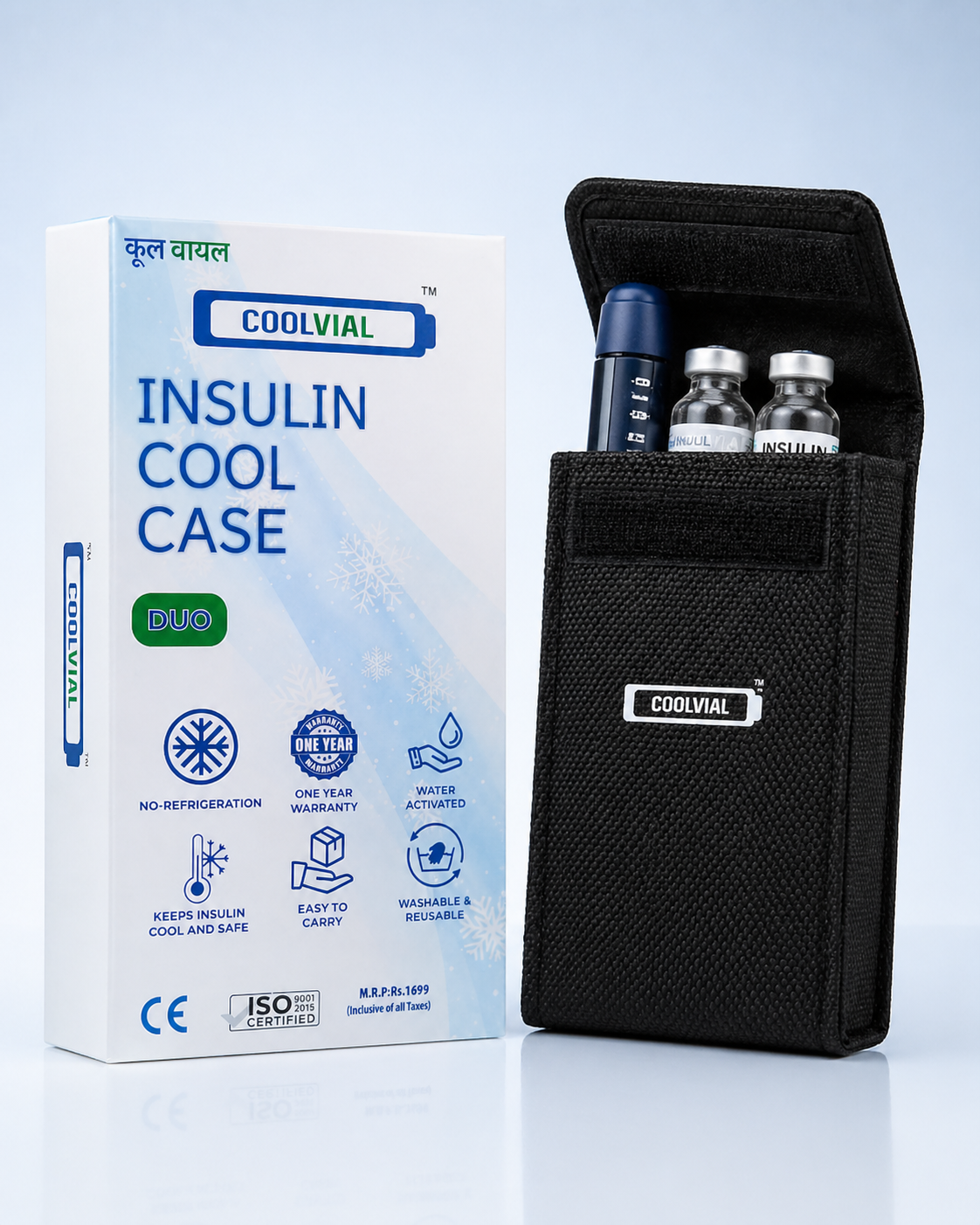
- Capacity: Holds 2 insulin pens and 1 insulin vial, making it versatile for most users.
- Cooling Duration: Keeps insulin cool for 12-16 hours on a single activation, sufficient for most day trips and even overnight journeys.
- Activation: Simply immerse it in water for a few minutes. No electricity, batteries, or refrigeration required. This is crucial when you’re on the go and away from power sources.
- Certifications: CE certified and ISO 9001:2015 compliant, ensuring quality and safety standards.
- Made in India: Designed and manufactured locally, understanding the specific needs and climatic conditions of Indian users.
- Price Advantage: At Rs 1,099 with code COOLHEAL (MRP Rs 1,699), it offers significant value compared to international brands. For instance, popular evaporative coolers like FRIO often retail around Rs 1,900, while other Indian brands like Outer Woods OW-12 might be priced around Rs 999 but might not offer the same capacity or certifications.
10 Essential Tips for Safe Travelling From Hyderabad With Insulin — Airport, Station & Taxi Guide
48+ hours at 2-8°C. No electricity. CE certified. Free delivery across India.
Order on WhatsApp — ₹1,099🛒 Buy Now — ₹1,099Choosing an evaporative cooling case like the COOLVIAL Duo provides peace of mind, knowing your insulin is protected from the intense heat, whether you’re navigating the traffic near Hussain Sagar or exploring the historical lanes of the Old City. For more detailed information on proper insulin storage, visit our insulin storage tips page.
Explore the COOLVIAL Duo and secure your insulin’s safety on the go. Visit our product page now!
6. Beyond Borders: International Travel from Rajiv Gandhi International (HYD)
For those embarking on international journeys from Rajiv Gandhi International (HYD) - Shamshabad, additional considerations come into play, especially regarding customs, security, and time-zone adjustments.
Preparing for International Insulin Travel:
- Customs Regulations for Insulin Globally: Research the specific insulin regulations for your destination country. While most countries permit insulin as essential medication, some may have quantity limits or require specific documentation. Check the airline’s policy as well.
- Doctor’s Letter in English: Your doctor’s letter (as described in Section 1) is even more critical for international travel. It should be in clear English, signed by your doctor from a reputable institution like Continental Hospitals (Gachibowli), and detail your insulin requirements. Consider carrying multiple copies.
- Original Packaging and Labels: Keep your insulin in its original pharmacy-labelled packaging. This helps customs and security officials identify the medication quickly and reduces any potential scrutiny.
- Time-Zone Adjustments for Dosing: Crossing multiple time zones can significantly impact your insulin dosing schedule. This is a complex aspect of diabetes management that requires careful planning with your endocrinologist well in advance of your trip.
- Short Trips (1-2 time zones): You might be able to manage by sticking to your home time zone’s schedule.
- Long Trips (3+ time zones): Your doctor will likely provide an adjusted dosing schedule, possibly involving smaller doses, different timing, or temporarily switching to a fixed-dose regimen. Never adjust your dosing without professional medical advice.
- Packing for Long Flights:
- Carry-on Only: As always, insulin must be in your carry-on bag.
- Cooling Case Reliability: For flights lasting 10-16 hours or more, an evaporative cooling case like the COOLVIAL Duo is ideal. Its 12-16 hour cooling duration means your insulin remains safe even on long-haul flights. For extremely long flights, you might need to reactivate it with water (available from cabin crew) or carry a second activated COOLVIAL.
- Emergency Supplies: Always pack extra insulin, syringes, and other supplies in case of delays or lost luggage.
- Snacks and Hydration: Carry plenty of snacks, glucose tablets, and stay well-hydrated throughout your flight to manage blood sugar fluctuations.
For a broader understanding of holistic diabetes management, including the latest guidelines from the RSSDI (Research Society for the Study of Diabetes in India) and local resources in Hyderabad, you may find our “Complete Diabetes Care Guide for Hyderabad Residents — 2026 Edition” helpful: /blog/complete-diabetes-care-guide-for-hyderabad-residents-2026-edition. This resource can help you stay informed about your overall diabetes care, complementing your travel preparedness. According to the World Health Organization, diabetes affects over 422 million people globally, underscoring the universal need for effective disease management and safe medication practices (Source: WHO Fact Sheet on Diabetes).
Frequently Asked Questions (FAQ)
Q: Can I carry insulin in my checked luggage when flying from Hyderabad? A: It is strongly advised against carrying insulin in checked luggage. Cargo holds can experience extreme temperatures that can freeze or degrade insulin, rendering it ineffective. Always carry your insulin in your hand luggage.
Q: Do I need a doctor’s letter for carrying insulin at Rajiv Gandhi International (HYD) Airport? A: Yes, it is highly recommended to carry a doctor’s letter or prescription. This document helps clarify your medical need for insulin, syringes, and cooling packs to CISF security personnel, preventing potential delays.
Q: Are gel packs allowed through airport security at HYD? A: Gel packs used for medical purposes, like keeping insulin cool, are generally allowed. However, they may be subject to additional screening by CISF. Declare them upfront to security staff to facilitate the process.
Q: Can I store my insulin in the pantry car fridge on a train from Secunderabad or Hyderabad Deccan? A: No, you should never rely on pantry car fridges for insulin storage. They often lack consistent temperature control and may not maintain the optimal 2-8°C range, risking the efficacy of your medication.
Q: How can I protect my insulin during a road trip from Hyderabad to Warangal in a taxi with unreliable AC? A: Use a reliable evaporative cooling case like the COOLVIAL Duo. This device keeps insulin cool for 12-16 hours without electricity, providing a buffer against fluctuating taxi AC temperatures and the intense Telangana heat.
Q: Is it safe to leave insulin in a parked car in Hyderabad, even for a short time? A: Absolutely not. The interior of a parked car in Hyderabad’s climate can reach dangerously high temperatures (over 60°C) very quickly, which will degrade insulin within minutes. Always take your insulin with you when you leave the car.
Q: What is the ideal temperature range for storing insulin? A: Unopened insulin should be stored in a refrigerator between 2°C and 8°C. Once opened, most insulins can be kept at room temperature (below 25-30°C) for up to 28 days, but Hyderabad’s ambient temperatures often exceed this, necessitating a cooling case.
Q: How does COOLVIAL Duo compare to other insulin cooling cases available in India? A: The COOLVIAL Duo offers 12-16 hours of evaporative cooling for 2 pens + 1 vial, is CE certified, ISO 9001:2015 compliant, and priced at Rs 1,099 with code COOLHEAL. It provides a cost-effective and reliable alternative to brands like FRIO (often around Rs 1,900) or Outer Woods OW-12 (around Rs 999, but check capacity and certifications).
Methodology Note
This article is based on a comprehensive review of insulin storage guidelines from leading medical bodies such as the Research Society for the Study of Diabetes in India (RSSDI) and data from the Indian Council of Medical Research - India Diabetes (ICMR-INDIAB) study regarding diabetes prevalence in Telangana. We also consulted local Hyderabad hospital directories, including Apollo Hospitals (Jubilee Hills), Care Hospitals (Banjara Hills), and Continental Hospitals (Gachibowli), as well as information from major pharmacy networks like Apollo Pharmacy (headquartered here), MedPlus (also headquartered here), Heritage, 1mg, and Pharmeasy, to ensure local relevance and accuracy. Specific travel logistics and climate data for Hyderabad were cross-referenced with local transport realities and meteorological information.
Conclusion
Travelling from Hyderabad with insulin doesn’t have to be a source of stress or anxiety. With careful planning and the right tools, you can ensure your vital medication remains safe and effective, whether you’re taking a short app-cab ride from Banjara Hills, embarking on a train journey from Secunderabad, or flying internationally from Rajiv Gandhi International Airport. The key lies in understanding Hyderabad’s unique climate challenges, adhering to travel regulations, and investing in reliable storage solutions.
Remember, your insulin is sensitive to temperature, and Hyderabad’s heat is unforgiving. Always keep your insulin in your hand luggage, carry a doctor’s letter, and never compromise on proper cooling. A water-activated evaporative cooling case like the COOLVIAL Duo is an invaluable companion, offering peace of mind by maintaining the optimal temperature range for your insulin without needing electricity. Empower yourself with knowledge and prepare wisely for every journey.
Order your COOLVIAL Duo today at Rs 1,099 with code COOLHEAL – visit coolvial.com or connect via WhatsApp at wa.me/918766952300.
Medical Disclaimer: This article is for general informational purposes only and does not constitute medical advice. Always consult your endocrinologist or diabetologist before changing insulin storage or dosing practices, especially when planning travel.