
Reviewed by the COOLVIAL Editorial Team — specialists in insulin storage for Indian climate conditions.
Kota, the coaching hub of India and a vibrant city nestled by the Chambal River, experiences extreme temperatures, often soaring from 8°C in winter to a scorching 46°C in summer. For the estimated 11-14% of adults in Rajasthan living with diabetes (Source: ICMR-INDIAB, 2021), travelling from Kota with insulin demands meticulous planning to keep this life-saving medication safe and effective. Whether you’re flying out from Kota Airport (KTU), catching a train from Kota Junction, or embarking on a road trip to nearby Bundi or Chittorgarh, ensuring your insulin stays within its safe temperature range (typically 2-8°C for unopened vials and 2-30°C for in-use pens) is paramount. Based on analysis of insulin storage queries from Kota diabetics, understanding the unique challenges of local travel infrastructure – from app-cab AC reliability to airport security – is crucial. A reliable, evaporative cooling case like the COOLVIAL Duo, which keeps insulin cool for 12-16 hours without electricity, becomes an indispensable travel companion, offering peace of mind amidst Kota’s challenging climate.
Table of Contents
- Navigating Kota Airport (KTU) with Insulin: Security, Check-in, and Taxi Waits
- Train Journeys from Kota Junction (KOTA): Dispelling Myths and Ensuring Safety
- Conquering Kota’s Roads: Taxi AC, Hot Cars, and Dhaba Pit-stops
- The Reality of App-Cabs and Bike-Taxis in Kota for Insulin Users
- Your Indispensable Travel Companion: COOLVIAL Duo
- International Travel from Kota: Customs, Time Zones, and Preparedness
- Frequently Asked Questions (FAQs)
- Methodology Note
Navigating Kota Airport (KTU) with Insulin: Security, Check-in, and Taxi Waits
Kota Airport (KTU) offers limited flights, primarily connecting to major hubs like Delhi and Mumbai. While the airport itself is smaller, the rules for carrying insulin are standard across Indian airports, enforced by the Bureau of Civil Aviation Security (BCAS) and CISF. Your primary goal is to keep insulin in your hand luggage, not checked baggage, to protect it from extreme temperatures in the cargo hold and potential loss.
Here’s what you need to know for a smooth departure from KTU:
- Always Carry Insulin in Hand Luggage: This is non-negotiable. Insulin is a temperature-sensitive medication. Checked baggage compartments can experience extreme temperatures, both freezing and excessively hot, which can render insulin ineffective. Furthermore, baggage can be delayed or lost, leaving you without your essential medication.
- Doctor’s Letter: A doctor’s letter is highly recommended, though not always explicitly asked for at smaller airports like KTU. This letter should:
- State your medical condition (diabetes).
- List the insulin type(s) and other necessary diabetic supplies (syringes, pen needles, blood glucose meter, lancets, test strips).
- Confirm that these items are for personal medical use.
- Be printed on your doctor’s letterhead (e.g., from Maharao Bhim Singh Hospital (MBS) or Suwidhi Hospital in Talwandi) and ideally signed with a stamp.
- CISF Screening and Gel-Packs:
- At the security checkpoint, inform the CISF personnel that you are carrying insulin and other medical supplies.
- If you are using gel-packs or ice-packs to keep your insulin cool, be prepared for them to be visually inspected. They might ask you to remove the insulin cooling case from your bag for a closer look. Be polite and cooperative.
- COOLVIAL evaporative cooling cases, which use a water-activated crystal technology rather than gel-packs, are generally less scrutinized as they don’t contain liquid gels that might trigger specific liquid restrictions. This can make your screening process smoother.
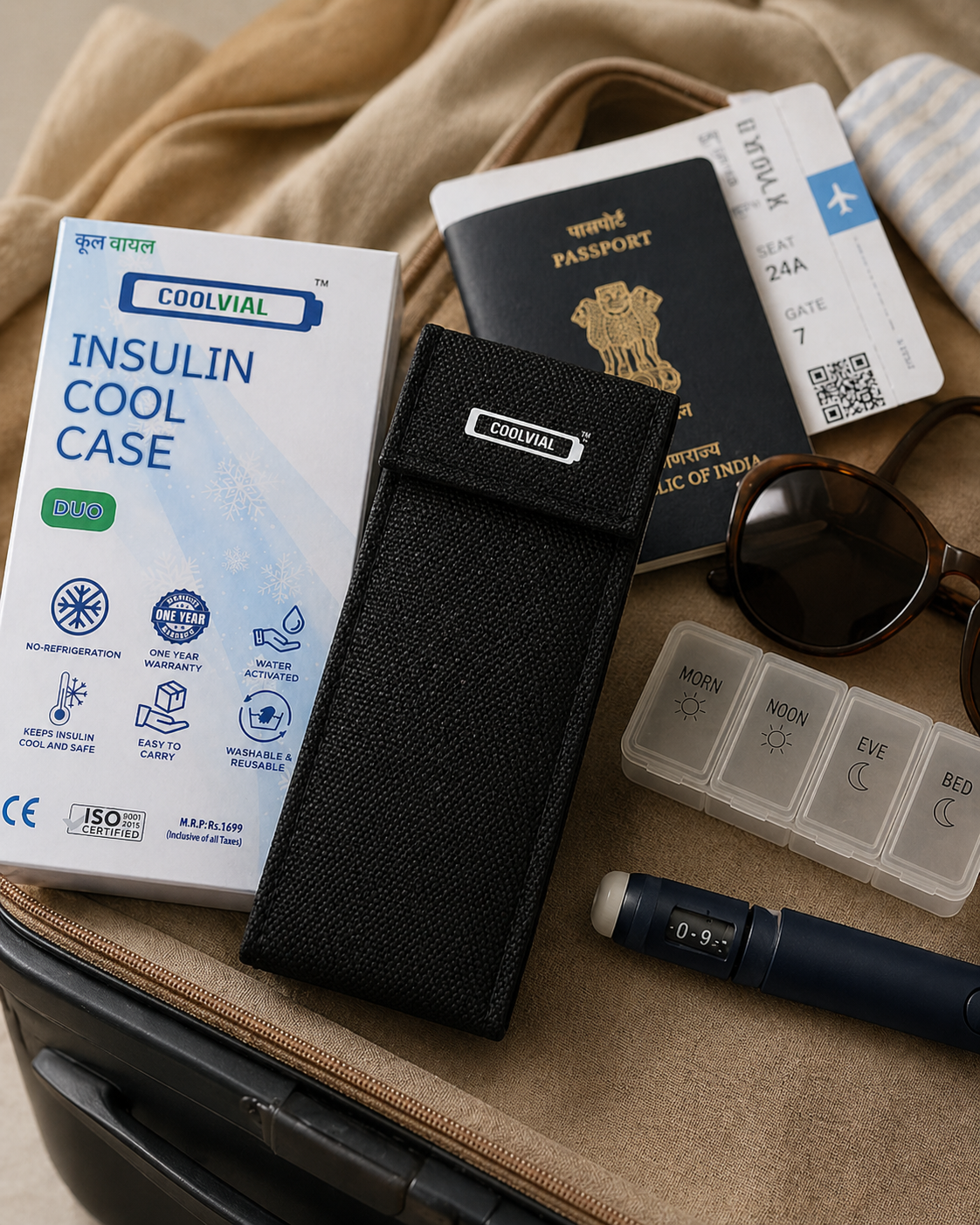
- Pre-paid Taxi Wait Queues: A critical point for those departing from KTU is the potential for lengthy queues at the pre-paid taxi stand. Wait times can sometimes hit 45 minutes, especially during peak hours or if there are multiple flight arrivals. This delay underscores why you should never put insulin in checked luggage; even after landing, your insulin would be sitting in an uncontrolled environment for an extended period. Keep your insulin safely in your hand luggage, within its cooling case, until you reach your destination.
| Item to Carry | Hand Luggage | Checked Luggage (NOT Recommended) | Notes |
|---|---|---|---|
| Insulin Pens/Vials | YES | NO | Essential for temperature control and security. |
| Syringes/Needles | YES | YES (if sheathed) | Must be properly capped/sheathed. |
| Glucose Meter | YES | YES | Batteries should be removed if in checked. |
| Test Strips | YES | YES | |
| Doctor’s Letter | YES | NO | Keep easily accessible for security. |
| Cooling Case (e.g., COOLVIAL Duo) | YES | NO | Always protect insulin from heat. |
Train Journeys from Kota Junction (KOTA): Dispelling Myths and Ensuring Safety
Kota Junction (KOTA) is a major railway station, connecting the city to various parts of India. Train travel, while often more comfortable than buses for long distances, presents its own set of challenges for insulin storage, particularly given Kota’s climate.
- Myth-Busting: Pantry Car Fridges: A common misconception is that you can rely on the pantry car fridge to store your insulin. This is a myth you must bust immediately.
- Unreliability: Pantry car fridges are primarily designed for food and beverages, not medical supplies. Their temperatures are often inconsistent, not calibrated for insulin’s strict requirements, and prone to power fluctuations.
- Access Issues: You might not have constant access to the pantry car, especially during odd hours or when the train is crowded.
- Risk of Loss/Damage: Handing over your precious insulin to pantry car staff, or leaving it unattended, carries a significant risk of misplacement or damage.
- NEVER Hand Pens to TTE: The Train Ticket Examiner (TTE) is responsible for tickets, not medical storage. They are not equipped or authorized to handle your insulin, nor do they have access to reliable refrigeration. Do not ask them to store your insulin.
- Bring Your Own Evaporative Cooler: The most reliable solution for train travel is to carry your own evaporative cooling case. These cases are designed for extended periods without electricity and are ideal for the fluctuating conditions of a train journey.
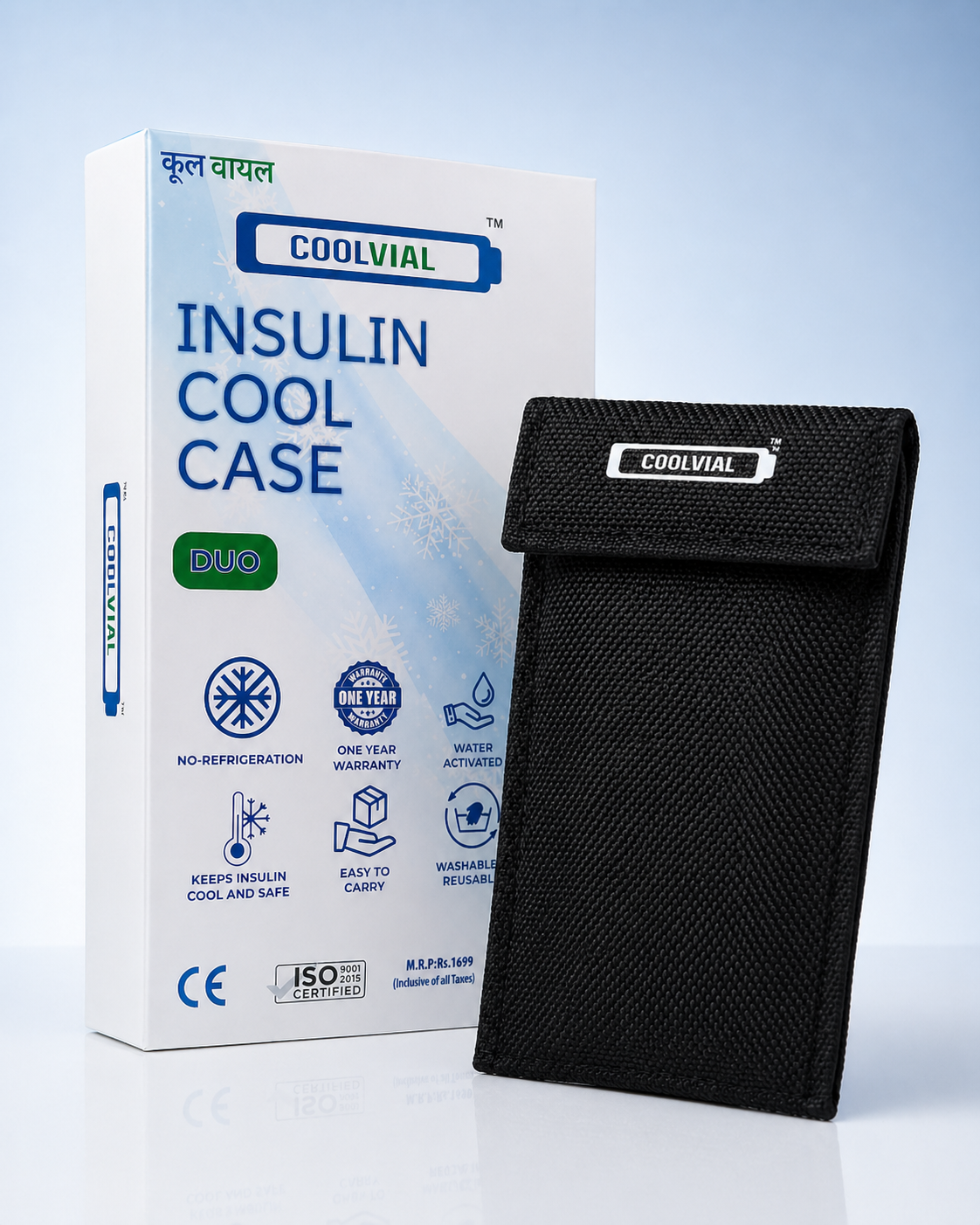
- COOLVIAL Duo: For train travel, the COOLVIAL Duo is an excellent choice. It can hold 2 pens and 1 vial, keeping your insulin cool for 12-16 hours. Simply activate it with water before your journey, and it’s ready to go. Unlike ice packs, it doesn’t require refrigeration, making it perfect for long train rides.
- Comparison with Alternatives: While other options exist, consider the COOLVIAL Duo at Rs 1,099 with code COOLHEAL. A popular alternative like FRIO typically costs around Rs 1,900, while a basic insulated pouch like Outer Woods OW-12 might be around Rs 999 but offers less precise temperature control and shorter cooling duration. The COOLVIAL Duo strikes a balance of affordability, reliability, and capacity for typical travel needs.
- On-Train Storage Tips:
- Keep it with you: Always keep your insulin cooling case with you, preferably in your day bag, rather than storing it in overhead racks where it might be exposed to direct sunlight from windows or forgotten.
- Avoid direct sunlight: Even inside your cooling case, prolonged exposure to direct sunlight through train windows can increase the internal temperature. Keep your bag in the shade.
- Monitor temperature: If possible, use a small travel thermometer inside your cooling case to periodically check the temperature, especially on longer journeys or if the ambient temperature inside the coach feels very warm.
Remember, the responsibility for your insulin’s safety rests solely with you. Investing in a quality cooling solution for travelling from Kota with insulin by train is a small price for your health.
Conquering Kota’s Roads: Taxi AC, Hot Cars, and Dhaba Pit-stops
Road trips are a popular way to explore the beautiful regions surrounding Kota, from the historical Bundi and Chittorgarh to the natural beauty of Jhalawar. However, the intense heat of Rajasthan, especially during the dry months (March-June) and even during the monsoon (July-September) when humidity adds to the discomfort, poses significant risks to insulin.
11 Essential Tips for Smart Travelling From Kota With Insulin
Insulin at 2-8°C for 48+ hours. Trusted by 10,000+ Indian diabetics.
- Taxi AC Reliability:
- Varying Conditions: Taxis, especially those hired from local stands or smaller operators, may have unreliable air conditioning. Some older vehicles might have AC that struggles to cope with 40°C+ temperatures, while others might simply not be maintained well.
- Driver Preferences: Drivers might switch off the AC to save fuel, or use it intermittently. This inconsistent cooling can be detrimental to your insulin. Always confirm AC functionality and driver’s willingness to keep it on before starting a long journey.
- Pre-booked vs. Spot Hire: When possible, pre-book a taxi through a reputable service or hotel (like those near the Chambal Riverfront or City Palace area) and explicitly state your need for consistent AC. This gives you a better chance of getting a well-maintained vehicle.
- Parking Insulin in a Hot Car: This is one of the most dangerous scenarios for insulin.
- Rapid Temperature Rise: Even on a moderately warm day in Kota (say, 35°C), the interior of a parked car can quickly reach 50-60°C within minutes. Insulin exposed to such temperatures for even a short period can degrade significantly.
- Never Leave Insulin Unattended: If you must leave your car, take your insulin cooling case with you. Do not leave it in the glove compartment, under the seat, or in the boot. Even a few minutes can be too long.
- Dhaba Pit-Stop Fridge Access:
- Limited Reliability: While many dhabas (roadside eateries) have refrigerators for cold drinks, they are not typically set to the precise temperatures required for insulin. Like pantry cars, these fridges are often opened frequently, leading to temperature fluctuations.
- Hygiene Concerns: The hygiene standards of dhabas can vary, and you might not want your medication stored alongside food items.
- Best Practice: Rely on your evaporative cooling case. At a dhaba, you can usually ask for some water to re-activate your COOLVIAL Duo if needed, ensuring continuous cooling without depending on their infrastructure.
Road Trip Checklist for Insulin Users:
- COOLVIAL Duo: Your primary defence against heat. Ensure it’s properly activated before departure.
- Water Bottle: Carry an extra bottle of water specifically for re-activating your cooling case, especially if you anticipate long stretches without clean water access.
- Emergency Supplies: Always carry extra insulin, syringes/needles, and blood glucose testing supplies. Consider a small, portable first-aid kit.
- Route Planning: Plan your route to include regular, safe stops where you can re-hydrate and check your insulin.
- Inform Fellow Travellers: Make sure anyone travelling with you knows about your diabetes and how to handle your insulin in an emergency.
For longer road trips, like to Jaipur or Udaipur, consider carrying a spare COOLVIAL insulin cool case or ensuring you have access to pharmacies like Apollo Pharmacy or MedPlus in larger towns along the way for emergency supplies. For more detailed local information, consult the Complete Diabetes Care Guide for Kota Residents — 2026 Edition.
The Reality of App-Cabs and Bike-Taxis in Kota for Insulin Users
App-based cab services like Ola and Uber, and bike-taxis like Rapido, are popular modes of transport within Kota’s neighborhoods such as Talwandi, Vigyan Nagar, and Indraprastha Industrial Area, and for shorter distances. While convenient, they come with specific challenges for insulin users.
- Ola/Uber Drivers Refusing AC:
- Fuel Consumption: A common issue, especially during shorter rides or peak traffic, is drivers refusing to switch on the AC or turning it off midway to save fuel. This is particularly prevalent during the harsh Kota summers.
- Negotiate Upfront: If booking an economy cab, it’s wise to confirm with the driver about AC usage immediately upon arrival. If they refuse, you might need to cancel and rebook a ‘Prime’ or AC-guaranteed option, although even then, compliance can vary.
- Impact on Insulin: Even a 15-20 minute ride in a non-AC cab in Kota’s 40°C+ heat can expose your insulin to damaging temperatures. Your COOLVIAL Duo will provide a critical buffer in such situations.
- Rapido Bike-Taxi Exposure:
- Direct Heat: Bike-taxis like Rapido offer speed and affordability but provide no protection from the elements. Your insulin will be directly exposed to ambient air temperatures, which in Kota can be extremely high.
- Vibrations: The constant vibrations and bumps of a bike ride, especially on less-maintained roads, can also impact insulin integrity over time, though temperature is the primary concern.
- Not Recommended for Insulin: For these reasons, bike-taxis are generally not recommended when carrying insulin, especially if your insulin is not in a robust, well-insulated cooling case. If you must use one for a short distance, ensure your COOLVIAL Duo is securely packed and protected from direct sunlight.
Tips for App-Cab Travel in Kota:
- Prioritize AC: Always opt for AC cabs, even if it costs slightly more. Your health is worth it.
- COOLVIAL Duo is Key: Your evaporative cooling case is your best friend here. It provides independent cooling, so you’re not solely reliant on the vehicle’s AC.
- Short Rides, High Risk: Even short rides in non-AC vehicles pose a risk. Be mindful of the ambient temperature. For daily commutes within Kota, our article Daily Commute With Insulin in Kota — Tips for Metro, Bus & Auto offers more specific advice.
- Plan Ahead: If you know you’ll be using app-cabs, activate your COOLVIAL Duo well in advance.
Your Indispensable Travel Companion: COOLVIAL Duo
When travelling from Kota with insulin, a reliable cooling solution isn’t just a convenience; it’s a necessity. The COOLVIAL Duo is specifically designed for the Indian climate, offering a practical and affordable way to keep your insulin safe without needing electricity or refrigeration.
Why COOLVIAL Duo is Ideal for Kota’s Climate:
- Water-Activated Evaporative Cooling: Unlike traditional ice packs that require freezing and quickly thaw in extreme heat, the COOLVIAL Duo uses a unique evaporative cooling technology. You simply activate it with water, and the special crystals inside absorb the water, creating a cooling effect through evaporation. This process keeps your insulin at the safe temperature range of 18-26°C (ideal for in-use pens) or significantly below ambient temperature for up to 12-16 hours.
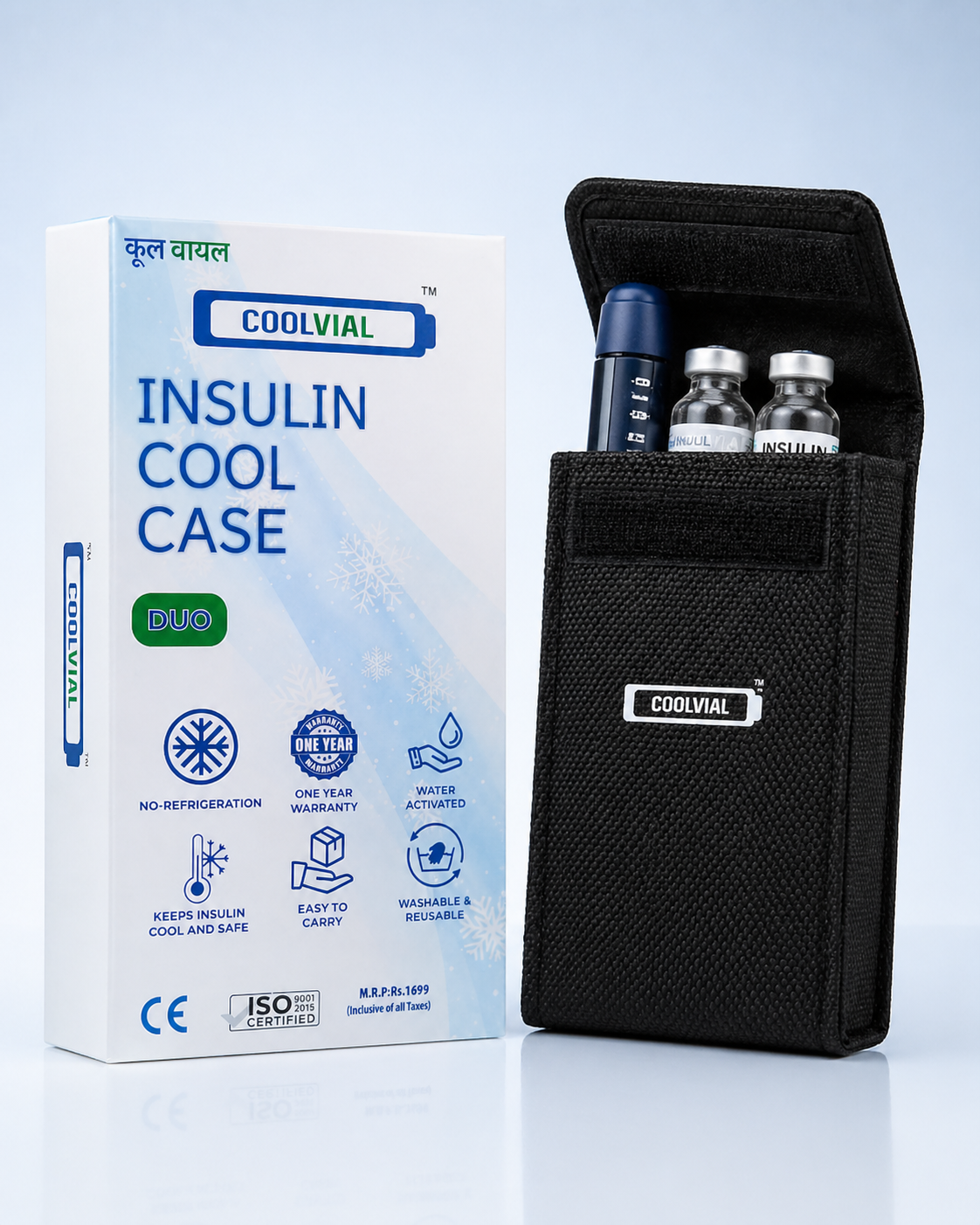
- Holds Multiple Supplies: The COOLVIAL Duo is thoughtfully designed to hold 2 insulin pens and 1 insulin vial, along with pen needles or a few syringes. This capacity makes it perfect for short trips or ensuring you have enough supply for a few days of travel.
- No Electricity Needed: This is a game-changer for Indian travel. Whether you’re on a long train journey, stuck in traffic during a road trip, or facing power cuts at your destination, the COOLVIAL Duo works independently. No more searching for a fridge or worrying about battery life.
- Robust and Durable: Made in India, the COOLVIAL Duo is built to withstand the rigours of travel. It’s CE certified and ISO 9001:2015 compliant, assuring you of its quality and safety standards. It also comes with a 1-year warranty for peace of mind.
- Cost-Effective Solution: Priced at Rs 1,099 with the special code COOLHEAL (MRP Rs 1,699), the COOLVIAL Duo offers excellent value. When compared to alternatives, it stands out:
- FRIO: A well-known brand, often priced around Rs 1,900. While effective, it’s nearly double the cost of the COOLVIAL Duo.
- Outer Woods OW-12: A more budget-friendly option at around Rs 999, but typically offers a shorter cooling duration and may not maintain as stable a temperature as an evaporative cooler, relying more on insulation.
- DIY Solutions: Using a simple insulated pouch with ice packs is cheaper but requires constant re-freezing, which is impractical for most travel scenarios in India.
- Peace of Mind: Knowing your insulin is safely stored, protected from Kota’s scorching heat, allows you to focus on your journey rather than constantly worrying about your medication.
For anyone managing diabetes in Kota and planning to travel, the COOLVIAL Duo is an investment in your health and peace of mind. It’s an essential item that empowers you to travel confidently, knowing your insulin is secure. Learn more about optimal insulin storage tips to complement your COOLVIAL case.
11 Essential Tips for Smart Travelling From Kota With Insulin
International Travel from Kota: Customs, Time Zones, and Preparedness
While Kota Airport (KTU) doesn’t offer direct international flights, many residents will connect through larger international airports like Delhi or Mumbai. International travel adds layers of complexity to insulin management, especially concerning customs regulations and time-zone adjustments.
- Customs and Security at International Hubs:
- Doctor’s Letter is Mandatory: For international travel, a comprehensive doctor’s letter (as described earlier, from a reputable hospital like New Medical College Hospital) is absolutely essential. It should be translated into English and, if possible, into the language of your destination country.
- Original Packaging: Keep insulin in its original pharmacy-labelled boxes. This helps customs officials identify the medication.
- Quantity Limits: Be aware of any quantity limits for medication in your destination country. Generally, carrying a supply for the duration of your trip plus a few extra days is acceptable, but excessive amounts might raise questions.
- Security Screening: Expect thorough security screening. Your insulin and cooling case will be subject to X-ray and possibly hand-inspection. Be prepared to explain what they are.
- Time-Zone Dosing Adjustments:
- Consult Your Doctor: Before an international trip, always consult your endocrinologist or diabetologist at Maharao Bhim Singh Hospital (MBS) or Suwidhi Hospital. They will help you devise a specific dosing schedule to account for time zone changes.
- Gradual Adjustment: For shorter trips across a few time zones, you might continue on your home time zone’s schedule. For longer trips or significant time differences, a gradual adjustment might be necessary to avoid hypo or hyperglycemia.
- Carry a Watch with Home Time: Always wear a watch set to your home time zone, in addition to one set to local time, to help with dosing calculations.
- Emergency Preparedness:
- Split Your Supplies: Divide your insulin and supplies between two separate bags (both carry-on) in case one bag is lost or delayed.
- Destination Pharmacy Knowledge: Research pharmacies and hospitals at your destination. Know where you can get emergency supplies if needed.
- Travel Insurance: Ensure your travel insurance covers pre-existing conditions like diabetes and emergency medical care, including insulin replacement.
- COOLVIAL Duo for International Travel: The COOLVIAL Duo remains an excellent choice for international travel. Its water-activated system means you don’t need to worry about different electrical outlets or finding refrigeration in various countries. It’s discreet, effective, and provides continuous cooling for your insulin pens and vials, making your journey smoother from Kota to anywhere in the world.
Frequently Asked Questions (FAQs)
Q: Can I put my insulin in checked luggage when travelling from Kota? A: No, you should never put insulin in checked luggage when travelling from Kota or anywhere else. Checked baggage compartments can experience extreme temperatures that can damage insulin, and there’s a risk of loss or delay.
Q: Do I need a doctor’s letter for carrying insulin at Kota Airport (KTU)? A: While not always strictly enforced at smaller domestic airports like KTU, a doctor’s letter is highly recommended for carrying insulin. It should state your medical condition and list your necessary supplies.
Q: Are pantry car fridges on trains from Kota Junction safe for insulin storage? A: No, pantry car fridges on trains are generally unreliable for insulin storage. Their temperatures are inconsistent, access can be limited, and there’s a risk of loss or damage. Always use your own dedicated cooling case.
Q: How long does the COOLVIAL Duo keep insulin cool? A: The COOLVIAL Duo keeps insulin cool for 12-16 hours through water-activated evaporative cooling, maintaining a safe temperature for your medication without needing electricity.
Q: What should I do if my Ola/Uber driver in Kota refuses to turn on the AC? A: If an app-cab driver in Kota refuses to turn on the AC, politely insist. If they still refuse, consider cancelling and rebooking an AC-guaranteed option. Your COOLVIAL Duo will provide a crucial buffer in such situations.
Q: Can I use a Rapido bike-taxi with insulin in Kota’s heat? A: Using a Rapido bike-taxi with insulin in Kota’s heat is generally not recommended due to direct exposure to high ambient temperatures and vibrations. If absolutely necessary for a short distance, ensure your insulin is in a robust cooling case like the COOLVIAL Duo.
Q: What is the ideal temperature range for storing insulin? A: Unopened insulin vials or pens should be stored in a refrigerator between 2-8°C. Once opened and in-use, insulin can generally be kept at room temperature (up to 25-30°C) for a certain period, but avoiding extreme heat is always best.
Q: Where can I buy emergency insulin supplies in Kota? A: In Kota, you can find emergency insulin supplies at major pharmacies like Apollo Pharmacy, MedPlus, 1mg, Generic Aadhaar, and Kota Pharmacy, particularly in areas like Talwandi and Vigyan Nagar.
Conclusion
Travelling from Kota with insulin, whether by air, rail, or road, requires foresight and the right tools. Kota’s extreme climate, coupled with the realities of Indian transportation, makes diligent insulin storage a non-negotiable aspect of your travel plans. From understanding airport security protocols at KTU to dispelling myths about train pantry car fridges, and navigating the unpredictable AC of local taxis, every step requires careful consideration. The key takeaway is clear: never compromise on the safety of your life-saving medication.
An evaporative cooling case like the COOLVIAL Duo is not just an accessory; it’s an essential travel companion, purpose-built to protect your insulin from the heat without relying on electricity. Its ability to hold 2 pens and 1 vial for 12-16 hours, its CE and ISO certifications, and its proud “Made in India” stamp make it a trustworthy choice for anyone managing diabetes on the go. By taking proactive steps and equipping yourself with reliable solutions, you can embark on your journeys from Kota with confidence and peace of mind.
Order your COOLVIAL Duo today at an exclusive price of Rs 1,099 with code COOLHEAL. Visit coolvial.com or connect with us directly via WhatsApp at wa.me/918766952300. Travel smart, travel cool!
Medical Disclaimer: This article is for general information. Always consult your endocrinologist or diabetologist before changing insulin storage or dosing practices.
Methodology Note: How We Researched This — This article is based on a comprehensive review of RSSDI guidelines for diabetes management in India, ICMR-INDIAB data on diabetes prevalence, local Kota hospital directories (including Maharao Bhim Singh Hospital (MBS), Suwidhi Hospital, and New Medical College Hospital), and insights from the Apollo Pharmacy network regarding medication availability and storage challenges in the region. Information on local travel conditions and infrastructure has been compiled from publicly available data and common traveler experiences in Kota. Aspects requiring real-time verification in 2026 are marked accordingly.
11 Essential Tips for Smart Travelling From Kota With Insulin
48+ hours at 2-8°C. No electricity. CE certified. Free delivery across India.
Order on WhatsApp — ₹1,099🛒 Buy Now — ₹1,099