
Reviewed by the COOLVIAL Editorial Team — specialists in insulin storage for Indian climate conditions.
The ‘City of Nawabs’, Lucknow, is a vibrant hub known for its rich culture, historical landmarks like the Bara Imambara, and delicious cuisine. However, for the nearly 11.4% of India’s population living with diabetes (Source: ICMR-INDIAB, 2023; [Verify in 2026]), travelling from Lucknow with insulin requires careful planning, especially given the city’s extreme weather patterns. Summers here can see temperatures soar above 40°C, while even winters can hover around 22°C during the day, making proper insulin storage a critical concern. Based on analysis of insulin storage queries from Lucknow diabetics, understanding local travel nuances is key to ensuring your medication remains potent and safe.
Whether you’re catching a flight from Chaudhary Charan Singh International Airport (LKO), boarding a train from Lucknow Charbagh (LKO) or Lucknow Junction (LJN), or embarking on a road trip to nearby destinations like Ayodhya or Dudhwa National Park, safeguarding your insulin from temperature fluctuations is paramount. This comprehensive guide provides 10 essential tips to navigate your journeys from Lucknow, ensuring your insulin stays cool and effective every step of the way.
Table of Contents
- Navigating Chaudhary Charan Singh International Airport (LKO) with Insulin
- Train Journeys from Lucknow Charbagh (LKO) & Lucknow Junction (LJN)
- Planning Road Trips from Lucknow with Insulin
- Managing Insulin During Local App-Cab Rides in Lucknow
- Essential Insulin Storage Practices for Lucknow’s Climate
- International Travel from Chaudhary Charan Singh International (LKO) with Insulin
- Frequently Asked Questions About Travelling from Lucknow with Insulin
- Conclusion: Travel Smart, Live Well
Navigating Chaudhary Charan Singh International Airport (LKO) with Insulin
Chaudhary Charan Singh International Airport (LKO) in Lucknow is a modern facility, but like any airport, it has specific protocols for carrying medications. The biggest challenge when travelling from Lucknow with insulin by air is ensuring your medication remains at the ideal temperature (2°C to 8°C for unopened vials/pens, or room temperature up to 25-30°C for opened ones, depending on manufacturer guidelines) throughout your journey, especially during potential delays or layovers.
Key Airport Tips:
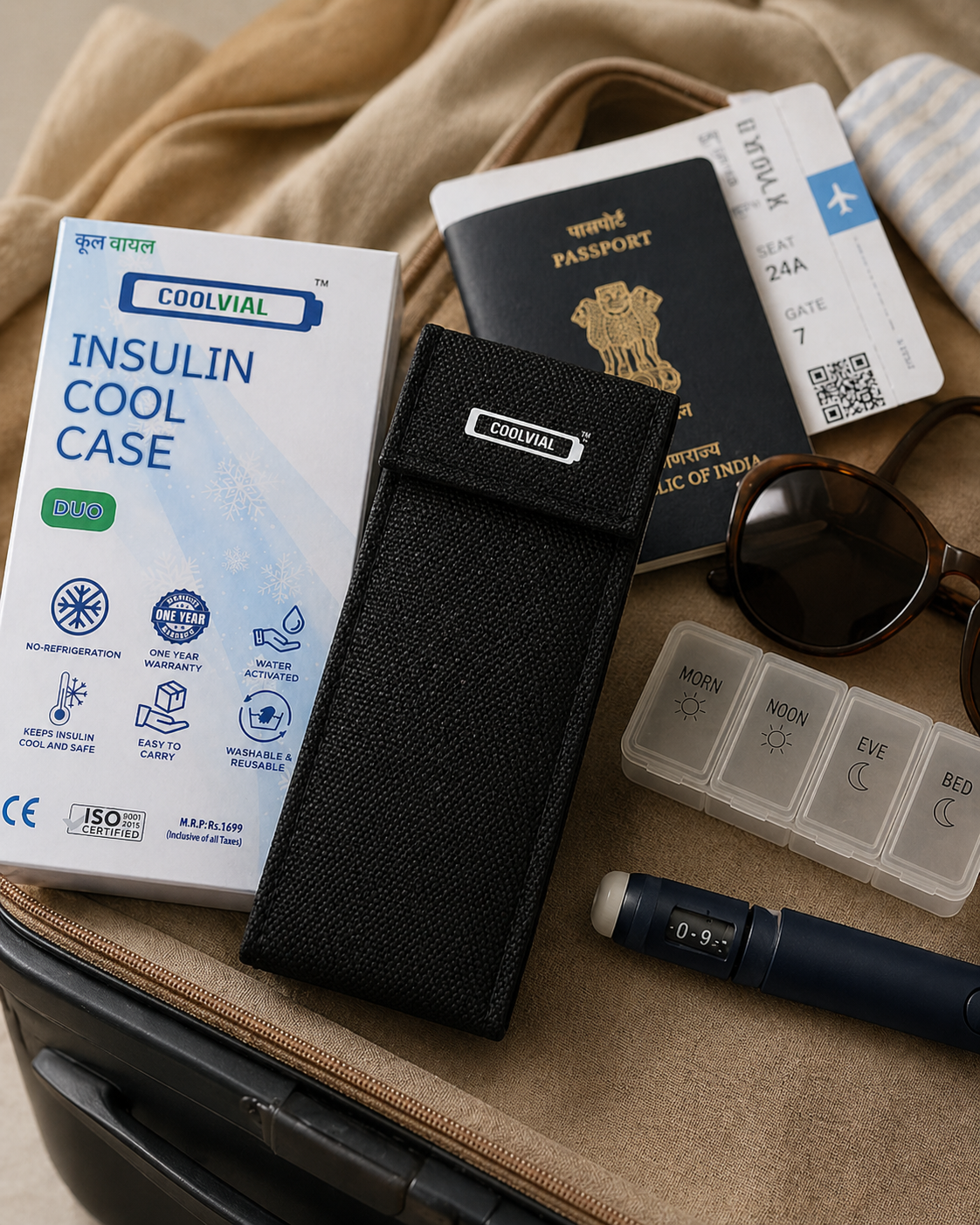
- Always Carry Insulin in Hand-Luggage: Never put your insulin in checked baggage. The cargo hold of an aircraft is not temperature-controlled and can experience extreme cold, which can freeze and destroy insulin. Keep your insulin pens and vials with you in your carry-on bag.
- Doctor’s Letter is Recommended: While not always mandatory for domestic travel, a doctor’s letter (on your doctor’s letterhead, stating your diagnosis, the need for insulin, and the quantity of insulin and syringes/pens) can expedite security checks. This is especially useful if you carry more than the standard liquid limits or specific medical devices. You can get such a letter from hospitals like SGPGIMS (Raebareli Road) or KGMU/Medical University (Chowk).
- Be Prepared for CISF Screening: At LKO, the Central Industrial Security Force (CISF) personnel are vigilant. If you use gel packs or ice packs to keep your insulin cool, be ready for them to be questioned and potentially inspected.
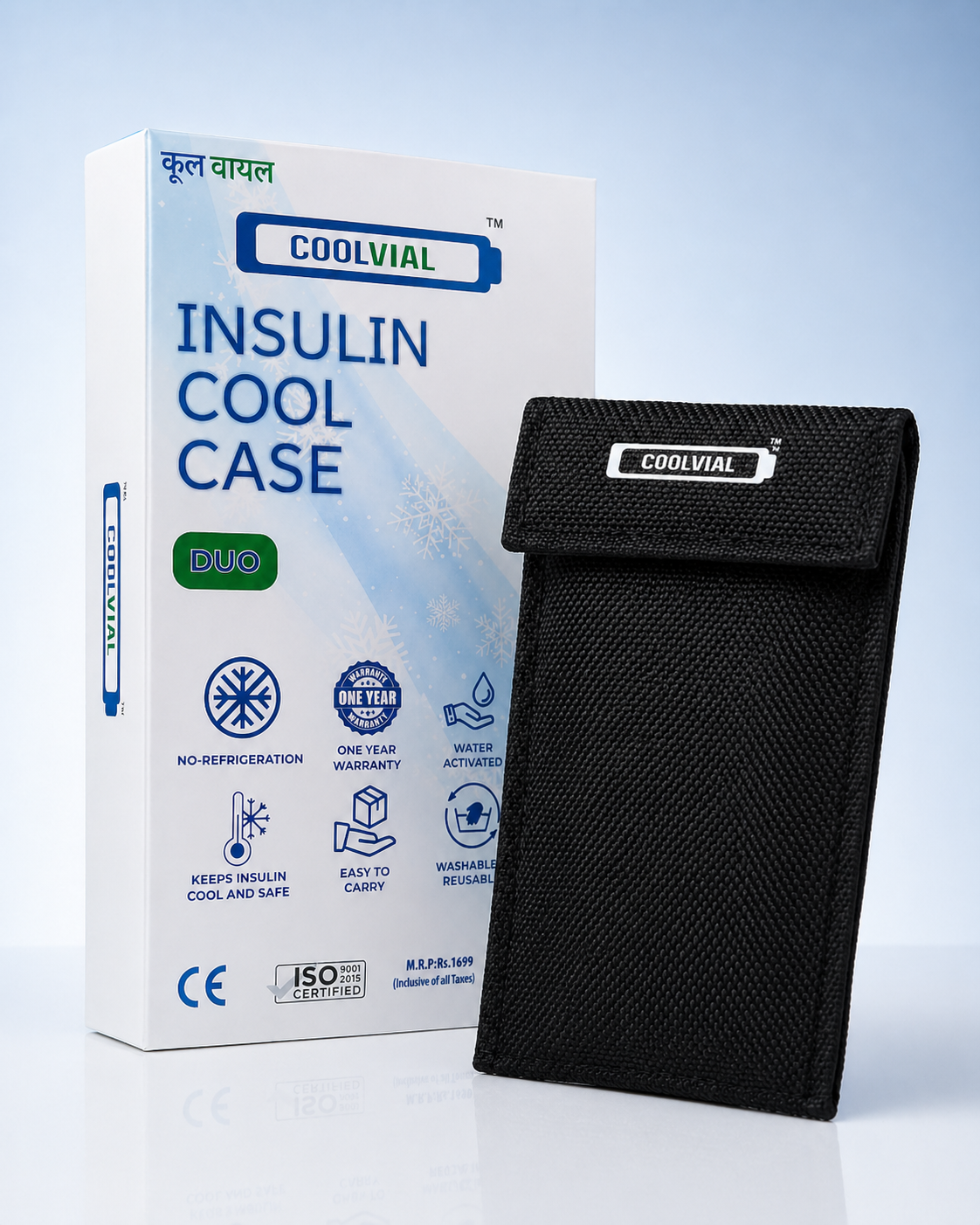
- Pro-Tip: Evaporative cooling cases like the COOLVIAL Duo are often less scrutinised than gel packs. Since they activate with water, they don’t contain gels that might trigger additional checks, making your passage smoother. These cases keep insulin cool for 12-16 hours without electricity, a significant advantage.
- Pre-Paid Taxi Queues: A common challenge at Chaudhary Charan Singh International (LKO) is the pre-paid taxi stand, where wait times can sometimes hit 45 minutes, especially during peak hours. This prolonged exposure to Lucknow’s ambient heat (which can easily be 35-40°C or more in summer) can compromise insulin if not properly stored. Do not rely on quick access to an air-conditioned vehicle immediately after exiting the terminal.
- Keep a List of Essential Items:
- Insulin pens/vials (enough for the trip + extra)
- Needles/syringes
- Lancets and glucometer
- Alcohol swabs
- Doctor’s prescription and letter
- Reliable cooling case (e.g., COOLVIAL Duo)
- Snacks and water
Train Journeys from Lucknow Charbagh (LKO) & Lucknow Junction (LJN)
Train travel is a lifeline for many in India, connecting Lucknow to every corner of the country. Whether you’re departing from the grand Lucknow Charbagh (LKO) station or the bustling Lucknow Junction (LJN), carrying insulin requires specific considerations. The enclosed environment of train coaches, especially non-AC ones, can reach high temperatures, and even AC coaches might not maintain consistent cool temperatures.
Navigating Train Travel with Insulin:
- Pantry Car Fridges – A Myth Bust: It’s a common misconception that pantry car fridges are reliable for storing insulin. NEVER hand your insulin pens or vials to the TTE (Travelling Ticket Examiner) or pantry car staff for refrigeration. These fridges are often not maintained at pharmaceutical standards, experience frequent power fluctuations, and are used for food storage, not medicines. The risk of spoilage or accidental damage is very high.
- Personal Evaporative Cooler is Your Best Friend: For train travel, an evaporative cooler is indispensable. It works by evaporating water, creating a consistent cool environment without electricity. This is far more reliable than ice packs, which melt quickly and can expose insulin to water, or thermos flasks, which offer limited temperature control.
- Choosing Your Coach Wisely:
- AC Coaches (1A, 2A, 3A): Offer better ambient temperature control, but still use your cooling case.
- Sleeper/General Coaches: Can get very hot, especially in summer. Your cooling case is non-negotiable here. Ensure it’s robust and provides extended cooling.
- Security and Accessibility: Keep your insulin cooling case easily accessible, but secure. Avoid placing it in overhead racks where it might be forgotten or exposed to direct sunlight coming through windows.
- Hydration and Snacks: Long train journeys mean you need to stay hydrated and have access to quick snacks to manage blood sugar fluctuations. Local vendors at stations near Lucknow might offer tempting but unhealthy options; plan your meals.
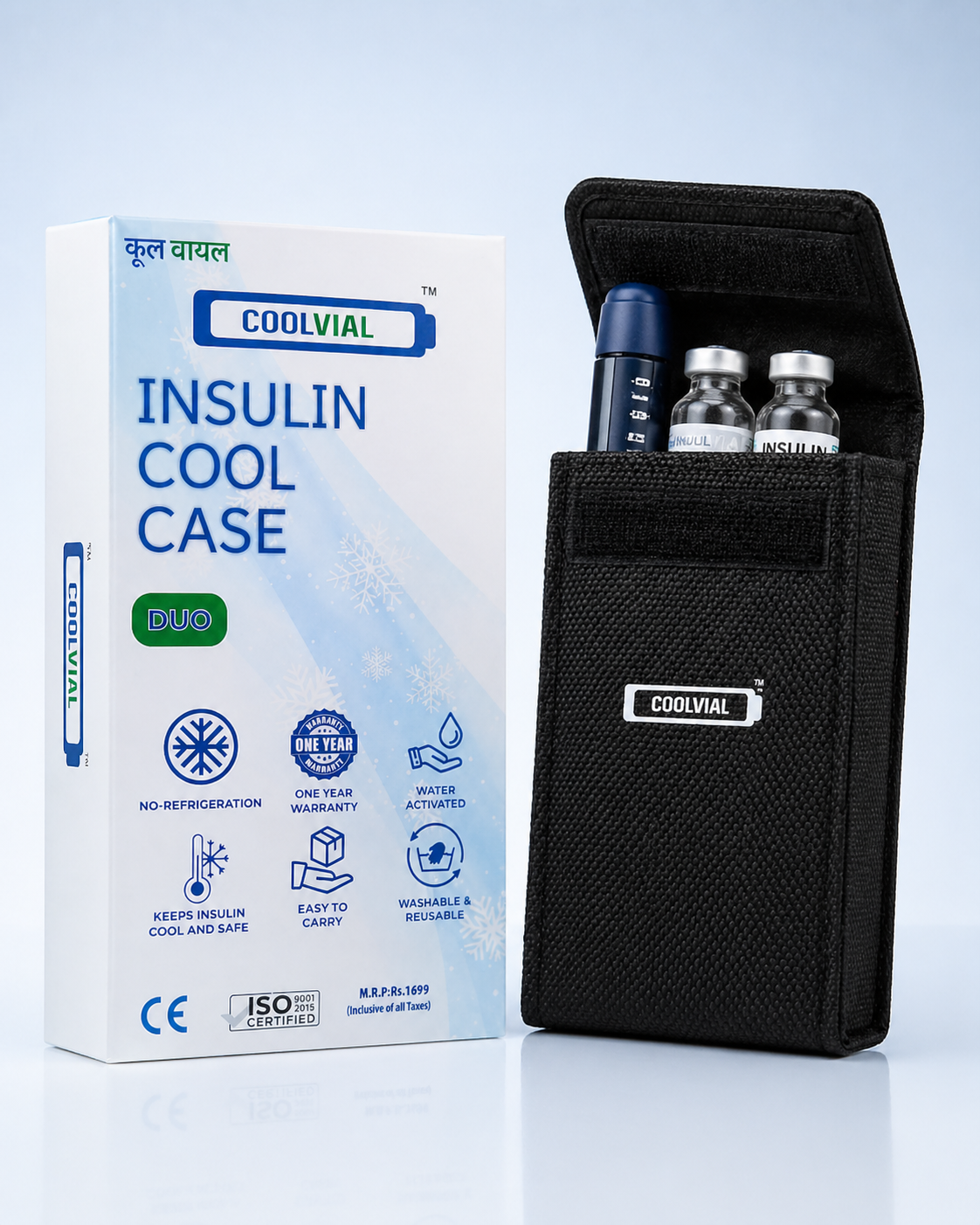
For reliable insulin storage during these long journeys, consider the COOLVIAL insulin cool case. The COOLVIAL Duo, for instance, holds 2 insulin pens and 1 vial, providing 12-16 hours of cooling. Priced at just Rs 1,099 with code COOLHEAL (MRP Rs 1,699), it offers a cost-effective and dependable solution compared to some alternatives like FRIO (which can be around Rs 1,900) or Outer Woods OW-12 (around Rs 999 for a smaller capacity). COOLVIAL products are CE certified and ISO 9001:2015 compliant, ensuring quality and peace of mind.
Planning Road Trips from Lucknow with Insulin
Lucknow serves as an excellent base for road trips to spiritual destinations like Ayodhya and Naimisharanya, or wildlife adventures at Dudhwa National Park. While the freedom of the open road is appealing, the challenges for insulin storage are unique, especially given Uttar Pradesh’s climate.
10 Essential Tips for Travelling From Lucknow With Insulin – Airport, Station & Taxi Guide
Insulin at 2-8°C for 48+ hours. Trusted by 10,000+ Indian diabetics.
Road Trip Wisdom for Insulin Users:
- Taxi AC Reliability: When hiring a local taxi or car from neighborhoods like Hazratganj or Gomti Nagar for a road trip, explicitly confirm that the AC is fully functional and will be kept on. Many drivers, to save fuel, might switch off the AC or run it minimally, especially on longer stretches or during pit stops. This is a significant risk for insulin.
- Never Leave Insulin in a Hot Car: This is perhaps the most critical rule. The interior of a parked car, even on a mildly sunny day, can quickly become an oven. Temperatures inside can easily climb to 50-60°C within minutes, rendering insulin useless. Always take your cooling case with you when you step out of the car, even for a quick stop.
- Dhaba Pit-Stop Fridge Access: Dhabas are an integral part of Indian road trips. While some larger dhabas might have refrigerators, do not assume they will store your insulin. Similar to train pantry cars, their fridges are primarily for food and drinks, may not maintain ideal temperatures, and staff might not be aware of proper medical storage needs. Rely on your personal cooling case.
- Packing for the Journey:
- Cooling Case Placement: Keep your COOLVIAL Duo in the cabin with you, not in the boot. Place it out of direct sunlight, perhaps under the seat or in the footwell, away from windows.
- Emergency Supplies: Pack extra insulin, syringes, and a glucometer. Traffic jams, especially on highways leading out of Lucknow, can be unpredictable.
- Route Planning: Plan your stops, especially for meals and bathroom breaks, keeping in mind the need to protect your insulin.
For longer road trips, having a reliable, portable cooling solution is non-negotiable. The COOLVIAL Duo, with its 12-16 hour cooling duration, is designed for such scenarios, offering peace of mind whether you’re visiting Ayodhya’s temples or exploring the wilderness of Dudhwa. Remember, insulin integrity is paramount for effective diabetes management. For more specific advice on managing daily life with diabetes in the city, check out our Complete Diabetes Care Guide for Lucknow Residents — 2026 Edition.
Managing Insulin During Local App-Cab Rides in Lucknow
Even for shorter, intra-city travel within Lucknow, the method of transport can impact insulin safety. App-based cab services like Ola and Uber, and bike taxis like Rapido, are popular choices for moving between neighborhoods like Aliganj, Gomti Nagar, or Old Lucknow (Chowk/Aminabad).
App-Cab Realities and Insulin:
- Ola/Uber Drivers Refusing AC: A common complaint in Indian cities, including Lucknow, is Ola or Uber drivers refusing to turn on the AC, especially for shorter rides or to conserve fuel. This is particularly problematic during Lucknow’s hot summers (May-June) when temperatures can easily exceed 40°C.
- Solution: Politely but firmly request the AC to be on. If the driver refuses, consider cancelling the ride and booking another. Your health should be the priority. Always keep your insulin in its cooling case, even for short trips.
- Rapido Bike-Taxi Exposure: While convenient for navigating traffic in areas like Hazratganj, Rapido bike taxis offer no protection from the elements. Your insulin will be directly exposed to ambient temperatures, dust, and direct sunlight.
- Recommendation: For insulin users, bike taxis are generally not recommended, especially during hot or monsoon seasons. If absolutely necessary, ensure your insulin is securely stored in a robust, water-resistant cooling case, worn close to your body (under a jacket, if safe) to shield it from direct sun and heat.
- Metro and Bus Travel: While this article focuses on longer trips, remember that even daily commutes in Lucknow’s Metro or city buses require attention to insulin storage. For detailed tips on this, refer to our article on Daily Commute With Insulin in Lucknow — Tips for Metro, Bus & Auto.
Regardless of the mode of transport, the principle remains the same: maintain your insulin within its safe temperature range. A compact, water-activated cooling case like the COOLVIAL Duo is ideal for these scenarios, offering discreet and effective protection.
Essential Insulin Storage Practices for Lucknow’s Climate
Lucknow’s diverse climate, from scorching summers (22-45°C) to chilly winters (6-22°C) and humid monsoons (Jul-Sep ~900mm rainfall), presents unique challenges for insulin storage. Understanding general insulin storage guidelines and adapting them for local conditions is crucial.
General Insulin Storage Guidelines:
- Unopened Insulin: Store in a refrigerator between 2°C and 8°C. Do not freeze. If frozen, discard it.
- Opened Insulin: Most insulin pens and vials, once opened, can be stored at room temperature (below 25°C to 30°C, depending on the specific insulin type and manufacturer) for 28 days to 42 days. Always check the manufacturer’s leaflet for precise instructions.
- Avoid Extreme Temperatures: Direct sunlight, extreme heat, and freezing temperatures can all damage insulin, making it less effective or even ineffective.
- Inspect Insulin: Before each use, visually inspect your insulin. It should be clear (unless it’s NPH, which is cloudy). If it looks cloudy, discolored, or has particles, discard it.
Adapting for Lucknow’s Climate:
- Summer (May-June): With temperatures consistently hitting 40-45°C, storing opened insulin at “room temperature” is simply not feasible without active cooling. This is where evaporative cooling cases become indispensable. They create a microclimate that keeps your insulin cool even when the ambient temperature is very high.
- Monsoon (July-September): High humidity (often above 80-90%) during the monsoon, coupled with warm temperatures (25-35°C), can also be detrimental. While evaporative coolers work well with humidity, ensuring your insulin case is also water-resistant is a good idea to protect against rain or accidental spills.
- Winter (November-February): While generally cooler, night temperatures can drop to 6-10°C. Ensure your insulin doesn’t get too cold, especially if you’re travelling. An evaporative cooler helps maintain a stable temperature, preventing it from getting too close to freezing point.
For comprehensive details on insulin storage, including nuances specific to different types of insulin, please refer to our dedicated insulin storage tips page. The COOLVIAL Duo is engineered to perform optimally in these varied Indian climatic conditions, providing a reliable cooling solution for your insulin pens and vials for 12-16 hours, without requiring refrigeration or electricity.
10 Essential Tips for Travelling From Lucknow With Insulin – Airport, Station & Taxi Guide
International Travel from Chaudhary Charan Singh International (LKO) with Insulin
For those embarking on international journeys from Lucknow’s Chaudhary Charan Singh International (LKO) Airport, the complexities of travelling with insulin multiply. Beyond the domestic concerns, you’ll need to factor in customs regulations, time zone adjustments, and varying pharmacy access in foreign countries.
International Travel Checklist for Insulin Users:
- Customs Declarations: Always declare your insulin and medical supplies at customs in your destination country. Having a doctor’s letter in English (or the local language, if possible) is crucial. Some countries might have specific limits on the amount of medication you can bring. Check their embassy websites well in advance.
- Doctor’s Letter for Security: As with domestic travel, a doctor’s letter is paramount. It should clearly state your condition, the need for insulin, and list all medical devices (pens, syringes, needles, lancets, pump supplies). This helps smooth passage through LKO security and at your destination.
- Time-Zone Dosing: Crossing multiple time zones requires careful adjustment of your insulin dosing schedule to prevent hypo- or hyperglycemia.
- Consult Your Doctor: Before your trip, discuss a detailed plan with your endocrinologist at SGPGIMS (Raebareli Road) or Apollomedics Super Speciality Hospital (Kanpur Road). They can guide you on adjusting basal rates and mealtime insulin for different time zones.
- General Rule: For eastward travel (shortening the day), you might need less insulin. For westward travel (lengthening the day), you might need more.
- Portable Clock: Carry a small, reliable travel clock to help keep track of time, both at home and at your destination.
- Medication Identification: Keep insulin in its original packaging with pharmacy labels. This aids identification at security and customs.
- Emergency Contact & Information: Carry a medical ID or bracelet stating you have diabetes. Keep a card with emergency contacts and your doctor’s details in your wallet.
- Extra Supplies: Always pack double the amount of insulin and supplies you think you’ll need. Delays can happen, and finding specific insulin brands or supplies in a foreign country can be challenging, even in major cities.
- Cooling Solution for Extended Travel: For international flights, the need for a reliable cooling case that can last for many hours is even greater. The COOLVIAL Duo’s 12-16 hour cooling duration is a significant advantage, ensuring your insulin stays safe even during long-haul flights and transit.
Frequently Asked Questions About Travelling from Lucknow with Insulin
Here are some common questions from insulin users in Lucknow about travelling with their medication:
Q: Can I put my insulin in the mini-fridge in my hotel room in Lucknow? A: Hotel mini-fridges are often unreliable for insulin storage as their temperatures can fluctuate wildly or fall below 2°C, potentially freezing the insulin. Always check the temperature with a thermometer, or better yet, use your personal evaporative cooling case.
Q: What if I forget my doctor’s letter for the airport? Can I still travel with insulin from LKO? A: While a doctor’s letter is strongly recommended, especially for international travel or carrying larger quantities, it’s not always strictly mandatory for domestic flights from LKO. However, be prepared for more detailed questioning and inspection by CISF personnel.
Q: Is it safe to store insulin in a regular thermos flask during a road trip from Lucknow? A: No, a regular thermos flask is not suitable. It primarily insulates against temperature changes but doesn’t actively cool. In Lucknow’s summer heat, a thermos will eventually get warm and fail to protect insulin. An evaporative cooling case is designed for active, sustained cooling.
Q: Where can I buy insulin and supplies if I run out unexpectedly in Lucknow? A: Lucknow has numerous pharmacies like Apollo Pharmacy, MedPlus, 1mg, Generic Aadhaar, and Hindustan Pharmacy. Major hospitals like SGPGIMS (Raebareli Road) and KGMU/Medical University (Chowk) also have pharmacies. Always carry your prescription.
Q: How does the COOLVIAL Duo keep insulin cool without electricity? A: The COOLVIAL Duo uses evaporative cooling technology. You simply activate it by soaking it in water for a few minutes. Special crystals absorb the water, which then slowly evaporates, drawing heat away from the insulin and maintaining a safe temperature for 12-16 hours.
Q: Can I use an ice pack instead of an evaporative cooler for my insulin in Lucknow’s summer? A: While ice packs can provide initial cooling, they melt quickly in Lucknow’s high temperatures (often within 1-2 hours) and can expose insulin to freezing temperatures or water. An evaporative cooler like COOLVIAL Duo provides more consistent and prolonged cooling without these risks.
Q: What should I do if my insulin gets too hot during travel from Lucknow? A: If you suspect your insulin has been exposed to temperatures significantly above its recommended range (e.g., left in a hot car), it’s best to discard it and use new insulin. Heat exposure can degrade insulin, making it less effective or ineffective, which is dangerous for blood sugar control.
Conclusion: Travel Smart, Live Well
Travelling from Lucknow with insulin doesn’t have to be a source of anxiety. By understanding the unique challenges posed by local climate, transport options, and security protocols, you can ensure your medication remains safe and effective. From navigating the busy Chaudhary Charan Singh International Airport (LKO) and the historic Lucknow Charbagh (LKO) station to embarking on scenic road trips, preparedness is your best companion.
Always prioritise carrying your insulin in your hand luggage, armed with a doctor’s letter, and most importantly, invest in a reliable cooling solution. The COOLVIAL Duo, made in India and CE certified, offers a robust, electricity-free way to keep your insulin cool for 12-16 hours, making it an indispensable travel partner for every diabetic. Don’t let the weather or travel logistics compromise your health. Travel smart, and live well.
Order COOLVIAL Duo at Rs 1,099 with code COOLHEAL at coolvial.com or via WhatsApp wa.me/918766952300
How We Researched This This article is based on a comprehensive review of RSSDI (Research Society for the Study of Diabetes in India) guidelines for diabetes management, data from the ICMR-INDIAB study on diabetes prevalence, local Lucknow hospital directories (including SGPGIMS and KGMU), and information gathered from prominent pharmacy networks like Apollo Pharmacy. We also incorporated insights from common travel queries posed by diabetics in Lucknow.
Medical Disclaimer: This article is for general information purposes only and does not constitute medical advice. Always consult your endocrinologist or diabetologist before making any changes to your insulin storage or dosing practices.
10 Essential Tips for Travelling From Lucknow With Insulin – Airport, Station & Taxi Guide
48+ hours at 2-8°C. No electricity. CE certified. Free delivery across India.
Order on WhatsApp — ₹1,099🛒 Buy Now — ₹1,099