
Reviewed by the COOLVIAL Editorial Team — specialists in insulin storage for Indian climate conditions.
Nashik, with its pleasant climate (typically 11-36°C) and scenic beauty, is a wonderful place to live and a popular starting point for journeys to spiritual landmarks like Trimbakeshwar or leisure spots like Sula Vineyards and Saputara. However, for the over 80 million Indians living with diabetes, of whom a significant number rely on insulin, travelling from Nashik with insulin requires careful planning. Insulin is a life-saving medication, but its efficacy is highly sensitive to temperature fluctuations, degrading rapidly above 25°C. This article provides 7 essential, practical tips for ensuring your insulin remains safe and potent, whether you’re catching a flight from Ozar Airport (ISK), boarding a train from Nashik Road (NK), or taking a taxi across the city or region. Based on analysis of insulin storage queries from Nashik diabetics, we’ll address the unique challenges of local transport and travel logistics in and around Maharashtra’s wine capital.
Table of Contents
- General Insulin Travel Preparation: The Foundation of Safe Journeys
- Navigating Ozar Airport (ISK) with Insulin: Security, Hand-Luggage & Taxi Queues
- Train Travel from Nashik Road (NK) & Devlali (DVL): Dispelling Myths and Ensuring Safety
- Road Trips from Nashik: Shirdi, Trimbakeshwar & Saputara – Handling Heat in Cabs & Dhabas
- App-Cabs in Nashik: Ola, Uber, and Rapido – Mitigating Local Transport Risks
- Your Reliable Travel Companion: COOLVIAL Duo for Nashik Travellers
- Considering International Travel from Ozar Airport (ISK): Customs, Time Zones & More
- Frequently Asked Questions (FAQ) about Travelling with Insulin in Nashik
- Conclusion: Empowering Your Nashik Journeys with Insulin
1. General Insulin Travel Preparation: The Foundation of Safe Journeys
Before you even step out of your home in College Road or Indira Nagar, thorough preparation is key when travelling from Nashik with insulin. This isn’t just about packing; it’s about understanding your needs, anticipating challenges, and equipping yourself with the right tools. Insulin, once opened, can last for 28 days at room temperature (up to 25-30°C depending on the specific brand), but direct exposure to high heat, like the summer peak of 36°C or higher in Nashik, can render it ineffective in a matter of hours.
Here’s a checklist to ensure you’re ready:
-
Consult Your Doctor:
- Doctor’s Letter: Obtain a letter from your endocrinologist or diabetologist at Apollo Hospitals Nashik or Wockhardt Hospital Nashik. This letter should clearly state that you have diabetes, require insulin, and need to carry syringes, pens, needles, and other supplies in your hand-luggage. It should also mention any other necessary medications. This is crucial for airport security and can be helpful at train stations or even for explaining your medical needs to taxi drivers.
- Medication Supply: Ask your doctor how much insulin and other diabetes supplies you should carry, especially if you’re travelling for an extended period. It’s always wise to carry at least 1.5 to 2 times the amount you anticipate needing, in case of travel delays or lost luggage.
- Dosing Adjustments: Discuss potential dosing adjustments for different time zones if you’re travelling internationally, or if your routine will be significantly altered by travel.
-
Organise Your Insulin Supplies:
- Original Packaging: Keep insulin vials and pens in their original pharmacy-labelled boxes. This helps identify the medication and dosage, which can be useful for security personnel or in an emergency.
- Separate Supplies: Divide your insulin and related supplies (needles, alcohol swabs, glucometer, test strips, lancets) into two separate bags. Carry the bulk of your insulin in your primary travel cooler in your hand-luggage, and a smaller emergency supply in a separate, easily accessible pouch. This redundancy protects against unforeseen circumstances.
- Expiry Dates: Check the expiry dates of all your insulin pens and vials. Do not carry insulin that is nearing its expiry date for long journeys. You can easily pick up fresh supplies from local pharmacies like Apollo Pharmacy or Wellness Forever in Nashik.
-
Understand Insulin Storage Needs:
- Temperature Range: Unopened insulin must be refrigerated, typically between 2-8°C. Once opened, it can usually be kept at room temperature (up to 25-30°C, check your specific insulin’s leaflet) for about 28 days. However, never let it freeze or expose it to direct sunlight or temperatures above 30°C for prolonged periods.
- Cooling Solutions: Invest in a reliable insulin cooling case. For the Indian climate, especially when travelling from Nashik, evaporative cooling cases are highly effective as they don’t require electricity or ice packs. Products like the COOLVIAL Duo are designed to keep insulin cool for 12-16 hours, making them ideal for a day’s journey.
-
Emergency Contact Information:
- Keep a list of emergency contacts, your doctor’s details, and information about your diabetes condition readily accessible. Consider wearing a medical alert bracelet.
By taking these preparatory steps, you lay a solid groundwork for safe and stress-free travelling from Nashik with insulin. For a broader understanding of managing diabetes locally, you might find our article, “Complete Diabetes Care Guide for Nashik Residents — 2026 Edition”, helpful.
2. Navigating Ozar Airport (ISK) with Insulin: Security, Hand-Luggage & Taxi Queues
Ozar Airport (ISK) serves Nashik with limited domestic connectivity, primarily to major cities. While its smaller size might suggest fewer hassles, specific procedures for medical supplies, especially insulin, must be followed diligently. The key rule for travelling from Nashik with insulin by air is to always carry your insulin and related supplies in your hand-luggage.
Here’s what you need to know for a smooth experience at Ozar Airport (ISK):
-
Hand-Luggage is Non-Negotiable:
- Why: Checked luggage compartments are not temperature-controlled and can experience extreme cold (freezing temperatures) at high altitudes or extreme heat on the tarmac. Both can damage insulin.
- Rule: Carry all insulin pens, vials, syringes, needles, and your glucometer in your carry-on bag. This also ensures immediate access to your medication during your flight.
-
Security Check-in with CISF:
- Declaration: When you reach the security screening point at Ozar Airport, declare your medical supplies to the Central Industrial Security Force (CISF) personnel before your bag goes through the X-ray machine.
- Doctor’s Letter: Present your doctor’s letter (as discussed in Section 1) to the CISF officer. This letter is your most important document for medical exemptions.
- Liquid Insulin & Gel Packs: While liquid restrictions (100ml rule) generally apply, essential medicines like insulin are exempt. However, be prepared for CISF officers to visually inspect your insulin vials/pens. If you’re using gel-packs for cooling (though evaporative coolers are often preferred), declare them as well. They may require additional screening or a test.
- Screening Process: Your medical bag might undergo a separate, more thorough screening. Remain patient and cooperative. The process is designed for your safety and that of other passengers.
-
Pre-Paid Taxi Queues at Ozar Airport (ISK):
- The Wait: Ozar Airport is smaller, and while convenient, the pre-paid taxi stand can sometimes experience significant wait times, especially during peak hours or if multiple flights arrive close together. Waits of up to 45 minutes are not uncommon [Verify in 2026].
- Insulin Safety: This wait time highlights why insulin should never be placed in checked luggage. Even a 45-minute delay on the tarmac or in a hot car can begin to degrade insulin if it’s not adequately protected.
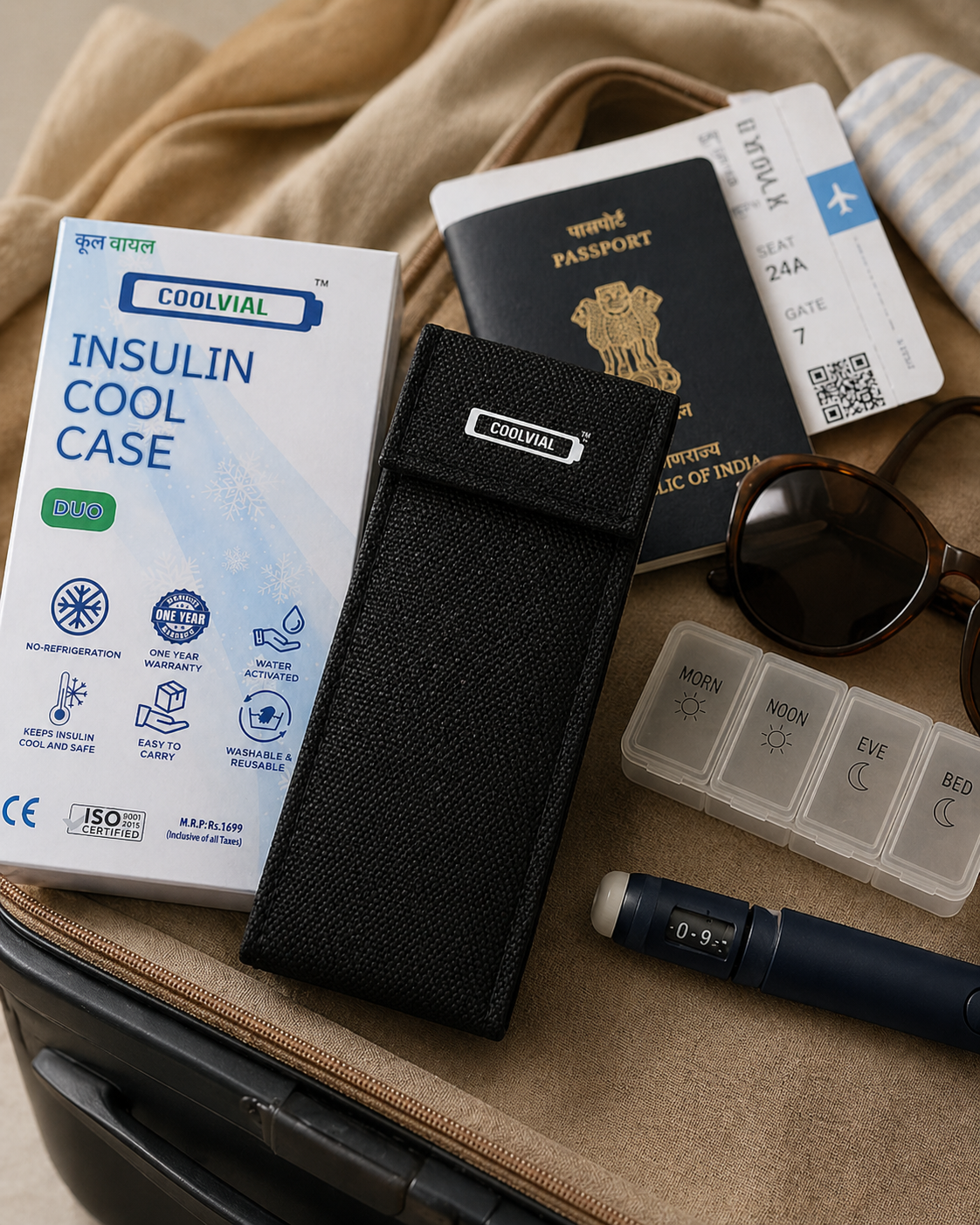
- Solution: Keep your insulin in a reliable cooling case like the COOLVIAL Duo until you are comfortably inside an air-conditioned vehicle. The COOLVIAL Duo, for instance, can maintain cool temperatures for 12-16 hours, easily covering your travel time from Ozar to Gangapur Road or Cidco.
3. Train Travel from Nashik Road (NK) & Devlali (DVL): Dispelling Myths and Ensuring Safety
Train travel, a lifeline for many Indians, presents its own set of challenges for insulin users. Nashik Road (NK) and Devlali (DVL) are key railway stations for residents. The relaxed pace of train journeys often leads to common misconceptions about insulin storage.
Here’s how to safely navigate train travel from Nashik:
- Myth-Busting: Pantry Car Fridges:
- Unreliable: A common myth is that you can store your insulin in the pantry car fridge. NEVER rely on pantry car fridges for your insulin. These fridges are primarily for food storage, are often unregulated in terms of temperature, and their hygiene standards may not be suitable for life-saving medication.
- Security Risk: Your insulin could be misplaced, tampered with, or stolen. There’s no guarantee of secure storage.
- Solution: Your insulin is your responsibility. Always carry it with you in a personal cooling solution.
7 Essential Tips for Travelling From Nashik With Insulin: Airport, Station & Taxi Guide
48+ hours at 2-8°C. No electricity. CE certified. Free delivery across India.
Order on WhatsApp — ₹1,099🛒 Buy Now — ₹1,099-
Myth-Busting: Handing Pens to TTEs:
- Absolute No: Another dangerous myth is that you can hand your insulin pens or vials to the Ticket Travelling Examiner (TTE) for safekeeping or refrigeration. ABSOLUTELY DO NOT DO THIS. TTEs are not equipped or responsible for storing medications. It’s a significant liability and safety risk.
- Personal Responsibility: Maintain personal control over your insulin at all times.
-
Best Practices for Train Travel:
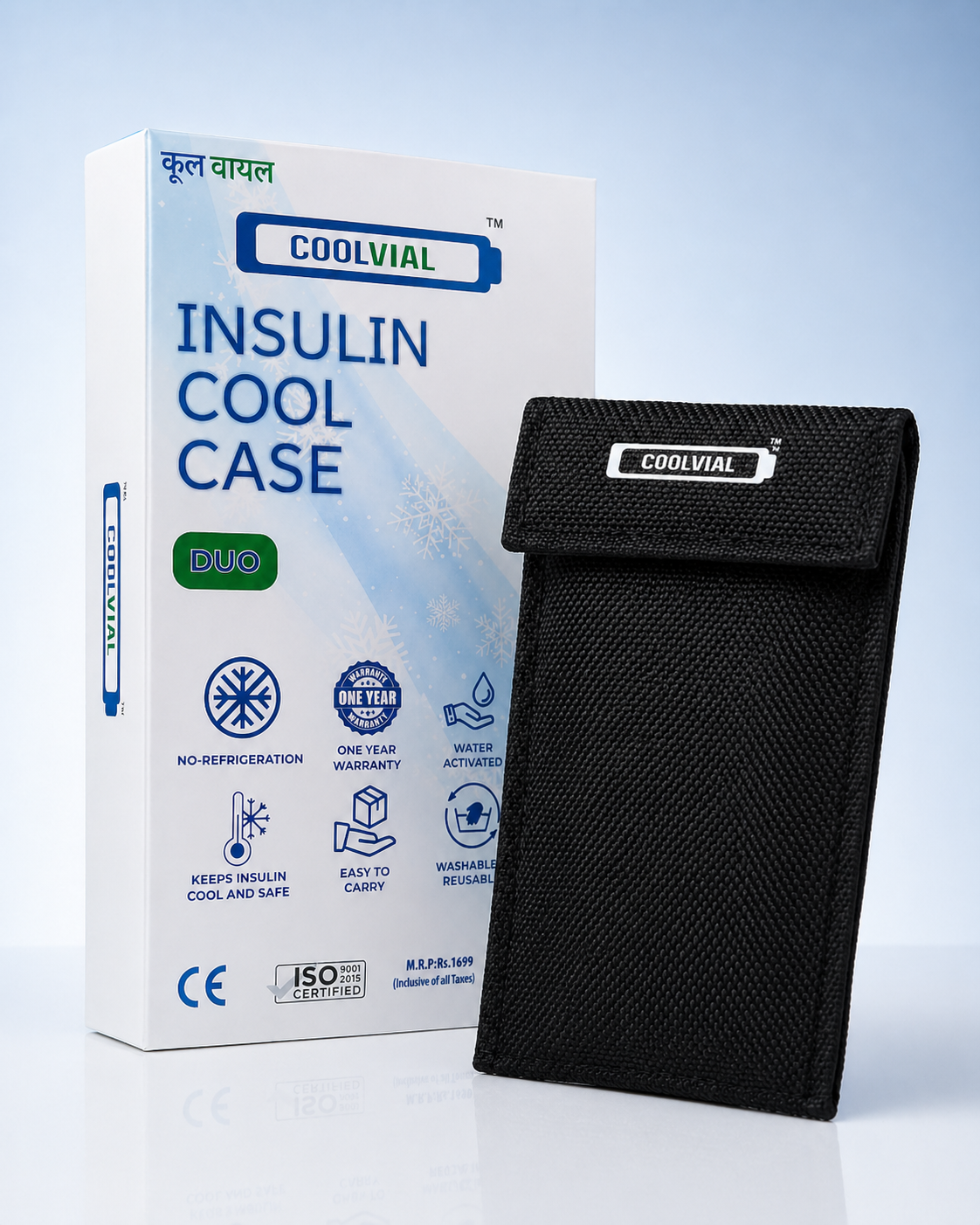
- Evaporative Cooling Case: This is the most practical solution for train journeys. The COOLVIAL Duo is an excellent choice as it’s water-activated and doesn’t require electricity, making it perfect for Indian Railways where power outlets can be scarce or unreliable. Just soak it in water for a few minutes, and it keeps insulin cool for hours.
- Strategic Seating: If possible, choose a seat away from direct sunlight, especially if you’re travelling during the day. Window seats can get very hot.
- Hydration: Keep yourself well-hydrated, especially in crowded trains. Dehydration can affect blood sugar levels.
- Snacks: Carry appropriate snacks to manage blood sugar fluctuations during long journeys, which might have unpredictable meal timings.
- Accessibility: Keep your cooling case with insulin easily accessible, not stowed away under heavy luggage. You need to be able to access it for injections and to re-activate the cooling case if needed.
-
Table: Insulin Storage During Train Travel
| Aspect | Unsafe Practice | Safe Practice (for Nashik to any destination) |
|---|---|---|
| Cooling Method | Relying on ice packs (melt quickly) or pantry fridge | Using an evaporative cooling case (e.g., COOLVIAL Duo) or a high-quality vacuum-insulated flask with gel packs |
| Location | Checked luggage, pantry car, with TTE | Personal hand-luggage, always with you |
| Temperature | Exposed to heat near windows, in un-AC coaches | Maintained at 18-26°C within a cooling case |
| Accessibility | Stored in overhead luggage rack | Kept within arm’s reach for regular checks and injections |
| Contingency Plan | None | Extra insulin, doctor’s letter, emergency contacts, local pharmacy lookup (e.g., MedPlus at destination) |
Remember, when travelling from Nashik with insulin by train, your personal cooling solution is your best defence against temperature damage.
4. Road Trips from Nashik: Shirdi, Trimbakeshwar & Saputara – Handling Heat in Cabs & Dhabas
Nashik is a hub for popular road trips. Whether it’s a spiritual journey to Trimbakeshwar (approx. 50 km) or Shirdi (approx. 85 km), or a leisurely drive to the nearby hill station of Saputara (approx. 80 km), road travel is common. However, the Indian climate, especially the afternoon heat, poses significant risks to insulin.
Here are critical considerations for road trips:
-
Taxi AC Reliability:
- Inconsistent AC: While many taxis and private cars have AC, its reliability can vary greatly. Some drivers might switch it off to save fuel, or it might not be functioning optimally, especially in older vehicles.
- Heat Build-up: Even with AC on, the car interior, especially non-vented compartments, can get warm quickly.
- Solution: Do not assume the car’s AC will suffice. Always keep your insulin in a dedicated cooling case.
-
Parking Insulin in a Hot Car:
- Extreme Danger: This is one of the most common mistakes. Leaving insulin in a parked car, even for a short pit stop, is extremely dangerous. The interior temperature of a car parked in direct sunlight can soar to over 50°C in minutes, especially during Nashik’s summer afternoons. This temperature will quickly degrade insulin.
- Rule: NEVER leave your insulin in a parked car. Take it with you, even if you’re just stepping out for a few minutes.
- Example: If you’re visiting Pandavleni Caves, ensure your insulin is with you, protected in your cooling case, rather than left in the car.
-
Dhaba Pit-Stop Fridge Access:
- Limited Trust: Similar to train pantry cars, dhaba (roadside eatery) refrigerators are generally not suitable for insulin storage. They are for food and beverages, not medical supplies.
- Hygiene & Temperature: There’s no guarantee of consistent temperature or hygiene.
- Best Practice: Always carry your insulin in your personal cooling case. If you need to re-activate an evaporative cooler like the COOLVIAL Duo, you can easily ask for some water at any dhaba.
-
Tips for Road Trips:
- Plan Your Stops: If possible, plan stops in places where you can take your insulin inside with you, or where you can safely re-activate your cooling case.
- Monitor Temperature: Be aware of the ambient temperature. If you feel uncomfortably hot, your insulin is likely struggling too.
- Emergency Supplies: Ensure you have enough insulin and other supplies for the entire trip, plus a buffer. Knowing the locations of pharmacies like MedPlus or 1mg along your route could also be helpful, though not a substitute for carrying your own supply.
When embarking on a road trip, whether to a local landmark like Ramkund or further afield, remember that your personal evaporative cooler is your best friend for safe travelling from Nashik with insulin.
5. App-Cabs in Nashik: Ola, Uber, and Rapido – Mitigating Local Transport Risks
App-based taxis and bike-taxis have become ubiquitous in Nashik, from College Road to Gangapur Road, offering convenience for daily commutes and short trips. However, they introduce unique challenges for insulin users.
-
Ola/Uber Driver Refusing AC:
- Common Issue: It’s a frequent complaint that Ola/Uber drivers, especially for shorter rides, might refuse to turn on the AC to save fuel.
- Impact on Insulin: Even a 15-20 minute ride in a non-AC car during Nashik’s warmer months (which can be 8-9 months of the year, with temperatures often above 30°C) can expose insulin to damaging heat.
- Action: Politely but firmly request the AC. If the driver refuses, consider cancelling the ride and booking another. However, this is not always practical.
- Protection: Your best defence is to keep your insulin in a reliable cooling case like the COOLVIAL Duo, which provides passive cooling regardless of the vehicle’s AC status.
-
Rapido Bike-Taxi Exposure:
- Direct Sunlight: Rapido bike-taxis, while quick and economical, offer no protection from the elements. Your bag (and thus your insulin) will be directly exposed to sunlight, wind, and ambient temperatures.
- Risk: This direct exposure can rapidly heat your insulin to dangerous levels.
- Recommendation: If you must use a bike-taxi for travelling from Nashik with insulin, ensure your insulin is securely placed in an evaporative cooling case, preferably carried in a backpack close to your body, shielded from direct sun. Avoid keeping it in a front-mounted bag or a flimsy side bag where it gets direct heat.
-
Specific Tips for App-Cabs:
- Prioritise AC: For car-based services, always try to ensure the AC is on.
- Cooling Case: Always carry your insulin in a cooling case. This is non-negotiable for app-based transport in Nashik’s climate.
- Shortest Route: Opt for the shortest routes to minimise exposure time.
- Plan Ahead: If you know you’ll be using app-cabs frequently, ensure your cooling case is always primed and ready.
For more insights into managing insulin during daily commutes within Nashik, our article “Daily Commute With Insulin in Nashik — Tips for Metro, Bus & Auto” offers additional valuable advice.
6. Your Reliable Travel Companion: COOLVIAL Duo for Nashik Travellers
When travelling from Nashik with insulin, the choice of your cooling solution is paramount. Generic ice packs or insulated bags often fall short in the varied and often warm Indian climate. This is where specialized evaporative cooling cases like the COOLVIAL Duo truly shine.
-
Why Evaporative Cooling?
- Evaporative coolers work on the principle of evaporation, where water evaporating from a surface draws heat away, thus cooling the contents. This process is highly effective in dry to moderately humid climates, making it ideal for Nashik’s plateau climate, which is pleasant for much of the year but can get quite warm.
- They don’t require electricity, batteries, or ice packs, making them incredibly convenient for travel across India’s diverse infrastructure. All you need is access to water.
-
Introducing the COOLVIAL Duo:
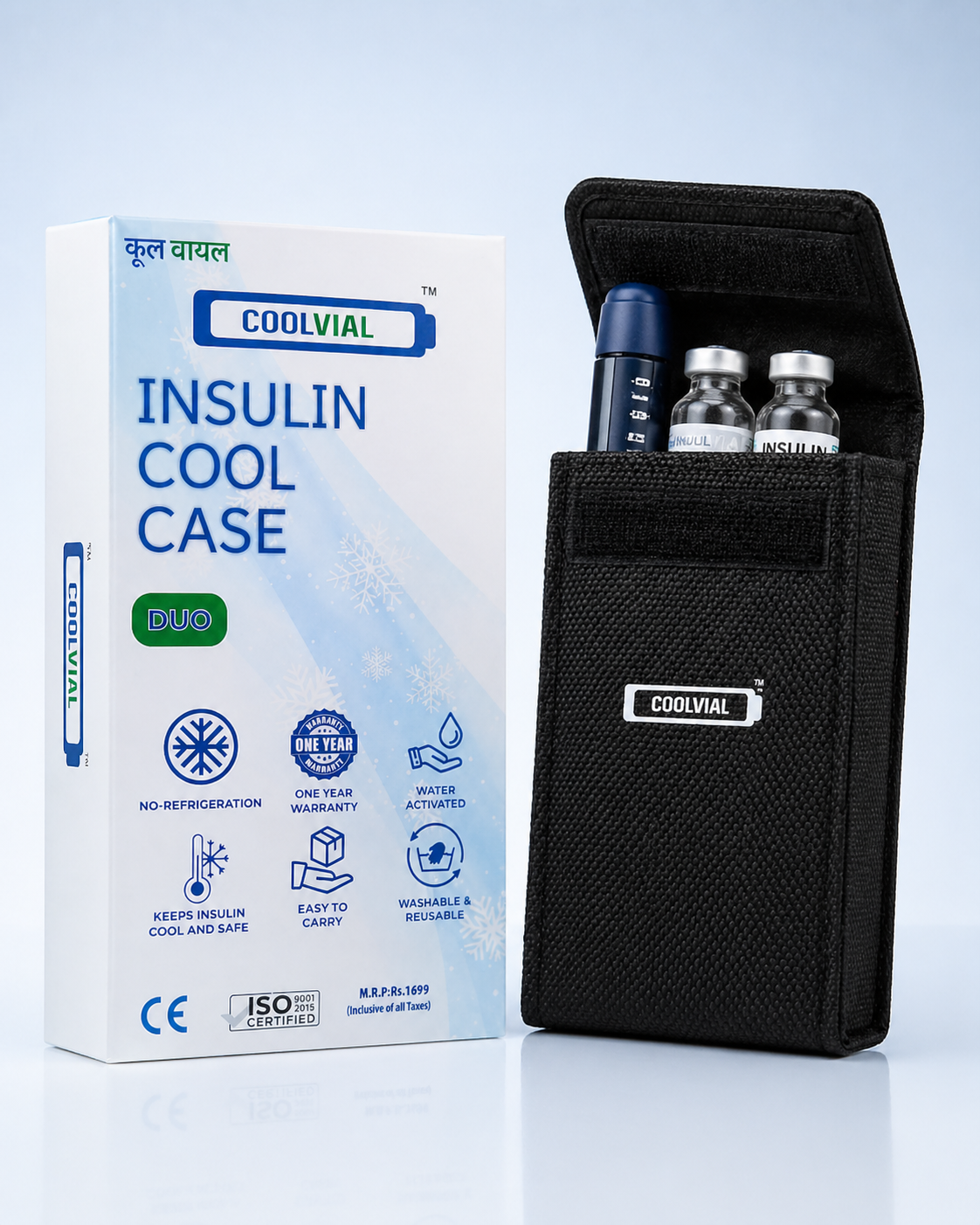
- The COOLVIAL Duo is specifically designed for convenience and reliability. It holds 2 insulin pens and 1 vial, offering ample space for most travellers’ needs.
- Performance: It keeps insulin cool for an impressive 12-16 hours, ensuring your medication stays within its safe temperature range (typically 18-26°C) for most day-long journeys.
- Activation: Simply immerse the inner pouch in cold water for a few minutes, then wring out the excess. The special crystals inside absorb the water and initiate the evaporative cooling process. It’s ready to use in minutes.
- Durability: Made with robust materials, it’s designed to withstand the rigours of travel.
- Certification & Warranty: The COOLVIAL Duo is CE certified and ISO 9001:2015 compliant, ensuring quality and safety. It also comes with a 1-year warranty, giving you peace of mind.
- Made in India: Proudly manufactured in India, COOLVIAL understands the specific needs and climatic conditions faced by Indian insulin users.
-
Comparing COOLVIAL Duo with Alternatives:
- FRIO: A well-known international brand, FRIO offers similar evaporative cooling technology. While effective, a comparable FRIO case might cost around Rs 1,900, making COOLVIAL Duo a more budget-friendly option without compromising on performance.
- Outer Woods OW-12: This is another Indian brand, often priced lower at around Rs 999. While it offers a basic cooling solution, the COOLVIAL Duo often provides superior insulation and longer cooling durations (12-16 hours) compared to some entry-level models, justifying its slightly higher price point for enhanced reliability.
-
Why COOLVIAL Duo is Right for Nashik:
- Climate Adaptability: Nashik’s climate, with its cool plateau characteristics but potential for high temperatures (up to 36°C), demands a cooling solution that performs consistently. The evaporative technology thrives in such conditions.
- Versatility: Whether you’re on a long bus ride to Mumbai, a train to Pune, or just commuting from Cidco to College Road, the COOLVIAL Duo offers uninterrupted cooling without needing power.
- Peace of Mind: Knowing your insulin is protected allows you to focus on your journey, whether it’s for business or leisure.
Investing in a high-quality, reliable insulin cooling case like the COOLVIAL insulin cool case is one of the smartest decisions you can make as an insulin user who travels. It’s an investment in your health and peace of mind. For general information on insulin storage, refer to our insulin storage tips page.
7. Considering International Travel from Ozar Airport (ISK): Customs, Time Zones & More
While Ozar Airport (ISK) currently has limited international flights (often requiring a connecting flight from Mumbai or Delhi), it’s important to be prepared if your journey starts here and takes you across borders. International travel with insulin introduces additional layers of complexity, from customs regulations to managing time zone changes.
-
Customs and Immigration:
- Declaration: Always declare your insulin and medical supplies to customs officials upon arrival in a foreign country.
- Doctor’s Letter: Your doctor’s letter, translated into English (and potentially the local language if travelling to a non-English speaking country), is indispensable. It validates your need for the medication.
- Quantity: Be aware of any restrictions on the quantity of medication you can bring into a country. Most countries allow sufficient personal supply, but it’s wise to check the specific country’s customs website.
- Security: Be prepared for your insulin and cooling case to undergo additional scrutiny, potentially including manual checks.
-
Time-Zone Dosing Adjustments:
- Consult Your Doctor: This is perhaps the most critical aspect of international travel. Crossing multiple time zones can significantly disrupt your insulin dosing schedule, leading to potential highs or lows.
- Pre-Travel Planning: Your doctor at Suyash Hospital or Apollo Hospitals Nashik should provide you with a detailed plan for adjusting your insulin doses. This might involve taking partial doses, adjusting timing, or temporarily switching to different types of insulin.
- Emergency Kit: Carry a comprehensive emergency kit, including glucagon, glucose tablets, and extra testing supplies.
-
Tips for International Travel:
- Multiple Cooling Cases: Consider carrying two COOLVIAL Duo cases or similar, especially for very long flights or if you anticipate significant time in transit. This provides redundancy and extended cooling capacity.
- Travel Insurance: Purchase comprehensive travel insurance that covers medical emergencies, including diabetes-related incidents, in foreign countries.
- Local Pharmacy Information: Research pharmacies and hospitals at your destination in advance.
- Language Barrier: If travelling to a country where you don’t speak the language, carry translation cards explaining your diabetes and insulin needs.
International travel with insulin demands meticulous planning. Always prioritise your health and safety by ensuring your insulin is protected and your dosing schedule is carefully managed under medical guidance. The World Health Organization (WHO) provides global statistics on diabetes, highlighting the widespread need for effective diabetes management, including safe travel practices (Source: WHO, https://www.who.int/news-room/fact-sheets/detail/diabetes).
8. Frequently Asked Questions (FAQ) about Travelling with Insulin in Nashik
Q: Can I put my insulin in checked luggage when flying from Ozar Airport (ISK)? A: No, you should never put insulin in checked luggage when flying. Checked luggage compartments are not temperature-controlled and can expose insulin to extreme temperatures that will degrade its efficacy.
Q: Is it safe to store insulin in a train’s pantry car fridge when travelling from Nashik Road (NK)? A: It is not safe to store insulin in a train’s pantry car fridge. These fridges are unreliable, not temperature-regulated for medication, and pose a security risk for your life-saving medication.
Q: What is the best way to keep insulin cool during a road trip from Nashik to Shirdi or Saputara? A: The best way is to use an evaporative insulin cooling case like the COOLVIAL Duo. It keeps insulin cool for 12-16 hours without electricity, protecting it from unreliable taxi ACs and hot car interiors.
Q: What should I do if my Ola/Uber driver in Nashik refuses to turn on the AC? A: Politely but firmly request the AC. If refused, your insulin should be protected in an evaporative cooling case. For future rides, you might consider cancelling and rebooking, or choosing a premium service if available.
Q: Do I need a doctor’s letter to carry insulin on a flight from Ozar Airport (ISK)? A: While not always strictly mandatory for domestic flights, a doctor’s letter is highly recommended. It explains your medical condition and the necessity of carrying insulin and supplies, which can prevent delays at CISF security checkpoints.
Q: How long can insulin stay at room temperature in Nashik’s climate? A: Once opened, most insulin can stay at room temperature (up to 25-30°C, check your specific brand) for about 28 days. However, direct exposure to higher temperatures, like those often experienced in Nashik’s summers or inside hot vehicles, will degrade it much faster, often within hours.
Q: Can I carry extra insulin supplies when travelling from Nashik? A: Yes, it is always advisable to carry 1.5 to 2 times the amount of insulin and other supplies you anticipate needing. This provides a buffer against unexpected delays, lost luggage, or other unforeseen circumstances during your travels.
9. Conclusion: Empowering Your Nashik Journeys with Insulin
Travelling from Nashik with insulin doesn’t have to be a source of anxiety. By understanding the unique challenges posed by local transport, climate conditions, and specific travel hubs like Ozar Airport (ISK) and Nashik Road (NK) station, you can equip yourself with the knowledge and tools for safe and stress-free journeys. From preparing a comprehensive doctor’s letter to knowing the pitfalls of pantry car fridges and hot parked cars, every tip in this guide is designed to empower you.
The key takeaway is consistent temperature control. For this, a reliable evaporative cooling case is indispensable. The COOLVIAL Duo, with its 12-16 hour cooling capacity and robust design, is a testament to our commitment to providing effective and affordable solutions for Indian insulin users. It’s CE certified, ISO 9001:2015 compliant, and comes with a 1-year warranty, all while being made right here in India.
Don’t let concerns about insulin storage limit your exploration of Maharashtra or beyond. With smart planning and the right cooling companion, you can embark on any journey with confidence.
Order COOLVIAL Duo at Rs 1,099 with code COOLHEAL (MRP Rs 1,699) — visit coolvial.com or WhatsApp us at wa.me/918766952300 today!
Medical Disclaimer: This article is for general information purposes only and does not constitute medical advice. Always consult your endocrinologist or diabetologist before changing insulin storage or dosing practices, especially when travelling.
How We Researched This: This article is based on a thorough review of RSSDI (Research Society for the Study of Diabetes in India) guidelines for insulin storage, ICMR-INDIAB (Indian Council of Medical Research - India Diabetes) data on diabetes prevalence and management in India, local Nashik hospital directories (Apollo Hospitals Nashik, Wockhardt Hospital Nashik, Suyash Hospital), and information from pharmacy networks such as Apollo Pharmacy and Wellness Forever. Local travel conditions and challenges were assessed based on common experiences of residents in Nashik.
7 Essential Tips for Travelling From Nashik With Insulin: Airport, Station & Taxi Guide
COOLVIAL keeps insulin safe in India's heat. 48+ hours, no electricity needed.