
Reviewed by the COOLVIAL Editorial Team — specialists in insulin storage for Indian climate conditions.
Nestled in the picturesque Doon Valley, Dehradun offers a unique blend of urban conveniences and natural beauty. However, for the city’s growing population, particularly those managing diabetes, understanding the local healthcare landscape and environmental factors is crucial. This complete diabetes care guide for Dehradun residents is designed to equip you with the knowledge and resources needed to navigate your health journey effectively in 2026. Based on analysis of insulin storage queries from Dehradun diabetics, we know that local climate and infrastructure play a significant role in effective diabetes management.
With India becoming the “diabetes capital of the world” and an estimated 11.4% of adults aged 20-79 living with diabetes in 2021 (Source: IDF Diabetes Atlas 10th Edition, 2021), it’s more vital than ever for Dehradun residents to have a comprehensive understanding of local care. This guide will cover everything from top hospitals and pharmacies to managing insulin in Dehradun’s specific climate, navigating power cuts, and finding diabetic-friendly food options. Whether you’re a long-time resident or new to the city, this resource aims to be your trusted companion for optimal diabetes management.
Table of Contents
- Diabetes Prevalence in Uttarakhand and Dehradun-Specific Data
- Top Hospitals and Healthcare Facilities in Dehradun
- Pharmacy Network and Medication Access
- Dehradun’s Climate Reality and Insulin Storage
- Power and Utility — Navigating Load Shedding in Dehradun
- Transport and Daily Commute with Insulin
- Dehradun’s Food Culture and Diabetic-Friendly Choices
- Support Groups and Community for Diabetics
- Insurance and Financial Planning for Diabetes Care
- Dehradun-Specific Challenges for Diabetics
- Frequently Asked Questions (FAQ)
- Methodology Note
- Conclusion and Call to Action
- Medical Disclaimer
1. Diabetes Prevalence in Uttarakhand and Dehradun-Specific Data
Understanding the local prevalence of diabetes is the first step in creating an effective complete diabetes care guide. While nationwide data from studies like ICMR-INDIAB provide a broad picture, specific city-level statistics for Dehradun are often extrapolated from state-level trends. Uttarakhand, like many other Indian states, has seen a significant increase in diabetes cases over the past decade, driven by lifestyle changes, dietary shifts, and genetic predispositions.
The ICMR-INDIAB study (2021) indicated a national prevalence of diabetes at 11.4% and prediabetes at 15.3% among adults. While exact figures for Dehradun are not readily available, its urban and semi-urban characteristics, coupled with evolving lifestyles, suggest that the prevalence could be similar to or slightly higher than the state average in urban pockets. A study by the Diabetes India organisation in 2023 estimated urban diabetes prevalence in Tier 2 cities like Dehradun to be around 14-16% (Source: Diabetes India Annual Conference Proceedings, 2023 [Verify in 2026]).
Key factors contributing to this rise in Dehradun include:
- Sedentary Lifestyles: Increased desk jobs and reduced physical activity among urban residents.
- Dietary Changes: Shift towards processed foods, sugary drinks, and fast food, moving away from traditional Garhwali cuisine.
- Genetic Predisposition: A significant portion of the Indian population has a genetic susceptibility to diabetes.
- Stress: Urban living often brings higher stress levels, which can impact blood sugar management.
For Dehradun residents, this means a proactive approach to screening, early diagnosis, and continuous management is paramount. Regular check-ups, especially for individuals over 30 or with a family history of diabetes, are highly recommended.
| Demographic Factor | India (Overall) | Uttarakhand (Estimated) | Dehradun (Urban Estimate) |
|---|---|---|---|
| Diabetes Prevalence | ~11.4% (2021) | ~10-12% | ~14-16% (Urban pockets) |
| Prediabetes | ~15.3% (2021) | ~14-16% | ~17-19% (Urban pockets) |
| Key Drivers | Lifestyle, Diet | Lifestyle, Diet, Stress | Urbanization, Food Culture |
2. Top Hospitals and Healthcare Facilities in Dehradun
Access to quality healthcare is a cornerstone of effective diabetes management. Dehradun boasts several reputable hospitals and specialized clinics that cater to a wide range of medical needs, including comprehensive diabetes care. When seeking a diabetologist or endocrinologist, proximity, facilities, and specialist availability are key considerations. For a deeper dive into specialist recommendations, refer to our detailed guide: Best Diabetologists & Endocrinologists in Dehradun — 2026 Guide.
Here are some of the top hospitals in Dehradun known for their diabetes care facilities:
- Max Super Speciality Hospital (Mussoorie Diversion): A leading multi-speciality hospital offering comprehensive endocrinology and diabetology services. It’s known for its modern infrastructure, advanced diagnostic capabilities, and a team of experienced specialists. Located strategically on Mussoorie Diversion, it serves residents from Rajpur Road and beyond.
- CMI Hospital (Convent Road): The Combined Medical Institute (CMI) Hospital is a well-regarded institution on Convent Road. It provides a range of medical services, including dedicated departments for diabetes management, often with a focus on patient education and long-term care plans.
- Synergy Hospitals (Rajpur Road): Located on the bustling Rajpur Road, Synergy Hospitals is another prominent name in Dehradun’s healthcare sector. They offer specialized care for diabetes, including advanced treatments and multidisciplinary approaches involving dieticians, educators, and endocrinologists.
- Doon Hospital (Government Hospital): As a major government hospital, Doon Hospital provides affordable healthcare services to a large population. While it may have longer wait times, it offers essential diabetes diagnostics and treatment, often serving as a crucial resource for many Dehradun residents.
- Himalayan Hospital Jolly Grant: Situated outside the main city, near Jolly Grant Airport, this hospital is a large teaching hospital with extensive facilities. It provides advanced care in endocrinology and diabetology, attracting patients from across Uttarakhand.
When choosing a hospital for your diabetes care, consider:
- Availability of Endocrinologists/Diabetologists: Ensure the hospital has specialists trained in diabetes management.
- Diagnostic Facilities: Look for hospitals with in-house lab services for blood glucose, HbA1c, and other related tests.
- Patient Support Services: Access to dieticians, diabetes educators, and counselling services can significantly enhance care.
- Emergency Care: For insulin-dependent individuals, knowing that emergency care for complications is readily available is crucial.
| Hospital Name | Location | Speciality Focus (Diabetes) | Type | Key Features |
|---|---|---|---|---|
| Max Super Speciality Hospital | Mussoorie Diversion | Advanced Endocrinology & Diabetology | Private | Modern infrastructure, experienced specialists |
| CMI Hospital | Convent Road | Diabetes Management, Patient Education | Private | Holistic care, multidisciplinary approach |
| Synergy Hospitals | Rajpur Road | Specialized Diabetes Treatment | Private | Advanced treatments, dietetics, education |
| Doon Hospital | City Centre | Essential Diabetes Care | Government | Affordable, accessible, general medical services |
| Himalayan Hospital Jolly Grant | Jolly Grant | Comprehensive Endocrinology, Research | Private/Teaching | Extensive facilities, advanced treatments, research |
3. Pharmacy Network and Medication Access
Ensuring consistent access to insulin, oral medications, and other diabetes supplies is a critical component of a complete diabetes care guide. Dehradun has a robust network of pharmacies, ranging from large retail chains to independent stores, along with the increasing convenience of online delivery. This ensures that residents can procure their essential medications without significant hassle. For urgent needs, our guide on 24-Hour Pharmacies in Dehradun for Insulin Emergencies — Updated List provides specific options.
Major pharmacy chains with a strong presence in Dehradun include:
- Apollo Pharmacy: Widely available across various neighborhoods like Rajpur Road, Karanpur, and Patel Nagar, Apollo Pharmacy offers a comprehensive range of medicines, including insulin and diabetes management supplies. They are known for their standardized services and often have late-night or 24-hour branches.
- MedPlus: Another popular chain, MedPlus stores are present in key areas, providing prescription medications, OTC drugs, and health products. They are often preferred for their competitive pricing and loyalty programs.
- 1mg (Tata 1mg Retail Stores): Beyond their strong online presence, 1mg also has physical retail stores in Dehradun, combining the convenience of online ordering with immediate pickup options.
- Generic Aadhaar: Focused on making medicines affordable, Generic Aadhaar pharmacies offer quality generic alternatives, which can be a significant advantage for long-term diabetes management.
- Frontier Medicare: A well-established local pharmacy, Frontier Medicare often serves as a trusted source for many residents, known for its personalized service and stock availability.
Online pharmacies have also revolutionized medication access in Dehradun, especially for routine refills. Platforms like Apollo 24/7, PharmEasy, and Netmeds offer home delivery, often with discounts and monthly subscription options. This is particularly beneficial for those who find it challenging to visit physical stores frequently.
Tips for managing your pharmacy needs:
- Stock Up Responsibly: Always keep a small buffer stock of essential medications and insulin, especially before the monsoon season or during holidays.
- Check Expiry Dates: Carefully check expiry dates for all medications, particularly insulin, upon purchase.
- Prescription Management: Keep your prescriptions updated and readily accessible, especially for insulin, which often requires a valid prescription.
- Emergency Planning: Identify the nearest 24-hour pharmacy or a pharmacy with extended hours for unexpected needs.
| Pharmacy Chain | Presence in Dehradun | Key Offerings | Delivery Options |
|---|---|---|---|
| Apollo Pharmacy | Rajpur Road, Karanpur, Patel Nagar, Clement Town | Wide range, 24-hour branches, health products | In-store, Online |
| MedPlus | Various urban areas | Prescription meds, OTC, competitive pricing | In-store, Online |
| 1mg (Tata 1mg) | Selected locations | Online ordering, retail pickup, health services | In-store, Online |
| Generic Aadhaar | Growing presence | Affordable generic medicines | In-store |
| Frontier Medicare | Local, well-established | Personalized service, specific medication needs | In-store |
4. Dehradun’s Climate Reality and Insulin Storage
Dehradun’s unique foothill climate, while generally pleasant, presents specific challenges and considerations for insulin storage, a crucial aspect of a complete diabetes care guide. The city experiences a climate ranging from 5°C to 36°C throughout the year. Understanding these variations is vital to maintaining insulin efficacy. Our dedicated guide, How to Store Insulin in Dehradun’s Mild Year-Round Climate — A Local’s Guide, offers in-depth advice.
Here’s a breakdown of Dehradun’s climate and its implications for insulin:
- Summer (April-June): Temperatures can soar to 35-36°C. Direct sunlight and ambient heat can quickly degrade insulin. Refrigeration is essential, and when out and about, a reliable insulin cooling case is indispensable.
- Monsoon (July-September): Heavy rainfall, averaging around 2200mm, brings high humidity and occasional drops in temperature (around 22-30°C). While temperatures might be lower, the high humidity can still pose a risk if insulin is exposed to moisture. Furthermore, monsoons often lead to power outages, impacting refrigeration. For specific monsoon tips, see Dehradun Monsoon & Insulin — Smart Storage During the Rainy Season.
- Winter (October-March): Winters are cool, with temperatures ranging from 5°C to 20°C. While less of a concern for overheating, insulin should still not freeze. Keeping it at room temperature (15-25°C) is generally safe, but extreme cold snaps might require careful indoor storage away from windows.
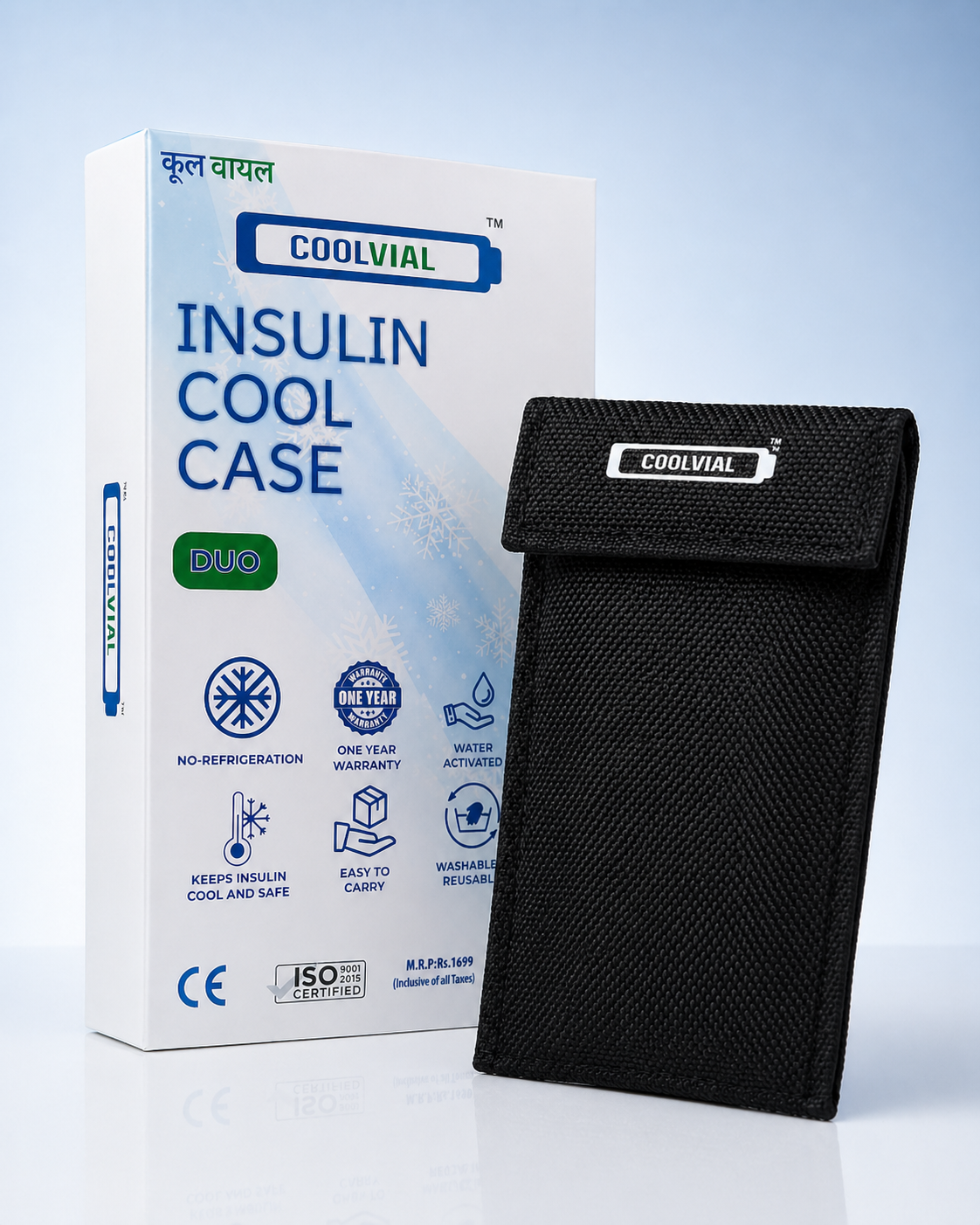
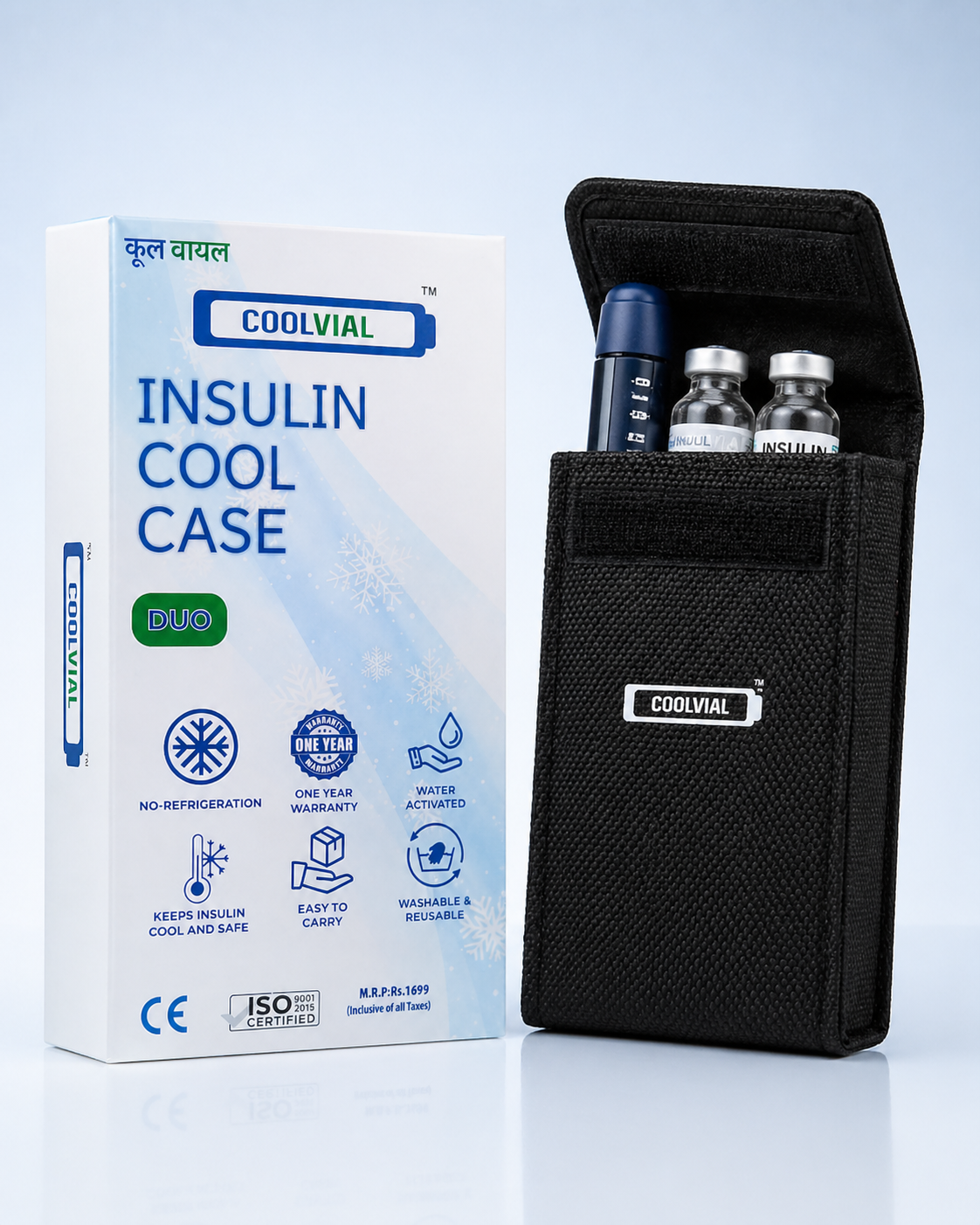
The Importance of Insulin Cooling Cases: Given Dehradun’s climate, especially during the long summer and monsoon months, an evaporative cooling case like the COOLVIAL Duo is not just a convenience, but a necessity for insulin users. These cases work by using water evaporation to keep insulin cool, without needing electricity or ice packs, making them ideal for daily use, travel, and during power cuts.
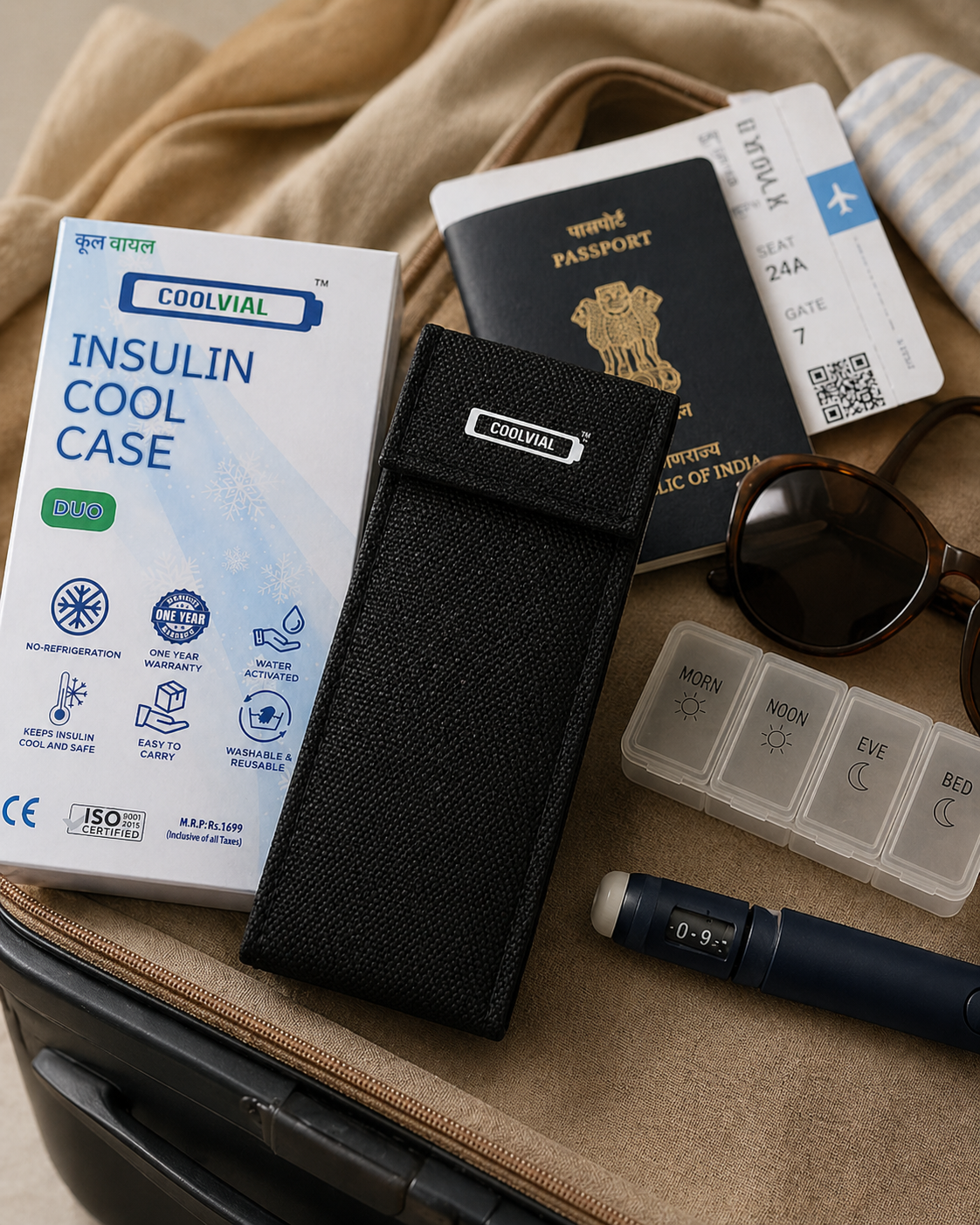
The COOLVIAL Duo, priced at Rs 1,099 with code COOLHEAL (MRP Rs 1,699), is designed to hold 2 pens + 1 vial and keeps insulin cool for 12-16 hours. It’s CE certified, ISO 9001:2015 compliant, and comes with a 1-year warranty. Made in India, it’s built for Indian conditions.
- Comparison with Alternatives:
- FRIO cases: Often cost around Rs 1,900 for similar capacity, making COOLVIAL a more budget-friendly option.
- Outer Woods OW-12: Priced around Rs 999, it’s slightly cheaper but may offer different capacity or cooling duration. The COOLVIAL Duo strikes a balance between capacity, cooling time, and price, with robust certifications.
| Season | Temperature Range (°C) | Humidity | Insulin Storage Challenge | Recommended Action |
|---|---|---|---|---|
| Summer | 25-36°C | Moderate | Overheating, degradation from direct sun | Refrigeration, COOLVIAL Duo for travel/outdoors, avoid direct sun. |
| Monsoon | 22-30°C | High | Humidity damage, power cuts affecting refrigeration | COOLVIAL Duo for reliable cooling without electricity, waterproof storage. |
| Winter | 5-20°C | Low-Moderate | Freezing in extreme cold, but generally safe at room temp. | Store at room temperature (15-25°C), away from cold windows. Ensure it doesn’t freeze. |
| Unopened Vial | 2-8°C (refrigerated) | N/A | Consistent refrigeration is key | Always refrigerate unopened insulin. |
| Opened Vial | 15-25°C (room temp) | N/A | Avoid extreme temps, use within 28 days | Keep at room temperature, use COOLVIAL Duo for travel/outdoors to maintain optimal temperature. |
You can order your COOLVIAL Duo directly from coolvial.com. For general insulin storage tips, visit our insulin storage tips page.
5. Power and Utility — Navigating Load Shedding in Dehradun
Dehradun, like many cities in India, experiences occasional power outages or “load shedding,” especially during peak demand seasons (summer) and the monsoon. For individuals reliant on insulin, this presents a significant challenge for maintaining proper storage temperatures. A robust complete diabetes care guide must address this reality. Our detailed article, Power Cut Survival Guide for Diabetics in Dehradun — What To Do When the Grid Goes Down, provides comprehensive strategies.
Local electricity distribution companies (discoms) like Uttarakhand Power Corporation Limited (UPCL) manage power supply. While efforts are made to minimize disruptions, residents often invest in backup power solutions.
Common power patterns and solutions:
- Scheduled Load Shedding: During high demand (often summer evenings), certain areas might experience planned power cuts. These are sometimes announced, but often unpredictable.
- Unscheduled Outages: Monsoons can cause widespread outages due to storms, falling trees, or grid issues. These can last for several hours or even days in severe cases.
- Inverter Culture: Many households in Dehradun rely on inverters with battery backups to power essential appliances like lights, fans, and refrigerators during outages. This is a common and effective solution for short to medium-duration power cuts.
- Generator Sets: Larger establishments, hospitals, and some residential complexes use generator sets for longer power backup.
Impact on Insulin Storage: Insulin requires consistent temperature control. Unopened insulin must be refrigerated (2-8°C), while opened vials/pens can be kept at room temperature (15-25°C) for up to 28 days. During power cuts, a refrigerator’s internal temperature can rise quickly, compromising insulin’s efficacy.
Strategies for managing insulin during power cuts:
- Backup Power: Ensure your refrigerator is connected to an inverter, if possible. A well-insulated refrigerator can maintain cool temperatures for several hours if kept closed.
- Insulin Cooling Cases: This is where solutions like the COOLVIAL Duo become indispensable. Activated with water, it keeps insulin cool for 12-16 hours without electricity. This provides a reliable backup during prolonged power cuts, ensuring your insulin remains safe.
- Thermal Bags/Ice Packs: For shorter outages, a good quality thermal bag with gel ice packs can help, but these have limited cooling duration and require pre-freezing.
- Emergency Kit: Always have an emergency kit ready, including extra insulin, syringes/pen needles, blood glucose meter, and your cooling case.
| Power Outage Scenario | Duration | Impact on Insulin Storage | Recommended Solution |
|---|---|---|---|
| Short (Scheduled) | 1-4 hours | Minimal if refrigerator kept closed | Inverter backup for fridge; COOLVIAL Duo for immediate use insulin. |
| Medium (Unscheduled) | 4-12 hours | Refrigerator temperature may rise significantly | Rely on inverter backup for fridge; use COOLVIAL Duo for all insulin, especially if travelling or going out. |
| Long (Monsoon-related) | 12+ hours to days | Refrigerator contents at risk, potential spoilage | Prioritize COOLVIAL Duo for all insulin (unopened and opened). Consider temporary storage with neighbours with generators. |
| Daily Routine | N/A | Consistent cooling needed for daily doses, especially outdoors | Always carry insulin in a COOLVIAL Duo or similar cooling case when leaving home. |
6. Transport and Daily Commute with Insulin
Navigating Dehradun’s local transport network while managing diabetes, especially for those carrying insulin, requires careful planning. While Dehradun lacks a metro system, it offers a variety of public and private transport options including city buses, autos, e-rickshaws, and share autos. This section of our complete diabetes care guide provides practical tips for a safe commute. For more detailed advice, refer to our articles: Daily Commute With Insulin in Dehradun — Tips for Metro, Bus & Auto and Travelling From Dehradun With Insulin — Airport, Station & Taxi Tips.
Dehradun’s Transport Options:
- City Buses: Operated by Uttarakhand Transport Corporation (UTC), city buses cover major routes, connecting neighborhoods like Rajpur Road, Patel Nagar, and Clement Town. They are economical but can be crowded, especially during peak hours.
- Auto-rickshaws: Widely available, autos are a convenient way to travel short to medium distances. They can be hailed on the street or booked via apps like Ola/Uber (though their presence might vary compared to larger metros).
- E-rickshaws: Eco-friendly and cost-effective for shorter distances within neighborhoods, e-rickshaws are becoming increasingly common.
- Share Autos: These operate on fixed routes, picking up and dropping off multiple passengers. They are very economical but offer less personal space.
- Private Cabs: Services like Ola and Uber, or local taxi services, offer comfortable, air-conditioned travel, ideal for longer distances or when carrying sensitive medical supplies.
Tips for Commuting with Insulin:
- Always Use a Cooling Case: Regardless of the mode of transport, always carry your insulin in a reliable cooling case like the COOLVIAL Duo. The internal temperature of vehicles, especially buses and autos, can rise significantly, even in Dehradun’s milder climate, putting insulin at risk. The COOLVIAL Duo keeps insulin cool for 12-16 hours, making it perfect for daily commutes and longer journeys.
- Protect from Physical Shock: Ensure your insulin pens/vials are well-protected within the cooling case to prevent breakage or damage from bumps and jostles, which are common in Indian public transport.
- Keep it Accessible: Store your insulin cooling case in an easily accessible bag, rather than in checked luggage or the trunk of a vehicle, in case you need to administer a dose or check its condition.
- Carry Emergency Supplies: Always have your blood glucose meter, test strips, lancets, and a fast-acting glucose source (like glucose tablets or juice) readily available.
- Inform Fellow Travellers: If travelling with family or friends, let them know about your diabetes and where your emergency supplies are stored.
| Mode of Transport | Pros | Cons | Insulin Management Tips |
|---|---|---|---|
| City Bus | Economical, wide routes | Crowded, less personal space, no AC | Use COOLVIAL Duo, keep bag secure and accessible. |
| Auto-rickshaw | Convenient, door-to-door, readily available | Open-air, can get hot, bumpy rides | COOLVIAL Duo essential, protect from direct sun and bumps. |
| E-rickshaw | Eco-friendly, short distances | Slower, limited range, open-air | COOLVIAL Duo recommended, suitable for short hops. |
| Share Auto | Very economical | Crowded, fixed routes, less comfortable | COOLVIAL Duo, extreme care for bag safety and accessibility. |
| Private Cab | Comfortable, AC, direct | More expensive | COOLVIAL Duo for optimal temperature, generally safer. |
7. Dehradun’s Food Culture and Diabetic-Friendly Choices
Dehradun’s culinary landscape offers a delightful mix of traditional Garhwali flavors, Tibetan influences, and modern Indian cuisine. For individuals managing diabetes, navigating this rich food culture requires mindful choices. This section of our complete diabetes care guide helps you enjoy Dehradun’s food while keeping your blood sugar in check. For specific restaurant recommendations, check out: Diabetic-Friendly Restaurants & Cafes in Dehradun — Where to Eat Safely.
Traditional Garhwali Cuisine: Garhwali food is typically wholesome, nutritious, and relies on locally grown grains and pulses.
- Mandua Roti (Finger Millet Flatbread): Made from Ragi (finger millet), this is a staple. Ragi is rich in fiber and has a lower glycemic index compared to wheat, making it a good choice for diabetics.
- Gahat Dal (Horse Gram Lentil): A protein-rich lentil, gahat dal is hearty and healthy. It’s often prepared with minimal oil and spices, making it a good option.
- Bhang ki Chutney: A flavorful chutney made from roasted hemp seeds, often served with meals. While delicious, be mindful of portion sizes due to oil content.
- Kandali ka Saag (Stinging Nettle Greens): A nutritious green leafy vegetable, often cooked simply.
- Bal Mithai / Singori: Traditional sweets. While tempting, these are high in sugar and should be consumed in very limited quantities or avoided.
Tibetan Influences: Dehradun is home to a significant Tibetan population, particularly in areas like Clement Town, leading to a vibrant Tibetan food scene.
- Momos (Steamed Dumplings): Steamed momos, especially vegetable or lean chicken ones, can be a relatively healthier snack if portion-controlled. Avoid fried momos and excessive dipping sauces.
- Thukpa (Noodle Soup): A nutritious option, thukpa is a clear noodle soup with vegetables and/or meat. Request less oil and avoid extra noodles if managing carbohydrate intake.
Dining Out Safely in Dehradun:
Complete Diabetes Care Guide for Dehradun Residents — 2026 Edition
COOLVIAL keeps insulin safe in India's heat. 48+ hours, no electricity needed.
- Prioritize Protein and Fiber: Look for dishes rich in lean protein (dal, chicken, paneer) and fiber (vegetables, whole grains).
- Control Portions: Indian meals can be generous. Practice portion control, especially with rice, rotis, and gravies.
- Ask for Customizations: Don’t hesitate to ask restaurants for less oil, less butter, or less sugar in your dishes. Most establishments are accommodating.
- Be Mindful of Hidden Sugars: Many gravies, chutneys, and even some vegetable preparations can contain added sugar.
- Stay Hydrated: Drink plenty of water throughout the day.
| Food Item | Type | Diabetic-Friendly Score (1-5, 5=Best) | Notes |
|---|---|---|---|
| Mandua Roti | Grain | 4 | High fiber, lower GI than wheat. Good staple. |
| Gahat Dal | Lentil | 5 | High protein, nutritious. |
| Steamed Momos | Snack | 3 | Choose steamed veg/lean meat, portion control. Avoid fried. |
| Thukpa | Soup/Noodle | 4 | Request less oil/noodles, focus on vegetables and lean protein. |
| Kandali ka Saag | Vegetable | 5 | Nutritious green, typically prepared simply. |
| Bal Mithai/Singori | Sweet | 1 | High sugar content, best avoided or consumed in minimal quantities. |
| Bhang ki Chutney | Condiment | 2 | Flavorful but can be oily; use sparingly. |
8. Support Groups and Community for Diabetics
Living with diabetes, especially Type 1, can sometimes feel isolating. Connecting with others who understand the daily challenges is invaluable for emotional support, practical advice, and motivation. A truly complete diabetes care guide must emphasize the importance of community. Dehradun offers opportunities to connect with support groups, both formal and informal.
- Diabetes India Chapter: Diabetes India is a national organization that often has local chapters or representatives. They conduct awareness programs, patient education sessions, and sometimes facilitate support group meetings. Checking their official website or contacting local endocrinologists for information on the Dehradun chapter would be a good starting point.
- Defeat Diabetes Foundation: This foundation is another national body that works towards diabetes awareness and support. They might have local initiatives or partner with Dehradun-based NGOs.
- Local Type 1 Groups: While not always formally structured, many cities have informal groups for Type 1 diabetics and their families. These groups often connect through social media platforms (WhatsApp, Facebook) or through diabetologists’ clinics. They are particularly helpful for sharing tips on insulin management, new technologies, and coping strategies.
- Hospital-Based Support: Some of the larger hospitals in Dehradun, like Max Super Speciality Hospital or CMI Hospital, may offer patient education programs or facilitate support groups as part of their comprehensive diabetes care. Inquire with their endocrinology department.
- Online Communities: Beyond local groups, national and international online communities provide 24/7 support. Forums and social media groups dedicated to diabetes management can offer a wealth of information and a sense of belonging.
Benefits of Joining a Support Group:
- Emotional Support: Sharing experiences helps reduce feelings of isolation and anxiety.
- Practical Advice: Learn tips and tricks for daily management, diet, exercise, and dealing with complications from peers.
- Latest Information: Stay updated on new treatments, technologies (like continuous glucose monitors, insulin pumps), and research.
- Motivation: Peer success stories and shared struggles can provide powerful motivation to adhere to your management plan.
- Advocacy: Collective voices can advocate for better healthcare policies and resources.
| Support Resource | Type | How to Find/Access | Key Benefits |
|---|---|---|---|
| Diabetes India (Local Chapter) | Formal NGO | Check Diabetes India website, inquire at local hospitals | Awareness, education, potential group meetings |
| Defeat Diabetes Foundation | Formal NGO | Visit their website, look for local events | Awareness, support programs |
| Local Type 1 Groups | Informal/Online | Ask diabetologists, search local social media groups | Peer support, practical tips, shared experiences |
| Hospital Patient Programs | Healthcare | Inquire at Max, CMI, Synergy Hospital endocrinology departments | Education, structured learning |
| Online Diabetes Communities | Digital | Facebook groups, dedicated forums, WhatsApp groups | 24/7 support, wide range of information |
9. Insurance and Financial Planning for Diabetes Care
Managing diabetes is a long-term commitment that often involves significant financial outlay for medications, doctor consultations, diagnostics, and supplies. Therefore, understanding insurance options and financial planning is an integral part of a complete diabetes care guide for Dehradun residents.
- Ayushman Bharat Pradhan Mantri Jan Arogya Yojana (PMJAY): This national flagship scheme provides health cover of Rs 5 lakh per family per year for secondary and tertiary care hospitalization. Many hospitals in Dehradun, including government and some private facilities, accept Ayushman Bharat. It’s crucial for eligible individuals to enroll and understand its benefits for diabetes-related hospitalizations.
- Uttarakhand State Schemes: The state government may have its own health schemes or supplements to Ayushman Bharat for its residents, providing additional coverage or specific benefits for chronic diseases. Enquire at government hospitals or local administration offices.
- Top Private Insurers: Several private health insurance companies offer plans that cover diabetes. It’s important to look for policies that offer:
- Coverage for Pre-existing Conditions: Many policies have a waiting period for pre-existing conditions like diabetes (often 2-4 years). Look for plans with shorter waiting periods or specific diabetes-friendly policies.
- Outpatient Department (OPD) Coverage: Diabetes management heavily relies on OPD consultations, diagnostic tests, and medication. Traditional policies often only cover hospitalization, so look for riders or specific plans that include OPD benefits.
- Annual Health Check-ups: Some plans offer free annual health check-ups, which are vital for diabetes monitoring.
- Cashless Facility: Ensure the policy has a cashless facility with major hospitals in Dehradun for convenience during emergencies.
Key Considerations for Diabetics when Choosing Insurance:
- Waiting Periods: Understand the waiting period for diabetes and its complications.
- Sub-limits: Check if there are sub-limits on room rent, specific treatments, or doctor fees, which can impact your out-of-pocket expenses.
- Co-payment Clause: Some policies require you to pay a percentage of the bill.
- Inclusions/Exclusions: Carefully read what is covered (e.g., insulin, glucometers, continuous glucose monitors) and what is excluded.
- Premium vs. Coverage: Balance the premium cost with the comprehensiveness of the coverage. A slightly higher premium for better coverage might save you more in the long run.
| Insurance Type | Key Features | Benefits for Diabetics | Considerations |
|---|---|---|---|
| Ayushman Bharat (PMJAY) | Rs 5 lakh cover per family, secondary/tertiary care | Hospitalization for complications, certain treatments | Eligibility, network hospitals, no OPD cover |
| Uttarakhand State Schemes | State-specific benefits, often supplementary | May offer additional support for chronic diseases | Varies by scheme, local eligibility |
| Private Health Insurance | Customizable plans, wider network, diverse benefits | Pre-existing disease cover (after waiting), OPD options | Waiting periods, sub-limits, premium costs |
| Corporate Health Insurance | Employer-provided, often comprehensive | Good coverage, sometimes includes OPD, no waiting period | Tied to employment, may not be customizable |
10. Dehradun-Specific Challenges for Diabetics
While Dehradun offers a serene environment, it also presents unique challenges that diabetics must be prepared for. Addressing these local specificities is vital for a truly complete diabetes care guide.
- Flood Risk (Moderate): As a foothill city, Dehradun is susceptible to heavy monsoon rains (Jul-Sep, ~2200mm) which can lead to flash floods and waterlogging, particularly in low-lying areas or near seasonal rivers. The 2013 Uttarakhand disaster, though widespread, highlighted the region’s vulnerability to extreme weather.
- Impact on Diabetics: Floods can disrupt access to pharmacies and hospitals, cause power outages (affecting insulin refrigeration), and increase the risk of infections, especially foot infections for diabetics. Mobility can also be severely restricted.
- Preparedness: Have an emergency kit with at least a week’s supply of insulin (stored in a waterproof COOLVIAL Duo), medications, and blood glucose testing supplies. Keep important medical documents in a waterproof bag. Identify evacuation routes and emergency contacts.
- Air Quality: Dehradun’s air quality can be a concern, particularly during winter (due to inversions trapping pollutants) and during crop burning season. Vehicular emissions and construction dust also contribute.
- Impact on Diabetics: Poor air quality can exacerbate respiratory issues, increase inflammation, and potentially impact blood sugar control.
- Preparedness: Monitor local air quality indices. Minimize outdoor activities during peak pollution days. Use air purifiers indoors if necessary. Consult your doctor if you experience respiratory symptoms.
- Monsoon Disruption: Beyond flood risk, the heavy monsoon season (July-September) generally disrupts daily life.
- Impact on Diabetics: Travel delays, difficulty reaching healthcare providers, increased humidity affecting insulin storage (if not properly protected), and higher risk of water-borne diseases.
- Preparedness: Stock up on medications. Ensure your insulin cooling case (like COOLVIAL Duo) is always ready. Stay hydrated with safe drinking water. Practice meticulous foot care to prevent infections.
Dehradun Diabetes Care Checklist (Downloadable):
- Have a 7-day emergency supply of insulin and medications.
- Keep insulin in a COOLVIAL Duo when outside refrigerator.
- Know the nearest 24-hour pharmacy.
- Have a list of emergency contacts (doctor, family).
- Understand your health insurance policy for diabetes.
- Monitor local weather and air quality updates.
- Practice regular foot care and inspect feet daily.
- Discuss emergency plans with family members.
- Keep digital copies of prescriptions and medical records.
For specific guidance on where to purchase a cooling case, refer to: Where to Buy an Insulin Cooler in Dehradun — Top Stores, Pharmacies & Online Delivery.
Frequently Asked Questions (FAQ)
Q: How do I store insulin during power cuts in Dehradun? A: During power cuts, keep your refrigerator door closed as much as possible. For immediate-use insulin or if outages are prolonged, use a water-activated evaporative cooling case like the COOLVIAL Duo, which keeps insulin cool for 12-16 hours without electricity.
Q: What are the best hospitals for diabetes treatment in Dehradun? A: Max Super Speciality Hospital (Mussoorie Diversion), CMI Hospital (Convent Road), and Synergy Hospitals (Rajpur Road) are among the top private hospitals in Dehradun offering specialized diabetes care. Doon Hospital also provides essential government-subsidized services.
Q: Is it safe to eat street food like momos in Dehradun if I have diabetes? A: Steamed momos, especially vegetable or lean chicken options, can be consumed in moderation and portion-controlled. Avoid fried momos and excessive dipping sauces, as they can be high in fat and hidden sugars.
Q: How does Dehradun’s monsoon season affect insulin storage? A: Dehradun’s heavy monsoon season brings high humidity and increased risk of power cuts, which can compromise insulin kept in refrigerators. Using a water-activated cooling case like COOLVIAL Duo is crucial during this period to maintain optimal insulin temperature.
Q: What kind of insurance covers diabetes in Dehradun? A: Ayushman Bharat (PMJAY) covers eligible individuals for diabetes-related hospitalizations. Additionally, many private health insurance providers offer plans with pre-existing disease coverage (after a waiting period) and some even include OPD benefits for diabetes management.
Q: Are there any diabetes support groups in Dehradun? A: While formal groups might vary, you can inquire about local chapters of Diabetes India or Defeat Diabetes Foundation. Many hospitals like Max or CMI may also facilitate patient education programs. Informal Type 1 diabetes groups often connect through social media or local diabetologists.
Q: What is the average temperature range in Dehradun for insulin storage? A: Dehradun’s climate ranges from 5°C in winter to 36°C in summer. Unopened insulin should be refrigerated (2-8°C), while opened insulin can be kept at room temperature (15-25°C) for up to 28 days. An insulin cooling case is recommended for maintaining this range when ambient temperatures are higher.
Methodology Note
This complete diabetes care guide for Dehradun residents was compiled based on a thorough review of various credible sources. Our research included referencing guidelines from the Research Society for the Study of Diabetes in India (RSSDI), nationwide diabetes prevalence data from the ICMR-INDIAB study (2021), and the IDF Diabetes Atlas (10th Edition, 2021). Local information was gathered from publicly available Dehradun hospital directories, major pharmacy network listings like Apollo Pharmacy, and general climate data for the Uttarakhand region. Where specific Dehradun data was not available, estimations were made based on comparable urban Tier 2 cities in India and clearly marked for verification in 2026.
Conclusion and Call to Action
Navigating life with diabetes in Dehradun, or any city, requires a blend of medical adherence, lifestyle adjustments, and smart planning. This complete diabetes care guide has aimed to provide Dehradun residents with a holistic overview of the local resources, environmental factors, and practical tips essential for effective diabetes management in 2026. From choosing the right hospital and ensuring consistent medication access to understanding the climate’s impact on insulin and enjoying local cuisine responsibly, every aspect plays a vital role.
Remember, consistent insulin storage is paramount for its efficacy, especially in Dehradun’s varied climate and during potential power disruptions. The COOLVIAL Duo is engineered to give you peace of mind, ensuring your insulin stays cool and safe, wherever your day in the Doon Valley takes you. Empower yourself with knowledge, leverage local resources, and embrace proactive self-care.
Order your COOLVIAL Duo today and experience worry-free insulin storage! Get it at Rs 1,099 with code COOLHEAL at coolvial.com or via WhatsApp wa.me/918766952300.
Medical Disclaimer
This article is for general information purposes only and does not constitute medical advice. Always consult your endocrinologist or diabetologist before changing insulin storage or dosing practices, diet, exercise regimen, or any other aspect of your diabetes management plan. The information provided should not be used as a substitute for professional medical advice, diagnosis, or treatment.
Complete Diabetes Care Guide for Dehradun Residents — 2026 Edition
Insulin at 2-8°C for 48+ hours. Trusted by 10,000+ Indian diabetics.