
Reviewed by the COOLVIAL Editorial Team — specialists in insulin storage for Indian climate conditions.
Mumbai, the city that never sleeps, also rarely cools down. For the over 2 million Mumbaikars living with diabetes (Source: ICMR-INDIAB study data, general prevalence), managing insulin during the daily commute is not just a convenience, but a critical health imperative. Imagine navigating the bustling Western Line local train during peak hours or sitting in a non-AC BEST bus stuck in traffic near Dadar, with outside temperatures frequently soaring to 38-42°C in summer. Your insulin, a life-saving medication, is highly sensitive to heat. Without proper protection, its efficacy can diminish significantly, sometimes in as little as 30-60 minutes of extreme exposure.
This article provides 5 essential, practical tips to ensure your daily commute with insulin across Mumbai’s diverse public transport network – from the local trains and Mumbai Metro to BEST buses and auto-rickshaws – keeps your medication safe and effective. Based on analysis of insulin storage queries from Mumbai diabetics, we’ll delve into the unique challenges of Mumbai’s climate and urban sprawl, offering actionable advice for everyone from students carrying insulin in their college backpacks to professionals heading to corporate parks in BKC.
Table of Contents
- Mumbai’s Relentless Climate: A Challenge for Insulin
- Navigating Public Transport: Keeping Insulin Cool On The Go
- Local Trains: Western, Central, and Harbour Lines
- Mumbai Metro: Lines 1, 2A, 3, and 7
- BEST Buses and Autorickshaws
- Ride-Sharing and Two-Wheelers
- Insulin in Your Everyday Bag: How Long is it Safe?
- Office Bags and Laptop Sleeves
- School Bags and College Backpacks
- Workplace and Educational Institution Storage
- Corporate Parks in BKC and Dadar
- Mumbai’s Major Schools and Colleges
- Your Daily Insulin Cooling Ritual: The COOLVIAL Solution
- Frequently Asked Questions (FAQ)
Mumbai’s Relentless Climate: A Challenge for Insulin
Mumbai’s climate is notoriously challenging for temperature-sensitive medications like insulin. The city experiences a tropical wet and dry climate, with average temperatures consistently ranging from 20-35°C year-round. Add to this a humidity level often between 70-90% and the intense Southwest monsoon from June to September, which brings approximately 2400mm of rain and regular flooding, and you have an environment that can quickly degrade unprotected insulin.
According to the Indian Council of Medical Research - India Diabetes (ICMR-INDIAB) study, diabetes prevalence is significant across urban India, and Mumbai is no exception. Insulin, whether in vials, pens, or cartridges, must be stored within a specific temperature range to maintain its potency. Unopened insulin should be refrigerated between 2-8°C. Once opened, it can typically be kept at room temperature (below 25-30°C, depending on the specific brand and type) for up to 28 days. However, Mumbai’s “room temperature” often exceeds this limit, making a reliable cooling solution indispensable for anyone on insulin therapy.
Key Climate Challenges for Insulin in Mumbai:
- High Ambient Temperatures: Often 30-35°C, soaring to 38-42°C in peak summer.
- Extreme Humidity: 70-90% humidity can make heat feel even more intense and stress materials.
- Monsoon Season: While it brings some cooling, the high humidity persists, and sudden downpours can expose bags to moisture.
- Urban Heat Island Effect: Concrete structures and dense traffic in areas like South Mumbai (Colaba/Marine Drive) and Bandra-Andheri can trap heat, elevating local temperatures even further.
Impact of Heat Exposure on Insulin:
- Loss of Potency: Insulin denatures (breaks down) when exposed to temperatures above its recommended range, losing its ability to lower blood sugar effectively.
- Reduced Shelf Life: Even if not completely denatured, prolonged exposure to higher temperatures can significantly shorten the effective life of an opened insulin pen or vial.
- Visible Changes: While not always obvious, extreme heat can cause insulin to look cloudy, discolored, or develop particles, making it unusable.
Navigating Public Transport: Keeping Insulin Cool On The Go
Mumbai’s public transport is the city’s lifeline, but it also presents unique challenges for insulin storage. A typical commute from Powai-Vikhroli to South Mumbai (Colaba/Marine Drive) can easily last 60-90 minutes, sometimes even longer.
Local Trains: Western, Central, and Harbour Lines
Mumbai’s local trains are notorious for their crowds and heat, especially during peak hours. Non-AC compartments, which are the majority, can feel stifling, with temperatures easily matching or exceeding the outside ambient temperature, often reaching 35-40°C even on a moderate day. Direct sunlight streaming through windows can create localized hot spots.
Tips for Local Train Commuters:
- Use a Cooling Case: Always carry your insulin in a water-activated evaporative cooling case like the COOLVIAL insulin cool case. This is non-negotiable for local train travel.
- Protect from Crushing: In crowded trains, ensure your cooling case is placed in a sturdy part of your bag to prevent it from being crushed.
- Avoid Direct Sun: Even inside the train, try to keep your bag out of direct sunlight coming through the windows.
- Stay Hydrated: While not directly for insulin, staying hydrated helps you manage your own body temperature, which is crucial for diabetes management in the heat.
Mumbai Metro: Lines 1, 2A, 3, and 7
The Mumbai Metro offers a more modern and generally air-conditioned environment. However, AC reliability can vary, and during peak hours, the sheer number of passengers can still raise internal temperatures. Seat-side temperatures, especially near doors or windows, might not always be uniformly cool.
Tips for Metro Commuters:
- Don’t Rely Solely on AC: While the Metro is usually cooler, it’s safer to assume variability. Continue using your insulin cooling case.
- Be Mindful of Transitions: The biggest temperature shock for your insulin will be the transition from the hot platform to the AC train, and then back out. A cooling case provides a stable microclimate.
- Keep Bag Accessible: If you need to access your insulin quickly, ensure your bag is within reach but not obstructing others.
BEST Buses and Autorickshaws
Non-AC BEST buses, a common mode of transport, can be extremely hot. During peak summer, internal temperatures can easily reach 38-42°C, especially when stuck in traffic on arterial roads like the Western Express Highway or near Juhu. Autorickshaws, while open, offer inconsistent shade. The side facing the sun can heat up quickly.
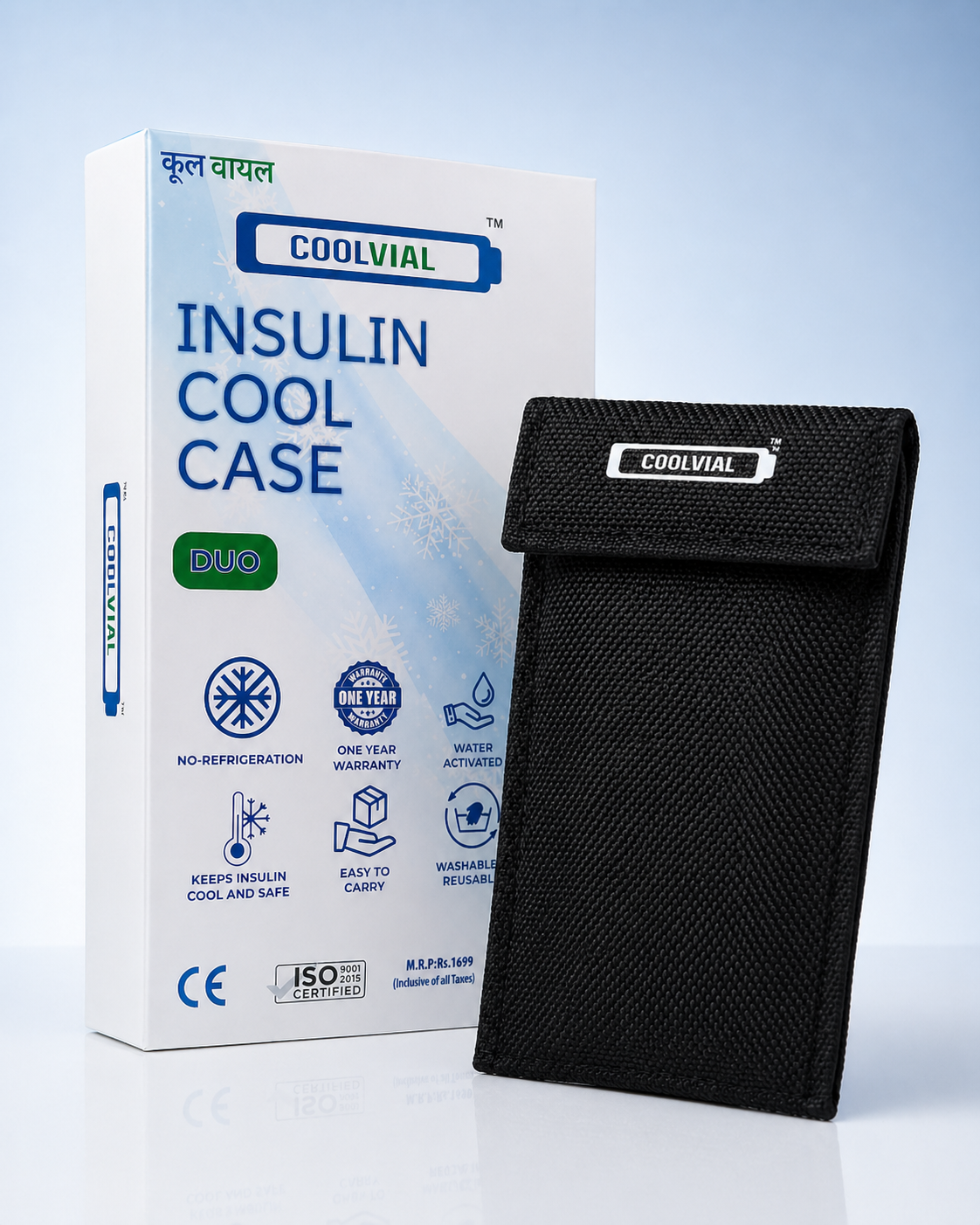
Tips for Bus and Auto Commuters:
- Cooling Case is Essential: For BEST buses and autos, a cooling case is absolutely mandatory. Your insulin will not survive a 60-minute ride in these conditions without protection.
- Strategic Placement in Auto: In an auto, try to keep your bag on the side that’s shaded, or even on your lap, shielding it from direct sunlight.
- Ventilation: In a bus, if possible, choose a seat near an open window (if available and not letting in direct sun) for better air circulation, though the cooling case remains your primary defense.
Ride-Sharing and Two-Wheelers
Ride-sharing services like Ola and Uber should offer AC, but Mumbai often sees a “AC denial culture” where drivers might hesitate to turn it on to save fuel, especially for shorter rides. For two-wheelers, the risk is even greater.
Critical Warning for Two-Wheelers: NEVER store insulin in a two-wheeler dickey (under-seat storage). The dickey can trap engine heat and reach extreme temperatures, often exceeding 60°C, which will render insulin ineffective very quickly. This is one of the quickest ways to ruin your insulin supply.
Tips for Ride-Sharing and Two-Wheeler Commuters:
- Always Request AC: For ride-sharing, politely but firmly request the AC be turned on. If the driver refuses, consider canceling or reporting.
- Cooling Case for All Rides: Even with AC, use your cooling case. The AC might not be consistently cool, or there could be delays.
- Backpack for Two-Wheelers: If you commute by two-wheeler, carry your insulin in a cooling case within a backpack worn on your back, not in the dickey. This provides better insulation and keeps it away from engine heat.
Insulin in Your Everyday Bag: How Long is it Safe?
Without a proper cooling solution, insulin’s survival time in a typical bag during a Mumbai commute is alarmingly short.
Temperature and Time Limits (Approximate):
| Bag Type / Location | Estimated Temperature (Mumbai Commute) | Safe Duration (without cooling case) |
|---|---|---|
| Office Bag (non-AC) | 30-40°C | 30-60 minutes |
| School Bag | 30-40°C | 30-60 minutes |
| College Backpack | 30-40°C | 30-60 minutes |
| Laptop Sleeve | 35-45°C (due to laptop heat) | 15-30 minutes |
| Two-Wheeler Dickey | 50-60°C+ | 5-10 minutes (highly dangerous) |
(Source: General insulin manufacturer guidelines and evaporative cooling performance data, based on a 25°C threshold for opened insulin.)
As you can see, the typical 60-90 minute commute from areas like Powai to South Mumbai far exceeds the safe limits for unprotected insulin. This means that by the time you reach your destination, your insulin may have already started losing its potency.
Office Bags and Laptop Sleeves
Many professionals carry their insulin in an office bag or a laptop sleeve for convenience. While a laptop sleeve might seem protective, the heat generated by a laptop can actually accelerate insulin degradation.
- Separate Storage: Always keep your insulin separate from electronics in your bag.
- Dedicated Pouch: Use a dedicated cooling pouch, even if your office bag is high-quality.
School Bags and College Backpacks
Children with Type 1 diabetes and college students often carry their insulin in their school bags or backpacks. These bags are frequently exposed to direct sun during walks to bus stops or across campuses, and then subjected to varying temperatures inside classrooms or lecture halls.
- Educate the Child/Student: Ensure they understand the importance of keeping their insulin cool and how to use their cooling case.
- Cooling Case is a Must: For school and college students, a reliable cooling case is non-negotiable for daily carry.
- Avoid Locker Storage: School lockers can get surprisingly hot, especially if exposed to sunlight.
Workplace and Educational Institution Storage
Once you reach your destination, the challenge doesn’t end. Proper storage at your office or school/college is equally important.
Corporate Parks in BKC and Dadar
Corporate parks in Bandra Kurla Complex (BKC) and Dadar house numerous offices. While most offices have AC, it might be turned off during non-working hours, or specific areas might be warmer. Storing insulin with your lunch box in a non-refrigerated common area is often a bad idea.
Workplace Storage Best Practices:
- Office Refrigerator: If available, store your insulin (in its cooling case for added protection) in a designated spot in the office refrigerator. Ensure it’s clearly labeled.
- Personal Desk Drawer: If refrigeration isn’t an option, keep your cooling case in a shaded, well-ventilated desk drawer, away from direct sunlight or heat sources like windows or personal heaters.
- Lunch Storage: Never store insulin directly with lunch in a tiffin bag unless the tiffin bag itself is insulated and contains ice packs, which require regular replenishment. A dedicated insulin cooling case is superior.
- Communication: Inform your HR or office manager about your need for proper insulin storage, especially if you require access to a refrigerator.
5 Essential Tips for Your Daily Commute With Insulin in Mumbai — Metro, Bus & Auto
COOLVIAL keeps insulin safe in India's heat. 48+ hours, no electricity needed.
Mumbai’s Major Schools and Colleges
From schools near Bandra to colleges in South Mumbai or institutions in the Powai-Vikhroli belt, students need clear guidelines for insulin storage.
School/College Storage Tips:
- Nurse’s Office/Medical Room: The best place for students to store their insulin is in the school nurse’s office or a designated medical room, which typically has a refrigerator.
- Teacher/Professor Awareness: Inform teachers or professors about the child’s/student’s insulin needs and where it is stored.
- Personal Cooling Case: For quick access during the day, or if no central refrigeration is available, the student should keep their insulin in their personal cooling case at their desk or locker (if the locker is not excessively hot).
- Emergency Kit: Ensure an emergency kit with rapid-acting glucose and glucagon is available and the staff knows how to use it.
For more comprehensive care guidelines, you might find our Complete Diabetes Care Guide for Mumbai Residents — 2026 Edition helpful.
Your Daily Insulin Cooling Ritual: The COOLVIAL Solution
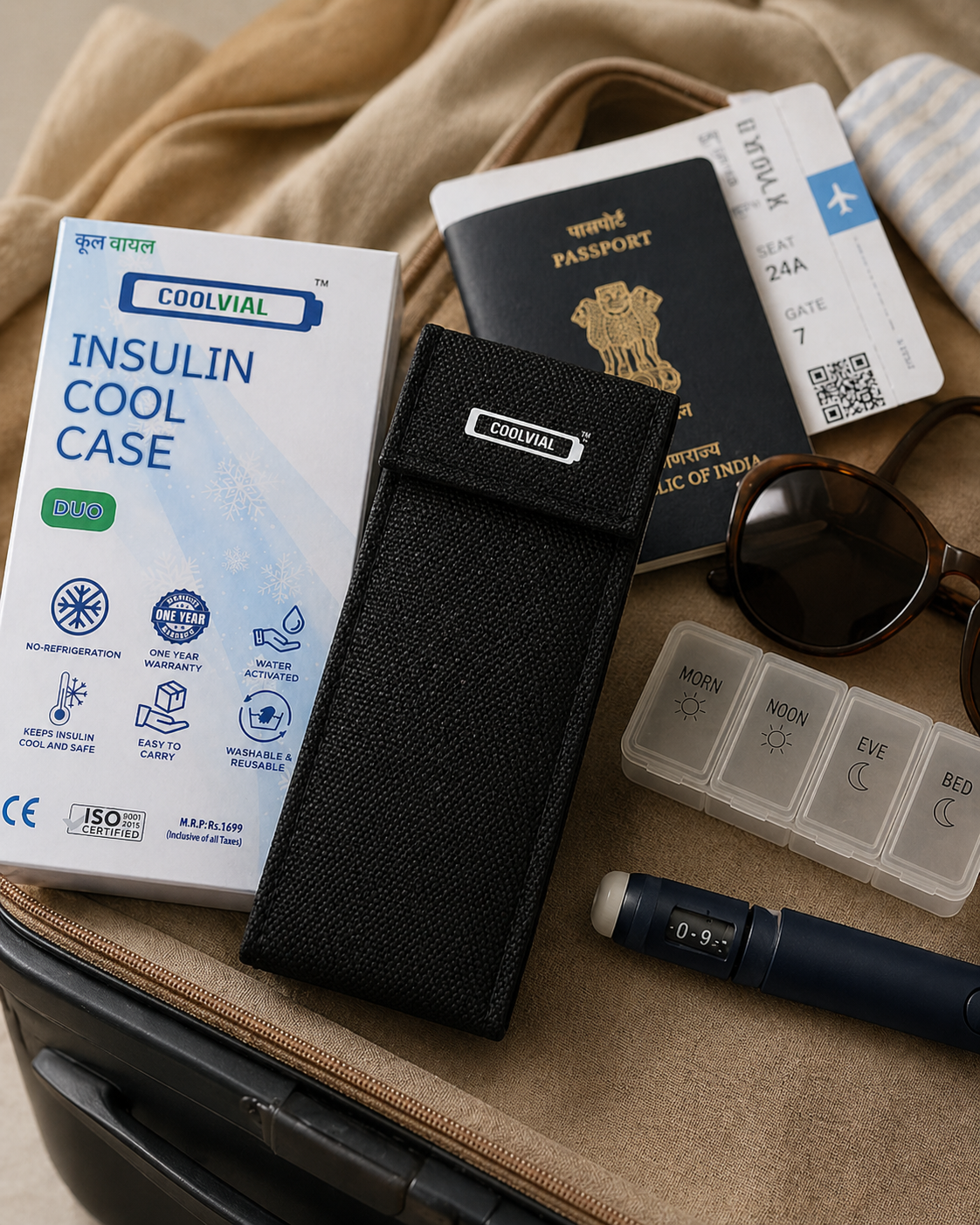
Given Mumbai’s climate and commute realities, a robust and reliable cooling solution is not an option, but a necessity. This is where COOLVIAL Duo comes in as an indispensable companion for your daily journey.
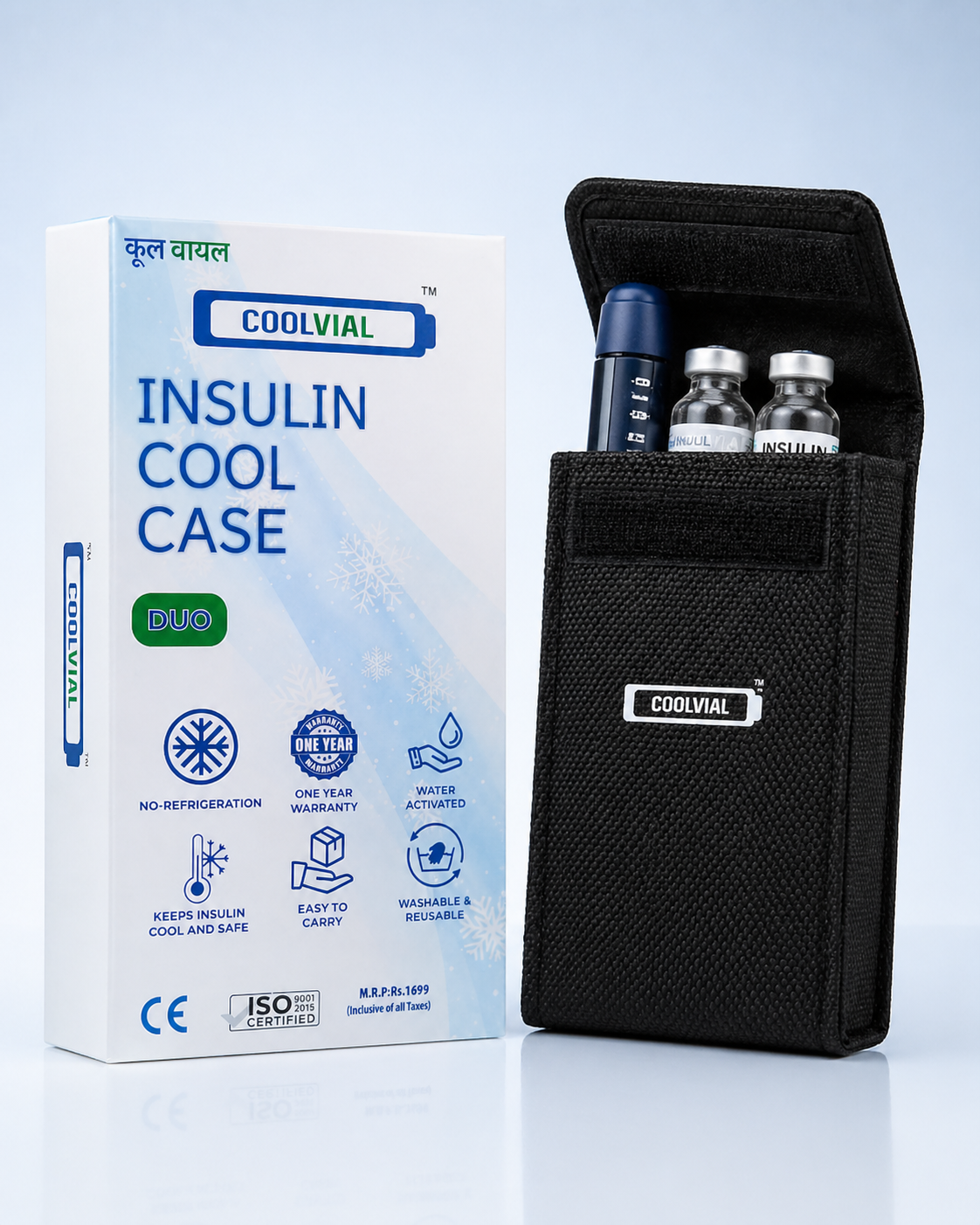
The COOLVIAL Duo is a water-activated evaporative cooling case designed specifically to protect your insulin from extreme temperatures. It holds 2 pens and 1 vial, providing ample space for your daily insulin needs.
Why COOLVIAL Duo is Ideal for Mumbai Commutes:
- Consistent Cooling: It keeps insulin cool (between 18-26°C) for 12-16 hours, even when ambient temperatures reach 38-42°C. This covers even the longest Mumbai commutes and a full day at work or school.
- No Electricity Needed: Simply activate with water. This is perfect for areas with unreliable power or when you’re on the go.
- Durable & Portable: Made in India, CE certified and ISO 9001:2015 certified, it’s designed for daily use and fits easily into most bags. It comes with a 1-year warranty.
- Cost-Effective: At Rs 1,099 with code COOLHEAL (MRP Rs 1,699), it offers superior value.
How COOLVIAL Compares:
| Feature | COOLVIAL Duo | FRIO (Similar Capacity) | Outer Woods OW-12 (Similar Category) |
|---|---|---|---|
| Capacity | 2 pens + 1 vial | Varies, often 2 pens | 2 pens + ice pack |
| Cooling Method | Water-activated evaporative cooling | Water-activated evaporative cooling | Gel pack/ice pack |
| Cooling Duration | 12-16 hours | Up to 45 hours (claim, varies with climate) | 8-12 hours (with ice pack) |
| Temp. Range | 18-26°C (when outside 38-42°C) | Stable 18-26°C (when outside 38-42°C) | Maintains low temp (needs freezing) |
| Price | Rs 1,099 (with COOLHEAL code) | ~Rs 1,900 | ~Rs 999 |
| Maintenance | Re-activate with water | Re-activate with water | Re-freeze gel pack daily |
| Portability | Slim, fits in bags | Slim, fits in bags | Can be bulkier with gel pack |
| Certifications | CE certified, ISO 9001:2015, Made in India | UK certified, generally recognized | Varies by model |
Your Morning Prep Ritual with COOLVIAL Duo:
- Activate Your COOLVIAL Duo: Before you leave home, simply immerse the inner pouch of your COOLVIAL Duo in cold water for 5-10 minutes. The crystals inside will absorb the water and turn into a gel.
- Drain Excess Water: Gently squeeze out any excess water and pat the pouch dry with a towel. It should feel cool and slightly damp, but not wet.
- Insert Insulin: Place your insulin pens and/or vial into the activated pouch.
- Place in Outer Cover: Slip the pouch into the protective outer cover.
- Pack & Go: Put your COOLVIAL Duo into your office bag, school bag, or backpack. It’s now ready to protect your insulin for your entire commute and workday.
This simple ritual ensures your insulin remains within its safe temperature range, regardless of the heat, humidity, or AC reliability you encounter during your journey across Mumbai.
For more tips on managing insulin during travel, check out our article on Travelling From Mumbai With Insulin — Airport, Station & Taxi Tips.
Frequently Asked Questions (FAQ)
Q: How long can insulin stay out of the refrigerator in Mumbai’s climate? A: Unopened insulin should be refrigerated at 2-8°C. Once opened, most insulin types can be kept at room temperature (below 25-30°C) for up to 28 days. However, in Mumbai’s climate, which often exceeds 30°C, insulin can start losing potency in as little as 30-60 minutes without a cooling case.
Q: Is it safe to carry insulin in my regular office bag or school backpack in Mumbai? A: No, it is generally not safe to carry insulin directly in a regular office bag or school backpack in Mumbai without a dedicated cooling solution. The city’s high temperatures and humidity can quickly compromise insulin’s effectiveness, especially during commutes.
Q: Can I store my insulin in a two-wheeler dickey or car glove compartment in Mumbai? A: Absolutely not. A two-wheeler dickey can reach temperatures over 60°C, and a car glove compartment can also get extremely hot, both of which will rapidly destroy insulin. Always carry insulin in a personal cooling case, ideally in a backpack worn on your back for two-wheelers.
Q: What is the ideal temperature range for opened insulin? A: Most opened insulin is safe at temperatures below 25-30°C for up to 28 days. However, always refer to your specific insulin manufacturer’s guidelines and consult your doctor. A cooling case like COOLVIAL Duo maintains insulin between 18-26°C, keeping it safely within the recommended range.
Q: Where can I buy insulin and other diabetes supplies in Mumbai? A: Insulin and other diabetes supplies are widely available across Mumbai at major pharmacy chains like Apollo Pharmacy, Wellness Forever, MedPlus, and local chemists such as Noble Chemist and Trust Chemists. Always ensure you purchase from reputable sources.
Q: What if I forget my cooling case at home during my Mumbai commute? A: If you realize you’ve forgotten your cooling case, try to minimize your insulin’s exposure to heat. Keep it in the coolest part of your bag, out of direct sunlight, and seek an air-conditioned environment as soon as possible. Consider having a backup insulin pen at your office if feasible, or immediately procure a temporary cooling solution if available nearby.
Q: How do I know if my insulin has gone bad due to heat exposure? A: Heat-damaged insulin may appear cloudy, discolored, or have small particles. However, sometimes the damage isn’t visible. If you suspect your insulin has been exposed to high temperatures and you experience unusual blood sugar readings, discard the pen/vial and start a fresh one, consulting your doctor if concerns persist.
Q: Are there any specific tips for children carrying insulin to school in Mumbai? A: Yes, children should always carry their insulin in a reliable cooling case. Parents should also inform the school nurse or teacher about the child’s diabetes and where the insulin is stored. Ideally, insulin should be kept in the school’s medical room refrigerator if available.
Conclusion
Navigating Mumbai’s bustling streets and diverse transport systems with insulin requires careful planning and the right tools. The city’s persistent heat and humidity demand a proactive approach to insulin storage, ensuring that your vital medication remains potent and effective throughout your daily journey. From the crowded local trains to the air-conditioned Metro, and the open-air auto-rickshaws, understanding the environmental risks and preparing adequately can make all the difference.
By adopting a simple morning ritual and investing in a reliable cooling solution like the COOLVIAL Duo, you empower yourself to live your life fully, without the constant worry of insulin degradation. Prioritizing your health means taking control of these everyday challenges.
Order your COOLVIAL Duo today at Rs 1,099 with code COOLHEAL – visit coolvial.com or reach out via WhatsApp at wa.me/918766952300 to ensure your insulin stays cool, safe, and effective, no matter how hot Mumbai gets.
Medical Disclaimer
This article is for general information and educational purposes only and is not a substitute for professional medical advice, diagnosis, or treatment. Always consult your endocrinologist or diabetologist before changing insulin storage or dosing practices, or if you have any medical questions or concerns.
How We Researched This
This article is based on a comprehensive review of current insulin storage guidelines from the Research Society for the Study of Diabetes in India (RSSDI - Source: https://www.rssdi.in/publications.html), prevalence data from the Indian Council of Medical Research - India Diabetes (ICMR-INDIAB) study, and an analysis of local Mumbai climate patterns and public transport conditions. We also consulted local Mumbai hospital directories (including Lilavati Hospital (Bandra), PD Hinduja Hospital (Mahim), Kokilaben Dhirubhai Ambani Hospital (Andheri)) and pharmacy networks (such as Apollo Pharmacy, Wellness Forever, MedPlus) to understand local healthcare accessibility and common diabetic queries regarding daily insulin management. Local specifics, such as typical commute times and temperature variations in transport, are based on general Mumbai resident experiences and observations [Verify in 2026].
5 Essential Tips for Your Daily Commute With Insulin in Mumbai — Metro, Bus & Auto
Insulin at 2-8°C for 48+ hours. Trusted by 10,000+ Indian diabetics.