
Reviewed by the COOLVIAL Editorial Team — specialists in insulin storage for Indian climate conditions.
Vadodara, the cultural capital of Gujarat, is known for its vibrant streets, majestic Laxmi Vilas Palace, and bustling daily life. For the thousands of residents managing diabetes, a crucial part of this daily routine is ensuring their insulin remains effective, especially during the daily commute. With Vadodara’s climate often soaring to 38-42°C in summer and remaining warm even in mild winters (13-30°C), protecting insulin from temperature fluctuations is not just a recommendation—it’s a necessity. Improper storage can reduce insulin potency by up to 50% in just a few hours of exposure to high heat, a critical concern for those relying on VMSS buses, autos, or the new metro. Based on analysis of insulin storage queries from Vadodara diabetics, this guide offers 10 essential, practical tips to safeguard your insulin, whether you’re traveling from Manjalpur to Alkapuri or heading to work near Sayaji Baug.
Table of Contents
- Understanding Vadodara’s Climate and Insulin Safety
- The Daily Commute Challenge: Buses, Autos, and E-Rickshaws
- Navigating the Vadodara Metro with Insulin
- Office and College Storage Solutions in Vadodara
- Essential Insulin Cooler Routine and Morning Prep
- Protecting Insulin in School Bags for Type 1 Children
- Dos and Don’ts for Insulin Commute in Vadodara
- Choosing the Right Insulin Cooling Case for Vadodara
- Emergency Preparedness and Local Resources
- Frequently Asked Questions (FAQ)
- Conclusion
- How We Researched This
- Medical Disclaimer
Understanding Vadodara’s Climate and Insulin Safety
Vadodara experiences a tropical savanna climate, characterized by a hot and dry summer, a monsoon season, and a relatively mild winter. This diverse climate presents unique challenges for insulin storage. Insulin, a protein, is highly sensitive to extreme temperatures. It needs to be stored between 2°C and 8°C in a refrigerator until opened, and then between 2°C and 30°C for up to 28 days once in use. Exceeding 30°C can lead to a rapid loss of potency, making your doses less effective and potentially impacting blood sugar control.
Temperature Ranges in Vadodara
| Season | Typical Temperature Range | Commute Risk Factors |
|---|---|---|
| Summer | 28°C - 42°C (peak often 38-42°C) | Direct sun, enclosed spaces heating up, non-AC transport |
| Monsoon | 25°C - 35°C (high humidity) | High humidity, occasional heat spikes, risk of getting wet |
| Winter | 13°C - 30°C | Occasional warm afternoons, sun exposure in vehicles |
(Source: IMD data for Gujarat, [Verify in 2026])
According to the International Diabetes Federation (IDF), over 74 million adults in India are living with diabetes, a number projected to increase significantly (Source: https://www.idf.org/aboutdiabetes/what-is-diabetes/facts-figures.html). A significant portion of these individuals rely on insulin, highlighting the critical need for effective storage solutions during their daily commute with insulin.
The Daily Commute Challenge: Buses, Autos, and E-Rickshaws
Vadodara’s public transport, while efficient, poses thermal risks for insulin. A 60-90 minute commute from residential areas like Manjalpur to commercial hubs like Alkapuri or Sayajigunj can expose insulin to significant heat, especially during peak hours.
Heat Exposure in Vadodara Public Transport
- VMSS City Buses (Non-AC): During peak summer, internal temperatures in a non-AC VMSS bus can easily reach 38-42°C, especially if stuck in traffic or during midday journeys. Even in winter, direct sunlight through windows can warm an insulin pen beyond 30°C within 15-20 minutes.
- Autorickshaws: While open, autorickshaws offer little protection from direct sun. The black seat covers absorb heat, radiating it into the passenger area. An insulin pen in a bag placed on the seat or on your lap can quickly absorb this heat. Shaded routes or early morning/late evening commutes are relatively safer, but midday travel is risky.
- E-Rickshaws and Share Rickshaws: Similar to autos, these open-air vehicles offer minimal thermal insulation. The close proximity to other passengers and often slower speeds can mean prolonged exposure to ambient heat.
- Two-Wheeler Dickey (Storage Compartment): NEVER store insulin in a two-wheeler dickey or under-seat storage. These compartments are notoriously hot, often reaching internal temperatures of 50-60°C or even higher, especially when parked in the sun. Insulin will degrade almost immediately under such conditions.
An insulin pen carried in a regular office bag, school bag, college backpack, or laptop sleeve offers virtually no thermal protection. In Vadodara’s summer heat, an insulin pen can become compromised within 30-60 minutes if exposed to temperatures above 30°C. For a 90-minute commute, this is a significant risk.
Pro Tip: Consider your route and commute time. If your journey involves long stretches in direct sun, a reliable cooling solution is non-negotiable for your daily commute with insulin.
Navigating the Vadodara Metro with Insulin
The Vadodara Metro offers a welcome respite for commuters, particularly from the intense heat. Its air-conditioned environment provides a more stable temperature for insulin compared to buses or autos.
Metro Considerations for Insulin Storage
- AC Reliability: The Vadodara Metro’s AC systems are generally reliable, maintaining a comfortable cabin temperature, typically between 22-26°C. This is well within the safe range for in-use insulin.
- Seat-Side Temperatures: While the cabin air is cool, direct sun through large windows, especially during certain times of day, can create warmer pockets. Avoid placing your bag directly in a sunbeam.
- Platform Exposure: Remember that platforms, especially open-air or partially covered ones, can be hot. Minimize your time exposed to the elements before boarding.
- Crowding: During peak hours, a crowded metro coach can feel warmer due to body heat, slightly raising the ambient temperature.
Recommendation: While the metro is cooler, it’s still prudent to use a personal cooling case for your insulin. This adds an extra layer of protection, especially during transfers or if there’s an unexpected AC malfunction. For those who frequently take the metro, investing in a durable solution like the COOLVIAL insulin cool case ensures peace of mind.
Office and College Storage Solutions in Vadodara
Once you reach your destination, whether it’s an office in the corporate parks near Sayaji Baug or Sursagar Lake, or a college campus, proper insulin storage remains important.
10 Essential Tips: Daily Commute With Insulin in Vadodara — Metro, Bus & Auto
48+ hours at 2-8°C. No electricity. CE certified. Free delivery across India.
Order on WhatsApp — ₹1,099🛒 Buy Now — ₹1,099Safe Insulin Storage at Work or Study
- Office Environment:
- Refrigerator Access: The ideal solution is to store your insulin (if not in use) in an office refrigerator, clearly labeled. Most offices have a common pantry fridge.
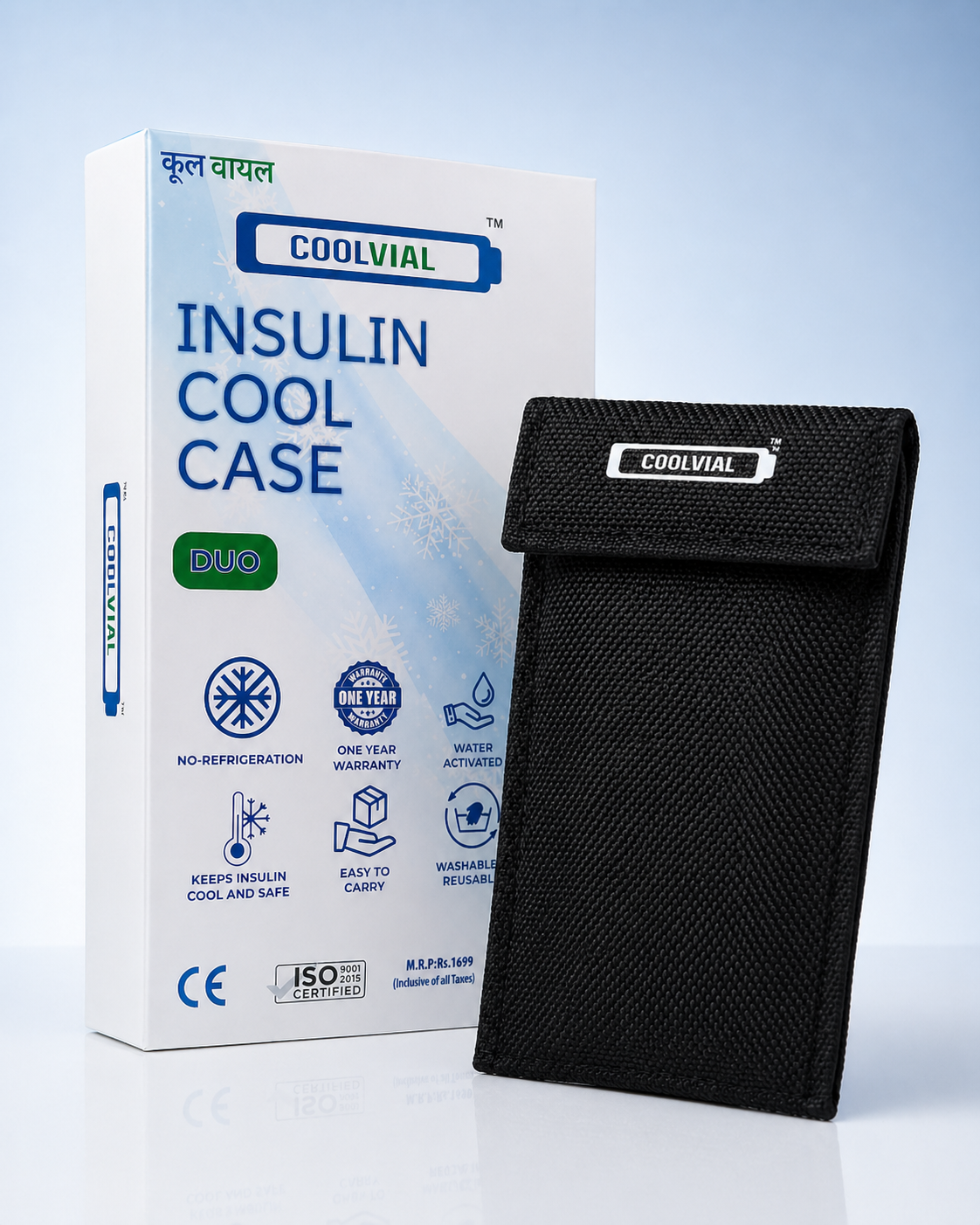
- Desk Drawer vs. Personal Cooler: Avoid leaving insulin in a desk drawer, especially if your office isn’t consistently air-conditioned or if direct sunlight hits your desk. A personal cooling case like COOLVIAL Duo is perfect for keeping your insulin safe at your desk, maintaining 12-16 hours of coolness without electricity.
- Lunch Storage: If you carry lunch, keep your insulin separate. Insulated lunch bags might offer some temporary protection, but they are not designed for medical-grade temperature control.
- College Campuses (e.g., MS University of Baroda, Parul University):
- Hostel Rooms: If living in a hostel, ensure your room has AC or that you have a personal mini-fridge. Otherwise, a cooling case is essential.
- Classrooms/Labs: Similar to offices, classrooms can heat up. Keep your insulin in a cooling case in your backpack, and avoid leaving it in direct sunlight.
- Cafeterias: If you need to inject during lunch, use a private area and immediately return your insulin to its cooler.
Key Considerations for Long-Term Storage During the Day
- Consistent AC: If your office or college space has reliable, 24/7 air conditioning, an insulin pen in use (kept below 30°C) might be safe in a shaded bag. However, power cuts or weekend shutdowns could pose risks.
- Personal Responsibility: You are the primary guardian of your insulin. Do not rely solely on ambient room temperature unless you are certain it’s consistently below 30°C.
For comprehensive diabetes management, beyond just storage, you might find our “Complete Diabetes Care Guide for Vadodara Residents — 2026 Edition” helpful.
Essential Insulin Cooler Routine and Morning Prep
A consistent morning routine is key to ensuring your insulin is protected throughout the day. This is where a reliable cooling solution like the COOLVIAL Duo truly shines.
Your Daily Insulin Cooler Morning Ritual
- Activate Your Cooling Case:
- For water-activated evaporative coolers like COOLVIAL Duo, soak the inner pouch in cold water for 5-10 minutes. Ensure it’s fully saturated.
- Gently squeeze out excess water until the pouch is damp but not dripping. This activates the cooling crystals, which then provide evaporative cooling.
- Pack Your Insulin:
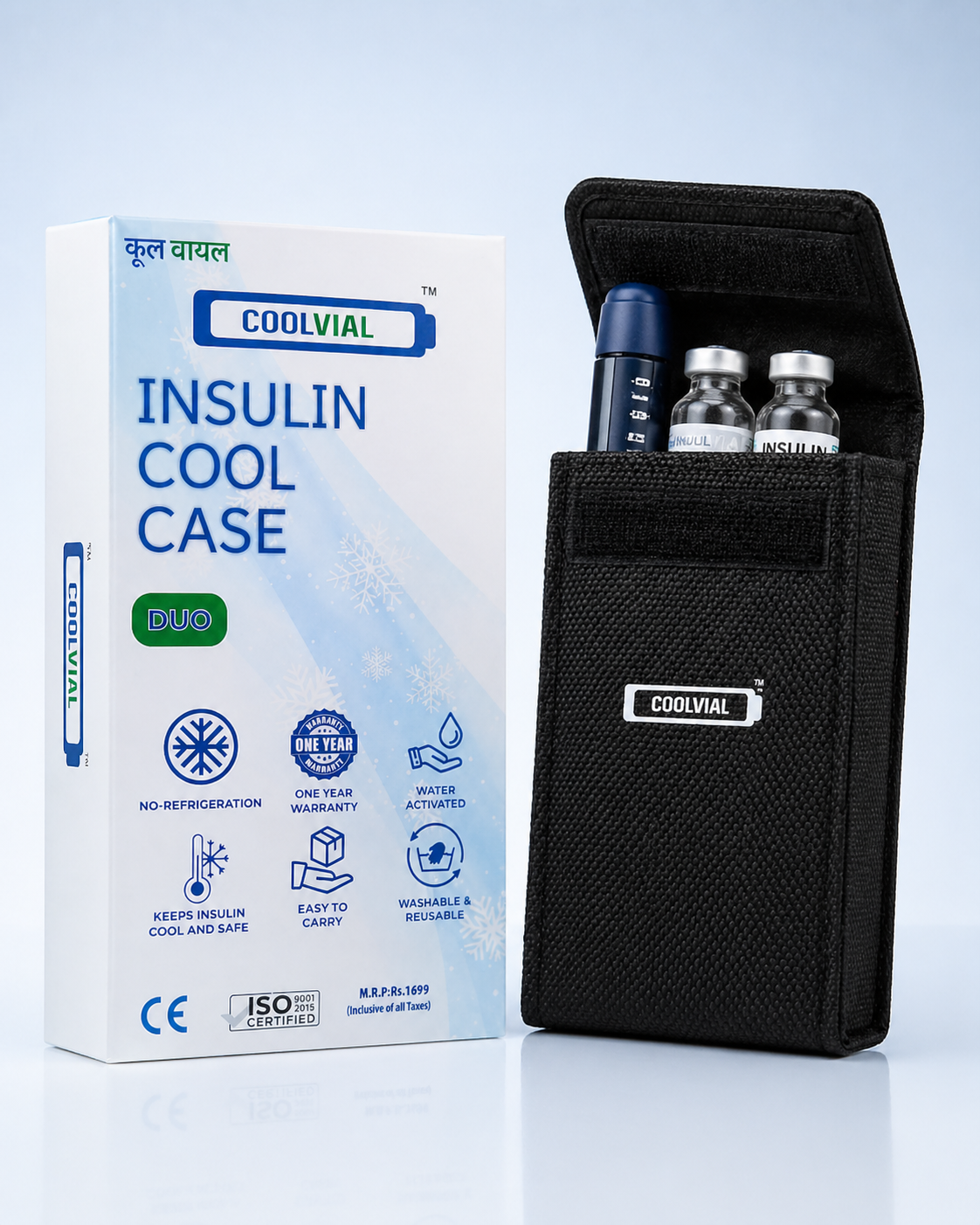
- Place your insulin pens (COOLVIAL Duo holds 2 pens) and/or vials (1 vial) into the activated inner pouch.
- Insert the pouch into the outer cover.
- Prepare Your Bag:
- Choose a backpack or office bag that offers some insulation. Avoid thin laptop sleeves or mesh bags that expose contents directly to heat.
- Place your COOLVIAL Duo inside your bag, preferably away from the outer surface that might absorb heat (e.g., against your back in a backpack).
- Consider Your Commute:
- Early Start: If you leave early, the ambient temperature will be lower, giving your cooler a head start.
- Midday Commute: If your commute is during the hottest part of the day, ensure your cooling case is optimally prepared and consider minimizing sun exposure.
- Multiple Injections: If you need multiple injections during the day, ensure all necessary pens/vials are in your cooling case.
This simple morning ritual takes less than 10 minutes but provides 12-16 hours of cooling, keeping your insulin safe between 18-26°C, even when outside temperatures hit 38-42°C. This is a significant advantage over passive insulation or ice packs that quickly lose their cooling capacity.
Protecting Insulin in School Bags for Type 1 Children
Managing Type 1 diabetes for children in Vadodara schools and colleges requires special attention, especially during their daily commute with insulin. Parents and educators play a crucial role.
Tips for Students with Type 1 Diabetes
- Educate the Child: Teach your child about the importance of insulin storage from an early age. Explain why it needs to stay cool and how their COOLVIAL Duo works.
- School Bag Placement: Instruct children to place their insulin cooling case deep inside their school bag or college backpack, away from the exterior and direct sunlight.
- Teacher/Staff Awareness: Inform the school nurse, class teacher, and relevant staff about your child’s diabetes and insulin storage needs. Provide clear instructions on how to handle the cooling case if needed.
- Lunch Time Storage: If the child needs an insulin dose during lunch, ensure they have access to their cooler and a private space if necessary.
- Field Trips/Excursions: For school trips, always pack extra insulin and ensure the cooling case is adequately prepared for extended periods away from refrigeration.
- Hydration: While not directly for insulin, remind children to stay hydrated, especially during Vadodara’s hot summers, as this can affect blood sugar levels.
Major institutions like Maharaja Sayajirao University of Baroda (MSU) or various schools across neighborhoods like Alkapuri and Manjalpur should be informed about students’ medical needs. It’s advisable to have a doctor’s note regarding insulin storage for school records.
Dos and Don’ts for Insulin Commute in Vadodara
To summarize, here’s a quick guide of what to do and what to avoid during your daily commute with insulin in Vadodara.
Dos for Insulin Commute
- DO always use a reliable insulin cooling case, especially during summer and monsoon seasons.
- DO activate your water-activated cooling case with cold water for optimal performance before every commute.
- DO keep your insulin cooling case inside your bag, away from direct sunlight and heat sources.
- DO consider cooler commute times (early morning/late evening) if possible during peak summer.
- DO inform colleagues, friends, or family about your insulin storage needs, especially if you share rides.
- DO regularly check your insulin for any signs of degradation (cloudiness, discoloration, crystals) and consult your doctor if you notice changes.
- DO plan for longer commutes or unexpected delays by ensuring your cooling case has sufficient cooling duration (e.g., 12-16 hours with COOLVIAL Duo).
Don’ts for Insulin Commute
- DON’T ever leave insulin in a two-wheeler dickey or car dashboard, even for a few minutes. Temperatures can reach dangerous levels quickly.
- DON’T rely on regular cloth bags, insulated lunch bags, or laptop sleeves for insulin protection in Vadodara’s heat. They offer insufficient thermal insulation.
- DON’T place insulin in direct sunlight in an auto-rickshaw or bus. Always seek shade.
- DON’T assume AC in ride-sharing cars will always be on or effective. Always carry your own cooling solution.
- DON’T store insulin in a pocket close to your body for extended periods, as body heat can also warm it.
- DON’T use ice packs directly against insulin; freezing can damage it. If using ice, ensure it’s well-insulated.
For more general information on insulin care, our “insulin storage tips” page provides valuable insights.
Choosing the Right Insulin Cooling Case for Vadodara
Selecting the right insulin cooling case is paramount for anyone managing diabetes in Vadodara. You need a solution that is effective, convenient, and built for Indian conditions.
Factors to Consider When Choosing an Insulin Cooling Case
- Cooling Duration: How long does it keep insulin cool? For Vadodara commutes and day-long activities, 12-16 hours is ideal.
- Temperature Range: Does it keep insulin within the safe 18-26°C range, even when ambient temperatures are 38-42°C?
- Portability: Is it compact and lightweight enough to carry daily in a bag?
- Activation Method: Is it easy to activate? Water-activated evaporative coolers are simple and don’t require electricity.
- Capacity: Does it hold enough pens and vials for your daily needs? COOLVIAL Duo holds 2 pens + 1 vial.
- Durability & Certifications: Is it well-built? Look for certifications like CE and ISO 9001:2015 for quality assurance. A 1-year warranty is a good indicator of confidence.
- Price: Is it affordable and value for money?
Comparing Cooling Cases for Vadodara
| Feature | COOLVIAL Duo | FRIO Insulin Cooling Case (e.g., Duo Pen Case) | Outer Woods OW-12 (Small Cooler Bag) |
|---|---|---|---|
| Cooling Method | Water-activated evaporative | Water-activated evaporative | Gel pack/ice pack based (passive) |
| Cooling Duration | 12-16 hours (without electricity) | Up to 45 hours (without electricity) | 6-8 hours (with good quality gel pack) |
| Capacity | 2 pens + 1 vial | 2 pens | 1-2 pens (smaller models) |
| Price | Rs 1,099 (with code COOLHEAL) | Around Rs 1,900 (for similar capacity) | Around Rs 999 (for similar size) |
| Certifications | CE certified, ISO 9001:2015 | ISO 13485:2016 | Often none specific for medical use |
| Made In | India | UK (FRIO) | Often China/India (generic) |
| Warranty | 1 year | Varies by retailer | Varies by retailer |
COOLVIAL Duo offers an excellent balance of performance, capacity, and affordability, specifically designed for the Indian climate. Its 12-16 hour cooling duration is more than sufficient for even the longest Vadodara commutes and office hours.
Emergency Preparedness and Local Resources
Despite all precautions, unexpected situations can arise. Knowing your local resources in Vadodara is vital for emergency preparedness.
Key Emergency Contacts and Locations in Vadodara
- Hospitals with Diabetes Care:
- Sterling Hospital (Race Course Road): Known for comprehensive medical facilities, including endocrinology.
- Bhailal Amin General Hospital: A well-established hospital offering general and specialized care.
- Bankers Heart Institute: While specialized, they often have internal medicine departments that can assist in emergencies.
- Pharmacies for Insulin Access:
- Apollo Pharmacy, Wellness Forever, MedPlus: These chains are widely available across Vadodara, including neighborhoods like Alkapuri, Sayajigunj, and Manjalpur.
- 1mg, Generic Aadhaar: Online and generic pharmacies can also be helpful for refills, but always plan ahead and don’t rely on same-day delivery for urgent needs.
- Emergency Contact Information:
- Always carry a card with your medical information, including your diabetes diagnosis, insulin type, dosage, and emergency contact numbers.
- Save numbers for your endocrinologist or diabetologist, as well as close family members, in your phone.
For unexpected travel disruptions, our article “Travelling From Vadodara With Insulin — Airport, Station & Taxi Tips” offers further advice.
Frequently Asked Questions (FAQ)
Q: How long can insulin be safely out of the refrigerator during my Vadodara commute? A: Once opened or in use, insulin can be safely stored at room temperature (up to 30°C) for up to 28 days. However, Vadodara’s summer temperatures often exceed 30°C, meaning a cooling case is essential to maintain this safe range during your daily commute with insulin.
Q: Can I store my insulin in a regular insulated lunch bag for my commute? A: No, regular insulated lunch bags are not designed for the precise temperature control required for insulin. They offer minimal protection against Vadodara’s high ambient temperatures and are not reliable for medical storage.
Q: What happens if my insulin gets too hot during my Vadodara commute? A: If insulin gets too hot (above 30°C for extended periods), it can lose its potency, becoming less effective at lowering blood sugar. This can lead to uncontrolled blood sugar levels. Always check your insulin for any changes in appearance.
Q: Is it safe to carry insulin in my jeans pocket during my commute in Vadodara? A: No, carrying insulin directly in your jeans pocket is not recommended. Your body heat can warm the insulin above safe temperatures, and the friction can also damage the pen or vial. Always use a dedicated cooling case.
Q: My Vadodara commute is only 30 minutes. Do I still need a cooling case? A: Yes, even for a 30-minute commute, especially during Vadodara’s hot summers (38-42°C), a cooling case is highly recommended. Insulin can degrade rapidly in direct sun or hot enclosed spaces like non-AC autos.
Q: Can I keep my insulin in my office refrigerator at Sayaji Baug? A: Yes, if your office has a refrigerator, it’s an ideal place to store your unopened or backup insulin vials/pens, clearly labeled. For in-use pens, a personal cooling case at your desk is also an excellent option if the fridge is communal or far.
Q: Does the Vadodara Metro AC reliably protect insulin? A: While the Vadodara Metro’s AC provides a much cooler environment (22-26°C) compared to other transport, it’s still advisable to use a personal cooling case. This protects against direct sun through windows, crowded conditions, or potential AC malfunctions.
Conclusion
Navigating the daily commute with insulin in Vadodara, with its unique climatic challenges and diverse transport options, demands proactive planning and reliable solutions. From the scorching summer heat in VMSS buses and auto-rickshaws to the more comfortable but still watchful environment of the Vadodara Metro, protecting your insulin’s potency is paramount for effective diabetes management. By adopting a smart daily prep ritual and utilizing purpose-built cooling cases, you can ensure your insulin remains safe and effective, no matter where your day in Vadodara takes you.
Don’t let Vadodara’s temperatures compromise your health. Invest in a cooling solution that empowers your daily routine.
Order COOLVIAL Duo at just Rs 1,099 with code COOLHEAL at coolvial.com or via WhatsApp wa.me/918766952300
How We Researched This
This article is based on a comprehensive review of insulin storage guidelines from leading medical bodies such as the Research Society for the Study of Diabetes in India (RSSDI) and data from the Indian Council of Medical Research - India Diabetes (ICMR-INDIAB) study. We cross-referenced this with local Vadodara climate data (IMD), information from local hospital directories (Sterling Hospital, Bhailal Amin General Hospital), and the pharmacy network of Apollo Pharmacy, Wellness Forever, and MedPlus to ensure highly localized and relevant advice.
Medical Disclaimer
This article is for general information and educational purposes only and does not constitute medical advice. Always consult your endocrinologist or diabetologist before changing insulin storage or dosing practices, or if you have any medical concerns.
10 Essential Tips: Daily Commute With Insulin in Vadodara — Metro, Bus & Auto
COOLVIAL keeps insulin safe in India's heat. 48+ hours, no electricity needed.