
Reviewed by the COOLVIAL Editorial Team — specialists in insulin storage for Indian climate conditions.
Vadodara, the cultural capital of Gujarat, with its majestic Laxmi Vilas Palace and serene Sursagar Lake, is a vibrant city. However, its climate, ranging from a mild 13-30°C in winter to a scorching 23-42°C in summer, poses a unique challenge for individuals managing diabetes, especially when travelling from Vadodara with insulin. Insulin is a temperature-sensitive medication, and exposure to heat above 25°C can quickly degrade its efficacy, rendering it useless and potentially leading to dangerous blood sugar fluctuations. Based on analysis of insulin storage queries from Vadodara diabetics, ensuring safe transit for your insulin pens and vials is paramount, whether you’re catching a flight from Vadodara Airport (BDQ), boarding a train from Vadodara Junction (BRC), or embarking on a road trip to the Statue of Unity. In India, where diabetes prevalence is significant – affecting over 101 million people as per ICMR-INDIAB data (Source: RSSDI.in) – understanding safe insulin travel practices is not just a convenience, but a critical health necessity. This guide offers 7 practical tips to help you keep your insulin cool and effective on any journey originating from Vadodara.
Table of Contents
- Flying Out of Vadodara Airport (BDQ): Security & Insulin Storage
- Seamless Train Travel from Vadodara Junction (BRC) & Pratapnagar
- Navigating Vadodara’s Roads: Car, Taxi & App-Cab Realities
- Essential Packing & Preparation for Your Vadodara Departure
- Why Evaporative Cooling is Your Best Friend When Travelling from Vadodara with Insulin
- International Travel from Vadodara Airport (BDQ): Beyond Borders
- Frequently Asked Questions (FAQs)
- Conclusion
1. Flying Out of Vadodara Airport (BDQ): Security & Insulin Storage
When travelling from Vadodara with insulin by air, your primary concern should be airport security and maintaining insulin’s temperature. Vadodara Airport (BDQ) follows standard Bureau of Civil Aviation Security (BCAS) guidelines for medical supplies. Insulin, syringes, and lancets are permitted in both carry-on and checked luggage. However, always carry your insulin pens and vials in your hand luggage. The cargo hold of an aircraft can experience extreme temperature fluctuations, both freezing and excessively hot, which can destroy insulin.
At BDQ, during CISF screening, you may be asked questions about your insulin or cooling device, especially if you’re using gel packs. Evaporative cooling cases like the COOLVIAL Duo are generally less scrutinised as they contain no gels or ice, just water. A doctor’s letter, though not always mandatory for domestic flights, is highly recommended. It should state your medical condition, the necessity of carrying insulin and related supplies, and any prescribed medications. This can smooth your passage through security checks.
Vadodara Airport (BDQ) Specific Tip: One crucial point to remember when flying out of Vadodara Airport (BDQ) is the potential for long wait times at the pre-paid taxi queues, which can sometimes extend up to 45 minutes, especially during peak hours. If your insulin is in checked luggage, it will be exposed to ambient temperatures for this duration after retrieval, before you even leave the airport premises. This reinforces the absolute necessity of keeping insulin with you in your hand luggage, ideally in a reliable cooling case.
Airport Insulin Checklist:
- Doctor’s Letter: Carry a letter from your endocrinologist or diabetologist from Sterling Hospital (Race Course Road) or Bhailal Amin General Hospital, clearly stating your diabetes diagnosis and the need for insulin.
- Original Packaging: Keep insulin in its original pharmacy-labelled packaging (e.g., from Apollo Pharmacy or MedPlus in Alkapuri).
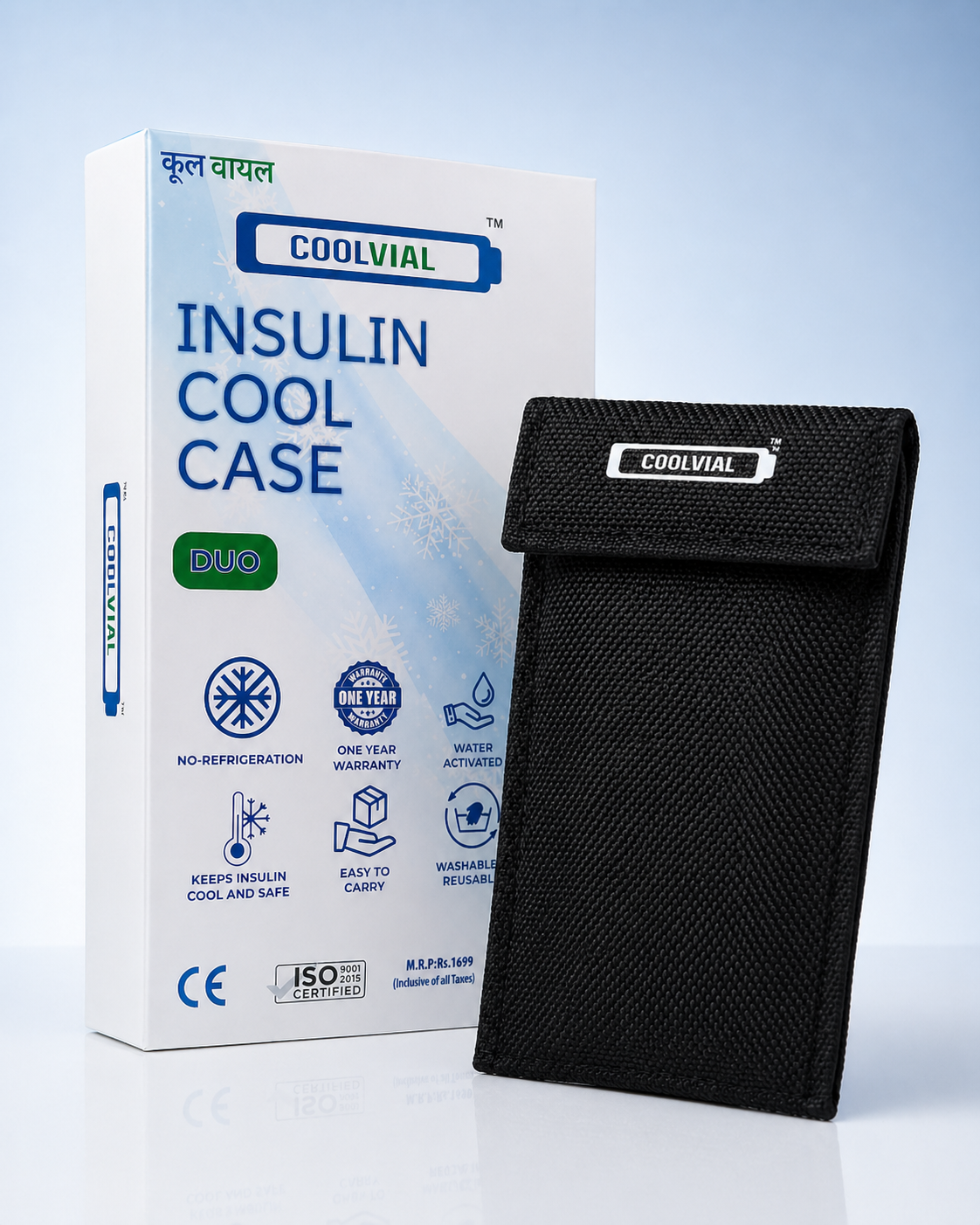
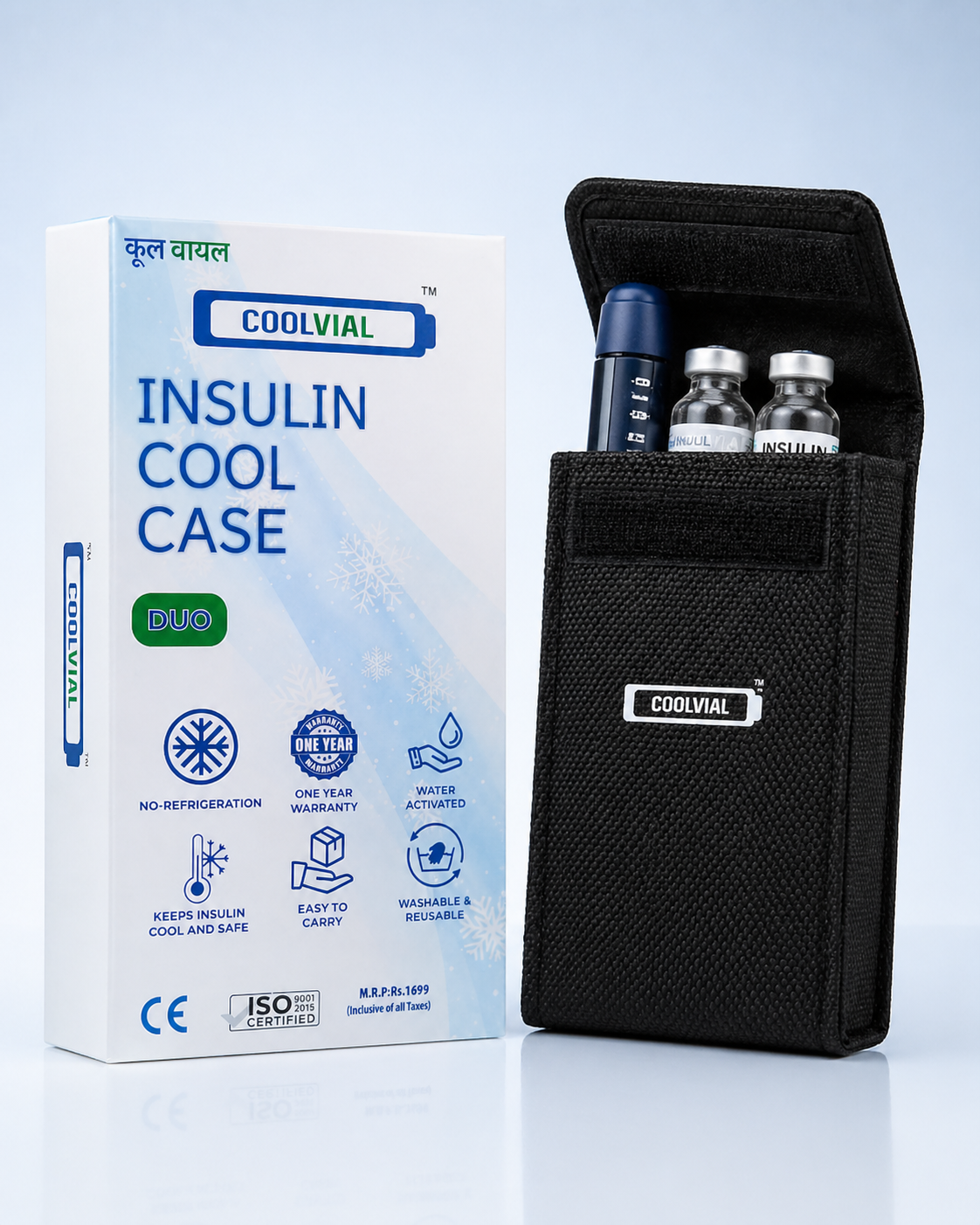
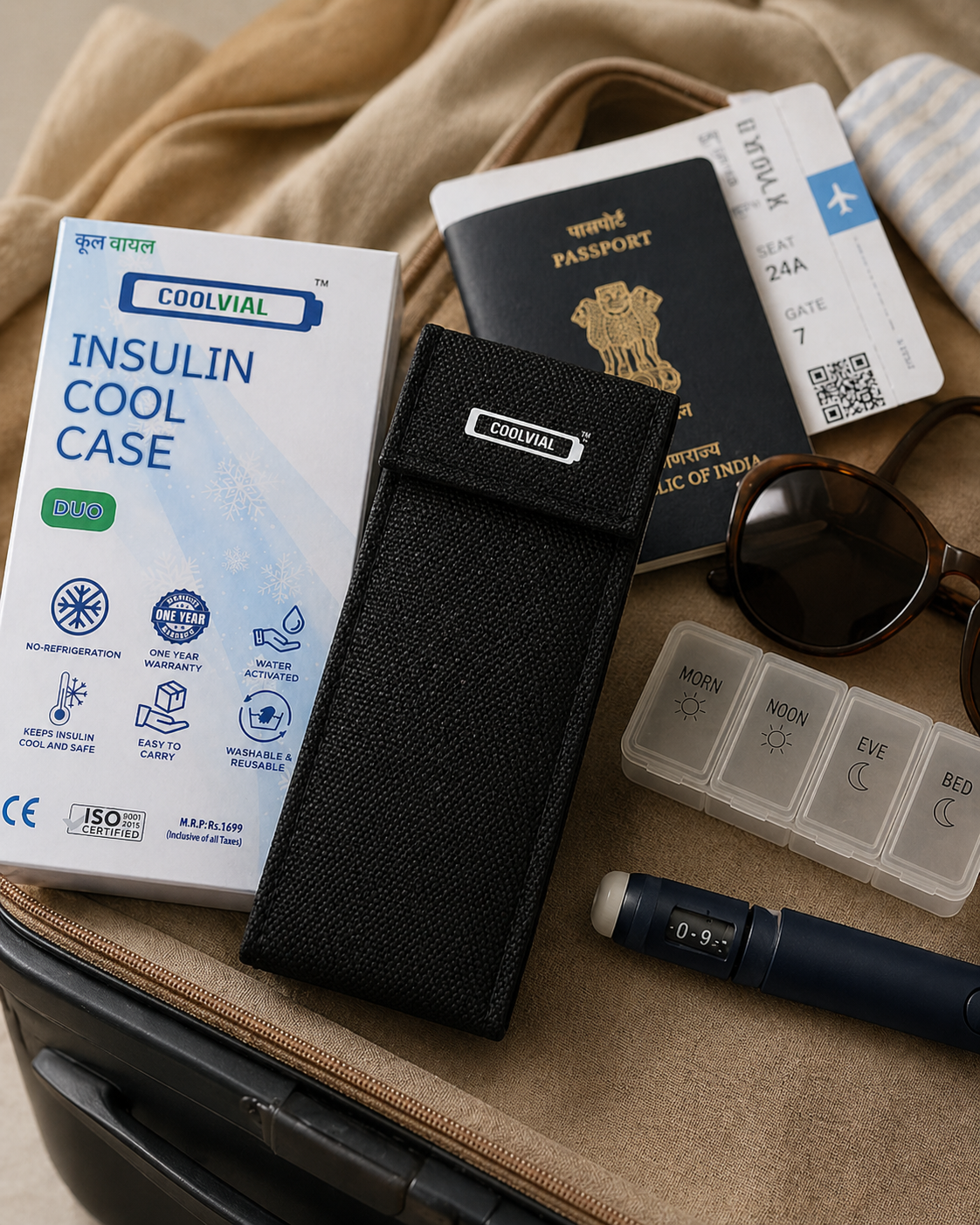
- Cooling Case: Use an effective, non-refrigerated cooling case such as the COOLVIAL insulin cool case. The COOLVIAL Duo is ideal, holding 2 pens and 1 vial, keeping them cool for 12-16 hours.
- Declaration: Be prepared to declare your medical supplies to security personnel at BDQ.
- Avoid Checked Luggage: Never place insulin in checked baggage due to unpredictable cargo hold temperatures.
2. Seamless Train Travel from Vadodara Junction (BRC) & Pratapnagar
Train journeys from Vadodara Junction (BRC) or Pratapnagar are a popular mode of transport for many, whether heading to Mumbai, Ahmedabad, or further afield. While train travel offers a different set of challenges compared to flying, keeping your insulin at the right temperature remains critical. The summer heat in Gujarat, often exceeding 40°C, can quickly compromise insulin integrity if left exposed in a general compartment or even in an AC coach that might not be consistently cool.
A common myth among travellers is that pantry car fridges are a safe place to store insulin. This is highly unreliable. Pantry car fridges are often over-stuffed, poorly maintained, and their temperatures are not consistently monitored. Furthermore, NEVER hand your insulin pens or vials to a TTE (Travelling Ticket Examiner) or any railway staff for storage. They are not equipped or responsible for safeguarding medical supplies, and your insulin could be lost, damaged, or stored improperly.
For train travel, having your own dedicated evaporative cooler is the most dependable solution. The COOLVIAL Duo, with its ability to keep insulin cool for 12-16 hours without electricity, is perfectly suited for long train journeys, ensuring your medication stays within the safe temperature range (2-25°C). You can easily re-activate it by soaking it in water at any station stop or even from the train’s washroom.
Train Travel Tips for Insulin Users:
- Personal Cooling Solution: Invest in a reliable evaporative cooling case. It’s the only way to guarantee insulin safety during train travel, especially when passing through hot regions.
- Keep Insulin Accessible: Always keep your insulin and cooling case with you, ideally in your day bag, not in overhead luggage or under seats where temperatures can fluctuate.
- Avoid Pantry Car Fridges: Do not rely on train staff or pantry car fridges for insulin storage.
- Stay Hydrated: While not directly for insulin, staying hydrated yourself is crucial for managing diabetes, especially in the heat.
- Monitor Coach Temperature: Even in AC coaches, internal temperatures can vary. If you feel the coach is too warm, check your insulin’s temperature regularly if possible. For more tips on local commutes, refer to our guide on Daily Commute With Insulin in Vadodara — Tips for Metro, Bus & Auto.
3. Navigating Vadodara’s Roads: Car, Taxi & App-Cab Realities
Road trips are an exciting way to explore destinations like the Statue of Unity, the UNESCO World Heritage site of Champaner-Pavagadh, or the coastal beauty of Diu from Vadodara. However, the open road, especially under the scorching Gujarat sun, presents unique challenges for insulin storage. Temperatures inside a parked car can soar to over 60°C within minutes, far exceeding insulin’s safe storage limits.
Taxi AC Reliability: When booking a taxi or an app-cab (Ola/Uber), always confirm that the AC is functional and will be kept on throughout the journey. Many drivers, especially in older vehicles, might refuse to run the AC to save fuel, which is detrimental to insulin. If using Rapido bike-taxis, the exposure to direct sunlight and ambient temperatures makes carrying insulin incredibly risky without a robust cooling solution.
Parking Insulin in a Hot Car: Never leave your insulin in a parked car, even for a short duration. If you must stop at a dhaba or a landmark, take your insulin cooling case with you. Dhaba fridges are generally not suitable for insulin storage, similar to pantry car fridges, due to inconsistent temperatures and hygiene concerns. Your personal evaporative cooler is your most reliable companion.
Road Trip Insulin Safety:
- Cooling Case is a Must: Always carry your insulin in an evaporative cooling case like the COOLVIAL Duo. Its 12-16 hour cooling duration is perfect for most day trips or segments of longer journeys.
- Avoid Direct Sunlight: Keep your cooling case out of direct sunlight, even inside the car. Place it on the floor or under a seat.
- Constant AC: Ensure the car’s AC is running consistently. If an Ola/Uber driver refuses, politely insist or consider alternate transport.
- Pit Stop Precautions: Take your insulin with you during pit stops. Do not rely on dhaba fridges.
- Check Insulin Visuals: Before injecting, always check your insulin for any changes in appearance (cloudiness, particles, discolouration) which could indicate degradation due to heat exposure.
The COOLVIAL Duo (Rs 1,099 with code COOLHEAL) offers a dependable, Made in India solution for these challenges. While other options like FRIO (around Rs 1,900) or Outer Woods OW-12 (around Rs 999) exist, COOLVIAL Duo provides a CE certified and ISO 9001:2015 certified product with a 1-year warranty, striking an optimal balance of quality, reliability, and affordability for the Indian climate.
4. Essential Packing & Preparation for Your Vadodara Departure
Thorough preparation is the cornerstone of stress-free travel, especially when managing diabetes and travelling from Vadodara with insulin. Before you even think about packing, a visit to your doctor at Sterling Hospital (Race Course Road) or Bankers Heart Institute is highly recommended. Discuss your travel plans, potential time zone changes, and get a comprehensive doctor’s letter.
This letter should detail your diabetes type, the specific insulin you use (e.g., Novorapid, Lantus), dosage, and the necessity of carrying syringes, pens, needles, and a blood glucose meter. It can be crucial for smooth passage through airport security, customs, and also for any medical emergencies abroad. Having a copy of your prescription from a local pharmacy like Wellness Forever or 1mg is also beneficial.
Beyond medical documentation, practical packing ensures you have everything you need. Remember that pharmacies like Generic Aadhaar in Manjalpur or MedPlus in Akota might not stock the exact brands you use, especially in smaller towns or other countries. Always carry more supplies than you anticipate needing, accounting for potential delays or unforeseen circumstances.
Pre-Travel Checklist:
- Doctor’s Letter: A detailed, signed letter from your diabetologist. Include contact information.
- Prescription Copies: Multiple copies of all insulin and medication prescriptions.
- Sufficient Supplies:
- Insulin pens/vials (enough for the trip + extra).
- Needles/syringes.
- Blood glucose meter, test strips, lancets.
- Alcohol swabs.
- Glucagon emergency kit (if prescribed).
- Oral diabetes medications (if applicable).
- Snacks and fast-acting glucose (juice, glucose tablets).
- Emergency Contacts: Keep a list of emergency contacts, including your doctor, family members, and local emergency services at your destination.
- Medical ID: Wear a medical ID bracelet or necklace indicating you have diabetes.
- Check Expiry Dates: Ensure all insulin and test strips have valid expiry dates well beyond your return date.
- Insurance: Verify your travel insurance covers diabetes-related medical emergencies.
For a broader understanding of diabetes management in Vadodara, consider reading our Complete Diabetes Care Guide for Vadodara Residents — 2026 Edition.
5. Why Evaporative Cooling is Your Best Friend When Travelling from Vadodara with Insulin
Vadodara’s climate, with its high temperatures and humidity, makes passive cooling solutions essential for insulin users on the go. Evaporative cooling technology offers a simple yet highly effective way to keep insulin within its safe temperature range (typically 2-25°C) without the need for electricity, ice packs, or refrigeration. This is particularly vital when travelling from Vadodara with insulin, where access to consistent refrigeration might be limited.
How it Works: Evaporative cooling cases, like the COOLVIAL Duo, utilise specially designed polymer crystals embedded within fabric layers. When soaked in water (tap water is fine, even in India), these crystals absorb the water and swell, forming a gel. As the water slowly evaporates from the surface of the case, it draws heat away from the contents inside, maintaining a cool temperature. This process is similar to how your body cools itself through sweating. The effectiveness of evaporative cooling increases in hotter, drier conditions, making it ideal for the arid and semi-arid regions often encountered when travelling out of Vadodara.
The COOLVIAL Duo is a superior choice for several reasons:
- Sustainable & Eco-friendly: Reusable hundreds of times, reducing waste.
- No Refrigeration Needed: Simply activate with water, perfect for remote areas or during power outages.
- Long-lasting Cooling: Provides 12-16 hours of cooling per activation, suitable for long travel days.
- Compact & Lightweight: Easy to carry in hand luggage or a day bag.
- Made in India: Designed specifically for Indian climate conditions, CE certified and ISO 9001:2015 compliant, with a 1-year warranty.
Compared to traditional ice packs, evaporative coolers are superior as they prevent insulin from freezing (which also destroys it), avoid condensation which can damage insulin pens, and don’t require re-freezing. While other brands like FRIO (often retailing around Rs 1,900) or Outer Woods OW-12 (around Rs 999) offer similar concepts, COOLVIAL Duo (priced at Rs 1,099 with code COOLHEAL) provides a robust, reliable, and locally manufactured option that is both cost-effective and specifically engineered for Indian travel conditions.
7 Practical Tips for Travelling From Vadodara With Insulin
COOLVIAL keeps insulin safe in India's heat. 48+ hours, no electricity needed.
Cooling Case Comparison:
| Feature | COOLVIAL Duo | FRIO (Similar Products) | Outer Woods OW-12 (Similar Products) | Ice Packs / Gel Packs |
|---|---|---|---|---|
| Cooling Method | Evaporative cooling (water activation) | Evaporative cooling (water activation) | Insulated bag (requires ice/gel packs) | Phase change (freezing/thawing) |
| Electricity Needed | No | No | No (but ice packs need freezer) | Yes (for re-freezing) |
| Cooling Duration | 12-16 hours | Up to 45 hours (varies by model) | Dependent on ice pack melt rate | Few hours, then needs re-freezing |
| Insulin Capacity | 2 pens + 1 vial | Varies by model (often 1-2 pens) | Varies by model (often 2-4 pens) | Variable |
| Risk of Freezing | Very Low (maintains ambient cool) | Very Low | Moderate (if in direct contact with ice) | High |
| Condensation | Minimal | Minimal | High (from melting ice) | High |
| Certifications | CE certified, ISO 9001:2015 | Varies by product | Varies by product | None (for the cooling method itself) |
| Price (approx.) | Rs 1,099 (with code COOLHEAL) | Rs 1,900+ | Rs 999+ | Rs 100-300 (for packs) |
| Made in | India | UK | India | Varies |
6. International Travel from Vadodara Airport (BDQ): Beyond Borders
For those venturing beyond India’s borders from Vadodara Airport (BDQ), international travel with insulin introduces additional layers of complexity, primarily concerning customs regulations and time-zone management. While the core principle of keeping insulin cool and in hand luggage remains, understanding country-specific rules is crucial.
Customs and Declaration: When you arrive at your international destination, you will need to declare your medical supplies to customs officials. The doctor’s letter (as detailed in Section 4) becomes even more critical here, potentially needing to be translated into the destination country’s language or English. Some countries have strict regulations on medical imports, and pre-emptively checking their embassy websites or contacting their customs department can save you significant hassle.
Time-Zone Dosing: Crossing multiple time zones can disrupt your usual insulin dosing schedule. This requires careful planning with your endocrinologist well in advance. Generally, for eastbound travel (shorter day), you might need to reduce insulin to avoid hypoglycaemia. For westbound travel (longer day), you might need an additional small dose. It’s vital to have a clear, written plan from your doctor. Adjustments often involve short-acting insulin, while long-acting insulin might be kept on a more consistent schedule.
Language Barriers: In non-English speaking countries, language barriers can pose a challenge in medical emergencies or when explaining your condition. Carry a medical alert card in the local language, explaining your diabetes and emergency contacts. Ensure your cooling case is clearly labelled as containing medical supplies.
International Travel Checklist:
- Doctor’s Letter (Translated): A comprehensive letter, ideally in English and the local language of your destination.
- Customs Research: Check the medical import regulations for your destination country.
- Time-Zone Dosing Plan: A detailed, written plan from your doctor for insulin adjustments.
- Medical Alert Card: In the local language, explaining your diabetes and emergency care.
- Travel Insurance: Ensure comprehensive travel insurance that covers diabetes-related emergencies abroad.
- Emergency Contact Abroad: Know how to access emergency medical services in your destination country.
Frequently Asked Questions (FAQs)
Q: Can I put insulin in checked luggage when travelling from Vadodara? A: No, you should never put insulin in checked luggage. The cargo hold of an aircraft experiences extreme temperature fluctuations that can freeze or overheat and destroy insulin, rendering it ineffective.
Q: Do I need a doctor’s letter for travelling from Vadodara with insulin? A: While not always strictly mandatory for domestic travel, a doctor’s letter is highly recommended for all journeys, especially air and international travel, to explain your medical condition and the necessity of carrying insulin and supplies.
Q: How long can insulin stay out of refrigeration when travelling? A: Unopened insulin vials or pens, once removed from refrigeration, are typically stable at room temperature (below 25°C) for up to 28 days. However, when travelling from Vadodara, where ambient temperatures can easily exceed 25°C, an evaporative cooling case like COOLVIAL Duo is crucial to maintain this temperature range for 12-16 hours.
Q: What if my taxi AC breaks down or the driver refuses to turn it on in Vadodara? A: If the AC breaks down or the driver refuses, immediately ensure your insulin is secured in an evaporative cooling case and out of direct sunlight. Consider finding alternative transport with working AC as quickly as possible, especially in Vadodara’s hot climate.
Q: Can I use regular ice packs to keep my insulin cool? A: Regular ice packs are generally not recommended as they can freeze insulin, which destroys its efficacy. They also cause condensation, potentially damaging pens and labels. Evaporative cooling cases offer a safer alternative by maintaining a stable, cool temperature without freezing.
Q: Where can I buy insulin supplies in Vadodara before my trip? A: You can purchase insulin supplies from major pharmacies across Vadodara, including Apollo Pharmacy, Wellness Forever, MedPlus, 1mg, and Generic Aadhaar outlets in neighborhoods like Alkapuri, Sayajigunj, or Akota. Ensure you buy enough for your trip plus extra.
Q: Is it safe to hand my insulin to train staff for storage in their fridge? A: It is not safe to hand your insulin to train staff or rely on pantry car fridges. These fridges are often unreliable, and railway personnel are not equipped or responsible for the proper storage of medical supplies. Always carry your insulin in a personal cooling case.
Conclusion
Travelling from Vadodara with insulin demands meticulous planning and the right tools to ensure your medication remains effective and your health is never compromised. From navigating the security checks at Vadodara Airport (BDQ) and the bustling platforms of Vadodara Junction (BRC) to enduring the unpredictable conditions of road trips and app-cab rides, the persistent challenge of Vadodara’s climate highlights the need for a reliable cooling solution. By always keeping your insulin in hand luggage, securing a comprehensive doctor’s letter, and crucially, utilising an efficient evaporative cooling case like the COOLVIAL Duo, you empower yourself to travel safely and confidently. Embrace the journey, knowing your vital medication is protected against the heat, allowing you to focus on the experiences ahead.
Order COOLVIAL Duo at Rs 1,099 with code COOLHEAL at coolvial.com or via WhatsApp wa.me/918766952300.
How We Researched This
This article is based on analysis of insulin storage queries from Vadodara diabetics, combined with established medical guidelines. Our research incorporated recommendations from the Research Society for the Study of Diabetes in India (RSSDI) publications, epidemiological data from the ICMR-INDIAB study on diabetes prevalence, and practical insights gleaned from local Vadodara hospital directories (e.g., Sterling Hospital), and insights from major pharmacy networks like Apollo Pharmacy. Where specific local data points were not universally verifiable, we have indicated the need for verification in 2026.
Medical Disclaimer
This article is for general information. Always consult your endocrinologist or diabetologist before changing insulin storage or dosing practices.
7 Practical Tips for Travelling From Vadodara With Insulin
Insulin at 2-8°C for 48+ hours. Trusted by 10,000+ Indian diabetics.