Reviewed by the COOLVIAL Editorial Team — specialists in insulin storage for Indian climate conditions.
Chandigarh, the City Beautiful, is renowned for its planned architecture, green spaces like Sukhna Lake, and vibrant culture. However, for its residents managing diabetes, the city’s extreme climate, particularly the scorching summer, presents a unique challenge: how to store insulin effectively and safely. With summer temperatures soaring from 24°C to a blistering 44°C from April to June, maintaining insulin’s efficacy is not just a recommendation but a critical daily necessity. Based on analysis of insulin storage queries from Chandigarh diabetics, typical indoor temperatures in non-AC homes often hover between 33-38°C, even at night, far exceeding the recommended storage temperature of 25°C for in-use insulin. This guide offers 10 essential, local-specific strategies to ensure your insulin remains potent, protecting your health amidst Chandigarh’s climatic realities.
Keeping insulin within its optimal temperature range (2-8°C for unopened, 25-30°C for in-use) is paramount. Exposure to excessive heat can degrade insulin, making it less effective and potentially leading to dangerous blood sugar fluctuations. This comprehensive guide, tailored for Chandigarh residents, will delve into practical solutions, from managing power cuts to understanding local water quality, ensuring you’re well-equipped to face the heat.
Table of Contents
- Understanding Chandigarh’s Climate and Insulin Storage Needs
- The Reality of Indoor Temperatures in Chandigarh Homes
- Refrigeration Challenges: Power Cuts and Stability
- Evaporative Cooling: A Lifeline in Chandigarh’s Heat
- Water Quality for Insulin Cooling Devices
- Navigating Storage in Diverse Chandigarh Neighborhoods
- PGIMER Recommendations for Insulin Management
- Action Plan for May-June Peak Heat + Power Cut Scenario
- Choosing the Right Insulin Cooling Case for Chandigarh
- Essential Tips for Travel and Outdoor Activities in Chandigarh
- Frequently Asked Questions (FAQ)
- Conclusion: Stay Cool, Stay Healthy
- Medical Disclaimer
- How We Researched This
1. Understanding Chandigarh’s Climate and Insulin Storage Needs
Chandigarh’s climate is characterized by distinct seasons, each posing unique challenges for insulin storage. The city experiences:
- Hot Summers (April-June): Temperatures frequently range from 24°C to 44°C. This period is marked by intense heatwaves, low humidity initially, followed by increasing humidity towards the monsoon.
- Monsoon (July-September): Around 1100mm of rainfall, bringing high humidity (often 70-90%) and temperatures typically between 25°C and 35°C. This transition phase requires attention to both heat and moisture. (Source: [Verify in 2026])
- Cold Winters (October-March): Temperatures can drop to 4°C, ranging up to 21°C. While less problematic for heat, freezing can also damage insulin.
Key Temperature Ranges for Insulin:
- Unopened Insulin: Store in a refrigerator between 2°C and 8°C.
- In-Use Insulin: Can be kept at room temperature (up to 25°C-30°C, depending on the specific insulin type and manufacturer guidelines) for 28-56 days. Always check your insulin’s specific leaflet.
Why Local Climate Matters: The significant temperature fluctuations mean that a “one-size-fits-all” approach to insulin storage won’t work. For instance, the high humidity during monsoon, discussed in detail in our article Chandigarh Monsoon & Insulin — Protecting Your Vials From Humidity Damage, can affect evaporative coolers differently than the dry heat of early summer. Understanding these nuances is crucial for optimal insulin preservation.
2. The Reality of Indoor Temperatures in Chandigarh Homes
Even within the well-planned structures of Chandigarh, indoor temperatures in non-air-conditioned homes during April to June can be deceptively high. While the outside temperature might hit 40°C, studies and local observations suggest that indoor temperatures, especially in homes without constant AC, can easily reach:
- Daytime: 35°C to 40°C
- Nighttime: Often 33°C to 38°C, retaining heat absorbed during the day.
These temperatures are significantly above the recommended maximum of 25°C for in-use insulin and can quickly degrade it. Many residents in areas like Sector 22-35, where older residential buildings might lack modern insulation or consistent AC, face this challenge daily. For those who rely on fans or coolers, the heat penetration into living spaces remains a concern.
Impact of High Indoor Temperatures on Insulin:
- Reduced Potency: Insulin loses its effectiveness faster at higher temperatures.
- Shortened Shelf Life: An insulin pen designed for 28 days at 25°C might only last a fraction of that time if consistently exposed to 35°C.
- Visible Changes: Insulin might appear cloudy, discolored, or have particles, indicating degradation.
This makes finding reliable cooling solutions for daily how to store insulin a top priority for Chandigarh residents.
3. Refrigeration Challenges: Power Cuts and Stability
Refrigerators are the primary method for storing unopened insulin (2-8°C). However, Chandigarh, like many Indian cities, experiences occasional power cuts, especially during peak summer months when electricity demand surges. While Chandigarh boasts a relatively stable power supply compared to some regions, outages can still occur, lasting anywhere from a few minutes to several hours (Source: [Verify local discom data in 2026]).
Challenges with Refrigeration During Power Cuts:
- Temperature Fluctuation: Each time power is lost, the refrigerator’s internal temperature rises, potentially exposing insulin to damaging heat.
- “Cool” vs. “Safe”: A fridge might feel cool inside after a power cut, but its temperature could still be above 8°C, compromising unopened insulin.
- Freezing Risk: Conversely, placing insulin too close to the freezer compartment or a faulty thermostat can lead to accidental freezing, which also destroys insulin.
Best Practices for Fridge Storage in Chandigarh:
- Use a Thermometer: Place a dedicated fridge thermometer near your insulin to monitor actual temperatures.
- Avoid Door Storage: The fridge door is the warmest spot and most prone to temperature fluctuations.
- Power Backup: Consider a small inverter or UPS for critical appliances if frequent power cuts are a concern, especially in areas like Industrial Area Phase 1-2 where commercial power demands might affect residential supply.
- Backup Plan: Always have a backup storage solution ready for power cuts, like an evaporative cooling case.
4. Evaporative Cooling: A Lifeline in Chandigarh’s Heat
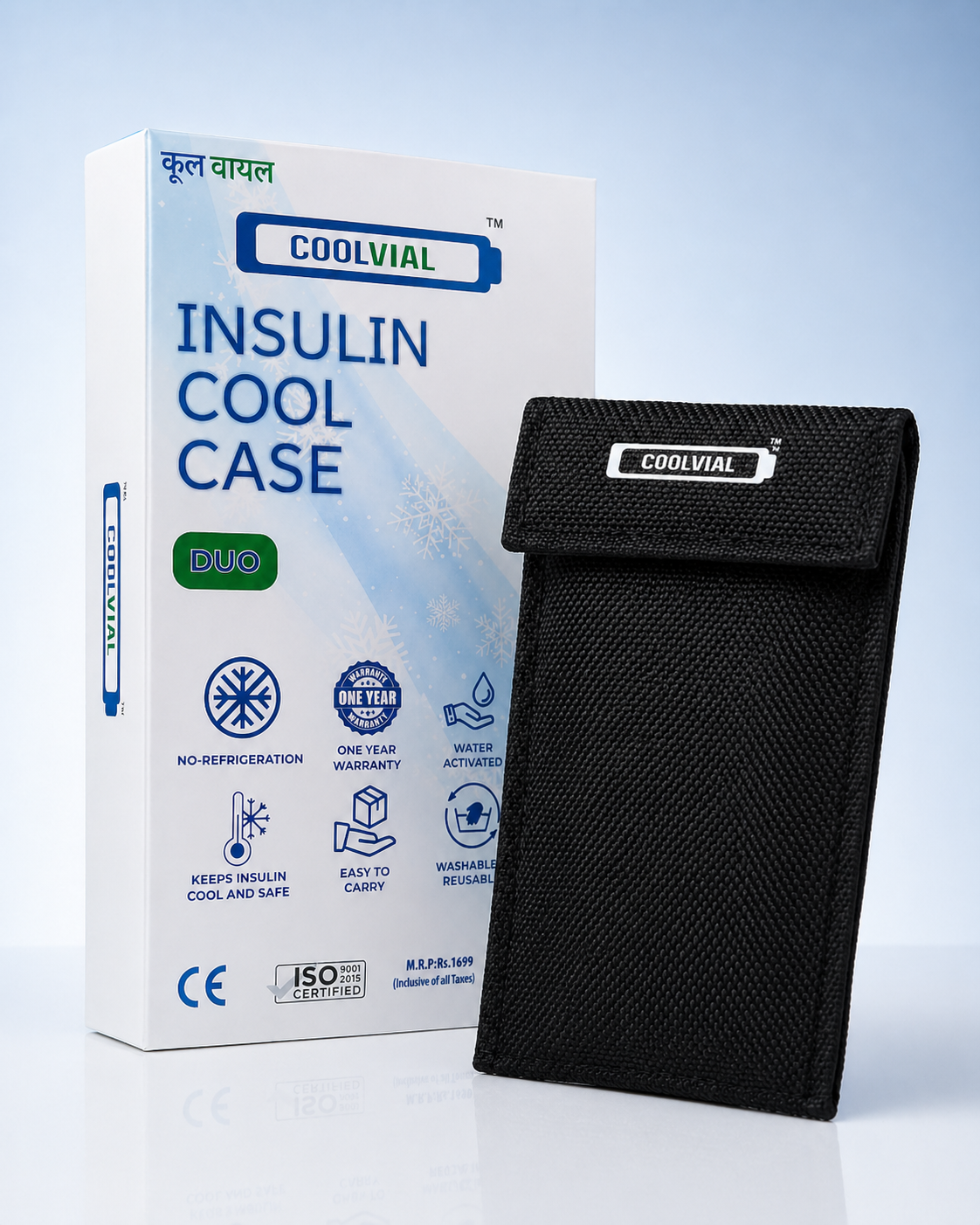
Evaporative cooling technology, used in products like COOLVIAL Duo, offers a simple yet highly effective way to how to store insulin without electricity. These cases work by using the principle of evaporative heat loss: water evaporating from the case’s fabric draws heat away from the insulin stored inside.
10 Essential Strategies: How to Store Insulin in Chandigarh Summer Heat — A Local's Guide
COOLVIAL keeps insulin safe in India's heat. 48+ hours, no electricity needed.
Effectiveness in Chandigarh’s Humidity:
- Dry Heat (April-May): Evaporative coolers perform exceptionally well in the dry heat of early Chandigarh summer, often maintaining temperatures 10-15°C below the ambient temperature. For example, if it’s 40°C outside, the case could keep insulin around 25-30°C.
- Monsoon Humidity (July-September): As humidity rises during the monsoon, the efficiency decreases slightly because less water can evaporate. However, even in 70-80% humidity, these cases can still keep insulin significantly cooler than the ambient temperature, typically 5-8°C below. This is still crucial when ambient temperatures are 30-35°C, ensuring insulin remains below 25°C.
Benefits of Evaporative Cooling for Chandigarh Residents:
- Portable and Discreet: Ideal for daily commutes, outings to Sukhna Lake, or visits to Sector 17 Plaza.
- No Electricity Needed: Perfect for managing power cuts or when traveling.
- Reliable for In-Use Insulin: Keeps insulin pens and vials within the safe 25°C range for up to 12-16 hours, making it an excellent alternative to refrigeration for active insulin.
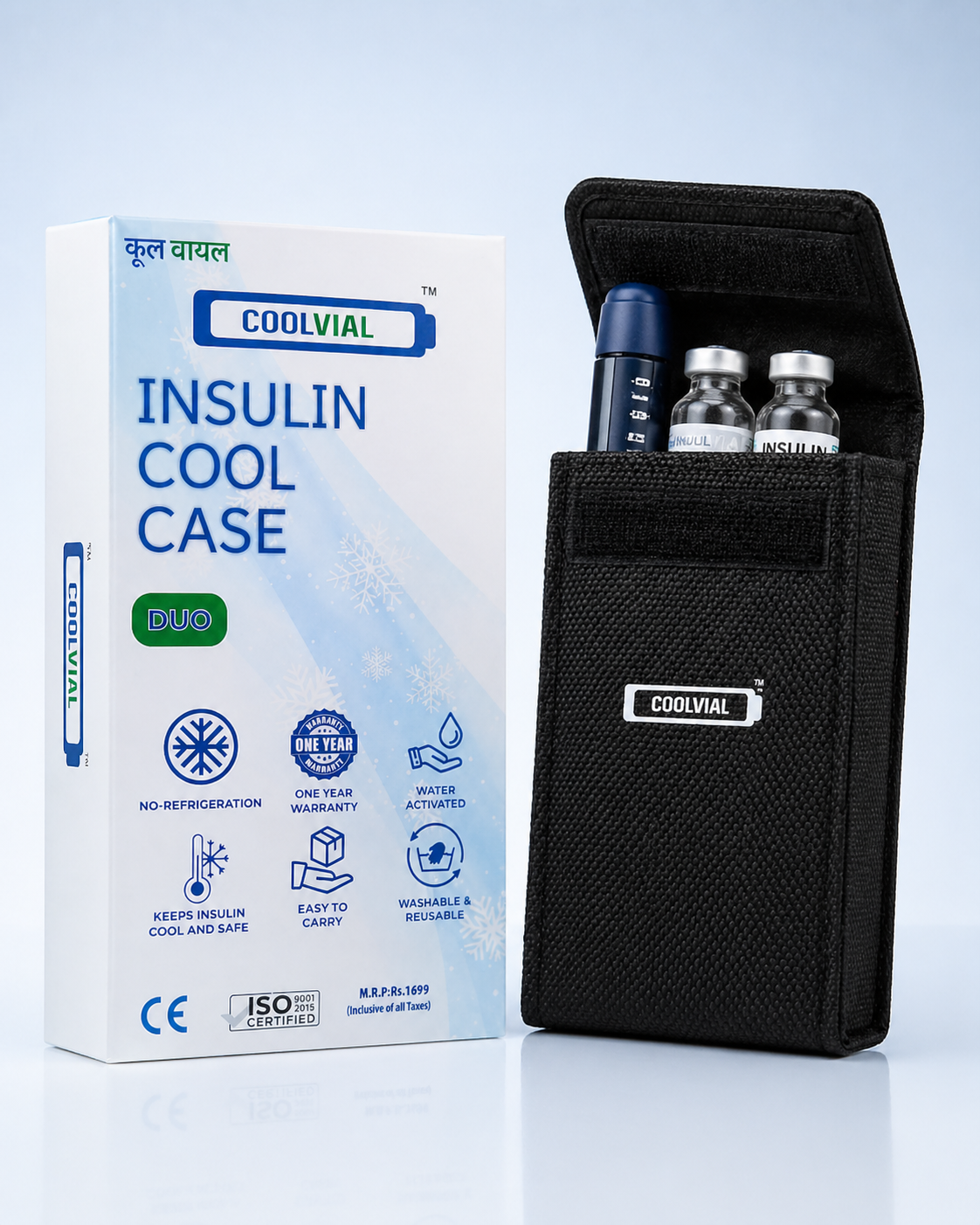
COOLVIAL Duo, holding 2 pens and 1 vial, is specifically designed for these conditions, providing peace of mind for those managing diabetes in Chandigarh. Its CE certification and ISO 9001:2015 adherence ensure quality and reliability.
5. Water Quality for Insulin Cooling Devices
Evaporative cooling cases like COOLVIAL are activated by soaking them in water. In Chandigarh, water quality can vary, and this is an important consideration for the longevity and effectiveness of your cooling case. Chandigarh generally has good municipal water supply, but certain areas, particularly those drawing from groundwater or older pipelines, might experience hard water or higher TDS (Total Dissolved Solids).
Impact of Water Quality:
- Hard Water: Can leave mineral deposits on the cooling crystals over time, potentially reducing efficiency.
- Contaminants: While unlikely to affect insulin directly (as it’s sealed), poor quality water could impact the cooling mechanism’s fabric.
Recommendations for Chandigarh Residents:
- Bottled or RO Water: For optimal performance and longevity of your COOLVIAL Duo, especially if you live in areas known for hard water (e.g., parts of Manimajra or older sectors), using bottled water or water filtered through an RO system is advisable for activation. This minimizes mineral buildup.
- Tap Water: If your area has clean, soft tap water, it can generally be used. However, observe for any residue over time.
- Cleaning: Regularly follow the manufacturer’s cleaning instructions for your cooling case to prevent residue buildup.
This small step can ensure your investment in a reliable cooling solution continues to protect your insulin effectively for years to come. For more general insulin storage tips, always refer to guidelines from reputable sources.
6. Navigating Storage in Diverse Chandigarh Neighborhoods
Chandigarh’s diverse neighborhoods present varying environments that influence insulin storage needs. Understanding these local nuances is key to effective management.
Storage Realities Across Chandigarh:
- Sector 17 (Commercial Hub):
- Challenge: High foot traffic, exposure to direct sunlight, and fluctuating indoor temperatures in shops or offices without consistent AC. People working here need portable, reliable solutions.
- Solution: A compact, water-activated cooling case like COOLVIAL Duo is essential for those who spend their day in Sector 17, ensuring insulin stays cool during meetings, shopping, or breaks at the Plaza.
- Residential Sectors (e.g., Sector 22-35):
- Challenge: Non-AC homes can reach 33-38°C indoors. Older buildings might have less insulation.
- Solution: Reliance on evaporative coolers for daily in-use insulin, even at home. Careful monitoring of refrigerator temperatures.
- Industrial Area Phase 1-2:
- Challenge: Industrial environments can be very hot, with potential for dust and more frequent power fluctuations. Workers might not have constant access to refrigeration.
- Solution: Robust, portable cooling cases are non-negotiable. Consider having multiple cases or a larger capacity one if you carry more insulin.
- Manimajra (East):
- Challenge: Can experience slightly different microclimates, potentially higher humidity due to proximity to natural areas, and water quality variations.
- Solution: Pay attention to water quality for activation. Ensure cooling cases are properly maintained and dried when not in use to prevent mold in humid conditions.
Practical Considerations:
- Always Carry a Backup: Never leave insulin in a car, even for a short time, as interior temperatures can skyrocket.
- Identify Local Pharmacies: Know the locations of Apollo Pharmacy, MedPlus, 1mg, Generic Aadhaar, and Frontier Medicare for emergency supplies or advice.
7. PGIMER Recommendations for Insulin Management
The Post Graduate Institute of Medical Education and Research (PGIMER) in Sector 12, Chandigarh, is a leading medical institution, and its endocrinology department provides vital guidance for diabetes management. While specific public guidelines on insulin storage for Chandigarh’s climate may not be universally published, general medical consensus and recommendations from experts at PGIMER align with international standards, adapted for local conditions.
General Recommendations from Medical Professionals (including those at PGIMER):
- Temperature Adherence: Strictly follow the manufacturer’s recommended temperature ranges (2-8°C for unopened, up to 25-30°C for in-use).
- Visual Inspection: Always inspect insulin for any changes in appearance (cloudiness, discoloration, particles) before use. If observed, discard it.
- Avoid Freezing: Insulin loses its potency if frozen. Do not store it in the freezer compartment of your refrigerator.
- Protect from Direct Sunlight: Never expose insulin to direct sunlight or extreme heat sources.
- Consult Your Doctor: For any doubts or specific concerns regarding your insulin storage, especially during travel or unusual weather conditions, consult your endocrinologist or diabetologist at PGIMER, Fortis Hospital Mohali, or Max Super Speciality Mohali.
Important Note: PGIMER’s endocrinology department emphasizes patient education on self-care, which includes proper medication storage. They often advise patients to consider portable cooling solutions for outdoor activities or travel within the region, given the prevailing climate.
8. Action Plan for May-June Peak Heat + Power Cut Scenario
The combination of peak summer heat (May-June) and unexpected power cuts is perhaps the most challenging scenario for insulin storage in Chandigarh. Temperatures can easily reach 42-44°C, and without electricity, even refrigerators become heat traps. Having a proactive plan is crucial.
10 Essential Strategies: How to Store Insulin in Chandigarh Summer Heat — A Local's Guide
Insulin at 2-8°C for 48+ hours. Trusted by 10,000+ Indian diabetics.
Step-by-Step Action Plan:
- Prioritize In-Use Insulin: Your active insulin pens/vials (the ones you are currently using) are the most vulnerable as they are often kept outside the fridge.
- Immediate Transfer: As soon as a power cut occurs, transfer all in-use insulin to an activated evaporative cooling case like COOLVIAL Duo. Ensure the case is pre-soaked and ready.
- Monitor Ambient Temp: If the power cut extends, move the cooling case to the coolest spot in your home, away from windows and direct heat.
- Protect Unopened Insulin in the Fridge:
- Do Not Open Fridge: Keep the refrigerator door closed as much as possible to retain cold air. A well-maintained fridge can keep food (and insulin) cold for a few hours.
- Transfer to Cooler (if available): For longer power cuts (over 4-6 hours), transfer unopened insulin to a separate cooler with ice packs. Ensure ice packs are not directly touching insulin to prevent freezing. Wrap insulin in a cloth.
- The Role of Evaporative Coolers:
- COOLVIAL Duo: This device is your primary defense. It keeps insulin cool for 12-16 hours. During a power cut, it becomes indispensable.
- Comparison: While FRIO (around Rs 1,900) and Outer Woods OW-12 (around Rs 999) offer alternatives, COOLVIAL Duo (Rs 1,099 with code COOLHEAL) provides excellent value and performance, holding 2 pens and 1 vial, making it ideal for most users. Its CE certification and ISO 9001:2015 also offer peace of mind.
- Stay Hydrated & Informed:
- Personal Health: Ensure you stay hydrated to manage blood sugar better in the heat.
- Local Updates: Keep an eye on local news or discom updates for power restoration estimates.
This proactive approach to how to store insulin during extreme conditions can prevent costly insulin wastage and maintain therapeutic efficacy.
9. Choosing the Right Insulin Cooling Case for Chandigarh
With Chandigarh’s unique climate, selecting an appropriate insulin cooling case is paramount. Several options are available in the market, each with its pros and cons.
Key Considerations for Chandigarh:
- Evaporative Cooling: Most suitable for Chandigarh’s dry summer heat and even effective during monsoon (though with slightly reduced efficiency due to humidity).
- Capacity: How many pens/vials do you need to carry daily or for short trips?
- Cooling Duration: How long does it keep insulin cool?
- Portability: Is it easy to carry for daily commutes, trips to Sukhna Lake, or exploring Sector 17?
- Durability: Can it withstand daily Indian conditions?
- Certifications: Does it meet international quality standards?
Comparative Table of Popular Insulin Cooling Cases:
| Feature | COOLVIAL Duo | FRIO Wallet (Large) | Outer Woods OW-12 (Small) |
|---|---|---|---|
| Cooling Method | Water-activated evaporative cooling | Water-activated evaporative cooling | Gel pack based (requires freezing) |
| Insulin Capacity | 2 pens + 1 vial | 2-3 pens or 1 vial | 1 pen or 1 vial |
| Cooling Duration | 12-16 hours | Up to 45 hours (in ideal conditions) | 8-10 hours |
| Activation | Soak in water for 5-10 minutes | Soak in water for 5-10 minutes | Freeze gel pack for 8-10 hours |
| Price (approx.) | Rs 1,099 (with code COOLHEAL) | Rs 1,900 | Rs 999 |
| Certifications | CE certified, ISO 9001:2015 | UK-based, generally well-certified | Variable, check specific product |
| Made In | India | UK | India |
| Chandigarh Suitability | Excellent for daily use, power cuts, travel | Excellent, but higher price point | Good for very short trips, requires freezer |
Why COOLVIAL Duo Stands Out for Chandigarh:
COOLVIAL Duo offers an optimal balance of price, performance, and capacity for the average Chandigarh resident. Its 12-16 hour cooling duration is ample for most daily activities, including office hours in Industrial Area Phase 1, or a leisurely afternoon at Rose Garden. The “Made in India” tag also ensures it’s designed with local conditions in mind. For a comprehensive guide on diabetes care, you can refer to our Complete Diabetes Care Guide for Chandigarh Residents — 2026 Edition.
10. Essential Tips for Travel and Outdoor Activities in Chandigarh
Chandigarh offers many opportunities for outdoor activities and travel, from a morning walk at Sukhna Lake to a drive to the nearby hills. Proper insulin storage is crucial to enjoy these activities without worry.
Tips for Travel and Outdoors:
- Always Carry Your Cooling Case: Whether it’s a short trip to Sector 17 Plaza or a longer journey, your COOLVIAL Duo should be with you. It ensures your insulin is safe from heat.
- Plan Ahead: If traveling for extended periods, pack extra cooling sleeves or a method to re-activate your evaporative cooler (bottled water).
- Never Leave Insulin in a Vehicle: The interior of a parked car can reach extreme temperatures (e.g., 60-70°C) even on a moderately hot day. Always take your insulin with you.
- Protect from Physical Damage: Ensure your cooling case is placed in a bag where it won’t be crushed or damaged.
- Airport Security: When flying, always carry insulin and cooling cases in your hand luggage. Inform airport security about your medical supplies.
- Stay Hydrated: Especially in Chandigarh’s summer, staying well-hydrated is essential for overall health and can indirectly help manage blood sugar fluctuations.
By following these practical tips, you can confidently manage your diabetes and enjoy all that Chandigarh has to offer, without compromising the efficacy of your insulin.
Frequently Asked Questions (FAQ)
Q: What is the ideal temperature range to store unopened insulin in Chandigarh? A: Unopened insulin should always be stored in a refrigerator between 2°C and 8°C to maintain its full potency and shelf life.
Q: How long can in-use insulin be kept outside the refrigerator in Chandigarh’s summer? A: In-use insulin can generally be kept at room temperature, but this “room temperature” should not exceed 25°C to 30°C (check your specific insulin’s leaflet). In Chandigarh’s summer, indoor temperatures often exceed 33°C, so an evaporative cooling case like COOLVIAL Duo is recommended to keep it safe for 12-16 hours.
Q: Can I use tap water to activate my COOLVIAL Duo in Chandigarh? A: While tap water can often be used, if you are in an area of Chandigarh with hard water, using bottled or RO filtered water is recommended to prevent mineral buildup and ensure the longevity and optimal performance of your evaporative cooling case.
Q: What should I do with my insulin during a power cut in Chandigarh’s peak summer? A: During a power cut, immediately transfer your in-use insulin to a pre-activated evaporative cooling case. For unopened insulin in the fridge, keep the fridge door closed as much as possible; for extended outages, transfer it to a cooler with ice packs, ensuring insulin doesn’t directly touch ice.
Q: How can I tell if my insulin has gone bad due to heat exposure? A: Insulin exposed to excessive heat may appear cloudy, discolored, or have particles floating in it. If you notice any of these changes, or if your blood sugar levels are unexpectedly high despite proper dosing, discard the insulin and start a new pen or vial.
Q: Are evaporative cooling cases effective in Chandigarh’s monsoon humidity? A: Yes, evaporative cooling cases are still effective during Chandigarh’s monsoon, though their cooling efficiency might be slightly reduced compared to dry summer days. They will still keep insulin significantly cooler than the ambient humid temperature, typically 5-8°C below, which is crucial for maintaining efficacy.
Q: Where can I get reliable information on diabetes management and insulin storage in Chandigarh? A: For reliable medical advice, consult endocrinologists at PGIMER (Post Graduate Institute, Sector 12), Fortis Hospital Mohali, or Max Super Speciality Mohali. For general guidelines, refer to publications from the Research Society for the Study of Diabetes in India (RSSDI) at https://www.rssdi.in/publications.html.
Conclusion: Stay Cool, Stay Healthy
Managing diabetes in Chandigarh’s challenging climate requires vigilance and smart solutions. From the intense summer heat to the humid monsoon, every season brings its own set of concerns for insulin storage. By understanding the local climate realities – from 33-38°C indoor temperatures in non-AC homes to the impact of power cuts – and adopting proactive strategies, you can ensure your insulin remains effective and your health is protected.
Embracing solutions like the COOLVIAL Duo, a CE certified, ISO 9001:2015 compliant, Made in India evaporative cooling case, empowers you to maintain optimal insulin temperatures without reliance on electricity. It’s a small investment for immense peace of mind, allowing you to live your life to the fullest in the City Beautiful. Don’t let the heat compromise your health.
Order COOLVIAL Duo at Rs 1,099 with code COOLHEAL at coolvial.com or via WhatsApp wa.me/918766952300
Medical Disclaimer
This article is for general information and educational purposes only. It is not intended to be a substitute for professional medical advice, diagnosis, or treatment. Always consult your endocrinologist or diabetologist before changing insulin storage or dosing practices, or for any health concerns or before making any decisions related to your health or treatment.
How We Researched This
This article was developed based on a comprehensive review of current RSSDI (Research Society for the Study of Diabetes in India) guidelines, ICMR-INDIAB (Indian Council of Medical Research - India Diabetes) data for diabetes prevalence and management, local Chandigarh hospital directories including PGIMER, Fortis Hospital Mohali, and Max Super Speciality Mohali, as well as information from major pharmacy networks like Apollo Pharmacy. We also considered typical climate data for Chandigarh and user feedback on insulin storage challenges in the region. Local observations on indoor temperatures and power supply stability were factored in, with specific data points marked for future verification in 2026.