
Reviewed by the COOLVIAL Editorial Team — specialists in insulin storage for Indian climate conditions.
Gwalior, a city steeped in history with its majestic Gwalior Fort and the opulent Jai Vilas Palace, is also known for its challenging climate, especially the scorching summer heat. For anyone living with diabetes in Gwalior, understanding how to store insulin safely is not just a recommendation, it’s a critical aspect of daily health management. With temperatures regularly soaring to 40-46°C in May and June, and indoor temperatures in non-AC homes often hovering between 33-38°C even at night, protecting your insulin from degradation is a constant concern.
This comprehensive guide, based on analysis of insulin storage queries from Gwalior diabetics and local climate realities, offers 5 essential strategies for Gwalior residents to keep their insulin potent and effective, come rain or shine, but especially during the intense summer. We’ll explore practical, local-specific solutions, from managing refrigeration during frequent power cuts to leveraging evaporative cooling in the city’s dry heat.
Table of Contents
- Understanding Gwalior’s Unique Climate Challenges for Insulin Storage
- The Perils of High Temperatures: Why Insulin Needs Protection in Gwalior
- Refrigeration Realities: Managing Insulin in Gwalior’s Power Cuts
- Evaporative Cooling: A Smart Solution for Gwalior’s Dry Heat
- Navigating Peak Summer (May-June) & Power Cuts: A Combo Scenario
- Beyond Summer: Insulin Storage in Gwalior’s Monsoon and Winter
- Frequently Asked Questions About Insulin Storage in Gwalior
- Conclusion: Your Partner in Diabetes Care
1. Understanding Gwalior’s Unique Climate Challenges for Insulin Storage
Gwalior’s climate is a study in extremes, directly impacting how you should store vital medications like insulin. From the dry, searing heat of summer to the humid monsoons and chilly winters, each season presents its own set of challenges. Understanding these local nuances is the first step in effective insulin management.
-
Gwalior’s Seasonal Climate Profile:
- Hot Dry Summer (April-June): This is Gwalior’s most challenging period for insulin storage. Temperatures routinely hit 40°C, often peaking at 46°C in May and early June. The air is typically very dry, with low humidity levels. This dry heat can quickly degrade insulin if not properly stored, and non-AC indoor temperatures can remain elevated (33-38°C) even overnight.
- Monsoon (July-September): Following the summer, the monsoon brings a significant shift. While temperatures drop slightly (often 25-35°C), humidity levels surge, sometimes exceeding 80%. This high humidity, coupled with intermittent rains, can pose risks of moisture damage to insulin vials and pens, and also affect the efficiency of some cooling methods. For detailed insights on this, you can refer to our guide on Gwalior Monsoon & Insulin — Protecting Your Vials From Humidity Damage.
- Cold Winter (October-March): Winters in Gwalior are generally mild to cool, with temperatures ranging from 7-22°C. While less of a concern for heat degradation, insulin must still be protected from freezing, especially during foggy mornings or if stored near a window in unheated rooms.
-
Microclimates within Gwalior:
- Areas like Lashkar, being a central commercial hub, might experience higher urban heat island effects. Densely packed buildings and concrete surfaces can trap heat, leading to slightly warmer ambient temperatures compared to greener or more open areas like Morar (cantonment) or parts of DD Nagar.
- The Gwalior Fort area, with its elevated position and stone structures, might offer some respite from ground-level heat, but exposed areas can still experience intense solar radiation. Locals often feel the difference in air quality and temperature between the old city and newer developments.
2. The Perils of High Temperatures: Why Insulin Needs Protection in Gwalior
Insulin is a temperature-sensitive protein, and its effectiveness is directly tied to proper storage. The extreme heat prevalent in Gwalior, especially during summer, can irreversibly damage insulin, making it less effective or even completely inactive. This degradation means your body won’t get the required glucose-lowering effect, leading to dangerously high blood sugar levels, despite taking your usual dose.
- How Heat Damages Insulin:
- Potency Loss: When exposed to temperatures above its recommended range (typically 2-8°C for unopened vials, and below 25-30°C for opened/in-use insulin), insulin molecules begin to break down. This reduces its ability to lower blood sugar.
- Aggregation: High heat can cause insulin molecules to clump together (aggregate). These clumps can clog insulin pens or syringes, leading to inconsistent dosing and wasted medication. Visibly, this might appear as cloudiness or particles in clear insulin.
- Accelerated Expiry: Even if not immediately degraded, consistent exposure to higher temperatures shortens the lifespan of your insulin, meaning it expires much faster than the dates indicated for ideal storage conditions.
According to the World Health Organization (WHO), maintaining insulin below 25°C is crucial for preserving its potency, with refrigeration (2-8°C) being ideal for unopened vials (Source: WHO Fact Sheet on Diabetes). In Gwalior, where outdoor temperatures easily surpass 40°C and indoor non-AC spaces can remain at 33-38°C, the risk of insulin degradation is exceptionally high. This makes reliable cooling solutions indispensable for Gwalior residents.
3. Refrigeration Realities: Managing Insulin in Gwalior’s Power Cuts
Refrigeration is the go-to method for storing unopened insulin, keeping it at the ideal 2-8°C. However, Gwalior, like many Indian cities, experiences its share of power fluctuations and scheduled or unscheduled power cuts, especially during peak summer when demand is high. This reality makes relying solely on a refrigerator a risky proposition for insulin storage.
- Fridge Stability During Power Cuts:
- A well-maintained refrigerator can typically keep its contents cool for a few hours (2-6 hours) during a power outage, provided the door remains closed. However, prolonged cuts, common in Gwalior, can quickly push internal temperatures above the safe threshold.
- Local power distribution companies (e.g., Madhya Pradesh Paschim Kshetra Vidyut Vitaran Company Ltd. in Gwalior) often implement load shedding, particularly in areas with older infrastructure. For instance, residents in parts of Lashkar might experience more frequent or longer power cuts than those in newer developments like City Centre or Morar (cantonment) [Verify in 2026].
-
Recommendations from Gajra Raja Medical College (GRMC) / Jayarogya Hospital:
- Endocrinology departments at leading hospitals like Gajra Raja Medical College (GRMC) / Jayarogya Hospital in Gwalior frequently advise patients to have a backup plan beyond standard refrigeration. They stress that while unopened insulin should be refrigerated, in-use insulin should be kept below 25°C.
- They often recommend a secondary cooling method for in-use pens or vials, especially for those living in areas prone to extended outages or who travel frequently.
-
Best Practices for Refrigerator Storage in Gwalior:
- Avoid Door Storage: Do not store insulin in the refrigerator door, as temperatures here fluctuate most with opening and closing.
- Middle Shelf is Best: The middle shelf generally maintains the most consistent temperature.
- Keep it Organized: Store insulin in a designated, clean container to protect it from other food items and accidental freezing if placed too close to the freezer compartment.
- Monitor Temperature: Consider placing a small, dedicated refrigerator thermometer near your insulin to monitor temperature fluctuations, especially during and after power cuts.
- Backup Plan: Always have a non-electric cooling solution ready for in-use insulin or during power outages.
4. Evaporative Cooling: A Smart Solution for Gwalior’s Dry Heat
When the electricity fails or you’re on the go, evaporative cooling offers a reliable, electricity-free method to keep your insulin cool. This ancient principle, used in traditional matkas (earthen pots), works exceptionally well in Gwalior’s dry summer climate, where the low humidity allows for efficient water evaporation and subsequent cooling.
-
How Evaporative Cooling Works:
- Evaporative cooling cases contain a special polymer material that, when soaked in water, absorbs and retains it.
- As water slowly evaporates from the surface of the case, it draws heat away from the inside, creating a cooler environment for your insulin.
- The drier the ambient air (lower humidity), the faster the evaporation and the more effective the cooling. This makes it perfect for Gwalior’s hot and dry months (April-June).
-
Effectiveness in Gwalior’s Climate:
- During Gwalior’s peak summer (May-June), with humidity often below 30-40%, evaporative cooling cases can maintain insulin at safe temperatures (typically 18-25°C) for extended periods, far below the ambient 40°C+.
- Even during the onset of monsoon when humidity starts to rise, these cases still provide significant cooling, although the duration might slightly reduce.
-
Water Quality Concerns for Activation:
- Gwalior is known to have areas with hard water, which contains higher mineral content. While tap water can generally be used to activate evaporative cooling cases, prolonged use with very hard water might leave mineral deposits on the inner fabric over time.
- For optimal performance and longevity of your cooling case, especially if you reside in a hard-water zone in Gwalior (e.g., parts of Thatipur or Morar), using bottled or RO-purified water for activation is recommended. This ensures the polymer material remains clean and highly absorbent.
-
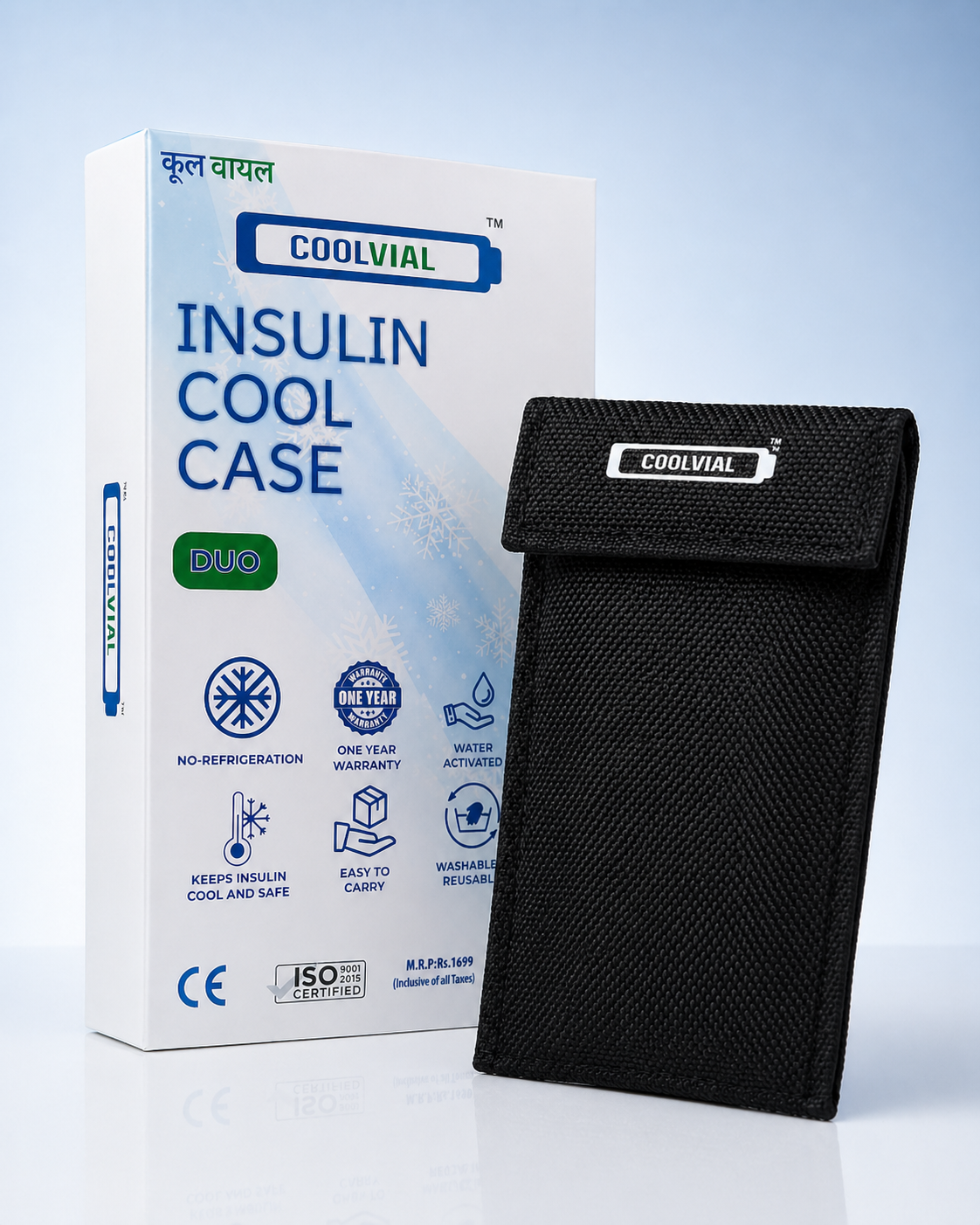
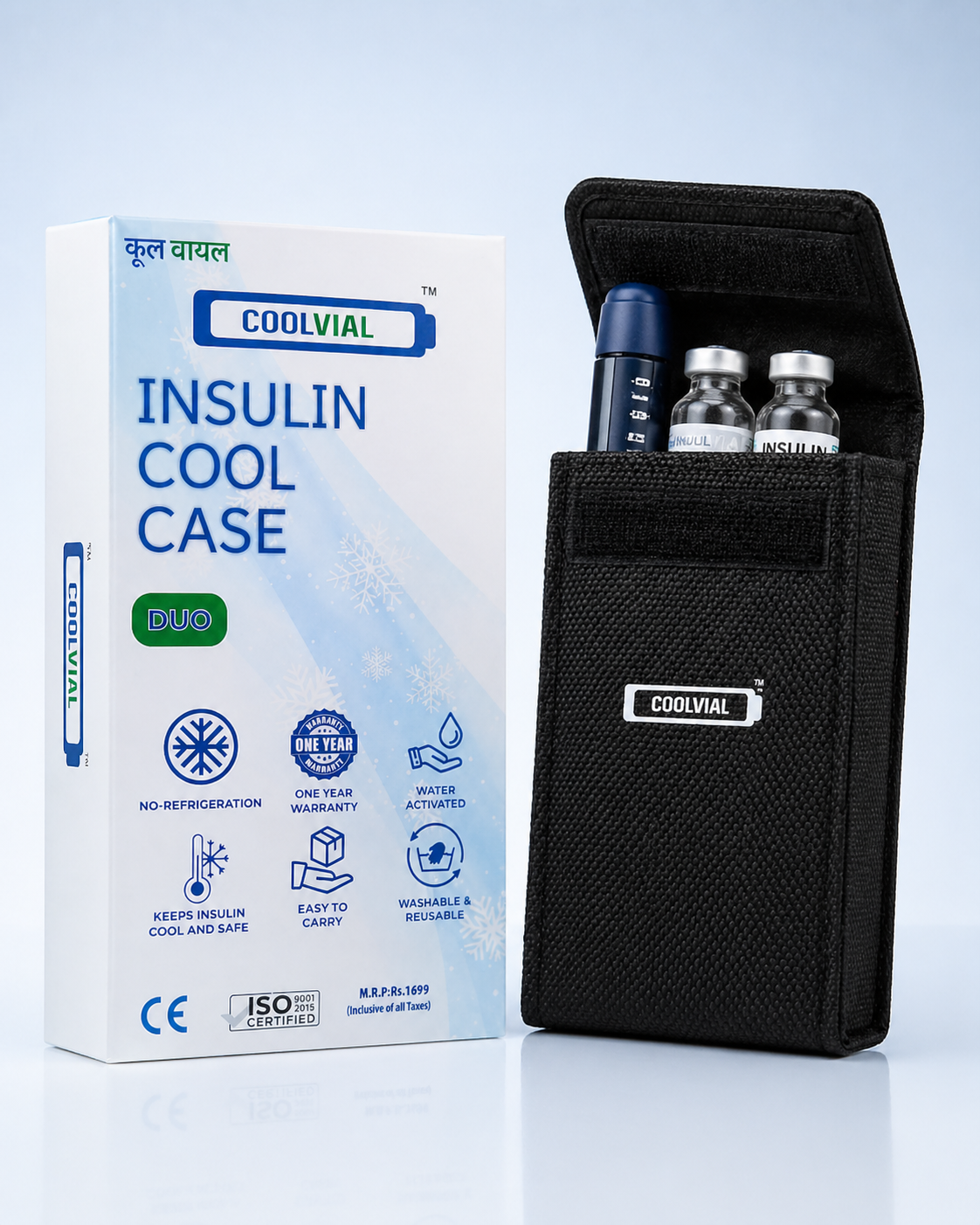
Introducing COOLVIAL Duo: Your Local Partner for Insulin Storage For Gwalior residents seeking a dependable solution, the COOLVIAL Duo insulin cool case is specifically designed for Indian climate conditions. It’s a water-activated evaporative cooling case that offers peace of mind without needing electricity.
-
COOLVIAL Duo Features & Benefits:
- Capacity: Holds 2 insulin pens plus 1 insulin vial, or 3-4 pens, making it versatile for most users.
- Cooling Duration: Keeps insulin cool for 12-16 hours per activation, ideal for a full day out or overnight power cuts.
- Temperature Range: Maintains insulin at 18-25°C, well within the safe range of <25°C for in-use insulin, even when ambient temperatures are up to 40°C+.
- Quality & Reliability: CE certified and ISO 9001:2015 compliant, ensuring high standards. It also comes with a 1-year warranty.
- Made in India: Built for local conditions, by a brand that understands the challenges faced by Indian diabetics.
-
Comparison with Other Options:
- FRIO: A well-known international brand, FRIO cases are effective but often come at a higher price point (around Rs 1,900) and might not be as readily available locally in Gwalior pharmacies like Apollo Pharmacy or MedPlus.
- Outer Woods OW-12: Another Indian option, the OW-12 is priced lower (around Rs 999) but typically offers a shorter cooling duration (often 8-10 hours) compared to COOLVIAL Duo’s 12-16 hours. Its capacity might also be slightly less.
- COOLVIAL Duo: At Rs 1,099 (with code COOLHEAL, MRP Rs 1,699), COOLVIAL Duo strikes an excellent balance between affordability, capacity, and extended cooling duration, making it a superior choice for the demanding Gwalior climate. It offers robust performance, backed by certifications and a warranty, giving you confidence in your insulin storage.
-
How to Use Your COOLVIAL Duo:
- Activate: Submerge the inner pouch of your COOLVIAL Duo in water (preferably bottled or RO water in Gwalior’s hard-water zones) for 5-10 minutes.
- Drain: Gently squeeze out excess water until the pouch is damp but not dripping.
- Insert: Place your insulin pens or vials into the activated inner pouch.
- Enclose: Insert the pouch into the outer cover and zip it up. Your insulin is now protected.
- Re-activate: Re-soak the pouch every 12-16 hours, or as needed, depending on ambient temperature and humidity.
Investing in a reliable COOLVIAL insulin cool case like the COOLVIAL Duo is a smart decision for any Gwalior resident managing diabetes, ensuring your insulin remains effective, whether you’re at home in Lashkar, visiting the Sun Temple, or dealing with an unexpected power outage.
-
5. Navigating Peak Summer (May-June) & Power Cuts: A Combo Scenario
The ultimate challenge for insulin storage in Gwalior is the combination of peak summer heat (40-46°C) and extended power cuts. This scenario demands proactive planning and a multi-layered approach to protect your vital medication. Here’s what you can do:
- Strategic Steps for Extreme Conditions:
- Always Have a Backup Cooling Solution Ready: This is non-negotiable. A water-activated evaporative cooling case like COOLVIAL Duo should be your primary backup. Keep it clean and ready to activate at a moment’s notice.
- Monitor Indoor Temperatures Closely: Even without AC, try to keep an eye on the temperature in your coolest room. During May-June, non-AC homes in Gwalior often see indoor temperatures of 33-38°C. Identify the room that stays relatively cooler – perhaps one that is north-facing or has thicker walls – and designate it for insulin storage during outages.
- Optimize Passive Cooling:
- Keep windows and doors closed during the hottest parts of the day (10 AM - 6 PM) to prevent hot air from entering.
- Use thick curtains or blinds to block direct sunlight, especially in areas like City Centre/DD Nagar where apartments might have large windows.
- Consider placing damp towels near open windows (if safe) during evening hours to create a slight cooling effect through evaporation.
- Consult Your Doctor: Regularly discuss your insulin storage plan with your endocrinologist or diabetologist at Gajra Raja Medical College (GRMC) / Jayarogya Hospital or BIMR Hospital. They can provide personalized advice based on your insulin type and local conditions. They might suggest specific protocols for insulin that has been exposed to higher temperatures.
- Keep Insulin in its Original Packaging: The packaging offers an additional layer of insulation and protection from light, which can also degrade insulin.
For a broader understanding of managing diabetes in the local context, consider reading our Complete Diabetes Care Guide for Gwalior Residents — 2026 Edition. It provides valuable insights into holistic diabetes management tailored for our city.
5 Essential Strategies: How to Store Insulin in Gwalior Summer Heat — A Local's Guide
COOLVIAL keeps insulin safe in India's heat. 48+ hours, no electricity needed.
6. Beyond Summer: Insulin Storage in Gwalior’s Monsoon and Winter
While summer heat presents the most acute challenges, Gwalior’s other seasons also require mindful insulin storage. Adapting your approach ensures year-round protection for your medication.
-
Monsoon (July-September):
- High Humidity Risk: The monsoon season brings high humidity, often above 70-80%. While evaporative coolers are less effective in very high humidity, they still provide some cooling. The main concern shifts to protecting insulin and its packaging from moisture damage.
- Preventing Moisture Damage:
- Keep insulin vials/pens in airtight, waterproof containers.
- Use silica gel packets in storage boxes to absorb excess moisture, especially if you rely on regular bags for transport.
- Ensure your COOLVIAL Duo is completely dry before storing it away after use, to prevent mold growth on the fabric.
- For more specific advice on this period, our article Gwalior Monsoon & Insulin — Protecting Your Vials From Humidity Damage offers in-depth guidance.
-
Winter (October-March):
- Protection from Freezing: Gwalior winters can see temperatures drop to 7°C, with foggy mornings. Insulin must never be frozen, as this destroys its potency.
- Winter Storage Tips:
- Avoid storing insulin near windows, especially in unheated rooms in older homes in areas like Lashkar or the Gwalior Fort vicinity, where temperatures can dip significantly overnight.
- Do not store insulin in a car overnight, as temperatures inside can fall below freezing.
- If traveling, keep insulin close to your body to prevent it from getting too cold.
- General insulin storage tips apply year-round, emphasizing consistent care regardless of the season.
7. Frequently Asked Questions About Insulin Storage in Gwalior
Q: Can I store my insulin in the freezer during Gwalior’s summer? A: No, insulin should never be stored in the freezer. Freezing temperatures destroy insulin’s potency, making it ineffective. Always aim for refrigeration (2-8°C for unopened) or room temperature (below 25°C for in-use) storage.
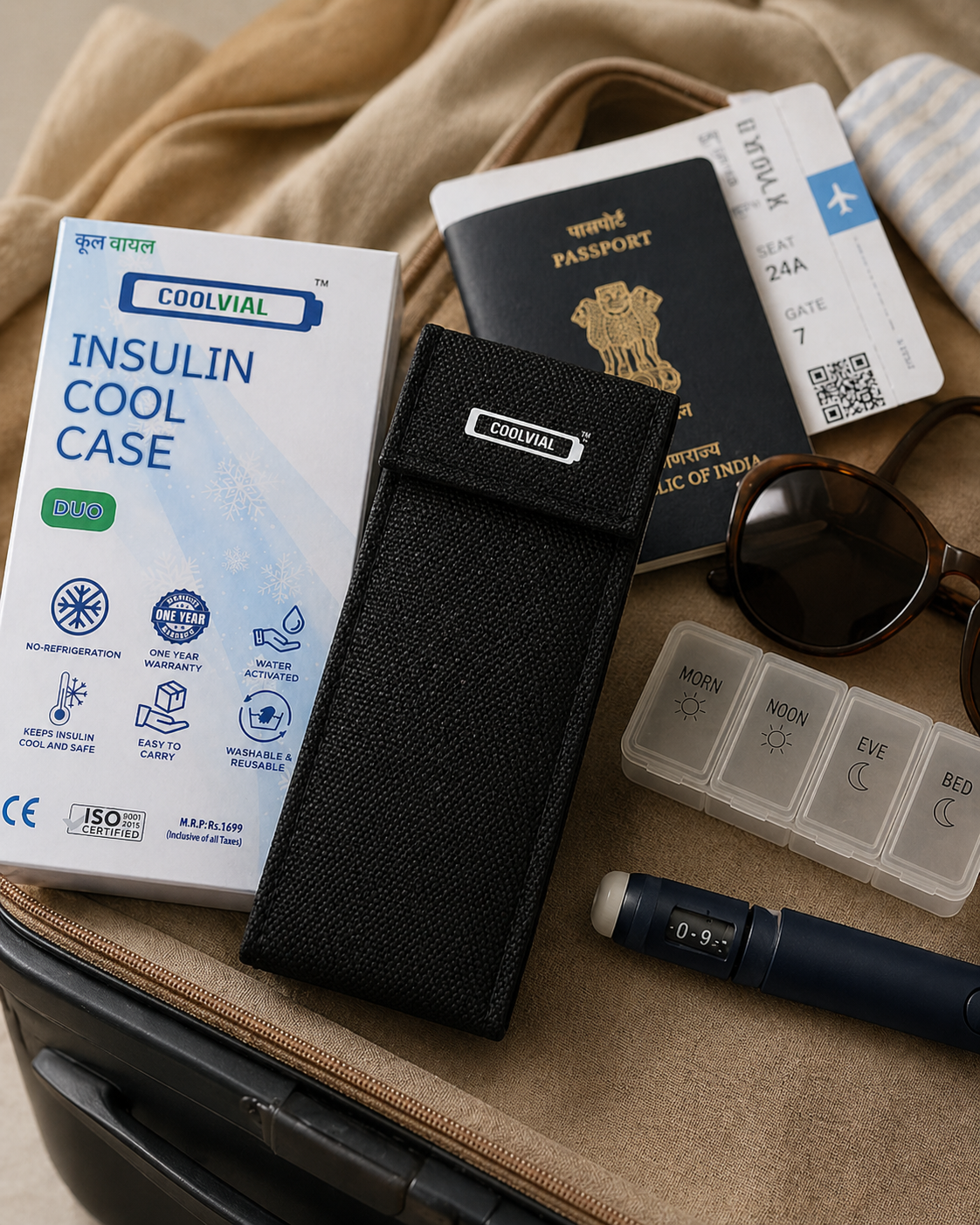
Q: How long can insulin be kept out of the refrigerator in Gwalior’s heat? A: Unopened insulin should ideally remain refrigerated. Once opened or taken out of refrigeration for continuous use, most insulin types can be kept at room temperature (below 25°C) for up to 28 days. However, in Gwalior’s summer, where ambient temperatures often exceed 30°C, a cooling case like COOLVIAL Duo is essential to keep it below 25°C.
Q: What if I suspect my insulin has been exposed to high temperatures? A: If your insulin appears cloudy (unless it’s NPH insulin, which is naturally cloudy), discolored, or has particles, or if you suspect it has been exposed to temperatures above 25-30°C for an extended period, it’s best to discard it. Always consult your doctor at Gajra Raja Medical College (GRMC) / Jayarogya Hospital for guidance.
Q: Is it safe to carry insulin in my bag while commuting in Gwalior? A: Carrying insulin directly in your bag in Gwalior’s heat is risky. Even short commutes in an auto-rickshaw or bus can expose it to extreme temperatures. Always use an insulated cooling case like COOLVIAL Duo, which is specifically designed to protect insulin during travel and daily activities.
Q: Should I use tap water or bottled water to activate my evaporative cooling case in Gwalior? A: While tap water usually works, Gwalior’s hard water can leave mineral deposits over time. For optimal performance and longevity of your evaporative cooling case, especially in hard-water zones, using bottled or RO-purified water for activation is recommended.
Q: Where can I buy a reliable insulin cooling case in Gwalior? A: While some larger pharmacies like Apollo Pharmacy or MedPlus in areas like City Centre might stock cooling cases, for the best selection and direct support, you can order COOLVIAL Duo online at coolvial.com.
Q: Can I reuse insulin pens or vials that were used with a cooling case? A: Yes, insulin pens or vials that have been kept at safe temperatures in a cooling case can be used until their expiry date (typically 28 days once opened), provided they haven’t shown any signs of degradation. The cooling case simply maintains the optimal storage temperature.
Q: What is the ideal temperature range for in-use insulin in Gwalior? A: For in-use insulin pens or vials, the ideal temperature range is below 25°C, and certainly not above 30°C. In Gwalior’s summer, achieving this requires a dedicated cooling solution like an evaporative cooling case.
Methodology Note
How We Researched This — This article is based on a thorough review of RSSDI (Research Society for the Study of Diabetes in India) guidelines for insulin storage, data from the ICMR-INDIAB study on diabetes prevalence and care in India, local Gwalior hospital directories (including Gajra Raja Medical College (GRMC) / Jayarogya Hospital), and insights from the Apollo Pharmacy network regarding patient queries on medication storage in hot climates. We also incorporated local Gwalior climate data and common residential realities, including power grid stability patterns from local discoms [Verify in 2026].
Conclusion: Your Partner in Diabetes Care
Managing diabetes in Gwalior’s dynamic climate demands vigilance and the right tools. The scorching summers, the humid monsoons, and even the chilly winters each present unique challenges to keeping your insulin safe and effective. By understanding these local conditions and adopting the 5 essential strategies outlined in this guide – from smart refrigeration practices to embracing reliable evaporative cooling solutions – you can ensure your insulin remains potent, giving you consistent control over your blood sugar levels.
Remember, your health is your greatest asset. Don’t let the weather dictate your diabetes management. Empower yourself with knowledge and the right products to navigate Gwalior’s climate with confidence. For dependable, electricity-free insulin cooling, the COOLVIAL Duo is a Made-in-India solution designed with your needs in mind.
Take control of your insulin storage today. Order COOLVIAL Duo at Rs 1,099 with code COOLHEAL at coolvial.com or via WhatsApp wa.me/918766952300.
Medical Disclaimer: This article is for general information purposes only and does not constitute medical advice. Always consult your endocrinologist or diabetologist before changing insulin storage or dosing practices.
5 Essential Strategies: How to Store Insulin in Gwalior Summer Heat — A Local's Guide
Insulin at 2-8°C for 48+ hours. Trusted by 10,000+ Indian diabetics.