
Reviewed by the COOLVIAL Editorial Team — specialists in insulin storage for Indian climate conditions.
Lucknow, the city of Nawabs, is renowned for its rich culture, delectable cuisine, and the warmth of its people. However, when May and June roll around, this warmth transforms into a scorching heat that can challenge even the most prepared residents. For the thousands living with diabetes in Lucknow, understanding how to store insulin safely during these extreme temperatures is not just important – it’s life-saving. With summer temperatures often soaring past 40°C and sometimes reaching 45°C, ensuring insulin potency is a critical concern, especially given typical indoor temperatures in non-AC Lucknow homes can hover between 33-38°C, even at night. Based on analysis of insulin storage queries from Lucknow diabetics, this guide provides practical, local insights to protect your vital medication.
Insulin is a delicate protein that loses its effectiveness when exposed to temperatures outside its recommended range, typically 2°C to 25°C for in-use vials/pens and 2°C to 8°C for unopened ones (Source: RSSDI Guidelines [Verify in 2026]). In Lucknow’s climate, where the mercury can fluctuate wildly from cold winters (6-22°C) to very hot summers (22-45°C) and humid monsoons (July-September), proactive storage strategies are essential. This comprehensive guide will arm you with the knowledge to navigate Lucknow’s unique climate challenges, from power cuts to varying humidity levels across neighborhoods.
Table of Contents
- Understanding Lucknow’s Climate and Its Impact on Insulin
- The Reality of Indoor Temperatures and Power Cuts in Lucknow
- Evaporative Cooling: A Lifesaver in Lucknow’s Dry Heat
- Water Quality and Your Cooling Case: A Lucknow-Specific Concern
- Insulin Storage Across Lucknow’s Neighborhoods: Hazratganj vs. Aliganj
- Navigating Peak Summer (May-June) with Power Cuts
- SGPGIMS Recommendations: Expert Advice for Insulin Storage
- Frequently Asked Questions (FAQ)
1. Understanding Lucknow’s Climate and Its Impact on Insulin
Lucknow experiences a diverse climate throughout the year, each season posing its own set of challenges for insulin storage.
- Very Hot Summer (May-June): This is the most critical period. Temperatures consistently range from 22°C to 45°C, often staying above 35°C for extended periods. Direct sunlight can heat surfaces to much higher temperatures. Insulin exposed to these conditions can rapidly degrade, losing its potency and potentially leading to dangerously high blood sugar levels.
- Cold Winter (December-February): While less of a concern for heat degradation, temperatures can drop to 6°C. Freezing insulin is equally detrimental, as it can separate and become ineffective. Never store insulin in the freezer.
- Monsoon (July-September): Lucknow receives around 900mm of rainfall during this period, bringing high humidity. While temperatures might drop slightly, the moisture in the air can still affect poorly sealed insulin or cooling devices not designed for high humidity. For more detailed advice, refer to our article on Lucknow Monsoon & Insulin — Protecting Your Vials From Humidity Damage.
Key Temperature Ranges for Insulin Storage:
| Insulin State | Recommended Temperature Range | Impact of Deviation |
|---|---|---|
| Unopened | 2°C to 8°C (Refrigerated) | Loss of potency if above 8°C or frozen below 2°C |
| In-use | Up to 25°C (Room Temperature) | Degradation if above 25°C, freezing if below 2°C |
| Travel/Emergency | Up to 30°C for short durations | Rapid degradation if consistently above 30°C |
Always check the specific instructions on your insulin packaging, as formulations can vary slightly. The general rule is to avoid extreme heat, direct sunlight, and freezing.
2. The Reality of Indoor Temperatures and Power Cuts in Lucknow
For many Lucknow residents, especially those without air conditioning, indoor temperatures during April, May, and June are a significant concern. It’s not uncommon for homes to register ambient temperatures of 33-38°C even at night, long after the sun has set. This is well above the 25°C recommended maximum for in-use insulin.
Challenges Posed by Indoor Heat and Power Cuts:
- Constant Exposure: Without active cooling, insulin pens and vials stored indoors are continuously exposed to temperatures that compromise their efficacy.
- Fridge Instability: While refrigerators are crucial for unopened insulin, their stability is directly impacted by Lucknow’s notorious power cuts. A typical power cut in many parts of Lucknow can last anywhere from 1-4 hours, with longer outages not uncommon during peak summer or monsoon (Source: Local Discom Data [Verify in 2026]). During these periods, fridge interiors can quickly warm up, pushing insulin out of its safe temperature zone.
- Travel and Commute: Whether you’re commuting to SGPGIMS (Raebareli Road) for an appointment or heading to Phoenix Palassio Mall, your insulin is exposed to external heat. Public transport, auto-rickshaws, and even cars without effective AC can become ovens, turning insulin unusable within minutes.
Strategies to Mitigate Indoor Heat and Power Cut Risks:
- Strategic Storage: Keep insulin away from windows, direct sunlight, and heat-emitting appliances (e.g., ovens, TVs).
- Insulated Bags: For daily use, a simple insulated bag can offer minimal protection, but it’s not a long-term solution against sustained heat or power cuts.
- Evaporative Cooling Cases: These devices are specifically designed to maintain insulin within safe temperatures for extended periods without electricity. They are particularly useful during power cuts and for daily commutes.
This is where smart solutions come into play, offering peace of mind even when the mercury climbs and the power goes out.
3. Evaporative Cooling: A Lifesaver in Lucknow’s Dry Heat
Evaporative cooling technology is a game-changer for insulin storage in climates like Lucknow’s, especially during its dry summer months. These cases work on the principle of evaporative cooling – similar to how sweat cools your body. When water evaporates from a surface, it draws heat away, thereby cooling the object.
5 Essential Tips: How to Store Insulin in Lucknow Summer Heat — A Local's Guide
48+ hours at 2-8°C. No electricity. CE certified. Free delivery across India.
Order on WhatsApp — ₹1,099🛒 Buy Now — ₹1,099How Evaporative Cooling Works:
- Activation: The inner pouch of the cooling case is soaked in water (preferably bottled or RO water in Lucknow, as discussed later) for a few minutes.
- Absorption: Special polymer crystals inside the pouch absorb the water, forming a gel.
- Evaporation: As water slowly evaporates from the surface of the pouch, it cools the contents (your insulin pens and vials) by several degrees below the ambient temperature.
- Sustained Cooling: This process continues for hours, typically 12-16 hours, providing a stable, cool environment for your insulin.
Why Evaporative Cooling is Ideal for Lucknow:
- Dry Heat Effectiveness: Evaporative cooling is most effective in dry climates, where evaporation occurs rapidly. Lucknow’s May-June summers, characterized by low humidity and high temperatures, are perfect for this technology.
- Power-Free Operation: No electricity, batteries, or refrigeration required. This is invaluable during Lucknow’s frequent power cuts.
- Portability: Lightweight and compact, these cases allow you to carry your insulin safely whether you’re visiting Bara Imambara, heading to a family function in Gomti Nagar, or travelling across the city.
- Reliable Temperature Control: It keeps insulin within the safe range of 18-26°C, even when ambient temperatures are much higher.
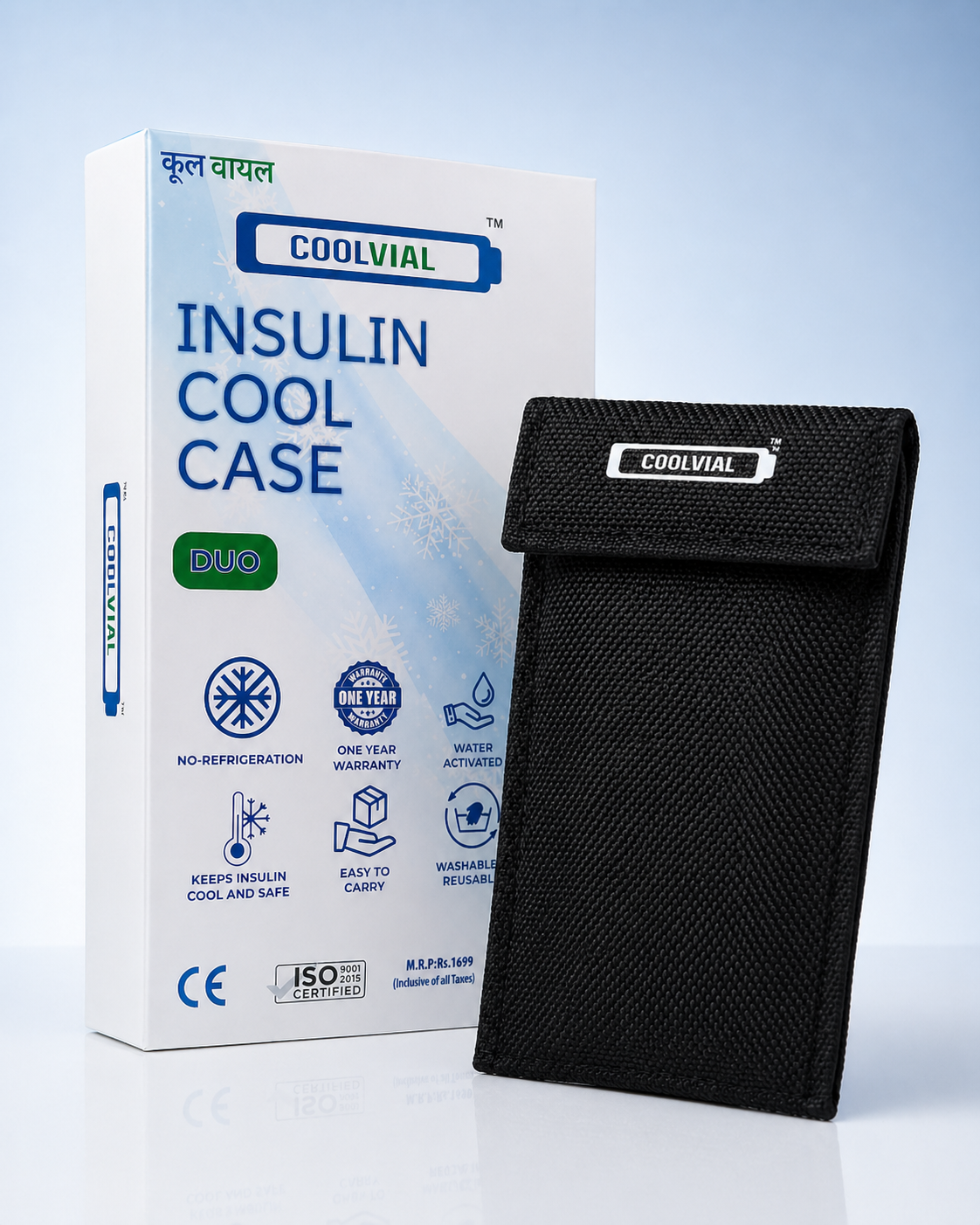
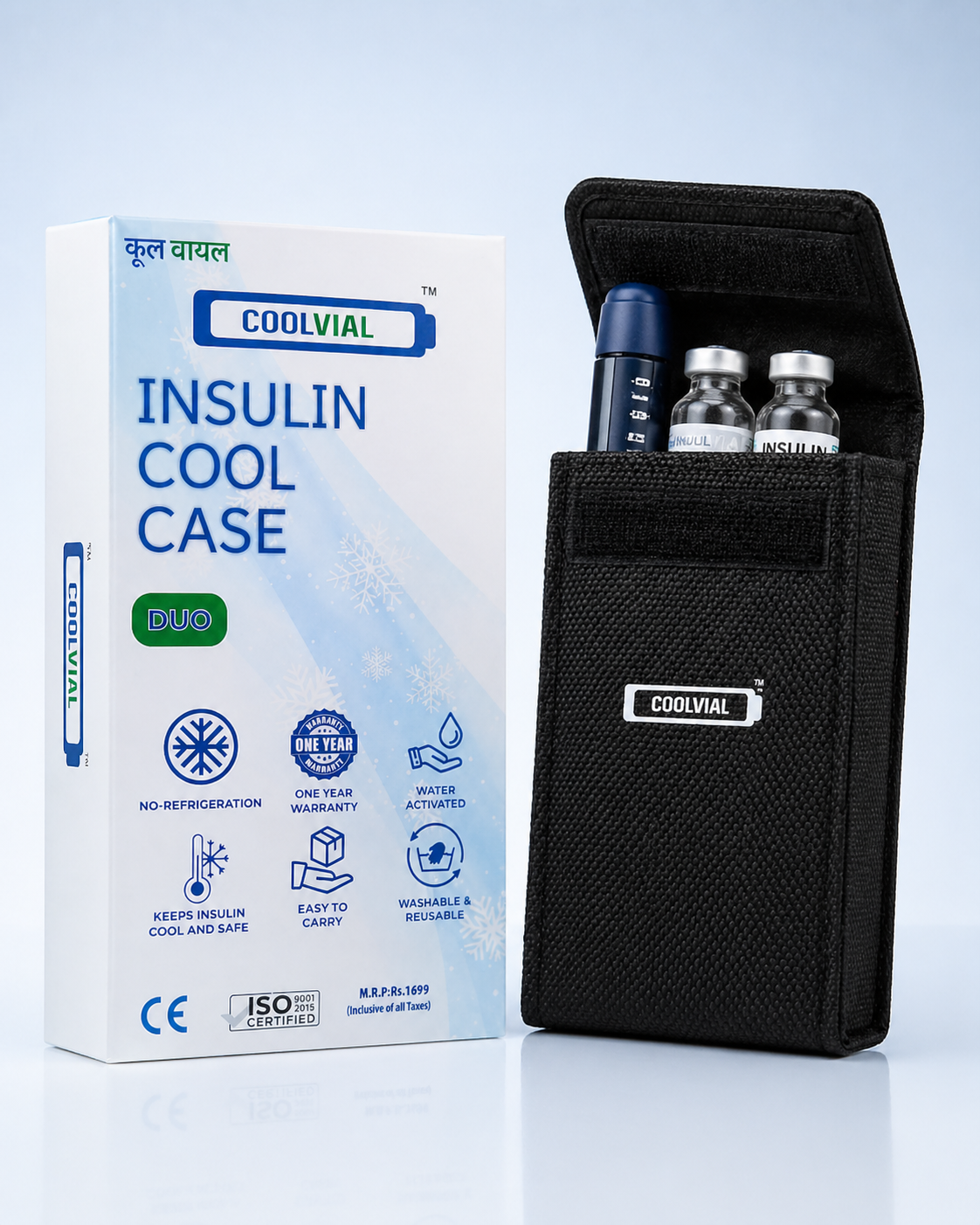
One such highly effective solution is the COOLVIAL insulin cool case. The COOLVIAL Duo, for instance, is designed to hold 2 insulin pens and 1 vial, keeping them cool for 12-16 hours. Priced at just Rs 1,099 with code COOLHEAL (MRP Rs 1,699), it offers significant value. It’s also CE certified, ISO 9001:2015 compliant, and comes with a 1-year warranty, providing peace of mind. Compared to other options like FRIO (often around Rs 1,900 for a similar capacity) or some basic insulated pouches like Outer Woods OW-12 (around Rs 999 but with potentially shorter cooling duration and less robust certification), COOLVIAL Duo strikes an excellent balance of performance, capacity, and affordability, all while being proudly Made in India.
4. Water Quality and Your Cooling Case: A Lucknow-Specific Concern
Lucknow, like many cities in Uttar Pradesh, is known for its hard water. Hard water contains high concentrations of minerals like calcium and magnesium. While generally safe for consumption, these minerals can pose a problem for water-activated evaporative cooling cases if used consistently.
The Impact of Hard Water:
- Mineral Buildup: Repeatedly soaking your cooling case in hard tap water can lead to a buildup of mineral deposits on the fabric and within the polymer crystals.
- Reduced Efficiency: This mineral buildup can hinder the evaporation process, reducing the cooling efficiency and the duration for which the case remains cool.
- Hygiene Concerns: Over time, mineral deposits can also become a breeding ground for bacteria or fungi if not properly maintained, although this is less common with regular drying.
Recommendations for Water Activation in Lucknow:
- Use Bottled or RO Water: To ensure optimal performance and longevity of your evaporative cooling case, it is highly recommended to use bottled water or water from a Reverse Osmosis (RO) purifier for activation. This minimizes mineral residue.
- Regular Cleaning: Even with purified water, occasional gentle cleaning of the outer pouch (if recommended by the manufacturer) can help maintain hygiene and efficiency.
- Check Manufacturer Guidelines: Always follow the specific activation and cleaning instructions provided by your cooling case manufacturer. For COOLVIAL Duo, a quick dip in clean water for just 5-10 minutes is usually sufficient for activation.
By paying attention to water quality, you can ensure your evaporative cooling case, like the COOLVIAL Duo, performs at its best, providing consistent protection for your insulin throughout Lucknow’s demanding seasons.
5. Insulin Storage Across Lucknow’s Neighborhoods: Hazratganj vs. Aliganj
The challenges of insulin storage in Lucknow can vary subtly depending on your locality. While the fundamental principles remain the same, factors like building age, population density, and local infrastructure can influence daily realities.
Storage Realities:
- Hazratganj (Central Lucknow): As a bustling commercial and residential hub, Hazratganj might have better access to amenities. However, many buildings are older, often with less modern insulation. The dense urban environment can also contribute to higher ambient temperatures due to heat island effect. Power cuts, though potentially less frequent than in more peripheral areas, still occur. Residents here might experience longer commutes to hospitals like SGPGIMS (Raebareli Road) or Apollomedics Super Speciality (Kanpur Road), making portable cooling solutions essential for travel.
- Aliganj (North Lucknow): This is largely a residential area, often with newer constructions and potentially better ventilation in some homes. However, it is still susceptible to the same high summer temperatures and power fluctuations. Residents might find pharmacies like Apollo Pharmacy or MedPlus easily accessible but still need reliable at-home storage, especially if their homes lack consistent air conditioning.
- Old Lucknow (Chowk/Aminabad): Areas around historical landmarks like Bara Imambara are characterized by very old, dense housing structures. These buildings can often trap heat, leading to higher indoor temperatures than more open localities. Power infrastructure might also be older, potentially leading to more frequent or prolonged outages. For residents here, managing insulin during peak summer requires extra vigilance and dependable, electricity-free cooling.
Regardless of your neighborhood, the core principles of protecting insulin from heat and freezing remain paramount. Having a reliable, portable cooling solution like the COOLVIAL Duo allows you to maintain optimal insulin storage conditions, whether you’re at home in Gomti Nagar, exploring the markets of Old Lucknow, or commuting across the city. This flexibility is crucial for maintaining an active lifestyle while managing diabetes effectively.
6. Navigating Peak Summer (May-June) with Power Cuts
The combination of Lucknow’s peak summer heat (May-June) and unpredictable power cuts presents the most significant challenge for insulin users. Imagine a night when the outdoor temperature doesn’t drop below 35°C, and suddenly, the power goes out for several hours. Your refrigerator starts warming up, and your indoor ambient temperature quickly climbs to an unbearable 38°C. What do you do?
Action Plan for Peak Heat + Power Cut Scenarios:
- Immediate Protection: If you have an evaporative cooling case like COOLVIAL Duo, this is its moment to shine. Ensure it’s activated and ready. Transfer your in-use insulin pens and vials into it immediately. If you have unopened insulin in the fridge, consider transferring a day or two’s supply into the cooling case as a backup, especially if the power cut is prolonged.
- Minimize Refrigerator Opening: For any remaining unopened insulin in the fridge, avoid opening the refrigerator door unnecessarily. A well-sealed refrigerator can maintain cool temperatures for a few hours, but constant opening will accelerate warming.
- Seek Cooler Spots: Move to the coolest part of your home, if possible. This might be a ground-floor room, a corner with better ventilation, or even a temporary shift to a relative’s home with a generator or AC, if feasible. However, your insulin should remain in its dedicated cooling case.
- Monitor Insulin: Visually inspect your insulin. If it looks cloudy, discolored, or has particles, do not use it, even if you suspect it was kept cool. Discard it safely and use a fresh vial/pen. This is crucial for your health.
- Stay Hydrated: While not directly related to insulin storage, managing diabetes in extreme heat requires extra care for yourself. Drink plenty of fluids to avoid dehydration.
A reliable, portable, and electricity-independent cooling solution is not just a convenience; it’s a necessity for diabetes management in Lucknow’s summers. Products like COOLVIAL Duo are specifically designed for these very Indian realities, offering 12-16 hours of cooling without power, ensuring your insulin remains effective even during the most challenging days and nights. For broader diabetes care guidance, consider reading our Complete Diabetes Care Guide for Lucknow Residents — 2026 Edition.
7. SGPGIMS Recommendations: Expert Advice for Insulin Storage
Leading medical institutions in Lucknow, such as the Sanjay Gandhi Postgraduate Institute of Medical Sciences (SGPGIMS) on Raebareli Road, provide guidelines for diabetes management that align with national and international best practices. While specific storage recommendations are often general, they emphasize the critical importance of temperature control.
General Insulin Storage Recommendations from Medical Experts (including SGPGIMS Endocrinology Dept. [Verify in 2026] and RSSDI guidelines):
- Unopened Insulin: Store in the refrigerator between 2°C and 8°C. Do not freeze.
- In-Use Insulin: Store at room temperature, ideally below 25°C, for up to 28 days (or as specified by the manufacturer). Do not refrigerate in-use pens/vials if they are meant for room temperature use, as repeated warming and cooling can affect potency.
- Avoid Extremes: Protect insulin from direct sunlight, extreme heat (above 25-30°C), and freezing temperatures (below 2°C).
- Travel: When traveling, always carry insulin in an insulated bag or cooling case. If flying, carry insulin in your cabin baggage. The Directorate General of Civil Aviation (DGCA) permits carrying essential medicines like insulin in hand luggage. You can check specific guidelines on their official website: https://dgca.gov.in/pages/medical-requirements.html.
- Visual Inspection: Before each use, visually inspect your insulin. It should be clear and colorless (unless it’s NPH insulin, which is cloudy). If you notice any changes in appearance, discard it.
Why Localized Solutions Matter:
While these general guidelines are crucial, the local climate of Lucknow, with its unique heat and power challenges, necessitates practical solutions. Relying solely on “room temperature” storage when room temperature is often 35°C in summer is not feasible. This is why products like COOLVIAL Duo are endorsed by many local endocrinologists as a practical, accessible solution for maintaining insulin integrity in Indian conditions. They bridge the gap between ideal storage conditions and the realities of daily life in cities like Lucknow.
8. Frequently Asked Questions (FAQ)
Q: How long can insulin stay out of the fridge in Lucknow’s summer? A: In Lucknow’s summer, with ambient temperatures often exceeding 35°C, insulin should not be left out of the fridge for more than an hour or two without an active cooling solution. Even in-use insulin, typically stored at room temperature (up to 25°C), will degrade quickly at higher temperatures.
Q: Can I use ice packs to keep insulin cool during a power cut? A: While ice packs can provide temporary cooling, direct contact with ice can freeze insulin, rendering it ineffective. If using ice packs, ensure the insulin is wrapped in cloth or placed in an insulated container to prevent direct contact and freezing.
Q: Is it safe to store insulin in an ordinary insulated lunch bag? A: An ordinary insulated lunch bag provides minimal protection against Lucknow’s extreme heat and is generally not sufficient for prolonged storage, especially during power cuts or long commutes. For reliable temperature control, a specialized evaporative cooling case or medical-grade insulated bag is recommended.
Q: What is the ideal temperature range for in-use insulin pens in Lucknow? A: The ideal temperature range for in-use insulin pens is typically below 25°C. In Lucknow’s summer, achieving this without active cooling is challenging, making evaporative cooling cases crucial to maintain the pens within their safe temperature window.
Q: Where can I buy a reliable insulin cooling case in Lucknow? A: While some pharmacies like Apollo Pharmacy or MedPlus might carry basic insulated pouches, specialized evaporative cooling cases like COOLVIAL Duo are best purchased directly online at coolvial.com for guaranteed authenticity and the best price.
Q: How often should I check my insulin’s appearance during summer? A: You should visually inspect your insulin before every use during summer. Look for any changes in clarity, color, or the presence of particles, as these can indicate degradation due to heat exposure.
Q: Does using RO water for my cooling case really make a difference? A: Yes, using RO or bottled water for activating your evaporative cooling case, especially in Lucknow’s hard water zones, prevents mineral buildup, which can reduce the cooling efficiency and longevity of the case over time.
Conclusion
Navigating diabetes management in Lucknow’s challenging climate requires a proactive and informed approach, especially when it comes to how to store insulin effectively. From the scorching dry heat of May and June to the humid monsoons, every season presents unique hurdles for maintaining insulin potency. Understanding the realities of indoor temperatures, the impact of power cuts, and the nuances of water quality are all part of ensuring your medication remains safe and effective.
By adopting strategies like using evaporative cooling cases, being mindful of water quality, and staying informed about local conditions, you can empower yourself to live a full and active life in Lucknow without compromising your health. Remember, your insulin is your lifeline, and protecting it is paramount.
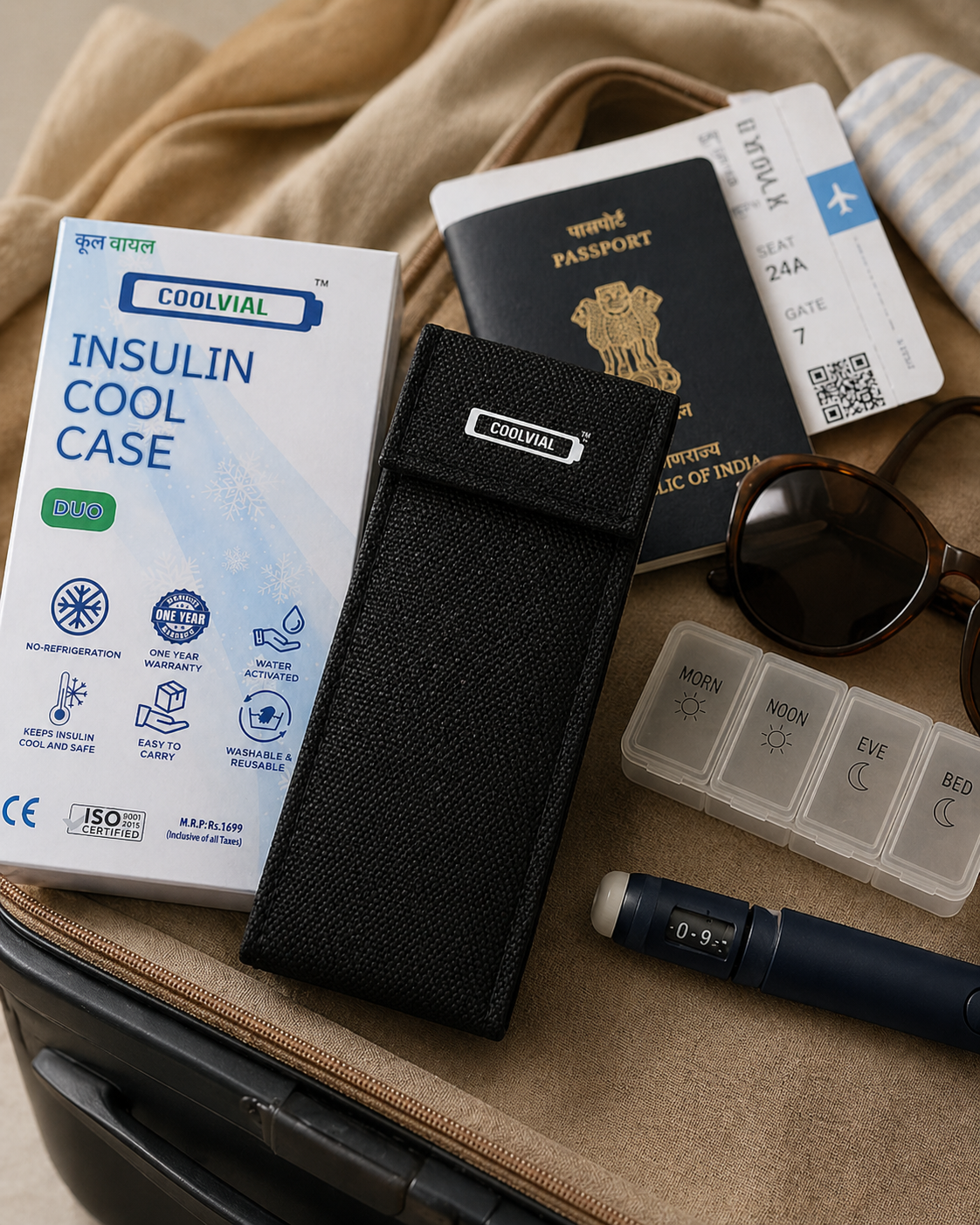
For a reliable, electricity-free solution that offers 12-16 hours of cooling for your insulin pens and vials, consider the COOLVIAL Duo. It’s CE certified, ISO 9001:2015 compliant, Made in India, and comes with a 1-year warranty.
Order COOLVIAL Duo at Rs 1,099 with code COOLHEAL at coolvial.com or via WhatsApp wa.me/918766952300 today and experience peace of mind, even in Lucknow’s hottest summer!
Medical Disclaimer: This article is for general information purposes only and does not constitute medical advice. Always consult your endocrinologist or diabetologist before changing insulin storage or dosing practices.
How We Researched This: This guide is based on a comprehensive review of RSSDI guidelines, ICMR-INDIAB data on diabetes prevalence in India, local Lucknow hospital directories, and information from pharmacy networks like Apollo Pharmacy. It integrates general medical recommendations with specific insights into Lucknow’s climate and infrastructure realities, drawing from common queries and challenges faced by local diabetics.
5 Essential Tips: How to Store Insulin in Lucknow Summer Heat — A Local's Guide
COOLVIAL keeps insulin safe in India's heat. 48+ hours, no electricity needed.