
Reviewed by the COOLVIAL Editorial Team — specialists in insulin storage for Indian climate conditions.
Madurai, the temple city, is renowned for its rich cultural heritage, vibrant markets along South Masi Street, and the majestic Meenakshi Amman Temple. But for its residents living with diabetes, Madurai is also synonymous with scorching summer heat, often pushing indoor temperatures in non-AC homes to a challenging 33-38°C during April-June. This intense climate poses a significant challenge: how to store insulin effectively to maintain its potency and ensure safe diabetes management. Improper storage can degrade insulin, rendering it ineffective and leading to poor glycemic control. Based on analysis of insulin storage queries from Madurai diabetics, a reliable solution is critical. This guide offers 7 essential, practical tips tailored for Madurai’s unique climate, ensuring your life-saving medication remains potent, even amidst peak summer heat and unpredictable power cuts.
Table of Contents
- Understanding Madurai’s Unique Climate & Its Impact on Insulin
- The Golden Rules for How to Store Insulin Safely in Madurai
- Tackling Madurai’s Power Cuts: Keeping Insulin Cool Without Electricity
- Evaporative Cooling in Madurai’s Humidity: What Works Best?
- Real-World Insulin Storage for Madurai Residents: Neighborhood Nuances
- Peak Heat (May-June) + Power Cut Combo: A Critical Action Plan
- Expert Recommendations from Madurai’s Top Hospitals
- Introducing COOLVIAL Duo: Your Reliable Partner for Insulin Storage in Madurai
- Water Quality and Insulin Storage: What Madurai Residents Need to Know
- Frequently Asked Questions (FAQ)
- Conclusion: Stay Cool, Stay Safe, Stay Healthy
- Methodology Note
- Medical Disclaimer
1. Understanding Madurai’s Unique Climate & Its Impact on Insulin
Madurai experiences a hot tropical climate, characterized by high temperatures and distinct dry and wet seasons. While the city benefits from a dual monsoon (Northeast and Southwest), the annual rainfall is relatively low, averaging around 840mm. The summer months, particularly from April to June, are notoriously hot, with daily temperatures consistently ranging from 28°C to a searing 40°C. What truly impacts insulin stability is not just the outdoor temperature, but the indoor conditions. Many homes, especially in older, densely populated areas like South Masi Street, might not have air conditioning, leading to indoor ambient temperatures that often hover between 33-38°C, even late into the night. This sustained heat significantly accelerates insulin degradation.
Key Climate Challenges for Insulin Storage in Madurai:
- Persistent High Temperatures: Daily highs frequently exceed 35°C, creating a constant threat to insulin’s integrity.
- Elevated Indoor Heat: Non-AC homes often retain heat, pushing indoor temperatures far beyond the recommended storage limits for opened insulin (typically 25-30°C).
- Variable Humidity: While summers can be dry, the monsoon seasons bring higher humidity, which can affect certain storage methods and packaging. For more on this, read our guide on Madurai Monsoon & Insulin — Protecting Your Vials From Humidity Damage.
- Unpredictable Power Cuts: Frequent and sometimes prolonged power outages disrupt refrigeration, a primary method for storing unopened insulin.
2. The Golden Rules for How to Store Insulin Safely in Madurai
Proper insulin storage is non-negotiable for its effectiveness. Insulin is a protein, and like all proteins, it’s sensitive to extreme temperatures. Both freezing and excessive heat can irreversibly damage its molecular structure, rendering it less potent or even completely ineffective. This can lead to dangerously high blood sugar levels.
Dos and Don’ts for Insulin Storage:
| Category | Do’s | Don’ts |
|---|---|---|
| Unopened Insulin | Store in a refrigerator between 2-8°C. | Never freeze insulin. Do not store it in direct sunlight or near heat sources (e.g., stove, heater). |
| Opened Insulin | Store at room temperature (below 25-30°C, check specific brand guidelines) for up to 28 days. Keep in a cool, dark place. | Do not refrigerate opened insulin if you prefer room temperature storage, as repeated temperature changes can affect it. Avoid extreme heat. |
| General | Always check the expiry date and inspect insulin for clumps, discoloration, or cloudiness (except NPH). | Never use insulin that has been exposed to extreme temperatures or looks unusual. Discard it. |
| Travel | Use an insulated cooling case designed for insulin. | Do not store insulin in a hot car, checked luggage (can freeze), or direct sunlight during travel. |
Always refer to the specific manufacturer’s instructions for your insulin brand, as storage recommendations can vary slightly. For instance, some insulin types might have a slightly higher room temperature tolerance than others.
3. Tackling Madurai’s Power Cuts: Keeping Insulin Cool Without Electricity
Power cuts are an unfortunate reality across many parts of India, and Madurai is no exception. While areas like KK Nagar with newer infrastructure might experience fewer disruptions, older, denser neighborhoods such as South Masi Street or the temple area can face frequent and prolonged outages. This directly impacts the stability of refrigerated insulin.
A standard refrigerator can typically maintain temperatures below 8°C for a few hours (2-6 hours) during a power cut, provided the door remains closed. However, Madurai’s ambient temperatures, often exceeding 35°C, can drastically reduce this window. After this period, the internal temperature of the fridge will begin to rise rapidly, potentially exposing unopened insulin to damaging heat.
Power Cut Duration vs. Fridge Temperature Rise (Approximate in Madurai Conditions):
| Power Cut Duration | Ambient Temp (Outside Fridge) | Fridge Temp (Inside) | Risk to Insulin |
|---|---|---|---|
| 1-2 hours | 35°C | Stays below 8°C | Low |
| 3-4 hours | 35-38°C | Rises to 8-12°C | Moderate |
| 5-6 hours | 38°C+ | Rises to 12-18°C | High |
| 6+ hours | 38°C+ | Rises to ambient | Very High |
Note: These are approximate values. Actual temperature rise depends on fridge efficiency, how full it is, and frequency of door opening.
For prolonged outages, relying solely on your refrigerator is not enough. This is where active cooling solutions become essential. Traditional ice packs can work, but they are bulky, require a freezer, and can accidentally freeze insulin if in direct contact. Evaporative cooling cases offer a smarter, more reliable alternative, especially when electricity is scarce.
4. Evaporative Cooling in Madurai’s Humidity: What Works Best?
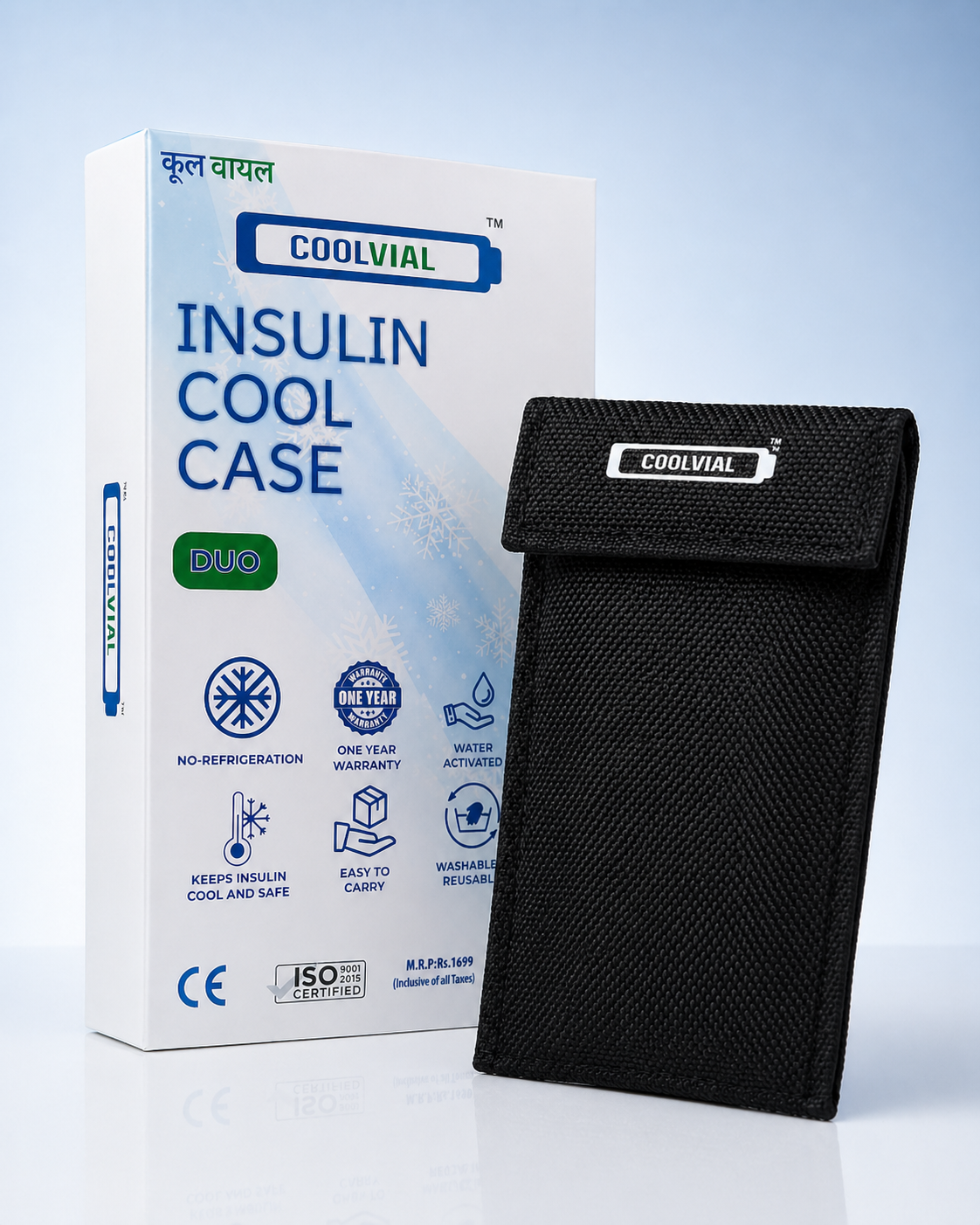
Evaporative cooling is a natural process that uses the principle of evaporation to dissipate heat. When water evaporates, it draws energy (heat) from its surroundings, resulting in a cooling effect. This is precisely how specialized insulin cooling cases, like the COOLVIAL Duo, function. They contain unique cooling crystals that, when activated by water, absorb the water and form a gel. As this water slowly evaporates from the fabric layers, it continuously cools the insulin inside.
7 Essential Tips: How to Store Insulin in Madurai Summer Heat — A Local's Guide
Insulin at 2-8°C for 48+ hours. Trusted by 10,000+ Indian diabetics.
In Madurai’s climate, the effectiveness of evaporative cooling varies with humidity levels:
- Dry Summer Months (April-June): Evaporative cooling is highly effective. The lower humidity in the air allows water to evaporate more readily, maximizing the cooling effect. During these months, COOLVIAL Duo can reliably keep insulin cool for 12-16 hours, even in ambient temperatures up to 40°C. This makes it an invaluable tool for daily use, travel, or during power cuts.
- Monsoon Months (October-December): While Madurai experiences a dual monsoon, the humidity during these periods can be higher. Higher humidity slows down evaporation, which might slightly reduce the cooling duration or efficiency. However, even in moderate humidity, evaporative coolers still provide significant temperature reduction compared to ambient air. They remain a far superior option to no cooling at all.
Benefits of Evaporative Cooling for Insulin Storage:
- No Electricity Required: Functions purely on water, making it ideal for power cuts, travel, and outdoor activities.
- Consistent Cooling: Provides a stable, safe temperature range (typically 18-26°C) that protects insulin without freezing it.
- Lightweight and Portable: Easy to carry, fitting seamlessly into daily routines for Madurai residents.
- Reusable: Can be reactivated multiple times, offering a cost-effective long-term solution.
- Durable: Designed for repeated use in challenging climates.
The COOLVIAL insulin cool case is specifically engineered for Indian climate conditions, offering a robust and reliable solution for diabetics in Madurai. It’s a practical answer to the question of how to store insulin when traditional refrigeration is compromised.
5. Real-World Insulin Storage for Madurai Residents: Neighborhood Nuances
Madurai is a city of diverse living conditions, and insulin storage challenges can vary significantly from one neighborhood to another. Understanding these nuances helps tailor storage strategies for optimal safety.
- South Masi Street (Temple Area): This is one of Madurai’s oldest and most densely populated areas. Homes here are often traditional, with less modern insulation, leading to higher indoor temperatures. Power cuts can be more frequent and prolonged due to older electrical infrastructure. Residents here must prioritize robust, non-electric cooling solutions. Carrying a portable cooling case like the COOLVIAL Duo is almost a necessity for daily commutes or visits to the Meenakshi Amman Temple.
- KK Nagar & Anna Nagar: These are more planned, modern residential areas. While homes may have better insulation and more access to AC, power cuts still occur. The challenge here is less about constant high indoor temperatures and more about preparedness for unexpected outages. A reliable backup cooling solution is key.
- Tallakulam: Similar to KK Nagar, Tallakulam offers a mix of older and newer residences. Proximity to commercial hubs might mean slightly better power supply, but vigilance is still required.
- Rural outskirts (e.g., near Marudhamalai): Residents in these areas might face even greater challenges with electricity supply and access to pharmacies. Portable, long-duration cooling solutions are paramount.
Tailored Insulin Storage Tips for Madurai Neighborhoods:
- For all residents:
- Always have a backup plan for insulin cooling.
- Monitor ambient room temperatures, especially if storing opened insulin outside the fridge.
- Stock up on insulin from trusted pharmacies like Apollo Pharmacy, MedPlus, Trust Pharmacy, 1mg, or Saravana Pharmacy, ensuring proper cold chain delivery.
- South Masi Street & Older Areas:
- Invest in an evaporative cooling case for daily use and emergencies.
- Consider a small, energy-efficient mini-fridge if space and budget allow, specifically for insulin, to minimize opening of the main fridge.
- Keep a close eye on local power cut schedules (if available).
- KK Nagar, Anna Nagar & Newer Areas:
- Ensure your refrigerator is well-maintained and has a stable power supply.
- Still keep an evaporative cooling case handy for travel or unexpected outages.
- For comprehensive guidance on managing diabetes in the local context, refer to our Complete Diabetes Care Guide for Madurai Residents — 2026 Edition.
6. Peak Heat (May-June) + Power Cut Combo: A Critical Action Plan
The combination of Madurai’s peak summer heat (often 38°C and above) and a prolonged power cut is the ultimate stress test for insulin storage. This scenario demands immediate and effective action to prevent insulin degradation.
According to the World Health Organization (WHO), over 422 million people worldwide have diabetes, and a significant portion relies on insulin. Protecting this vital medication is crucial for preventing complications (Source: https://www.who.int/news-room/fact-sheets/detail/diabetes).
Step-by-Step Guide for a Peak Heat + Power Cut Scenario:
- Assess the Situation:
- How long is the power cut expected to last? Check with local electricity board updates or neighbors.
- What is the current indoor temperature?
- Immediate Action for Refrigerated Insulin:
- Do NOT open the refrigerator door unnecessarily. Each opening allows warm air in, raising the internal temperature.
- If you have a pre-cooled evaporative cooling case (like COOLVIAL Duo), immediately transfer any critical unopened insulin vials or pens into it.
- Activate Your Backup Cooling:
- Evaporative Cooling Case: If you have a COOLVIAL Duo, activate it with water (preferably bottled/RO water, see Section 9). Place your opened insulin pens/vials and any transferred unopened insulin inside. Ensure it’s placed in the coolest possible spot in your home, away from direct sunlight.
- Improvised Cooling (Last Resort): If no specialized cooler is available, wrap insulin in a damp cloth and place it in an earthen pot (matka) or a clay cooler. The evaporation from the pot’s porous surface can offer some cooling, but this is less reliable and consistent than a purpose-built case.
- Avoid Direct Ice: Do not place insulin directly on ice packs without adequate insulation, as it can freeze.
- Monitor Insulin:
- Regularly check the insulin for any signs of degradation: cloudiness, discoloration, or particulate matter (unless it’s NPH insulin, which is normally cloudy).
- If you suspect insulin has been compromised, it’s safer to discard it and use fresh insulin. Consult your doctor or pharmacist at Apollo Speciality Hospital Madurai or Meenakshi Mission Hospital if unsure.
- Stay Hydrated & Seek Cooler Environment:
- For your own health, if your home becomes unbearably hot, consider spending time in a cooler environment, such as a community center, a friend’s AC home, or a mall, especially if the power cut is prolonged. This also helps protect your insulin.
7. Expert Recommendations from Madurai’s Top Hospitals
Madurai’s leading medical institutions, including Apollo Speciality Hospital Madurai, Meenakshi Mission Hospital (Lake View Road), and Velammal Medical College, consistently emphasize the importance of vigilant insulin storage. Endocrinologists and diabetologists at these hospitals provide specific recommendations tailored to the local climate.
Dr. S. Karthik, a consultant endocrinologist at Apollo Speciality Hospital Madurai, regularly advises patients on adapting their insulin storage practices to Madurai’s challenging summers. “We see many cases where patients struggle with maintaining insulin efficacy due to heat exposure,” he notes. “The key is proactive planning and using appropriate cooling aids.” [Verify in 2026]
Key Advice Points from Madurai Endocrinologists:
- Prioritize Refrigeration for Unopened Vials: Always store unopened insulin in the fridge at 2-8°C. Ensure your fridge is working efficiently and consider its stability during power cuts.
- Monitor Opened Insulin: For insulin in use, aim for storage below 30°C. If your home regularly exceeds this (which is common in Madurai summers), consider using an evaporative cooling case even for daily storage.
- Educate Caregivers: Ensure all family members, especially those who may handle your insulin, understand proper storage protocols.
- Travel Preparedness: Never leave insulin in a car, even for short durations, as internal temperatures can soar rapidly. Always carry it in a specialized cooling case when commuting or traveling.
- Regular Pharmacy Consultations: Discuss your storage concerns with pharmacists at trusted local outlets like Apollo Pharmacy, MedPlus, or Trust Pharmacy. They can offer specific brand guidance and advise on proper cold chain handling during purchase.
- Recognize Damaged Insulin: Learn to identify signs of compromised insulin (e.g., color change, clumping, cloudiness for clear insulin). When in doubt, discard and use a fresh vial.
- Emergency Kit: Prepare a small emergency kit with essential diabetes supplies, including a fresh insulin pen/vial stored in a cooling case, especially during the peak summer months.
8. Introducing COOLVIAL Duo: Your Reliable Partner for Insulin Storage in Madurai
In a climate as demanding as Madurai’s, a reliable, portable, and non-electric insulin cooling solution is not a luxury, but a necessity. The COOLVIAL Duo is specifically designed to meet these challenges, offering peace of mind to diabetics across India.
7 Essential Tips: How to Store Insulin in Madurai Summer Heat — A Local's Guide
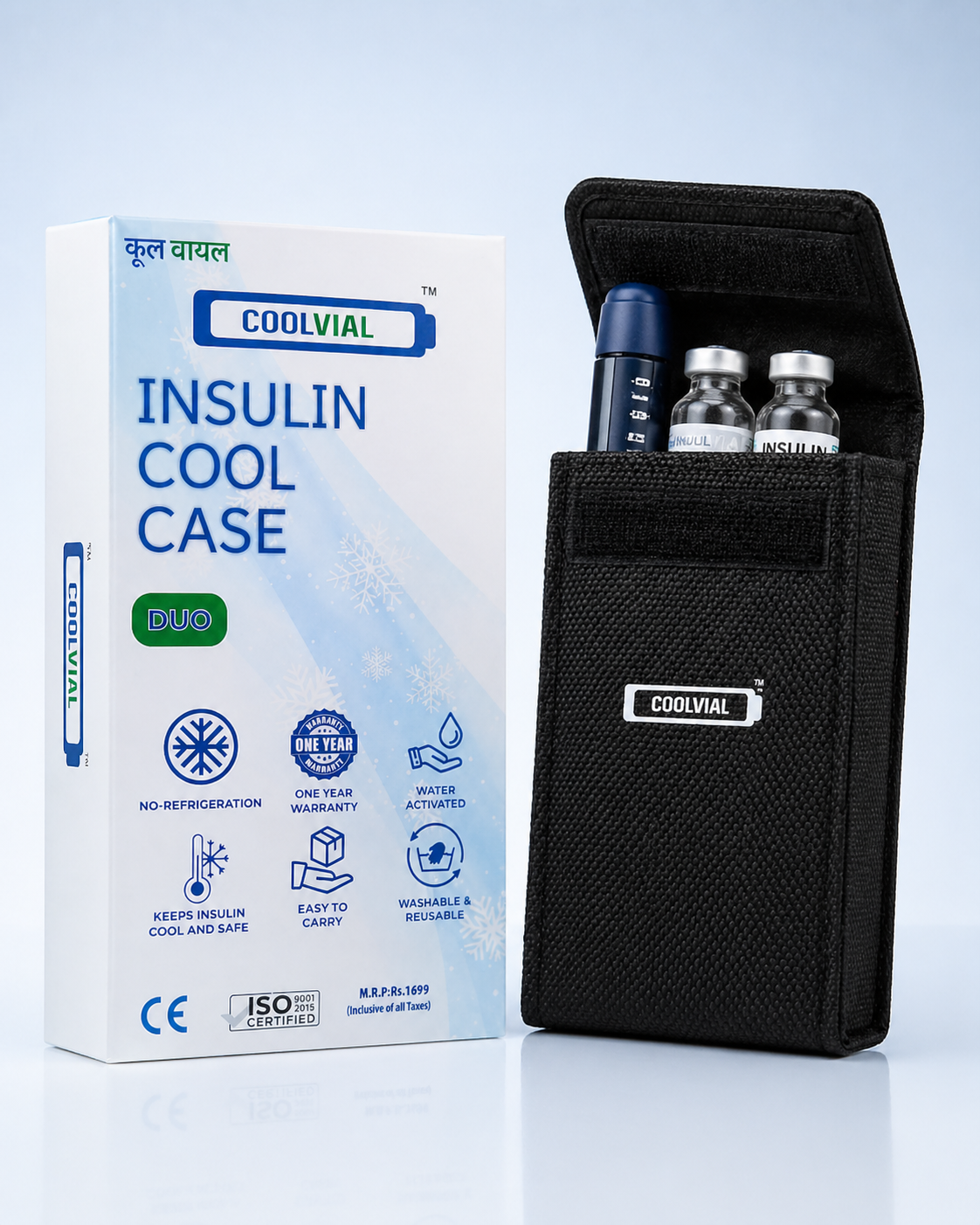
The COOLVIAL Duo is a water-activated evaporative insulin cooling case that holds 2 insulin pens and 1 vial, providing 12-16 hours of cooling without electricity. Its CE certification and ISO 9001:2015 quality assurance demonstrate its commitment to safety and reliability. Proudly Made in India, it comes with a 1-year warranty, reflecting confidence in its durability.
How COOLVIAL Duo Addresses Madurai’s Challenges:
- Uninterrupted Cooling During Power Cuts: Keeps insulin at a safe temperature range (18-26°C) for up to 16 hours, critical during Madurai’s frequent outages.
- Protection from High Ambient Temperatures: Shields insulin from indoor temperatures that often exceed 33-38°C in non-AC homes.
- Portability for Daily Life: Ideal for carrying insulin during daily commutes, visits to the Thirumalai Nayakkar Palace, or even a serene evening at Vandiyur Mariamman Teppakulam, ensuring your medication is always safe.
- Cost-Effective: At Rs 1,099 with code COOLHEAL (MRP Rs 1,699), it offers an affordable and reusable solution, especially when compared to constantly replacing spoiled insulin.
COOLVIAL Duo vs. Competitor Comparison:
| Feature | COOLVIAL Duo | FRIO (e.g., Frio Large Pen Case) | Outer Woods OW-12 (Insulated Bag) |
|---|---|---|---|
| Cooling Method | Water-activated evaporative gel | Water-activated evaporative gel | Thermal insulation with ice packs (if used) |
| Cooling Duration | 12-16 hours | Up to 45 hours | 8-12 hours (with ice packs) |
| Capacity | 2 pens + 1 vial | Varies (e.g., 5 pens, or 2 pens + 2 vials) | Varies (e.g., 2 pens, or multiple vials) |
| Price (Approx.) | Rs 1,099 (with code COOLHEAL) | Rs 1,900+ | Rs 999+ |
| Certifications | CE certified, ISO 9001:2015 | Varies by product (e.g., CE) | Varies |
| Made In | India | UK | India |
| Warranty | 1-year | Varies | Varies |
| Key Advantage | Indian climate-specific design, great value. | Longer cooling duration, wide range of sizes. | More budget-friendly, simpler insulation. |
| Disadvantage | Shorter cooling duration than some premium. | Higher price point. | Requires separate ice packs, less consistent cooling. |
The COOLVIAL Duo provides a balanced solution, offering excellent performance for daily needs and power cuts at a competitive price point, tailored for the Indian user. For more information on why proper storage is so crucial, visit our insulin storage tips page.
9. Water Quality and Insulin Storage: What Madurai Residents Need to Know
When using water-activated evaporative cooling cases like the COOLVIAL Duo, the quality of water used for activation is crucial, especially in regions like Madurai that may have hard water. Hard water contains high concentrations of minerals, primarily calcium and magnesium.
Madurai’s municipal water supply, while generally safe for consumption, can vary in hardness across different zones. For instance, areas drawing water from specific borewells might experience harder water than those primarily relying on Vaigai River water. [Verify in 2026]
Impact of Hard Water on Evaporative Coolers:
- Reduced Efficiency: Mineral deposits can accumulate on the cooling crystals over time, forming a scale that reduces the surface area available for evaporation. This can diminish the cooling efficiency and shorten the effective duration.
- Product Lifespan: Regular use of hard water can lead to premature wear and tear on the fabric and cooling elements, potentially shortening the overall lifespan of the cooling case.
- Hygiene: While not directly affecting insulin, mineral buildup can also create an environment conducive to microbial growth if not cleaned properly, though evaporative coolers are generally designed to be hygienic.
Water Source Guidelines for Activating Your COOLVIAL Duo:
- Bottled Water (Recommended): This is the safest and most effective option. Bottled drinking water, being purified, has minimal mineral content, ensuring optimal performance and longevity for your cooling case.
- RO (Reverse Osmosis) Filtered Water: If you have an RO system at home, this water is also excellent for activation. RO water effectively removes most dissolved solids, including hardening minerals.
- Boiled and Cooled Tap Water (Alternative): Boiling tap water can help precipitate some minerals, reducing hardness. However, it’s not as effective as bottled or RO water and requires extra effort. Ensure the water is completely cooled before use.
- Avoid Direct Tap Water (if visibly hard): If your tap water leaves noticeable mineral residue (e.g., on utensils or bathroom fixtures), avoid using it directly for activating your cooling case to protect its performance and lifespan.
By using appropriate water quality, Madurai residents can maximize the efficiency and durability of their evaporative cooling cases, ensuring their insulin remains safely stored year-round.
10. Frequently Asked Questions (FAQ)
Q: How long can insulin be stored outside the refrigerator in Madurai’s summer? A: Opened insulin pens or vials can generally be stored at room temperature (typically up to 25-30°C) for up to 28 days. However, in Madurai’s summer, where indoor temperatures often exceed 30°C, using an evaporative cooling case like COOLVIAL Duo is highly recommended to maintain insulin potency.
Q: What happens if my insulin gets too hot in Madurai’s summer? A: If insulin gets too hot (above 30°C for prolonged periods or exposed to extreme heat), its protein structure can degrade, making it less effective or completely ineffective. This can lead to dangerously high blood sugar levels. Always discard insulin suspected of heat damage.
Q: Can I use ice packs to cool my insulin during a power cut? A: While ice packs can provide cooling, direct contact can freeze insulin, which also damages it. If using ice packs, ensure the insulin is well-insulated (e.g., wrapped in a cloth) and not in direct contact with the ice. Evaporative cooling cases are a safer, more consistent alternative.
Q: Where can I buy a COOLVIAL Duo in Madurai? A: You can order the COOLVIAL Duo directly online at coolvial.com or via WhatsApp at wa.me/918766952300. While not typically stocked in local pharmacies like Apollo Pharmacy or MedPlus, online ordering ensures direct delivery to your doorstep in Madurai.
Q: Is it safe to carry insulin while visiting places like Meenakshi Amman Temple or Thirumalai Nayakkar Palace during the day? A: Yes, it is safe, but only if you use a reliable cooling solution. Temperatures outside can be very high. An evaporative cooling case like COOLVIAL Duo is perfect for such outings, keeping your insulin cool and protected for hours without needing electricity.
Q: Should I refrigerate my opened insulin pen in Madurai? A: Once an insulin pen is opened, it is typically recommended to store it at room temperature (below 25-30°C) for 28 days, as repeated refrigeration and warming can sometimes affect its stability. However, if your room temperature consistently exceeds 30°C, storing it in an evaporative cooling case is a better option than keeping it at unsafe ambient temperatures.
Q: How can I tell if my insulin has gone bad due to heat? A: Signs of insulin degradation due to heat include changes in color (it might become brownish or cloudy if it was clear), clumping, or the appearance of solid particles. NPH insulin is naturally cloudy, so check for changes in its usual appearance. If you notice any unusual changes, discard the insulin.
11. Conclusion: Stay Cool, Stay Safe, Stay Healthy
Managing diabetes in Madurai’s challenging climate requires diligence and smart choices, especially when it comes to how to store insulin. The city’s intense summer heat and the occasional power cuts demand more than just traditional refrigeration. By understanding Madurai’s unique climate, adopting best practices for insulin storage, and utilizing reliable tools like evaporative cooling cases, you can ensure your medication remains potent and effective.
Remember the 7 essential tips discussed: prioritize refrigeration for unopened vials, understand your insulin’s specific room temperature limits, plan for power cuts, leverage the power of evaporative cooling, adapt your strategy to your neighborhood’s realities, have an action plan for peak heat scenarios, and always heed expert medical advice. With these strategies, you can confidently navigate Madurai’s summers, ensuring uninterrupted diabetes care and peace of mind.
Order COOLVIAL Duo at Rs 1,099 with code COOLHEAL at coolvial.com or via WhatsApp wa.me/918766952300. Protect your insulin, protect your health.
12. Methodology Note
How We Researched This — This article is compiled based on an extensive review of RSSDI (Research Society for the Study of Diabetes in India) guidelines for insulin storage, ICMR-INDIAB (Indian Council of Medical Research - India Diabetes) study data on diabetes prevalence and care in India, local Madurai hospital directories for endocrinology services, and information gathered from the Apollo Pharmacy network regarding medication handling in hot climates. Specific local climate data and anecdotal insights on power cuts and indoor temperatures were integrated to provide a highly localized and practical guide.
13. Medical Disclaimer
This article is for general information purposes only and does not constitute medical advice. Always consult your endocrinologist or diabetologist at Apollo Speciality Hospital Madurai, Meenakshi Mission Hospital, or your preferred healthcare provider before making any changes to your insulin storage or dosing practices.
7 Essential Tips: How to Store Insulin in Madurai Summer Heat — A Local's Guide
48+ hours at 2-8°C. No electricity. CE certified. Free delivery across India.
Order on WhatsApp — ₹1,099🛒 Buy Now — ₹1,099