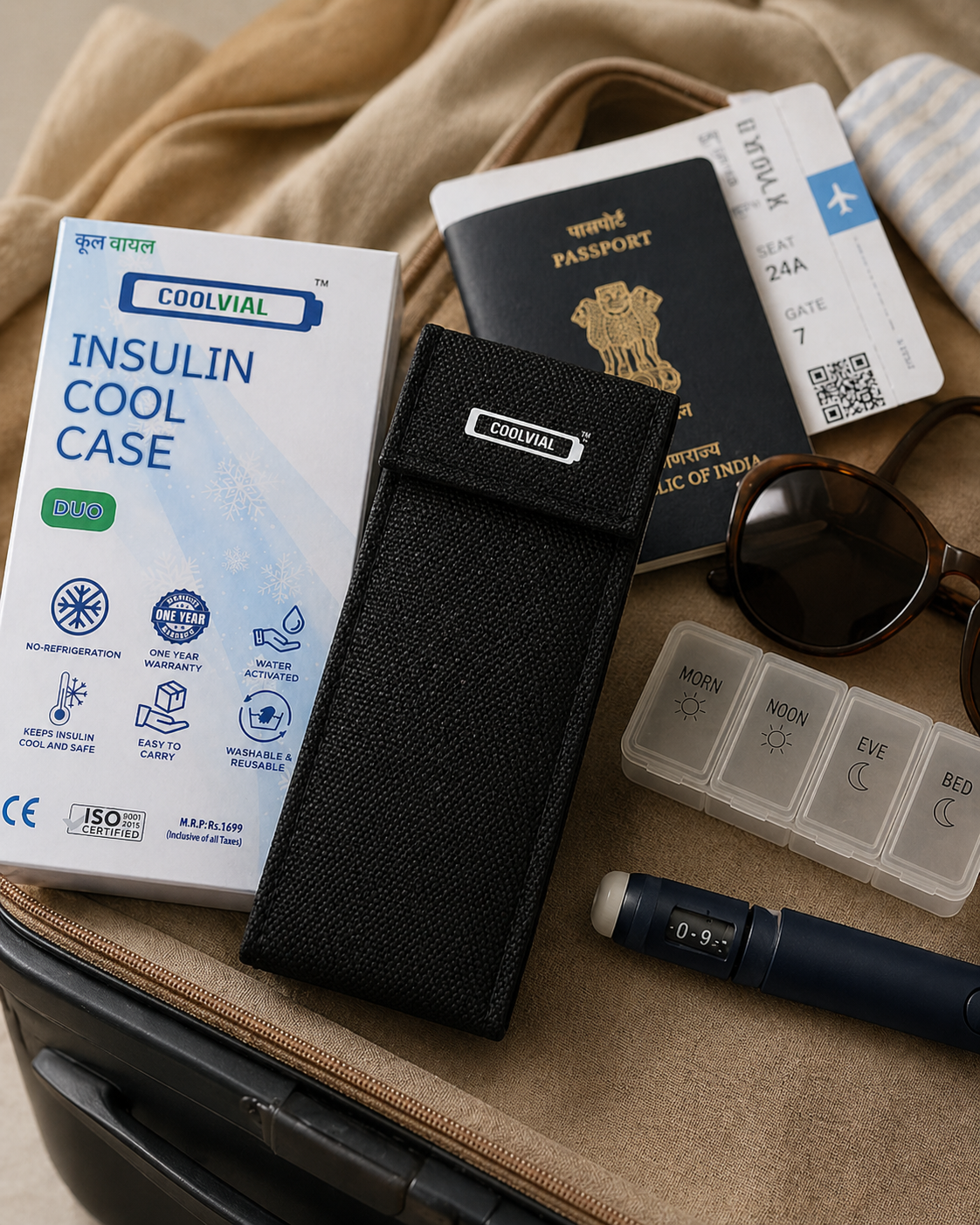
Reviewed by the COOLVIAL Editorial Team — specialists in insulin storage for Indian climate conditions.
From the bustling lanes of Sadar Bazaar to the quieter residential pockets of Shastri Nagar, Meerut is a city that truly experiences the extremes of North Indian weather. As the mercury begins its inevitable climb towards the scorching summer peak, often reaching 44°C and above, a critical question arises for hundreds of thousands of residents living with diabetes: how to store insulin safely and effectively? Based on analysis of insulin storage queries from Meerut diabetics, the challenge isn’t just about high daytime temperatures, but also the persistent heat indoors, power cuts, and humidity.
Unopened insulin should always be stored in a refrigerator between 2-8°C. However, once in use, most insulin pens and vials can be kept at room temperature (up to 25°C or 30°C depending on the brand) for a period of 28-56 days. The harsh reality in Meerut is that “room temperature” in non-AC homes during April-June often hovers between 33-38°C, even at night. This significantly exceeds safe limits and can compromise your insulin’s efficacy, potentially leading to dangerous blood sugar fluctuations. This guide provides 7 essential, practical tips specifically tailored to Meerut’s climate, ensuring your life-saving medication remains potent and safe through the intense summer.
Table of Contents
- Understanding Meerut’s Unique Summer Climate & Insulin Needs
- The Reality of Indoor Temperatures in Meerut Homes
- Navigating Fridge Stability & Frequent Power Cuts
- Evaporative Cooling Effectiveness: A Meerut Perspective
- Water Quality Concerns for Insulin Cooling Cases
- Local Storage Realities: Sadar Bazaar vs. Shastri Nagar
- Peak Heat & Power Cut Combo: Your Action Plan for May-June
- Frequently Asked Questions (FAQ)
- Conclusion
1. Understanding Meerut’s Unique Summer Climate & Insulin Needs
Meerut, nestled in western Uttar Pradesh, faces a distinct climate profile that poses unique challenges for insulin storage. The year can be broadly divided into three phases:
- Hot Summer (April to June): Temperatures soar from 22°C to a blistering 44°C, often exceeding this during heatwaves. This period is characterized by intense dry heat, low humidity initially, followed by a gradual increase towards monsoon.
- Monsoon (July to September): While temperatures might drop slightly, humidity levels skyrocket. This brings a different set of challenges, primarily concerning moisture and mold, which can affect traditional storage methods. (For more on this, read our guide: Meerut Monsoon & Insulin — Protecting Your Vials From Humidity Damage).
- Cold Winter (October to March): Temperatures range from 6°C to 22°C, often accompanied by dense fog. While cold, insulin should never freeze, so care is still needed.
The primary concern for insulin is heat degradation. Exposure to temperatures above its recommended range (typically 25-30°C for in-use insulin, and 2-8°C for unopened) can lead to:
- Loss of Potency: Insulin molecules break down, making the medication less effective.
- Reduced Shelf Life: The usable period of the insulin is drastically shortened.
- Increased Risk of High Blood Sugar: Due to ineffective insulin, blood glucose levels can become uncontrolled.
The Indian Council of Medical Research (ICMR) and the Research Society for the Study of Diabetes in India (RSSDI) consistently emphasize the need for proper insulin storage, especially in diverse climatic zones like Meerut (Source: ICMR Guidelines on Diabetes). This underscores why a one-size-fits-all approach to how to store insulin simply won’t work here.
2. The Reality of Indoor Temperatures in Meerut Homes
Many homes in Meerut, particularly in older or more densely populated areas like the Begum Bridge area or parts of Sadar Bazaar, do not have air conditioning. Even in homes with AC, it’s often not run 24/7 due to cost or power supply issues.
Consider these common scenarios:
- Daytime Heat Soak: During peak summer, a typical non-AC room in Meerut can easily reach 35-40°C by afternoon. Walls and roofs absorb heat, radiating it inwards.
- Nighttime Persistence: Unlike some dry climates where temperatures drop significantly at night, Meerut’s indoor temperatures in non-AC homes often remain high. It’s not uncommon for rooms to stay between 33-38°C even late into the night during April, May, and June. This is well above the safe limits for in-use insulin.
- Ventilation Challenges: Poor cross-ventilation in some older structures or apartments can trap heat, making indoor conditions worse than outdoors.
This persistent heat means that simply leaving insulin on a shelf or in a cupboard is not a viable long-term solution. Even a cool corner might not be cool enough, as ambient room temperature is what matters. Anand Hospital (Sastri Nagar) endocrinologists frequently advise patients to be vigilant about indoor temperatures, recommending thermometers to monitor storage areas.
3. Navigating Fridge Stability & Frequent Power Cuts
Refrigerators are the go-to for unopened insulin, but even they present challenges in Meerut.
- Temperature Consistency: While refrigerators aim for 2-8°C, fluctuations can occur, especially if the door is opened frequently or if the fridge is old. Never store insulin in the fridge door, as this area experiences the most temperature swings.
- The Power Cut Predicament: Meerut, like many Indian cities, experiences periodic power cuts, particularly during summer when demand surges. These outages can range from short 30-minute disruptions to several hours, or even half a day in some peripheral areas
[Verify local discom data in 2026].- Impact on Refrigerators: A modern refrigerator can generally maintain its internal temperature for about 4-6 hours if unopened during a power cut. However, frequent, shorter cuts can prevent the fridge from reaching optimal cooling again, leading to cumulative warming.
- The Danger: If your fridge warms above 8°C for an extended period, your unopened insulin’s shelf life can be compromised. Similarly, in-use insulin stored in the fridge for extra precaution might also be affected.
Practical Steps for Fridge Storage & Power Cuts:
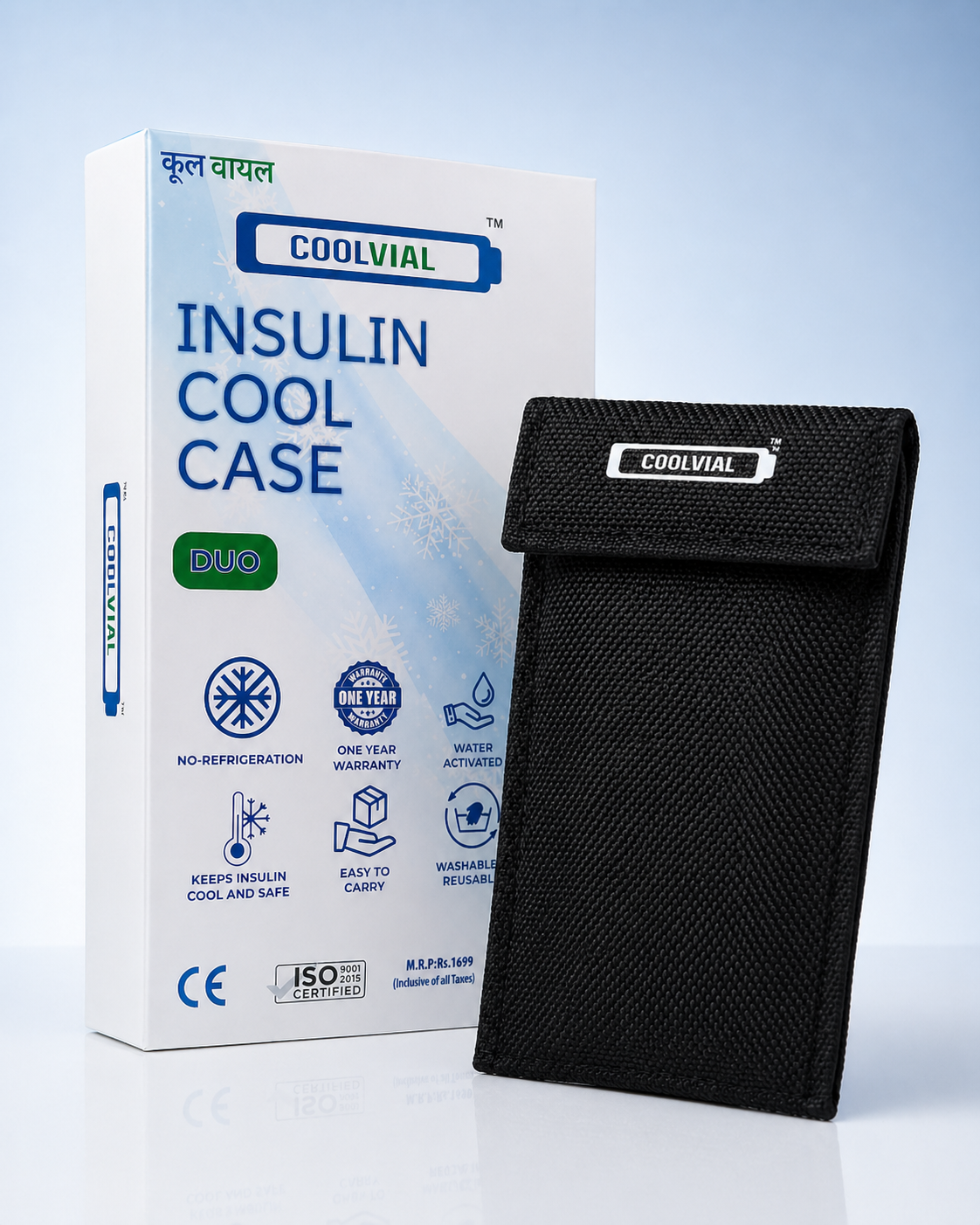
7 Essential Tips: How to Store Insulin in Meerut Summer Heat — A Local's Guide
COOLVIAL keeps insulin safe in India's heat. 48+ hours, no electricity needed.
- Monitor Fridge Temperature: Use a refrigerator thermometer to ensure consistent temperatures between 2-8°C.
- Limit Door Openings: During power cuts, keep the refrigerator door closed as much as possible to retain cold air.
- Backup Cooling for Unopened Vials: For critical unopened insulin, consider a small, insulated icebox with gel packs during prolonged outages, or better yet, a dedicated insulin cooling case that doesn’t rely on electricity.
4. Evaporative Cooling Effectiveness: A Meerut Perspective
Evaporative cooling technology, like that used in the COOLVIAL Duo, offers a reliable, electricity-free solution for how to store insulin. It works by using the natural process of evaporation to draw heat away from the stored insulin. The outer fabric of the case absorbs water, which then evaporates, creating a cooling effect.
-
How COOLVIAL Duo Works:
- Activate: Submerge the inner pouch of your COOLVIAL insulin cool case in water for a few minutes.
- Squeeze: Gently squeeze out excess water.
- Insert: Place your insulin pens and/or vials into the activated pouch.
- Cool: The case will keep your insulin cool (typically 18-26°C) for 12-16 hours, even in ambient temperatures up to 38°C.
-
Effectiveness in Meerut’s Climate:
- Dry Summer (April-June): Evaporative cooling is highly effective during Meerut’s dry summer months. Lower humidity allows for more rapid evaporation, maximizing the cooling effect. This is where COOLVIAL Duo shines, providing consistent cooling even when outdoor temperatures hit 40°C+.
- Monsoon (July-September): During the monsoon, higher humidity can reduce the efficiency of evaporative cooling. While still effective, the cooling duration might be slightly shorter, or the internal temperature might be at the higher end of the 18-26°C range. However, this is still significantly better than ambient room temperatures of 30°C+. For monsoon protection, ensuring the outer case remains dry is key, and COOLVIAL’s multi-layer design helps.
-
COOLVIAL Duo vs. Alternatives:
- COOLVIAL Duo (Rs 1,099 with code COOLHEAL): Holds 2 pens + 1 vial, 12-16 hours cooling, CE certified, ISO 9001:2015, 1-year warranty, Made in India. Excellent for Meerut’s dry summers.
- FRIO (Approx. Rs 1,900): Similar evaporative technology, often pricier.
- Outer Woods OW-12 (Approx. Rs 999): Another cooling case, but capacity and specific cooling duration/certification may vary.
The COOLVIAL Duo offers a robust, affordable, and certified solution for Meerut residents, providing peace of mind against both high ambient temperatures and the unpredictability of power supply. It ensures your in-use insulin remains within its safe temperature range, allowing you to carry on with your day, whether you’re visiting the PVS Mall or commuting through the city.
5. Water Quality Concerns for Insulin Cooling Cases
When activating an evaporative cooling case like COOLVIAL Duo, water quality is an important consideration, especially in Meerut. The city’s water supply, particularly in areas with older infrastructure or reliance on borewells, can sometimes be hard or contain sediments.
-
Hard Water & Mineral Deposits: Hard water, rich in minerals like calcium and magnesium, can leave deposits on the fabric of evaporative cooling pouches over time. These deposits can:
- Reduce Evaporation Efficiency: Clog the pores of the fabric, hindering water absorption and evaporation.
- Cause Staining: Lead to unsightly mineral stains on the case.
- Shorten Lifespan: Gradually degrade the material.
-
Recommendations for Meerut Residents:
- Use Bottled or RO Water: For optimal performance and longevity of your COOLVIAL Duo, especially if you reside in areas known for hard water (e.g., some parts of Mawana Road or older localities), it is highly recommended to use bottled drinking water or water from an RO (Reverse Osmosis) purifier for activation. This minimizes mineral buildup.
- Tap Water with Caution: If using tap water, ensure it is clear and free of visible sediments. If you notice any residue on your case after drying, switch to purified water.
- Regular Cleaning: Periodically, gently rinse the inner pouch with plain water and allow it to air dry completely. Avoid harsh detergents.
By being mindful of water quality, you can ensure your COOLVIAL Duo continues to perform effectively for years, providing reliable cooling for your insulin in Meerut’s demanding climate.
6. Local Storage Realities: Sadar Bazaar vs. Shastri Nagar
Meerut’s diverse neighborhoods present varying living conditions and, consequently, different insulin storage realities.
-
Sadar Bazaar & Begum Bridge Area:
- Characteristics: These are often older, more densely populated commercial-cum-residential areas. Homes might be smaller, with less open space, and often without modern amenities like air conditioning. Shops and homes are often intermingled.
- Challenges: Higher ambient temperatures due to heat trapped between buildings, limited access to stable electricity (more frequent power cuts due to high load), and potentially less access to purified water. People here are often on the move, running businesses or working, requiring portable solutions.
- Storage Reality: Relying solely on a home refrigerator can be risky. Portable, reliable solutions like the COOLVIAL Duo are almost essential for daily use, allowing residents to carry their insulin confidently whether they are at their shop, visiting the Augarnath Temple, or navigating the busy streets.
-
Shastri Nagar / Civil Lines & Mawana Road:
- Characteristics: Generally more affluent, residential areas with wider roads, more green spaces, and a higher prevalence of modern apartments and independent houses. Air conditioning is more common.
- Challenges: While AC provides relief, power cuts still occur, and people still travel. Even with AC, if it’s off for several hours, indoor temperatures can rise rapidly.
- Storage Reality: While home refrigerators might be more stable, the need for safe transport to Anand Hospital (Sastri Nagar) for appointments, or for day trips to places like Hastinapur or Suraj Kund, remains. A cooling case offers freedom and flexibility, ensuring insulin is protected even when away from a stable power source.
Regardless of your neighborhood, the principle of how to store insulin safely remains paramount. While the specific challenges might differ, the solution of a dependable, portable cooling system is universally beneficial across Meerut.
7. Peak Heat & Power Cut Combo: Your Action Plan for May-June
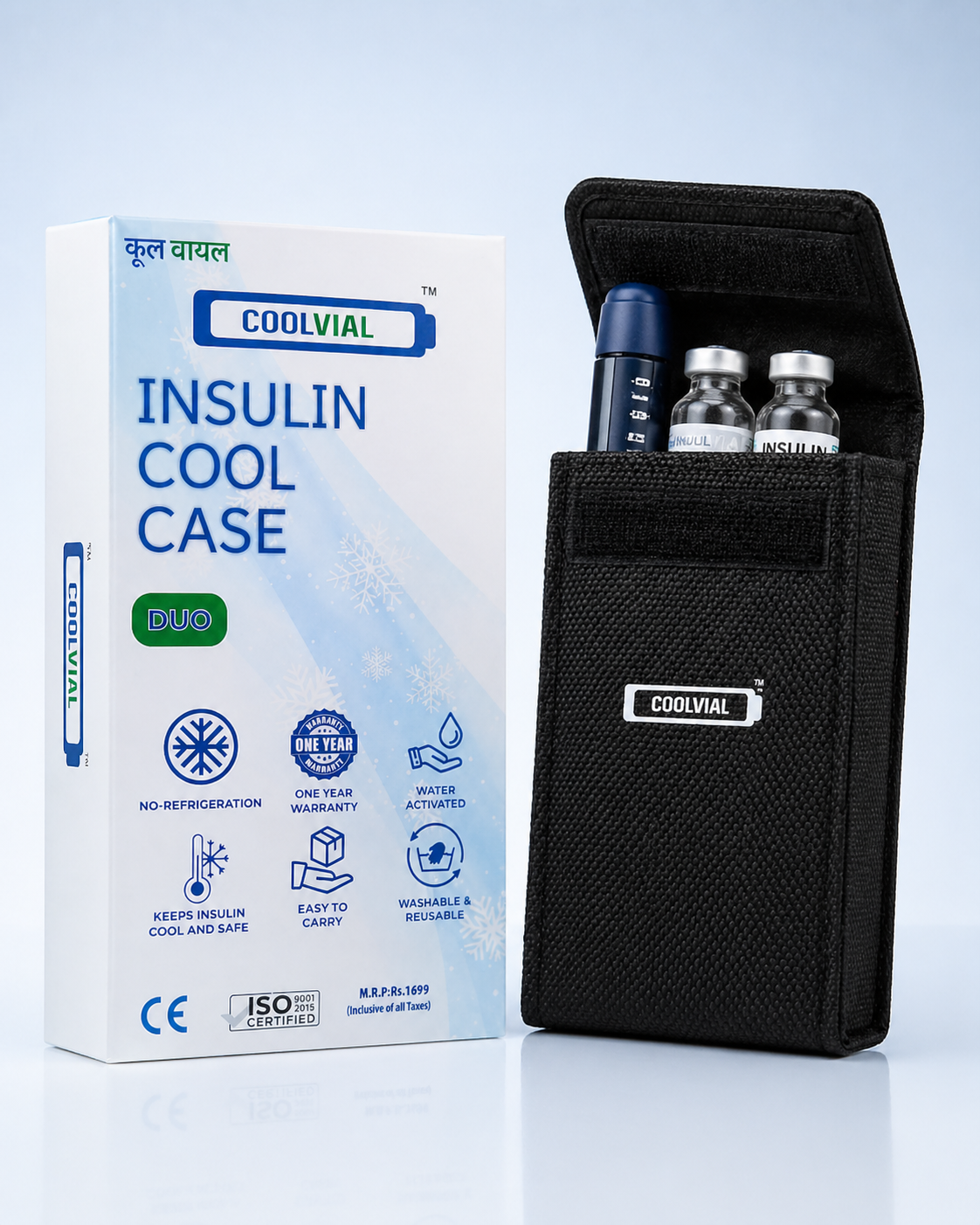
7 Essential Tips: How to Store Insulin in Meerut Summer Heat — A Local's Guide
Insulin at 2-8°C for 48+ hours. Trusted by 10,000+ Indian diabetics.
The months of May and June are historically the harshest in Meerut, with peak temperatures and a higher likelihood of prolonged power cuts. This “combo scenario” is the ultimate test for your insulin storage plan.
Scenario: It’s May, the outdoor temperature is 43°C, your non-AC home is at 37°C, and there’s a 6-hour power cut. What do you do?
Your Action Plan:
-
Prioritize Your COOLVIAL Duo: This is where an evaporative cooling case becomes your primary defense. Ensure your COOLVIAL Duo is always activated and ready.
- Pre-emptive Activation: If you know a power cut is scheduled (check local discom apps/notifications
[Verify in 2026]) or if the heat is particularly intense, activate your COOLVIAL Duo in advance. - Double Check: Before leaving home or during a power cut, ensure the inner pouch feels cool to the touch. Re-activate if needed, using bottled/RO water.
- Pre-emptive Activation: If you know a power cut is scheduled (check local discom apps/notifications
-
Strategic Insulin Placement:
- During Power Cut: Move your in-use insulin (in its COOLVIAL Duo) to the coolest part of your home. This might be a ground-floor room, away from direct sunlight, or near a window with a slight breeze (if the breeze is cooler than stagnant indoor air). Avoid storing it in a car, even for short periods.
- Unopened Vials: If your refrigerator is without power for more than 4-6 hours, consider moving unopened vials into your activated COOLVIAL Duo if space allows, or use a separate icebox with frozen gel packs, ensuring the vials do not directly touch the ice/gel to prevent freezing.
-
Hydration & Monitoring:
- Stay Hydrated: This is crucial for your overall health in the heat, especially when managing diabetes.
- Monitor Blood Sugar: In extreme heat or during power cuts, stress and temperature can affect blood sugar. Monitor your levels more frequently. If you suspect your insulin has been compromised (e.g., changes in appearance, reduced effectiveness), contact your doctor at Anand Hospital (Sastri Nagar) or Subharti Medical College immediately.
-
Consult Your Endocrinologist: Regularly discuss your insulin storage strategy with your doctor. Anand Hospital (Sastri Nagar) and Saket Hospital (Mawana Road) have endocrinology departments that can provide personalized advice based on your specific insulin type and lifestyle. They can also offer guidance on what to do if you suspect insulin damage. For a comprehensive overview of managing diabetes in Meerut, refer to our Complete Diabetes Care Guide for Meerut Residents — 2026 Edition.
This proactive approach, combining reliable tools like the COOLVIAL Duo with informed decision-making, empowers you to confidently manage your insulin storage, even during Meerut’s most challenging summer days.
Frequently Asked Questions (FAQ)
Q: Can I store insulin in a regular thermos flask with ice cubes? A: Storing insulin in a regular thermos flask with ice cubes is not recommended because direct contact with ice can freeze insulin, which renders it ineffective, and temperature control within a thermos is inconsistent, risking both freezing and overheating.
Q: How long can insulin stay out of the fridge in Meerut’s summer without a cooling case? A: Insulin’s safety outside the fridge depends on its specific type and the ambient temperature, but in Meerut’s summer heat (often 33-38°C indoors), in-use insulin should not be left out for more than 1-2 hours, far less than its typical 28-56 day room temperature allowance, as high temperatures rapidly degrade its potency.
Q: Is it safe to carry insulin in my bag when traveling from Meerut to nearby cities like Delhi in summer? A: Carrying insulin in your bag when traveling from Meerut to Delhi in summer is safe only if it is protected by an effective cooling solution like the COOLVIAL Duo, as car interiors and public transport can reach extreme temperatures far exceeding safe storage limits.
Q: What are the visible signs that my insulin might have gone bad due to heat exposure? A: Visible signs that insulin might have gone bad due to heat exposure include changes in appearance such as cloudiness, discoloration, or the presence of particles in clear insulin, or a granular or clumpy appearance in cloudy insulin.
Q: Can I re-refrigerate insulin that has been out in the heat? A: Re-refrigerating insulin that has been out in the heat is permissible if it has remained within its safe temperature range (typically below 25-30°C for in-use insulin) and has not exceeded its specified out-of-fridge duration. However, if you suspect it has been exposed to damaging temperatures, it’s best to discard it and use fresh insulin.
Q: Where can I buy a COOLVIAL Duo in Meerut? A: You can conveniently order the COOLVIAL Duo online directly from coolvial.com, or inquire at local pharmacies like Apollo Pharmacy or MedPlus in areas like Shastri Nagar, though direct online purchase ensures availability and the special offer.
Q: Does evaporative cooling work during Meerut’s monsoon season when humidity is high? A: Evaporative cooling still works during Meerut’s monsoon season, even with high humidity, though its efficiency might be slightly reduced compared to the dry summer, meaning the cooling duration could be shorter or the internal temperature might be at the higher end of the safe range.
Conclusion
Navigating Meerut’s challenging summer climate while managing diabetes demands a proactive and informed approach to insulin storage. From the scorching dry heat of April to June to the humid monsoons, understanding how to store insulin effectively is not just a convenience—it’s a critical aspect of your health management. The persistent high indoor temperatures, coupled with unpredictable power cuts, make traditional storage methods risky.
By adopting strategies like using purified water for activation, understanding the unique climate challenges of your Meerut neighborhood, and having a robust action plan for peak heat scenarios, you can safeguard your insulin’s potency. Products like the COOLVIAL Duo offer an essential, electricity-free solution, keeping your insulin cool and effective for 12-16 hours, providing peace of mind whether you’re at home, at work, or exploring the city. Don’t let Meerut’s heat compromise your health.
Take control of your insulin storage this summer. Order COOLVIAL Duo at Rs 1,099 with code COOLHEAL at coolvial.com or via WhatsApp wa.me/918766952300.
Medical Disclaimer: This article is for general information purposes only and does not constitute medical advice. Always consult your endocrinologist or diabetologist before changing insulin storage or dosing practices.
How We Researched This: This article is based on a comprehensive review of RSSDI guidelines, ICMR-INDIAB data on diabetes prevalence and care in India, local Meerut hospital directories including Anand Hospital (Sastri Nagar), Subharti Medical College, and Saket Hospital (Mawana Road), and insights into local pharmacy networks like Apollo Pharmacy and MedPlus. We also considered typical climate patterns and infrastructure realities specific to Meerut, Uttar Pradesh.