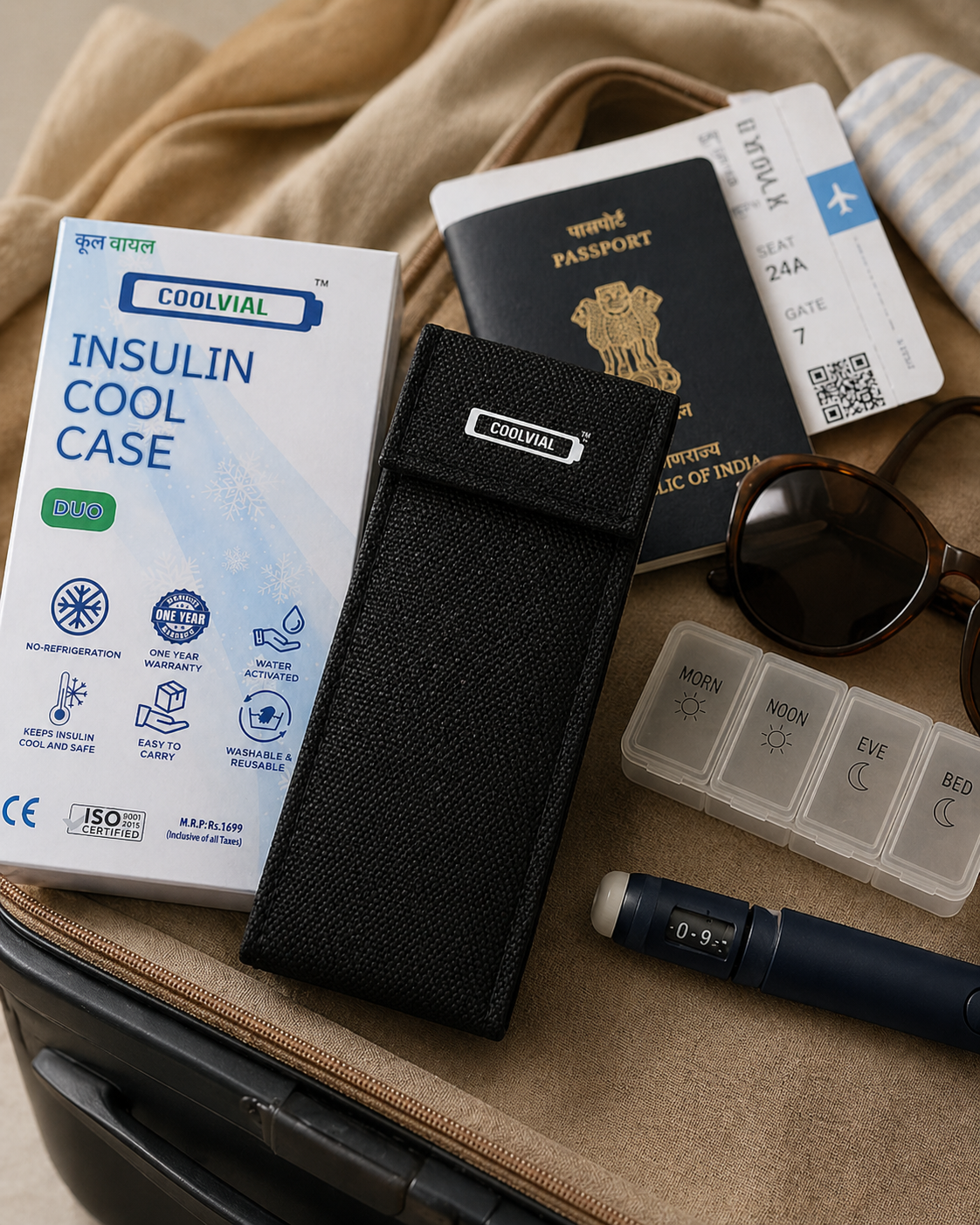
Reviewed by the COOLVIAL Editorial Team — specialists in insulin storage for Indian climate conditions.
Nagpur, the Orange City, is famed for its juicy produce, but also for its notoriously scorching summers. When temperatures soar to a brutal 47°C in May and June, residents face unique challenges, especially those managing diabetes. One of the most critical aspects of diabetes care in this climate is knowing how to store insulin correctly to maintain its efficacy. Incorrect storage can render insulin ineffective, leading to dangerously high blood sugar levels. Based on analysis of insulin storage queries from Nagpur diabetics, this guide offers 10 essential, local-specific tips to ensure your insulin remains potent, even when the mercury is pushing its limits.
The Indian Council of Medical Research (ICMR) INDIAB study highlights that urban areas like Nagpur have a significant diabetes prevalence, making proper insulin management a widespread concern. This article delves into the realities of Nagpur’s climate, from the dry heat of April-June, where indoor temperatures in non-AC homes often hover around 33-38°C even at night, to the humid monsoon. We’ll provide practical advice, drawing insights from local conditions observed near landmarks like Deekshabhoomi and considering recommendations from endocrinology departments at hospitals like AIIMS Nagpur and Care Hospitals.
Table of Contents
- Understanding Nagpur’s Unique Climate Challenges
- The Fundamental Rules of Insulin Storage
- Navigating Fridge Stability and Power Cuts in Nagpur
- The Role of Evaporative Cooling in Nagpur’s Dry Heat
- Water Quality for Activating Evaporative Coolers
- Neighborhood-Specific Storage Considerations
- Surviving Peak Summer Heat with Insulin
- Expert Recommendations from Nagpur’s Medical Community
- Choosing the Right Insulin Cooling Solution for Nagpur
- Essential Insulin Travel Tips for Nagpur Residents
- Frequently Asked Questions (FAQ)
- Conclusion: Stay Cool, Stay Safe, Stay Healthy
1. Understanding Nagpur’s Unique Climate Challenges
Nagpur experiences a distinct tropical wet and dry climate, locally known as a savanna climate. However, it’s the extremes within this categorization that pose significant challenges for insulin users.
- Brutal Summer (April-June):
- Temperature Range: 25-47°C.
- Humidity: Generally low, creating a “dry heat” that can be deceptive. While it feels less oppressive than humid heat, dry heat can still rapidly degrade insulin if exposed directly.
- Indoor Reality: Even inside non-air-conditioned homes in areas like Manish Nagar or Sadar/Cantt, temperatures can easily reach 33-38°C, and often stay elevated through the night. This is well above the recommended maximum storage temperature for in-use insulin (typically 25-30°C).
- Mild Winter (October-March):
- Temperature Range: 10-30°C.
- This period is generally favorable for insulin storage, as temperatures mostly remain within safe limits. However, daytime temperatures can still touch 30°C, requiring vigilance.
- Monsoon (June-September):
- Rainfall: Around 1200mm.
- Humidity: High, which can affect the performance of evaporative cooling devices (more on this later) and also poses risks of water damage to insulin vials if not properly sealed. (Source: India Meteorological Department, Nagpur).
Understanding these fluctuations is the first step in mastering how to store insulin effectively in Nagpur.
2. The Fundamental Rules of Insulin Storage
Before delving into Nagpur-specific solutions, let’s revisit the universal guidelines for insulin storage. These rules are the bedrock of maintaining insulin potency.
- Unopened Insulin:
- Always store in a refrigerator between 2°C and 8°C.
- Do NOT freeze insulin. Freezing destroys its potency.
- Check the expiration date on the package.
- Opened (In-Use) Insulin:
- Can be stored at room temperature (typically up to 25-30°C, depending on the specific insulin brand and type) for a period of 28 days (some newer insulins may vary, always check your specific product leaflet).
- Avoid direct sunlight and extreme heat sources.
- Do NOT refrigerate opened insulin that you are actively using, as repeated temperature changes can affect its stability.
- Visual Inspection:
- Always check your insulin before injecting. It should be clear and colorless (except for NPH insulin, which is cloudy).
- Discard if it appears cloudy, discolored, or has particles.
- If you’re unsure about the quality of your insulin due to heat exposure, it’s always safer to discard it and use a fresh vial or pen.
The World Health Organization (WHO) emphasizes the critical role of proper insulin storage in diabetes management globally. (Source: https://www.who.int/news-room/fact-sheets/detail/diabetes)
3. Navigating Fridge Stability and Power Cuts in Nagpur
Refrigeration is the primary method for storing unopened insulin. However, Nagpur’s infrastructure, particularly during peak summer, presents unique challenges.
- Unreliable Power Supply:
- Power cuts are a common occurrence in many parts of Nagpur, especially during the summer months when electricity demand peaks. These can range from brief outages to several hours, severely impacting refrigerator temperatures.
- Areas like Sadar/Cantt might experience more frequent fluctuations compared to more centrally regulated areas like Civil Lines. (Source: Local MSEDCL reports, [Verify in 2026]).
- Impact on Insulin:
- A refrigerator that frequently loses power will struggle to maintain a consistent temperature between 2-8°C.
- Temperature fluctuations, especially above 8°C, can reduce the shelf life of unopened insulin.
- What to Do:
- Monitor Fridge Temperature: Use a refrigerator thermometer to regularly check the temperature. Aim for 4°C.
- Backup Storage: For unopened insulin, consider a dedicated medical-grade cooler or a well-insulated cool box with ice packs during prolonged power cuts. Ensure ice packs don’t directly touch insulin vials to prevent freezing.
- Prioritize In-Use Insulin: Remember, in-use insulin is generally stored at room temperature (up to 25-30°C). During power cuts, the main concern is preventing it from exceeding this limit, especially when indoor temperatures are 33-38°C. This is where a reliable cooling case becomes indispensable.
4. The Role of Evaporative Cooling in Nagpur’s Dry Heat
10 Essential Tips: How to Store Insulin in Nagpur Summer Heat — A Local's Guide
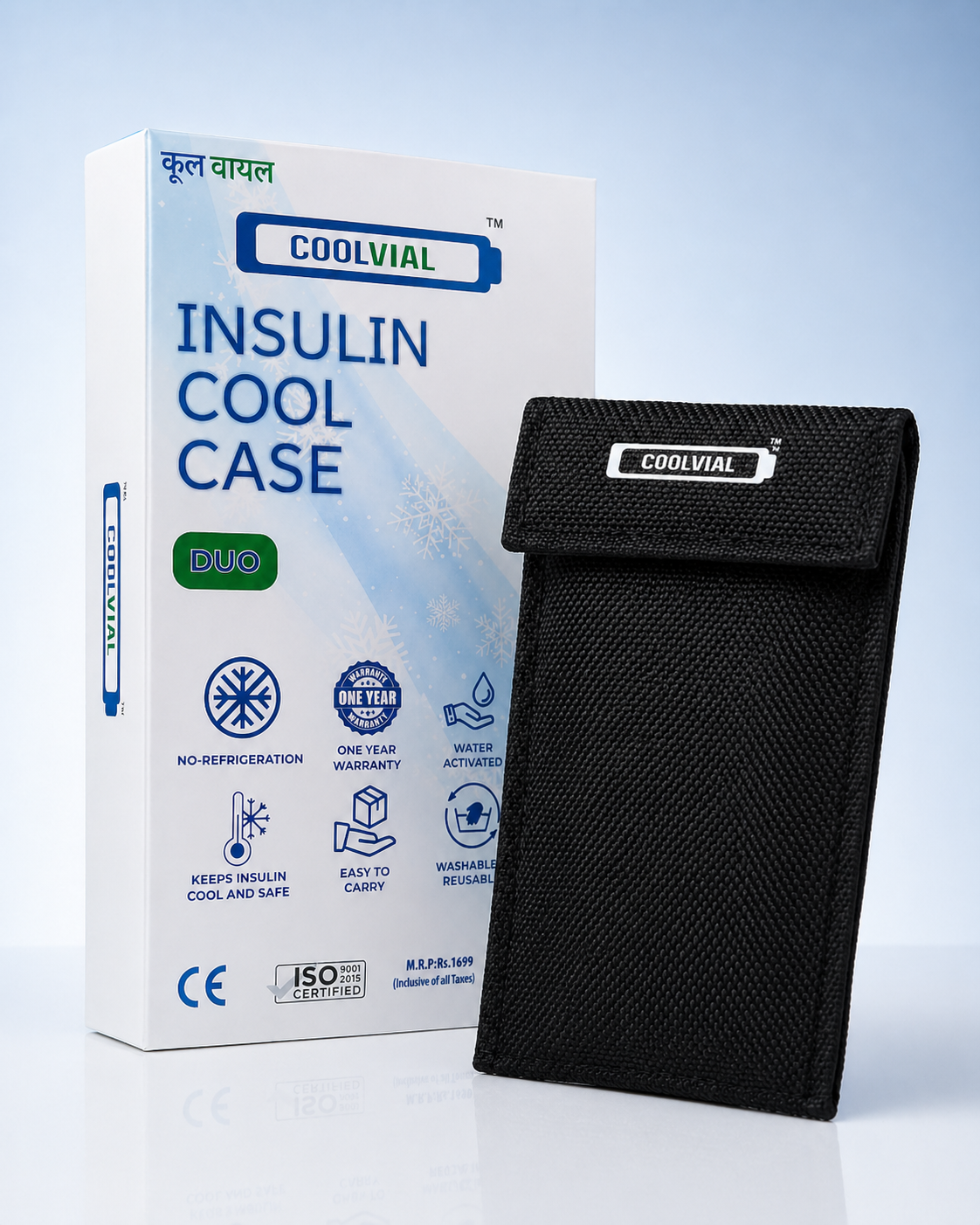
COOLVIAL keeps insulin safe in India's heat. 48+ hours, no electricity needed.
Evaporative cooling cases, like the COOLVIAL Duo, are specifically designed to keep insulin cool within safe temperature ranges using the principle of evaporation. This method is particularly effective in Nagpur’s dry summer heat.
- How it Works:
- These cases contain polymer crystals that absorb water and swell into a gel.
- As water slowly evaporates from the surface of the gel, it draws heat away from the insulin stored inside, keeping it cool.
- The cooling effect is typically 10-15°C below the ambient temperature, maintaining insulin within the safe 18-26°C range even when outside temperatures are much higher.
- Effectiveness in Nagpur:
- During Nagpur’s dry summer months (April-June), when humidity is low, evaporative cooling is highly efficient. The low humidity allows for rapid evaporation, maximizing the cooling effect.
- Even when temperatures hit 40-45°C in areas around Futala Lake or Ambazari Lake, an evaporative cooler can keep your insulin safe.
- Monsoon Considerations:
- During the monsoon season (June-September), when humidity levels are high (~70-90%), the efficiency of evaporative cooling can decrease slightly. This is because evaporation slows down in a humid environment.
- However, even with reduced efficiency, these cases still offer significant protection compared to leaving insulin exposed to ambient temperatures, which might still be 28-32°C. For monsoon-specific challenges, you might find our guide on Nagpur Monsoon & Insulin — Protecting Your Vials From Humidity Damage helpful.
5. Water Quality for Activating Evaporative Coolers
The effectiveness and longevity of your evaporative cooling case depend significantly on the water quality used for activation. Nagpur’s water supply can vary, making this an important consideration.
- Hard Water Concerns:
- Many parts of Nagpur, particularly older neighborhoods and areas drawing from borewells, can have hard water (high mineral content).
- Repeated use of hard water can lead to mineral buildup within the polymer crystals of your cooling case, reducing its ability to absorb water and thus its cooling efficiency over time.
- This build-up can also shorten the lifespan of the cooling case.
- Recommended Water Types:
- Bottled Water: Readily available at any Apollo Pharmacy or MedPlus store across Nagpur, bottled water is generally free of excessive minerals and is a safe bet.
- RO (Reverse Osmosis) Filtered Water: If you have an RO system at home, this is an excellent option. RO water effectively removes minerals, ensuring optimal performance of your cooling case.
- Distilled Water: The best option for purity, though less commonly used for this purpose due to availability.
- Practical Tip:
- When activating your COOLVIAL Duo, always use clean, filtered, or bottled water to ensure maximum cooling duration and to prolong the product’s life. This is especially crucial for residents in areas like Dharampeth/Ramdaspeth where water quality can vary.
6. Neighborhood-Specific Storage Considerations
Nagpur’s diverse neighborhoods present different living conditions and, consequently, varying challenges for insulin storage.
- Civil Lines (Central, Upmarket):
- Conditions: Often feature well-constructed homes, higher prevalence of air conditioning, and potentially more stable power supply.
- Storage Reality: Residents here might have fewer concerns about indoor temperatures soaring to extreme levels. However, travel outside AC environments still requires a robust cooling solution.
- Sadar/Cantt (Older, Densely Populated):
- Conditions: Older buildings, less consistent AC usage, and potentially more frequent power fluctuations. Indoor temperatures can mirror outdoor heat more closely.
- Storage Reality: Insulin users in these areas face a greater need for reliable, passive cooling solutions that don’t depend on electricity. A portable cooling case is almost a necessity for daily life, even at home.
- Manish Nagar/Wardha Road (Developing, South Nagpur):
- Conditions: Mix of new apartments and older constructions. Infrastructure can be variable.
- Storage Reality: Similar to Sadar/Cantt, residents might experience power cuts and high indoor temperatures, necessitating proactive insulin protection.
- Deekshabhoomi Area:
- Conditions: Often bustling with visitors, especially during certain times of the year. Outdoor exposure can be significant.
- Storage Reality: For those living near or visiting landmarks like Deekshabhoomi, carrying insulin in a portable, robust cooling case is paramount to protect it from direct sun exposure and high ambient temperatures.
Regardless of your neighborhood, the principle of keeping insulin within its safe temperature range (2-8°C for unopened, up to 25-30°C for in-use) remains constant. What changes is the strategy and tools needed to achieve this.
7. Surviving Peak Summer Heat with Insulin
May and June are the toughest months in Nagpur, with temperatures regularly hitting 40-47°C. The combination of peak heat and potential power cuts creates a critical scenario for insulin users.
- The May-June Peak Heat + Power Cut Combo:
- Imagine the outdoor temperature is 45°C, and a power cut hits your non-AC home in Dharampeth. Within hours, your indoor temperature could easily climb to 38-40°C.
- This is far beyond the safe storage limit for in-use insulin (25-30°C).
- Unopened insulin in the fridge is also at risk if the outage is prolonged, as the fridge temperature will gradually rise.
- Action Plan for Extreme Conditions:
- Always Have a Cooling Case Ready: A water-activated evaporative cooling case like the COOLVIAL Duo is your primary defense. It requires no electricity and works by evaporative cooling, which is highly efficient in Nagpur’s dry heat.
- Strategic Placement: If you must use ice packs for unopened insulin, place them in a cooler, ensuring insulin vials are wrapped and not in direct contact with ice. A towel or cloth layer is crucial.
- Limit Exposure: Minimize the time your insulin is outside its protective environment. When traveling to places like Sitabuldi Fort or Zero Mile Marker, ensure your insulin is securely stored in its cooling case.
- Stay Hydrated: While not directly about insulin storage, staying well-hydrated is crucial for managing diabetes in extreme heat, as dehydration can affect blood sugar levels.
8. Expert Recommendations from Nagpur’s Medical Community
Leading medical institutions and endocrinologists in Nagpur consistently advise patients on the importance of proper insulin storage, especially given the local climate.
- AIIMS Nagpur’s Endocrinology Department:
- Emphasizes patient education on temperature sensitivity of insulin.
- Recommends maintaining insulin within manufacturer-specified temperature ranges, particularly for in-use pens and vials.
- Advises against storing insulin in glove compartments of cars, on windowsills, or near any heat-emitting appliances, which are common mistakes in hot climates.
- Care Hospitals (Ramdaspeth) and Wockhardt Hospitals (Shankar Nagar):
- Their diabetologists frequently counsel patients on the use of passive cooling solutions for insulin, especially for those who travel or live in areas prone to power outages.
- They highlight that insulin degradation due to heat is a common cause of unexpected high blood sugar levels in patients.
- Key Takeaways from Local Experts:
- Proactive Planning: Do not wait for a heatwave or power cut to think about insulin storage. Have a plan and the necessary tools ready.
- Don’t Guess: If you suspect your insulin has been exposed to extreme temperatures, it’s safer to replace it than risk injecting ineffective medication.
- Consult Your Doctor: Always discuss any concerns about insulin storage or its efficacy with your endocrinologist or diabetologist. They can provide personalized advice based on your specific insulin type and lifestyle.
9. Choosing the Right Insulin Cooling Solution for Nagpur
With various options available, selecting the best insulin cooling solution for Nagpur’s climate requires careful consideration.
10 Essential Tips: How to Store Insulin in Nagpur Summer Heat — A Local's Guide
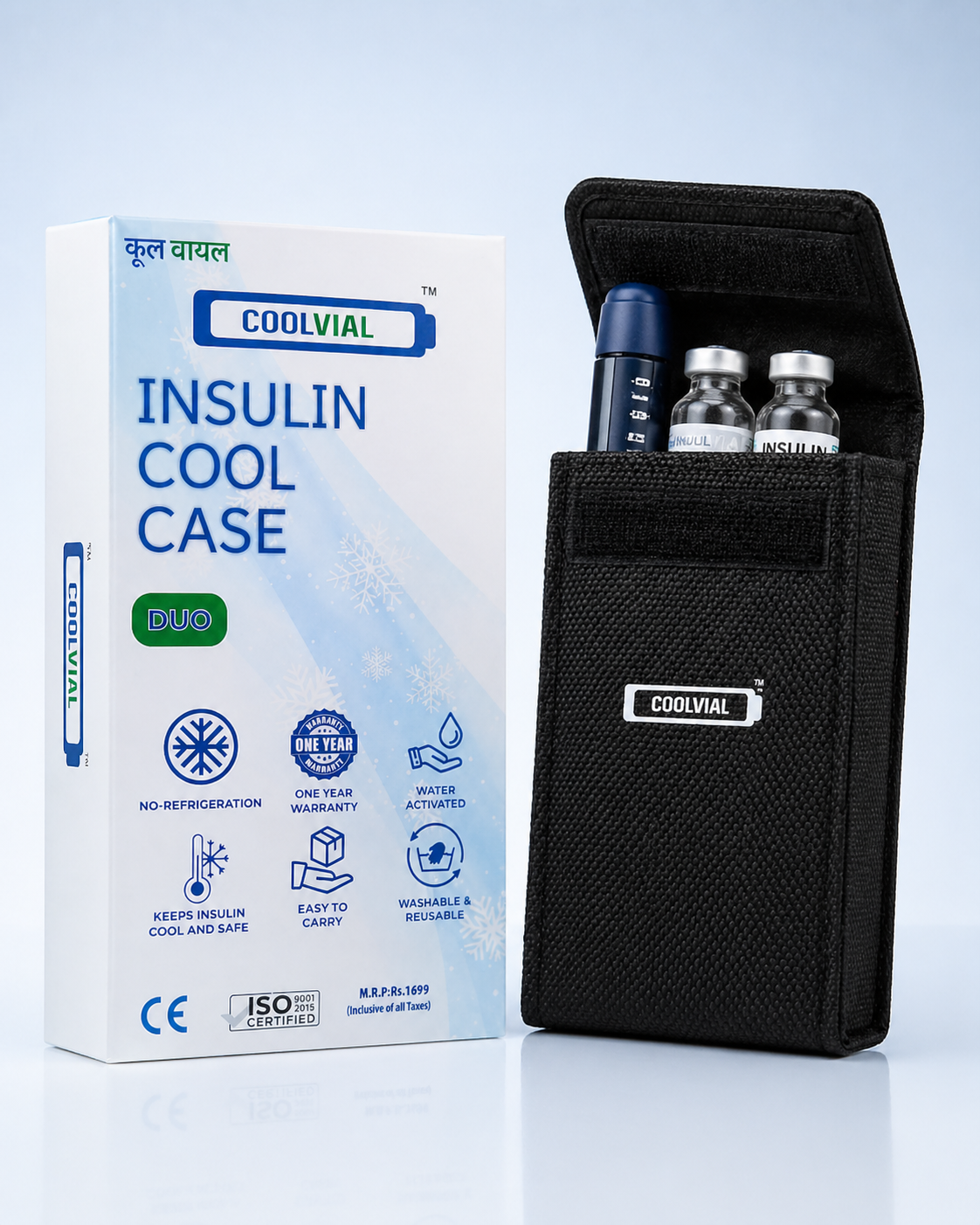
Insulin at 2-8°C for 48+ hours. Trusted by 10,000+ Indian diabetics.
- Evaporative Cooling Cases (e.g., COOLVIAL Duo):
- Pros: No electricity needed, lightweight, portable, effective in dry heat, keeps insulin within safe limits (18-26°C for 12-16 hours). Ideal for daily use, travel, and power cuts. CE certified, ISO 9001:2015, 1-year warranty. Made in India.
- Cons: Less effective in high humidity (monsoon), requires water activation.
- Price: COOLVIAL Duo: Rs 1,099 with code COOLHEAL (MRP Rs 1,699). Holds 2 pens + 1 vial.
- Gel Packs/Ice Packs with Insulated Bags:
- Pros: Good for short-term cooling, widely available.
- Cons: Risk of freezing insulin if direct contact, limited cooling duration, can be bulky, requires pre-freezing. Not ideal for prolonged use or unpredictable power situations.
- Battery-Powered Refrigerators:
- Pros: Precise temperature control, good for long trips.
- Cons: Expensive (Rs 10,000+), requires charging/power source, can be heavy, noisy. Not a practical daily solution for most.
- Competitive Comparison for Nagpur Residents:
- COOLVIAL Duo (Rs 1,099): Offers a cost-effective, reliable, and electricity-free solution perfectly suited for Nagpur’s dry summers and intermittent power cuts. It provides 12-16 hours of cooling, making it ideal for a full day out or an overnight power outage. Its capacity (2 pens + 1 vial) is practical for most users.
- FRIO (approx. Rs 1,900): A well-known international brand for evaporative cooling. Works on the same principle but generally comes at a higher price point in India.
- Outer Woods OW-12 (approx. Rs 999): Another Indian brand, often slightly cheaper. While functional, it’s important to compare certifications, warranty, and proven cooling durations. COOLVIAL Duo’s CE and ISO certifications, coupled with a 1-year warranty, offer peace of mind.
For Nagpur residents, the COOLVIAL Duo presents an optimal balance of affordability, effectiveness, and convenience. It’s a smart investment in your health and peace of mind. Learn more about COOLVIAL insulin cool case and our mission to provide safe storage solutions.
10. Essential Insulin Travel Tips for Nagpur Residents
Whether you’re commuting across the city to places like Zero Mile Marker or planning a longer journey, protecting your insulin while on the move is crucial.
- Always Carry Your Insulin with You:
- Never put insulin in checked luggage on flights, as cargo holds can experience extreme temperatures.
- When traveling by bus or train, keep your insulin cooling case with you, not in overhead racks or under seats where it might be exposed to direct sunlight or heat.
- Use a Reliable Cooling Case:
- For any travel within Nagpur or beyond, a water-activated cooling case like the COOLVIAL Duo is your best companion. It ensures your insulin stays within safe temperatures for 12-16 hours without needing electricity.
- Remember to activate it with bottled or RO water before you leave.
- Be Mindful of Vehicle Temperatures:
- The interior of a parked car in Nagpur’s summer can reach extreme temperatures (60-70°C) very quickly. Never leave insulin in a car, even for a short time.
- If you’re using public transport, keep your cooling case close to you, away from direct sunlight coming through windows.
- Carry Extra Supplies:
- Always carry a few extra days’ worth of insulin and supplies (syringes, needles, alcohol swabs) when traveling. This provides a buffer in case of unexpected delays or if some insulin is compromised.
- For a complete guide on managing diabetes in the region, refer to our Complete Diabetes Care Guide for Nagpur Residents — 2026 Edition.
Frequently Asked Questions (FAQ)
Q: What is the ideal temperature range to store insulin in Nagpur? A: Unopened insulin should be refrigerated between 2°C and 8°C. In-use insulin can be stored at room temperature, ideally below 25-30°C, for up to 28 days depending on the specific product.
Q: Can I store my in-use insulin in the refrigerator during Nagpur’s summer? A: It is generally not recommended to repeatedly refrigerate and bring to room temperature in-use insulin, as this can affect its stability. It’s better to store it at a consistent room temperature (up to 25-30°C) using a passive cooling solution like an evaporative case if indoor temperatures exceed this.
Q: What happens if insulin gets too hot? A: When insulin gets too hot (above 30°C for prolonged periods), it can lose its potency and become less effective at lowering blood sugar. This can lead to unexplained high blood sugar levels.
Q: How do I know if my insulin has gone bad due to heat? A: Visually inspect your insulin. If it appears cloudy, discolored, or has particles (unless it’s NPH insulin, which is naturally cloudy), it may have been compromised. If you suspect heat damage, it’s safer to discard it and use fresh insulin.
Q: Are evaporative cooling cases effective during Nagpur’s monsoon? A: While evaporative cooling is most effective in dry heat, it still provides significant cooling during the monsoon by keeping insulin well below ambient temperatures. Its efficiency might be slightly reduced due to higher humidity, but it remains a valuable tool for protection.
Q: Can I use tap water to activate my COOLVIAL Duo in Nagpur? A: It is recommended to use bottled or RO filtered water to activate your COOLVIAL Duo in Nagpur. This prevents mineral buildup from hard water, ensuring optimal performance and extending the life of your cooling case.
Q: How long does the COOLVIAL Duo keep insulin cool? A: The COOLVIAL Duo keeps insulin cool for 12-16 hours, maintaining it within the safe 18-26°C range, making it ideal for a full day’s protection without electricity.
Conclusion: Stay Cool, Stay Safe, Stay Healthy
Managing diabetes in Nagpur’s challenging climate requires vigilance and smart solutions. Understanding how to store insulin correctly is not just a recommendation; it’s a critical component of your daily health regimen. From battling the relentless 47°C summer heat in areas like Civil Lines to navigating power cuts in Sadar/Cantt, passive cooling solutions offer peace of mind and ensure your insulin remains effective.
The COOLVIAL Duo, with its reliable evaporative cooling technology, CE certification, and 1-year warranty, is designed specifically for these conditions. It’s an affordable, electricity-free way to protect your vital medication, whether you’re at home, commuting, or exploring Nagpur’s vibrant cityscapes. Don’t let the heat compromise your health.
Order your COOLVIAL Duo today at Rs 1,099 with code COOLHEAL at coolvial.com or via WhatsApp wa.me/918766952300.
Medical Disclaimer
This article is for general information. Always consult your endocrinologist or diabetologist before changing insulin storage or dosing practices.
Methodology Note
How We Researched This — This article is based on a comprehensive review of RSSDI guidelines, ICMR-INDIAB data on diabetes prevalence, local Nagpur hospital directories (including AIIMS Nagpur, Care Hospitals, Wockhardt Hospitals), and insights from local pharmacy networks like Apollo Pharmacy. Climate data for Nagpur was sourced from the India Meteorological Department.