
Reviewed by the COOLVIAL Editorial Team — specialists in insulin storage for Indian climate conditions.
Pune, the ‘Oxford of the East,’ is renowned for its pleasant weather, a welcome respite from the extreme temperatures found in many other Indian cities. With a climate that typically ranges from a cool 12°C in winter to a moderate 38°C in summer, it’s easy to assume that storing insulin here is less of a concern. However, this mildness can be deceptive. While the city avoids the scorching heat of Delhi or the intense humidity of Mumbai for most of the year, understanding how to store insulin correctly in Pune is still critical for maintaining its efficacy and your health. Based on analysis of insulin storage queries from Pune diabetics, many local residents face unique challenges, from heat buildup in parked cars to unexpected humidity during the monsoon. Unopened insulin requires refrigeration between 2-8°C, while an in-use pen or vial can be stored at room temperature, typically below 25-30°C, for up to 28 days. Failing to adhere to these guidelines can lead to a significant loss of potency, potentially affecting your blood sugar management.
Table of Contents
- Understanding Pune’s Unique Climate & Insulin Needs
- The Hidden Heat Traps: Cars, Commutes, and Pune’s IT Corridors
- Home Storage Habits: Apartments in Central & West Pune
- Navigating Pune’s Monsoon: Humidity is the Silent Threat
- Weekend Getaways & Day Trips: Lonavala, Khandala & Beyond
- Expert Advice from Pune’s Healthcare Community
- Choosing the Right Insulin Cooling Solution for Pune
- Practical Tips for Insulin Management in Pune’s Daily Life
- Frequently Asked Questions (FAQ)
- Conclusion: Smart Storage for a Healthier Pune Life
1. Understanding Pune’s Unique Climate & Insulin Needs
Pune’s salubrious climate, characterized by warm, moderate summers and cool, dry winters, often gives a false sense of security regarding insulin storage. The average annual temperature hovers around 25°C, making it tempting to be less vigilant. However, insulin is a delicate protein that degrades rapidly when exposed to temperatures outside its recommended range.
- Unopened Insulin: Must be refrigerated between 2°C and 8°C. Freezing it can also destroy its efficacy.
- Opened/In-Use Insulin: Can be stored at room temperature (below 25-30°C) for up to 28 days, depending on the specific type. Check your insulin’s package insert for precise instructions.
The Indian Council of Medical Research (ICMR) highlights that diabetes prevalence is rising across India, making proper insulin storage a nationwide concern, including in cities like Pune where an estimated 11.4% of the urban population lives with diabetes (Source: ICMR-INDIAB Study, 2021, https://icmr.gov.in/guidelines_diabetes.html). This underscores the importance of understanding how to store insulin effectively, even in seemingly mild conditions.
Here’s a quick overview of Pune’s climate and its implications for insulin:
| Season | Typical Temperature Range | Insulin Storage Consideration |
|---|---|---|
| Winter | 12°C - 28°C | Generally safe for in-use insulin, but ensure it doesn’t get too cold if kept near windows at night. Unopened still needs refrigeration. |
| Summer | 25°C - 38°C | Moderate heat, but can easily exceed 30°C indoors or in vehicles. Direct sunlight is a major risk. A portable cooler like COOLVIAL Duo becomes essential for outdoor activities. |
| Monsoon | 22°C - 30°C | Temperatures might seem acceptable, but high humidity (often 70-90%) poses a significant risk. Moisture can damage insulin pens/vials and cooling cases. Refer to our detailed guide on Pune Monsoon & Insulin — Smart Storage During the Rainy Season. |
2. The Hidden Heat Traps: Cars, Commutes, and Pune’s IT Corridors
Pune’s moderate climate is often cited as a reason for its popularity, especially among IT professionals. However, this pleasant exterior hides significant dangers for insulin. Daily commutes, even short ones, can expose insulin to damaging temperatures.
- Parked Cars: On a seemingly mild 28°C day in Pune, the interior of a parked car can quickly soar to 35-40°C within minutes, and even higher if left for an extended period in direct sunlight. This applies whether you’re parked at Phoenix MarketCity Viman Nagar for shopping, at FC Road for an evening out, or near your office in Hinjewadi. These temperatures are well above the safe limit for in-use insulin.
- PMPML Buses & Auto-Rickshaws: While air-conditioned options are available, many rely on regular PMPML buses or auto-rickshaws. These modes of transport often lack temperature control, exposing insulin to ambient heat and humidity, especially during peak hours.
- IT Corridor Commutes: Thousands commute daily from neighborhoods like Aundh, Baner, Wakad, and Kothrud to IT hubs in Hinjewadi and Kharadi. Carrying insulin pens all day in bags, backpacks, or even shirt pockets can lead to prolonged exposure to fluctuating temperatures, particularly if you’re out for 10-12 hours.
For these daily scenarios, a reliable cooling solution is non-negotiable. Traditional methods like ice packs can be cumbersome and risk freezing insulin, while simple insulated bags offer limited protection. This is where specialized solutions like the COOLVIAL insulin cool case prove invaluable.
Consider these scenarios:
- Scenario 1: Office Commute
- Problem: Insulin pen kept in a laptop bag for 8-10 hours, exposed to varying outdoor and indoor temperatures.
- Risk: Gradual degradation of insulin potency over time.
- Solution: A portable cooling case that maintains a stable temperature.
- Scenario 2: Shopping Trip
- Problem: Leaving insulin in a car parked at Phoenix MarketCity Viman Nagar for a few hours.
- Risk: Rapid temperature spike inside the car, potentially rendering insulin ineffective within an hour.
- Solution: Always carry your insulin with you in a reliable cooler, or ensure it’s in a safe, temperature-controlled environment.
3. Home Storage Habits: Apartments in Central & West Pune
Even within the comfort of your home in areas like Camp, MG Road, Koregaon Park, Aundh, or Baner, proper insulin storage requires attention. Many Pune residents, especially those working from home, might become complacent about fridge habits or ambient room temperatures.
- Refrigerator Habits:
- Placement: Store unopened insulin in the main compartment of your refrigerator, never in the door (which has fluctuating temperatures) or too close to the freezer compartment (risk of accidental freezing).
- Power Cuts: While Pune generally has reliable electricity, occasional power outages can occur, especially during the monsoon. Ensure your insulin is in a well-insulated part of the fridge and avoid opening the door frequently during power cuts.
- Temperature Monitoring: Regularly check your refrigerator’s temperature with a thermometer to ensure it stays between 2-8°C.
- Work-From-Home (WFH) & In-Use Insulin:
- With many Pune professionals continuing to work remotely, the distinction between “refrigerated” and “room temperature” insulin can blur.
- In-use pens/vials can be kept at room temperature (below 25-30°C) for up to 28 days.
- However, if your home office or living area (especially in older apartments in Central Pune or sun-facing flats in West Pune) regularly exceeds 25-30°C, then even in-use insulin needs protection.
- Tip: Avoid placing insulin near windows, electronic devices that generate heat, or in direct sunlight.
- Apartment Specifics:
- Central Pune (Camp/MG Road/Koregaon Park): Often features older buildings with thicker walls that might offer better insulation, but also smaller rooms that can heat up quickly without proper ventilation.
- West Pune (Aundh/Baner/Wakad): Newer high-rises can have large windows that allow significant sun exposure, leading to higher indoor temperatures, especially in summer afternoons. Air conditioning helps but isn’t always on.
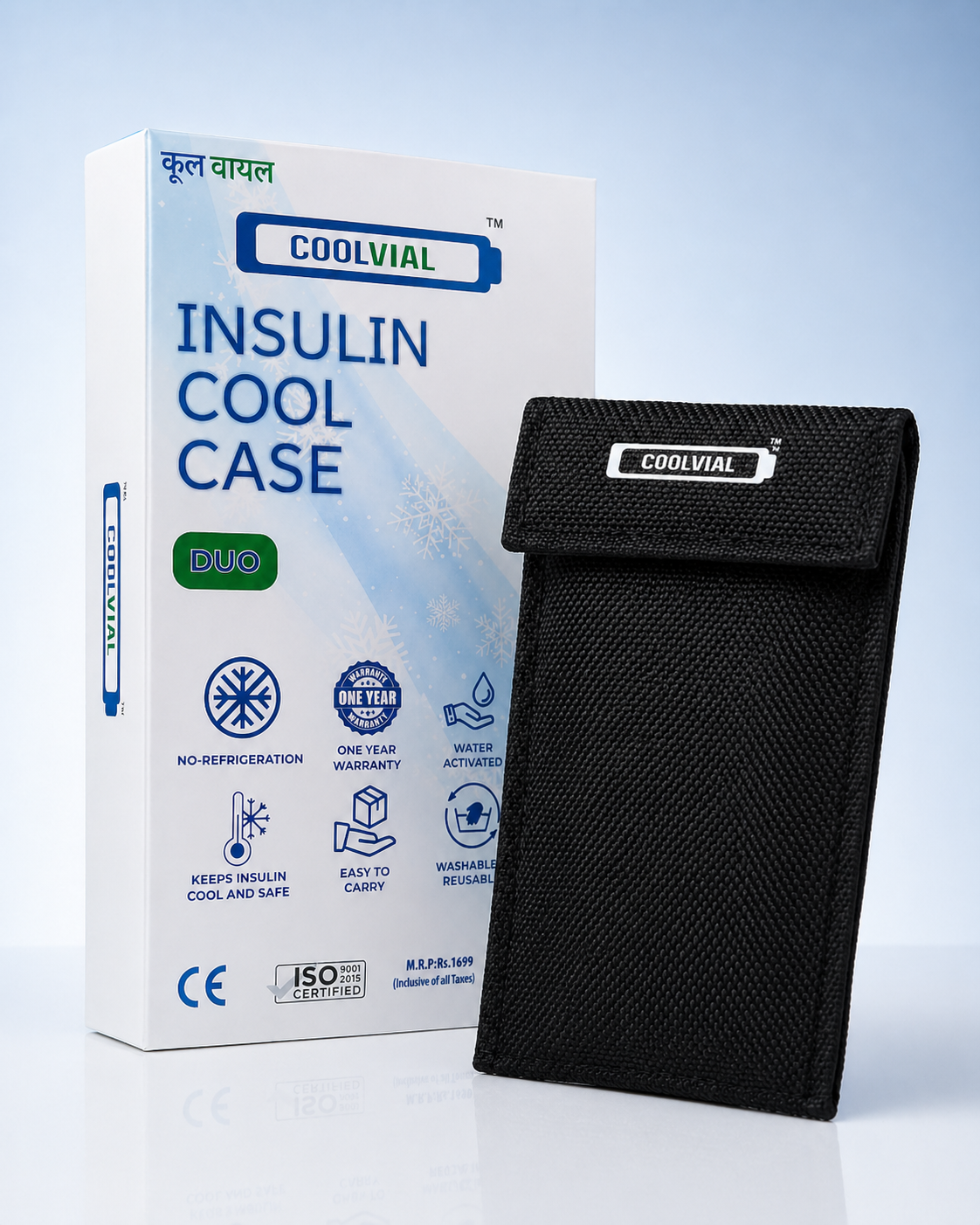
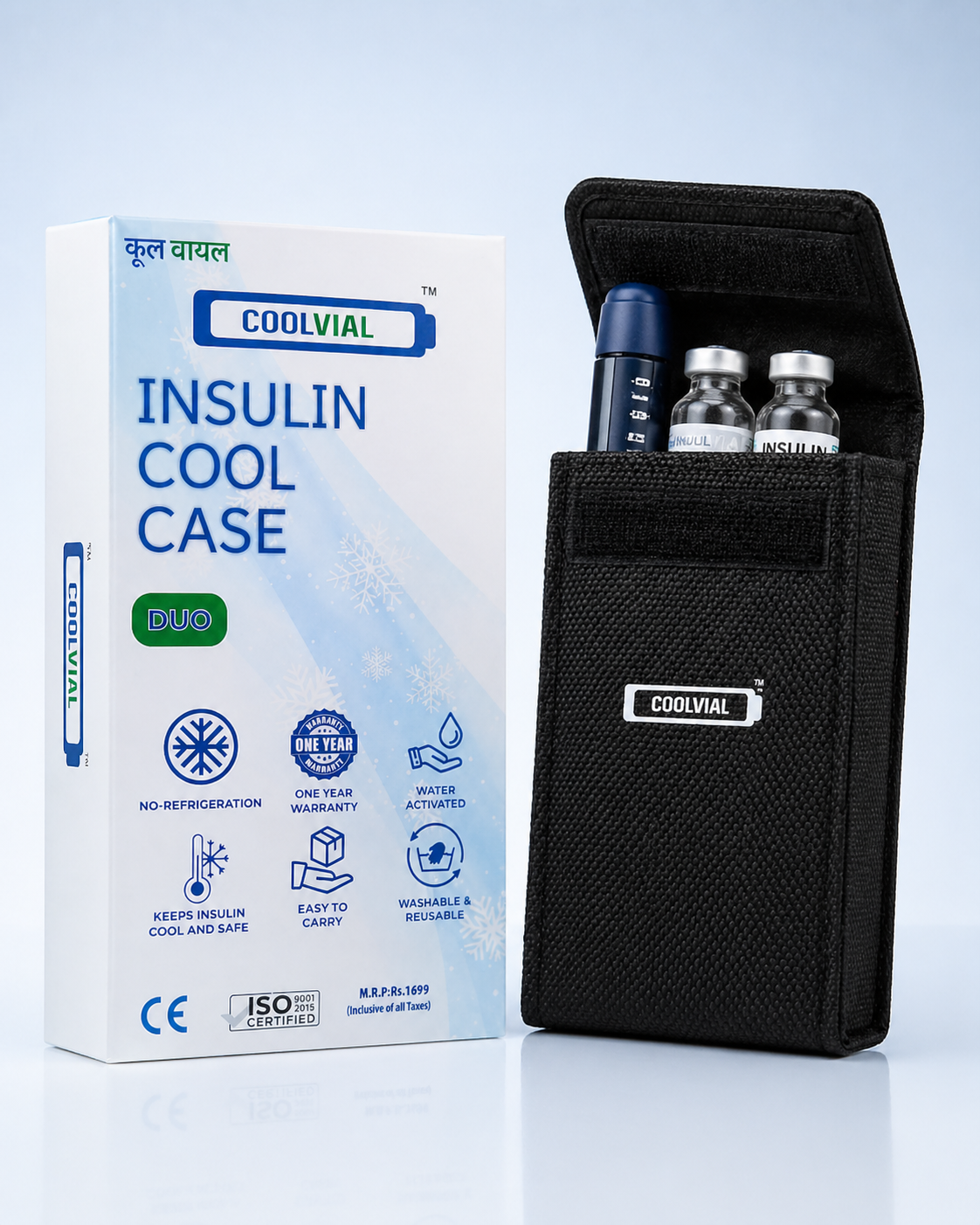
For those moments when your in-use insulin pen needs to be readily accessible but protected from ambient heat, a personal cooling solution is ideal. The COOLVIAL Duo, designed to hold 2 pens + 1 vial, is perfectly suited for keeping your daily dose safe and within reach without the need for a fridge.
How to Store Insulin in Pune's Mild Year-Round Climate — 7 Essential Tips for Locals
Insulin at 2-8°C for 48+ hours. Trusted by 10,000+ Indian diabetics.
4. Navigating Pune’s Monsoon: Humidity is the Silent Threat
Pune experiences its Southwest Monsoon from June to September, bringing an average rainfall of ~700mm. While these rains cool down the summer heat, they introduce a new challenge for insulin storage: high humidity.
- Impact of Humidity:
- Insulin Pens & Vials: While humidity doesn’t directly degrade insulin’s chemical structure as quickly as heat, prolonged exposure to high moisture can damage the pen’s electronic components, the rubber stopper of vials, or even lead to condensation inside cooling cases if not properly managed.
- Cooling Cases: Evaporative coolers like COOLVIAL Duo rely on evaporation to cool. In extremely high humidity (above 70-80%), the rate of evaporation slows down, slightly reducing their cooling efficiency. However, they still offer significant protection compared to ambient temperatures.
- Specific Monsoon Challenges:
- Indoor Dampness: Homes in areas like Kothrud or Sinhagad Road, known for their greenery, might experience higher indoor humidity.
- Travel: Commuting during monsoon means insulin is exposed to both ambient heat and heavy moisture, increasing the risk of damage.
- Mold/Mildew: While less common for insulin itself, high humidity can promote mold growth on storage materials or bags if not kept dry.
To effectively manage insulin during Pune’s rainy season, it’s crucial to take proactive steps. We have a dedicated resource for this: Pune Monsoon & Insulin — Smart Storage During the Rainy Season.
Key monsoon storage tips:
- Use a Water-Activated Cooler: Even if cooling efficiency is slightly reduced, these coolers still maintain temperatures significantly below ambient, offering vital protection.
- Keep It Dry: After activating your COOLVIAL Duo, wipe away any excess water from its exterior. Store it in a breathable bag rather than a sealed plastic one to prevent moisture buildup.
- Monitor Insulin Appearance: During monsoon, pay extra attention to your insulin. If it appears cloudy, discolored, or has particles, do not use it.
- Pharmacy Access: Be aware of local pharmacies like Apollo Pharmacy, Wellness Forever, MedPlus, Noble Plus, or Pristine in your neighborhood (e.g., Hadapsar, Magarpatta, Erandwane) for emergency insulin supply, should your current batch be compromised by improper storage.
5. Weekend Getaways & Day Trips: Lonavala, Khandala & Beyond
Pune residents cherish their weekend escapes to nearby hill stations like Lonavala and Khandala, or quick trips to destinations like Mahabaleshwar. These 2-day getaways, while refreshing, often pose overlooked challenges for insulin storage.
- Temperature Fluctuations: Even if the hill station climate feels cooler, transport in cars or buses can expose insulin to heat. Furthermore, hotel rooms may not always offer reliable refrigeration or maintain consistent room temperatures, especially if you step out for sightseeing.
- Lack of Refrigeration: Staying in homestays or budget hotels might mean no mini-fridge in the room. Relying on shared hotel refrigerators can be risky due to inconsistent temperatures or accidental freezing/misplacement.
- Outdoor Activities: Trekking, sightseeing at Karla Caves, or enjoying chikki in Lonavala means your insulin will be with you, exposed to the elements.
Why a Cooler is Essential for Short Trips:
- Consistent Cooling: A water-activated cooler like the COOLVIAL Duo provides 12-16 hours of cooling without electricity, making it perfect for day trips and overnight stays. You just need a little water to reactivate it.
- Portability: Its compact design allows you to carry 2 pens and 1 vial conveniently, whether you’re hiking in the hills or exploring tourist spots.
- Peace of Mind: Knowing your insulin is protected from heat gives you the freedom to enjoy your getaway without constant worry.
Consider how the COOLVIAL Duo compares to other options for travel:
| Feature | COOLVIAL Duo (Rs 1,099 with COOLHEAL) | FRIO (Approx. Rs 1,900) | Outer Woods OW-12 (Approx. Rs 999) |
|---|---|---|---|
| Cooling Method | Water-activated evaporative | Water-activated evaporative | Gel pack/ice pack (passive) |
| Cooling Duration | 12-16 hours | Up to 45 hours | 6-8 hours |
| Capacity | 2 pens + 1 vial | Varies, often 1-2 pens | Varies, often 1-2 pens |
| Electricity Req. | No | No | No |
| Reusability | Yes (many years) | Yes (many years) | Yes (gel pack needs refreezing) |
| Made in India | Yes | No | Yes |
While FRIO offers longer cooling, COOLVIAL Duo provides a cost-effective, Made-in-India solution perfectly adequate for Pune’s climate and typical 1-2 day trips, at nearly half the price. Outer Woods is cheaper but requires a freezer, which isn’t always available on the go.
6. Expert Advice from Pune’s Healthcare Community
Pune boasts excellent healthcare facilities, and local diabetologists and endocrinologists consistently emphasize the importance of proper insulin storage. Hospitals like Ruby Hall Clinic (Sassoon Road), Deenanath Mangeshkar Hospital (Erandwane), and Jehangir Hospital (Sassoon Road) provide invaluable guidance to their patients.
- Ruby Hall Clinic’s Stance: According to discussions with healthcare professionals at Ruby Hall Clinic, maintaining the cold chain for insulin is paramount. They advise patients to:
- Always store unopened insulin in a refrigerator at 2-8°C.
- Never allow insulin to freeze.
- Avoid direct sunlight and extreme heat (above 30°C) for in-use insulin.
- Use an insulated cooling device for travel or when ambient temperatures are high.
- Discard insulin if it looks cloudy, discolored, or if you suspect it has been exposed to improper temperatures.
- Pharmacy Guidance: Pharmacists at popular chains like Apollo Pharmacy, Wellness Forever (especially common in Pune), MedPlus, and Noble Plus are trained to provide basic insulin storage advice. When you pick up your insulin from these outlets, always ensure it is handed to you from a refrigerated unit and ask about specific storage requirements for that brand.
- Regular Consultations: Regular follow-ups with your endocrinologist or diabetologist are crucial. They can assess your insulin’s effectiveness and adjust your dosage if there are concerns about its potency, potentially linked to storage issues.
These guidelines from Pune’s trusted medical institutions reinforce the need for diligent storage practices, especially for a life-saving medication like insulin. For a comprehensive overview of diabetes management in the city, check out our Complete Diabetes Care Guide for Pune Residents — 2026 Edition.
How to Store Insulin in Pune's Mild Year-Round Climate — 7 Essential Tips for Locals
7. Choosing the Right Insulin Cooling Solution for Pune
Given Pune’s varied climate conditions – from moderate summers to humid monsoons and the constant risk of localized heat exposure – selecting the right insulin cooling solution is vital. Your choice should balance efficacy, convenience, and cost.
- Factors to Consider:
- Cooling Duration: How long do you need your insulin to stay cool without external power? For daily commutes or 2-day trips, 12-16 hours is often sufficient.
- Portability: Is it compact enough to carry in your bag without being cumbersome?
- Activation Method: Do you prefer water-activated, gel pack (requires freezer), or battery-powered options?
- Capacity: How many pens or vials do you need to carry?
- Durability & Certifications: Is it built to last, and does it meet safety standards?
The COOLVIAL Duo is specifically designed for the Indian climate and offers an excellent balance of these factors for Pune residents:
- Water-Activated Evaporative Cooling: Simply soak the inner pouch in cold water for a few minutes. The crystals absorb the water, forming a gel that cools through evaporation. This means no electricity, no ice packs, and no refrigeration needed for activation.
- Optimal Duration: Provides 12-16 hours of cooling, ideal for a full day of work, a long commute, or a short overnight trip.
- Convenient Capacity: Holds 2 insulin pens and 1 insulin vial, covering the needs of most users.
- Certified & Made in India: CE certified and ISO 9001:2015 compliant, ensuring quality and safety. Proudly made in India, supporting local manufacturing.
- Cost-Effective: Priced at Rs 1,099 with code COOLHEAL (MRP Rs 1,699), it offers significant value compared to imported alternatives like FRIO (which typically cost around Rs 1,900) while outperforming simpler passive coolers like Outer Woods OW-12 (around Rs 999, but requires freezing gel packs).
For specific insulin storage tips applicable to various scenarios, you can also visit our insulin storage tips page.
8. Practical Tips for Insulin Management in Pune’s Daily Life
Integrating smart insulin storage into your daily routine in Pune can be simple with these practical tips:
- At Home:
- Fridge Placement: Store unopened insulin pens and vials in the main body of your refrigerator, away from the freezer compartment and the door. Use a dedicated, clearly labelled container to prevent accidental disposal or freezing.
- Room Temperature Check: For in-use insulin, monitor your room temperature. If it consistently exceeds 25-30°C, especially in summer afternoons or sun-facing rooms, use a personal cooling case.
- Ventilation: Ensure good ventilation in your home, particularly in older apartments in Central Pune or during the monsoon, to mitigate heat and humidity.
- On the Go (Commutes & Errands):
- Always Carry a Cooler: For daily commutes to IT parks in Hinjewadi or Kharadi, or even quick trips to FC Road or Koregaon Park, always carry your in-use insulin in a reliable cooling case like the COOLVIAL Duo.
- Avoid Direct Sun: Never leave your insulin in a parked car, on a scooter seat, or in direct sunlight, even for a few minutes.
- Pharmacy Stops: If buying insulin, ensure the pharmacy (e.g., Wellness Forever in Erandwane) hands it to you from a cold storage unit.
- Travel (Weekend Getaways):
- Pre-Activate Your Cooler: Before heading to Lonavala or Khandala, activate your COOLVIAL Duo. Carry a small bottle of water for reactivation if your trip is longer than 12-16 hours.
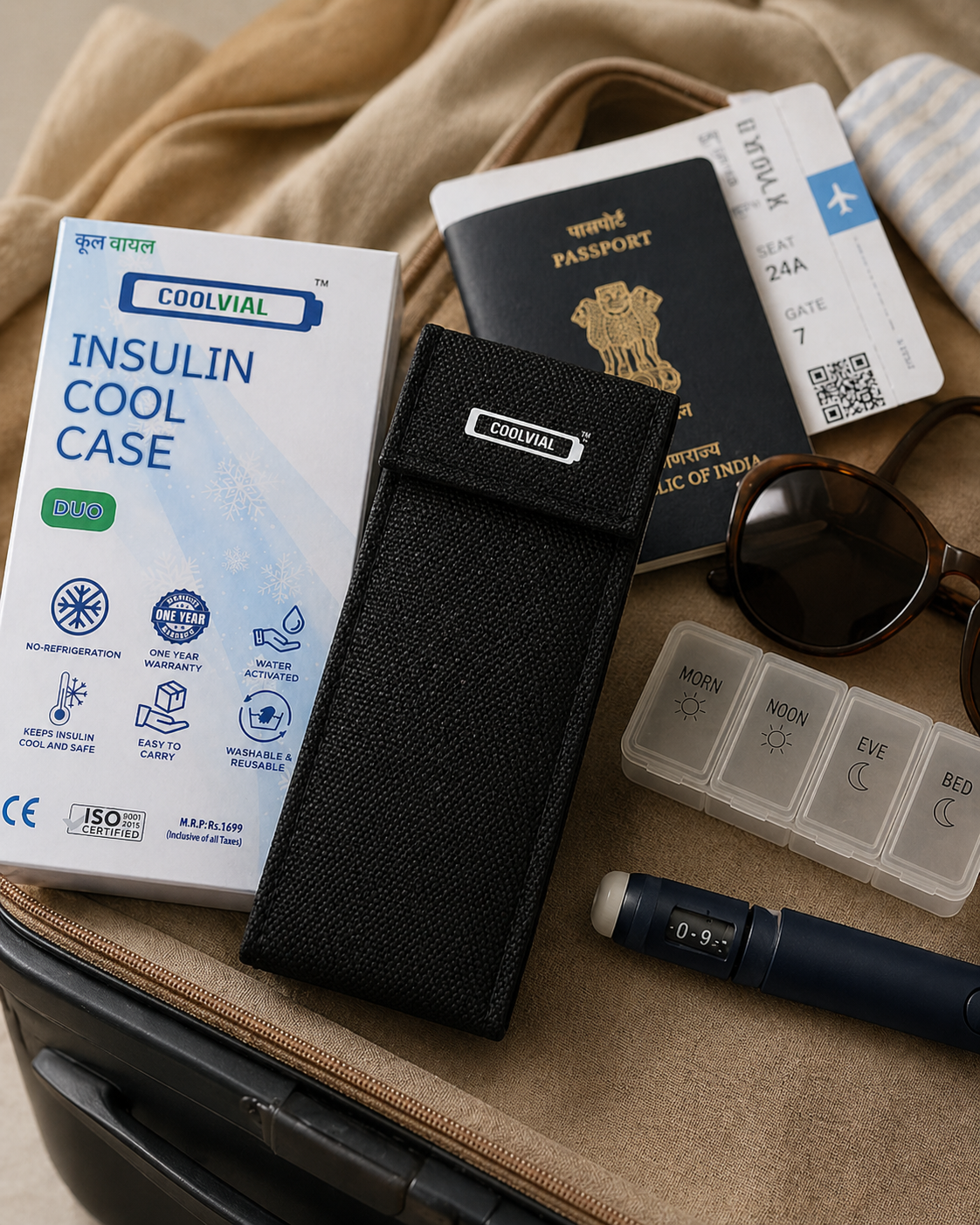
- Pack Smart: Place the cooler in your carry-on luggage or a easily accessible day bag. Avoid checking it into luggage where temperatures can be unpredictable.
- Hotel Check: Confirm refrigerator availability and reliability if you plan to store larger quantities of unopened insulin at your destination.
- During Monsoon (June-September):
- Humidity Management: Use a water-activated cooler to protect insulin from heat, and ensure the cooler itself is kept in a breathable, dry environment when not in use.
- Visual Inspection: Regularly check your insulin for any changes in appearance.
- Emergency Supply: Consider keeping a small backup supply if you anticipate prolonged power cuts or difficult travel during heavy rains.
Frequently Asked Questions (FAQ)
Q: What is the ideal temperature range for storing unopened insulin in Pune? A: Unopened insulin should always be stored in a refrigerator between 2°C and 8°C. This temperature range ensures its full potency is maintained until its expiry date.
Q: How long can an in-use insulin pen be kept at room temperature in Pune? A: An in-use insulin pen or vial can typically be stored at room temperature (below 25-30°C) for up to 28 days. However, always refer to the specific instructions on your insulin’s package insert, as durations can vary by brand.
Q: Can I leave my insulin in my car during Pune’s summer or even on a mild day? A: No, it is strongly advised not to leave insulin in a car, even on a mild day. Car interiors can rapidly heat up to damaging temperatures, often exceeding 35-40°C, which can quickly degrade insulin’s effectiveness.
Q: Does Pune’s monsoon humidity affect insulin storage? A: While humidity doesn’t directly degrade insulin as quickly as heat, prolonged high humidity can affect insulin pens’ electronic components and the overall integrity of storage. Water-activated coolers still provide protection from heat, but ensure they are wiped dry after activation and stored in a breathable environment.
Q: What are the signs that my insulin might have gone bad due to improper storage? A: Signs of degraded insulin include cloudiness (for clear insulin types), discoloration, presence of particles, or a change in consistency. If you notice any of these changes, or if your blood sugar levels are unexpectedly high despite correct dosing, discard the insulin and start a new vial/pen.
Q: Is the COOLVIAL Duo suitable for travel outside Pune? A: Yes, the COOLVIAL Duo is ideal for travel not just within Pune and to nearby hill stations, but also for domestic and international travel, as it provides 12-16 hours of cooling without electricity, relying only on water activation.
Q: Where can I buy a COOLVIAL Duo in Pune? A: The COOLVIAL Duo is available for purchase online at coolvial.com. You can order it directly and have it delivered to your address in Pune.
Conclusion: Smart Storage for a Healthier Pune Life
Pune’s climate, though generally pleasant, demands a proactive approach to insulin storage. The city’s moderate summers, humid monsoons, and the daily realities of commutes and travel create specific challenges that can compromise insulin’s efficacy if not addressed. From ensuring your refrigerator is optimally set to protecting your pens from a baking car interior or unexpected humidity, understanding how to store insulin correctly is a vital component of effective diabetes management.
By being mindful of your environment and investing in reliable solutions like the COOLVIAL Duo, you can ensure your insulin remains potent and your health remains on track. Don’t let the seemingly gentle climate lull you into complacency. Empower yourself with knowledge and the right tools to navigate Pune’s unique conditions with confidence.
Order your COOLVIAL Duo today at Rs 1,099 with code COOLHEAL at coolvial.com or via WhatsApp wa.me/918766952300 and experience peace of mind with smart insulin storage.
Medical Disclaimer: This article is for general information. Always consult your endocrinologist or diabetologist before changing insulin storage or dosing practices.
How We Researched This: Our insights are based on a thorough review of RSSDI guidelines for diabetes management in India, data from the ICMR-INDIAB study on diabetes prevalence, local Pune hospital directories including Ruby Hall Clinic and Deenanath Mangeshkar Hospital, and an understanding of the operational network of major pharmacy chains like Apollo Pharmacy and Wellness Forever in the city. We also factored in common climate patterns and lifestyle aspects unique to Pune residents.
How to Store Insulin in Pune's Mild Year-Round Climate — 7 Essential Tips for Locals
48+ hours at 2-8°C. No electricity. CE certified. Free delivery across India.
Order on WhatsApp — ₹1,099🛒 Buy Now — ₹1,099