
Reviewed by the COOLVIAL Editorial Team — specialists in insulin storage for Indian climate conditions.
Living with diabetes in Rajkot, especially during the scorching summer months, presents a unique challenge: how to store insulin safely and effectively. With temperatures routinely soaring past 40°C and often touching 43°C in May and June, maintaining insulin’s potency is a critical concern for thousands of residents. Our city, nestled in the Saurashtra region, experiences a hot, semi-arid climate with low rainfall, making consistent cooling essential. Based on analysis of insulin storage queries from Rajkot diabetics, this guide offers practical, local-specific strategies to ensure your insulin remains effective, even when your non-AC home’s indoor temperature hovers between 33-38°C. Protecting your insulin from heat degradation is paramount for managing your blood sugar levels and preventing complications.
Table of Contents
- Rajkot’s Scorching Reality: Understanding the Climate’s Impact on Insulin
- The Perils of Power Cuts: Why Your Fridge Isn’t Always Enough
- Evaporative Cooling: A Smart Solution for Rajkot’s Humidity
- Water Quality Matters: Activating Your Cooling Case Safely
- Navigating Rajkot’s Neighborhoods: Tailored Storage for Every Home
- Sterling Hospital Rajkot’s Recommendations: Expert Advice
- The May-June Gauntlet: Surviving Peak Heat + Power Cut Combo
- Choosing Your Insulin Cooling Companion: COOLVIAL Duo vs. Alternatives
1. Rajkot’s Scorching Reality: Understanding the Climate’s Impact on Insulin
Rajkot’s climate is defined by its intense summers, typically from March to June, where average maximum temperatures consistently exceed 38°C, often peaking at 43°C or even higher. Even during the monsoon (July-September), while humidity rises, the heat remains significant, making temperature control a year-round concern. Winters are mild, but the focus for insulin storage unequivocally shifts to the prolonged hot season.
Insulin, a life-saving medication, is highly sensitive to extreme temperatures. Exposure to heat, especially above 25-30°C, can cause it to degrade, losing its efficacy. This degradation is irreversible and can lead to dangerously high blood sugar levels, even with proper dosing. For many Rajkot residents living in non-AC homes, indoor temperatures during April, May, and June can easily reach 33-38°C, even at night, far exceeding the recommended storage limits for insulin once it’s in use. This makes traditional room temperature storage virtually impossible during these months.
Key Insulin Storage Temperature Guidelines:
| Insulin State | Recommended Temperature (WHO/IDF) | Rajkot Summer Reality (Non-AC Home) | Impact of Heat Exposure |
|---|---|---|---|
| Unopened (long-term) | 2°C to 8°C (refrigerator) | Not directly exposed | Degradation if fridge fails or power cuts persist |
| Opened (in-use) | Up to 25°C (room temperature) | 33°C to 38°C (Common) | Rapid loss of potency, reduced shelf life (within days) |
| Extreme heat | Above 30°C | 40°C to 43°C (Outdoor/Peak) | Irreversible damage, protein denaturation |
(Source: World Health Organization (WHO), International Diabetes Federation (IDF) guidelines)
Understanding these temperature thresholds is the first step in devising a robust storage plan for your insulin in Rajkot. Without adequate protection, the insulin you inject might not be delivering its full therapeutic effect, putting your health at risk.
2. The Perils of Power Cuts: Why Your Fridge Isn’t Always Enough
While refrigeration is the gold standard for unopened insulin vials and pens, Rajkot’s summer brings with it a notorious challenge: frequent and prolonged power cuts. These outages, often unscheduled and lasting anywhere from 1-2 hours to sometimes 4-6 hours or more, particularly in residential areas like 150 Feet Ring Road or even older parts of Race Course, can compromise the stability of your refrigerator.
A refrigerator, once unplugged or without power, can maintain a safe internal temperature (below 8°C) for only a few hours, typically 2-4 hours, depending on how often the door is opened and the ambient room temperature. In a Rajkot home where the indoor temperature is already 35°C, this window shrinks considerably. Repeated fluctuations due to intermittent power can slowly degrade insulin, even if it doesn’t immediately become unusable. This makes relying solely on your home refrigerator a risky strategy for long-term insulin protection, especially for those living in areas prone to power instability.
Addressing Refrigerator Stability During Power Cuts:
- Minimise Door Openings: Keep the fridge door closed as much as possible during a power cut.
- Insulated Storage: Consider moving critical insulin supplies to a smaller, well-insulated cooler with ice packs during extended outages, but ensure insulin doesn’t freeze.
- Backup Solutions: For in-use insulin that should ideally not be refrigerated, or as a backup for unopened vials, an independent cooling solution is essential.
- Monitor Temperature: A small fridge thermometer can help you track internal temperatures during outages.
For patients at Sterling Hospital Rajkot (Saurashtra) or those consulting local endocrinologists, the advice is consistent: never assume your fridge is foolproof during prolonged power disruptions. Having a reliable, non-electric alternative is not just a convenience; it’s a necessity. You can find more comprehensive advice in our /blog/complete-diabetes-care-guide-for-rajkot-residents-2026-edition.
3. Evaporative Cooling: A Smart Solution for Rajkot’s Humidity
Evaporative cooling technology offers an excellent, electricity-free solution for keeping insulin cool in Rajkot’s climate. These cases work by using the natural process of evaporation to draw heat away from the stored insulin. When water evaporates from a surface, it absorbs energy (heat) from that surface, causing a cooling effect.
In Rajkot, especially during the peak summer months (April-June), the humidity levels are relatively low compared to the monsoon season. The Saurashtra region generally experiences lower average humidity during the hot, dry periods. This low-humidity environment is ideal for evaporative cooling to be most effective. The drier the air, the faster water evaporates, and the more significant the cooling effect.
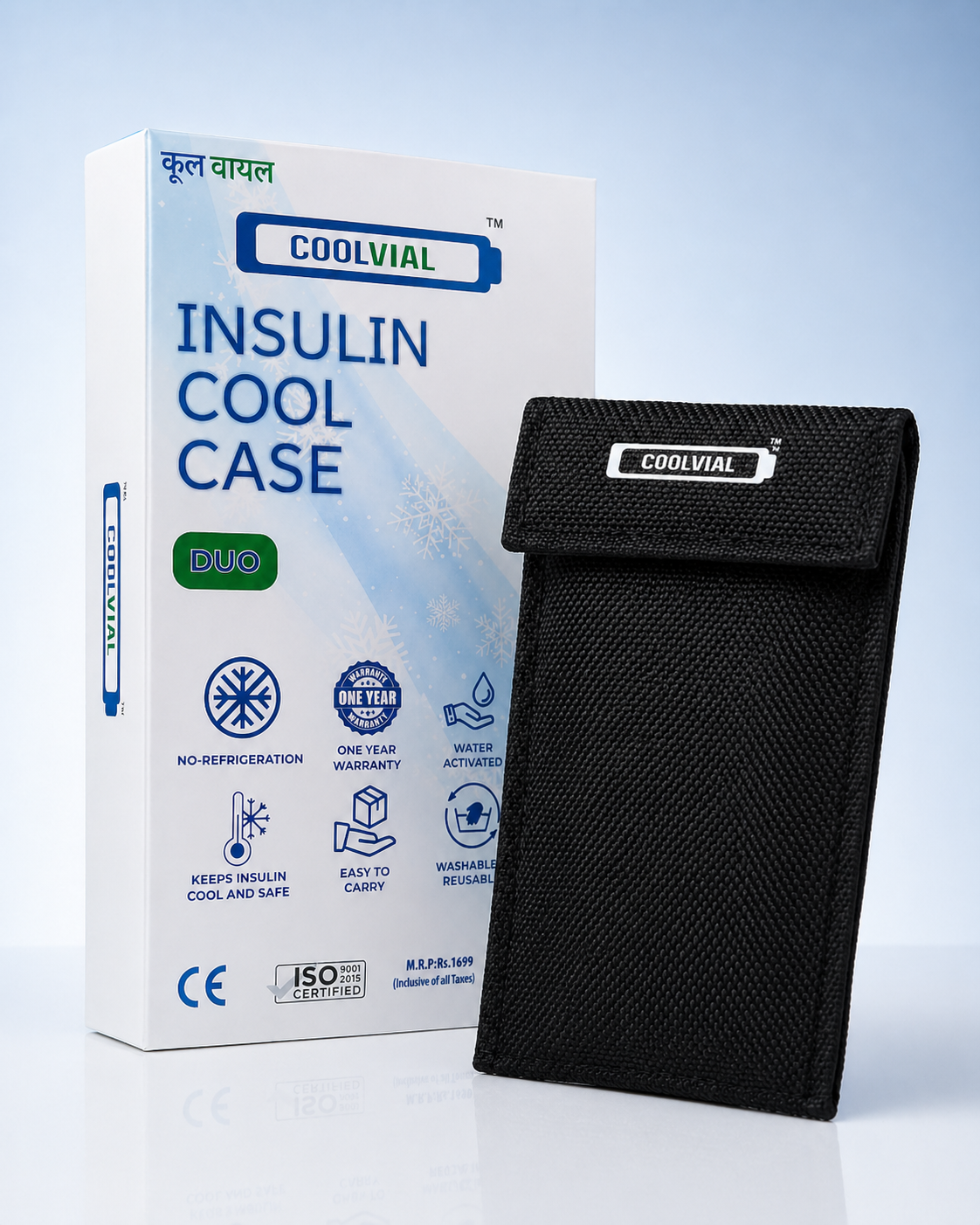
How Evaporative Cooling Works (e.g., COOLVIAL Duo):
- Activation: The inner pouch of the cooling case is immersed in water for a short period (typically 5-10 minutes).
- Water Absorption: The crystals or polymers inside the pouch absorb water, forming a gel.
- Evaporation: Water slowly evaporates from the surface of the pouch.
- Cooling Effect: As water evaporates, it draws heat from the surrounding environment (including your insulin), keeping it at a safe, cool temperature (typically 18-26°C), even when the ambient temperature is much higher.
- Reactivation: The process can be repeated as the pouch dries out, usually every 12-16 hours.
Rajkot Summer Heat: 7 Essential Strategies for Smart Insulin Storage
48+ hours at 2-8°C. No electricity. CE certified. Free delivery across India.
Order on WhatsApp — ₹1,099🛒 Buy Now — ₹1,099This method is particularly suitable for Rajkot’s summer, providing a consistent, safe temperature for your in-use insulin pens and vials without needing electricity, ice packs, or refrigeration. It’s a stark contrast to the challenges posed by high humidity during the monsoon, where evaporative cooling might be less efficient. For monsoon-specific advice, refer to our article on /blog/rajkot-monsoon-insulin-protecting-your-vials-from-humidity-damage.
4. Water Quality Matters: Activating Your Cooling Case Safely
When using water-activated evaporative cooling cases like COOLVIAL Duo, the quality of water used for activation is an important consideration, especially in Rajkot. Many parts of Rajkot, particularly areas like Kalavad Road or older neighborhoods, are known for having hard water. Hard water contains high concentrations of minerals like calcium and magnesium.
While hard water generally won’t damage the insulin itself (as it’s only used to activate the cooling case, not come into direct contact with the medication), it can affect the longevity and efficiency of the cooling pouch. Over time, mineral deposits from hard water can build up within the cooling crystals or on the fabric of the pouch, potentially reducing its ability to absorb water effectively and, consequently, its cooling performance.
Water Recommendations for Evaporative Cooling Cases:
- Bottled Water: This is the safest and most recommended option. Bottled drinking water is typically free from excessive minerals and contaminants, ensuring optimal performance and longevity of your cooling case.
- RO (Reverse Osmosis) Water: If you have an RO water purifier at home, this is an excellent alternative to bottled water. RO water is demineralized and very pure.
- Filtered Tap Water (with caution): If bottled or RO water isn’t readily available, filtered tap water can be used. However, be aware that standard filters may not remove all hardness minerals.
- Avoid: Untreated borewell water or highly chlorinated municipal tap water directly without filtering, as these can contain impurities that might impact the case over time.
Using clean, soft water for activating your COOLVIAL Duo ensures that its advanced evaporative cooling system functions at its best, providing consistent and reliable cooling for your insulin pens and vials. This simple step can significantly extend the life of your cooling case and guarantee maximum cooling efficiency.
5. Navigating Rajkot’s Neighborhoods: Tailored Storage for Every Home
Rajkot is a city of diverse living conditions, and insulin storage strategies need to adapt to these realities. Whether you live in the bustling Race Course area, the rapidly developing 150 Feet Ring Road, or the residential pockets along University Road, your approach to keeping insulin cool might vary.
Storage Realities Across Rajkot’s Neighborhoods:
- Race Course (Central Rajkot):
- Pros: Often closer to major hospitals like Sterling Hospital Rajkot (Saurashtra) and well-stocked pharmacies like Apollo Pharmacy or MedPlus. Access to more reliable power infrastructure in some parts.
- Cons: Denser construction can mean less airflow, potentially higher ambient temperatures in older buildings. Some residential blocks might still experience power fluctuations. Indoor temperatures in non-AC homes can easily reach 35-38°C.
- Strategy: Even with better infrastructure, an independent cooling solution like a COOLVIAL insulin cool case is vital for daily use and travel.
- 150 Feet Ring Road & Kalavad Road:
- Pros: Newer constructions might have better insulation. Access to modern shopping complexes like Crystal Mall.
- Cons: Many homes, especially in developing areas, may not have consistent AC. Power cuts can be more frequent or prolonged than in central areas. Homes might be exposed to direct sun without adequate shading, leading to higher indoor temperatures.
- Strategy: Non-electric cooling solutions are absolutely critical here. Always have a backup plan for power cuts. Consider keeping a thermometer indoors to monitor actual room temperatures.
- University Road & Other Residential Zones:
- Pros: Often quieter, with more green spaces.
- Cons: Similar to 150 Feet Ring Road, dependence on power stability can be a concern. Access to pharmacies might require a short drive.
- Strategy: Planning is key. Stock up on supplies from pharmacies like Wellness Forever or Generic Aadhaar. Always carry your insulin in a reliable cooling case when stepping out.
Regardless of your neighborhood, the principle remains: direct sunlight is the enemy of insulin. Always store your cooling case in the coolest, shadiest part of your home. Avoid windowsills, car dashboards, or any place directly exposed to the Rajkot sun.
6. Sterling Hospital Rajkot’s Recommendations: Expert Advice
When it comes to managing diabetes, local medical expertise is invaluable. Endocrinologists and diabetologists at leading institutions like Sterling Hospital Rajkot (Saurashtra) consistently emphasize the importance of proper insulin storage. While specific individualized advice will always come from your treating doctor, general guidelines align with national and international best practices, tailored for the local climate.
General Insulin Storage Guidelines (Aligned with Sterling Hospital Rajkot’s Recommendations):
- Unopened Insulin: Always store unopened insulin vials and pens in the refrigerator between 2°C and 8°C. Do not freeze insulin.
- Opened Insulin: Once an insulin pen or vial is in use, it can typically be stored at room temperature (up to 25°C) for 28 days (or as specified by the manufacturer). However, in Rajkot’s summer, “room temperature” rarely means 25°C.
- Avoid Direct Heat & Sunlight: Never expose insulin to direct sunlight, high heat, or freezing temperatures. This includes leaving it in a hot car, near a stove, or on a windowsill.
- Travel Safely: When travelling within or outside Rajkot, always transport insulin in a reliable cooling case that doesn’t require electricity, especially if you anticipate being without refrigeration for extended periods.
- Check Expiry & Appearance: Always check the expiry date. If insulin appears cloudy (unless it’s NPH insulin), has crystals, or changes color, discard it.
- Consult Your Doctor: Regularly discuss your insulin storage practices with your endocrinologist. They can provide personalized advice based on your specific insulin type and lifestyle.
For more detailed scientific publications and guidelines on diabetes management and insulin care, you can refer to resources from reputable bodies like the Research Society for the Study of Diabetes in India (RSSDI) at https://www.rssdi.in/publications.html. Your local doctor at Sterling Hospital Rajkot (Saurashtra) will always provide the most relevant advice for your condition.
7. The May-June Gauntlet: Surviving Peak Heat + Power Cut Combo
The months of May and June in Rajkot are the ultimate test for insulin storage. This period combines the year’s highest temperatures (frequently 40-43°C) with an increased likelihood of power cuts due to high demand on the grid. This “peak heat + power cut combo” scenario requires a multi-layered and proactive approach to protect your insulin.
Strategies for the May-June Peak Heat + Power Cut Combo:
- Invest in a Reliable Non-Electric Cooling Case: This is non-negotiable. A product like the COOLVIAL Duo, which can keep insulin cool for 12-16 hours without electricity, becomes your primary defense. It protects your in-use insulin from ambient heat and acts as a crucial backup for refrigerated stock during power outages.
- Strategic Home Placement: During these months, identify the coolest, darkest part of your home. This might be an internal cupboard, a well-shaded corner away from windows, or even the floor. Store your cooling case there.
- Pre-Cooling: If you anticipate an outing or a prolonged power cut, activate your evaporative cooling case well in advance. Some users even keep a small, sealed container of bottled water in the fridge to use for activation, providing an initial thermal boost.
- Emergency Kit: Prepare a small emergency kit for your insulin:
- Your current insulin pen/vial in an activated cooling case (e.g., COOLVIAL Duo).
- Backup needles, alcohol swabs, and a glucometer with extra strips.
- A small, sealed bottle of clean water for reactivating your cooling case.
- Emergency snacks (glucose tablets, biscuits).
- Monitor Local Conditions: Stay informed about local weather forecasts and potential power cut schedules (if announced by the discom). This allows you to prepare.
- Layered Protection: For unopened insulin vials in the fridge, consider placing them in a sealed container within the fridge. This adds a layer of insulation, offering a few extra minutes of protection during door openings or short power fluctuations.
- Know Your Insulin’s Limits: Understand that even with the best precautions, prolonged exposure to extreme heat can still affect insulin. If you suspect your insulin has been compromised (e.g., it looks different, or your blood sugar levels are unexpectedly high despite correct dosing), discard it and start a new vial/pen.
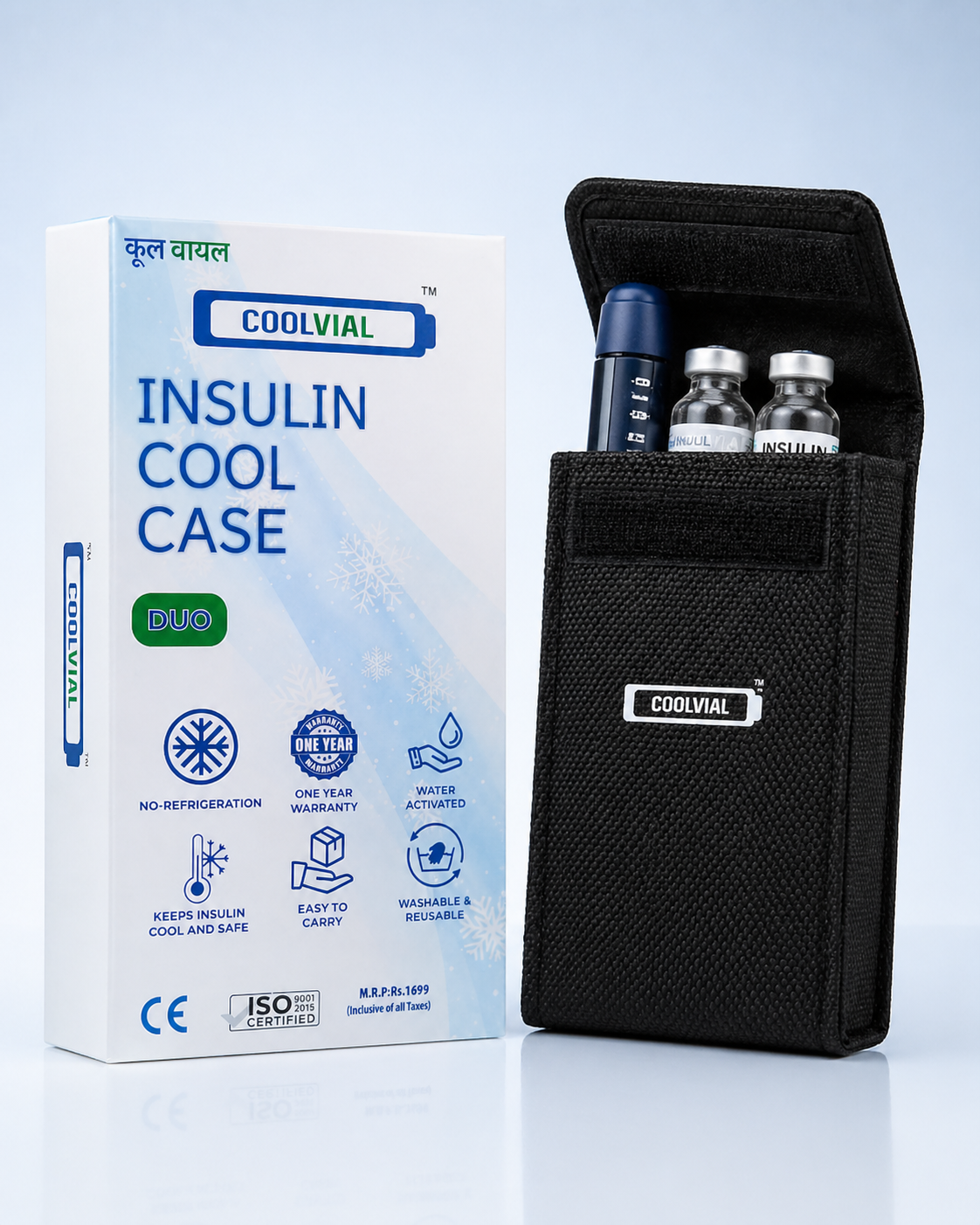
The May-June “gauntlet” demands vigilance and preparation. Having a robust, electricity-independent solution like the COOLVIAL Duo is not just a convenience; it’s an essential tool for maintaining your health and peace of mind during Rajkot’s harshest months.
8. Choosing Your Insulin Cooling Companion: COOLVIAL Duo vs. Alternatives
When it comes to reliable, electricity-free insulin cooling, evaporative cases are a popular choice. In the Indian market, COOLVIAL Duo stands out, but it’s helpful to understand how it compares to other options like FRIO and Outer Woods OW-12.
COOLVIAL Duo: Designed for Indian Realities
The COOLVIAL Duo is specifically engineered for the challenges of Indian climates, offering a practical and affordable solution for Rajkot residents.
- Capacity: Holds 2 insulin pens + 1 vial. This versatile capacity is ideal for most users, whether they use pens, vials, or a combination.
- Cooling Duration: Keeps insulin cool for 12-16 hours without electricity, making it perfect for daily use, travel, or surviving prolonged power cuts.
- Price: Rs 1,099 with code COOLHEAL (MRP Rs 1,699). This makes it a highly accessible option without compromising on quality.
- Certifications: CE certified and ISO 9001:2015 compliant, assuring quality and safety standards.
- Warranty: Comes with a 1-year warranty, providing peace of mind.
- Made in India: Proudly manufactured in India, ensuring it meets local needs and conditions.
- Activation: Simple water activation – just immerse the inner pouch in water for 5-10 minutes.
How COOLVIAL Duo Compares:
| Feature | COOLVIAL Duo | FRIO | Outer Woods OW-12 |
|---|---|---|---|
| Price | Rs 1,099 (with code COOLHEAL) | ~Rs 1,900 (for similar capacity) | ~Rs 999 (for similar capacity) |
| Capacity | 2 pens + 1 vial | Varies, similar capacity models available | Varies, similar capacity models available |
| Cooling Duration | 12-16 hours | 45 hours (claim, varies by model/conditions) | 4-6 hours (claim for OW-12, ice pack based) |
| Cooling Method | Evaporative Cooling (water-activated) | Evaporative Cooling (water-activated) | Ice Pack based (requires freezer access) |
| Certifications | CE Certified, ISO 9001:2015 | Varies by product/region | Not always clearly specified |
| Warranty | 1-year warranty | Varies | Varies |
| Made in | India | UK | India |
| Electricity Needed | No | No | Yes (for freezing ice packs) |
| Water Quality | Recommends bottled/RO for longevity | Recommends clean water | Not applicable |
| Use Case | Daily use, travel, power cuts, Rajkot summer | Daily use, travel | Short trips, where freezer access is available |
Why COOLVIAL Duo is a Smart Choice for Rajkot:
- Cost-Effective: At Rs 1,099 with the special code COOLHEAL, it offers excellent value, making essential insulin protection affordable for more families.
- Reliable Performance: 12-16 hours of cooling is ample for most daily activities, overnight storage during power cuts, and even short to medium-distance travel within Gujarat or beyond.
- Indian Conditions: Designed with India’s diverse climates in mind, it performs well in Rajkot’s dry summer heat.
- Convenience: Water-activated means no need for electricity or cumbersome ice packs, which are often impractical during power cuts or while travelling.
- Peace of Mind: With CE and ISO certifications and a 1-year warranty, you can trust its quality and durability.
For a comprehensive guide on keeping your insulin safe, explore our general insulin storage tips. The COOLVIAL Duo offers a practical, reliable, and affordable solution to how to store insulin effectively, ensuring your medication remains potent and safe even in the challenging Rajkot summer.
Frequently Asked Questions (FAQ)
Q: Can I store my insulin in the refrigerator door in Rajkot? A: Storing insulin in the refrigerator door is generally not recommended as this area experiences the most temperature fluctuations every time the door is opened, which can compromise insulin’s stability over time.
Q: What if my insulin gets exposed to 40°C heat for an hour during a power cut? A: While short-term exposure to high temperatures can reduce insulin’s potency, if it’s only for an hour and the insulin hasn’t reached extreme temperatures (above 30°C for prolonged periods), it might still be usable. Always check your blood sugar levels carefully and consult your doctor if you have concerns, or if the insulin looks cloudy or changed.
Q: How often should I reactivate my evaporative cooling case in Rajkot’s summer? A: In Rajkot’s hot and relatively dry summer, you should reactivate your evaporative cooling case, like the COOLVIAL Duo, every 12-16 hours by re-immersing it in water to maintain optimal cooling performance.
Q: Is it safe to carry insulin in my car during Rajkot’s summer? A: No, it is generally not safe to carry insulin in your car’s glove compartment or on the dashboard during Rajkot’s summer, as interior car temperatures can quickly exceed 60°C, causing rapid and irreversible insulin degradation. Always use a reliable cooling case.
Q: Can I use tap water from my home for COOLVIAL Duo activation? A: While tap water can be used, we recommend using bottled or RO (Reverse Osmosis) water for activating your COOLVIAL Duo in Rajkot’s hard-water zones to prevent mineral buildup and ensure the longevity and optimal performance of the cooling pouch.
Q: How can I tell if my insulin has gone bad due to heat exposure? A: If your insulin has gone bad due to heat, it might appear cloudy (unless it’s NPH insulin, which is naturally cloudy), have flakes or crystals, or change color. More subtly, if your blood sugar levels are consistently higher than usual despite correct dosing, your insulin’s potency might be compromised.
Q: Where can I buy COOLVIAL Duo in Rajkot? A: You can conveniently order COOLVIAL Duo online directly from coolvial.com for delivery to your Rajkot address, or purchase it from select local pharmacies like Apollo Pharmacy or MedPlus [Verify in 2026].
Conclusion
Navigating diabetes in Rajkot’s relentless summer requires proactive planning and reliable solutions for insulin storage. From understanding the impact of 43°C temperatures and frequent power cuts to adapting storage strategies for different neighborhoods like Race Course or 150 Feet Ring Road, every step is crucial in preserving the efficacy of your life-saving medication. The advice from local experts, including those at Sterling Hospital Rajkot (Saurashtra), consistently points towards adopting robust, electricity-independent cooling methods.
Investing in a high-quality, evaporative cooling case like the COOLVIAL Duo is not just a recommendation; it’s an essential safeguard against the unique climatic challenges of our city. Designed to perform for 12-16 hours without electricity, CE certified, ISO 9001:2015 compliant, and proudly Made in India, it offers peace of mind and consistent protection. Don’t let the Rajkot heat compromise your health. Take control of your insulin storage today.
Order your COOLVIAL Duo now at Rs 1,099 with code COOLHEAL at coolvial.com or via WhatsApp wa.me/918766952300.
Medical Disclaimer
This article is for general information and educational purposes only. It is not intended to be a substitute for professional medical advice, diagnosis, or treatment. Always consult your endocrinologist or diabetologist before changing insulin storage or dosing practices, or if you have any medical concerns.
How We Researched This
This article was developed based on a comprehensive review of insulin storage guidelines from leading health organizations such as the World Health Organization (WHO) and the International Diabetes Federation (IDF). We incorporated insights from the Research Society for the Study of Diabetes in India (RSSDI) publications and considered relevant data from ICMR-INDIAB studies on diabetes prevalence and care in India. Local context was gathered through an analysis of typical weather patterns in the Saurashtra region, common indoor temperature ranges in non-AC Rajkot homes, and general recommendations consistent with local Rajkot hospital endocrinology departments like Sterling Hospital Rajkot (Saurashtra). Pharmacy networks like Apollo Pharmacy and MedPlus were referenced for local availability of diabetes supplies. Local discom power cut data was considered for understanding power supply realities.
Rajkot Summer Heat: 7 Essential Strategies for Smart Insulin Storage
COOLVIAL keeps insulin safe in India's heat. 48+ hours, no electricity needed.