
Reviewed by the COOLVIAL Editorial Team — specialists in insulin storage for Indian climate conditions.
Bengaluru, our beloved Garden City, is known for its pleasant, salubrious climate, bustling tech hubs, and vibrant culture. However, even in this modern metropolis, the familiar hum of daily life can be abruptly silenced by an unannounced power cut. For the lakhs of diabetics residing in Bengaluru, such power outages are not just an inconvenience but a significant concern, especially when it comes to the safe storage of life-saving insulin. With an estimated 77 million diabetics in India (Source: ICMR-INDIAB data, 2021), ensuring insulin efficacy is paramount. This power cut survival guide provides 7 practical steps for Bengaluru diabetics to safeguard their insulin and well-being when the grid goes down. Based on analysis of insulin storage queries from Bengaluru diabetics, we’ve tailored this guide to address the unique challenges of our city.
From monsoon-triggered disruptions in South Bengaluru’s Jayanagar or JP Nagar to peak summer load shedding in East Bengaluru’s Whitefield, understanding local power patterns is the first step. The good news is, with a little preparation and the right tools, you can ensure your insulin remains effective, even during extended blackouts.
Table of Contents
- Understanding Bengaluru’s Power Landscape for Diabetics
- Your Immediate Action Plan: For Short Outages (Under 6 Hours)
- Navigating Longer Outages: When the Grid Stays Down (6-12 Hours)
- Extended Power Disruptions: 12 Hours and Beyond
- Strategic Insulin Storage During Power Cuts: A Bengaluru Perspective
- Community & Technology: Leveraging Bengaluru’s Resources
- Essential Emergency Kit for Bengaluru Diabetics
- Frequently Asked Questions (FAQs)
- Conclusion: Stay Prepared, Stay Safe
1. Understanding Bengaluru’s Power Landscape for Diabetics
Bengaluru’s electricity supply is managed by BESCOM (Bangalore Electricity Supply Company Limited), and while generally reliable, it’s not immune to disruptions. Knowing the common causes and patterns of power cuts in different parts of the city can help you better prepare.
Common Power Cut Triggers in Bengaluru:
- Monsoon Outages (June-October): Heavy rainfall, strong winds, and tree falls frequently lead to power line damage, especially in green, residential areas. Neighborhoods like Jayanagar, JP Nagar, Koramangala in South Bengaluru, and Hebbal, Yelahanka in North Bengaluru, with their abundant trees, are particularly susceptible during the Southwest monsoon.
- Peak Summer Load Shedding (April-June): As temperatures rise (though Bengaluru enjoys a mild climate of 18-33°C, summer days can still be warm), the demand for air conditioning and cooling appliances surges, leading to planned or unplanned load shedding by BESCOM. This can affect all parts of the city, including older building areas in East Bengaluru like Whitefield and Marathahalli, which might lack robust backup systems.
- Maintenance Work: BESCOM regularly undertakes scheduled maintenance, often announced beforehand. While necessary, these can still disrupt routines for diabetics.
- Local Faults: Cable faults, transformer issues, or minor localized problems can cause sudden, short-duration outages in specific streets or blocks.
Bengaluru’s Housing Realities and Power Backup:
- Apartment Complexes: Most modern apartment complexes, especially in areas like Indiranagar, Koramangala, and Whitefield, come equipped with powerful generators or inverters, offering near-continuous power backup for common areas and often a few essential points within flats.
- Independent Houses/Older Buildings: Many independent houses and older residential buildings, particularly in parts of Central Bengaluru (around MG Road) or older sections of East Bengaluru, may rely solely on BESCOM supply or have smaller, personal inverters that only power lights and fans. This makes them more vulnerable to prolonged outages.
Understanding these patterns is crucial for developing a robust power cut survival guide. For instance, residents in areas like South Bengaluru’s Jayanagar might anticipate monsoon-related outages, while those in older parts of East Bengaluru should be prepared for potential summer load shedding with limited backup. [Verify in 2026] for specific outage-prone pin codes released by BESCOM annually.
2. Your Immediate Action Plan: For Short Outages (Under 6 Hours)
A sudden power cut can be unsettling, but with a clear plan, you can protect your insulin effectively. For short outages, typically lasting less than 6 hours, your refrigerator is your first line of defense.
Immediate Steps During a Short Power Cut:
- Do Not Open the Refrigerator Door Unnecessarily: This is the most crucial step. A closed refrigerator can maintain a temperature below 8°C for up to 4-6 hours, sometimes longer if it’s well-stocked and efficient. Every time you open the door, precious cold air escapes, and warmer outside air rushes in.
- Tip: If you anticipate an outage (e.g., scheduled maintenance), pre-cool your fridge to its lowest setting.
- Utilize Ice Packs (If Available): If you have frozen gel packs or ice in your freezer, you can transfer your insulin pens and vials to a small, insulated lunch bag or cooler box with these ice packs. Ensure the insulin doesn’t directly touch the ice to prevent freezing, which can damage it. Wrap insulin in a cloth or paper towel.
- Monitor the Time: Keep track of how long the power has been off. Set an alarm or a timer on your phone. If the outage extends beyond 4-6 hours, you’ll need to move to the next set of precautions.
- Check BESCOM Updates: Use your mobile data to check the BESCOM website or their social media channels for updates on the estimated time of power restoration. This can help you gauge the severity of the situation.
| Outage Duration | Recommended Action |
|---|---|
| 0-30 Minutes | Keep fridge/freezer doors closed. Avoid opening. |
| 30 Min - 4 Hours | Keep fridge/freezer doors closed. Consider moving essential insulin to a pre-cooled insulated bag with gel packs if available. |
| 4-6 Hours | Prepare for longer storage solutions. Do not rely solely on the fridge. |
Remember, the goal is to keep your insulin within its safe temperature range of 2-8°C for unopened vials and pens, and generally below 30°C for opened pens in use.
3. Navigating Longer Outages: When the Grid Stays Down (6-12 Hours)
When a power cut extends beyond the initial few hours, especially in Bengaluru’s mild but often humid climate, your refrigerator’s internal temperature will inevitably rise. This is when an external, reliable cooling solution becomes essential.
Transitioning to a Dedicated Insulin Cooler:
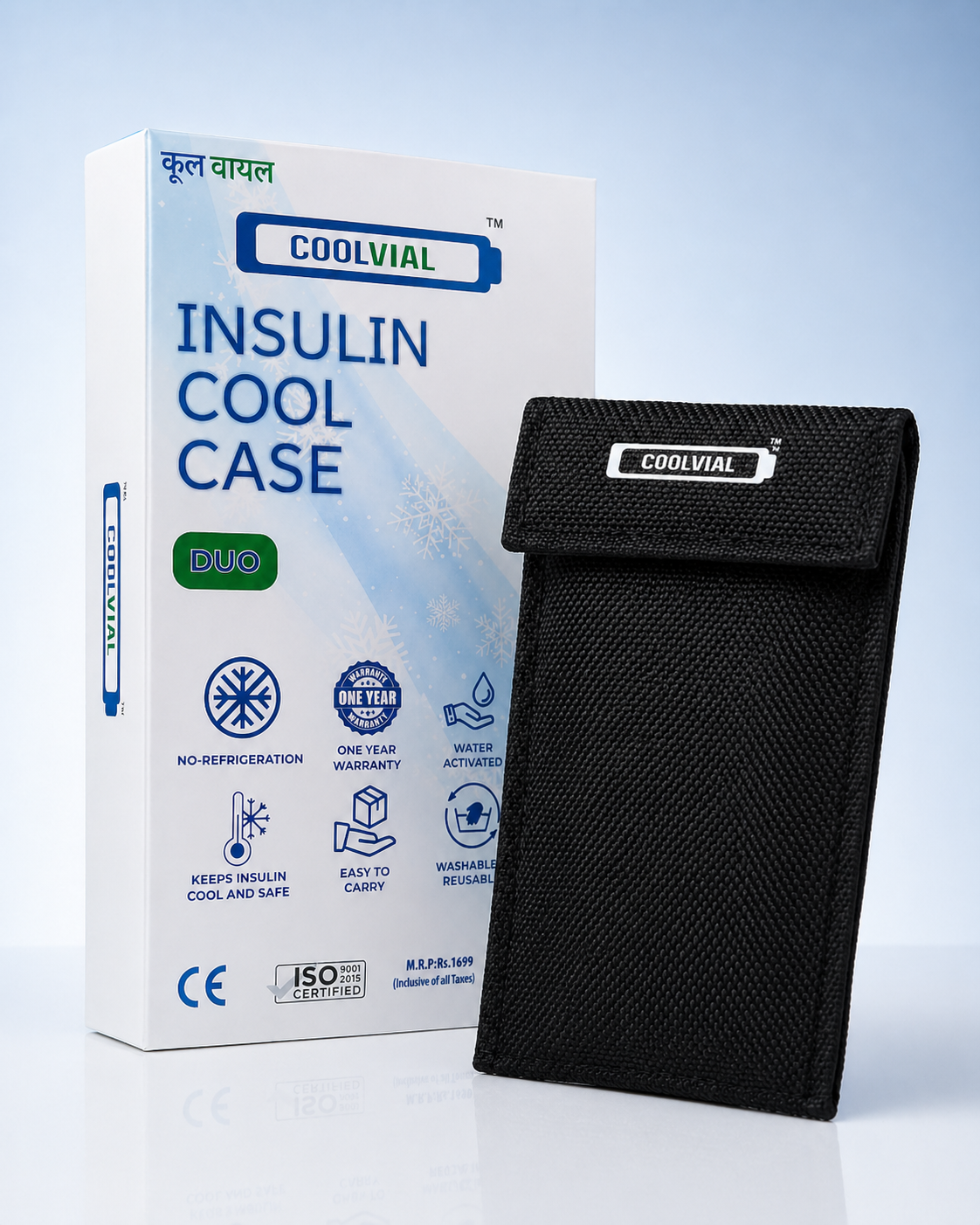
- Activate Your Evaporative Cooling Case: For outages lasting 6 hours or more, an evaporative cooling case like the COOLVIAL Duo becomes indispensable. These cases work on the principle of evaporative cooling – water evaporating from the outer fabric draws heat away from the inner chamber, keeping insulin cool without electricity.
- How to Prepare Your COOLVIAL Duo:
- Immerse: Submerge the inner pouch of your COOLVIAL Duo in cold water for 5-10 minutes. Ensure it is fully saturated.
- Drain: Remove the pouch and gently squeeze excess water, or pat it dry with a towel. It should feel damp, not dripping wet.
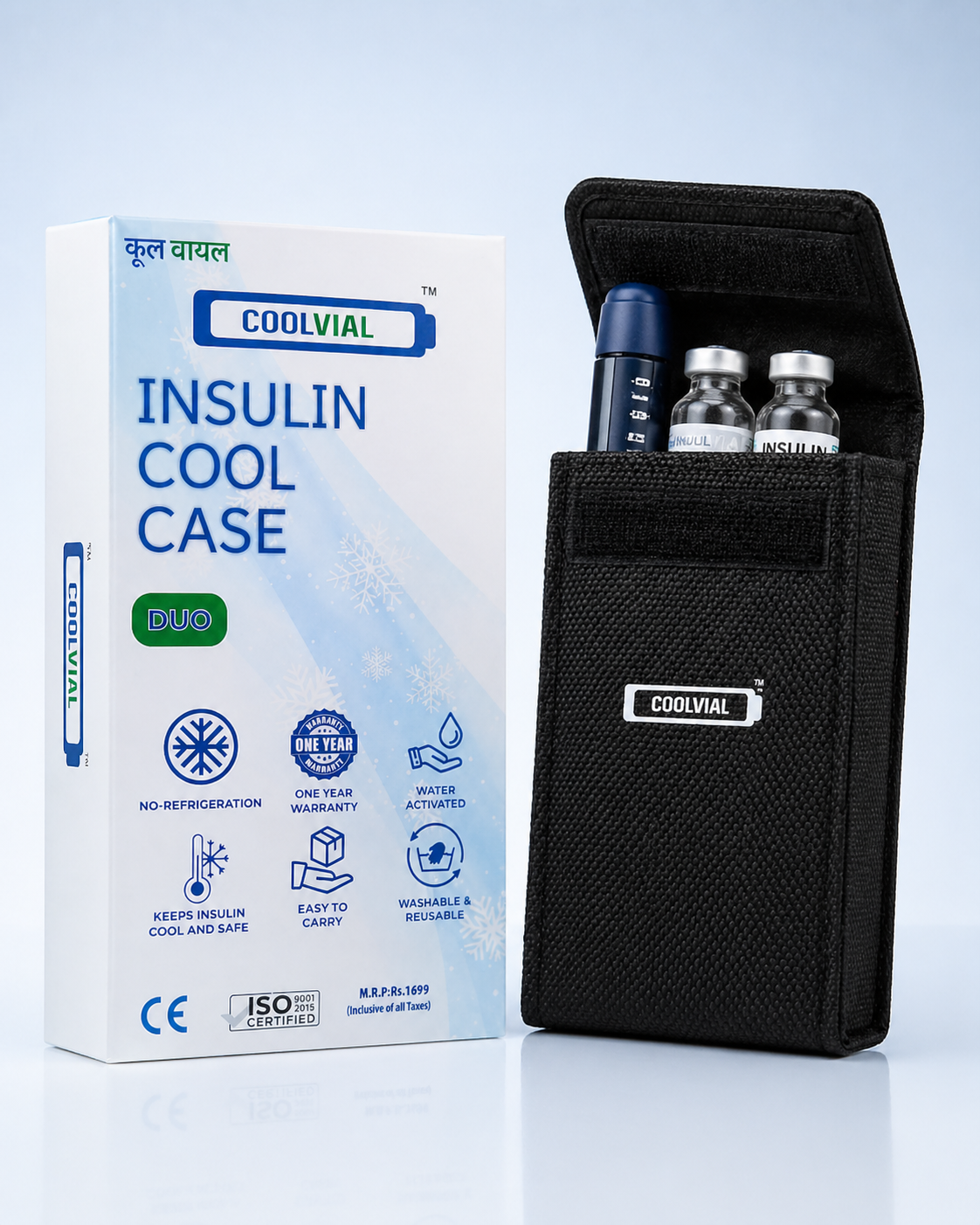
- Insert: Place your insulin pens and vials into the activated inner pouch. The COOLVIAL Duo is designed to hold 2 pens and 1 vial, making it ideal for most daily needs.
- Store: Insert the pouch into the outer casing. Your insulin is now protected and will remain cool between 12-16 hours, even in ambient temperatures up to 30°C.
7 Practical Steps: Your Power Cut Survival Guide for Diabetics in Bengaluru
48+ hours at 2-8°C. No electricity. CE certified. Free delivery across India.
Order on WhatsApp — ₹1,099🛒 Buy Now — ₹1,099Why Choose COOLVIAL Duo?
The COOLVIAL Duo offers a critical advantage for diabetics in Bengaluru, ensuring your insulin remains at a safe temperature (typically 18-26°C, much cooler than ambient) for extended periods. This is crucial for maintaining insulin efficacy, especially for opened pens that can be stored at room temperature (up to 30°C) for a specified duration, but benefit significantly from being kept cooler.
Comparison of Insulin Cooling Cases:
| Feature | COOLVIAL Duo | FRIO Classic Duo | Outer Woods OW-12 |
|---|---|---|---|
| Capacity | 2 pens + 1 vial | 2 pens | 2 pens |
| Cooling Duration | 12-16 hours | Up to 45 hours | 12-16 hours |
| Technology | Water-activated evaporative cooling | Water-activated evaporative cooling | Water-activated evaporative cooling |
| Price (approx.) | Rs 1,099 (with code COOLHEAL) (MRP Rs 1,699) | Rs 1,900 | Rs 999 |
| Certifications | CE certified, ISO 9001:2015 | ISO 13485 | N/A (usually basic) |
| Manufacturing Origin | Made in India | UK-based (often manufactured globally) | Made in India |
| Warranty | 1-year | 12 months | 6 months |
| Key Advantage | Optimal balance of capacity, cooling, and value for money. Ideal for daily use and short to medium outages. | Longer cooling duration, but higher price point and smaller capacity. | More budget-friendly, but might lack certifications and broader capacity. |
The COOLVIAL Duo stands out as a reliable, Indian-made solution offering excellent value, capacity, and certified quality for Bengaluru’s climate and power cut realities. It’s a smart investment for any diabetic to have in their power cut survival guide.
4. Extended Power Disruptions: 12 Hours and Beyond
When Bengaluru experiences prolonged outages stretching beyond 12 hours, a multi-pronged approach is necessary. This is where community spirit and knowing your local resources become vital.
Actions for 12-Hour+ Power Cuts:
- Re-activate Your Evaporative Cooler: If using a COOLVIAL Duo, re-immerse the inner pouch in cold water every 12-16 hours or as needed to maintain its cooling efficacy. This ensures continuous protection for your insulin.
- Reach Out to Neighbours: In apartment complexes with robust generator backups or independent houses with solar inverter setups, neighbours might have continuously running refrigerators. Politely ask if you can store your insulin in their fridge for a few hours. This is a common practice in many Bengaluru neighbourhoods.
- Locate 24-Hour Pharmacies: Bengaluru has a network of 24-hour pharmacies that often have backup power and proper cold chain storage.
- Apollo Pharmacy: Major branches across the city, including those near Manipal Hospital (Old Airport Road) or in Jayanagar, often operate 24/7.
- MedPlus: Another reliable chain with several 24-hour outlets.
- Refer to our detailed guide: 24-Hour Pharmacies in Bengaluru for Insulin Emergencies — Updated List.
- Hospital Pharmacies: Hospital pharmacies are usually the safest bet for cold storage during emergencies.
- Manipal Hospital (Old Airport Road): Its pharmacy is typically operational 24/7 and can be a lifesaver.
- Apollo Hospital (Bannerghatta Road): Another major hospital with round-the-clock pharmacy services.
- Fortis Hospital (Cunningham Road): Also offers emergency pharmacy services.
- Always call ahead if possible to confirm storage availability, especially for non-patients.
- Consider Local Clinics/Medical Centres: Smaller clinics or diagnostic centers in your neighbourhood might also have reliable refrigeration and could assist in extreme situations.
Remember, time is critical when insulin is exposed to higher temperatures. Unopened insulin must be kept between 2-8°C. Once opened, most insulin types can be stored at room temperature (below 30°C) for 28 days, but exceeding this temperature can rapidly degrade it.
5. Strategic Insulin Storage During Power Cuts: A Bengaluru Perspective
Understanding the nuances of insulin storage, especially in Bengaluru’s mild climate, is crucial for your power cut survival guide. While our city generally avoids extreme heat waves, humidity and fluctuating temperatures during outages can still pose risks.
Key Insulin Storage Principles:
- Unopened Insulin: Must be stored in a refrigerator at 2-8°C until its expiration date. This is non-negotiable for long-term storage.
- Opened Insulin: Most opened insulin pens or vials can be stored at room temperature (typically below 30°C) for up to 28 days. Check your specific insulin’s leaflet for exact instructions, as guidelines can vary. Do NOT refrigerate opened pens/vials if they are being used daily, as repeated warming and cooling can affect efficacy.
- Avoid Freezing: Insulin should never be frozen. If insulin freezes, it must be discarded immediately, as freezing destroys its protein structure.
- Protect from Direct Sunlight: Always keep insulin away from direct sunlight or extreme heat sources.
Bengaluru’s Climate and Insulin:
Bengaluru’s year-round climate (18-33°C) means that even “room temperature” can sometimes push the upper limits for opened insulin during summer or within unventilated homes during a power cut. An evaporative cooler like COOLVIAL Duo helps maintain a consistently cooler environment (18-26°C), well within the safe range for opened insulin and providing a buffer for unopened insulin during short exposures.
For a comprehensive understanding, refer to our detailed article: How to Store Insulin in Bengaluru’s Mild Year-Round Climate — A Local’s Guide.
When to Discard Insulin:
It’s better to be safe than sorry. Discard insulin if:
- It has been exposed to temperatures above 30°C for an extended period.
- It has frozen.
- It looks cloudy, has particles, or changes colour (unless it’s naturally cloudy like NPH insulin).
- Its effectiveness seems diminished (e.g., higher blood glucose readings despite usual dosage).
The Directorate General of Civil Aviation (DGCA) also provides guidelines for carrying medicines, including insulin, during air travel, emphasizing the need to maintain specific temperature ranges to ensure drug efficacy (Source: DGCA Medical Requirements). This underscores the universal importance of proper temperature control for insulin.
6. Community & Technology: Leveraging Bengaluru’s Resources
Bengaluru is a city of innovation and community. During power outages, leveraging both local technological advancements and neighbourhood bonds can make a significant difference in your power cut survival guide.
Apartment vs. Independent House Realities:
- Apartment Complexes: Many modern apartments in areas like Koramangala, Whitefield, and Jayanagar have robust common generators, which can be a valuable resource. Check if your complex allows temporary storage of critical medicines in the management office’s fridge or a designated common area fridge.
- Independent Houses: If you live in an independent house, especially in older areas or suburbs like Yelahanka, your reliance on personal backup (inverter) or neighbours is higher. Building good relationships with neighbours is key.
The Rise of Solar Inverter Setups:
Bengaluru, with its sunny days, is seeing a growing trend of solar inverter installations, particularly in new independent houses and even some apartment complexes in the suburbs. These systems provide a sustainable and reliable power backup, significantly reducing the impact of grid outages. If you’re considering a long-term solution, exploring solar options could be beneficial.
Community Support:
- Neighbourhood WhatsApp Groups: Many Bengaluru localities have active WhatsApp groups. Use these to inquire about power status, share information, or ask for temporary fridge space if needed.
- Local Resident Welfare Associations (RWAs): Your RWA can be a great resource for information, collective solutions, and even maintaining a community emergency contact list.
For a broader understanding of managing diabetes in the city, including resources and support networks, explore our: Complete Diabetes Care Guide for Bengaluru Residents — 2026 Edition.
7. Essential Emergency Kit for Bengaluru Diabetics
Being prepared is about having the right tools at your fingertips. A well-stocked emergency kit can be your lifeline during a power cut, ensuring you can manage your diabetes effectively.
Your Power Cut Diabetes Emergency Kit Should Include:
- COOLVIAL Duo Insulin Cool Case: Essential for maintaining insulin temperature for 12-16 hours without electricity. Fully charge its cooling capacity by soaking it in water before an anticipated power cut, or immediately when one begins.
- Extra Insulin: Keep a small emergency supply of insulin, ideally in an evaporative cooler, separate from your main supply.
- Glucometer and Test Strips: Ensure your glucometer has fresh batteries or is fully charged. Carry extra strips.
- Lancets and Lancing Device: Enough for several days.
- Alcohol Swabs: For hygiene before injections.
- Sharps Container: A small, travel-sized container for safe disposal of used needles.
- Glucagon Emergency Kit: For severe low blood sugar episodes, especially if you live alone.
- Fast-Acting Glucose: Glucose tablets, juice boxes, or hard candies for treating mild to moderate hypoglycemia.
- Non-Perishable Snacks: Crackers, nuts, or energy bars, especially if you take insulin with meals.
- Prescription Copies: Physical and digital copies of your insulin prescriptions and other diabetes medications.
- Doctor’s Contact Information: Your endocrinologist’s or diabetologist’s phone number.
- Emergency Contact List: Family, friends, and neighbours.
- Power Bank: A fully charged power bank for your mobile phone to check updates, make calls, or use as a flashlight.
- Flashlight/Headlamp: With extra batteries.
- Water Bottle: Stay hydrated.
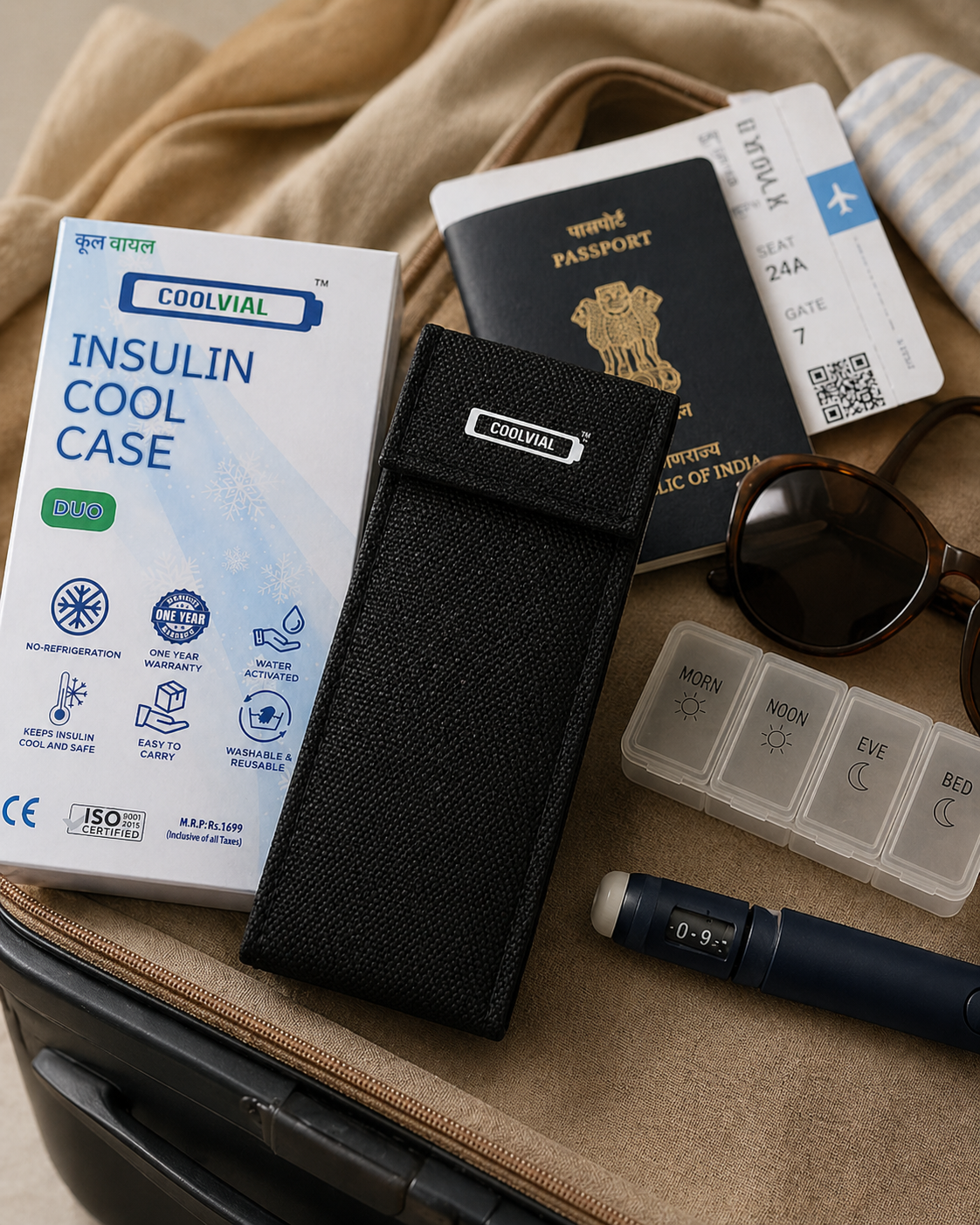
Regularly check and replenish your emergency kit. Think of it as your personal power cut survival guide in a bag, ready for any eventuality. Ensure your COOLVIAL insulin cool case is packed and easily accessible. For a list of places where you can restock, see our guide on 24-Hour Pharmacies in Bengaluru for Insulin Emergencies — Updated List.
Frequently Asked Questions (FAQs)
Q: Can I use a regular insulated lunch bag to store insulin during a power cut? A: A regular insulated lunch bag can offer some temporary protection, but it’s not designed for prolonged temperature control like an evaporative cooling case. For best results and to ensure insulin stays within safe temperatures for more than a few hours, a purpose-built insulin cooler like COOLVIAL Duo is recommended.
Q: How long can unopened insulin stay out of the fridge during a power cut in Bengaluru’s climate? A: Unopened insulin should ideally be kept between 2-8°C. During a power cut, if the ambient temperature in Bengaluru is typically between 18-33°C, unopened insulin can tolerate being out of refrigeration for a very limited time, generally not more than a few hours, before risking degradation. It’s best to transfer it to an evaporative cooler like COOLVIAL Duo immediately.
Q: What is the maximum temperature opened insulin can tolerate? A: Most opened insulin pens or vials can be stored at room temperature, typically up to 30°C, for a period of 28 days. Exceeding 30°C for extended periods can significantly reduce its effectiveness, making it crucial to use an evaporative cooler during power cuts.
Q: Where can I get new insulin if my supply is compromised during a long power cut? A: During a prolonged power cut in Bengaluru, you can obtain new insulin from 24-hour pharmacies like Apollo Pharmacy or MedPlus, or from hospital pharmacies at Manipal Hospital (Old Airport Road), Apollo Hospital (Bannerghatta Road), or Fortis Hospital (Cunningham Road), as these facilities typically have backup power and cold storage.
Q: Is it safe to use insulin that has been exposed to high temperatures but looks normal? A: Even if insulin looks normal after exposure to high temperatures (above 30°C), its effectiveness may be compromised, leading to unpredictable blood sugar levels. It’s always safer to discard insulin that has been exposed to extreme temperatures and obtain a fresh supply, as its chemical integrity might be affected.
Q: How often do I need to re-activate an evaporative cooling case like COOLVIAL Duo? A: The COOLVIAL Duo maintains its cooling effect for 12-16 hours on a single activation. For extended power cuts, you should re-immerse the inner pouch in cold water every 12-16 hours or when you notice the cooling effect diminishing, to ensure continuous protection for your insulin.
Conclusion: Stay Prepared, Stay Safe
Living with diabetes in Bengaluru, while rewarding, requires vigilance and preparation, especially concerning the unpredictable nature of power cuts. By understanding local power patterns, having an immediate action plan, and investing in reliable solutions like the COOLVIAL Duo, you can confidently navigate any power disruption. Your insulin is your lifeline, and protecting it ensures your continued health and peace of mind.
Don’t let power cuts compromise your diabetes management. Be proactive, stay informed, and equip yourself with the right tools.
Order your COOLVIAL Duo today at Rs 1,099 with code COOLHEAL (MRP Rs 1,699) and ensure your insulin is always safe. Visit coolvial.com or connect via WhatsApp at wa.me/918766952300.
This article is for general information. Always consult your endocrinologist or diabetologist before changing insulin storage or dosing practices.
How We Researched This — This article is compiled using RSSDI guidelines for diabetes management, ICMR-INDIAB data for diabetes prevalence, local Bengaluru hospital directories, and information from the Apollo Pharmacy network to provide accurate and relevant guidance for diabetics in Bengaluru.
7 Practical Steps: Your Power Cut Survival Guide for Diabetics in Bengaluru
COOLVIAL keeps insulin safe in India's heat. 48+ hours, no electricity needed.