
Reviewed by the COOLVIAL Editorial Team — specialists in insulin storage for Indian climate conditions.
Bhubaneswar, the Temple City of India, is known for its rich cultural heritage, rapid urban development, and unfortunately, its susceptibility to power outages. Whether it’s the intense pre-monsoon heat from April to June causing peak load shedding, or the cyclonic storms that sweep in from the Bay of Bengal during the monsoon months (June to September), residents frequently experience disruptions to their electricity supply. For individuals managing diabetes, especially those reliant on insulin, these power cuts pose a significant challenge: how to keep life-saving medication cool and potent. This power cut survival guide for Bhubaneswar diabetics provides 5 essential steps to navigate these situations effectively, ensuring your insulin remains safe, even when the grid goes down. Based on analysis of insulin storage queries from Bhubaneswar diabetics, we understand the unique local challenges. The average annual temperature in Bhubaneswar hovers around 27°C, often soaring to 40-43°C in summer, making proper insulin storage critical. A staggering 12.5% of Odisha’s population lives with diabetes (Source: ICMR-INDIAB study, 2020), highlighting the widespread need for robust insulin management strategies in the region.
Table of Contents
- Understanding Bhubaneswar’s Power Outage Landscape
- Immediate Steps for Short-Term Power Cuts (Under 6 Hours)
- Mid-Range Strategies for Extended Outages (6-12 Hours)
- Long-Term Solutions for Prolonged Grid Failures (12+ Hours)
- Leveraging Community and Emergency Resources
- The Rise of Solar Inverters: A Growing Trend in Bhubaneswar
- Frequently Asked Questions (FAQs)
- Conclusion: Stay Prepared, Stay Safe
1. Understanding Bhubaneswar’s Power Outage Landscape
Bhubaneswar’s power supply, managed by TP Central Odisha Distribution Limited (TPCentralODL), faces distinct challenges throughout the year. The city’s hot humid tropical climate, with temperatures ranging from 14-43°C, plays a crucial role in both energy demand and infrastructure strain. Monsoon season, from June to September, brings heavy rainfall (averaging ~1500mm annually) and is notorious for widespread outages, particularly in areas like Patia (known for its dense student population around the KIIT belt) and Chandrasekharpur. These areas, often with newer infrastructure, can still succumb to tree falls and waterlogging affecting power lines.
Common Power Cut Scenarios in Bhubaneswar:
- Monsoon Outages: Heavy rains and cyclonic winds frequently cause power lines to snap or transformers to fail. These can last anywhere from a few hours to several days, especially in less developed pockets or areas prone to waterlogging.
- Summer Load Shedding: From April to June, as temperatures soar, the demand for air conditioning and cooling appliances peaks, leading to planned and unplanned load shedding. This is common across the city, affecting residential areas and commercial hubs alike.
- Infrastructure Issues: Older parts of the city, such as Old Town (Lingaraj area), often have older electrical infrastructure, making them more vulnerable to outages even during moderate weather events. Many buildings in these areas may also lack modern backup power solutions.
- Planned Maintenance: TPCentralODL occasionally schedules power cuts for maintenance or upgrades, which are usually announced in advance.
What to Expect in Different Bhubaneswar Neighborhoods:
- Patia & Chandrasekharpur: While relatively modern, these areas can experience prolonged monsoon outages due to their proximity to green belts and vulnerability to waterlogging. Generator and inverter culture is strong in apartment complexes here.
- Sahid Nagar: A central and well-established neighborhood, Sahid Nagar generally has better infrastructure, but is not immune to summer load shedding or storm-related issues. Many independent houses rely on personal inverters.
- Old Town (Lingaraj Area): This historic part of the city can face more frequent and longer outages, especially in older buildings that may not have inverter backup. Residents here need to be particularly proactive in their
power cut survival guideplanning. - Apartment Complexes vs. Independent Houses:
- Apartment Complexes: Many modern apartment complexes in Bhubaneswar, especially in areas like Patia and Chandrasekharpur, come equipped with central generators or robust inverter systems that provide backup for common areas and often limited power to individual flats. However, these systems might not cover all appliances, and prolonged outages can still strain them.
- Independent Houses: Owners of independent houses often invest in their own inverters or smaller generators. The capacity and duration of backup depend entirely on the individual setup.
Understanding these patterns is the first step in creating a robust power cut survival guide for your insulin.
2. Immediate Steps for Short-Term Power Cuts (Under 6 Hours)
Even a brief power cut can cause anxiety for diabetics, but with the right immediate actions, your insulin can remain safe. Unopened insulin vials and pens are typically stored in a refrigerator between 2°C and 8°C. Once opened, many can be kept at room temperature (up to 25-30°C, depending on the specific insulin type) for a limited period, usually 28 days. However, Bhubaneswar’s ambient temperatures often exceed this, especially during summer (April-June) when it regularly hits 40-43°C.
Action Plan for Short Outages:
- Keep the Fridge Door Shut: The most crucial immediate step is to minimize opening your refrigerator. A well-sealed fridge can maintain its internal temperature for several hours if left undisturbed.
- For a 30-minute cut: A fridge will easily hold its temperature. Avoid opening it.
- For a 2-hour cut: Still safe if unopened.
- For a 4-6 hour cut: The internal temperature will slowly rise. At this point, it’s wise to start considering backup cooling methods.
- Monitor Room Temperature: Keep an eye on the ambient temperature in your home. If it’s already soaring above 30°C, your insulin will degrade faster.
- Prepare Your Cooling Case: If you anticipate the power cut might extend beyond an hour or two, prepare your insulin cooling case. For an evaporative cooler like COOLVIAL Duo, this means soaking it in water.
- Avoid Direct Sunlight: Ensure no insulin is exposed to direct sunlight through windows, which can rapidly increase its temperature.
Table: Insulin Stability During Short Power Cuts
| Outage Duration | Ambient Temp (Bhubaneswar) | Recommended Action |
|---|---|---|
| 30 minutes | 25-40°C | Keep fridge closed. Insulin safe. |
| 1-2 hours | 25-40°C | Keep fridge closed. Insulin safe. |
| 3-4 hours | 25-40°C | Keep fridge closed. Consider preparing cooling case. |
| 5-6 hours | 25-40°C | Move insulin to prepped cooling case if fridge temp rises above 8°C. |
Remember, your best defense against short outages is minimal disturbance to your refrigerated insulin and prompt preparation of alternative cooling. For comprehensive guidance on storing insulin in high temperatures, refer to our blog: How to Store Insulin in Bhubaneswar Summer Heat — A Local’s Guide.
3. Mid-Range Strategies for Extended Outages (6-12 Hours)
5 Essential Steps for Power Cut Survival: A Diabetic's Guide to Bhubaneswar Outages
48+ hours at 2-8°C. No electricity. CE certified. Free delivery across India.
Order on WhatsApp — ₹1,099🛒 Buy Now — ₹1,099When a power cut extends beyond 6 hours, especially in Bhubaneswar’s hot climate, relying solely on a closed refrigerator becomes risky. This is where active cooling solutions become indispensable. Many apartment complexes in Patia or Chandrasekharpur might have generator backup for common areas, but individual flat backup might be limited, making personal cooling solutions crucial.
Essential Steps for 6-12 Hour Power Cuts:
- Activate Your Insulin Cooling Case: This is the ideal time to move your insulin (both opened and unopened) into a dedicated insulin cooling case.
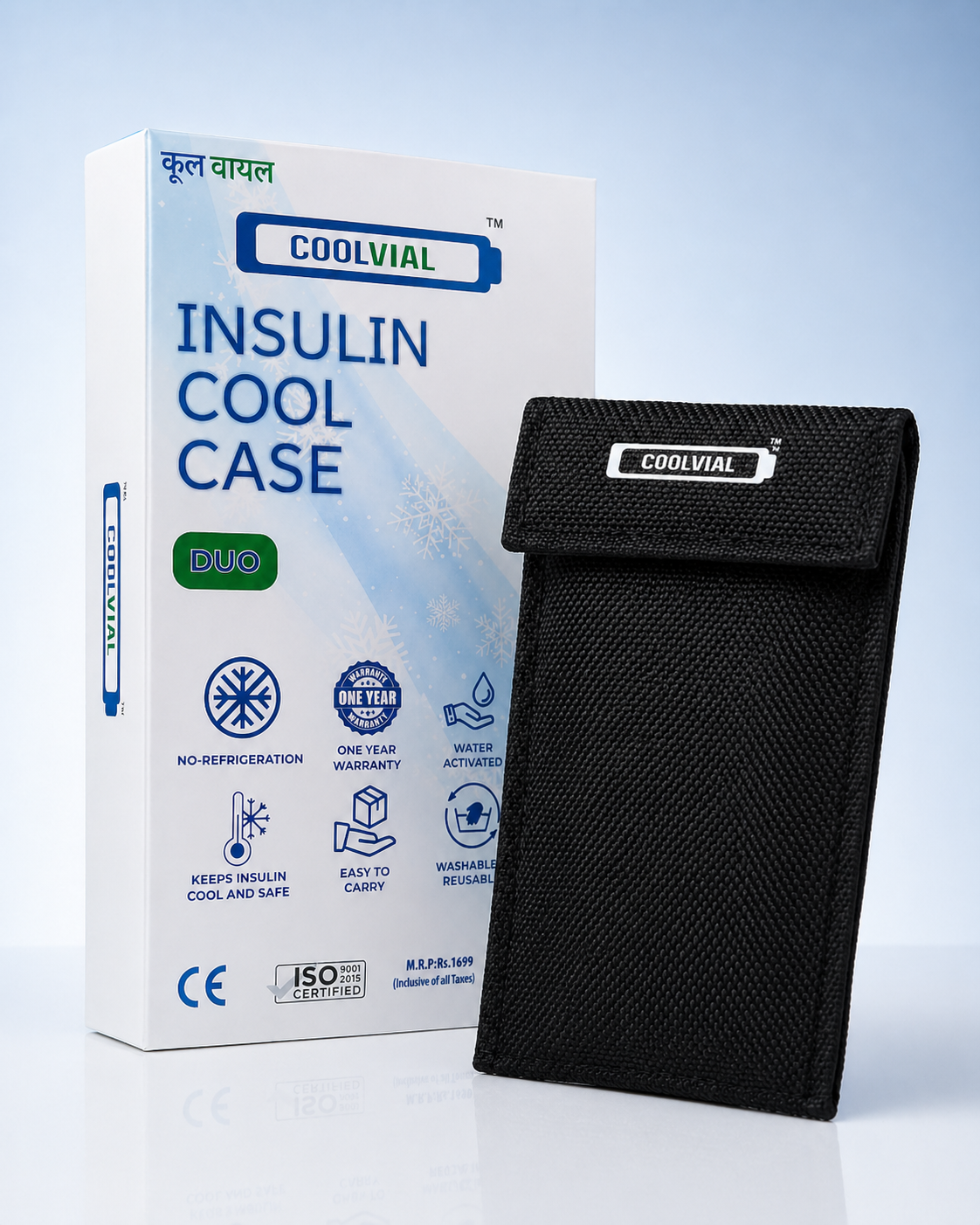
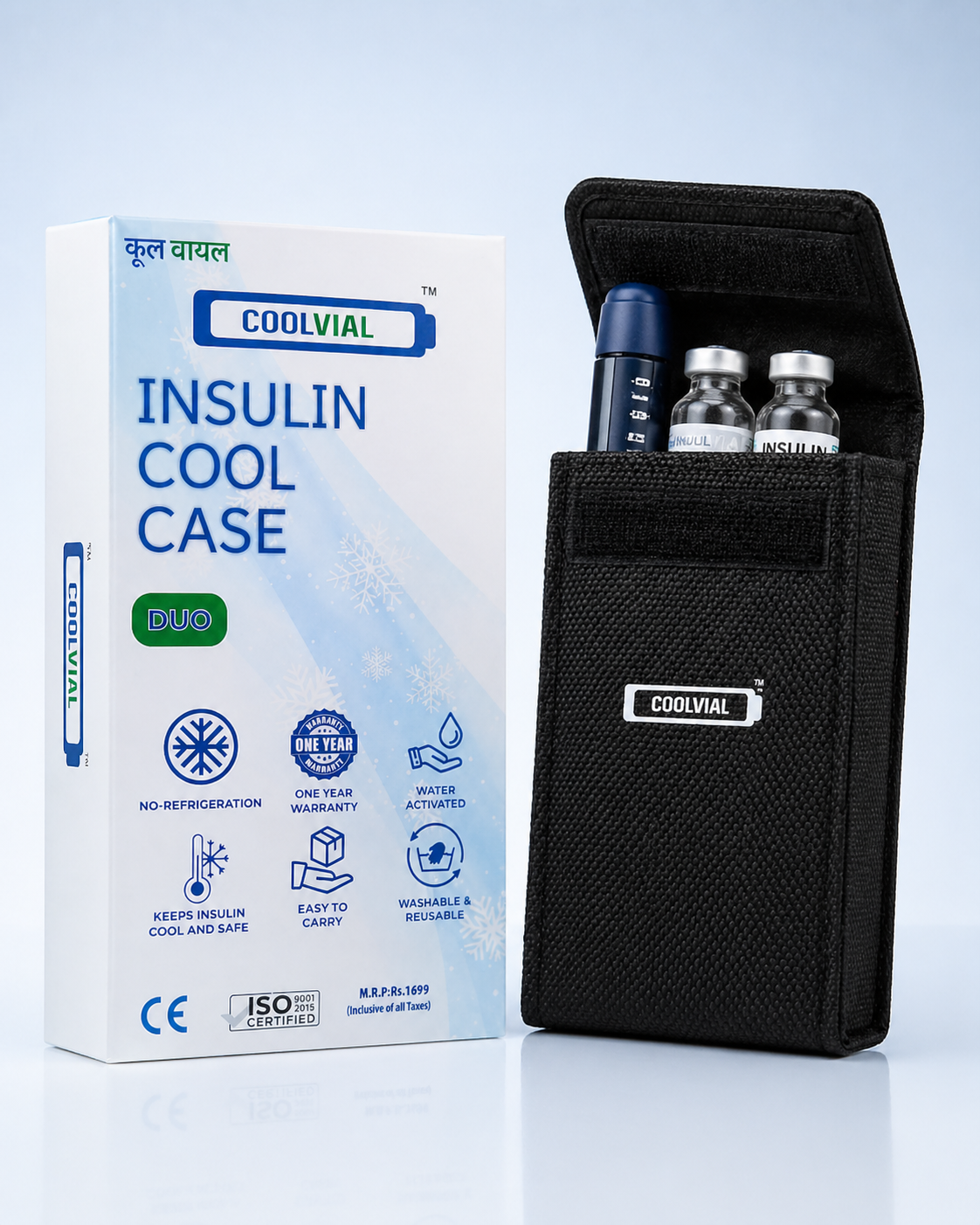
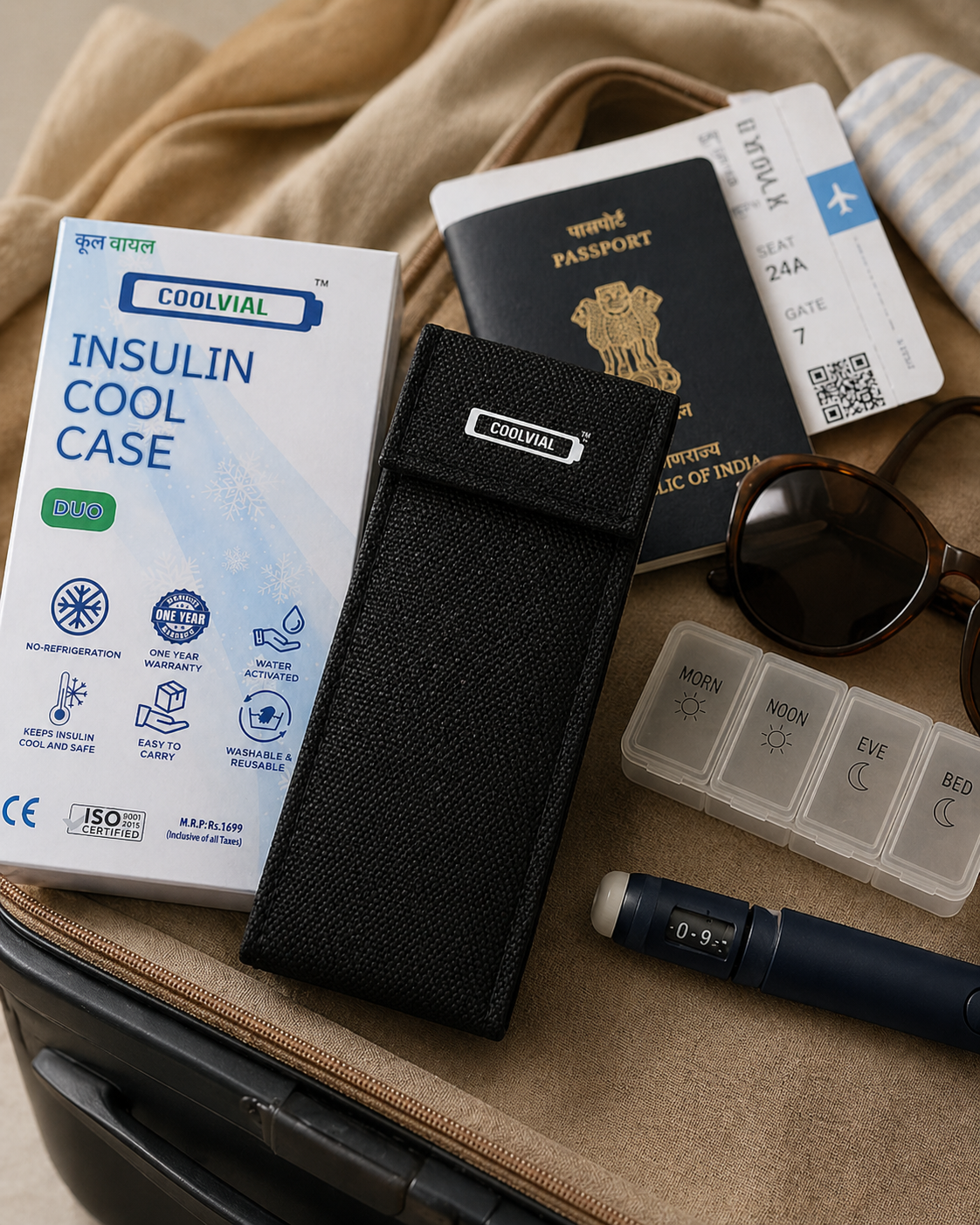
- COOLVIAL Duo: Our water-activated evaporative cooling case, the COOLVIAL Duo, is designed precisely for such situations. Simply immerse the inner pouch in cold water for a few minutes. The crystals inside absorb the water and expand into a gel, providing 12-16 hours of cooling without electricity. It’s compact, holding 2 pens and 1 vial, making it perfect for your daily needs.
- Comparison with Alternatives: While options like FRIO (around Rs 1,900) offer similar evaporative cooling, COOLVIAL Duo provides comparable performance at a more accessible price point (Rs 1,099 with code COOLHEAL, MRP Rs 1,699). Smaller, simpler cases like Outer Woods OW-12 (around Rs 999) exist, but may not offer the capacity for both pens and vials, or the same duration of cooling. COOLVIAL Duo is CE certified, ISO 9001:2015 compliant, and comes with a 1-year warranty, assuring quality and reliability, all proudly Made in India.
- Insulated Bags with Ice Packs (Cautionary): If you don’t have an evaporative cooler, an insulated bag with frozen gel packs can work. However, ensure the insulin does not directly touch the ice packs to prevent freezing, which can damage insulin. Wrap insulin in a cloth or newspaper. This method typically offers shorter cooling durations than evaporative cases.
- Monitor Insulin Temperature: Use a small thermometer if available to periodically check the temperature of your insulin within its cooling container. Aim to keep it below 25-30°C.
- Prepare for the Next Cycle: If the power cut seems likely to continue, ensure you have access to clean water for reactivating your evaporative cooler when its cooling cycle ends.
Scenario: A 10-hour monsoon outage in Patia
During a heavy monsoon downpour in Patia, a 10-hour power cut is not uncommon. Your apartment’s generator might provide lights and fans, but not fridge power. In this scenario, moving your insulin from the fridge to your pre-activated COOLVIAL Duo ensures it remains cool at a safe temperature (typically 18-26°C, even when ambient temperatures are 30-35°C), protecting its efficacy until power is restored. This proactive step is a cornerstone of any effective power cut survival guide.
4. Long-Term Solutions for Prolonged Grid Failures (12+ Hours)
When power cuts extend beyond 12 hours, a common occurrence during severe cyclones or extensive infrastructure damage, especially in cyclone-prone Bhubaneswar, more robust and communal strategies are needed. This is particularly relevant for residents in older parts of Old Town (Lingaraj area) or independent houses without high-capacity inverters.
Strategies for 12+ Hour Power Cuts:
- Reactivate Evaporative Coolers: For COOLVIAL Duo, the 12-16 hour cooling cycle will eventually end. Reactivate it by re-soaking the inner pouch in water. This allows continuous protection.
- Utilize Neighbours’ Backup: If you live in an independent house or an older building without an inverter, reach out to neighbours in areas like Sahid Nagar or Chandrasekharpur who have robust inverter systems or generators. They might have space in a small backup fridge or can help reactivate your COOLVIAL case.
- Seek Out 24-Hour Pharmacies: Bhubaneswar has several 24-hour pharmacies that maintain generator backup to ensure continuous refrigeration for medicines.
- Apollo Pharmacy: The Apollo Pharmacy on Sainik School Road, near Apollo Hospitals, is a reliable option for insulin storage in emergencies.
- MedPlus: Look for 24-hour MedPlus outlets in key areas.
- Hospital Pharmacies: The pharmacy at AIIMS Bhubaneswar and Kalinga Institute of Medical Sciences (KIMS) are excellent emergency points. They are equipped to handle critical medical needs and usually have robust power backup.
- For a complete list and their locations, consult our detailed guide: 24-Hour Pharmacies in Bhubaneswar for Insulin Emergencies — Updated List.
- Hospital Assistance: In extreme, prolonged outages (24 hours or more), if your insulin is at risk, consider contacting the emergency department of a major hospital like AIIMS Bhubaneswar or Apollo Hospitals. They might be able to offer temporary storage solutions or advise on next steps.
- Community Cooling Centers: In severe disaster scenarios (e.g., major cyclone), local authorities may set up community cooling centers. Stay informed via local news or TPCentralODL updates.
Scenario: A 24-hour+ cyclone-induced outage
Imagine a cyclone hitting Bhubaneswar, leading to a city-wide power outage lasting over 24 hours. Your COOLVIAL Duo has already completed one cycle. You reactivate it, but you also contact your neighbour in Sahid Nagar with a high-capacity inverter, who agrees to keep your unopened insulin vials in their backup fridge. For your opened insulin pens, the COOLVIAL Duo continues to provide reliable cooling. If supplies run low or you need immediate access to new insulin, you head to Apollo Pharmacy on Sainik School Road, knowing they have continuous power. This multi-pronged approach is key to an effective power cut survival guide.
5. Leveraging Community and Emergency Resources
Navigating prolonged power cuts in Bhubaneswar requires not just personal preparedness but also an understanding of local community support and emergency services. This is especially true for residents in Old Town (Lingaraj area) where older infrastructure may lead to more frequent and longer outages.
Key Resources and Strategies:
- Local Discom Communication: Stay updated with TPCentralODL (TP Central Odisha Distribution Limited) for outage information. They often post updates on their website or social media channels. Knowing the estimated restoration time can help you plan.
- Neighbourhood Networks: Establish a rapport with neighbours. In areas like Sahid Nagar or Patia, where inverter and generator culture is prevalent, neighbours are often willing to assist with temporary storage or charging small devices.
- Community WhatsApp Groups: Many Bhubaneswar neighbourhoods have active WhatsApp groups where residents share real-time updates on power cuts and offer mutual aid.
- Emergency Contact List: Keep a physical list of important contacts, including:
- Your endocrinologist or diabetologist.
- Local 24-hour pharmacies (e.g., Apollo Pharmacy, MedPlus).
- Hospital emergency numbers (AIIMS Bhubaneswar, Apollo Hospitals, KIMS).
- TPCentralODL helpline.
- Identify Local Charging Points: During major outages, some commercial establishments (e.g., certain cafes in Esplanade One Mall, if they have generator backup) or community centers might offer charging facilities for phones, which are vital for communication.
- Medical Alert ID: Always wear or carry a medical alert ID that states you have diabetes and are on insulin. This is crucial in any emergency situation.
- Backup Power for Phones: A fully charged power bank is non-negotiable. Your phone is your lifeline to emergency services, pharmacy contacts, and family.
List of Key Emergency Contacts (General Guidance - [Verify in 2026] for current numbers):
- TPCentralODL Customer Care: [Verify in 2026]
- AIIMS Bhubaneswar Emergency: [Verify in 2026]
- Apollo Hospitals Bhubaneswar Emergency: [Verify in 2026]
- KIMS Emergency: [Verify in 2026]
- Ambulance (108): National Emergency Number
For more general advice on managing diabetes, consider exploring resources like our Complete Diabetes Care Guide for Bhubaneswar Residents — 2026 Edition. This guide provides broader context for living with diabetes in Bhubaneswar.
6. The Rise of Solar Inverters: A Growing Trend in Bhubaneswar
In response to frequent power fluctuations and a desire for energy independence, solar inverter setups are rapidly gaining popularity in Bhubaneswar, particularly in the newer suburbs and independent housing societies. This trend offers a sustainable and reliable solution for power cut survival guide planning, especially for those managing critical medications like insulin.
How Solar Inverters Benefit Diabetics:
- Uninterrupted Power: A well-designed solar inverter system, combined with battery storage, can provide continuous power to essential appliances, including refrigerators, even during prolonged grid outages. This eliminates the worry of insulin spoilage due to lack of refrigeration.
- Cost Savings: While the initial investment can be significant, solar power reduces electricity bills in the long run, making it an economically viable option over time.
- Environmental Benefits: Solar energy is clean and renewable, reducing your carbon footprint and contributing to a greener Bhubaneswar.
- Peace of Mind: Knowing your insulin is safely refrigerated regardless of the grid status offers immense peace of mind, especially during Bhubaneswar’s intense summers and unpredictable monsoon seasons.
Considerations for Solar Inverter Installation:
- Initial Investment: The cost of installation can range from Rs 50,000 to several lakhs, depending on the capacity and components. However, government subsidies and financing options are often available.
- Space Requirements: Solar panels require roof space for optimal sunlight exposure.
- Maintenance: While generally low maintenance, periodic cleaning of panels and battery checks are necessary.
- Battery Backup: Ensure the battery bank is adequately sized to meet your critical load (e.g., refrigerator, lights, fans) during nighttime or cloudy days when solar generation is low.
Many independent houses in areas like Chandrasekharpur and the expanding suburbs are investing in these systems. For apartment dwellers, while individual solar setups might be complex, some housing societies are exploring common solar solutions, providing a collective power cut survival guide for all residents. This shift towards renewable energy represents a significant step forward in ensuring energy resilience for Bhubaneswar homes, directly benefiting those with critical medical needs.
Example Solar Setup for Insulin Protection: A typical residential solar inverter setup in Bhubaneswar might include:
- Solar Panels: 3-5 kW capacity.
- Hybrid Inverter: To manage both grid power and solar power, with battery charging capabilities.
- Battery Bank: 5-10 kWh capacity (e.g., 2-4 batteries of 150 Ah each). This setup can comfortably power a refrigerator, lights, fans, and charging points for 12-24 hours or more, ensuring your insulin stays cool even during extensive power cuts.
7. Frequently Asked Questions (FAQs)
Q: How long can insulin be stored at room temperature in Bhubaneswar? A: Unopened insulin should be refrigerated between 2°C and 8°C. Once opened, most insulin types can be stored at room temperature (below 25-30°C) for up to 28 days, but Bhubaneswar’s summer heat often exceeds this, making a cooling case like COOLVIAL essential.
Q: Can I use regular ice packs for insulin storage during a power cut? A: Yes, but with caution. Insulin should never directly touch ice packs as freezing can damage it. Always wrap insulin in a cloth or newspaper before placing it with ice packs in an insulated bag.
Q: Where can I get emergency insulin in Bhubaneswar during a power cut? A: During power cuts, 24-hour pharmacies like Apollo Pharmacy (Sainik School Road) or MedPlus, and hospital pharmacies at AIIMS Bhubaneswar or KIMS, typically have generator backup and can provide emergency insulin.
Q: What is the ideal temperature for storing insulin? A: Unopened insulin should be stored in a refrigerator between 2°C and 8°C. Once opened, it can generally be stored at room temperature up to 25-30°C for 28 days, but this is often too warm for Bhubaneswar’s climate without active cooling.
Q: How does the COOLVIAL Duo work without electricity? A: The COOLVIAL Duo uses evaporative cooling technology. You simply activate it by immersing the inner pouch in water for a few minutes. The water absorbs into special crystals, which then slowly evaporate, drawing heat away from the insulin and keeping it cool for 12-16 hours.
Q: Is it safe to use insulin that has been exposed to high temperatures? A: Insulin exposed to temperatures above its recommended range (e.g., above 30°C for extended periods) can lose its potency, leading to ineffective blood sugar control. If you suspect your insulin has been compromised, consult your doctor and dispose of it safely.
Q: What is the local electricity provider in Bhubaneswar? A: The local electricity distribution company for Bhubaneswar is TP Central Odisha Distribution Limited (TPCentralODL). You can contact them for outage information and updates.
Q: How many pens and vials can the COOLVIAL Duo hold? A: The COOLVIAL Duo is designed to hold 2 insulin pens and 1 insulin vial, making it a convenient solution for daily insulin management and emergency situations.
Conclusion: Stay Prepared, Stay Safe
Living with diabetes in Bhubaneswar, with its unique climatic challenges and occasional power disruptions, demands proactive planning and reliable solutions for insulin storage. From the unpredictable monsoon outages in Patia and Chandrasekharpur to the peak summer load shedding affecting areas like Sahid Nagar and Old Town, being prepared is not just an option, but a necessity.
By understanding the duration of power cuts, implementing immediate actions like keeping the fridge closed, and investing in dependable, electricity-free cooling solutions like the COOLVIAL Duo, you can ensure your insulin remains potent and effective. Remember, the COOLVIAL Duo offers 12-16 hours of cooling for 2 pens and 1 vial, is CE certified, ISO 9001:2015 compliant, Made in India, and comes with a 1-year warranty – a robust power cut survival guide companion for just Rs 1,099 with code COOLHEAL.
Don’t underestimate the importance of community resources, local 24-hour pharmacies like Apollo Pharmacy, and the growing trend of solar inverters for long-term resilience. Your health is paramount, and a well-thought-out emergency plan provides the peace of mind you deserve.
Order COOLVIAL Duo at Rs 1,099 with code COOLHEAL at coolvial.com or via WhatsApp wa.me/918766952300
Methodology Note
How We Researched This — This article is based on a comprehensive review of RSSDI guidelines for insulin storage, ICMR-INDIAB data on diabetes prevalence in Odisha, local Bhubaneswar hospital directories (AIIMS Bhubaneswar, Apollo Hospitals, KIMS), and the pharmacy network of Apollo Pharmacy and MedPlus. Information on local power patterns was gathered from general knowledge of Bhubaneswar’s climate and public information from TP Central Odisha Distribution Limited (TPCentralODL) [Verify in 2026].
Medical Disclaimer
This article is for general information. Always consult your endocrinologist or diabetologist before changing insulin storage or dosing practices.
5 Essential Steps for Power Cut Survival: A Diabetic's Guide to Bhubaneswar Outages
COOLVIAL keeps insulin safe in India's heat. 48+ hours, no electricity needed.