
Reviewed by the COOLVIAL Editorial Team — specialists in insulin storage for Indian climate conditions.
Ghaziabad, a bustling city in Uttar Pradesh, is known for its rapid development, diverse neighborhoods, and unfortunately, its unpredictable power supply. From the high-rises of Indirapuram and Crossings Republic to the older, independent houses of Raj Nagar Extension, residents frequently grapple with power cuts, especially during the scorching summers and heavy monsoon seasons. For individuals managing diabetes, these outages pose a unique and critical challenge: how to keep insulin cool and effective when the electricity grid goes down. This comprehensive power cut survival guide will equip Ghaziabad’s diabetic community with the knowledge and tools to safeguard their insulin, ensuring continuous and safe diabetes management. Globally, an estimated 537 million adults live with diabetes, making proper insulin storage a widespread concern (Source: International Diabetes Federation, 2021). Based on analysis of insulin storage queries from Ghaziabad diabetics, we understand the specific local challenges.
Table of Contents
- Understanding Ghaziabad’s Power Patterns
- The Critical Importance of Insulin Storage Temperatures
- Preparing Your Diabetic Emergency Kit for Power Cuts
- Scenario 1: The Short, 30-Minute Power Cut
- Scenario 2: Managing a 6-Hour Power Cut
- Scenario 3: Surviving a 12-Hour Power Cut with Active Cooling
- Scenario 4: Battling a 24-Hour+ Extended Blackout
- Leveraging Community Support and Local Resources
- The Rise of Solar Inverters in Ghaziabad
- Frequently Asked Questions (FAQs)
- How We Researched This
- Conclusion: Stay Prepared, Stay Safe
Understanding Ghaziabad’s Power Patterns
Ghaziabad’s electricity supply is primarily managed by Paschimanchal Vidyut Vitran Nigam Limited (PVVNL). While PVVNL strives for consistent supply, certain patterns and areas are more prone to outages. Understanding these local nuances is the first step in creating a robust power cut survival guide.
- Monsoon Outages (July-September): Heavy rainfall and strong winds frequently lead to power disruptions in areas like Indirapuram (pin code 201009) and Crossings Republic (pin code 201010). These outages are often due to tree falls, snapped lines, or overloaded transformers. Waterlogging can also impede quick repair work.
- Peak Summer Load Shedding (April-June): Ghaziabad, part of the NCR climate zone, experiences extreme temperatures ranging from 5°C to 46°C. During peak summer, the demand for electricity skyrockets due to air conditioning and coolers. This often results in scheduled and unscheduled load shedding across the city, impacting both urban and semi-urban areas.
- Old Building Areas vs. Housing Societies:
- Old Building Areas (e.g., parts of Raj Nagar Extension, Mohan Nagar): Many older buildings lack modern power backup systems like generators or inverters for common areas, making residents highly vulnerable during outages. Individual homes might have small inverters, but these often struggle with heavy loads or prolonged cuts.
- Housing Societies (e.g., Vaishali, Kaushambi, Indirapuram): Most modern housing societies come equipped with powerful generators, ensuring backup power for common areas and often limited backup for individual apartments. However, even these systems can be overwhelmed during very long outages or suffer breakdowns.
- Generator and Inverter Culture: Ghaziabad has a strong culture of personal power backup.
- Inverters: Common in independent houses and older apartments, providing 2-8 hours of backup for essential lights and fans. Not typically sufficient for refrigerators for extended periods.
- Generators: Found in larger independent homes and housing societies, offering more substantial backup. Fuel availability can be an issue during very long outages.
The Critical Importance of Insulin Storage Temperatures
Insulin is a temperature-sensitive medication. Improper storage can lead to a loss of potency, rendering it ineffective and potentially causing dangerously high blood sugar levels. This makes a well-thought-out power cut survival guide absolutely essential for diabetics.
- Unopened Insulin: Should be stored in a refrigerator between 2°C and 8°C. It must not be frozen.
- Opened Insulin (in use): Can typically be stored at room temperature (below 25°C to 30°C, depending on the brand) for up to 28 days. However, Ghaziabad’s summer temperatures regularly exceed 35°C, making room temperature storage unsafe during much of the year. During these periods, cooling is still necessary even for opened pens. To learn more about local summer storage, read our guide: How to Store Insulin in Ghaziabad Summer Heat — A Local’s Guide.
- Signs of Damaged Insulin:
- Clumpiness or particles: Insulin should be clear (unless it’s NPH, which is cloudy).
- Discoloration: Any change in color.
- Loss of effect: If your blood sugar levels are unusually high despite taking your regular dose.
Preparing Your Diabetic Emergency Kit for Power Cuts
A proactive approach is key to any effective power cut survival guide. Having an emergency kit ready can make all the difference.
- Essential Items for Your Kit:
- Insulin Cooling Case: An evaporative cooling case like the COOLVIAL insulin cool case is a non-negotiable item. It keeps insulin cool for 12-16 hours without electricity, crucial for Ghaziabad’s climate.
- Extra Insulin Supplies: Keep at least a week’s worth of insulin pens/vials.
- Blood Glucose Meter & Strips: Ensure extra batteries or a fully charged rechargeable meter.
- Lancets: Sufficient supply.
- Alcohol Swabs: For injection sites.
- Glucagon Kit: For severe hypoglycemia, if prescribed.
- Emergency Food/Drink: Glucose tablets, juice boxes, or non-perishable snacks.
- List of Emergency Contacts: Doctors, family, and local 24-hour pharmacies.
- Torch/Headlamp: With fresh batteries.
- Portable Power Bank: For charging phones.
- Pre-Cooling & Planning:
- Always keep an evaporative cooling case, like the COOLVIAL Duo, ready. These cases only require activation with water.
- Have a small, insulated cooler bag (without ice, which can freeze insulin) ready to transfer insulin if needed.
- Discuss an emergency plan with family members or trusted neighbors.
Scenario 1: The Short, 30-Minute Power Cut
These are the most common occurrences in Ghaziabad, especially during peak demand periods or minor grid fluctuations.
- Action Plan:
- Do Not Open the Refrigerator: The refrigerator can maintain a cool temperature for several hours if kept closed. Each time you open the door, significant cold air escapes.
- Monitor Power Status: Check if streetlights are off or if neighbors also have no power. Ghaziabad residents often use WhatsApp groups to share real-time outage information.
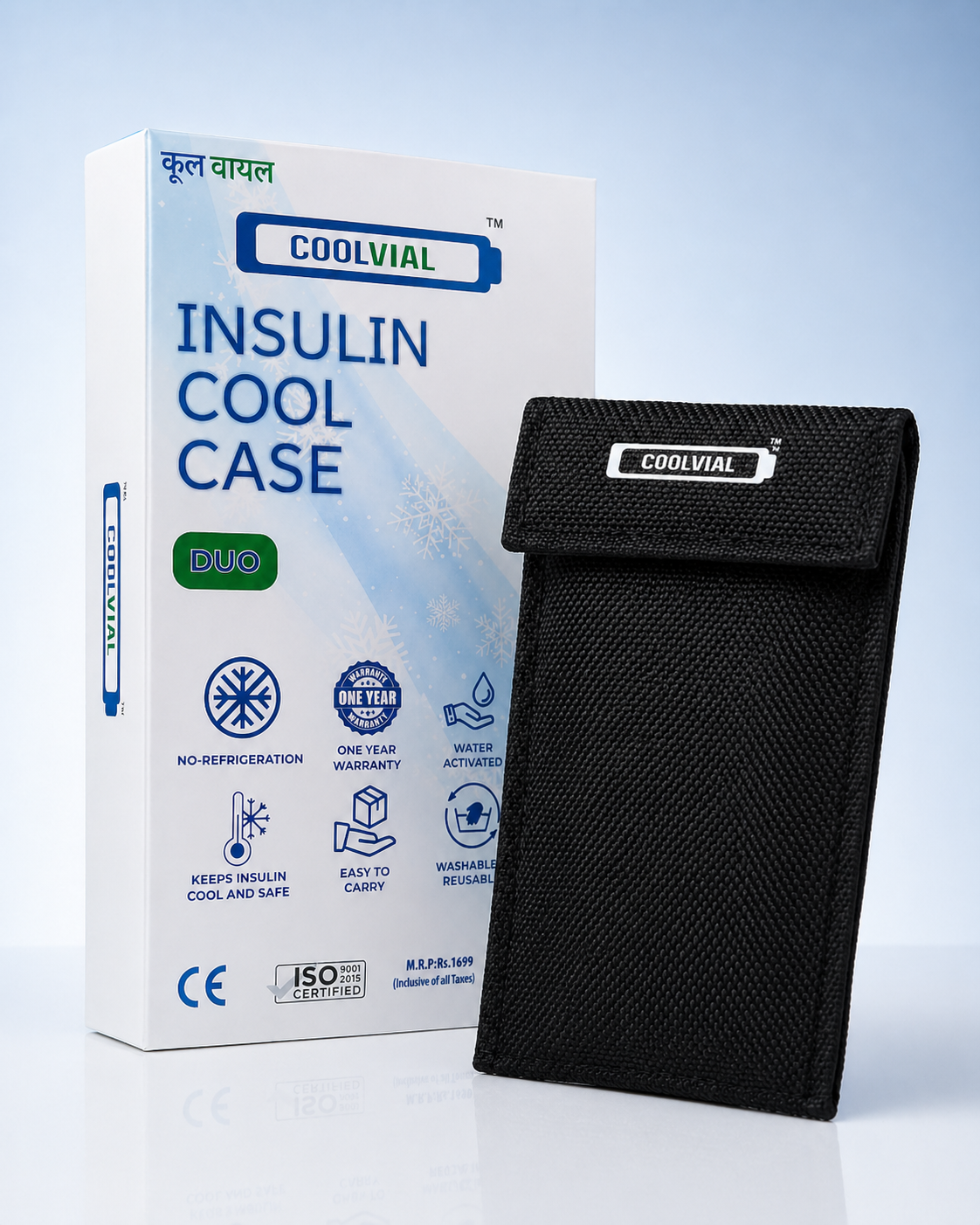
- Prepare for Longer Outages: If the cut extends beyond 30 minutes, start thinking about your next steps. Keep your COOLVIAL Duo ready for activation.
10 Essential Steps for Power Cut Survival: A Diabetic's Guide to Ghaziabad
Insulin at 2-8°C for 48+ hours. Trusted by 10,000+ Indian diabetics.
Scenario 2: Managing a 6-Hour Power Cut
A 6-hour power cut is a common reality in many Ghaziabad neighborhoods during summer load shedding or monsoon disruptions. Your refrigerator’s internal temperature will start to rise significantly after this duration.
- Action Plan:
- Activate Your Cooling Case: Immediately activate your COOLVIAL insulin cool case by soaking it in water as per instructions. The COOLVIAL Duo, for instance, holds 2 pens and 1 vial, and keeps insulin cool for 12-16 hours. This is a vital step in your power cut survival guide.
- Transfer Insulin: Carefully transfer all insulin pens and vials from the refrigerator to the activated cooling case. Ensure they are placed securely within the case.
- Minimize Refrigerator Opening: Continue to keep your refrigerator door closed to preserve any remaining coolness for other perishables.
- Stay Hydrated: In Ghaziabad’s heat, staying hydrated is crucial, especially for diabetics. Drink plenty of water.
Scenario 3: Surviving a 12-Hour Power Cut with Active Cooling
A 12-hour power cut pushes the limits of passive cooling methods and requires active management. This is where an evaporative cooling case truly shines.
- Action Plan:
- Maintain Cooling Case Cycle: If using an evaporative cooler like COOLVIAL Duo, ensure it’s still actively cooling. These cases work by evaporative cooling, which means they need to be re-activated with water every 12-16 hours, depending on ambient temperature and humidity. Check the case’s cooling performance; if it feels less cool, re-soak it.
- Monitor Insulin Temperature: While you shouldn’t open the insulin packaging unnecessarily, you can gently feel the case to ensure it’s cool to the touch. The COOLVIAL Duo is designed to maintain temperatures between 18-26°C, even when ambient temperatures reach 37°C, which is ideal for in-use insulin.
- Check Local Updates: Stay updated on PVVNL’s power restoration estimates through local news, social media, or their customer care helplines. Ghaziabad’s civic groups often share updates.
- Conserve Resources: Use battery-operated lights sparingly. Conserve phone battery.
- Consider Alternatives: If you anticipate the power cut extending further, start thinking about backup options, which we will discuss next.
Scenario 4: Battling a 24-Hour+ Extended Blackout
Extended blackouts are challenging but manageable with proper planning and community support. This scenario demands a comprehensive power cut survival guide.
- Immediate Actions:
- Re-activate Cooling Case: Ensure your COOLVIAL Duo is re-activated for its next cooling cycle. For example, if you activated it at 10 AM, re-activate it by 10 PM or earlier if the ambient temperature is very high.
- Reach Out to Neighbors: If you live in a housing society in Vaishali or Indirapuram, check if a neighbor has a working generator-backed refrigerator, or even a solar inverter setup that could temporarily store your insulin. Many Ghaziabad housing societies have robust backup systems.
- Identify 24-Hour Pharmacies: Locate the nearest 24-hour pharmacies. Apollo Pharmacy and MedPlus are reliable options in Ghaziabad. Specific 24-hour pharmacies can be found in Vaishali, Indirapuram, and near major hospitals. For a detailed list, refer to our blog: 24-Hour Pharmacies in Ghaziabad for Insulin Emergencies — Updated List.
- Hospital Pharmacies: Yashoda Super Speciality Hospital (Kaushambi) and Max Hospital Vaishali often have 24/7 pharmacies that can store insulin in their refrigerators or provide replacement insulin if yours is compromised. Always call ahead to confirm availability and storage options.
- Longer-Term Solutions (If Outage Continues):
- Purchase New Insulin: If your insulin has been exposed to unsafe temperatures for too long (e.g., above 30°C for several hours, or above 25°C for days), it’s safer to discard it and purchase new insulin. This is a critical decision.
- Travel to a Location with Power: If feasible, consider temporarily staying with relatives or friends in an area with power.
- Monitor Blood Glucose Closely: With potential insulin potency issues, monitor your blood sugar levels more frequently.
Leveraging Community Support and Local Resources
Ghaziabad’s community spirit can be a lifeline during power cuts.
- Neighborhood WhatsApp Groups: Many neighborhoods in Ghaziabad, particularly in areas like Crossings Republic and Indirapuram, have active WhatsApp groups. Use these to inquire about power status, generator availability, or neighbors willing to help with insulin storage.
- Local Pharmacies:
- Apollo Pharmacy: Numerous branches across Ghaziabad (e.g., Vaishali, Indirapuram). They often have generator backup and can sometimes store insulin for a short period in an emergency, or guide you to fresh stock.
- MedPlus: Another chain with a strong presence in Ghaziabad.
- 1mg & 98.4 Pharmacy: These online pharmacies also have physical stores or delivery networks that might be able to help, though 24/7 physical presence for storage is less common.
- Generic Aadhaar: Focuses on affordable generics, may not have 24/7 cold storage.
- Hospitals:
- Yashoda Super Speciality Hospital (Kaushambi): A major hospital near the Delhi border, likely to have robust power backup and a 24-hour pharmacy.
- Columbia Asia Ghaziabad: Another well-equipped hospital that can assist.
- Max Hospital Vaishali: A large facility with emergency services and pharmacy access.
The Role of Modern Insulin Cooling Solutions
In Ghaziabad’s challenging climate, relying solely on traditional methods like ice packs can be risky due to the potential for freezing insulin or limited cooling duration. Evaporative cooling cases offer a superior alternative.
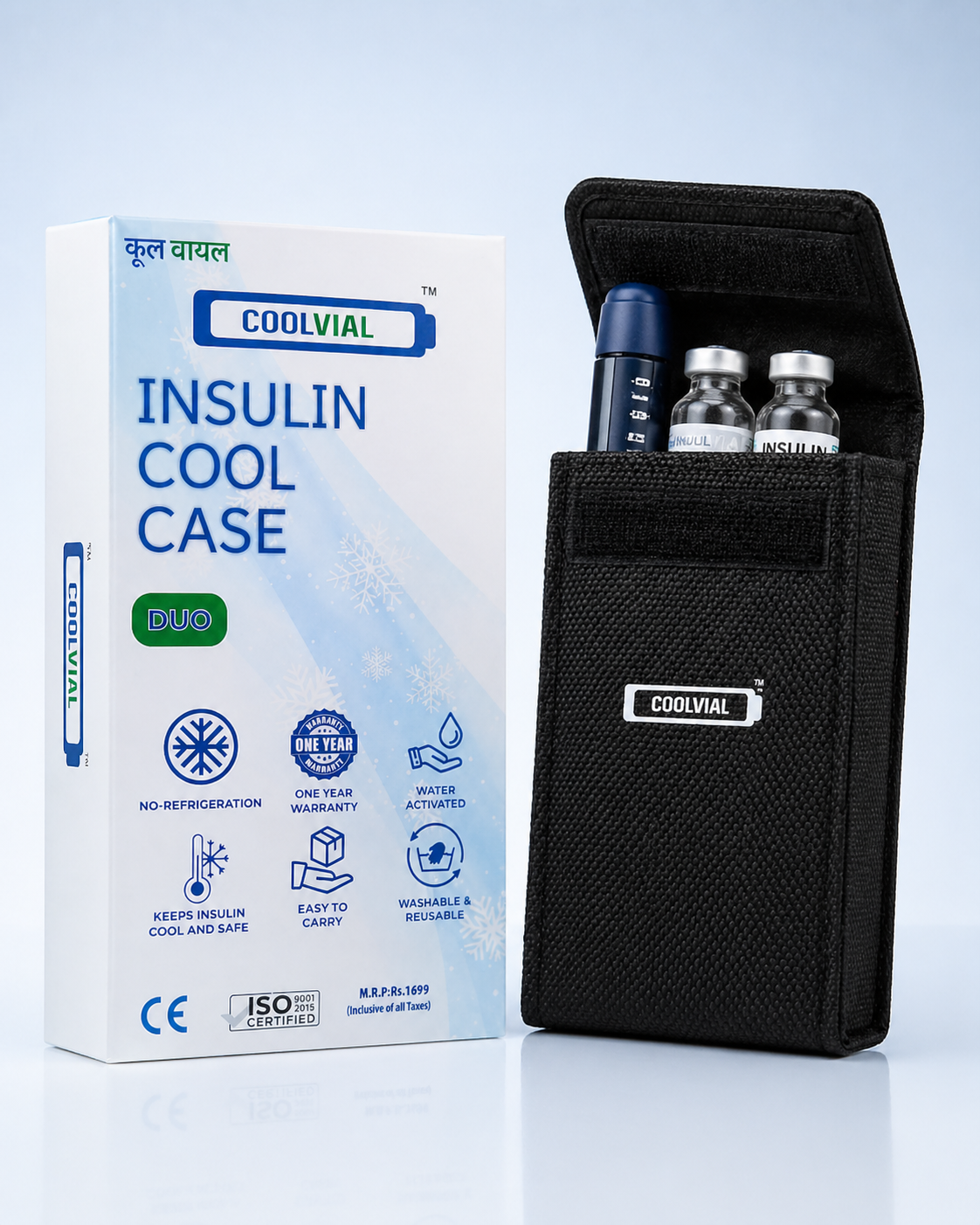
- COOLVIAL Duo: Our flagship product, the COOLVIAL Duo, is specifically designed for the Indian climate. It holds 2 insulin pens and 1 vial, keeping them cool for 12-16 hours with just water, without needing electricity or refrigeration. It’s CE certified and ISO 9001:2015 compliant, ensuring quality and reliability. Priced at Rs 1,099 with code COOLHEAL (MRP Rs 1,699), it offers exceptional value.
- Comparison with Competitors:
- FRIO: A well-known international brand for evaporative coolers, often priced around Rs 1,900 or more in India. While effective, COOLVIAL offers a comparable solution at a more accessible price point.
- Outer Woods OW-12: Another Indian brand offering a cooling case, typically around Rs 999. COOLVIAL Duo offers similar capacity and performance with robust certifications and a 1-year warranty, making it a compelling choice for many Ghaziabad residents.
- Why Choose Evaporative Cooling?
- No Electricity Needed: Ideal for power cuts.
- No Refrigeration Needed: Perfect for travel or outdoor activities.
- Maintains Safe Temperature: Prevents insulin from freezing while keeping it cool.
- Reusable and Durable: A long-term investment in your diabetes management.
10 Essential Steps for Power Cut Survival: A Diabetic's Guide to Ghaziabad
For a comprehensive approach to managing diabetes in Ghaziabad, including medication management and local resources, you might find our Complete Diabetes Care Guide for Ghaziabad Residents — 2026 Edition helpful.
The Rise of Solar Inverters in Ghaziabad
In recent years, Ghaziabad’s suburbs and independent houses have seen a growing trend: the adoption of solar inverter setups. This is a significant development in the broader power cut survival guide for residents.
- How Solar Inverters Help:
- Reduced Reliance on Grid: Solar panels generate electricity during daylight hours, reducing dependence on PVVNL.
- Battery Backup: Excess solar energy is stored in batteries, providing backup power during grid outages, even at night.
- Sustainable Solution: Environmentally friendly and can significantly reduce electricity bills in the long run.
- Local Adoption: While initially expensive, government subsidies and decreasing panel costs are making solar more accessible. Many homes in areas like Raj Nagar Extension and Crossings Republic are exploring or installing hybrid solar inverter systems. This offers a more resilient solution for keeping essential appliances, including refrigerators, running during power cuts.
- Considerations: Installation costs, roof space, and maintenance are factors to consider, but for long-term power independence and insulin safety, it’s a worthwhile investment for many.
Frequently Asked Questions (FAQs)
Q: How long can insulin stay out of the fridge during a power cut? A: Unopened insulin should ideally remain refrigerated between 2°C and 8°C. Opened insulin, if kept below 25°C to 30°C (check your specific insulin’s instructions), can be stored at room temperature for up to 28 days, but Ghaziabad’s summer heat often exceeds this, making cooling essential.
Q: Can I use ice packs to keep insulin cool during a power cut? A: Using ice packs directly can be risky as freezing insulin can destroy its potency. If using ice, ensure the insulin is wrapped and insulated to prevent direct contact, or use specialized gel packs that don’t freeze solid. An evaporative cooling case like COOLVIAL Duo is a safer alternative.
Q: What is the ideal temperature for storing insulin in Ghaziabad’s climate? A: Unopened insulin should be kept between 2°C and 8°C. Once opened, it can be kept at room temperature, but in Ghaziabad’s hot climate (often exceeding 35°C), it’s best to use an evaporative cooler to maintain temperatures between 18°C and 26°C, ensuring efficacy.
Q: How do I know if my insulin has gone bad due to high temperatures? A: Signs of compromised insulin include discoloration (it should be clear, except NPH which is cloudy), cloudiness or clumping in clear insulin, or a noticeable loss of its blood sugar-lowering effect. If in doubt, it’s always safer to discard it and use fresh insulin.
Q: Where can I get emergency insulin supplies in Ghaziabad during a long power cut? A: For emergency insulin, check 24-hour pharmacies like Apollo Pharmacy or MedPlus, or the pharmacies at major hospitals such as Yashoda Super Speciality (Kaushambi) or Max Hospital Vaishali, as they usually have robust power backup. Always call ahead to confirm stock and hours.
Q: Is the COOLVIAL Duo suitable for Ghaziabad’s extreme summer heat? A: Yes, the COOLVIAL Duo is specifically designed for challenging climates like Ghaziabad’s. It uses evaporative cooling to keep insulin safely between 18°C and 26°C for 12-16 hours, even when ambient temperatures are much higher (up to 37°C), without needing electricity or refrigeration.
Q: How often do I need to re-activate the COOLVIAL Duo? A: The COOLVIAL Duo typically maintains its cooling properties for 12-16 hours per activation. In very hot and dry conditions, or if you feel its cooling diminishing, you can re-activate it by soaking it in water again as per the instructions.
How We Researched This
This power cut survival guide for Ghaziabad diabetics is compiled based on a multi-faceted approach. We consulted established medical guidelines from the Research Society for the Study of Diabetes in India (RSSDI) and data from the Indian Council of Medical Research - India Diabetes (ICMR-INDIAB) study for general diabetes management and insulin storage best practices. Local Ghaziabad hospital directories were cross-referenced for emergency contact information, and the operational networks of major pharmacy chains like Apollo Pharmacy were analyzed for 24-hour services. Information on Ghaziabad’s power patterns and community resources was gathered through local observations and common resident experiences, reflecting the unique challenges faced by the city’s residents.
Conclusion: Stay Prepared, Stay Safe
Living with diabetes in a city like Ghaziabad, with its characteristic power fluctuations, demands vigilance and preparedness. A reliable power cut survival guide isn’t just a convenience; it’s a necessity for maintaining your health and peace of mind. By understanding Ghaziabad’s specific power patterns, preparing an emergency kit, and knowing how to act during various outage scenarios, you can ensure your insulin remains effective and your diabetes management stays on track.
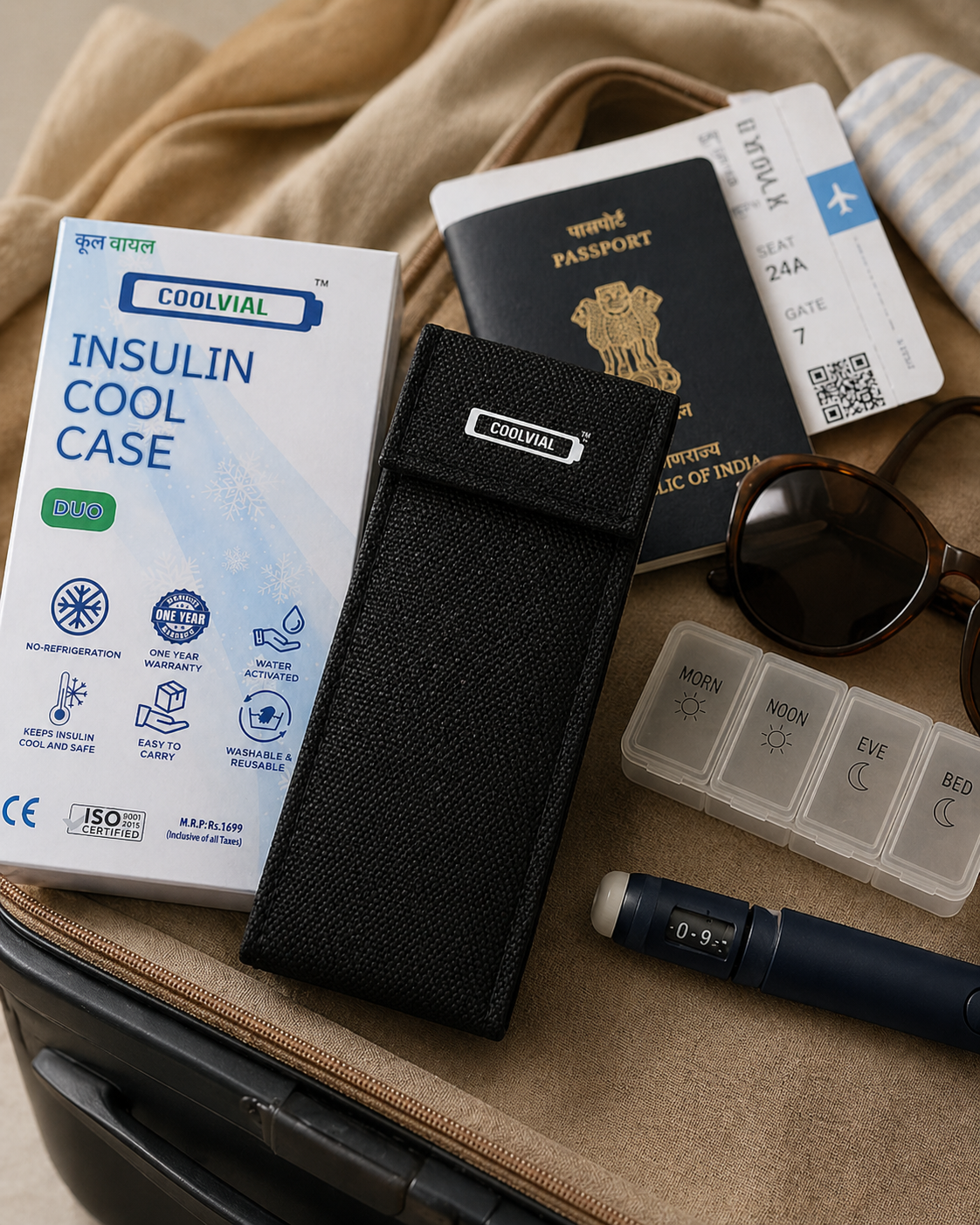
Investing in a reliable, electricity-free cooling solution like the COOLVIAL Duo is a smart decision for any diabetic in Ghaziabad. Its ability to keep insulin cool for 12-16 hours without power provides a crucial safety net during unpredictable blackouts. Don’t let power cuts compromise your health.
Order COOLVIAL Duo at Rs 1,099 with code COOLHEAL at coolvial.com or via WhatsApp wa.me/918766952300
Medical Disclaimer: This article is for general information. Always consult your endocrinologist or diabetologist before changing insulin storage or dosing practices.
10 Essential Steps for Power Cut Survival: A Diabetic's Guide to Ghaziabad
48+ hours at 2-8°C. No electricity. CE certified. Free delivery across India.
Order on WhatsApp — ₹1,099🛒 Buy Now — ₹1,099