
Reviewed by the COOLVIAL Editorial Team — specialists in insulin storage for Indian climate conditions.
Ludhiana, the industrial hub of Punjab, is a city brimming with life, from the bustling markets of Civil Lines to the serene green expanses of Punjab Agricultural University (PAU). With its hot summers, where temperatures can soar from 23°C to a scorching 44°C, and surprisingly cold winters often accompanied by dense fog, managing insulin effectively is a daily challenge for its residents. Based on analysis of insulin storage queries from Ludhiana diabetics, we know that travelling from Ludhiana with insulin requires careful planning, especially when navigating the city’s diverse transport options. Over 77 million Indians are living with diabetes, a number that continues to rise (Source: WHO, 2022). For those dependent on insulin, maintaining its efficacy during travel is paramount, as improper storage can render it useless within hours. This comprehensive guide offers 7 essential, practical tips to ensure your insulin remains safe and potent, whether you’re flying from Sahnewal Airport, catching a train from Ludhiana Junction, or embarking on a road trip to Amritsar or Chandigarh.
Table of Contents
- Understanding Insulin Storage in Ludhiana’s Climate
- Navigating Sahnewal Airport (LUH) with Insulin
- Mastering Train Travel from Ludhiana Junction (LDH)
- Staying Cool on Ludhiana Road Trips: Amritsar, Chandigarh & Mansa Devi
- Tackling App-Cab Realities with Insulin
- International Travel from Ludhiana: Customs & Time Zones
- Frequently Asked Questions (FAQs) About Travelling with Insulin
1. Understanding Insulin Storage in Ludhiana’s Climate
Ludhiana’s climate presents unique challenges for insulin storage. Unopened insulin vials or pens must be kept refrigerated at 2°C to 8°C. Once opened, most insulins can be stored at room temperature (up to 25°C or 30°C depending on the brand) for 28 days. However, Ludhiana’s summer temperatures consistently exceed this, making robust cooling solutions non-negotiable. Even in winter, while ambient temperatures might be lower, exposure to direct sunlight through a car window or prolonged periods in a heated room can quickly compromise insulin integrity.
According to ICMR-INDIAB study data, Punjab has a significant diabetes prevalence, underscoring the need for accessible and reliable insulin management tools for its population. Residents of neighborhoods like Sarabha Nagar, Model Town, and Bhai Randhir Singh Nagar (BRS Nagar) often seek practical advice for maintaining their health routines amidst travel. For a deeper dive into managing diabetes in your daily life, consider our Complete Diabetes Care Guide for Ludhiana Residents — 2026 Edition.
Key considerations for Ludhiana’s climate:
- Summer Heat (23-44°C): Ambient temperatures far exceed the safe storage limits for opened insulin. Direct sun exposure in a vehicle can push temperatures even higher, degrading insulin rapidly.
- Winter Cold (4-19°C, fog): While colder, insulin must not freeze. Freezing can destroy insulin’s protein structure, making it ineffective. Foggy conditions can sometimes lead to unexpected temperature drops.
- Monsoon Humidity (Jul-Sep ~800mm): High humidity doesn’t directly harm insulin but can affect packaging and the performance of some cooling devices if not designed for it.
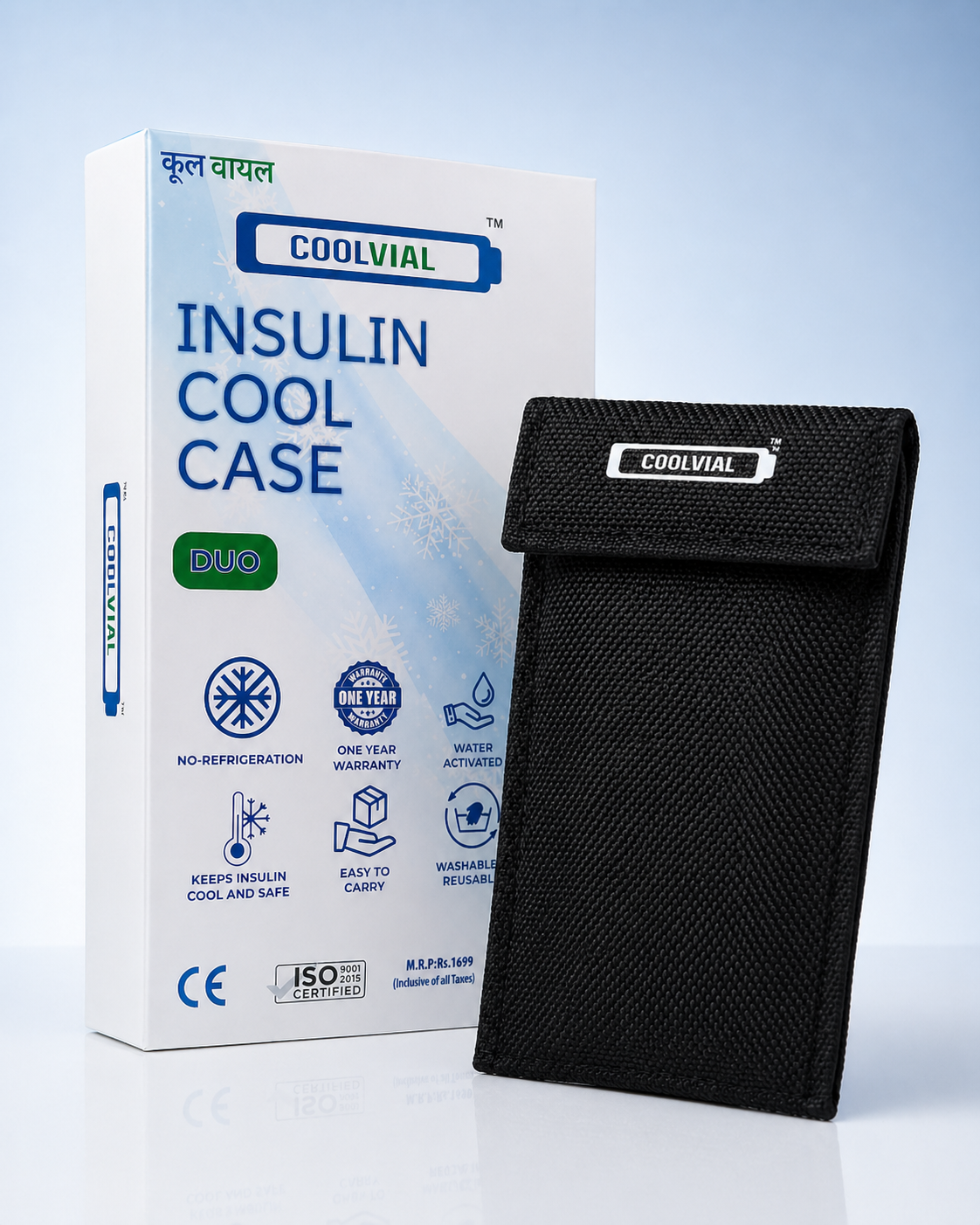
This is where an evaporative cooling case like the COOLVIAL Duo becomes an invaluable companion. Unlike ice packs that can freeze insulin or bulky electric coolers, evaporative coolers use water to create a sustained cool environment, perfectly within the safe temperature range for insulin, without relying on electricity.
2. Navigating Sahnewal Airport (LUH) with Insulin
Sahnewal Airport (LUH), though limited in its connectivity, serves as a crucial gateway for many Ludhiana residents. When flying, especially with insulin, meticulous planning is key. The golden rule for air travel with insulin is: always carry your insulin in your hand luggage. Never check insulin into the cargo hold, as temperatures can drop below freezing, rendering the insulin unusable.
Here’s what you need to know when travelling from Ludhiana with insulin through LUH:
2.1. Security and Check-in Rules for Insulin
- Hand Luggage is Mandatory: Insulin pens, vials, syringes, and lancets must go in your carry-on bag. This protects them from extreme temperatures in the cargo hold and ensures they are accessible.
- Doctor’s Letter: While not always explicitly demanded at domestic airports like LUH, carrying a doctor’s letter or prescription detailing your condition and the need for insulin, syringes, and needles is highly recommended. This can smooth your passage through CISF screening. The letter should be on your diabetologist’s letterhead, stating your name, medication, and the medical necessity.
- Liquid Exemptions: Insulin is a medical liquid and is exempt from the standard liquid restrictions (100ml rule) for carry-on baggage. However, security personnel may visually inspect it.
- Gel-Pack Questions at CISF Screening: If you’re using gel packs (ice packs) to keep your insulin cool, be prepared for questions from CISF officials. They might ask you to explain their purpose. Ensure the gel packs are completely frozen or completely thawed; partially frozen ones can sometimes cause issues. This is where an evaporative cooler like COOLVIAL Duo shines – it doesn’t use gel packs, just water, simplifying security checks.
2.2. Pre-paid Taxi Wait Queues at Sahnewal Airport
Upon arrival at LUH, especially during peak hours or after a flight, pre-paid taxi queues can sometimes extend to 45 minutes or even longer. This is a critical period for your insulin:
- Heat Exposure: Your insulin, even if in a cooling case, will be exposed to ambient temperatures while you wait. If you were relying on a basic insulated pouch without active cooling, this wait time could be detrimental.
- COOLVIAL Duo Advantage: An evaporative cooling case like the COOLVIAL Duo, which provides 12-16 hours of cooling per activation, offers a buffer against these delays. It ensures your insulin stays within the safe temperature range even during extended waits under the Ludhiana sun.
- Planning Ahead: If possible, pre-book a taxi with a reliable service or arrange for a pick-up to minimize waiting time.
3. Mastering Train Travel from Ludhiana Junction (LDH)
Ludhiana Junction (LDH) is one of the busiest railway stations in Punjab, connecting the city to destinations across India. Train travel offers a unique experience, but it also comes with specific considerations for insulin storage, especially given the varying temperatures inside carriages and the often-unreliable facilities.
Here’s how to ensure safe insulin storage when travelling from Ludhiana with insulin by train:
7 Essential Tips for Travelling From Ludhiana With Insulin: Airport, Station & Taxi Guide
48+ hours at 2-8°C. No electricity. CE certified. Free delivery across India.
Order on WhatsApp — ₹1,099🛒 Buy Now — ₹1,0993.1. Myth-Busting: Pantry Car Fridges are Unreliable
Many travellers mistakenly believe that pantry cars on Indian Railways trains offer reliable refrigeration for medicines. This is a myth that can have serious consequences for insulin users.
- Inconsistent Temperatures: Pantry car fridges are primarily for food and beverages. Their temperatures are often inconsistent, fluctuate widely, and may not maintain the strict 2-8°C required for unopened insulin or the maximum 25-30°C for opened vials. They might also be prone to power cuts or mechanical issues.
- Cross-Contamination Risk: Storing insulin alongside food items in a shared fridge can expose it to potential cross-contamination or damage.
- NEVER Hand Pens to TTE: Do not, under any circumstances, hand your insulin pens or vials to the Ticket Examiner (TTE) or any railway staff for storage. They are not equipped or trained to handle temperature-sensitive medications, and you risk misplacement or improper storage. Your insulin is your responsibility.
3.2. Bring Your Own Evaporative Cooler
The most reliable solution for train travel is to bring your own dedicated insulin cooling case.
- COOLVIAL Duo: The COOLVIAL Duo is ideal for this. Simply activate it with water before your journey from Ludhiana Junction, and it will keep your insulin cool for 12-16 hours. This means your insulin is always with you, under your direct control, and maintained at the correct temperature regardless of the train’s internal conditions or journey duration.
- Accessibility: Keep your COOLVIAL Duo in your carry-on bag or within easy reach. This allows for convenient access for your doses without disturbing other passengers or worrying about external storage.
- Reactivation: For longer journeys, the COOLVIAL Duo can be reactivated by simply re-immersing it in water for a few minutes. This is easily done in a train washroom or using bottled water.
4. Staying Cool on Ludhiana Road Trips: Amritsar, Chandigarh & Mansa Devi
Road trips are a popular way for Ludhiana residents to explore nearby destinations like the historic city of Amritsar (approx. 140 km), the planned city of Chandigarh (approx. 100 km), or the spiritual Mansa Devi Temple. However, the open road, especially during Ludhiana’s hot months, poses unique challenges for insulin storage.
Here are critical tips for travelling from Ludhiana with insulin by road:
4.1. Taxi AC Reliability & Hot Car Parking
- Inconsistent AC: Not all taxis, especially older models or those from smaller operators, have consistently working air conditioning. Even in app-cabs, drivers might sometimes turn off the AC to save fuel. This can quickly turn the car interior into a furnace, far exceeding safe insulin temperatures.
- Parking in a Hot Car: Never leave your insulin in a parked car, even for a short duration. The internal temperature of a car parked under the Ludhiana sun can climb to over 60°C within minutes, completely destroying insulin. This applies whether you’re stopping at the Pavilion Mall for a quick errand or visiting Lodhi Fort.
- Personal Cooling Solution: Your best defence against these scenarios is a personal evaporative cooling case. The COOLVIAL Duo ensures your insulin is protected from ambient heat, even if the car AC fails or you need to carry it with you during a quick stop.
4.2. Dhaba Pit-Stop Fridge Access
Indian road trips are synonymous with dhaba pit stops for delicious food. While some dhabas might have refrigerators, relying on them for insulin storage is not advisable for similar reasons as train pantry cars:
- Hygiene & Temperature Control: Dhaba fridges are primarily for food and drinks. Their hygiene standards and temperature consistency may not be suitable for sensitive medications.
- Security Risk: Leaving your insulin in a public fridge at a dhaba means it’s out of your sight and control, increasing the risk of misplacement or accidental damage.
- Always Carry Your Insulin: When you make a pit stop, take your COOLVIAL Duo with you. It’s compact enough to carry into the dhaba or any other stop, ensuring your insulin remains secure and at the correct temperature.
For those frequently commuting within Ludhiana, whether by bus, auto, or even the upcoming metro, similar principles of keeping insulin cool apply. Our guide on Daily Commute With Insulin in Ludhiana — Tips for Metro, Bus & Auto offers more localised advice.
5. Tackling App-Cab Realities with Insulin
App-based taxi services like Ola and Uber, and bike-taxis like Rapido, are popular in Ludhiana for their convenience. However, they introduce their own set of challenges when travelling from Ludhiana with temperature-sensitive medication like insulin.
5.1. Ola/Uber Drivers Refusing AC
It’s a common complaint across India that Ola or Uber drivers, especially for shorter distances or during off-peak hours, might refuse to turn on the air conditioning to save fuel.
- Rising Temperatures: In Ludhiana’s summer, even a 15-20 minute ride without AC can expose your insulin to damaging heat. If you’re heading from Sarabha Nagar to DMC&H (Dayanand Medical College), the interior of the cab can quickly become uncomfortably hot.
- Negotiation & Backup: While you can try to insist on AC (especially if you’ve paid for AC services), always have a backup plan. Your insulin should be in a reliable cooling case, independent of the vehicle’s AC.
5.2. Rapido Bike-Taxi Exposure
Rapido bike-taxis offer a quick and economical way to navigate Ludhiana’s traffic, but they expose you and your belongings directly to the elements.
- Direct Sunlight & Heat: Riding a bike-taxi means your bag, and crucially, your insulin, will be exposed to direct sunlight, high ambient temperatures, and dust. This is extremely risky for insulin, which degrades rapidly under such conditions.
- Impact of Vibration: While less critical than heat, constant vibration from a bike ride can also potentially impact insulin, though heat is the primary concern.
- Not Recommended for Insulin: For these reasons, using bike-taxis to transport insulin is generally not recommended, especially during the day or in summer. If absolutely necessary, ensure your insulin is in a robust, well-insulated evaporative cooler like the COOLVIAL Duo, stored within a backpack, and keep the journey as short as possible.
6. International Travel from Ludhiana: Customs & Time Zones
While Sahnewal Airport (LUH) primarily handles domestic flights, many Ludhiana residents connect to international flights via larger hubs like Delhi. International travel adds layers of complexity, from customs regulations to managing time zones.
6.1. Customs, Documentation, and Security Checks
- Comprehensive Doctor’s Letter: For international travel, a detailed doctor’s letter is paramount. It should be in English (or accompanied by a certified translation), clearly state your diagnosis, the names of all medications (insulin pens, vials, syringes, lancets), dosages, and the medical necessity for carrying them.
- Original Packaging: Keep insulin in its original pharmacy-labelled packaging. This helps customs officials identify it.
- Security Screening: Be prepared for more thorough security checks. Insulin is a medical liquid, but officials might still inspect it. Having a COOLVIAL Duo simplifies this as it doesn’t contain gel packs that can raise questions.
- Country-Specific Rules: Research the specific rules for medications in your destination country. Some countries have strict import regulations for certain medical devices or quantities of medication.
6.2. Time-Zone Dosing
Crossing multiple time zones can disrupt your usual insulin dosing schedule.
- Consult Your Doctor: Before travelling internationally, always consult your endocrinologist or diabetologist at DMC&H, CMC Ludhiana, or SPS Hospitals. They can help you devise a revised dosing schedule to align with the new time zone and minimize blood sugar fluctuations.
- Adjusting Doses: Generally, when travelling east (losing hours), you might need to slightly reduce doses. When travelling west (gaining hours), you might need an extra small dose. Never adjust without medical advice.
- Emergency Supplies: Always carry extra insulin, syringes/pens, and blood glucose monitoring supplies, enough for at least a few extra days, to account for delays or lost luggage.
The Reliable Companion for Your Journey: COOLVIAL Duo
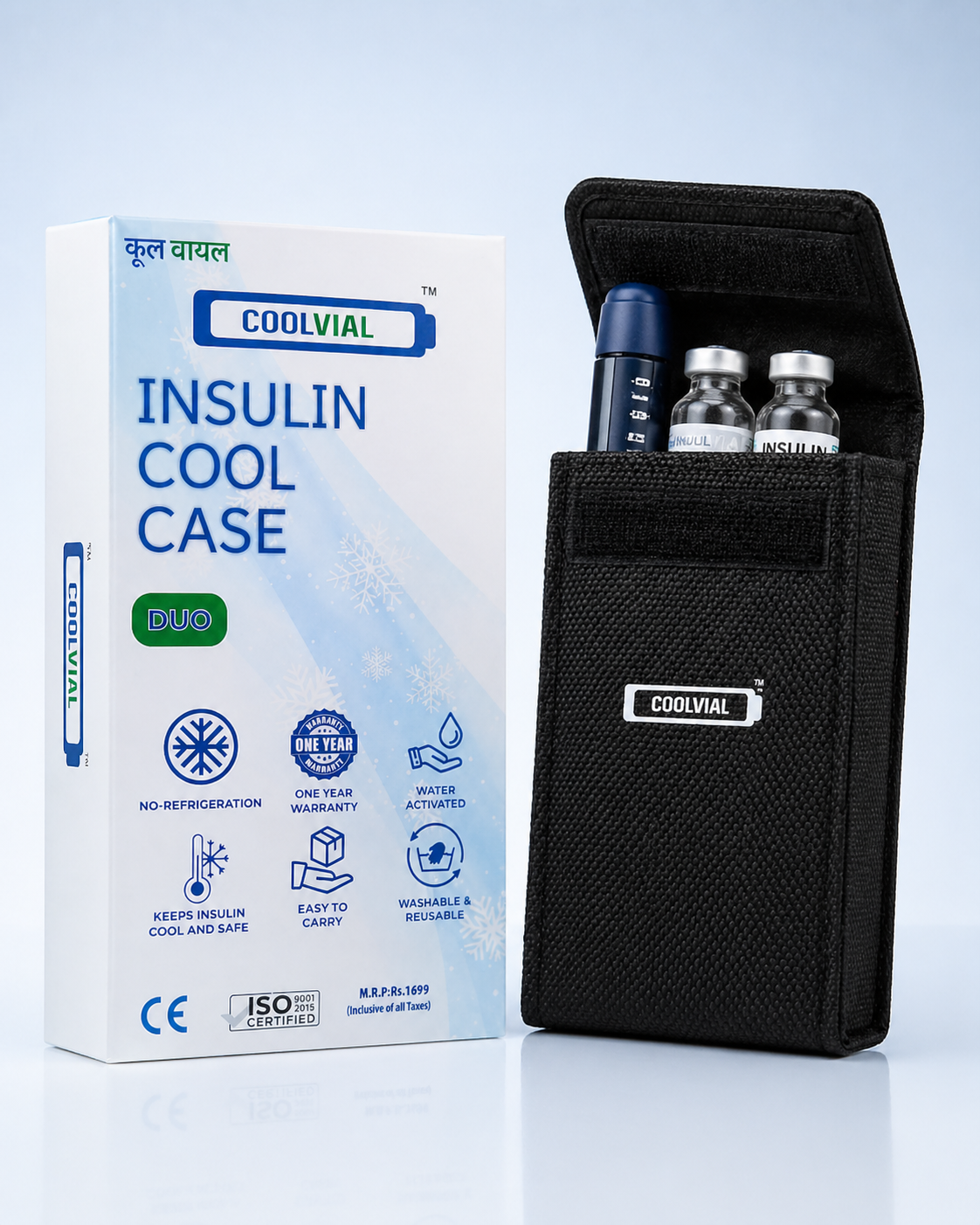
Throughout all these travel scenarios, the need for a reliable insulin cooling solution is constant. This is where the COOLVIAL Duo truly shines. Designed specifically for the Indian climate, it offers peace of mind for anyone travelling from Ludhiana with insulin.
Why COOLVIAL Duo is Your Ideal Travel Partner:
- Sustained Cooling: Activated by simply immersing it in water for a few minutes, the COOLVIAL Duo provides 12-16 hours of cooling (maintaining 18-26°C even in ambient temperatures up to 37.8°C). This extended cooling period is crucial for long journeys by train or road, or during unexpected delays at Sahnewal Airport.
- Capacity: The COOLVIAL Duo is thoughtfully designed to hold 2 insulin pens and 1 insulin vial, or a combination of up to 4 insulin pens. This capacity is perfect for most travel needs, ensuring you have enough medication for your trip.
- No Refrigeration, No Ice Packs: Unlike traditional methods, it doesn’t require electricity or refrigeration, and it avoids the hassle of gel packs at security. This makes it incredibly convenient for travel, especially in regions with unreliable power or access to freezers.
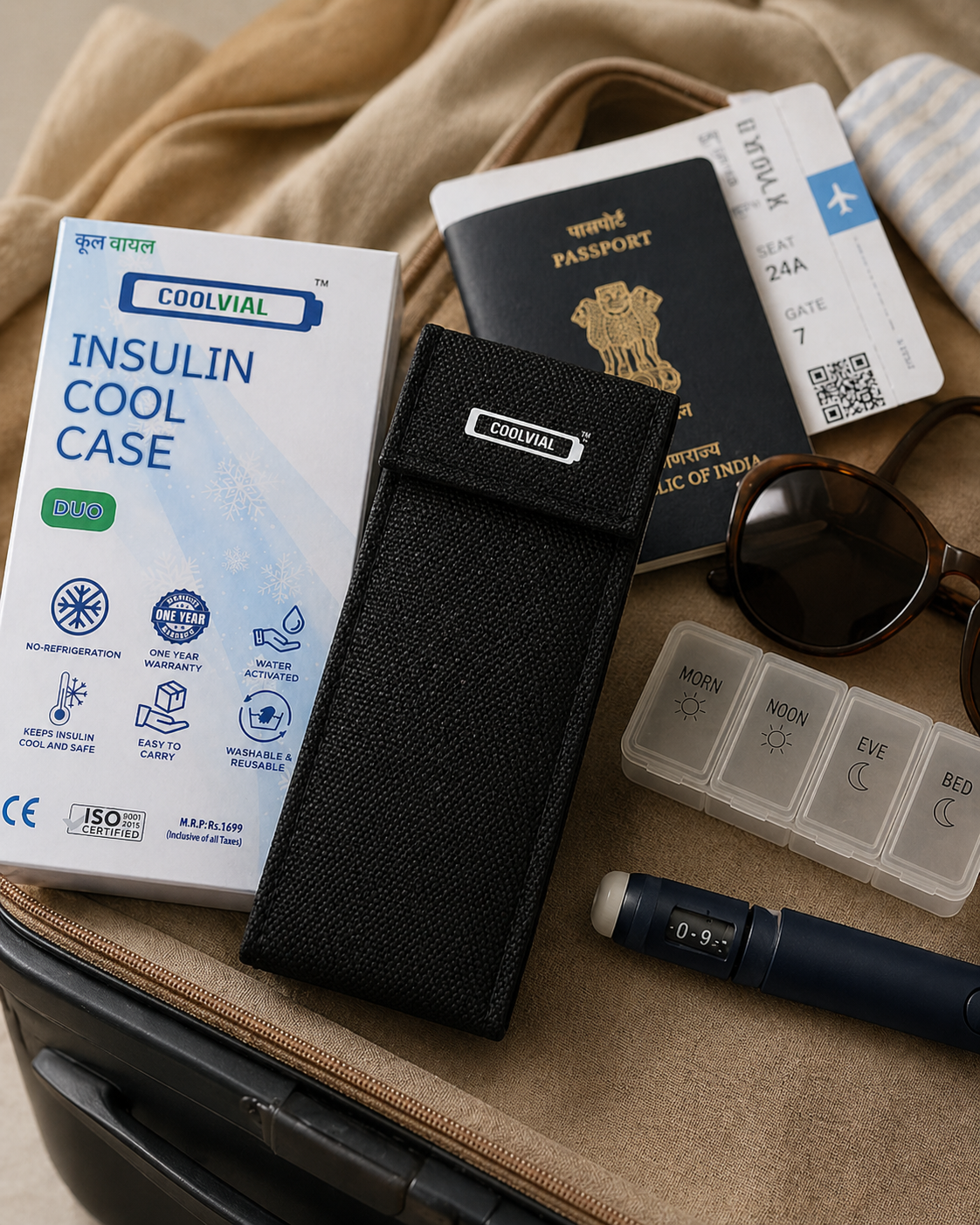
- Durable & Portable: Its robust construction ensures your insulin is protected from bumps and knocks during transit. It’s compact enough to fit easily into your hand luggage or a small backpack.
- Affordable Peace of Mind: At just Rs 1,099 with code COOLHEAL (MRP Rs 1,699), the COOLVIAL Duo offers an economical yet highly effective solution compared to some international brands like FRIO (which can retail for around Rs 1,900) or other Indian alternatives like Outer Woods OW-12 (around Rs 999, but with different cooling mechanisms and capacity). COOLVIAL Duo strikes an excellent balance of quality, capacity, and price.
- Certified Quality: CE certified and ISO 9001:2015 compliant, with a 1-year warranty, you can trust its performance. Plus, it’s proudly Made in India.
Whether you’re visiting friends in Model Town, heading to a business meeting near the Pavilion Mall, or embarking on a pilgrimage to Mansa Devi, the COOLVIAL Duo ensures your insulin is always protected. For more general insulin storage tips, you can refer to our dedicated guide.
7. Frequently Asked Questions (FAQs) About Travelling with Insulin
Here are some common questions about travelling from Ludhiana with insulin:
Q: Can I put my insulin in checked luggage when flying from Sahnewal Airport (LUH)? A: No, you should never put insulin in checked luggage when flying from Sahnewal Airport or any other airport, as the cargo hold can experience freezing temperatures that will destroy your insulin.
Q: Do I need a doctor’s letter for carrying insulin on a domestic flight from Ludhiana? A: While not always strictly enforced for domestic flights in India, carrying a doctor’s letter or prescription is highly recommended to avoid any issues during CISF security screening, especially if carrying syringes or needles.
Q: Is it safe to use a pantry car fridge on a train from Ludhiana Junction (LDH) for insulin? A: No, it is not safe to rely on pantry car fridges for insulin storage as their temperatures are often inconsistent and not monitored for medical-grade requirements, risking your insulin’s efficacy.
Q: How long can insulin be kept out of refrigeration in Ludhiana’s summer heat? A: Opened insulin can generally be kept at room temperature (up to 25-30°C, depending on the brand) for 28 days, but Ludhiana’s summer heat (up to 44°C) far exceeds this, making a cooling case essential to prevent degradation within hours.
Q: What should I do if my Ola/Uber driver in Ludhiana refuses to turn on the AC? A: Always carry your insulin in a reliable evaporative cooling case like the COOLVIAL Duo, which protects it from ambient heat even if the vehicle’s AC is off, ensuring your medication remains safe.
Q: Can I leave my insulin in a parked car during a short stop in Ludhiana? A: Absolutely not. The interior of a car parked under the Ludhiana sun can reach extremely high temperatures very quickly, destroying insulin in a matter of minutes, so always take your insulin with you.
Q: What is the best way to keep insulin cool during a road trip from Ludhiana to Amritsar or Chandigarh? A: The best way is to use a portable evaporative cooling case like the COOLVIAL Duo, which keeps insulin within safe temperatures for 12-16 hours without electricity, providing reliable protection throughout your journey.
Q: How does the COOLVIAL Duo compare to ice packs for keeping insulin cool? A: The COOLVIAL Duo uses evaporative cooling to maintain a stable, safe temperature (18-26°C) and avoids the risk of freezing insulin, which can happen with direct contact with ice packs, and it doesn’t require freezer access.
Conclusion
Travelling from Ludhiana with insulin doesn’t have to be a source of stress or anxiety. By understanding the unique climate challenges and transport realities of the city and its surroundings, and by adopting smart storage solutions, you can ensure your vital medication remains safe and effective. From navigating the security checks at Sahnewal Airport to enduring long train journeys from Ludhiana Junction or road trips to destinations like Amritsar and Chandigarh, proactive planning is your best ally.
The COOLVIAL Duo is specifically engineered to meet these challenges head-on. Its water-activated evaporative cooling technology offers a dependable, electricity-free solution that keeps your insulin within its safe temperature range for 12-16 hours, making it an indispensable companion for every Ludhiana diabetic on the go. Embrace the freedom of travel without compromising your health.
Order your COOLVIAL Duo today at Rs 1,099 with code COOLHEAL — visit coolvial.com or connect with us on WhatsApp at wa.me/918766952300 to secure your travel peace of mind.
Medical Disclaimer: This article is for general information. Always consult your endocrinologist or diabetologist before changing insulin storage or dosing practices.
How We Researched This: Our insights are compiled based on RSSDI guidelines, ICMR-INDIAB data on diabetes prevalence in India, local Ludhiana hospital directories (including DMC&H, CMC Ludhiana, SPS Hospitals), and an analysis of common insulin storage queries received from diabetics across the Apollo Pharmacy network and other local pharmacies like MedPlus, 1mg, Frontier Medicare, and Generic Aadhaar in Ludhiana.
7 Essential Tips for Travelling From Ludhiana With Insulin: Airport, Station & Taxi Guide
COOLVIAL keeps insulin safe in India's heat. 48+ hours, no electricity needed.