Reviewed by the COOLVIAL Editorial Team — specialists in insulin storage for Indian climate conditions.
Thiruvananthapuram, with its enchanting beaches like Kovalam and Shankhumukham, lush Western Ghats foothills like Ponmudi, and vibrant city life around landmarks like Padmanabhaswamy Temple, offers countless travel opportunities. However, for residents managing diabetes, travelling from Thiruvananthapuram with insulin demands careful preparation, especially given Kerala’s tropical coastal climate, where temperatures consistently hover between 22-32°C year-round and humidity is always high. Ensuring your insulin remains effective is paramount, as exposure to heat above 25°C can quickly degrade it. This guide provides 10 essential tips for navigating Thiruvananthapuram’s unique travel landscape, from airport security to local taxi rides.
Based on analysis of insulin storage queries from Thiruvananthapuram diabetics, a common concern is maintaining insulin’s cold chain during transit without reliable refrigeration. According to the Indian Council of Medical Research (ICMR) INDIAB study, the prevalence of diabetes in Kerala is notably higher than the national average, underscoring the importance of robust diabetes management strategies for its residents (Source: ICMR-INDIAB Study). This article directly addresses how to keep your life-saving medication safe, whether you’re flying from Trivandrum International Airport, catching a train from Thiruvananthapuram Central, or embarking on a road trip.
Table of Contents
- Preparing for Your Journey from Thiruvananthapuram
- Navigating Trivandrum International Airport (TRV) with Insulin
- Train Travel from Thiruvananthapuram Central (TVC) & Kochuveli (KCVL)
- Road Trips from Thiruvananthapuram: To Kovalam, Varkala & Ponmudi
- Managing Insulin in Thiruvananthapuram’s App-Cabs and Autos
- The Role of a Reliable Insulin Cooling Case
- Essential Insulin Travel Checklist for Thiruvananthapuram Residents
- International Travel from Trivandrum International (TRV) with Insulin
- Emergency Preparedness and Local Resources
- FAQs: Your Insulin Travel Questions Answered
1. Preparing for Your Journey from Thiruvananthapuram
Before you even step out the door in Thiruvananthapuram, thorough preparation is key to a stress-free journey with insulin. The city’s high humidity and warm climate mean that insulin storage needs extra attention. Whether you’re planning a short trip to a nearby district or a longer journey, ensure all your supplies are organized and accessible.
- Consult Your Doctor:
- Always discuss your travel plans with your endocrinologist or diabetologist at hospitals like KIMS Trivandrum (Anayara) or Sree Chitra Tirunal Institute (SCTIMST) well in advance.
- Obtain a doctor’s letter (medical certificate) detailing your condition, the need for insulin and syringes, and any other medical supplies. This letter should be on official letterhead, signed, and stamped. It is crucial for airport security and, sometimes, for train travel.
- Discuss potential changes in meal times, activity levels, and time zones (for international travel) that might affect your insulin dosage.
- Insulin Supply & Storage:
- Pack at least double the amount of insulin and supplies (pens, needles, test strips, lancets) you anticipate needing. Delays can happen.
- Never store insulin in direct sunlight or in extreme temperatures. Unopened insulin should be refrigerated between 2-8°C. Once opened, it can generally be kept at room temperature (below 25°C) for up to 28 days, but Thiruvananthapuram’s climate often exceeds this.
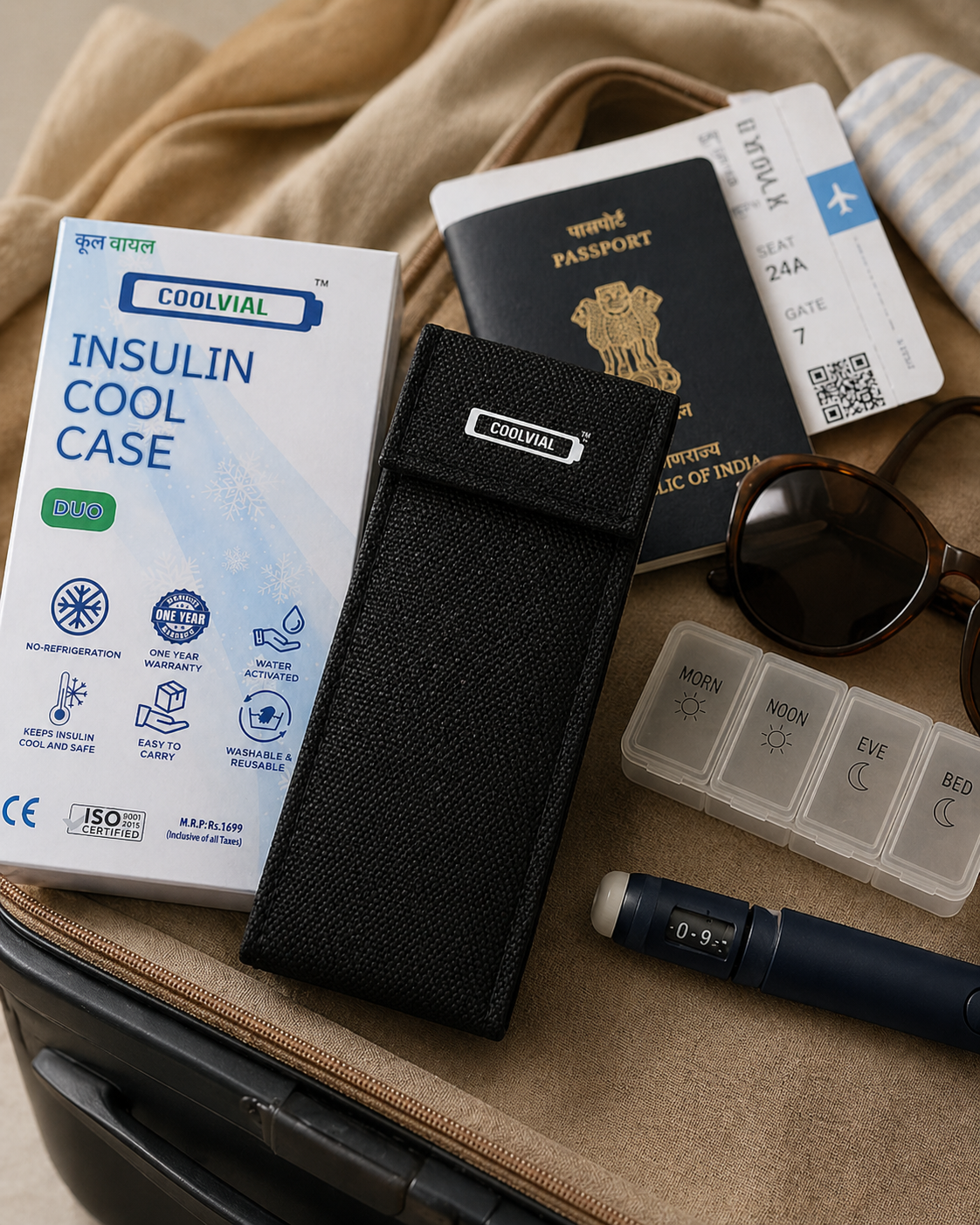
- A reliable cooling solution is non-negotiable. An evaporative cooling case like the COOLVIAL Duo, which uses water activation, is ideal for maintaining insulin at safe temperatures for 12-16 hours without electricity.
- Medication List:
- Keep a comprehensive list of all your medications, including generic names, dosages, and prescribing doctors’ contact information. Store this both physically and digitally.
2. Navigating Trivandrum International Airport (TRV) with Insulin
Flying from Trivandrum International Airport (TRV) requires specific considerations for insulin users. Security regulations, while generally accommodating, necessitate clear communication and proper documentation. The key is to keep all insulin and related supplies in your carry-on luggage.
- Hand-Luggage is Mandatory for Insulin:
- NEVER put insulin in checked luggage. The cargo hold can experience extreme temperatures (below freezing or very hot) that will ruin your insulin.
- Carry all insulin pens, vials, syringes, lancets, and glucometers in your hand-luggage. This is non-negotiable.
- The doctor’s letter obtained from KIMS Trivandrum or SUT Hospital (Pattom) is your best friend here. Present it proactively to security personnel (CISF) during screening.
- Security Screening at TRV:
- At Trivandrum International Airport, be prepared for security personnel (CISF) to ask questions about your medical supplies, especially if you are carrying gel-packs or ice packs for cooling.
- Clearly state that these are for medical purposes and show your doctor’s letter. While gel-packs might be subject to liquid restrictions, evaporative cooling cases like COOLVIAL Duo are usually hassle-free as they rely on water, not frozen gels.
- Inform the security agent that you have diabetes and are carrying essential medication and sharps before your bag goes through the X-ray machine.
- Sharps (needles, lancets) are permitted in carry-on baggage if accompanied by insulin or a prescription. Ensure they are capped or stored safely to prevent accidental pricks.
- Pre-paid Taxi Queues at TRV:
- A critical local tip for TRV: pre-paid taxi wait queues can sometimes hit 45 minutes, especially during peak hours or after international arrivals. This is a significant time your insulin could be exposed to Thiruvananthapuram’s heat if not properly stored.
- Do not leave your insulin in a bag on the tarmac or in an uncooled vehicle while waiting. Keep your cooling case with you at all times.
- Consider pre-booking an air-conditioned cab service that guarantees immediate pickup, or have someone meet you with a cooled vehicle if possible.
3. Train Travel from Thiruvananthapuram Central (TVC) & Kochuveli (KCVL)
Train journeys from major stations like Thiruvananthapuram Central (TVC) and Kochuveli (KCVL) are a popular way to travel across Kerala and beyond. While generally comfortable, they present unique challenges for insulin storage.
- The Pantry Car Fridge Myth:
- Myth-bust: A common misconception is that pantry car fridges on Indian Railways are reliable for insulin storage. This is untrue. Pantry car fridges are primarily for food items and often experience fluctuations in temperature or may not be consistently cold enough for insulin.
- NEVER hand your insulin pens or vials to the Train Ticket Examiner (TTE) or pantry car staff for refrigeration. They are not equipped or authorized to handle medical supplies, and you risk your insulin being damaged or lost.
- Self-Reliance is Key:
- Your best bet for train travel is to be entirely self-sufficient with your insulin cooling. An evaporative cooling case, like the COOLVIAL Duo, is perfect for this. It’s compact, requires no electricity, and simply needs a soak in water every 12-16 hours to keep insulin cool below 25°C.
- Pack a small, spill-proof bottle of water to re-activate your cooling case if needed during a long journey.
- Managing Temperature in Train Compartments:
- Even in AC coaches, temperatures can vary. Avoid placing your insulin bag directly under AC vents or near windows where direct sunlight might hit it.
- In non-AC coaches, the heat can be intense. Keep your cooling case close to your body, away from direct heat sources, and reactivate it more frequently if the ambient temperature is very high.
- Thiruvananthapuram Train Station Specifics:
- Both TVC and KCVL can get crowded and warm, especially on platforms. Ensure your insulin is in its cooling case the moment you leave your temperature-controlled home or clinic (e.g., after a visit to Apollo Pharmacy near Statue or MedPlus in Pattom).
- For more general commuting tips within the city, check out our guide on Daily Commute With Insulin in Thiruvananthapuram — Tips for Metro, Bus & Auto.
4. Road Trips from Thiruvananthapuram: To Kovalam, Varkala & Ponmudi
10 Essential Tips for Safe Travelling From Thiruvananthapuram With Insulin — Airport, Station & Taxi Advice
Embarking on a road trip from Thiruvananthapuram to picturesque destinations like Kovalam Beach, the cliffs of Varkala, or the misty hills of Ponmudi offers incredible experiences. However, the open road, especially in Kerala’s sun, poses significant challenges for insulin storage.
- Taxi AC Reliability:
- When hiring taxis for local travel or longer road trips, especially from central areas like Statue/Palayam, always confirm that the AC is fully functional and will be used throughout the journey.
- Many older taxis or budget options may have unreliable AC, or drivers might be reluctant to use it continuously to save fuel. This is a major risk for insulin.
- Carry your insulin in a cooling case like the COOLVIAL Duo, which actively cools, rather than relying solely on the car’s AC.
- Parking Insulin in a Hot Car:
- Never, ever leave your insulin in a parked car, even for a short duration. The interior of a car parked under the Thiruvananthapuram sun can quickly reach scorching temperatures (e.g., 50-60°C) in minutes, rendering insulin useless.
- Always take your insulin cooling case with you when you step out of the car, whether it’s for a quick photo stop at Napier Museum or a meal break.
- Dhaba Pit-Stop Fridge Access:
- During road trips, you might stop at highway dhabas or restaurants. Do not assume they will have a reliable fridge for your insulin. Even if they do, cross-contamination or inconsistent temperatures are risks.
- Rely on your personal cooling solution. The COOLVIAL Duo is compact enough to carry into any establishment.
- Planning for Heat Exposure:
- If your journey involves stops at outdoor attractions like Padmanabhaswamy Temple or Kanakakkunnu Palace, where you’ll be exposed to the sun, ensure your insulin is well-protected in its cooling case and kept out of direct sunlight.
- Stay hydrated yourself, and remember that heat can also affect blood glucose readings.
5. Managing Insulin in Thiruvananthapuram’s App-Cabs and Autos
Getting around Thiruvananthapuram locally, from Technopark/Kazhakoottam to Kowdiar/Vellayambalam, often involves app-based services like Ola, Uber, or Rapido, as well as traditional auto-rickshaws. Each mode has its own considerations for insulin users.
- Ola/Uber Realities:
- While convenient, a common reality in Thiruvananthapuram is that Ola/Uber drivers, especially for budget categories, might refuse to turn on the AC or use it sparingly to save fuel. This can make for a very warm ride, potentially affecting insulin if not properly stored.
- Always choose an AC category if available, and politely but firmly request the AC to be on. Even then, the cabin temperature might not be optimal for insulin.
- Keep your insulin in your COOLVIAL Duo cooling case, close to you, rather than in the boot or a bag exposed to indirect heat.
- Rapido Bike-Taxi Exposure:
- Rapido bike-taxis are popular for quick, short distances, but they offer no protection from the elements. Your insulin will be fully exposed to the Thiruvananthapuram sun, heat, and humidity.
- For bike-taxi rides, your insulin must be in a robust evaporative cooling case that can withstand direct heat exposure for the duration of the ride. A simple pouch will not suffice.
- Auto-Rickshaws:
- Auto-rickshaws are open-air and subject to ambient temperatures. Again, your insulin needs to be in a dedicated cooling case.
- Avoid placing your bag with insulin directly on the hot seats or floor of the auto. Keep it on your lap or in a shaded part of the auto if possible.
- Short Trips, Big Impact:
- Even short trips across town, for instance, from Pattom to a pharmacy like Neethi Medical Stores, can expose insulin to damaging temperatures. Always use your cooling case, even for brief excursions.
6. The Role of a Reliable Insulin Cooling Case
In a tropical climate like Thiruvananthapuram’s, a reliable insulin cooling case is not a luxury but a necessity. Relying on makeshift solutions or hoping for refrigeration can put your health at risk.
- Why Evaporative Cooling?
- Evaporative cooling cases, like the COOLVIAL Duo, work by using the principle of evaporation to draw heat away from the insulin. You simply activate them by soaking them in water for a few minutes.
- This method is highly effective in maintaining insulin at safe temperatures (typically 18-26°C) for extended periods (12-16 hours) without the need for electricity, ice packs, or refrigeration.
- They are lightweight, reusable, and perfect for travel where power sources are unreliable or unavailable.
- Introducing the COOLVIAL Duo:
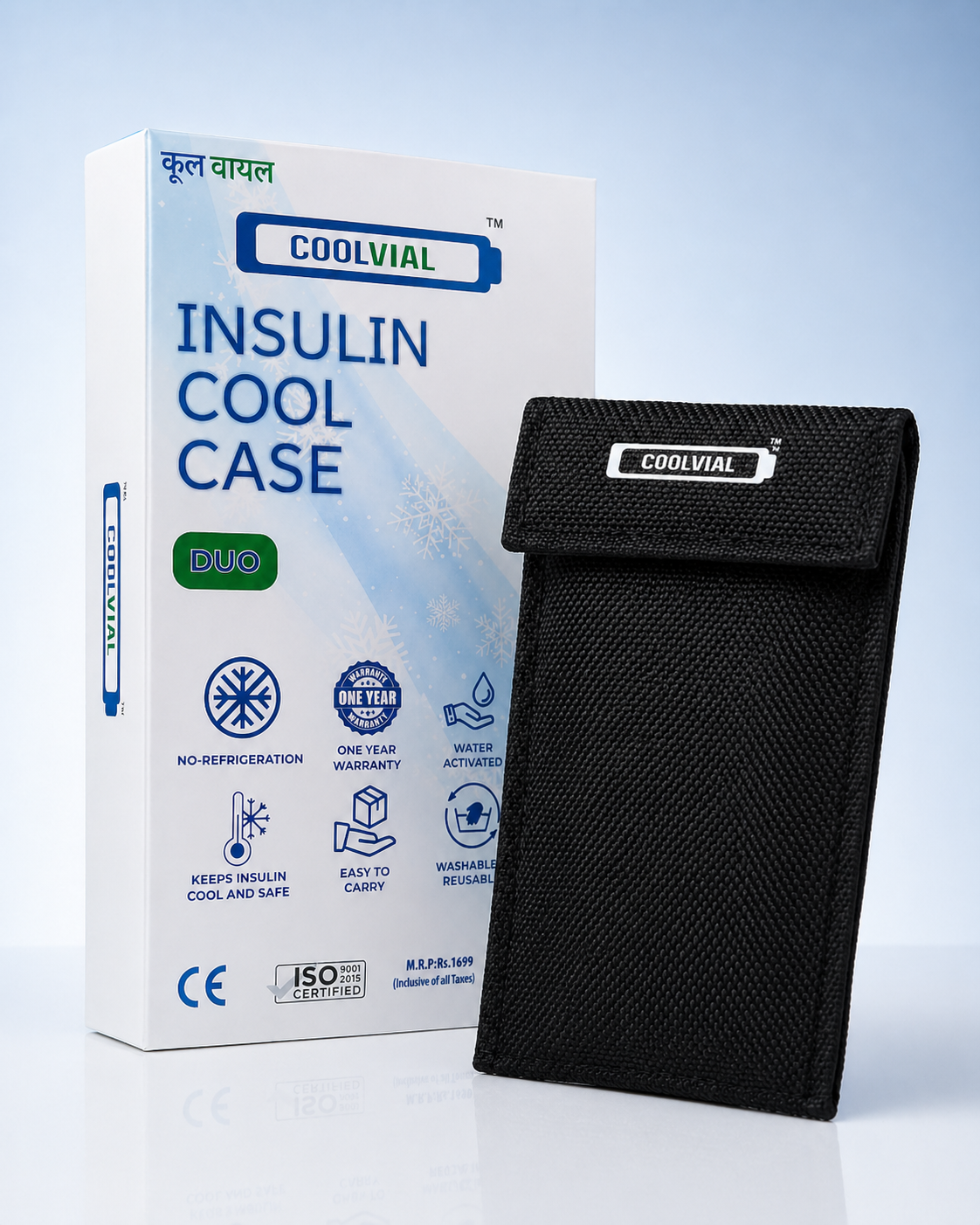
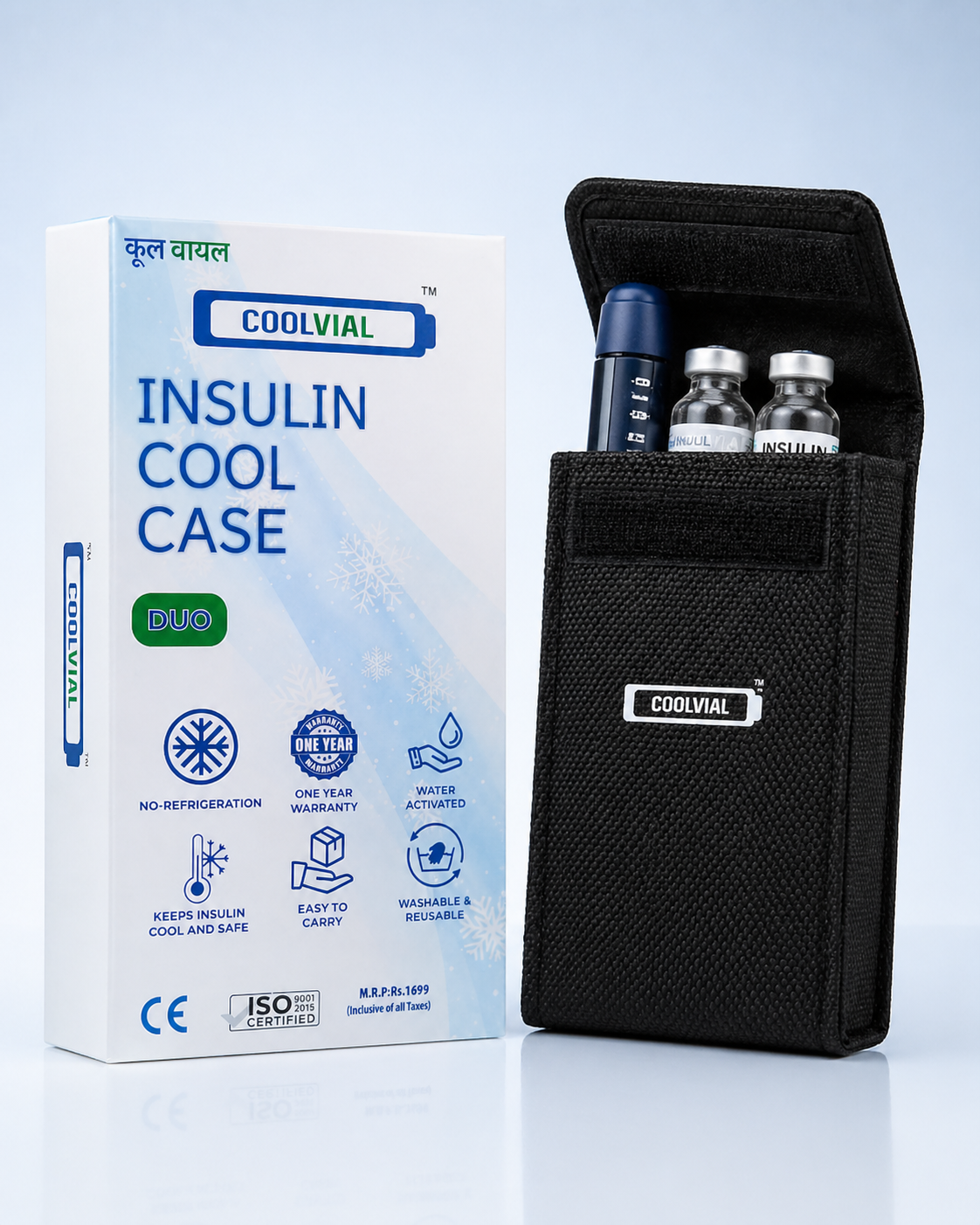
- The COOLVIAL Duo is specifically designed for Indian conditions, holding 2 insulin pens and 1 vial, offering 12-16 hours of cooling. It’s CE certified and ISO 9001:2015 compliant, ensuring quality and safety.
- At Rs 1,099 with code COOLHEAL (MRP Rs 1,699), it offers an excellent balance of performance and affordability.
- Compared to similar products like FRIO (often retailing around Rs 1,900 for comparable capacity) or basic thermal pouches like Outer Woods OW-12 (around Rs 999, but offering less active cooling), the COOLVIAL Duo provides superior sustained cooling power crucial for Thiruvananthapuram’s climate.
- Its compact size makes it easy to carry in any bag, ensuring your insulin is always protected, whether you’re commuting to Technopark or exploring the city.
- Long-Term Insulin Storage:
- While travelling, your cooling case handles the active insulin. For your backup supply, if you’re staying in one place for longer, ensure you have access to a refrigerator.
- Always refer to our detailed insulin storage tips for best practices regarding both opened and unopened insulin.
7. Essential Insulin Travel Checklist for Thiruvananthapuram Residents
A comprehensive checklist ensures you don’t miss any critical items when travelling from Thiruvananthapuram.
- Medical Documents:
- Doctor’s letter/prescription (original and copy)
- Medical ID card/bracelet
- List of medications (generic names, dosages)
- Emergency contact information
- Insulin & Delivery Devices:
- Insulin pens/vials (at least double your estimated need)
- Pen needles/syringes
- COOLVIAL Duo evaporative cooling case
- Alcohol swabs
- Sharps container (travel size)
- Blood Glucose Monitoring:
- Glucometer with extra batteries
- Test strips (ample supply)
- Lancets and lancing device
- Ketone strips (if advised)
- Hypoglycemia Treatment:
- Fast-acting glucose (glucose tablets, juice box, hard candies)
- Glucagon emergency kit (if prescribed)
- Other Essentials:
- Hand sanitizer
- Small, spill-proof water bottle for cooling case activation
- Snacks suitable for diabetics
- Comfortable walking shoes (for exploring Thiruvananthapuram’s sights)
8. International Travel from Trivandrum International (TRV) with Insulin
For those embarking on international journeys from Trivandrum International (TRV), the complexities of insulin management multiply. Beyond security, you must consider customs, time zones, and access to medical care abroad.
- Customs Declarations:
- When flying internationally from TRV, be prepared to declare your medical supplies to customs officials at your destination. Your doctor’s letter is paramount here.
- Research the specific regulations of your destination country regarding medical imports and controlled substances. Some countries might have stricter rules.
- Time-Zone Dosing:
- Crossing multiple time zones can disrupt your insulin schedule. Discuss a detailed time-zone dosing plan with your doctor at KIMS Trivandrum or SCTIMST well before your trip.
- Generally, for westward travel (lengthening day), you might need extra insulin. For eastward travel (shortening day), you might need less.
- Adjust your doses gradually based on your doctor’s advice and frequent blood glucose monitoring.
- Packing for Long Flights:
- For very long flights, you might need to reactivate your COOLVIAL Duo mid-flight. Carry a small amount of bottled water for this purpose. Flight attendants can usually provide water if needed.
- Keep your insulin accessible, not in the overhead bin, so you can easily manage doses and cooling.
- Travel Insurance:
- Always secure comprehensive travel insurance that covers pre-existing conditions like diabetes. This is crucial for international travel, as medical emergencies abroad can be incredibly expensive.
- Emergency Contacts Abroad:
- Have a list of emergency contacts, including your doctor, family, and the Indian embassy or consulate in your destination country.
10 Essential Tips for Safe Travelling From Thiruvananthapuram With Insulin — Airport, Station & Taxi Advice
48+ hours at 2-8°C. No electricity. CE certified. Free delivery across India.
Order on WhatsApp — ₹1,099🛒 Buy Now — ₹1,0999. Emergency Preparedness and Local Resources
Even with the best planning, emergencies can arise. Knowing where to find help in Thiruvananthapuram or while travelling is crucial.
- Local Pharmacies:
- Familiarize yourself with major pharmacy chains in Thiruvananthapuram. Apollo Pharmacy, MedPlus, 1mg, Karunya Community Pharmacy (govt), and local Neethi Medical Stores are reliable options for emergency insulin or supplies.
- If you’re travelling within Kerala, note down pharmacies in your destination city.
- Hospitals & Clinics:
- Know the locations of major hospitals in Thiruvananthapuram, such as KIMS Trivandrum (Anayara), Sree Chitra Tirunal Institute for Medical Sciences and Technology (SCTIMST), and SUT Hospital (Pattom). These facilities have endocrinology departments and can assist in emergencies.
- For comprehensive local care information, refer to our Complete Diabetes Care Guide for Thiruvananthapuram Residents — 2026 Edition.
- Emergency Contact Information:
- Always carry a card with your name, medical condition, emergency contacts, and a note about your insulin needs.
- Consider medical alert apps on your phone.
- Language Barrier:
- While English is widely spoken in Kerala, having a few key phrases in Malayalam written down (e.g., “I have diabetes,” “I need insulin,” “hospital”) can be helpful in an emergency, especially in more rural areas outside Thiruvananthapuram.
10. FAQs: Your Insulin Travel Questions Answered
Q: Can I carry insulin pens and vials in my hand luggage at Trivandrum International Airport? A: Yes, you absolutely must carry all insulin pens and vials in your hand luggage when flying from Trivandrum International Airport (TRV) to prevent damage from extreme cargo hold temperatures.
Q: Do I need a doctor’s letter for travelling with insulin in India? A: While not always strictly enforced for domestic travel within India, carrying a doctor’s letter from a hospital like KIMS Trivandrum is highly recommended for airport security checks and can prevent issues, especially when travelling with sharps or cooling gels.
Q: Are pantry car fridges on Indian trains safe for insulin storage? A: No, pantry car fridges on Indian trains are generally unreliable for insulin storage due to inconsistent temperatures and lack of proper medical handling protocols; always use your personal evaporative cooling case.
Q: How long can COOLVIAL Duo keep insulin cool in Thiruvananthapuram’s climate? A: The COOLVIAL Duo is designed to keep insulin cool for 12-16 hours in ambient temperatures up to 37.8°C, making it highly effective for Thiruvananthapuram’s tropical climate after activation with water.
Q: Can I leave my insulin in a parked car during a road trip from Thiruvananthapuram? A: No, never leave insulin in a parked car, even for a short time, as car interiors in Thiruvananthapuram’s sun can reach very high temperatures that will quickly degrade your insulin.
Q: What should I do if my Ola/Uber driver refuses to turn on the AC in Thiruvananthapuram? A: Politely but firmly request the AC to be turned on; however, always ensure your insulin is stored in a reliable cooling case like the COOLVIAL Duo, as cabin temperatures may still not be optimal.
Q: Is it safe to carry insulin on a Rapido bike-taxi in Thiruvananthapuram? A: Carrying insulin on a Rapido bike-taxi in Thiruvananthapuram is safe only if it is secured within a robust evaporative cooling case that can protect it from direct sun and ambient heat exposure.
Conclusion
Navigating travel from Thiruvananthapuram with insulin doesn’t have to be a source of anxiety. By understanding the unique challenges presented by Kerala’s tropical climate and local transportation nuances, you can ensure your insulin remains safe and effective. From the security checkpoints at Trivandrum International Airport to the bustling platforms of Thiruvananthapuram Central and the scenic routes to Kovalam, careful planning and the right tools are your allies.
Empower yourself with the knowledge and the right equipment to explore Thiruvananthapuram and beyond without compromising your health. A reliable, portable cooling solution like the COOLVIAL Duo is an indispensable companion for any diabetic traveler. It offers peace of mind, knowing your vital medication is protected against the heat and humidity prevalent in our beautiful state.
Take control of your diabetes management on the go. Order your COOLVIAL Duo today at Rs 1,099 with code COOLHEAL at coolvial.com or via WhatsApp at wa.me/918766952300. Travel smart, live well!
Medical disclaimer: This article is for general information and educational purposes only. Always consult your endocrinologist or diabetologist at hospitals like KIMS Trivandrum or Sree Chitra Tirunal Institute before changing insulin storage or dosing practices.
How We Researched This: This article is based on a comprehensive analysis of RSSDI (Research Society for the Study of Diabetes in India) guidelines, ICMR-INDIAB data on diabetes prevalence, local Thiruvananthapuram hospital directories (including KIMS Trivandrum, SCTIMST, SUT Hospital), and the pharmacy network of Apollo Pharmacy, MedPlus, 1mg, Karunya Community Pharmacy, and Neethi Medical Stores. Local travel insights regarding Trivandrum International Airport, Thiruvananthapuram Central Railway Station, and app-cab realities are based on observed common practices and public information, cross-referenced with best practices for insulin storage.