
Reviewed by the COOLVIAL Editorial Team — specialists in insulin storage for Indian climate conditions.
Embarking on a long train journey across India is an experience filled with vibrant sights, sounds, and flavors. However, for the millions of Indians managing diabetes, such travel requires careful planning, especially concerning insulin storage. The core challenge is maintaining insulin’s efficacy by keeping it within its optimal temperature range of 2-8°C when refrigerated, or below 25-30°C for opened vials, as insulin quickly degrades above 30°C (Source: National Library of Medicine). This complete guide to insulin on Indian Railways storage guide for long train journeys provides practical, 7-step advice to ensure your vital medication remains potent and safe throughout your adventure, from the bustling platforms of Mumbai to the serene backwaters of Kerala.
Table of Contents
- Why Safe Insulin Storage Matters on Indian Railways
- Understanding Insulin Stability and Your Travel Needs
- Practical Tips for Insulin on Indian Railways Storage Guide for Long Train Journeys
- Navigating India’s Diverse Climates: Regional Insulin Storage Strategies
- COOLVIAL: Your Reliable Partner for Insulin on Indian Railways
- Essential Checklist and Frequently Asked Questions
- Conclusion
Why Safe Insulin Storage Matters on Indian Railways
India’s vast railway network, connecting over 7,000 stations, is the lifeline for millions, often involving journeys spanning 12 to 48 hours or even longer. For individuals requiring insulin, these extended travel times, combined with India’s diverse and often extreme climatic conditions, present unique storage challenges. The effectiveness of insulin is highly dependent on its proper storage temperature. When exposed to temperatures outside its recommended range, especially above 30°C, insulin can lose its potency, becoming less effective or even completely inactive. This degradation can lead to dangerously high blood sugar levels, posing significant health risks during travel, far from immediate medical assistance.
The problem is exacerbated by several factors inherent to Indian train travel. Train compartments, particularly in non-AC coaches, can reach sweltering temperatures during summer months, with ambient temperatures inside coaches often exceeding 40°C in regions like Rajasthan, Uttar Pradesh, and Madhya Pradesh. Even in AC coaches, the cooling can be inconsistent, and direct sunlight streaming through windows can heat up luggage areas. Furthermore, the availability of reliable refrigeration on trains is virtually non-existent for passengers. Pantry car refrigerators are typically small, overused, and not intended for personal medication storage. This means travelers are solely responsible for maintaining their insulin’s temperature.
Consider the sheer scale: India had 101 million diabetics in 2023, according to the International Diabetes Federation (IDF) Diabetes Atlas Tenth Edition 2021, and this number is projected to rise. A significant portion of these individuals relies on insulin daily. Ensuring safe insulin on Indian Railways storage guide for long train journeys is not just a matter of convenience, but a critical aspect of public health, enabling millions to travel safely and confidently across the subcontinent. Without proper storage, a life-saving medication can turn ineffective, leading to serious health complications and disrupting travel plans.
Understanding Insulin Stability and Your Travel Needs
Insulin is a delicate protein hormone that can be denatured by heat, freezing, or vigorous shaking. Understanding its stability is the first step towards mastering safe storage during travel. The general rule of thumb is that unopened insulin should be stored in a refrigerator, typically between 2°C and 8°C. Once opened, or removed from refrigeration for daily use, most insulin vials and pens can be kept at room temperature, usually defined as 15°C to 25°C, for a specific period, often up to 28 days or 4 weeks, depending on the manufacturer. However, in India’s climate, “room temperature” frequently exceeds this range.
The critical temperature threshold for insulin degradation is around 30°C. Above this, insulin starts to lose its effectiveness at an accelerated rate. Freezing is also detrimental, as it can damage the insulin molecule, rendering it ineffective. Therefore, the goal during travel is to keep insulin consistently within its safe temperature range, avoiding both excessive heat and freezing. This requires thoughtful planning and the right tools.
Unopened Insulin Storage Guidelines
Unopened insulin vials, cartridges, or pens must be stored in a refrigerator (2-8°C) until their expiry date. When preparing for a long train journey, calculate the amount of unopened insulin you might need for the entire trip, plus a buffer for emergencies. This portion should be kept cool during transit. Any insulin that won’t be used within the journey’s duration or immediately after should ideally remain refrigerated at home or at your destination.
Opened Insulin Vial and Pen Storage
Once an insulin vial or pen is opened or taken out of the refrigerator for the first time, it can typically be stored at room temperature (below 25°C to 30°C, depending on the brand) for a period of 28 days (4 weeks) to 42 days (6 weeks). However, this “room temperature” guideline is often problematic in India, where ambient temperatures regularly soar above 30°C, especially during summer months in cities like Ahmedabad, Chennai, and Kolkata. For long train journeys, it’s safer to treat even opened insulin as requiring temperature control, aiming to keep it closer to the 15-25°C range if possible, or at least below 30°C.
"Finally a cooler that works in Indian summers. Insulin stayed perfect during a 3-day power cut." — Ramesh, Chennai
The Complete 7-Step Guide: Insulin on Indian Railways for Long Train Journeys
CE Certified · Free Delivery · 1-Year Warranty
📲 Buy on WhatsApp — ₹1,099The Complete 7-Step Guide: Insulin on Indian Railways for Long Train Journeys
48+ hours at 2-8°C. No electricity. CE certified. Free delivery across India.
Order on WhatsApp — ₹1,099🛒 Buy Now — ₹1,099
The Complete 7-Step Guide: Insulin on Indian Railways for Long Train Journeys
Don't let Indian heat spoil your insulin. COOLVIAL protects it for 48+ hours — at home, travelling, or during power cuts.
Recognizing Spoiled Insulin
It’s crucial to know how to identify insulin that may have spoiled. Changes in appearance are key indicators. Clear insulin (like regular or rapid-acting) should always remain clear. If it becomes cloudy, discolored, or contains particles, it has likely spoiled and should not be used. Cloudy insulin (like NPH or pre-mixed) should appear uniformly cloudy or milky. If it looks clumpy, granular, or has solid particles adhering to the bottom or sides of the vial, it may be compromised. If you suspect your insulin has been exposed to extreme temperatures or has changed in appearance, it’s always safer to discard it and use a fresh supply, even if it means interrupting your journey to procure new medication.
| Insulin Type | Storage Condition (Unopened) | Storage Condition (Opened/In Use) | Shelf Life (Opened) |
|---|---|---|---|
| Vials/Pens (Most) | Refrigerated (2-8°C) | Room Temperature (15-25°C, or below 30°C as per brand) | 28 days (4 weeks) |
| Specific brands | Refrigerated (2-8°C) | Room Temperature (15-25°C, or below 30°C as per brand) | Up to 42 days (6 weeks) |
| Avoid | Freezing, Direct Heat, Sunlight | Freezing, Direct Heat, Sunlight, Temperatures above 30°C | N/A |
| Signs of Spoilage | N/A | Cloudiness, discoloration, particles, clumping (for cloudy insulin) | N/A |
Practical Tips for Insulin on Indian Railways Storage Guide for Long Train Journeys
Mastering insulin on Indian Railways storage guide for long train journeys involves meticulous planning and adherence to best practices. Here are 7 essential steps to ensure your insulin stays safe and effective:
-
Consult Your Doctor Before Travel: Always discuss your travel plans with your diabetologist. They can provide specific advice tailored to your insulin regimen, suggest adjustments for time zone changes, and offer a prescription to carry, which can be useful if you need to purchase insulin en route. They might also advise on carrying extra supplies.
-
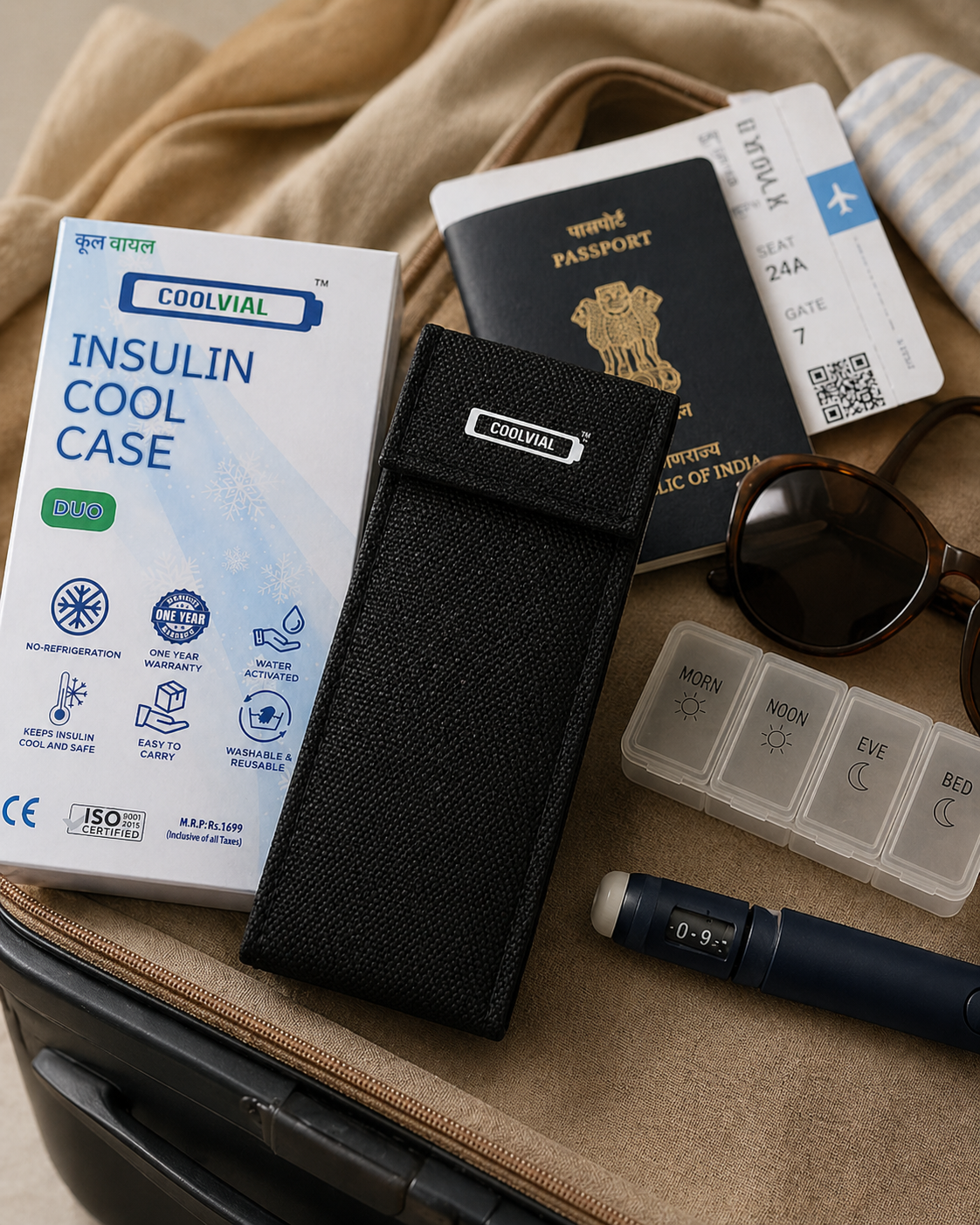
Pack Smartly with a Reliable Cool Case: Invest in a high-quality, insulated cool case designed for insulin. Traditional ice packs can freeze insulin if in direct contact, so look for cases that maintain a stable, cool (not freezing) temperature. A product like the COOLVIAL insulin cool case is specifically designed to keep insulin within the 2-8°C range for extended periods without electricity, making it ideal for unpredictable train travel. Pack all your diabetes supplies, including insulin, syringes/pens, lancets, testing strips, and a glucometer, in your carry-on luggage. Never put insulin in checked luggage, even on a train, as compartments can experience extreme temperatures.
-
Carry Sufficient Supplies and Backup: Always carry at least 1.5 to 2 times the amount of insulin and supplies you anticipate needing for the duration of your journey. Delays are common on Indian Railways, and having extra ensures you’re prepared. Consider packing a backup cool case or additional gel packs, especially for very long journeys or travel during peak summer. Also, carry a copy of your prescription and a doctor’s letter explaining your need for insulin and needles, which can be helpful at security checks or in case of emergencies.
-
Monitor Temperatures Regularly: If your cool case has a built-in thermometer, check it frequently. If not, consider carrying a small, portable thermometer to monitor the temperature inside the case. This helps you ensure the insulin is not getting too warm or too cold. Adjust gel packs or cooling elements as needed, ensuring they don’t directly touch insulin vials to prevent freezing.
-
Protect from Direct Heat and Sunlight: Even inside a cool case, direct exposure to sunlight or a heat source can compromise your insulin. Always keep your cool case in the coolest part of your train compartment, away from windows, direct sun, and heat vents. Avoid placing it on overhead racks if the roof gets hot. Under your seat or in a shaded spot is generally preferable.
-
Stay Hydrated and Mind Your Meals: While not directly related to insulin storage, staying hydrated and eating regular, balanced meals is crucial for diabetes management during travel. Indian train journeys offer various food options; choose wisely to maintain stable blood sugar levels. Pack healthy snacks to avoid relying solely on pantry car offerings.
-
Plan for Power Outages and Charging: If your cool case requires charging, ensure you have a portable power bank. While most modern trains have charging points, they can be limited or sometimes non-functional. For a manual cool case like COOLVIAL, this concern is mitigated, as it operates without external power. However, for other devices like glucometers, ensure they are fully charged and carry spare batteries.
Navigating India’s Diverse Climates: Regional Insulin Storage Strategies
India’s geography presents a mosaic of climatic conditions, each posing unique challenges for insulin storage. A successful insulin on Indian Railways storage guide for long train journeys must account for these regional variations. From the scorching summers of the North to the humid monsoons of the West Coast, and the moderate winters of the South, your strategy needs to adapt.
The Complete 7-Step Guide: Insulin on Indian Railways for Long Train Journeys
Don't let Indian heat spoil your insulin. COOLVIAL protects it for 48+ hours — at home, travelling, or during power cuts.
-
North Indian Plains (e.g., Delhi, Uttar Pradesh, Punjab): Summers here (April to June) are intensely hot, often reaching 45°C or higher. Winters (December to February) can be quite cold, sometimes dipping to near freezing. During summer train travel through these regions, robust insulation is paramount. Frequent checks of your cool case temperature are essential. In winter, ensure insulin doesn’t freeze in unheated compartments; keeping it closer to your body can offer some warmth. Power cuts are also common in smaller towns and rural areas, making non-electric cool cases invaluable.
-
Western India (e.g., Rajasthan, Gujarat, Maharashtra): Rajasthan shares the extreme heat of the North. Gujarat and Maharashtra experience hot, humid summers and moderate winters. The humidity, especially during monsoon season, can make temperature management tricky. High humidity can make the air feel warmer and potentially affect the longevity of some cooling methods. Ensure your cool case is sealed well to prevent moisture ingress. Travel during non-peak summer months might be advisable if possible.
-
Southern India (e.g., Kerala, Tamil Nadu, Karnataka, Andhra Pradesh): The South generally has a tropical climate, characterized by high temperatures and significant humidity year-round. While extreme peaks like the North are rare, consistent heat above 30°C is common. Train journeys through states like Kerala or Tamil Nadu require continuous cooling. Even during winter, temperatures rarely drop enough to alleviate the need for a cool case. The focus here is on sustained cooling in humid conditions.
-
Eastern and Northeastern India (e.g., West Bengal, Odisha, Assam): These regions experience hot, humid summers with heavy monsoons, and mild to moderate winters. The challenges are similar to South India – managing consistent heat and humidity. During monsoons, ensuring your cool case remains dry is also important, as dampness can affect some materials. Power availability can be intermittent in more remote parts of the Northeast, reinforcing the need for self-sufficient cooling solutions.
Given these varied conditions, relying on robust, passive cooling solutions like gel-pack based cool cases is often more practical than electric options, which depend on an unreliable power supply. For example, a journey from Delhi to Chennai could expose your insulin to extreme heat in the northern plains, then high humidity through central and southern India. A well-chosen cool case is your best defense.
COOLVIAL: Your Reliable Partner for Insulin on Indian Railways
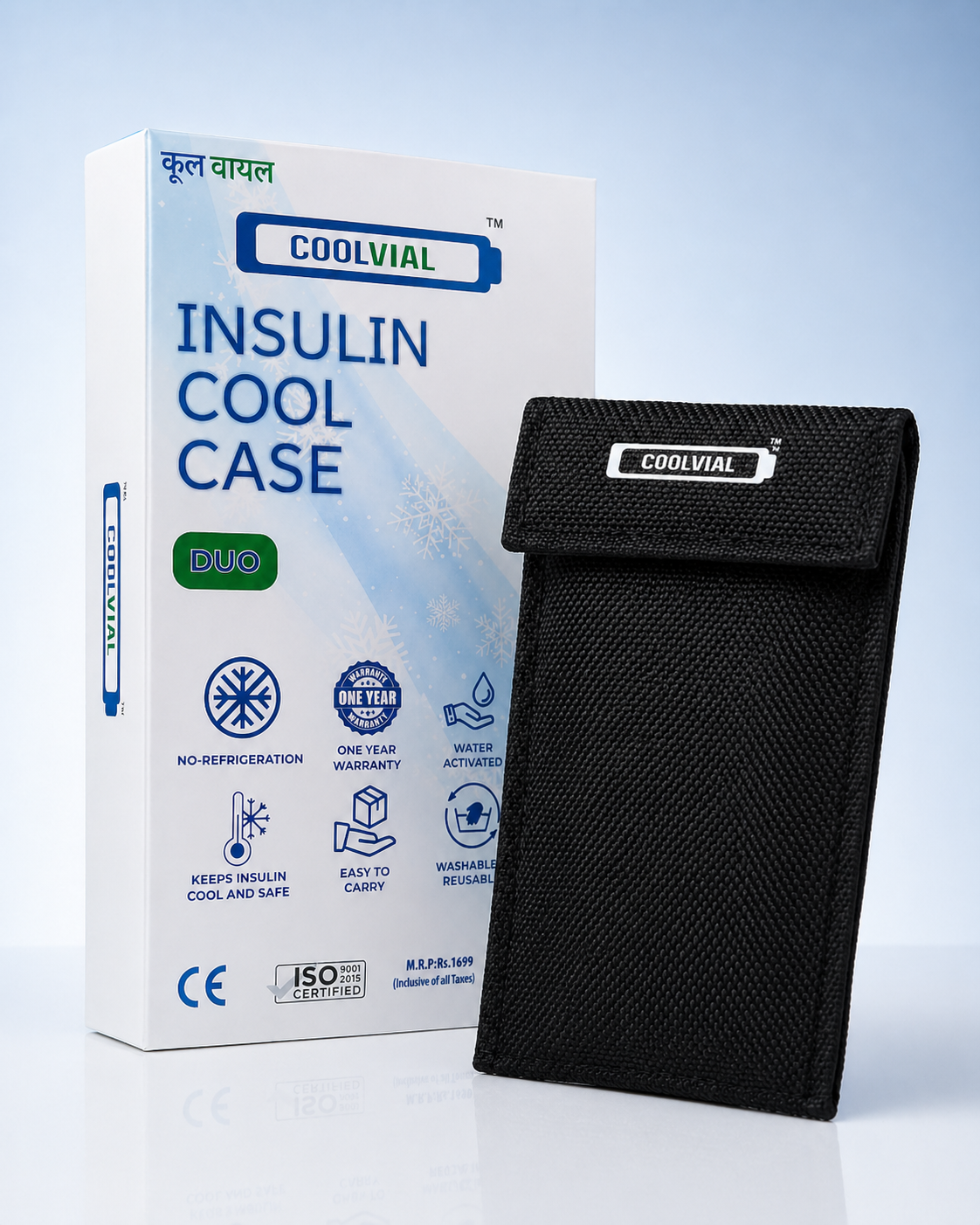
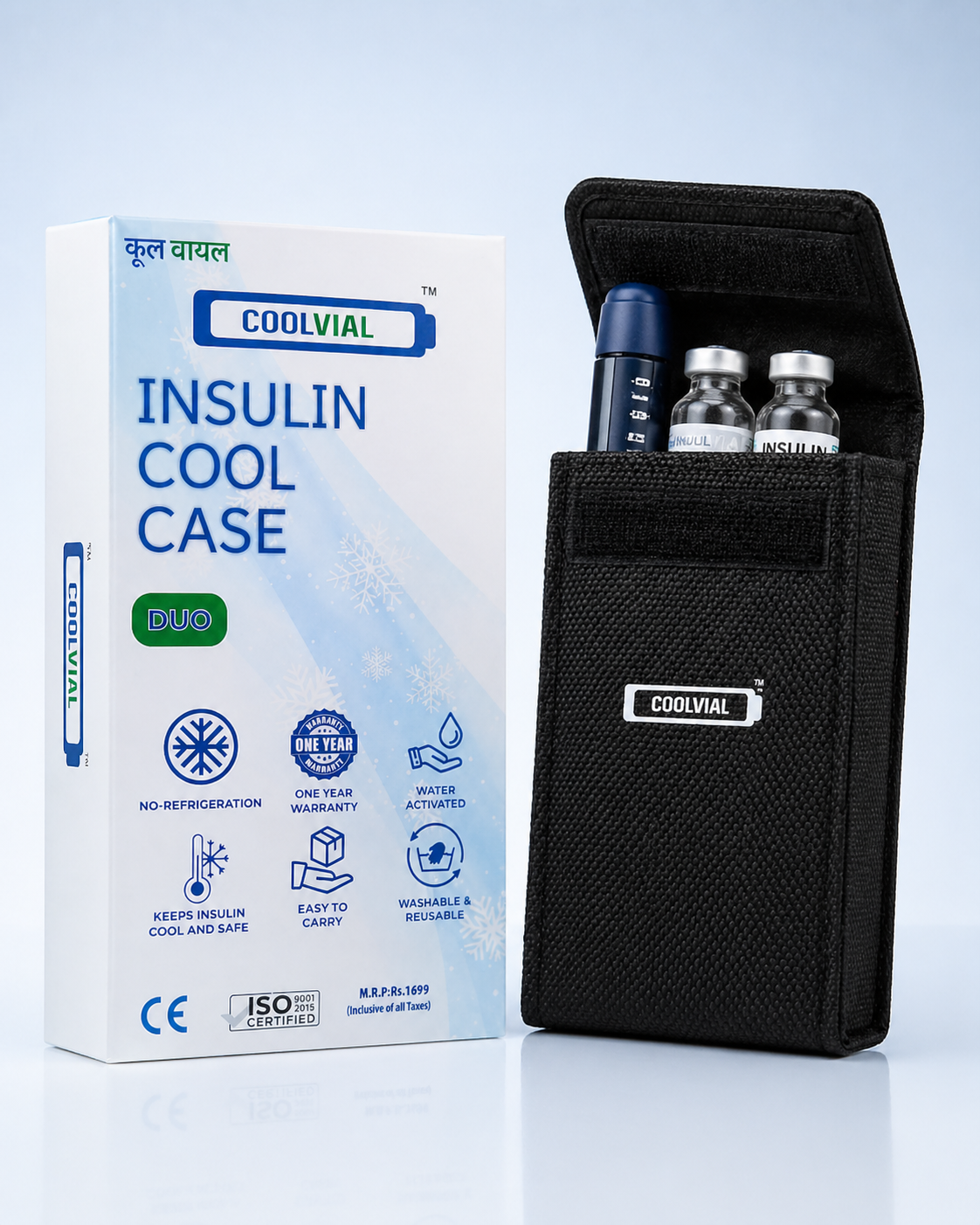
When planning your insulin on Indian Railways storage guide for long train journeys, the choice of storage solution is paramount. This is where COOLVIAL offers a practical and dependable answer for the unique challenges of Indian travel. The COOLVIAL insulin cool case (₹1,099) is specifically engineered to provide a stable, cool environment for your insulin without the need for electricity, making it an ideal companion for long hours on a train, through diverse climates, and during unexpected delays.
COOLVIAL cases work on a simple yet highly effective principle: advanced insulation combined with specially formulated gel packs that maintain a consistent temperature range, typically between 2-8°C, for extended periods. This critical range is where unopened insulin should be stored, and it also significantly extends the safe “room temperature” duration for opened insulin in India’s often scorching conditions. Unlike traditional ice boxes, COOLVIAL’s design prevents direct contact between the cooling elements and your insulin, eliminating the risk of accidental freezing, which can be just as damaging as excessive heat.
The robust construction of the COOLVIAL case ensures durability against the rigors of travel. It’s compact and lightweight, easily fitting into your carry-on luggage, ensuring your insulin is always with you. For a nominal investment, you gain peace of mind, knowing that your vital medication is protected from the fluctuating temperatures inside train compartments, from the blistering summer heat of Nagpur to the humid air of Kochi. Choosing COOLVIAL means choosing a solution designed with the Indian traveler in mind, offering a reliable, maintenance-free way to manage your insulin storage needs effectively.
Essential Checklist and Frequently Asked Questions
Preparing for your train journey with insulin requires a systematic approach. Use this checklist and FAQ to ensure you haven’t overlooked any critical steps.
Essential Travel Checklist for Insulin Users:
- Consult Doctor: Discuss travel plans, get a prescription copy.
- Insulin Supply: Pack 1.5-2x the required insulin, both opened and unopened.
- Cool Case: Use a reliable, non-electric insulin cool case (e.g., COOLVIAL).
- Cooling Elements: Ensure gel packs are properly frozen/conditioned.
- Diabetes Supplies: Include syringes/pens, needles, lancets, test strips, glucometer.
- Backup Plan: Consider extra gel packs, a small emergency supply of oral meds (if applicable).
- Identification: Carry a medical ID, doctor’s letter, and prescription.
- Hydration & Snacks: Pack water and healthy, non-perishable snacks.
- Disposal Bag: Small, sealable bag for used needles/syringes.
- Temperature Monitor: Portable thermometer (optional but recommended).
Frequently Asked Questions:
Q: Can I store insulin in the train’s pantry car refrigerator? A: It is generally not recommended to store insulin in a train’s pantry car refrigerator. These refrigerators are often unreliable, may not maintain a consistent temperature, and are not designed for personal medication storage, posing a risk to your insulin’s efficacy.
Q: What if my insulin cool case fails during a long journey? A: In case of a cool case failure, immediately try to procure ice from the pantry car or vendors at a station stop, wrap it in a cloth, and place it around your insulin (without direct contact). If possible, consider purchasing a new cool case or insulin at the next major station. Always have a backup plan, such as extra insulin and alternative cooling methods.
Q: How do I dispose of used syringes/needles on a train? A: Carry a small, sturdy, puncture-proof container (like an empty plastic bottle with a cap) for used syringes and needles. Do not dispose of them in train dustbins. You can safely discard this container at home or at your destination in a designated sharps disposal unit. For more insulin storage tips and disposal guidelines, consult your healthcare provider.
Q: Is it safe to carry insulin in check-in luggage on a train? A: No, it is not safe to carry insulin
The Complete 7-Step Guide: Insulin on Indian Railways for Long Train Journeys
Don't let Indian heat spoil your insulin. COOLVIAL protects it for 48+ hours — at home, travelling, or during power cuts.
The Complete 7-Step Guide: Insulin on Indian Railways for Long Train Journeys
Keep your insulin safe in India's extreme heat. COOLVIAL works for 48+ hours without electricity.
The Complete 7-Step Guide: Insulin on Indian Railways for Long Train Journeys
COOLVIAL keeps insulin safe in India's heat. 48+ hours, no electricity needed.