
Reviewed by the COOLVIAL Editorial Team — specialists in insulin storage for Indian climate conditions.
To effectively store insulin in 45°C Indian summers without a fridge, the most reliable method is to use a phase-change material (PCM) cool case like COOLVIAL, which maintains insulin at safe temperatures (typically 18-26°C) for extended periods, even when ambient temperatures soar to 45°C and beyond. Insulin degrades rapidly above 30°C, losing its efficacy and potentially leading to erratic blood sugar control. This guide will provide comprehensive, practical strategies on how to store insulin in 45°C Indian summers without a fridge, ensuring your vital medication remains potent and safe during India’s challenging summer months. We’ll explore various methods, from traditional techniques to advanced cooling solutions, offering you the knowledge to manage your diabetes confidently, regardless of the heat.
Table of Contents
- The Critical Challenge: Storing Insulin in India’s Extreme Heat
- Understanding Insulin Stability: Core Concepts for Safe Storage
- Practical Strategies: How to Store Insulin in 45°C Indian Summers Without a Fridge
- Navigating India’s Diverse Climates: Region-Specific Insulin Storage Tips
- COOLVIAL: Your Reliable Partner for How to Store Insulin in India’s Heat
- Frequently Asked Questions About Insulin Storage in Indian Summers
- Conclusion: Empowering Diabetics Through Smart Storage
The Critical Challenge: Storing Insulin in India’s Extreme Heat
India’s summers present a unique and formidable challenge for the millions living with diabetes. With temperatures in many regions, especially across North India, frequently soaring to 45°C and even touching 50°C in places like Rajasthan and Uttar Pradesh, maintaining the integrity of life-saving insulin becomes a critical concern. The delicate protein structure of insulin is highly sensitive to temperature fluctuations, particularly heat. Exposure to temperatures above its recommended storage range can cause irreversible damage, leading to a significant loss of potency.
According to research published in BMC Endocrine Disorders, maintaining insulin’s temperature within safe limits is paramount for its efficacy (Source: BMC Endocrine Disorders). When insulin degrades, it fails to lower blood glucose effectively, leading to unpredictable sugar levels, increased risk of hyperglycemia, and potentially dangerous complications. This makes understanding how to store insulin in 45°C Indian summers without a fridge an essential part of diabetes management for many.
The problem is compounded by several India-specific factors. For instance, India had 101 million diabetics in 2023, according to the International Diabetes Federation (IDF), highlighting the vast number of individuals affected by this challenge. Furthermore, unreliable electricity supply, with an estimated 78% of Indian households facing daily power cuts in summer, especially in rural and semi-urban areas, means that refrigeration is not always a consistent option. This necessitates alternative, robust storage solutions.
Consider also the extensive travel many Indians undertake, whether for work, family visits, or festivals like Diwali or Ganesh Chaturthi. Long journeys by train, bus, or even car often involve prolonged exposure to high ambient temperatures, making traditional refrigeration impossible. Even within homes, intense heat can quickly turn a normal room into an oven, compromising insulin if not stored correctly. The urgency to find reliable, electricity-free insulin storage solutions is not just about convenience; it’s about ensuring continuous, effective diabetes care in the face of India’s climatic realities.
Understanding Insulin Stability: Core Concepts for Safe Storage
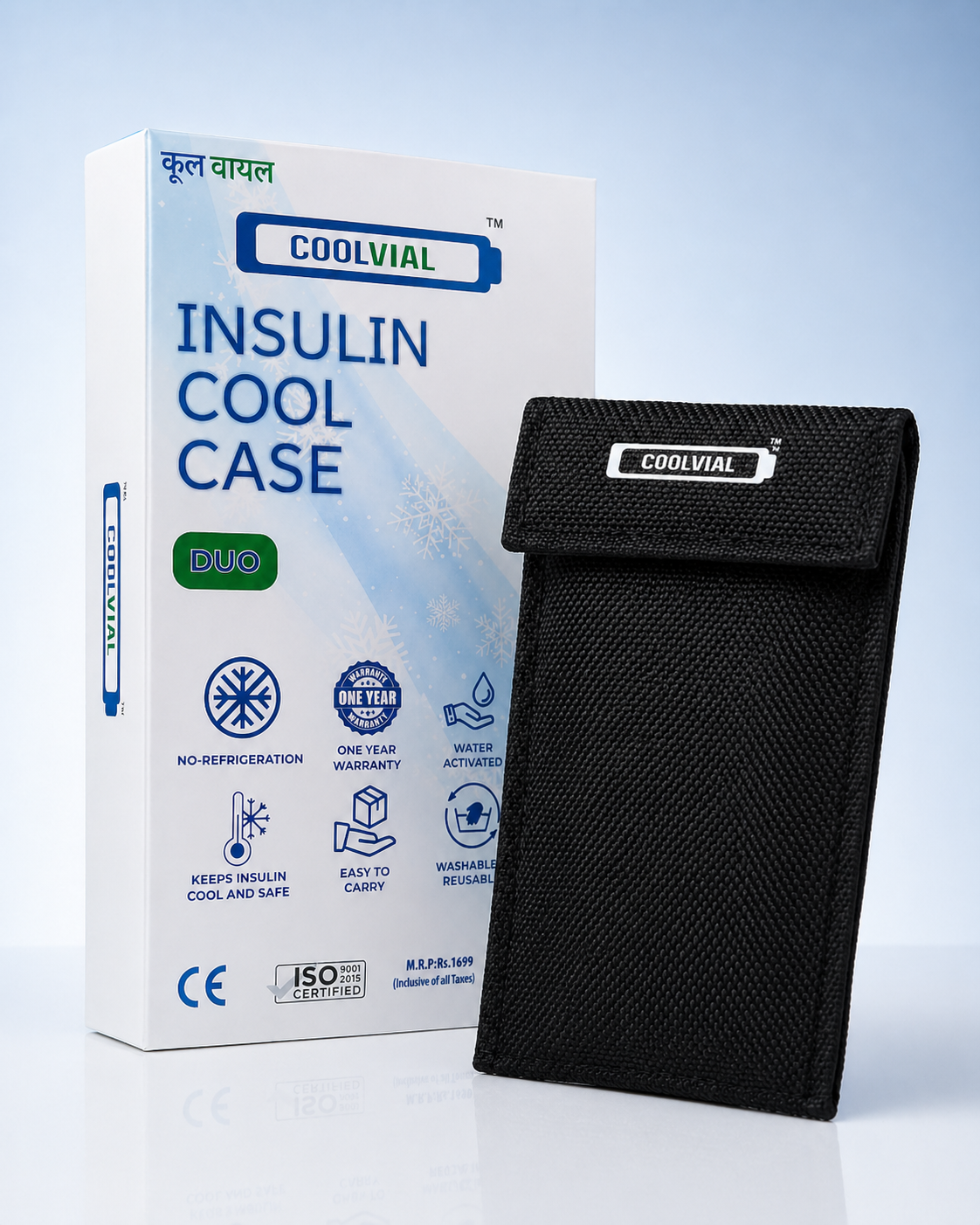
7 Proven Ways to Store Insulin in 45°C Indian Summers Without a Fridge
COOLVIAL keeps insulin at 2-8°C for 48+ hours. No electricity needed. Trusted by 10,000+ diabetics.
Insulin is a vital hormone, a protein, that helps regulate blood sugar. Its effectiveness hinges entirely on maintaining its structural integrity. When exposed to adverse conditions, particularly extreme temperatures, this delicate structure can break down, rendering the insulin less effective or even completely useless. Understanding these core concepts is the first step in mastering how to store insulin in 45°C Indian summers without a fridge.
Ideal Storage Temperatures: Unopened vs. Opened Insulin
The World Health Organization (WHO) and insulin manufacturers provide specific guidelines for insulin storage to ensure its potency. Adhering to these guidelines is non-negotiable for effective diabetes management.
- Unopened Insulin: Vials, pens, or cartridges that have not been opened should always be stored in a refrigerator, ideally between 2°C and 8°C (36°F and 46°F). This temperature range preserves the insulin’s full potency until its expiry date, which can be up to 2-3 years. Freezing insulin is strictly prohibited, as it destroys the protein structure.
- Opened or In-Use Insulin: Once an insulin vial, pen, or cartridge has been opened or punctured, its storage recommendations change. It can generally be kept at room temperature, typically between 15°C and 30°C (59°F and 86°F), for a limited period, usually 28 days (four weeks). Some specific insulin pens or types might allow for slightly longer, up to 42 days (six weeks), so always check the manufacturer’s leaflet. The key is to protect it from direct sunlight and extreme heat. Exceeding 30°C significantly reduces this 28-day window and accelerates degradation.
The Science of Insulin Degradation
Insulin is a protein. Like many proteins, it is susceptible to denaturation, a process where its three-dimensional structure unravels. Heat is a primary catalyst for this denaturation.
- Heat’s Impact: When insulin is exposed to high temperatures (above 30°C, and especially rapidly above 40°C), the protein molecules begin to break apart or aggregate. This structural change means the insulin can no longer bind effectively to insulin receptors in the body, leading to a loss of its glucose-lowering ability.
- Visible Signs of Spoilage: While early degradation might not be visible, severely compromised insulin can show noticeable changes. Look for:
- Cloudiness or particles: Clear insulin (like rapid-acting or long-acting basal insulin) should remain clear. Any cloudiness, flakes, or particles indicate spoilage.
- Discoloration: Insulin should be colorless. Any yellowing or browning is a sign of degradation.
- Change in consistency: If it feels unusually thick or sticky.
- Lack of efficacy: The most critical sign is when your blood sugar levels remain high despite administering your usual dose.
Phase Change Materials (PCMs) Explained
In environments where consistent refrigeration is impossible, Phase Change Materials (PCMs) offer an innovative and reliable solution. Unlike traditional ice packs, which cool to freezing temperatures and can damage insulin, PCMs are designed to maintain a specific, safe temperature range for extended periods without electricity.
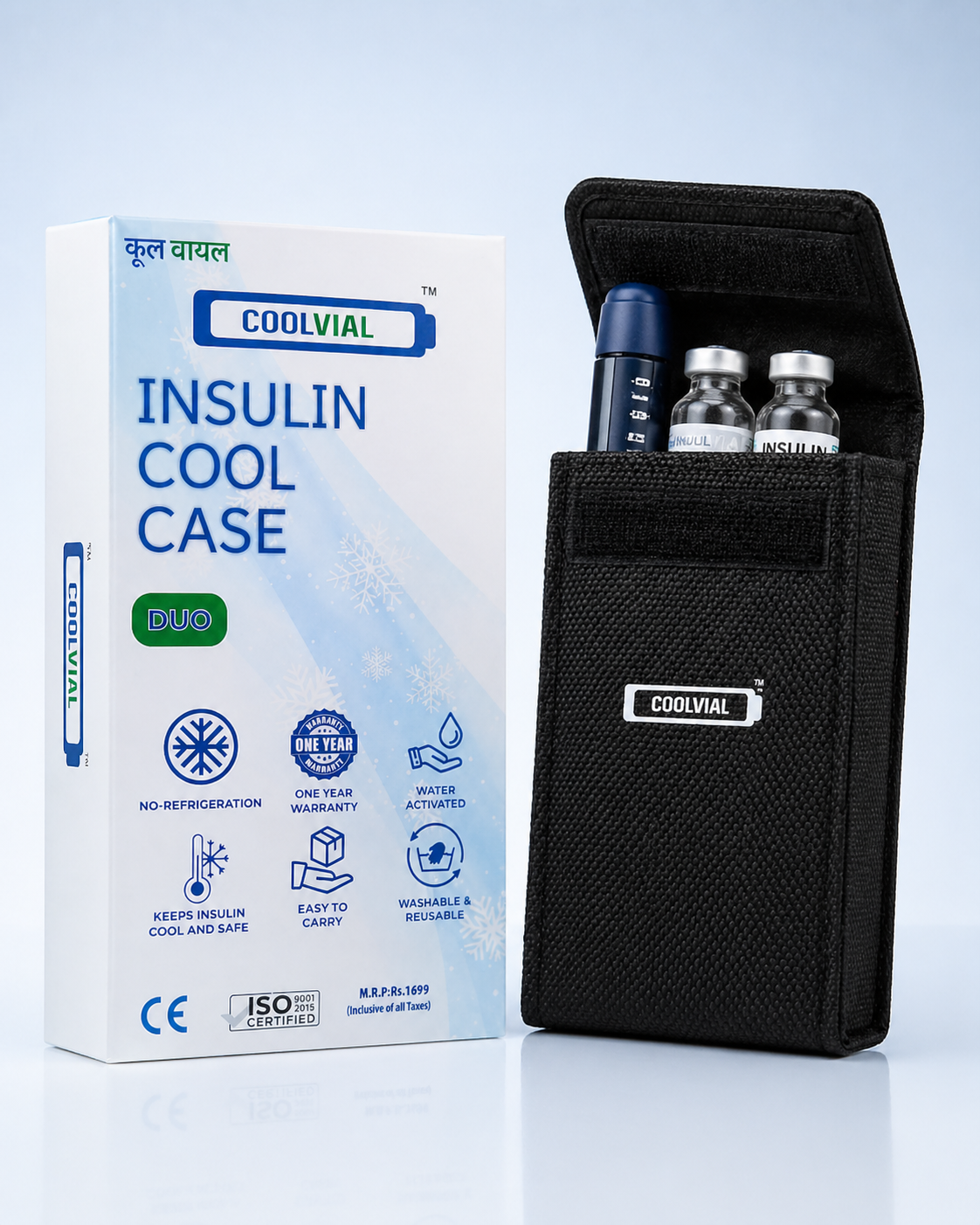
7 Proven Ways to Store Insulin in 45°C Indian Summers Without a Fridge
COOLVIAL keeps insulin safe in India's heat. 48+ hours, no electricity needed.
7 Proven Ways to Store Insulin in 45°C Indian Summers Without a Fridge
Keep your insulin safe in India's extreme heat. COOLVIAL works for 48+ hours without electricity.
- How PCMs Work: PCMs absorb and release thermal energy during a phase transition, typically from solid to liquid. For insulin cool cases, these PCMs are engineered to “melt” at temperatures precisely within the safe range for insulin (e.g., 18-26°C). As the ambient temperature rises, the PCM absorbs the heat and melts, keeping the internal compartment at its target temperature until all the material has melted. This process provides a stable, controlled cooling environment far superior to conventional methods.
- Advantages over Ice Packs:
- Prevents Freezing: PCMs are engineered not to go below a certain temperature (e.g., 18°C), thus eliminating the risk of accidental freezing, which is a common danger with ice packs.
- Consistent Temperature: They maintain a much more stable and safe temperature range for longer durations, unlike ice packs which initially cool too much and then warm up quickly.
- No Electricity Needed: Once “charged” (typically by placing them in a fridge or even just a cooler environment to solidify), they work autonomously, making them ideal for travel or power cuts.
Practical Strategies: How to Store Insulin in 45°C Indian Summers Without a Fridge
Navigating India’s scorching summers requires smart, proactive strategies for insulin storage. While refrigeration is ideal for unopened insulin, these practical methods provide crucial alternatives for in-use insulin, especially when a fridge is unavailable. Mastering how to store insulin in 45°C Indian summers without a fridge is about combining knowledge with the right tools.
Here are seven proven ways to keep your insulin safe and effective:
-
Utilize Insulin Cool Cases (PCM-based): The Gold Standard
- Mechanism: These cases use advanced Phase Change Materials (PCMs) that absorb heat from the environment and maintain an internal temperature typically between 18°C and 26°C. This is the safest and most reliable method for keeping insulin stable in extreme heat without electricity.
- How to Use: “Recharge” the PCM inserts by placing them in a refrigerator for a few hours (or even in an air-conditioned room overnight in a pinch) until they solidify. Once solid, place them back into the cool case with your insulin. They will then maintain the safe temperature for many hours, sometimes even days, depending on the ambient temperature and the specific product.
- Benefits: Prevents both freezing and overheating, offers extended protection, highly portable. Brands like COOLVIAL specifically design these for challenging climates.
- Example: A COOLVIAL insulin cool case is engineered precisely for this purpose, providing peace of mind during travel or power outages.
-
Employ Clay Pots (Matkas) for Evaporative Cooling
- Mechanism: This traditional Indian method leverages evaporative cooling. Water stored in porous clay pots (matkas) slowly evaporates from the surface, drawing heat away and cooling the contents inside.
- How to Use: Place your insulin (sealed in a waterproof bag to prevent moisture damage) inside a clean, unused clay pot. Place the pot in a shady, well-ventilated area. You can also place the pot in a shallow tray of water to enhance the cooling effect as the pot absorbs water.
- Limitations: The effectiveness is highly dependent on ambient humidity. In dry heat (like Rajasthan), it works better. In humid coastal areas (like Mumbai or Chennai), its cooling capacity is significantly reduced. It’s also less precise than PCM cases.
-
Use a Thermos Flask with Cool Water
- Mechanism: A good quality insulated thermos flask can act as a temporary cooler. Instead of ice (which can freeze insulin), use cool tap water or water that has been refrigerated.
- How to Use: Fill a thermos flask with cool water. Place your insulin vial or pen (again, sealed in a waterproof, airtight bag to prevent water damage) into the water. Ensure the water is cool, not icy cold. Replace the water every few hours as it warms up.
- Limitations: Requires frequent water changes, which can be inconvenient, especially during travel. The temperature control is not as precise as a PCM case.
-
The Wet Cloth/Towel Method (Short-Term Emergency)
- Mechanism: Similar to evaporative cooling, wrapping insulin in a damp cloth allows the evaporation of water to draw some heat away.
- How to Use: Dampen a clean cloth or towel with cool water (not cold). Wrap your insulin vial or pen tightly in the damp cloth. Place it in a shady, well-ventilated spot. Re-dampen the cloth frequently as it dries out.
- Limitations: This is a very temporary and emergency solution. It offers minimal protection in extreme 45°C heat and requires constant attention. Not suitable for long durations or travel.
-
Seek Out Cooler Environments
- Mechanism: Simple yet effective, always move your insulin to the coolest available spot.
- How to Use: Avoid direct sunlight at all costs. Keep insulin away from windows, car dashboards, and hot appliances. In a home without AC, an inner room, a shaded cupboard, or even placing it on a cool tiled floor might offer a few degrees of respite. During travel, keep it in your carry-on bag, close to your body or in the cabin of an AC bus/train rather than in hot luggage compartments.
-
Underground Storage (Rural/Emergency)
- Mechanism: The earth acts as a natural insulator, maintaining a more stable, cooler temperature a few feet below the surface than the scorching air above.
- How to Use: In rural settings or extreme emergencies where no other options are available, a small, insulated, waterproof container with insulin can be buried a foot or two deep in a shaded, dry spot.
- Limitations: This is a highly unconventional and impractical method for most, carrying risks of damage from moisture or animals. Only consider in dire situations with no alternatives.
-
Carry Only Necessary Amounts and Replenish Smartly
- Mechanism: Minimize risk by reducing the amount of insulin exposed to heat.
- How to Use: If you’re traveling or anticipate being away from reliable refrigeration for several days, consider carrying only the insulin you need for that period. If possible, arrange for fresh supplies at your destination or plan your travel around places where
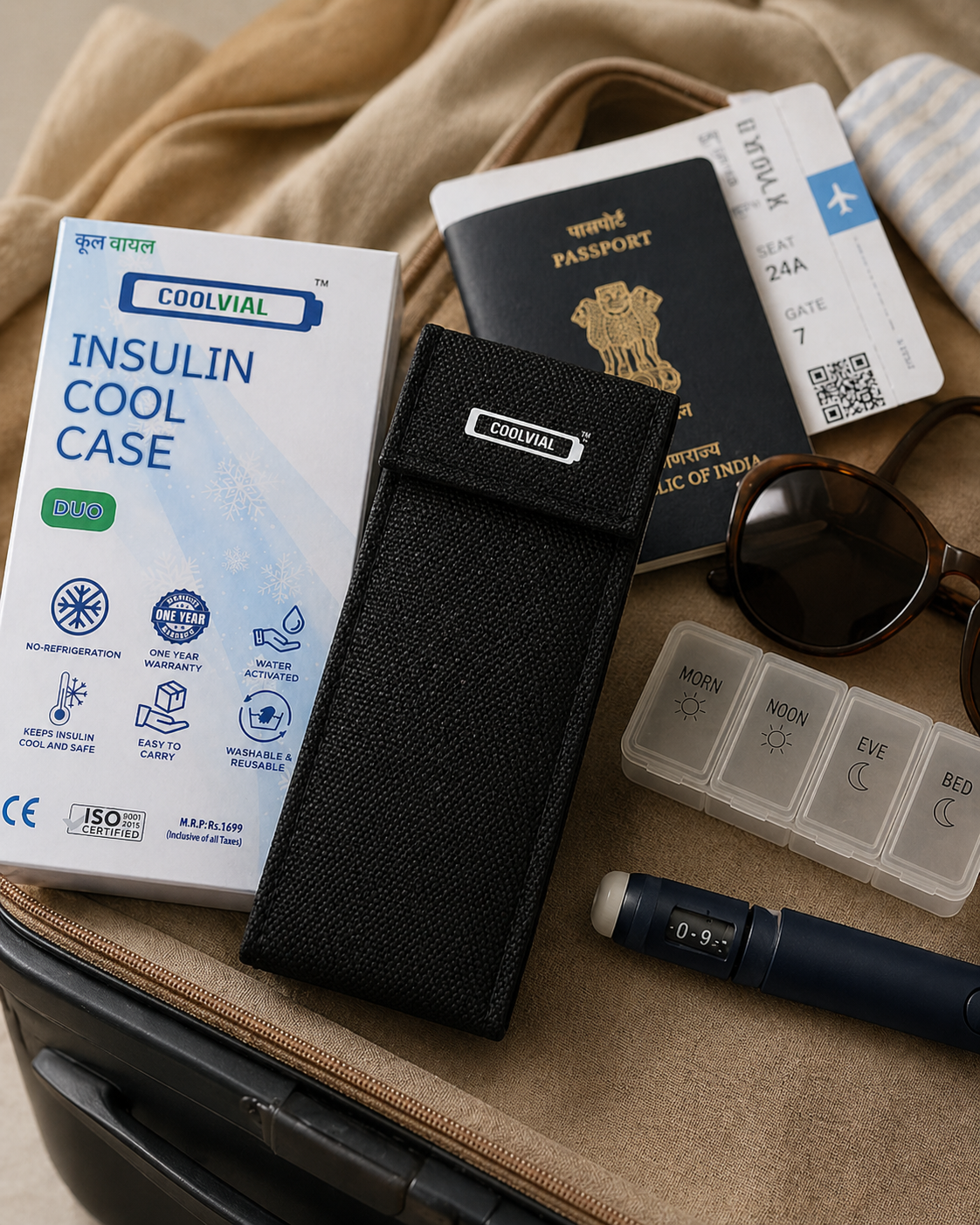
7 Proven Ways to Store Insulin in 45°C Indian Summers Without a Fridge
COOLVIAL keeps insulin at 2-8°C for 48+ hours. No electricity needed. Trusted by 10,000+ diabetics.
7 Proven Ways to Store Insulin in 45°C Indian Summers Without a Fridge
Insulin at 2-8°C for 48+ hours. Trusted by 10,000+ Indian diabetics.