
Reviewed by the COOLVIAL Editorial Team — specialists in insulin storage for Indian climate conditions.
For diabetics in India, the best insulin cooler in India 2026 is one that ensures your vital medication remains safely between 2–8°C, even amidst scorching summers, unpredictable power cuts, and extensive travel. Insulin begins to degrade rapidly above 30°C, losing its efficacy and potentially jeopardizing health. A reliable insulin cool case is not just a convenience; it’s a critical health device that empowers you to manage your diabetes effectively, no matter where you are in India.
Living with diabetes in India means navigating unique challenges, from bustling city life to remote village visits, all under a vast spectrum of climatic conditions. Ensuring your insulin maintains its potency is paramount for effective glucose management. This comprehensive guide will help you understand the critical factors in choosing the best insulin cooler for your needs, offering practical advice and highlighting solutions perfectly suited for the Indian environment. We’ll explore core concepts, practical tips, and specific considerations to help you keep your insulin safe and effective, enabling you to live a full and active life.
Table of Contents
- Why Reliable Insulin Cooling Matters: The Indian Context
- Understanding Insulin Storage: Core Concepts for the Best Insulin Cooler
- Practical Tips for Choosing the Best Insulin Cooler in India 2026
- Navigating India’s Diverse Climate with Your Insulin Cooler
- COOLVIAL: A Smart Solution for Indian Diabetics
- Essential Insulin Cooler FAQs for Indian Users
- Conclusion
Why Reliable Insulin Cooling Matters: The Indian Context
India’s climate presents significant challenges for insulin users. With temperatures soaring above 45°C in many regions during summer and high humidity prevalent across coastal areas, maintaining insulin’s integrity is a constant concern. Insulin, a protein, is highly sensitive to temperature fluctuations. Exposure to heat, freezing, or direct sunlight can denature it, reducing its effectiveness or even making it completely useless. This loss of potency can lead to uncontrolled blood sugar levels, increasing the risk of both short-term complications like hyperglycemia and long-term health issues.
According to the International Diabetes Federation (IDF), India had 101 million diabetics in 2023, making it a nation with one of the highest diabetes burdens globally. For these millions, proper insulin storage is not a luxury but a fundamental requirement for health and well-being. Imagine a diabetic individual traveling from Delhi to Chennai by train, a journey that can last over 30 hours, or a farmer in rural Rajasthan facing daily power cuts lasting several hours. These are common scenarios where a reliable cooling solution becomes indispensable.
Unopened insulin vials and pens must be stored in a refrigerator between 2°C and 8°C. Once opened, many insulins can be kept at room temperature (below 25°C or 30°C, depending on the specific type) for up to 28 days or sometimes 6 weeks. However, “room temperature” in India, especially during peak summer months from April to June, often far exceeds these safe limits. Temperatures in cities like Nagpur, Ahmedabad, and Hyderabad routinely cross 40°C. Even during winter, indoor temperatures can fluctuate significantly.
Moreover, the challenge is compounded by India’s infrastructure. While urban areas have better electricity access, 78% of Indian households still face daily power cuts in summer, especially in tier-2 and tier-3 cities and rural regions (Source: India Energy Access Survey). This means that even if you store insulin in a refrigerator at home, its temperature stability is at risk. For those who travel frequently for work, family, or pilgrimages, conventional refrigeration is often unavailable. This highlights the critical need for portable, robust, and electricity-independent insulin cooling solutions. Without them, individuals risk using compromised insulin, leading to ineffective treatment and serious health consequences. Ensuring your insulin is always stored correctly is a key pillar of effective diabetes management, as emphasized by health organizations worldwide (Source: Diabetes UK).
Understanding Insulin Storage: Core Concepts for the Best Insulin Cooler
Choosing the best insulin cooler requires a foundational understanding of how insulin reacts to temperature and the different technologies available to protect it. It’s not just about keeping it “cold,” but maintaining a precise, stable temperature range.
The Science Behind Insulin Degradation
Best Insulin Cooler in India 2026: Top 7 Proven Picks Reviewed
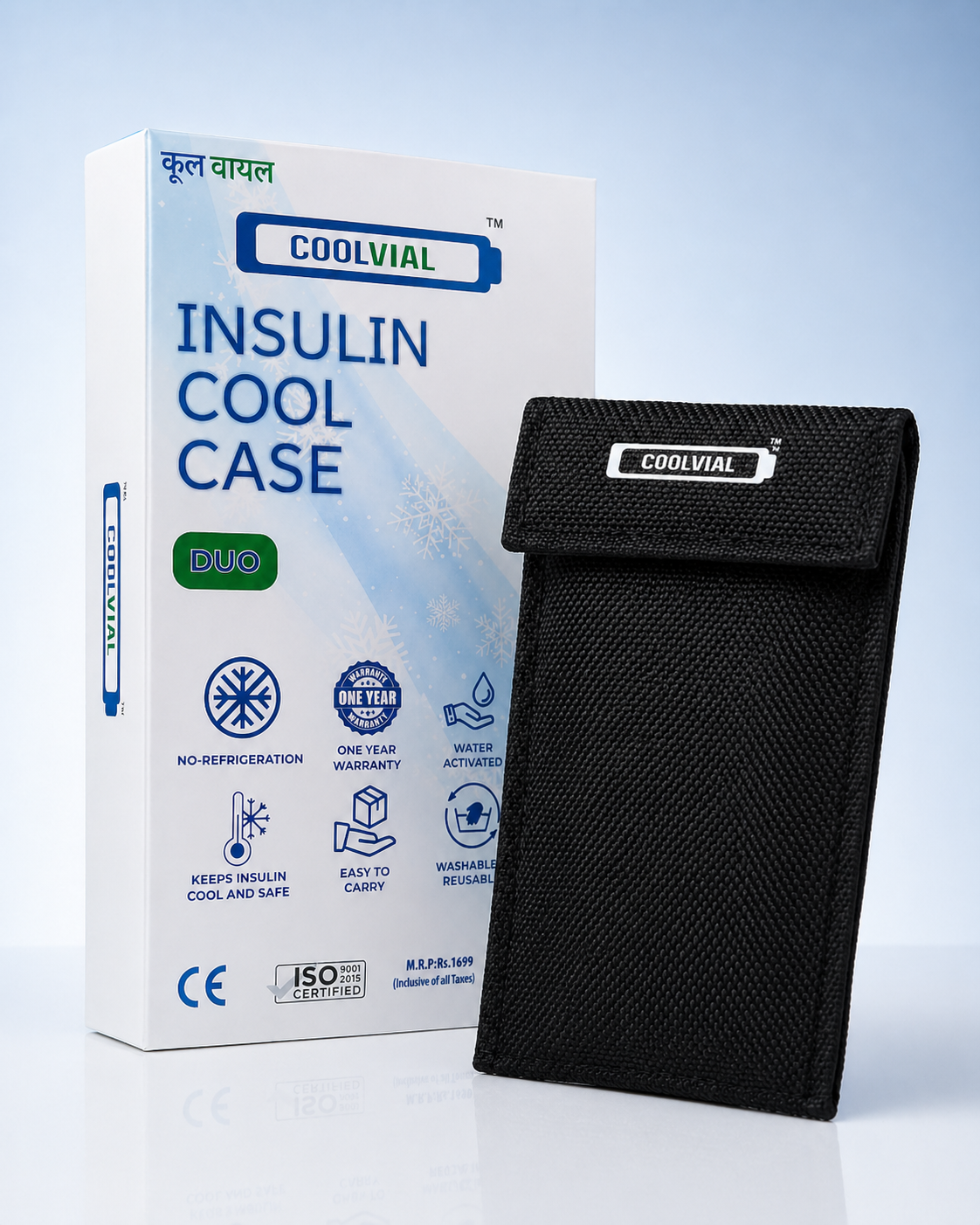
COOLVIAL keeps insulin at 2–8°C for 48+ hours. No electricity needed. Trusted by 10,000+ diabetics across India.
Insulin is a protein hormone. Like many proteins, its molecular structure is sensitive to extreme temperatures.
- Heat: High temperatures cause the insulin molecules to break down or aggregate. This process, known as denaturation, changes the insulin’s shape, making it unable to bind effectively to receptors in the body. The result is a loss of potency, meaning the insulin won’t lower blood sugar as intended. This can lead to dangerously high glucose levels. Above 30°C, this degradation accelerates significantly.
- Freezing: Freezing can also damage insulin. When insulin freezes, its protein structure can be permanently altered, rendering it ineffective. Even if it thaws, its potency will be compromised. This is why direct contact with ice packs is often discouraged without proper insulation.
Ideal Temperature Ranges for Insulin
Maintaining specific temperature ranges is crucial for both unopened and opened insulin.
| Insulin State | Recommended Temperature Range | Maximum Duration at Range |
|---|---|---|
| Unopened (Store) | 2°C to 8°C (Refrigerated) | Until Expiry Date |
| Opened (In Use) | Below 25°C (Room Temp) | 28 Days (most types) |
| Opened (In Use) | Below 30°C (Room Temp) | 28 Days (some specific types) |
| Danger Zone | Above 30°C | Rapid degradation begins |
| Danger Zone | Below 0°C (Freezing) | Permanent damage |
These guidelines are critical for ensuring the efficacy of your medication. The “room temperature” recommendation for opened insulin is particularly challenging in India. This is where an effective insulin cooler becomes indispensable.
Types of Insulin Cooling Solutions
Several types of insulin cooling solutions are available, each with its own mechanism and suitability for different situations. Understanding these can help you identify the best insulin cooler for your needs.
-
Gel Pack Coolers (Passive Cooling):
- How it works: These cases use non-toxic gel packs, pre-frozen in a refrigerator, to maintain a cool temperature. The insulation of the case helps to extend the cooling duration.
- Pros: No electricity required, highly portable, affordable. Ideal for short to medium trips or daily use.
- Cons: Limited cooling duration (typically 8-48 hours), requires access to a freezer for gel packs.
- Suitability in India: Excellent for daily commutes, short-haul travel, and as a backup during power cuts. Many Indian brands, including COOLVIAL, offer robust gel pack solutions.
-
Evaporative Coolers (Water Activated):
- How it works: These pouches use a special material that, when soaked in water, creates a cooling effect through evaporation.
- Pros: No electricity or refrigeration needed, lightweight, reusable, often compact.
- Cons: Effectiveness can be reduced in high humidity environments (common in coastal India), requires periodic re-soaking, can become damp.
- Suitability in India: Best for dry climates (e.g., Rajasthan, parts of Uttar Pradesh) but less effective in humid areas like Mumbai or Kolkata.
-
Thermoelectric Coolers (Active Cooling):
- How it works: These devices use the Peltier effect, where an electric current passes through two dissimilar materials to create a temperature difference. They typically plug into a power source (AC adapter, car charger, power bank).
- Pros: Can maintain precise temperatures, continuous cooling as long as powered.
- Cons: Requires constant power, generally heavier and more expensive, can be noisy.
- Suitability in India: More suitable for situations with reliable power access, like long car journeys with a charging port or hotel stays. Less practical for extended periods without electricity.
-
Compressor-Based Portable Fridges:
- How it works: Miniaturized versions of home refrigerators, using a compressor to cool.
- Pros: Highly effective, can achieve very low temperatures, large capacity.
- Cons: Very expensive, bulky, heavy, requires significant power, not truly “portable” for carrying.
- Suitability in India: Niche use, perhaps for long-term RV travel or specific medical transport, not for daily personal use.
For most Indian diabetics, especially those seeking portability and independence from electricity, passive cooling solutions like gel pack coolers are often the most practical and reliable. For more insulin storage tips tailored to specific needs, it’s always good to consult your healthcare provider.
Best Insulin Cooler in India 2026: Top 7 Proven Picks Reviewed
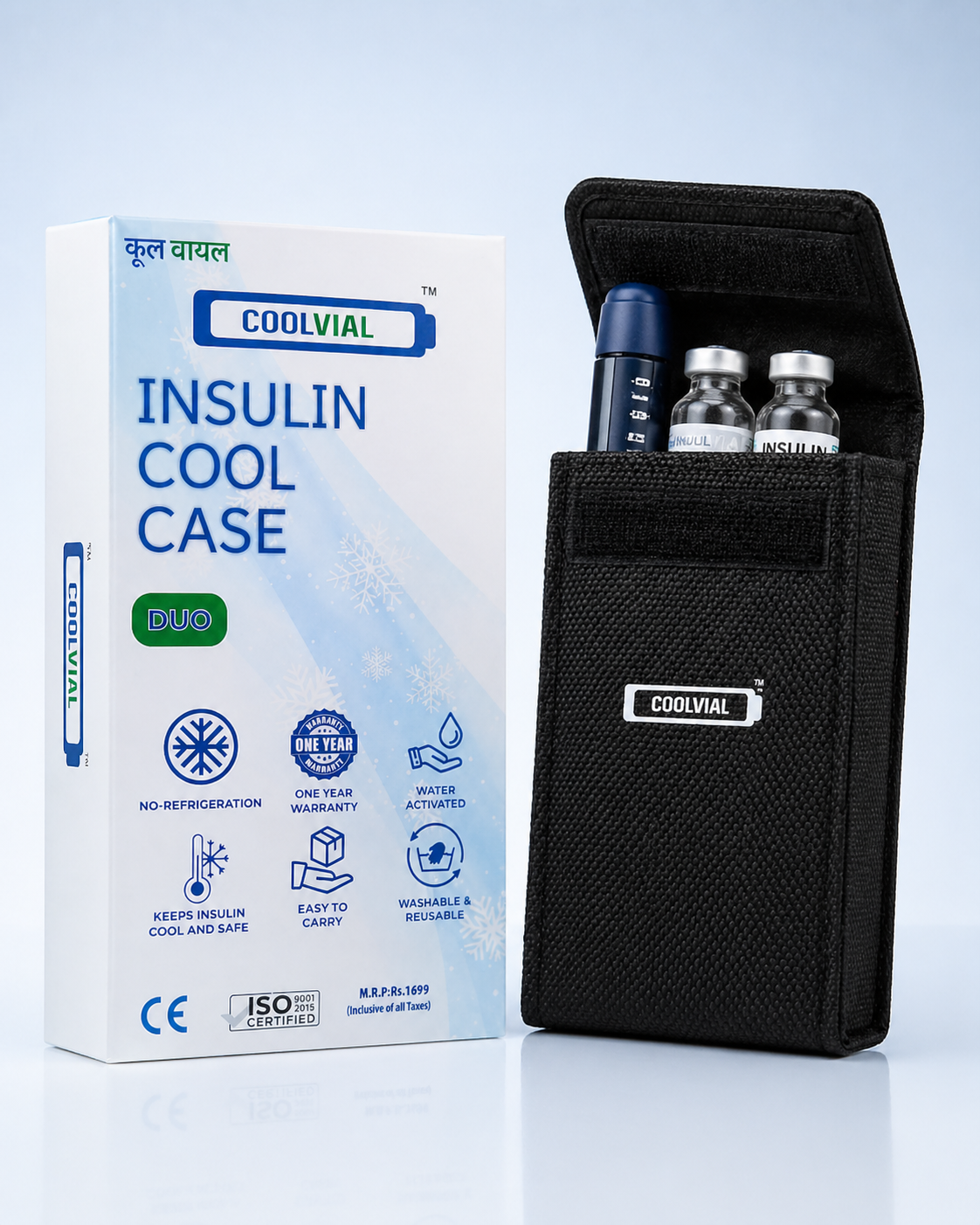
COOLVIAL keeps insulin at 2–8°C for 48+ hours. No electricity needed. Trusted by 10,000+ diabetics across India.
"Finally a cooler that works in Indian summers. Insulin stayed perfect during a 3-day power cut." — Ramesh, Chennai
Best Insulin Cooler in India 2026: Top 7 Proven Picks Reviewed
CE Certified · Free Delivery · 1-Year Warranty · Made for India
📲 Buy on WhatsApp — ₹1,099🛒 Buy Now — ₹1,099Practical Tips for Choosing the Best Insulin Cooler in India 2026
When evaluating options for the best insulin cooler in India 2026, consider these practical aspects to ensure you select a device that truly meets your lifestyle and the demands of the Indian environment.
- Cooling Duration: This is paramount. How long do you need your insulin to stay cool without re-freezing or re-powering? For daily commutes, 8-12 hours might suffice. For inter-city train travel (e.g., Mumbai to Delhi, 16+ hours) or long bus journeys, you’ll need 24-48 hours of cooling. Always check the manufacturer’s stated cooling duration and factor in ambient temperatures; higher outside temperatures will reduce effective cooling time.
- Portability and Size: Will you carry it in a handbag, backpack, or luggage? Consider its weight and dimensions. A compact design is crucial for everyday use and travel on crowded public transport like local Mumbai trains or Delhi Metro. Ensure it fits comfortably without being cumbersome.
- Durability and Build Quality: Indian conditions can be tough. Look for cases made from robust, high-quality materials that can withstand accidental drops, bumps, and varying weather. A sturdy zipper, strong outer shell, and reliable insulation are key.
- Insulation Effectiveness: Beyond the cooling mechanism, the quality of insulation (e.g., thick foam, multiple layers) directly impacts how long the internal temperature remains stable. Good insulation minimizes heat transfer from the outside.
- Capacity: How much insulin do you need to carry? Consider the number of vials, pens, or cartridges. Some coolers are designed for a single pen, while others can hold multiple vials and syringes. Plan for your typical usage and potential travel needs.
- For daily use: A single-pen or two-vial capacity might be enough.
- For short trips (2-3 days): A case holding 2-4 pens/vials is usually adequate.
- For long trips (1 week+): You might need a larger cooler or a combination of coolers.
- Ease of Use and Maintenance: Is it simple to prepare (e.g., freezing gel packs)? Is it easy to clean? Avoid complex designs that are difficult to manage on the go.
- Cost-Effectiveness: While quality is important, there’s a range of prices. Evaluate options that offer the best balance of features, durability, and cooling performance within your budget. Remember, investing in a reliable cooler is an investment in your health.
- Power Independence (for India): Given frequent power cuts and limited access to charging points during travel, coolers that rely on passive cooling (like gel packs or evaporative systems) are often more practical and reliable for the average Indian user.
By carefully considering these factors, you can make an informed decision and choose an insulin cooler that provides peace of mind and keeps your medication safe, no matter where your journey takes you across India.
Navigating India’s Diverse Climate with Your Insulin Cooler
India’s geographical and climatic diversity means that a “one-size-fits-all” approach to insulin cooling might not be ideal. What works in the dry heat of Rajasthan might struggle in the monsoonal humidity of Kerala or the coastal regions.
- North Indian Plains (Delhi, Uttar Pradesh, Punjab): Summers here are characterized by extreme dry heat, often exceeding 40°C, with temperatures in cities like Delhi, Lucknow, and Chandigarh regularly hitting 45°C. In these conditions, gel pack coolers are highly effective as they maintain a stable low temperature. Evaporative coolers might also work well due to low humidity, but their cooling duration could be shorter than gel packs. Winters can be cold, but indoor temperatures rarely fall below the safe range for insulin.
- West India (Mumbai, Gujarat, Goa): This region experiences high humidity, especially along the coasts and during the monsoon season. Mumbai, for instance, has humidity levels often above 80%. In such conditions, evaporative coolers lose significant efficiency because evaporation is hindered. Gel pack coolers remain the most reliable option here, as their cooling mechanism is not dependent on ambient humidity.
- South India (Chennai, Bangalore, Hyderabad, Kerala): The South generally has a tropical climate with high temperatures and significant humidity year-round. While not as extreme as North Indian summers, 35-40°C is common. Similar to West India, gel pack coolers are superior for consistent performance. Cities like Bangalore, known for their relatively milder climate, still experience heat waves where a cooler is essential.
- East India (Kolkata, Odisha, Northeast): This region also faces high humidity and substantial rainfall during monsoons, alongside hot summers. Again, gel pack-based solutions are the most dependable choice for maintaining insulin integrity.
- Central India (Nagpur, Bhopal): These areas combine high summer temperatures with moderate humidity. Gel pack coolers are a strong choice, offering reliable cooling performance.
Beyond climate, specific conditions impact your cooler choice:
- Power Cuts: As mentioned, 78% of Indian households face daily power cuts in summer. This makes electricity-dependent coolers (thermoelectric, compressor) impractical for home storage during outages and risky for travel. Passive coolers, which require only pre-frozen gel packs, offer complete independence from electricity for their cooling duration.
- Travel by Train/Bus: Long-distance travel across India, often involving non-AC compartments or extended waits at stations, exposes insulin to high temperatures for prolonged periods. A cooler with a 24-48 hour cooling duration is crucial. The ability to carry pre-frozen gel packs without needing a fridge on the journey is a significant advantage.
- Festivals and Outdoor Events: India’s vibrant festival calendar often means spending hours outdoors in crowds, under the sun. Carrying an insulin cooler ensures your medication remains safe while you participate in celebrations like Diwali, Holi, or religious pilgrimages.
Understanding these regional and situational nuances is vital. For most Indian diabetics, especially those who travel or face unreliable power, a robust, passive cooling system like a well-insulated gel pack cooler provides the most consistent and worry-free solution.
COOLVIAL: A Smart Solution for Indian Diabetics
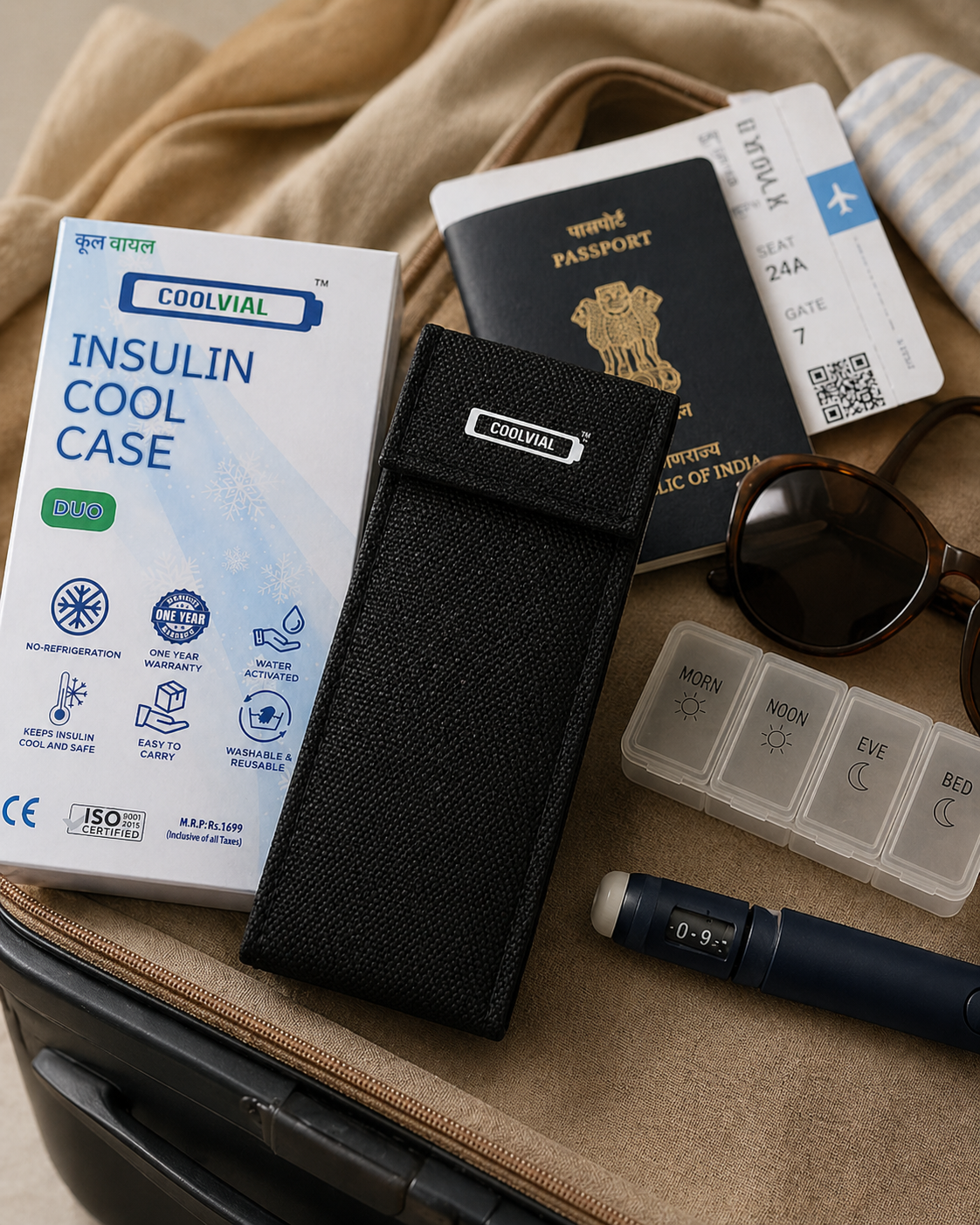
In the challenging Indian climate, where reliable insulin storage is a daily concern, solutions like the COOLVIAL insulin cool case stand out. Designed with the specific needs of Indian diabetics in mind, COOLVIAL offers a practical, effective, and affordable way to protect your vital medication.
COOLVIAL understands that dependence on electricity is often impractical. Our insulin cool case leverages advanced gel pack technology combined with superior insulation to provide extended cooling without any need for power. This makes it an ideal companion for daily life, whether you’re commuting to work in Delhi’s summer heat, traveling by bus across Karnataka, or simply needing a reliable backup during power outages at home in Mumbai.
Here’s why COOLVIAL is considered a smart choice for many seeking the best insulin cooler in India 2026:
- Reliable Temperature Control: The COOLVIAL case is engineered to maintain insulin within the crucial 2°C to 8°C range for extended periods. This precise control is vital for preventing degradation and ensuring your insulin remains fully potent.
- Extended Cooling Duration: With its high-performance gel packs and multi-layered insulation, COOLVIAL provides cooling for up to 36-48 hours, depending on ambient conditions. This extended duration offers peace of mind for long journeys, overnight stays, or during prolonged power cuts.
- Portability and Convenience:
Best Insulin Cooler in India 2026: Top 7 Proven Picks Reviewed
COOLVIAL keeps insulin at 2–8°C for 48+ hours. No electricity needed. Trusted by 10,000+ diabetics across India.
"Finally a cooler that works in Indian summers. Insulin stayed perfect during a 3-day power cut." — Ramesh, Chennai
Best Insulin Cooler in India 2026: Top 7 Proven Picks Reviewed
CE Certified · Free Delivery · 1-Year Warranty · Made for India
📲 Buy on WhatsApp — ₹1,099🛒 Buy Now — ₹1,099