
Reviewed by the COOLVIAL Editorial Team — specialists in insulin storage for Indian climate conditions.
Insulin must be kept cool, ideally between 2-8°C for unopened vials and below 25°C for opened vials or pens, to prevent spoilage and maintain its potency. During India’s pre-monsoon heatwaves (April–May), actively protecting insulin from ambient temperatures that can exceed 45°C is paramount. Unrefrigerated insulin can lose potency rapidly if exposed to temperatures above 30°C, rendering it ineffective for managing blood sugar levels. This guide offers 5 essential tips for effective insulin storage during India’s pre-monsoon heatwaves (April–May), ensuring your medication remains safe and potent.
India’s pre-monsoon season, particularly April and May, brings scorching temperatures that pose significant challenges for individuals managing diabetes. The rising mercury, often coupled with unpredictable power outages, creates an environment where maintaining the efficacy of temperature-sensitive medications like insulin becomes a critical daily task. Without proper care, insulin can quickly degrade, leading to poor glycemic control and serious health complications. This comprehensive article delves into the intricacies of insulin storage during India’s intense pre-monsoon heat, providing practical, actionable advice to safeguard your health. You will learn about optimal temperature ranges, India-specific challenges, and smart solutions to keep your insulin safe and effective, even in the harshest summer conditions.
Table of Contents
- 1. The Critical Challenge: Why Insulin Storage During India’s Pre-Monsoon Heatwaves (April–May) Matters
- 2. Understanding Insulin Stability: Core Concepts for Safe Storage
- 3. Practical Tips for Effective Insulin Storage During India’s Pre-Monsoon Heatwaves
- 4. Navigating India’s Diverse Climate: Regional Storage Considerations
- 5. COOLVIAL: A Smart Solution for Insulin Storage in Indian Heat
- 6. Frequently Asked Questions (FAQs) on Insulin Storage
1. The Critical Challenge: Why Insulin Storage During India’s Pre-Monsoon Heatwaves (April–May) Matters
India’s pre-monsoon period, spanning April and May, is notorious for its brutal heatwaves. Temperatures frequently soar above 40°C across vast swathes of the country, with cities like Delhi, Nagpur, and Ahmedabad often registering peaks well over 45°C. This extreme heat is a direct threat to insulin, a life-saving medication for millions of Indians living with diabetes. According to the International Diabetes Federation (IDF), India had 101 million diabetics in 2023, making it the country with the second-highest number of people with diabetes globally (Source: IDF Diabetes Atlas 10th Edition). For this large population, effective insulin management is non-negotiable.
The primary concern for insulin storage during India’s pre-monsoon heatwaves (April–May) is temperature stability. Insulin is a protein, and like many proteins, it denatures or breaks down when exposed to excessive heat. Once denatured, insulin loses its ability to lower blood glucose, rendering it ineffective and potentially leading to dangerously high blood sugar levels. This degradation is irreversible. The consequences of using degraded insulin can be severe, including diabetic ketoacidosis (DKA) in Type 1 diabetes and hyperglycemia in both Type 1 and Type 2 diabetes.
Beyond ambient temperatures, frequent and prolonged power cuts are another significant challenge unique to the Indian context, especially during summer. Many households across India, particularly in tier-2 and tier-3 cities and rural areas, experience daily power outages that can last for several hours. A study by the Council on Energy, Environment and Water (CEEW) in 2021 indicated that 78% of Indian households faced daily power cuts in summer, with some regions experiencing outages for over 8 hours. These power cuts directly impact refrigeration, which is the standard method for storing unopened insulin vials. When refrigerators cease to function, the temperature inside quickly rises, jeopardizing the integrity of the medication.
Moreover, the sheer volume of daily travel in India, whether by public transport like trains and buses, or personal vehicles, exposes individuals to varying and often high temperatures. A person traveling from Mumbai to Pune, or even commuting within a city like Chennai, can encounter significant heat exposure, making proper insulin storage during these periods even more complex. The need for robust, reliable solutions for insulin storage during India’s pre-monsoon heatwaves (April–May) is therefore not just a matter of convenience, but a critical public health imperative.
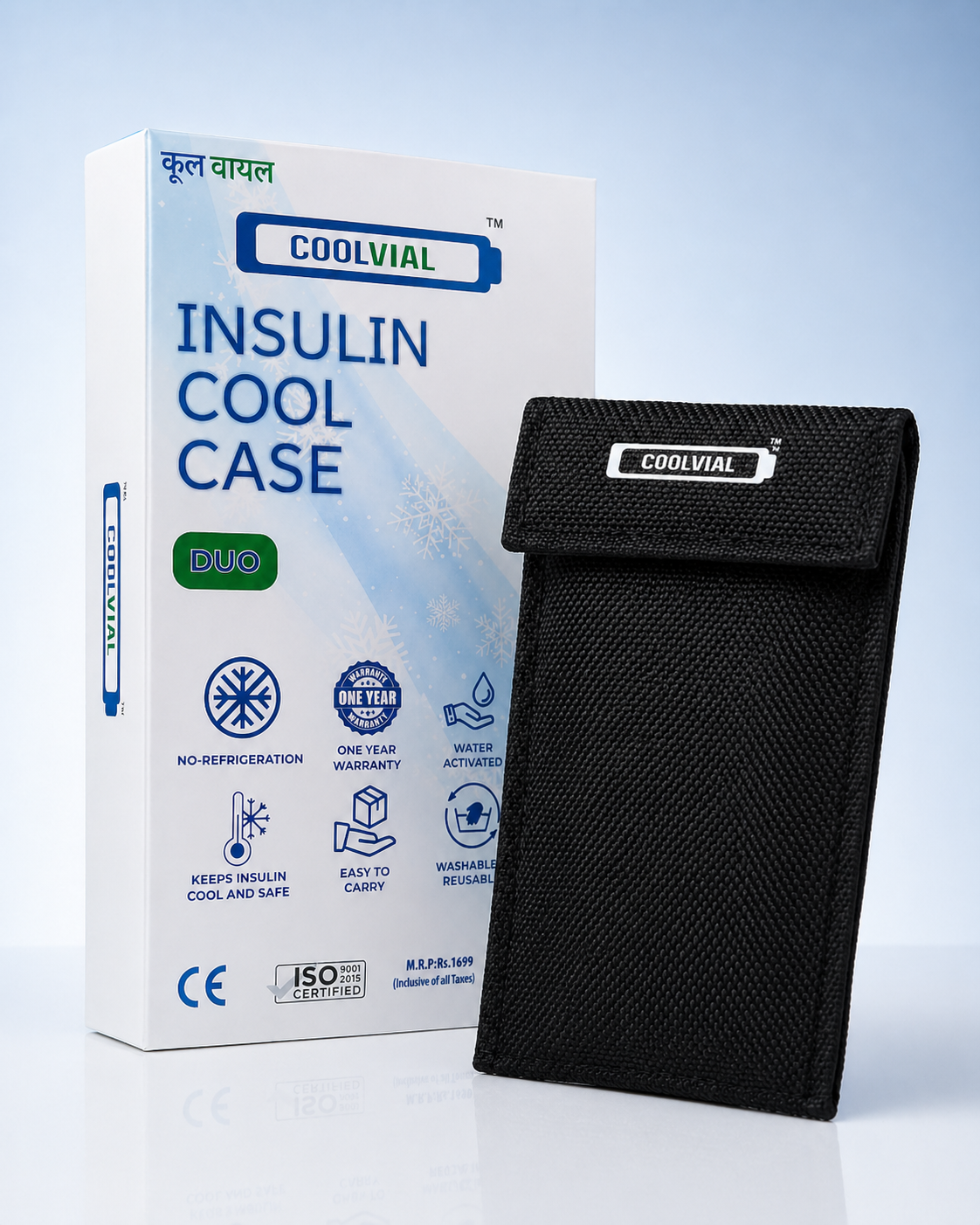
5 Essential Tips for Insulin Storage During India's Pre-Monsoon Heatwaves (April–May)
Keep your insulin safe in India's extreme heat. COOLVIAL works for 48+ hours without electricity.
| Challenge | Impact on Insulin | Recommended Action |
|---|---|---|
| Extreme Ambient Temperatures | Insulin denatures above 30°C, losing potency. Can lead to ineffective blood sugar control. | Use insulated cool cases, avoid direct sunlight, seek air-conditioned environments. |
| Frequent Power Cuts | Refrigerators stop working, leading to rapid temperature increase for stored insulin. | Have backup cool storage solutions ready (e.g., gel packs, cool cases). |
| Travel & Commute | Exposure to high temperatures inside vehicles (cars, buses, trains) without climate control. | Carry insulin in a portable cool case; never leave in parked vehicles. |
| Humidity | While less direct than heat, high humidity can sometimes affect packaging integrity. | Store in sealed, waterproof containers within cool cases. |
5 Essential Tips for Insulin Storage During India's Pre-Monsoon Heatwaves (April–May)
48+ hours at 2-8°C. No electricity. CE certified. Free delivery across India.
Order on WhatsApp — ₹1,099🛒 Buy Now — ₹1,0992. Understanding Insulin Stability: Core Concepts for Safe Storage
To effectively manage insulin storage during India’s pre-monsoon heatwaves (April–May), it’s crucial to understand the fundamental principles of insulin stability. Insulin is a polypeptide hormone, meaning its structure is sensitive to environmental factors like temperature, light, and agitation. Maintaining its structural integrity is key to its therapeutic action. Deviations from recommended storage conditions can lead to physical changes (e.g., aggregation, precipitation) or chemical degradation, both of which reduce its efficacy.
Unopened Insulin: The Cold Chain
Unopened insulin vials, cartridges, or pens should always be stored in a refrigerator at a temperature range of 2°C to 8°C (36°F to 46°F). This is known as maintaining the “cold chain.” This low temperature slows down the degradation processes, allowing the insulin to remain potent until its expiration date, which is typically printed on the packaging. It is vital not to freeze insulin, as freezing can damage the protein structure, rendering it unusable. If insulin freezes, even partially, it must be discarded.
When storing insulin in the refrigerator, place it away from the freezer compartment and the refrigerator door. Fluctuations in temperature are common near the door, and proximity to the freezer can lead to accidental freezing. A stable internal shelf is generally the best spot. During a power cut, the refrigerator’s insulation can keep insulin cool for a few hours, but proactive measures are necessary for longer outages.
Opened Insulin: Room Temperature Nuances
Once an insulin vial, cartridge, or pen is opened and put into use, the storage guidelines change. Opened insulin should generally not be refrigerated again. Instead, it can be stored at room temperature, ideally between 15°C and 25°C (59°F to 77°F). Most insulin formulations remain stable at this range for up to 28 days (four weeks) after opening. Some specific formulations might have slightly different durations (e.g., up to 42 days or six weeks for certain pens), so always refer to the manufacturer’s instructions provided with your specific insulin product.
The key here is “room temperature,” which in India’s pre-monsoon heatwaves (April–May) is a highly relative term. A typical Indian room in April or May can easily exceed 30°C, and often reach 40°C or more, especially in regions like Rajasthan or Uttar Pradesh. This means that “room temperature” storage as defined by manufacturers (often based on temperate climates) is not suitable for opened insulin in most parts of India during this period. Therefore, even opened insulin requires a cooling solution to keep it within the 15-25°C range, or at least below 30°C, to prevent rapid degradation.
Signs of Spoilage
"Finally a cooler that works in Indian summers. Insulin stayed perfect during a 3-day power cut." — Ramesh, Chennai
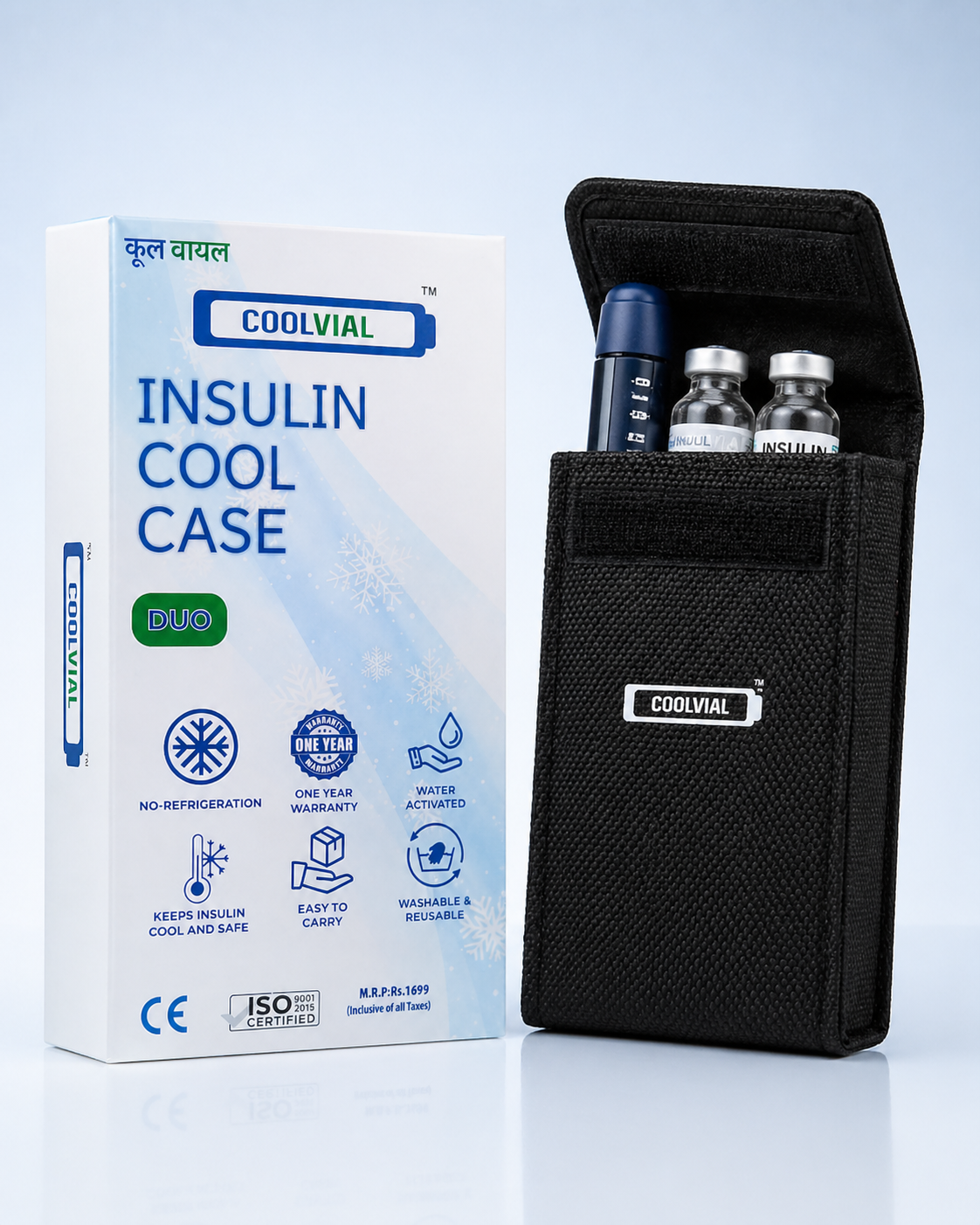
5 Essential Tips for Insulin Storage During India's Pre-Monsoon Heatwaves (April–May)
CE Certified · Free Delivery · 1-Year Warranty
📲 Buy on WhatsApp — ₹1,099It’s essential to recognize the signs of insulin spoilage. Using compromised insulin can be dangerous as it will not effectively lower blood glucose. Always check your insulin before injection.
Signs of spoilage include:
- Color Change: Most insulins are clear and colorless. If it becomes cloudy, discolored, or has particles floating in it (unless it’s a naturally cloudy insulin like NPH), it should be discarded.
- Texture Change: If the insulin feels gritty or sandy when shaken, or if it appears thicker than usual.
- Clumping or Frosting: If you see any clumps, crystals, or a frosted appearance on the vial or pen, it’s likely compromised.
- Loss of Potency: If your blood sugar levels are consistently high despite using your usual dose of insulin, and you’ve ruled out other factors like diet or illness, your insulin might have lost its potency due to improper storage.
Important Note: Even if there are no visible signs of spoilage, if insulin has been exposed to temperatures above 30°C for an extended period, its potency may be compromised, and it’s safer to replace it if possible.
| Insulin Type | Storage Condition (Unopened) | Storage Condition (Opened/In Use) | Shelf Life (Unopened) | Shelf Life (Opened/In Use) |
|---|---|---|---|---|
| Vials | Refrigerator (2°C - 8°C) | Room Temp (15°C - 25°C) | Until Expiry Date | 28 Days |
| Pens/Cartridges | Refrigerator (2°C - 8°C) | Room Temp (15°C - 25°C) | Until Expiry Date | 28-42 Days (check label) |
| Freezing | NEVER | NEVER | N/A | N/A |
| Above 30°C | SPOILS RAPIDLY | SPOILS RAPIDLY | N/A | N/A |
3. Practical Tips for Effective Insulin Storage During India’s Pre-Monsoon Heatwaves
Navigating the intense heat of India’s pre-monsoon months requires proactive and practical strategies for insulin storage. Relying solely on a refrigerator, especially with the prevalence of power cuts, is often insufficient. Here are some actionable tips to ensure your insulin remains safe and effective:
-
Invest in a Quality Insulin Cool Case: This is perhaps the most crucial investment for any diabetic in India. Look for cool cases designed to maintain temperatures within the safe range (typically 2-8°C for unopened, or below 25°C for opened) for extended periods without electricity. These cases often use gel packs or evaporative cooling technology. They are indispensable for daily use and travel. For more comprehensive guidance, explore our insulin storage tips.
-
Utilize Wet Cloth Evaporative Cooling: A simple yet effective traditional method involves wrapping your insulin vial or pen in a damp cloth and placing it in a well-ventilated area, away from direct sunlight. As the water evaporates, it draws heat away from the insulin, providing a cooling effect. This method is particularly useful during short power cuts or when a cool case isn’t immediately available, but it requires frequent re-wetting of the cloth.
-
Avoid Direct Sunlight and Hot Surfaces: Never leave insulin in direct sunlight, even for a few minutes. Car dashboards, windowsills, and countertops exposed to sun can reach extremely high temperatures very quickly. Always store insulin in a shaded, cool spot, even if it’s within a cool case. The inside of a parked car in India during April or May can become an oven, easily exceeding 60°C; never leave insulin inside a vehicle.
-
Plan for Travel: When traveling by train, bus, or car, always carry your insulin in a dedicated cool case. If traveling by train, especially in non-AC coaches, ensure your cool case is robust enough to withstand continuous heat exposure. For longer journeys, consider carrying extra gel packs or a second cool case. If staying at hotels, confirm they have reliable refrigeration for your backup insulin.
-
Keep a Thermometer Handy: Small, inexpensive thermometers can be placed inside your cool case or refrigerator to monitor the temperature accurately. This provides peace of mind and allows you to react quickly if temperatures deviate from the safe range. Digital thermometers with alarms can be particularly useful.
-
Stock Up Responsibly: While it’s wise to have a small buffer supply, avoid hoarding large quantities of insulin, especially if your storage conditions are not ideal. Purchase insulin in smaller batches, ensuring you can store it properly until use. Always check the expiry date.
-
Educate Family Members: Ensure that family members, especially those who might handle your medication or travel with you, understand the critical importance of proper insulin storage. They should know the safe temperature ranges and how to use your cool case. This collective awareness can prevent accidental spoilage.
-
Check Insulin Visually Before Use: Regardless of storage precautions, always visually inspect your insulin before each
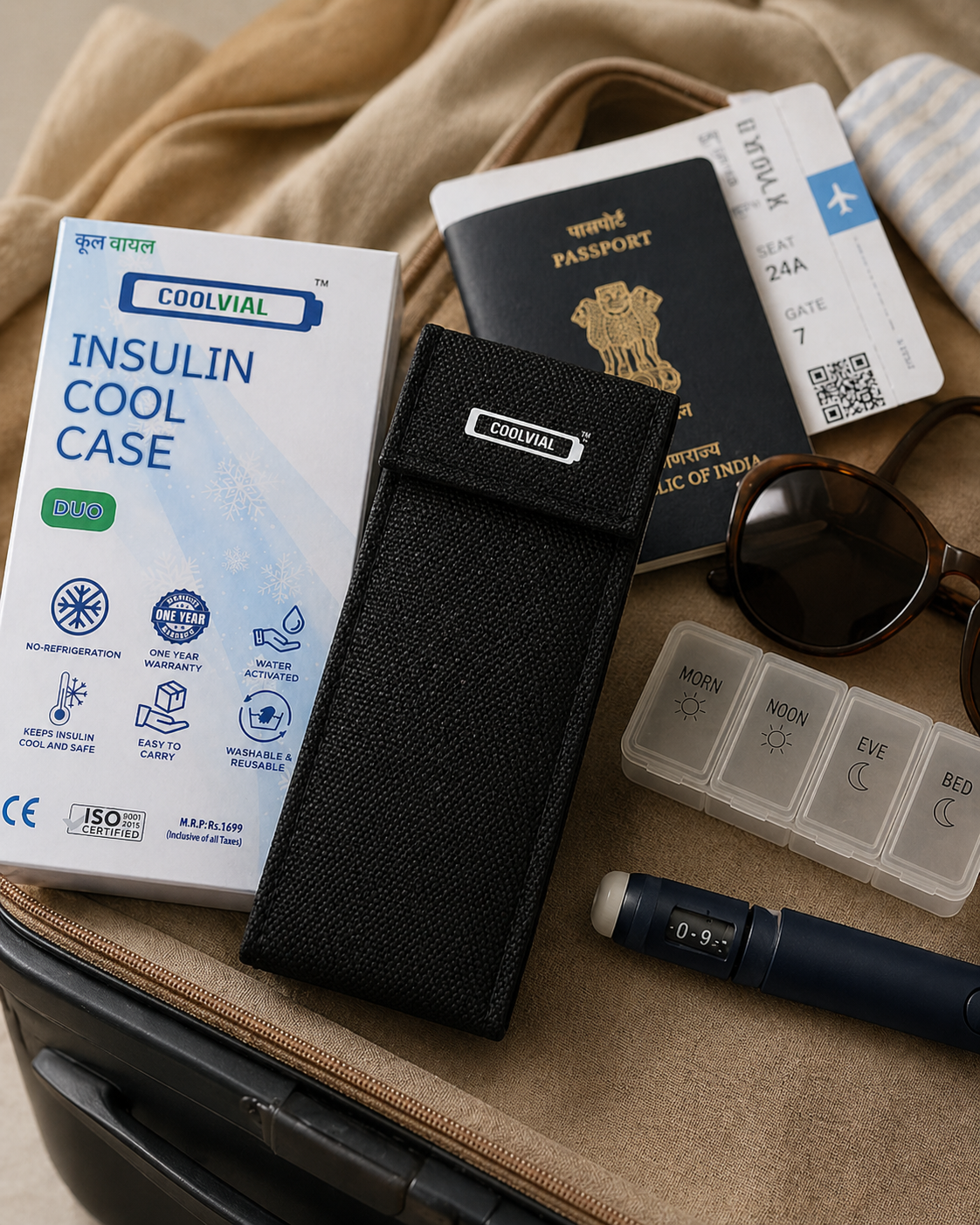
5 Essential Tips for Insulin Storage During India's Pre-Monsoon Heatwaves (April–May)
COOLVIAL keeps insulin at 2-8°C for 48+ hours. No electricity needed. Trusted by 10,000+ diabetics.
5 Essential Tips for Insulin Storage During India's Pre-Monsoon Heatwaves (April–May)
COOLVIAL keeps insulin safe in India's heat. 48+ hours, no electricity needed.